Kentucky Is Home To One Of The Oldest Gothic Revival Cathedrals Still In Use In The United States
You love a jaw-dropping building, but your budget prefers the local strip mall. Seeing real Gothic drama usually means a plane ticket to Europe and a very unhappy credit card.
Most of us settle for scrolling through photos of Paris from the couch instead. Here is the good news, and it has stood in Kentucky since the 1850s.
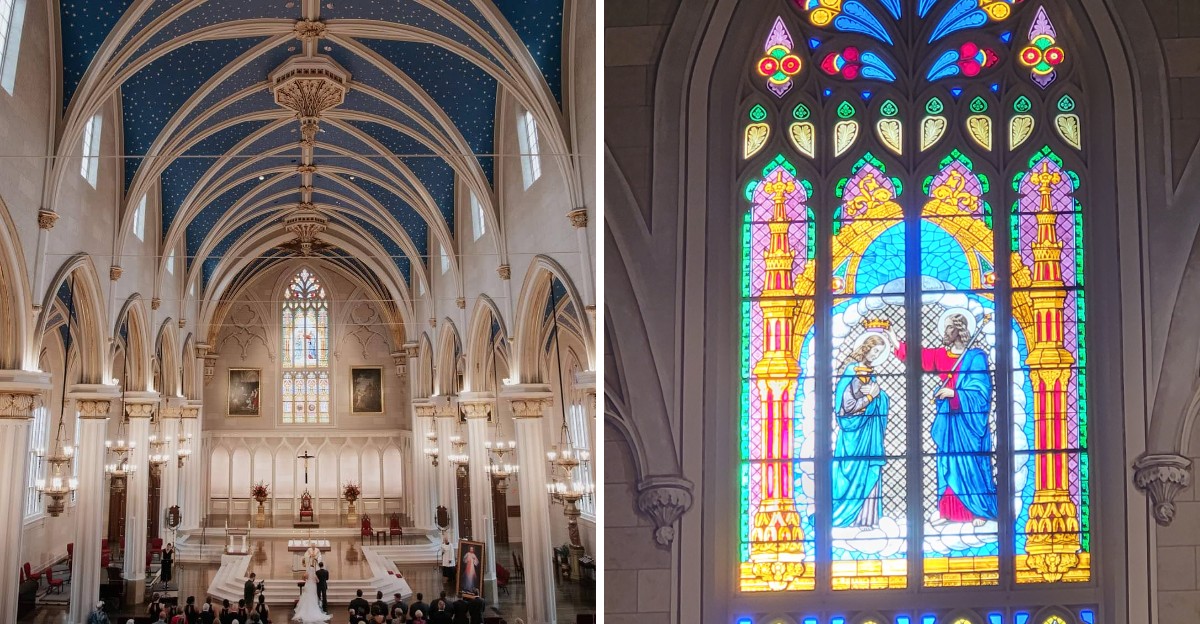
Look up inside, and you will find a deep blue ceiling covered in thousands of gold leaf stars. Its spire was the tallest in North America when it was finished.
One window ranks among the oldest surviving examples of hand-painted stained glass in the country. The doors have stayed open to worshippers for more than a century and a half.
Plan a quiet visit. Bring your camera.
Tilt your head back. Let your neck complain later.
Old Stones With A Very Long Memory
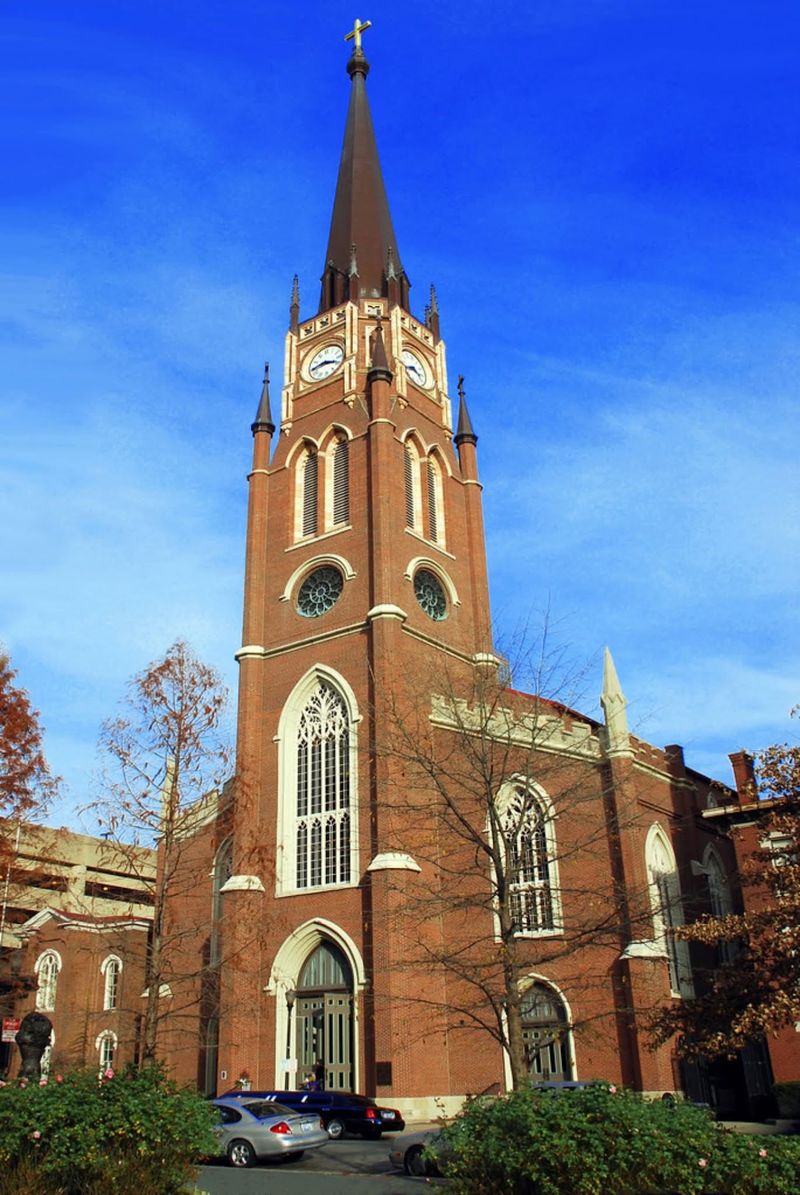
Some buildings brag with neon, but the Cathedral of the Assumption prefers limestone and patience.
Workers laid the cornerstone in 1849, when Kentucky was still a young state. The cathedral was dedicated three years later, in 1852.
That makes it the third oldest Catholic cathedral in continuous use in the United States. It also ranks as the fourth oldest public building in Louisville.
Two architects, William Keeley and Isaiah Rogers, shaped the original design. They chose the Gothic Revival style, which borrows ideas from medieval European churches.
Think pointed arches, tall windows, and lines that pull your gaze straight up. The whole style is built to make you feel small in the best possible way.
Here is the fun part. This is not a museum piece behind velvet ropes, since Mass is still celebrated here regularly.
It serves as the mother church for the Archdiocese of Louisville. So when you visit, you are stepping into a living place, not a frozen one.
Before you go, grab one of the helpful pamphlets usually found near the back. They explain the meaning behind different parts of the church in plain language.
You will find this Louisville landmark at 433 S 5th St, Louisville, Kentucky.
A Spire That Once Topped The Whole Continent
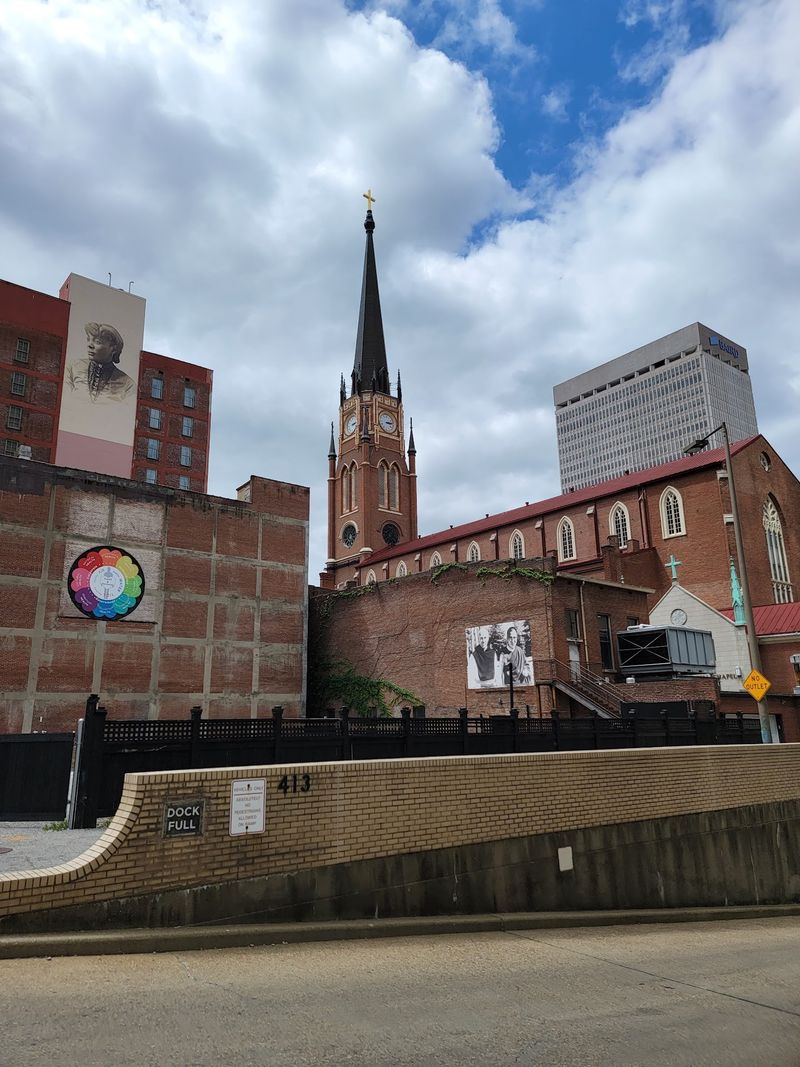
Crane your neck, because the Cathedral of the Assumption did not come to play small. Its spire rises an impressive 287 feet above downtown Louisville.
When the spire was finished in 1858, it was the tallest in North America. For a brief shining moment, Kentucky held the height crown.
Architect Henry Whitestone designed this soaring feature. He became one of the best known architects in Louisville.
Today, glass office towers crowd the skyline around it. Somehow, the old spire still holds its own against the newer neighbors.
Stand across the street for the best view of the full height. From there, you can take in the pointed windows and crisp limestone trim.
Photographers, take note. A wide angle lens or a few steps backward will save you from cutting off the tip.
The spire and bell tower received a complete renovation in 1998. That work helped keep the landmark sturdy and handsome for new generations.
Look closely at the stonework as you walk around the base. Each carved detail shows how much care went into a building meant to last.
Just try not to trip over the curb while staring upward. The sidewalk will not politely move out of your way.
Eight Thousand Stars And Not One Cloud
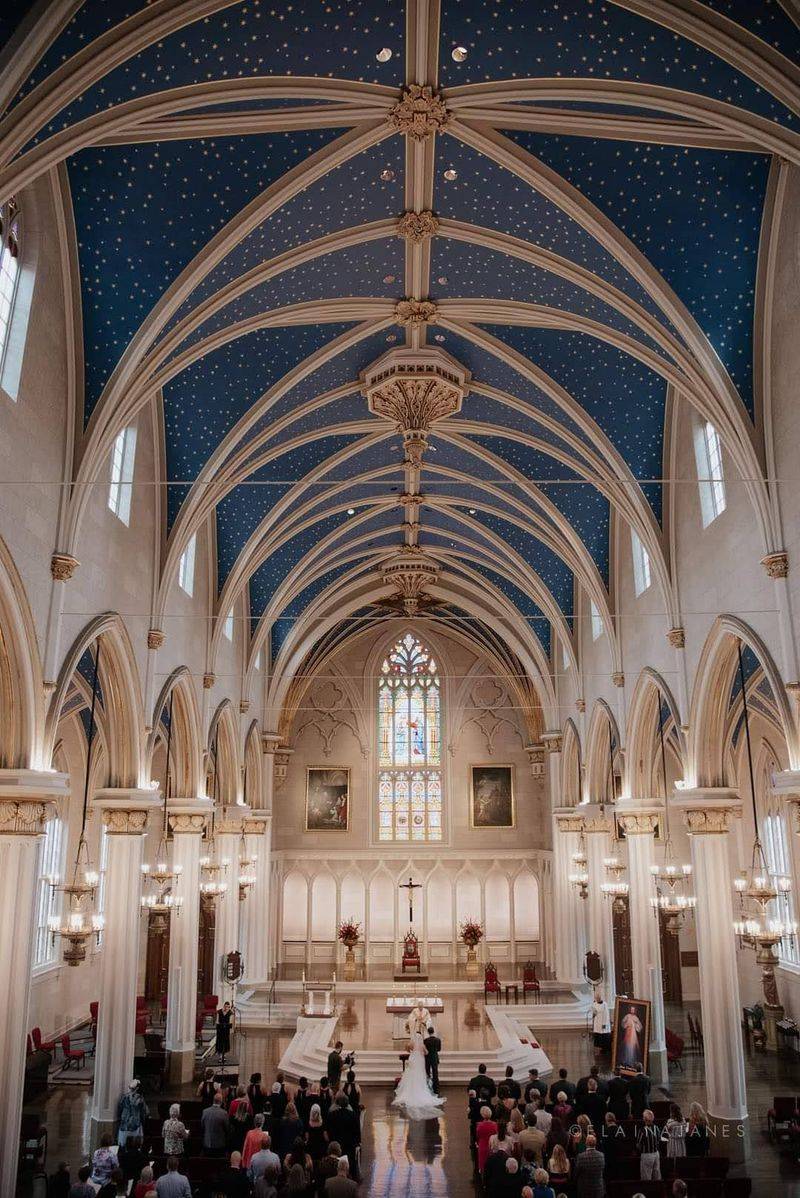
Forget the planetarium, because the ceiling inside the Cathedral of the Assumption puts on a permanent night sky. More than 8,000 six-pointed stars cover it.
Each star is made with 24-karat gold leaf. They sparkle against a deep field of blue, like someone painted heaven and added a little glitter.
The stars sit within elaborate ribbed vaulting. Those ribs are the curved lines that cross overhead, giving the ceiling its graceful, woven look.
Tall columns rise from the floor to meet them. Pointed arches connect everything, creating long sightlines that feel calm and orderly.
Many visitors say the ceiling is the part they remember most. It is easy to understand why once you tilt your head back.
A smart move is to sit in a pew for a few minutes. Your eyes adjust, and more details start to appear in the patterns above.
Changing daylight can make the gold look warm and soft. As the hours shift, the stars seem to glow in slightly different ways.
Bring patience rather than a checklist. The ceiling rewards anyone who slows down and simply looks.
Kids especially love counting stars, though finishing all 8,000 might take until dinner. Consider it a quiet game with a golden prize.
Walls That Play A Clever Trick On You
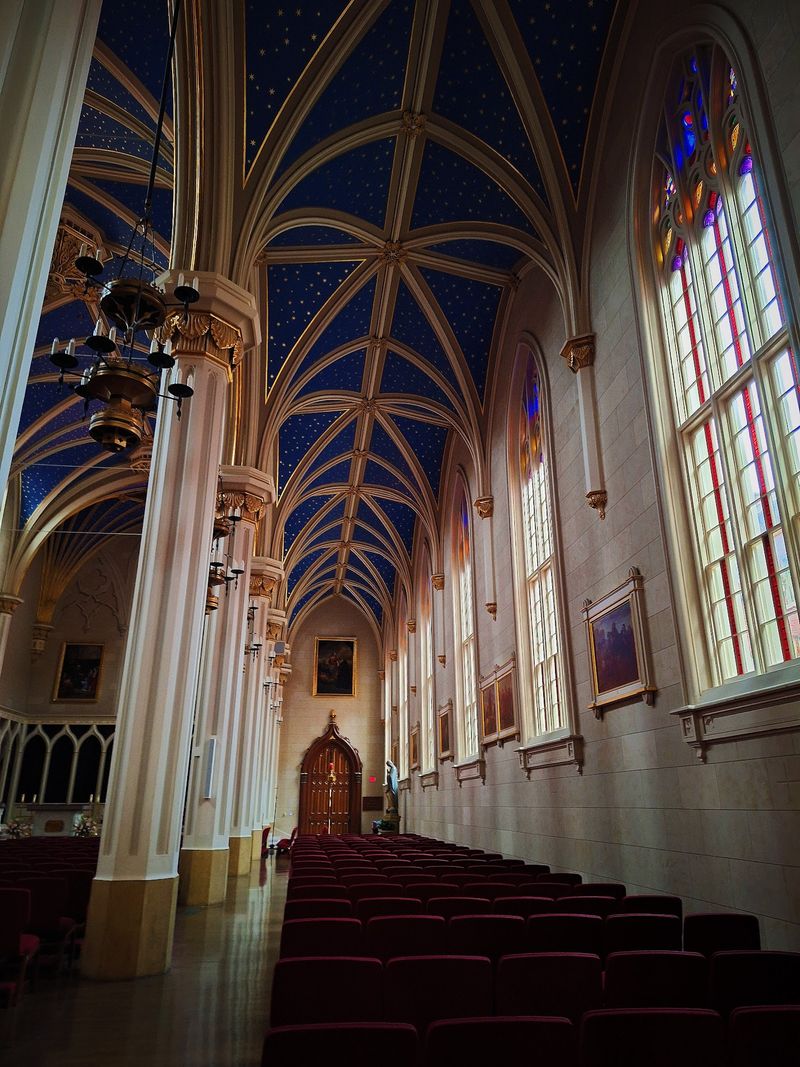
Your eyes are about to be fooled, and the Cathedral of the Assumption is completely unapologetic about it. The interior walls use a faux painting technique.
Skilled artists created the look of solid limestone blocks with paint alone. From a normal distance, the effect is remarkably convincing.
Get a little closer, and you start to notice the artistry behind the illusion. Every line and shade was placed to suggest weight and texture.
It is a reminder that beauty sometimes comes from clever problem solving. Painted stone delivers a grand look through pure skill and patience.
Now glance down at your feet. The floor is made of white oak tongue-in-groove planking, fitted board by board.
Wood underfoot adds warmth to a space full of stone colors and gold. It also gives the room a softer, more welcoming feel.
Much of the current look comes from a major two-year renovation. That project wrapped up in 1994 and refreshed the main space.
The result feels both historic and cared for, like a family heirloom polished for company. Nothing looks tired or forgotten.
Take a slow lap around the edges of the nave. You will notice small details that most people rush past on the way to the front.
A Window That Finally Came Back Home
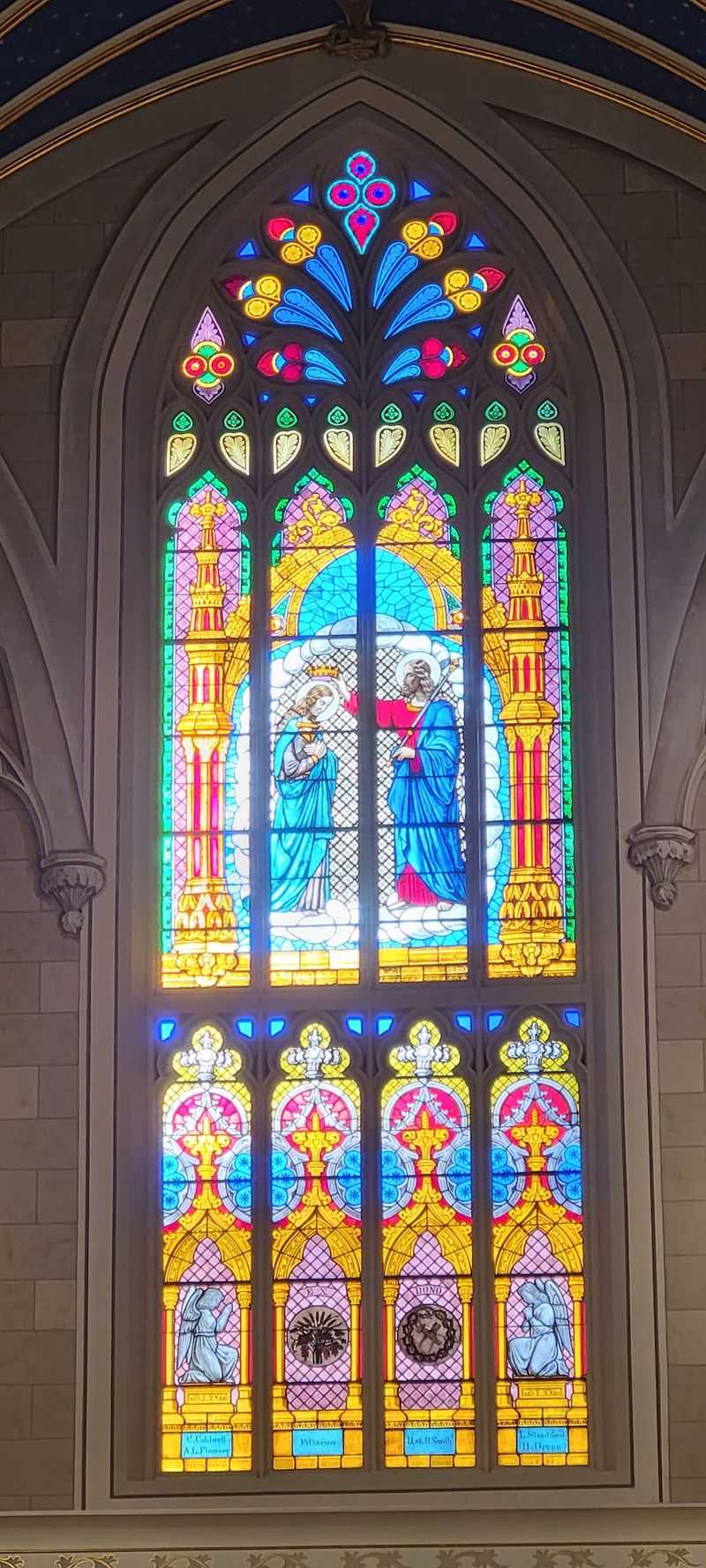
Every great story needs a comeback, and the Cathedral of the Assumption keeps one in glass. The Coronation Window was designed by the Blum Art Company in 1883.
It shows the crowning of the Virgin Mary in rich, glowing color. The window is considered one of the oldest and largest hand-painted glass windows in the country.
In 1912, the window was removed from its place. For decades, visitors never got to see it where it belonged.
Then came 1994, when it was carefully restored and returned to its original position. Talk about a homecoming worth the wait.
Other stained glass windows fill the cathedral too. On bright days, they scatter colored light across the pews and floor.
Try visiting when the sun is out for the best effect. Reds, blues, and golds seem to drift across the room as the hours pass.
Hand-painted glass is different from simple colored glass. Artists paint details like faces and fabric folds directly onto the panes before firing them.
That is why the figures look so lifelike, even from far away. Bring a small pair of binoculars if you want to study the faces up close.
An Organ With Serious Lung Power
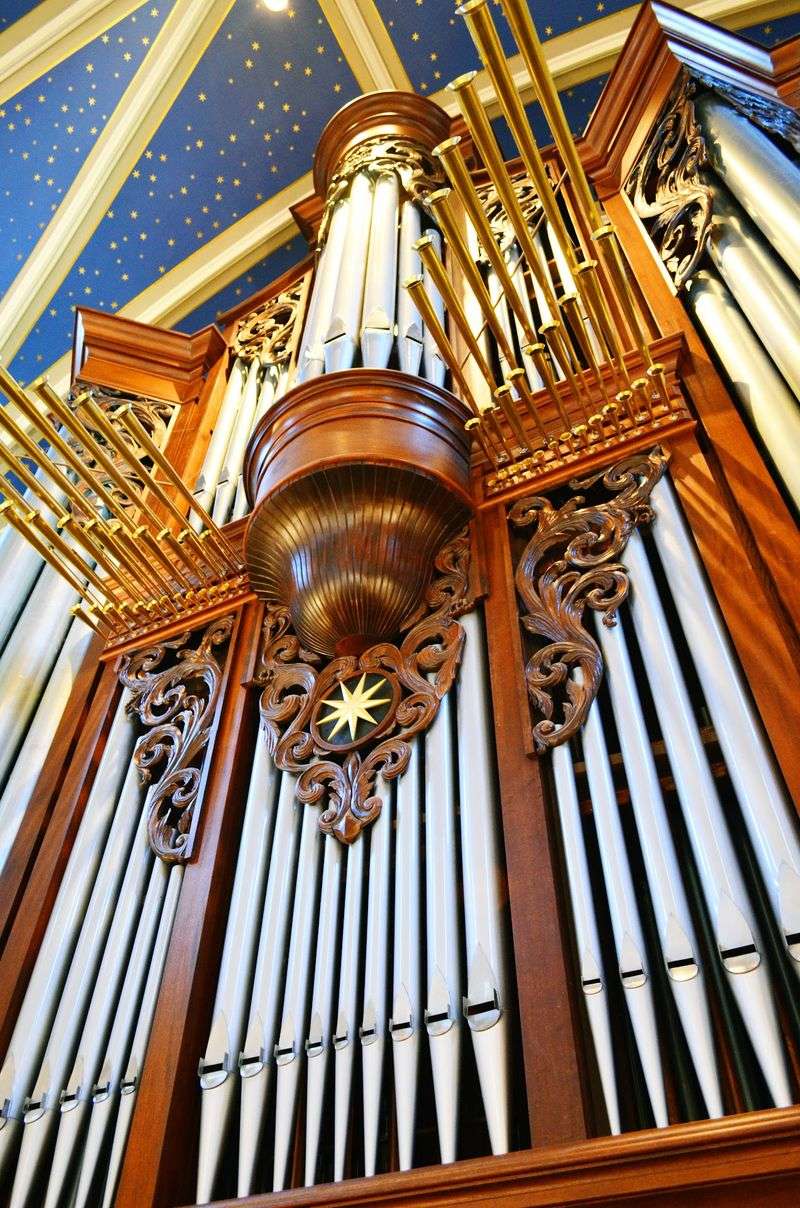
Some instruments whisper, but the pipe organ at the Cathedral of the Assumption prefers to make an entrance. It was built in 1983 by the Steiner-Reck Company of Louisville.
A hometown builder for a hometown landmark feels just right. The organ uses a mechanical-action tracker system, which links keys to pipes through physical connections.
The organ has grown over the years, with additions made in 1994 and again in 2026. Today, it is a 50-rank, three-manual tracker organ.
In simple terms, that means a huge range of sounds, from soft and sweet to thunderous.
The casework is hand-carved mahogany. Its design echoes the Gothic style of the building, so the organ looks like it has always belonged there.
Music plays a big role in cathedral life. Visitors often praise the choir, and many leave humming long after the final note.
The space also hosts concerts and recitals from time to time. Past events have included an afternoon Celtic recital, which sounds charming indeed.
Attending Mass is one of the best ways to hear the organ at full strength. Everyone is welcome, whether you come to worship or simply to listen.
Check the cathedral website for upcoming concerts before your trip. A live performance under that starry ceiling is hard to top.
Sit toward the middle for balanced sound. Your ears will thank you.
The Undercroft Beneath Your Feet
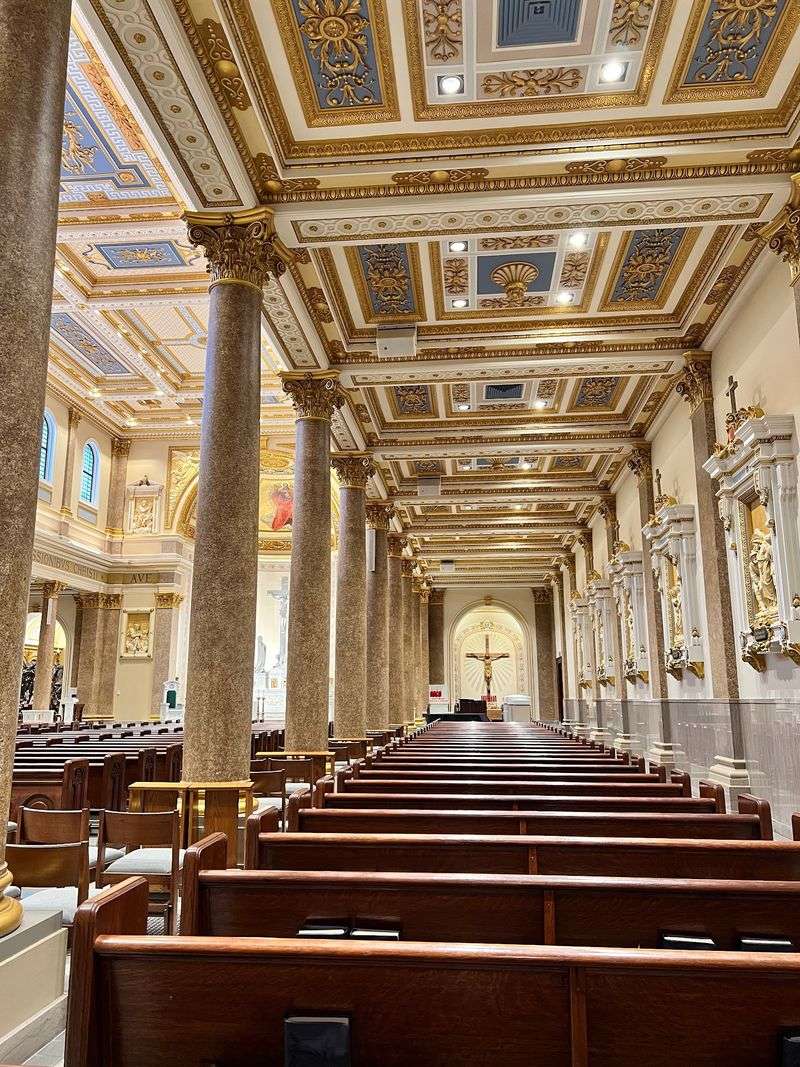
There is more to the Cathedral of the Assumption than meets the eye, quite literally. Below the main sanctuary lies the historic Undercroft.
For about a century, this lower level sat unused. Then it was beautifully restored and reopened in 1991.
Today, the Undercroft is a busy, useful space. It hosts parish gatherings, meetings, and a variety of community events.
Within it is the Chapel of the Bishops, a room with special meaning. It honors early leaders of the Catholic Church in Kentucky.
Among them is Benedict Joseph Flaget, the first bishop of the diocese. His leadership shaped Catholic life across early Kentucky.
The chapel carries a peaceful, reflective mood. Visitors tend to lower their voices without being asked.
Old buildings often keep their best stories out of sight. The Undercroft proves that, turning a once quiet level into a place where people gather again.
The cathedral also offers an audio tour for curious visitors. It is a great way to learn background you might miss on your own.
Ask a staff member what areas are open during your visit. Access can vary depending on events, so a quick question saves time.
Curiosity pays off here. The quietest rooms often hold the richest history.
Floods, Crowds, And A Stubborn Survivor

Tough is not the first word you think of for a cathedral, yet it fits the Cathedral of the Assumption perfectly. This building has faced plenty of challenges.
In 1855, angry crowds threatened the church during a tense period in the city. Louisville Mayor John Barbee personally inspected the building and declared it clear.
His quick action helped protect it. The cathedral stayed standing, ready to welcome people again.
Decades later, the Ohio River flood of 1937 swamped much of Louisville. The cathedral opened its doors as a refuge for families pushed from their homes.
That spirit of welcome still shows today. Staff and parishioners are often described as kind and helpful to newcomers.
Before you leave, step out to the small courtyard beside the building. It offers a pleasant spot to sit and let everything sink in.
The cathedral earns glowing reviews, and it is easy to see why. History, art, and music all meet under one remarkable roof.
Plan ahead, since weddings and special services sometimes limit touring. A quick look at the website helps you pick the right day.
Downtown Louisville has plenty to explore nearby. Still, this old Gothic treasure deserves a top spot on your list.