This Massive Arizona Library Feels More Like An Art Museum Than A Place To Read
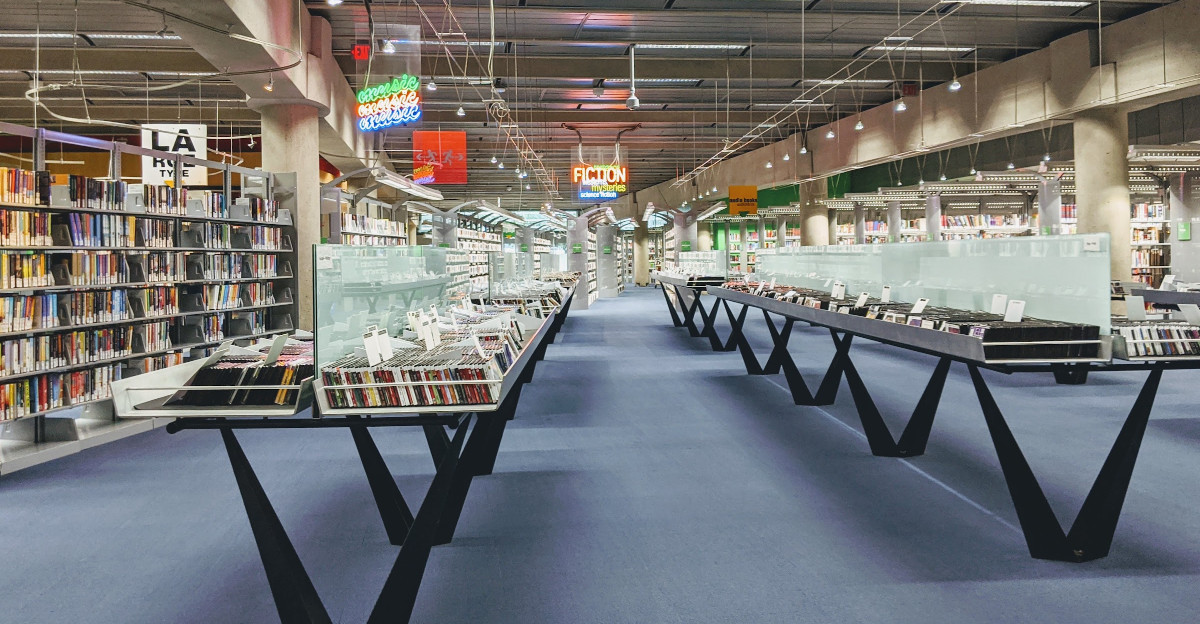
Who said libraries had to look serious?
One massive Arizona library throws that idea straight out the window with copper, glass, dramatic light, and interior spaces that practically beg you to look up.
Books are everywhere, obviously, but the building keeps stealing their thunder. Even moving between floors feels like part of the experience.
Sunlight changes the mood as the day goes on, and little design details keep appearing once you slow down.
You may arrive looking for a quiet reading spot and end up wandering around like you bought a museum ticket.
Not bad for a place where admission is free!
Desert Mesa Turned Into Architecture
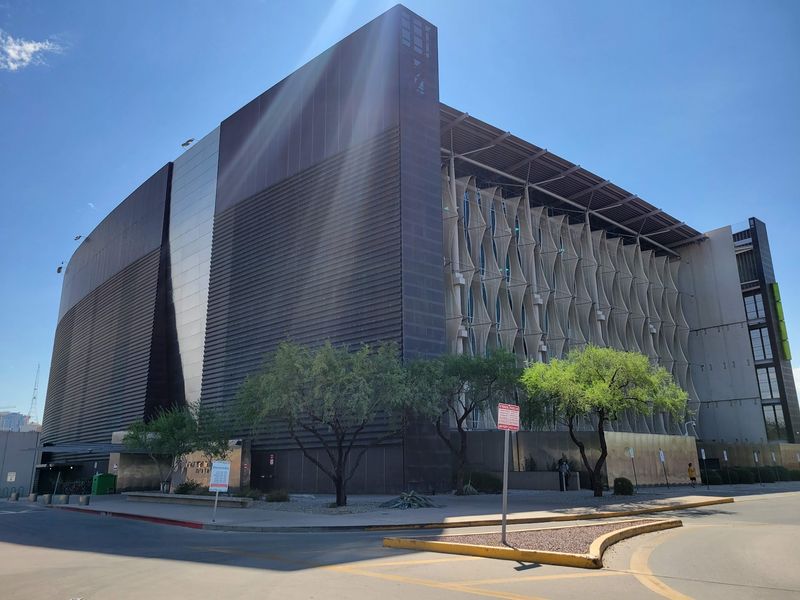
My first glimpse downtown made me stop mid-step on the sidewalk.
Burton Barr Central Library opened in 1995 at 1221 N Central Ave in Phoenix.
Designed by Will Bruder with DWL Architects, the five-story building covers about 280,000 square feet and has become one of the city’s most recognizable civic landmarks.
Its form was inspired by the desert landscape, especially the broad mesas of Monument Valley. Corrugated copper-colored surfaces wrap much of the exterior, while glass at the north and south ends opens the building to daylight.
The City of Phoenix describes the composition as a curving copper mesa split by a stainless-steel canyon.
That contrast becomes more noticeable as the sun changes position. The metal walls can appear muted in softer light and much brighter later in the day, while the deep ribs and perforated surfaces give the exterior a rugged texture up close.
The library was originally planned to accommodate a collection of up to one million volumes, but current City of Phoenix information places the collection at nearly 706,000 items.
The scale still feels enormous, especially because the architecture keeps long sightlines open across several floors.
Riding Through The Crystal Canyon
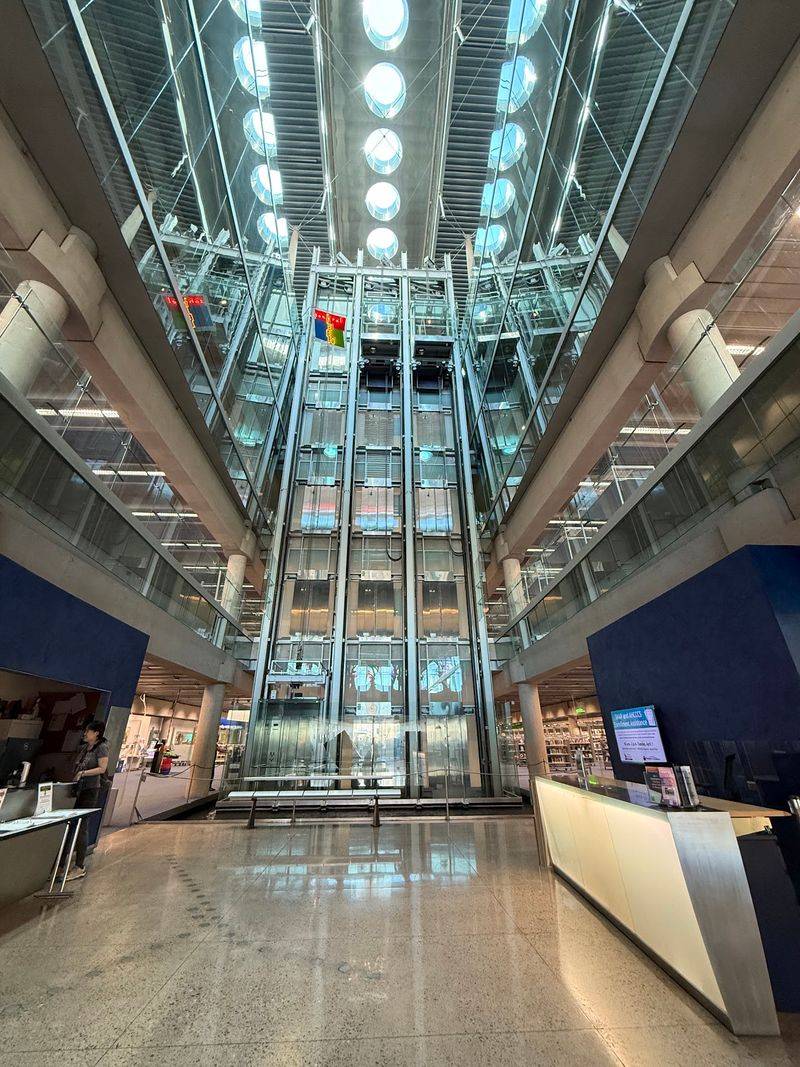
The center of the building is known as the Crystal Canyon, a tall atrium containing glass elevators, a grand staircase, and a reflecting pool at its base.
The space rises through the building and acts as a vertical connection between the public floors.
Natural light is central to the experience. Nine skylights and a system of reflective elements bring changing patterns of daylight into the atrium, so the space can look noticeably different depending on the hour.
The glass elevators make the vertical scale especially clear. As they rise, more of the surrounding floors come into view, while the staircase offers a slower look at the same structure.
The reflecting pool below adds another layer by catching portions of the steel, glass, and movement above it.
It is one of those library spaces where circulation becomes part of the design rather than simply a way to get from one floor to another. A ride up followed by a walk down is an easy way to notice details that can disappear during a quick visit.
The Acre-Sized Great Reading Room
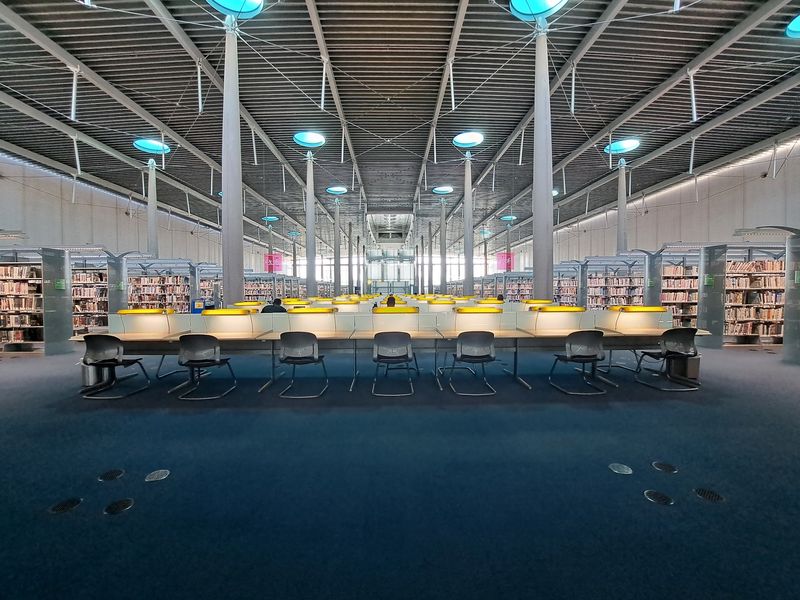
The fifth-floor Great Reading Room is one of Burton Barr’s defining spaces.
Roughly an acre in size, it brings together long rows of books, study tables, broad city views, and a roof structure that appears to float above the room.
That effect comes from an unusual cable-stayed tensegrity system developed with engineers from Arup.
Slender columns, steel cables, and supporting struts carry the corrugated metal roof while keeping much of the structure visually light.
Narrow gaps between the roof and walls admit additional daylight, while large areas of glass open the room toward the Phoenix skyline and surrounding mountains.
The result feels spacious without losing the quiet atmosphere expected from a reading room.
Much of the library’s nonfiction collection has traditionally been housed on this level, making it equally useful for serious research and casual browsing.
A newer magazine lounge also occupies part of the fifth floor, giving visitors another reason to stay awhile.
A Summer Solstice Light Show
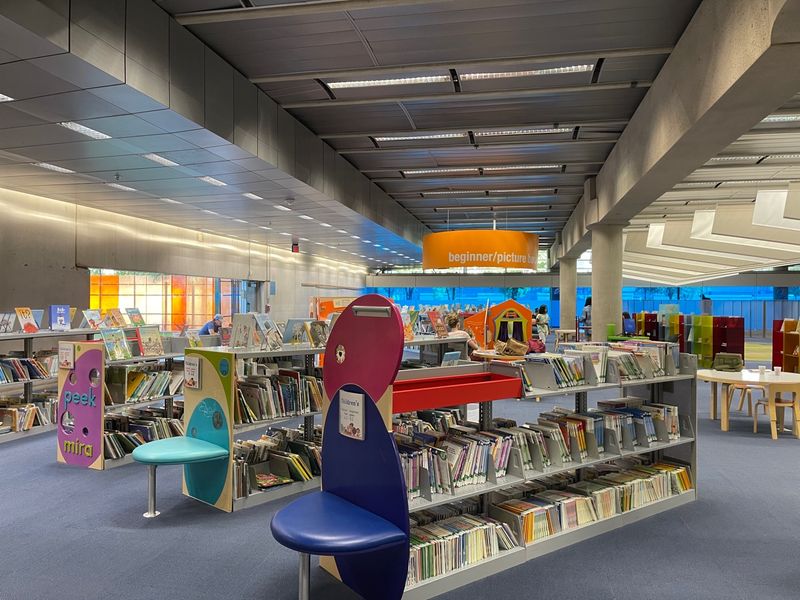
Burton Barr’s best-known architectural event happens around the summer solstice.
The roof above the Great Reading Room contains nine circular skylights positioned over the tall tapered columns below.
Each skylight includes a small clear opening designed to align with the high summer sun.
Near solar noon on the solstice, shafts of sunlight strike the tops of the columns, creating the intended effect of giant candles being lit across the room.
The event is not an accidental trick of light. It was built into the architecture from the beginning, linking the building directly to Phoenix’s intense desert sun rather than treating that climate only as something to block.
Phoenix Public Library has turned the phenomenon into an annual public celebration, often adding music, talks, and other programming.
The exact solar-noon timing shifts slightly from year to year, so checking the current event schedule is smarter than relying on a fixed clock time.
Smart Shade For Desert Sun
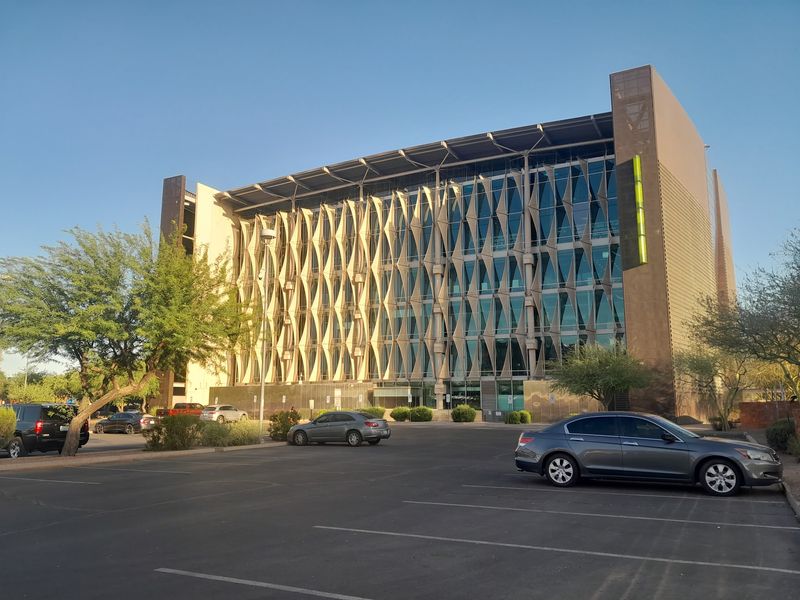
A building with large glass walls needs serious sun control in Phoenix, and Burton Barr handles the north and south sides differently.
Automated louvers on the south facade respond to strong light, adjusting to reduce glare and heat gain.
The north side uses large fabric shade sails designed to soften glare without completely blocking views. Historical accounts of the building note that the sails were designed by a sailmaker in Maine, an unusual detail for a desert library.
The east and west sides are more solid, limiting exposure where low-angle sunlight can be especially difficult.
Together, these strategies allow daylight to remain a major part of the interior without leaving every glass surface exposed to direct desert heat.
Those climate-responsive choices helped establish Burton Barr as an important example of late-20th-century public architecture in the Southwest.
In 2021, the American Institute of Architects recognized the building with its Twenty-Five Year Award, honoring designs that continue to demonstrate architectural significance decades after completion.
History Hiding On Floor Two
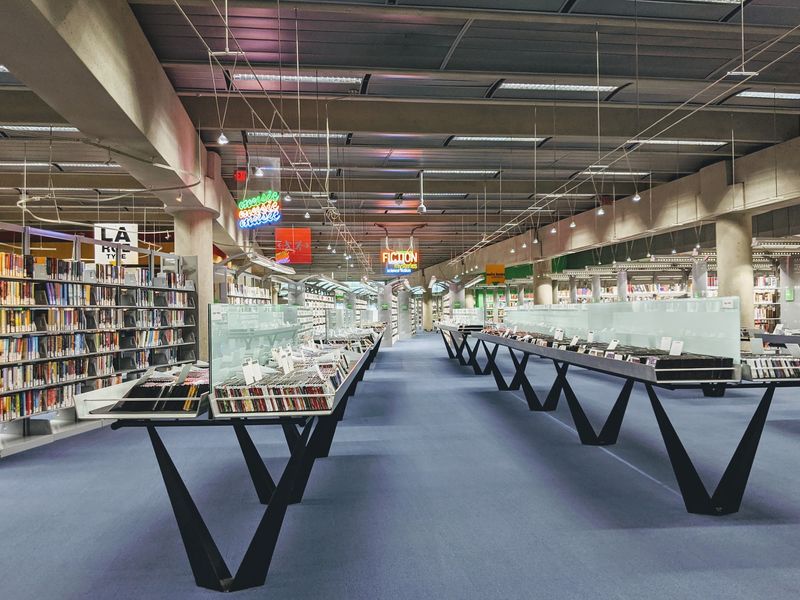
The second-floor Arizona Room is devoted to the history and culture of Phoenix, Arizona, and the broader Southwest.
Its holdings include books, photographs, maps, manuscripts, periodicals, and other research material tied to the region.
Rather than functioning like a general browsing area, it serves as a special research collection.
Genealogists, students, historians, and anyone tracing the development of Arizona can use the room to move beyond the material found on ordinary library shelves.
The library’s Rare Book Room is a separate destination on the fourth floor.
Its collections include artist-made books, fine-press works, and the Alfred Knight Rare Book Collection, with access structured around the preservation needs of the material.
Both spaces reward a little planning. Special collections can have different access procedures from the rest of the building, so visitors interested in a particular item should check current availability before arriving.
That makes it especially valuable for research that depends on primary sources rather than general reference material.
Maker Spaces, Music, And More
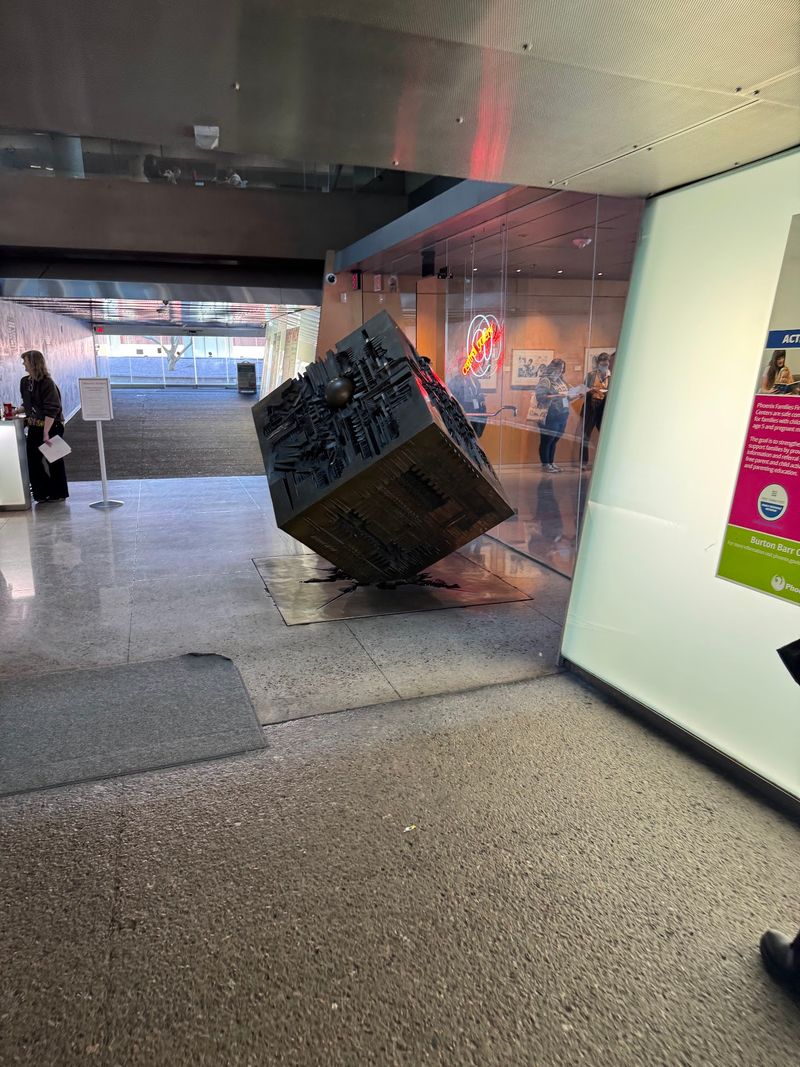
Burton Barr works as much more than a place to borrow books.
The fourth floor includes MACH1, the library’s makerspace for technology, crafts, and hands-on learning. Programs have included coding, robotics, sewing, digital art, 3D modeling, and 3D printing.
Teen Central also gives younger visitors a dedicated area for programs, creative activities, studying, and social events.
Current programming ranges from open-mic sessions to workshops, making the floor noticeably more active than the stereotype of a silent library might suggest.
Families have their own large destination downstairs. Children’s Place covers about 10,000 square feet and supports storytimes, early-literacy programs, reading, play, and family activities.
The library also connects visitors with practical resources beyond recreation.
College Depot recently reopened in an expanded second-floor space in 2026, while StartUpPHX and other business and career services provide support for people working toward education, employment, or entrepreneurial goals.
That mix of creative, educational, and practical services gives visitors plenty of reasons to stay long after they have checked out a book.
Gallery Walls and Visiting Tips
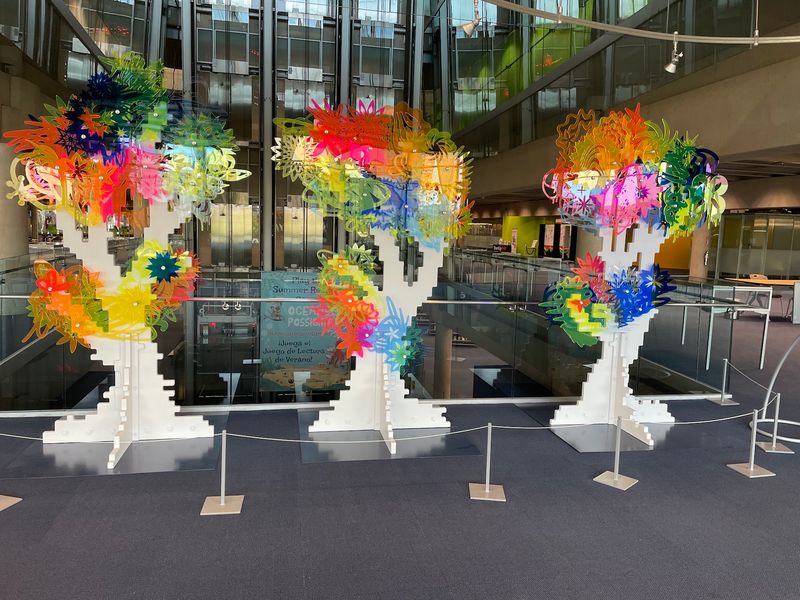
Art is woven into the building as deliberately as books.
The first-floor at Central Gallery hosts changing exhibitions, including work connected to Phoenix history, local artists, community projects, and cultural programs.
Other artworks and design features appear throughout the building, which is why the library also offers periodic art and architecture tours.
Current hours are Monday from 9 a.m. to 5 p.m., Tuesday through Thursday from 9 a.m. to 7 p.m., Friday and Saturday from 9 a.m. to 5 p.m., and Sunday from 1 to 5 p.m. The library is free to enter.
Parking is available at the site, including shaded spaces beneath solar-panel canopies, and Valley Metro light rail stops nearby along Central Avenue. Those options can be especially useful during Phoenix’s hottest months.
Because Burton Barr has undergone several capital improvements in recent years, including roof, fire-suppression, College Depot, and second-floor work, room access can occasionally change even while the building remains open.
Anyone visiting specifically for the Arizona Room, Rare Book Room, a makerspace program, or a tour should check the library’s current notices before making the trip.
Two hours is enough for a general look, but architecture fans can easily spend longer moving through all five floors. The best approach is not to rush toward one famous feature.