Before You Drive To Nebraska’s Chimney Rock, Here’s What Most People Get Wrong
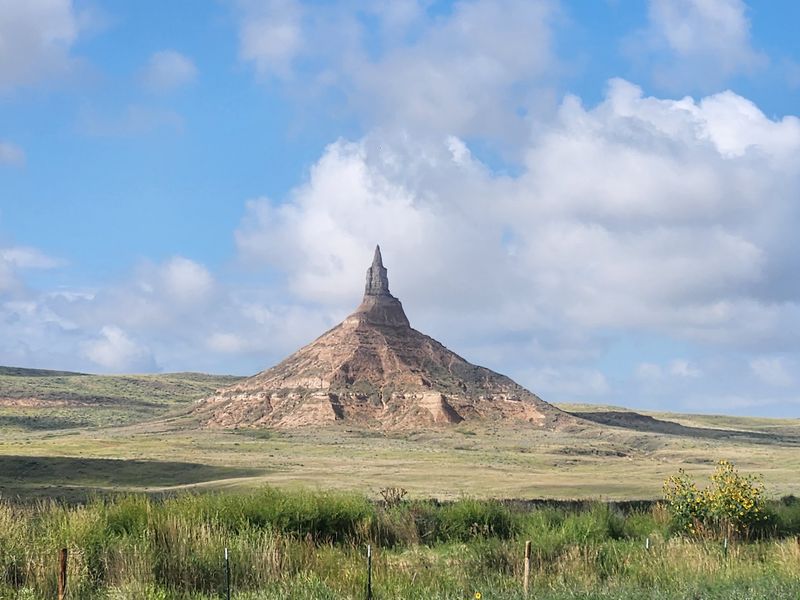
Out on a flat western Nebraska highway, a thin spire pokes up from the horizon, and it barely looks real. It seems like a quick photo stop, the kind you snap and leave behind.
Then you pull off the road and realize almost everything you pictured was a little off. Here is what to know before you point the car toward one of the most talked-about landmarks in pioneer history.
A Spire Above the North Platte Valley
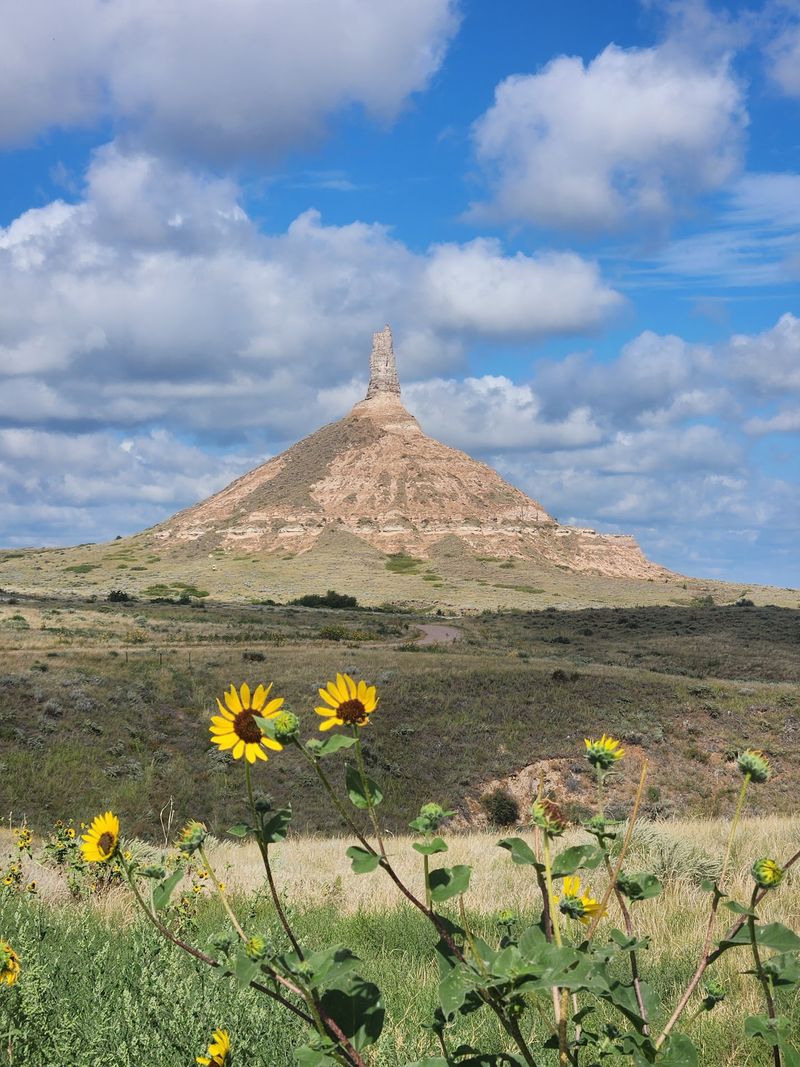
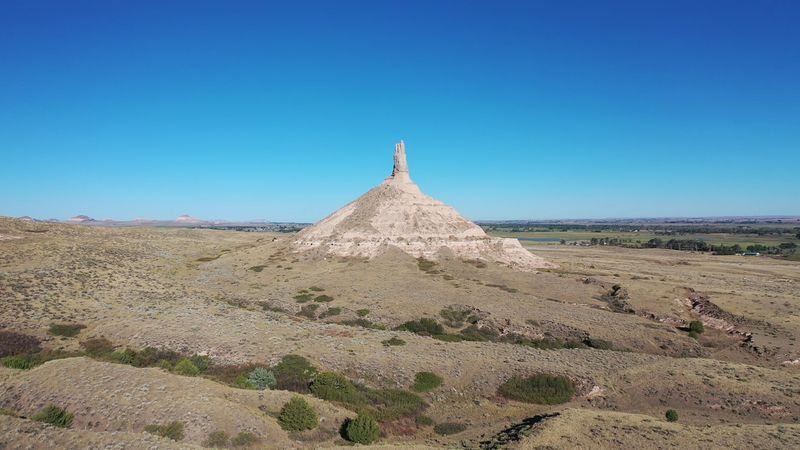
Picture a cone-shaped hill with a skinny column balanced on top, like a witch’s hat set down in the middle of the prairie. Chimney Rock stands in western Nebraska near the town of Bayard, rising over 300 feet above the North Platte River valley.
Its peak sits at 4,228 feet above sea level.
Many first-timers expect a busy park with lots of attractions around it. In truth, the setting is quiet, open, and wide.
Farms and rolling valley land stretch in every direction, and the nearest bigger stop, Scotts Bluff National Monument, sits about half an hour away.
The site is a National Historic Site managed by History Nebraska along with the National Park Service. That partnership means you get a proper visitor center, museum exhibits, and walking trails, all pointed at one lonely tower of rock.
So what exactly are you driving to? Think of it as a landmark plus a small, well-kept visitor area, not a sprawling park.
Knowing that ahead of time sets you up for a much better afternoon. The spire itself is the star, and it stays visible from nearly every corner of the grounds, whether the museum doors are open or not.
The Landmark Every Wagon Train Watched For
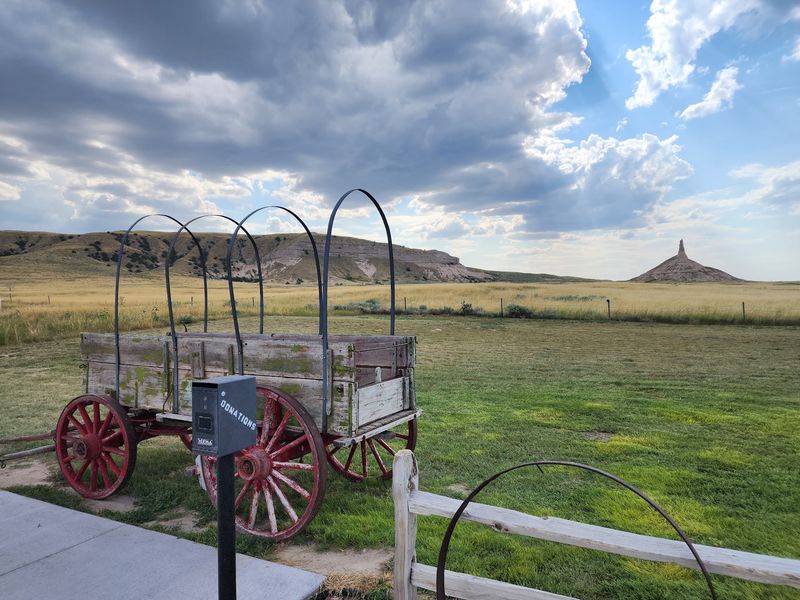
Oregon Trail, yes. But that is only part of the story.
Chimney Rock also guided pioneers on the California Trail and the Mormon Trail during the mid-1800s, which makes it a shared marker for several waves of westward travel.
The trails ran along the north side of the formation. For days, emigrants could watch the spire slowly grow larger as their wagons creaked closer.
It became one of the most frequently mentioned landmarks in pioneer diaries, a signal that the Great Plains were giving way to the rougher country leading toward the Rocky Mountains.
Imagine walking beside an ox team for weeks with nothing but grass ahead, and then spotting that thin point on the skyline. Early travelers sometimes claimed to see it from 30 miles away, though their guesses about its height were all over the map.
Nebraska kids learn about it in school, and it shows up in history lessons from elementary grades through college. Standing in the valley now, the scale of those journeys starts to make sense.
The rock was a mile marker, a morale boost, and a promise that progress was happening, all at once.
A Shrinking Tower of Clay and Ash
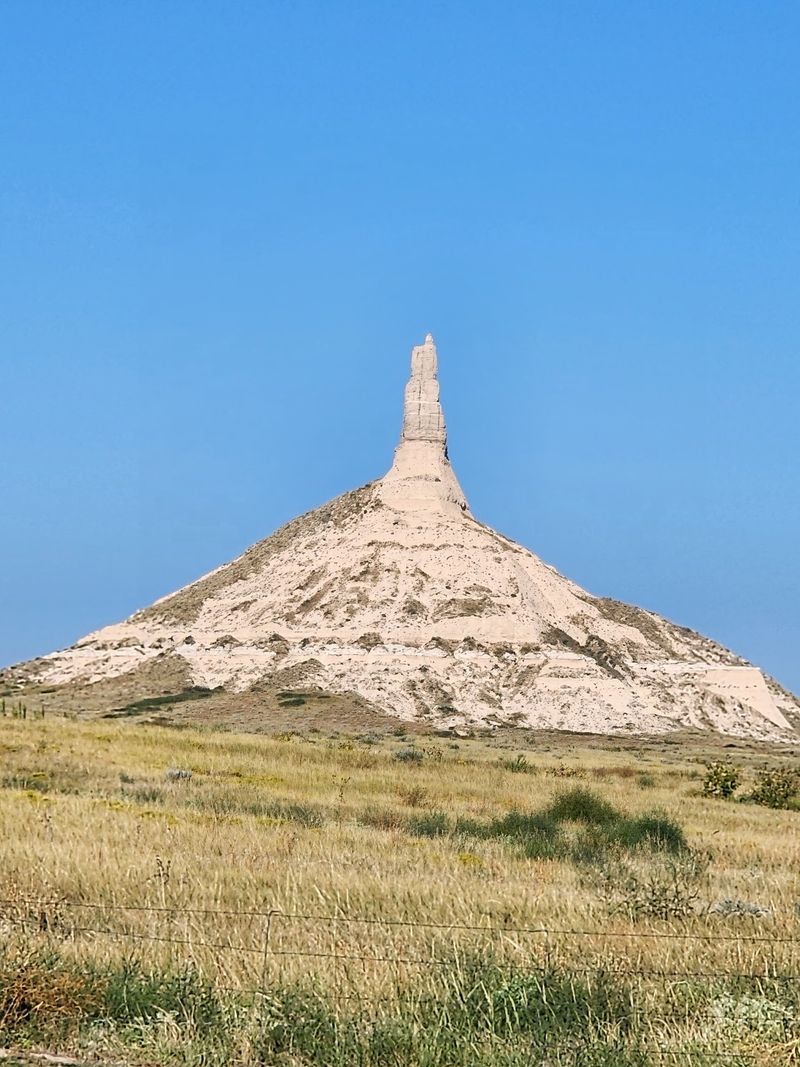
Most people assume solid stone. The spire is mostly Brule clay, layered with volcanic ash and Arikaree sandstone.
Harder sandstone near the top has acted like a cap, shielding the softer material below while the land around it wore away over millions of years.
Soft material comes with a catch. Wind, water, and lightning have been chipping at Chimney Rock for centuries.
Old sketches, 19th-century photographs, and pioneer descriptions all show a noticeably taller column than the one standing today.
Even back in the 1800s, travelers predicted it would topple soon. Some emigrants were surprised enough by its makeup to describe it as sand and dirt.
It still stands, but the slow erosion never stops.
Here is the part that stings a little for Nebraskans who grew up hearing about this place: the rock you see is not the rock the pioneers saw. It has gotten shorter, and it keeps changing.
That gives a visit some urgency. The best time to see Chimney Rock is sooner rather than later, while the column still holds its famous shape against the sky.
Where the Name Came From
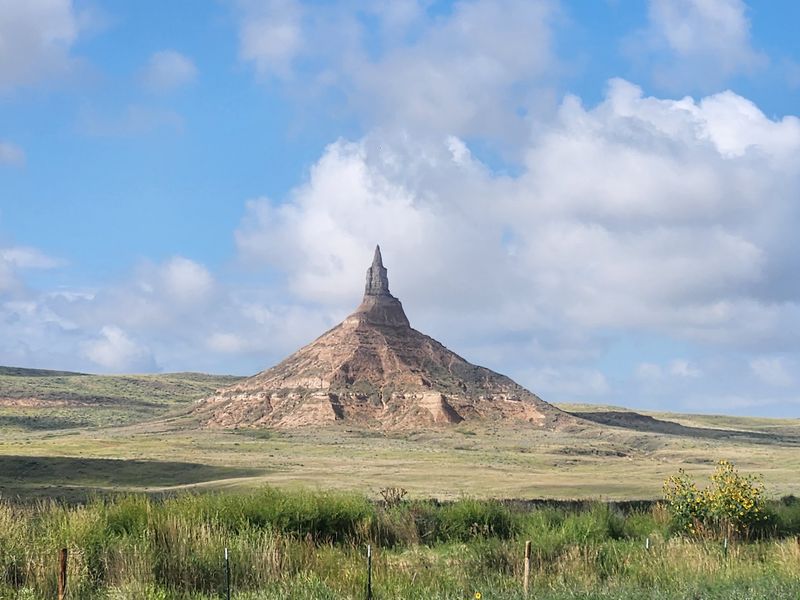
Names on old maps rarely start out polished. Long before it was called Chimney Rock, the Lakota people who lived in the region used a very blunt, anatomical term for the formation, one inspired by an elk.
Fur traders and explorers who came later softened things up. Over the years, the spire picked up nicknames such as Elk Peak, Elk Brick, and Nose Mountain.
By 1842, Chimney Rock had become the widely used name in print, and it stuck for good.
It is easy to see why the chimney label won. From a distance, the cone and column look a lot like a smokestack rising from a prairie cabin.
Travelers writing letters home needed a word everyone would recognize, and chimney did the job.
The older names still tell a story. They show how different groups looked at the same shape and saw something familiar to their own lives.
For a landmark tied so tightly to Nebraska identity, it is a fun bit of trivia to share on the drive, especially with anyone who assumed the name was the first and only one.
Why You Can’t Walk Right Up to the Base
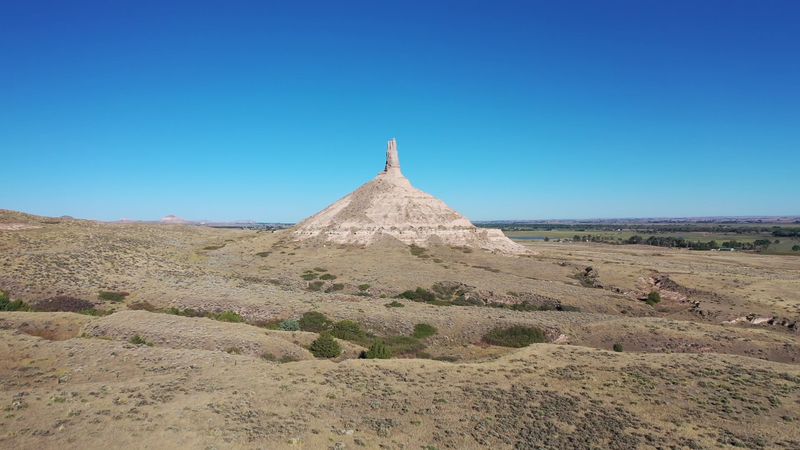
Here is the big surprise for many first-time visitors: you cannot climb the spire, and the base is off limits. The land right around the rock is privately owned, and a fence surrounds the perimeter to protect the fragile formation.
Years ago, people could hike all the way to the bottom. That old path is now discouraged, with no trespassing signs posted, and it has not been maintained.
Climbing or hiking on the spire itself is prohibited to help preserve it.
Does that ruin the trip? Not at all.
Several roads and trails bring you as close as you can now legally get, and the views from those spots are wide and clear. A bridge sits right in front of the rock, framing it nicely for photos.
Showing up with the wrong expectations is the most common way this visit falls flat. Plan for a viewing experience rather than a scramble up the slope.
Once you accept that, the fence becomes part of the story. It is there because the rock is soft, rare, and slowly wearing down, and everyone wants it standing for the next generation.
Gravel Loops, Bridges, and Wildflowers
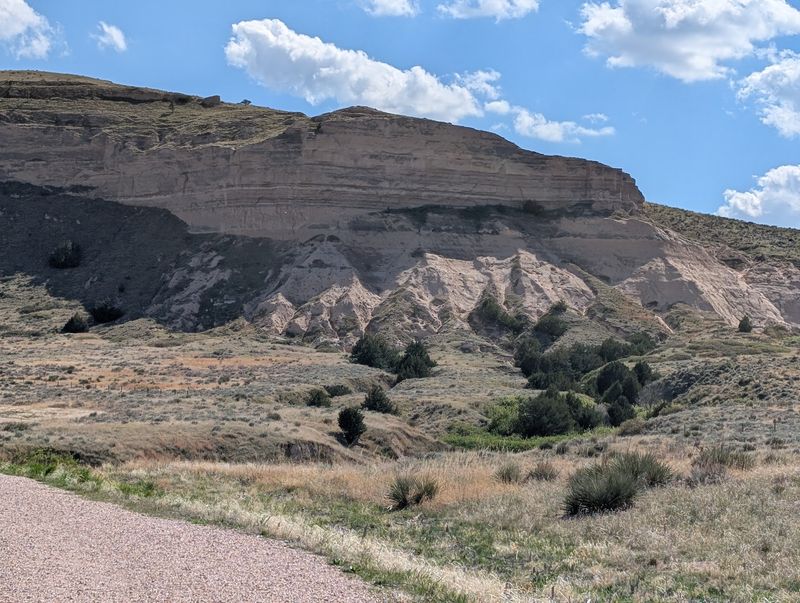
Crunching gravel underfoot, a breeze moving through the grass, and that spire hanging on the skyline. The trails here are packed gravel loops, easy to follow and kept in good shape.
There are a few gentle inclines and some rolling hills, but nothing steep. A wheelchair can handle the packed surface, and a three-year-old managed about two miles of it on her own.
Little bridges and wildflowers dot the route, and the surrounding valley and farmland spread out in all directions.
The Ethel S. Abbott Foundation Trail makes a nice option when daylight is fading.
Other loops head closer to the rock. One honest note: on some stretches, your back or side faces the spire, so stop and turn around now and then.
Thistles line parts of the paths, so long pants help. Rattlesnake warning signs are posted along the narrower trail toward the base, and summer brings plenty of mosquitoes.
Pack bug spray and wear sturdy shoes. Best of all, every hiking trail is free to use, which makes this an easy, low-cost stretch of walking for families.
Inside the Visitor Center and Museum
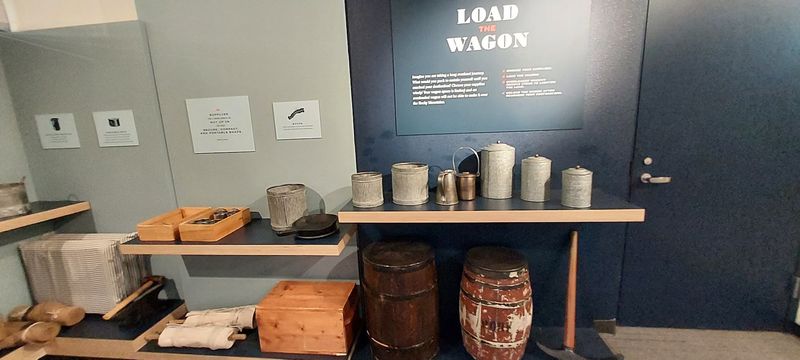
The building looks like something you would find at a major national park, clean and modern against the prairie. Inside, the museum is small but focused, with exhibits showing how Chimney Rock has changed over time and how the Oregon Trail worked.
Kids tend to gravitate toward the interactive wagon loading station. Figuring out what fits in a covered wagon, and what has to stay behind, turns pioneer life into a hands-on puzzle.
The museum charges a small entry fee, while the gift shop and information desk are free. Outside, a little free library lets young readers pick out a book and pass it along at the next one they find.
Timing matters. The museum is open Tuesday through Saturday, so a Monday stop means the doors stay shut, though the monument remains visible the whole time.
Check the official National Park Service page before you leave home to confirm current days and fees.
The exhibits are not huge. For a history buff, though, seeing the rock’s changing profile laid out in pictures adds real weight to the view outside the window.
The Pioneer Cemetery Across the Road
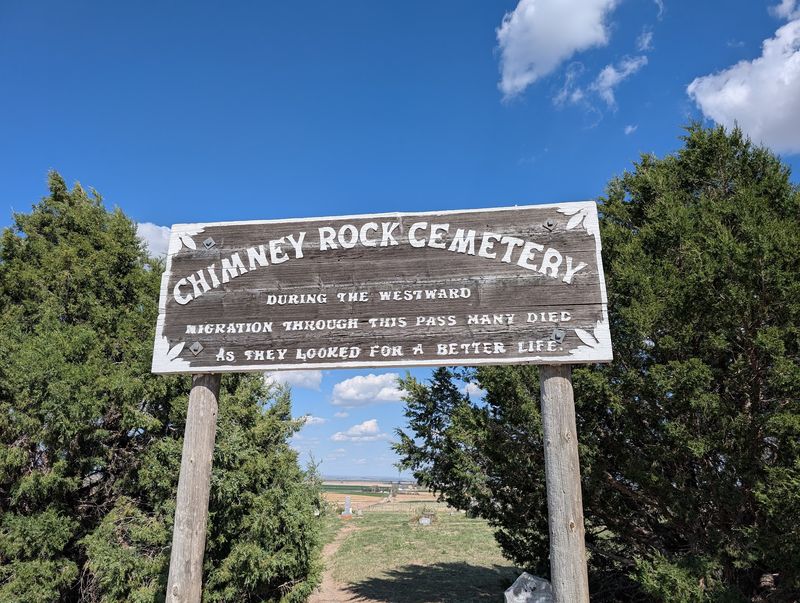
A five-minute walk from the trailhead parking lot, right across a dirt road, sits the Chimney Rock Cemetery. Many people drive in, snap a photo of the spire, and leave without ever noticing it.
Skipping it would be a mistake. The small burial ground offers a quiet reminder that the westward trails were hard, and not every family who passed this landmark reached the end of their journey.
Weathered markers and open prairie create a thoughtful, peaceful mood.
It also works well as a parking spot. Pull up next to the cemetery and you are steps from the trail network, which saves some walking compared to starting at the visitor center lot.
For Nebraskans with pioneer roots, the cemetery can feel personal. It turns the rock from a postcard image into a place tied to real people and real stories.
Spend a few minutes reading the stones, then look back at the spire. The view lands differently after that, and the whole site makes more sense as a place of memory rather than simply a roadside curiosity.
Evenings, Quiet Mornings, and Unexpected Wildlife
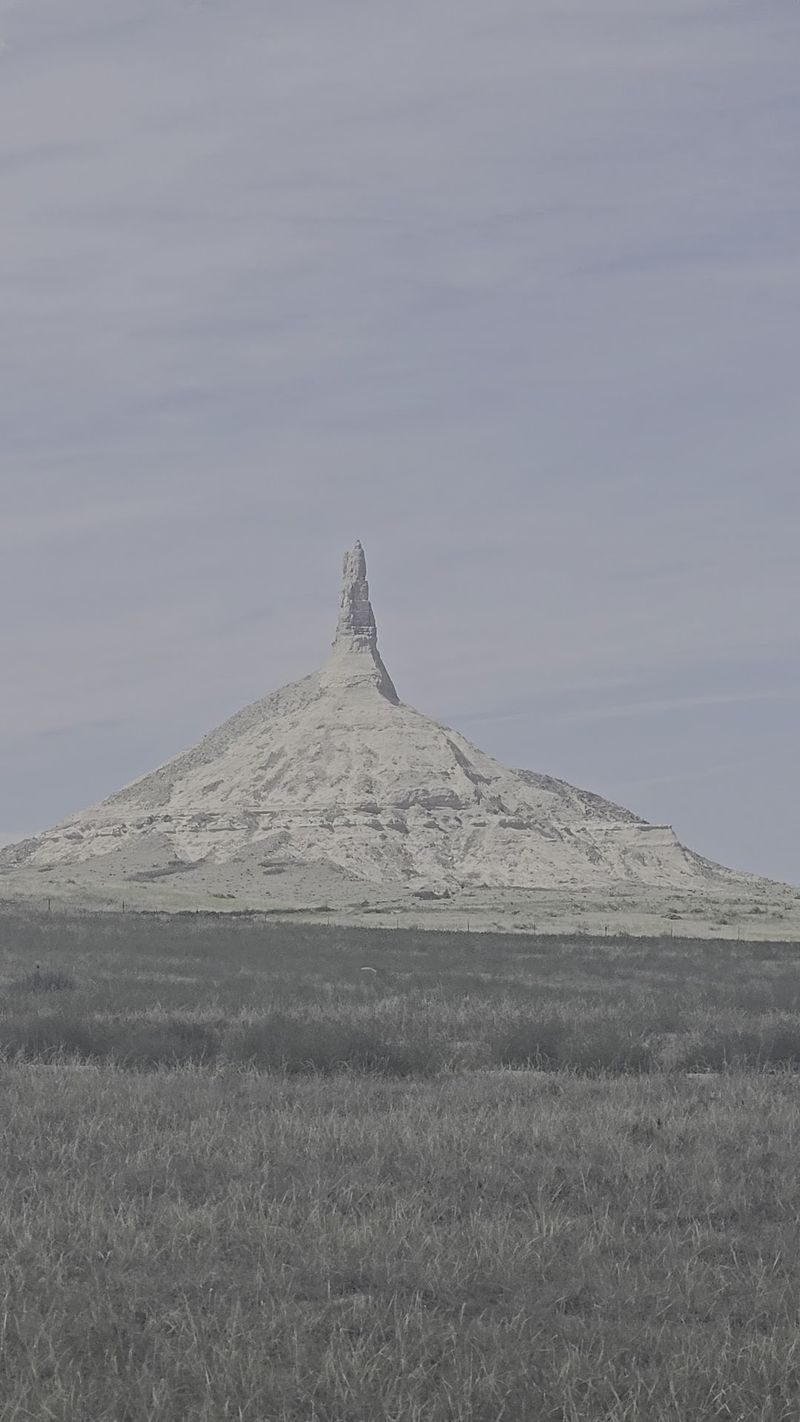
Midday on a weekend, most people crowd into the museum while the trails stay nearly empty. Early mornings and evenings are even calmer, and it is common to have the entire place to yourself.
Arriving after the visitor center closes is no problem, since the trails and views remain open. The rock is also lit up at night, so an after-dark stop pays off with a glowing spire against the black sky.
In summer, lightning bugs flicker across the grass, a thrill for kids who have never seen them.
Wildlife makes surprise appearances too. A bighorn sheep has been spotted on the bluff right next to the monument, and cloud shadows sliding across the rock shift its colors throughout the day.
In late summer, sunflowers make a bright foreground for photos.
The silence may be the biggest takeaway. Standing alone in that wide valley gives a hint of what pioneers felt two centuries ago.
Photographers, couples, retirees, and families with patient kids all fit here, as long as nobody needs a busy attraction. Go for stillness and a slow look around.
Getting There and a Fair Verdict
Two parking areas serve the site. The visitor center lot sits about a mile down the secondary road, and the trailhead lot lies farther on, past the end of the road and a turn to the right.
Both have a few spaces for RVs.
For the shortest walk to the best views, head straight to the trailhead lot. It also puts you right by the cemetery.
The address is Chimney Rock Trail, Bayard, Nebraska, and the drive across the plains adds to the mood, especially when that chimney first rises into view.
Pair it with Scotts Bluff National Monument, about half an hour away, for a full day. From the top of Scotts Bluff, Chimney Rock appears as a tiny point in the distance, which makes seeing both in one trip extra satisfying.
So is it right for you? If you want thrills and crowds, probably not.
If you want a free walk, a small museum, and a quiet look at a shrinking piece of Nebraska history, this stop delivers. Come with honest expectations, bring bug spray, and see the spire while it still stands tall.