This Nebraska Park Hosts Free Saturday Night Stargazing Where Volunteers Aim Telescopes At The Planets
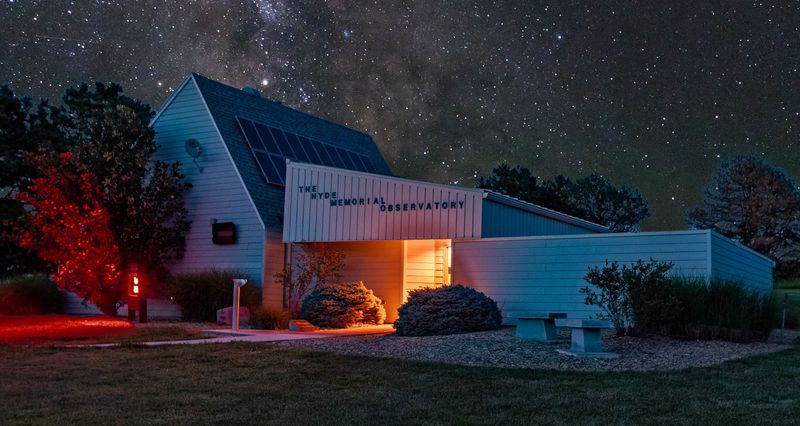
The plan was a quiet walk by the lake, nothing more. Then a small building with a rolling roof caught the last of the sunset, and a line of people was forming outside it.
A few minutes later, Saturn was floating in an eyepiece, rings and all, and nobody asked for a single dollar. Nebraska keeps some of its best surprises under the open sky, and this one happens every Saturday night.
A Small Observatory Beside Holmes Lake
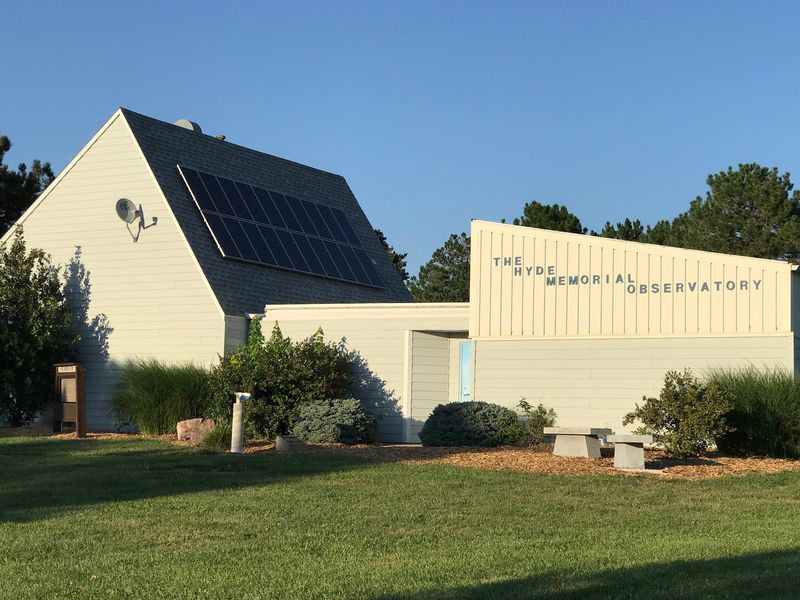
On the southeast side of Lincoln, where 70th Street runs past the grassy edge of Holmes Park, sits a modest building that opens its roof to the stars. Hyde Memorial Observatory is a public stargazing station, built for one purpose: letting anyone look through a telescope for free.
Holmes Lake stretches out nearby, and daytime brings walkers, anglers, and families to the shoreline. After dark, the focus shifts upward.
The observatory opens on Saturday evenings, and the volunteers inside spend those hours pointing instruments at the Moon, the planets, and whatever else the season offers.
What makes it different from a planetarium? Everything here is live.
The light hitting your eye left Jupiter or Saturn minutes or hours ago, traveling across space to land in a small eyepiece in a Lincoln city park. No screen stands between you and the sky.
Plenty of people who have lived in the capital city for years have never noticed the place. It blends into the park landscape so well that the domed roofline looks like a utility shed from a passing car.
That quiet profile is part of its appeal, and part of the fun of finding it.
Built by Donations, Run by the Prairie Astronomy Club
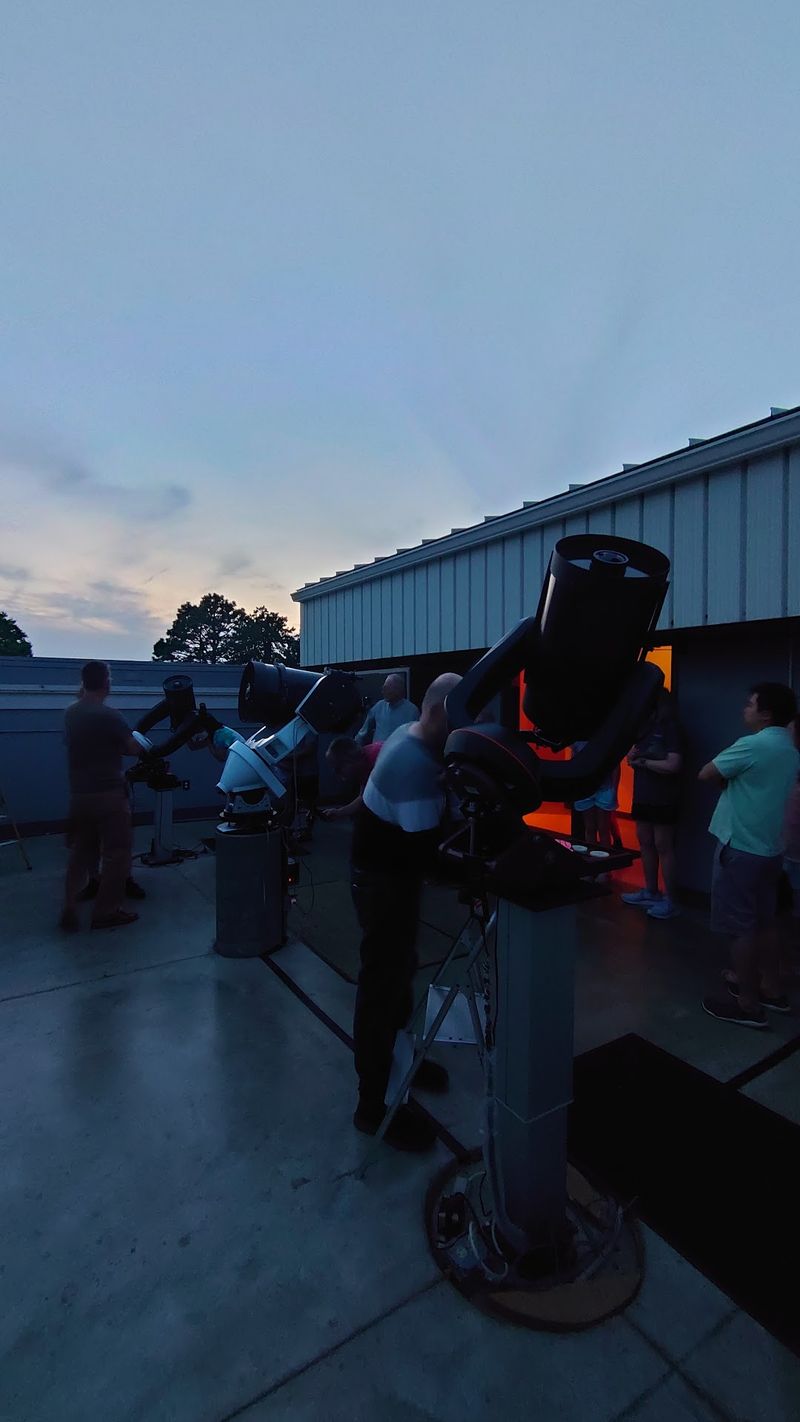
Back in 1977, the doors opened on an idea that still sounds a little unusual: a public observatory paid for by the community and dedicated entirely to public viewing. Hyde Memorial Observatory was built with donations, and donations keep it running today.
No ticket booth greets you at the entrance. Instead, a donation box sits quietly for anyone who wants to help cover upkeep, and giving is completely optional.
The model has held steady for decades, which says plenty about how much Lincoln values the place.
Behind the scenes stands the Prairie Astronomy Club, a group of amateur astronomers who staff the building on Saturday nights. They are not paid.
They show up because they love the sky and enjoy handing that feeling to strangers.
Picture someone who has spent twenty years learning star charts, now patiently helping a nine-year-old find the right eyepiece. That scene repeats week after week.
The volunteers run the telescopes, answer questions, and lead short talks, so the observatory stays a community project rather than a business. It belongs, in a real sense, to everyone in Nebraska who wanders through the door.
The Telescopes Doing the Heavy Lifting
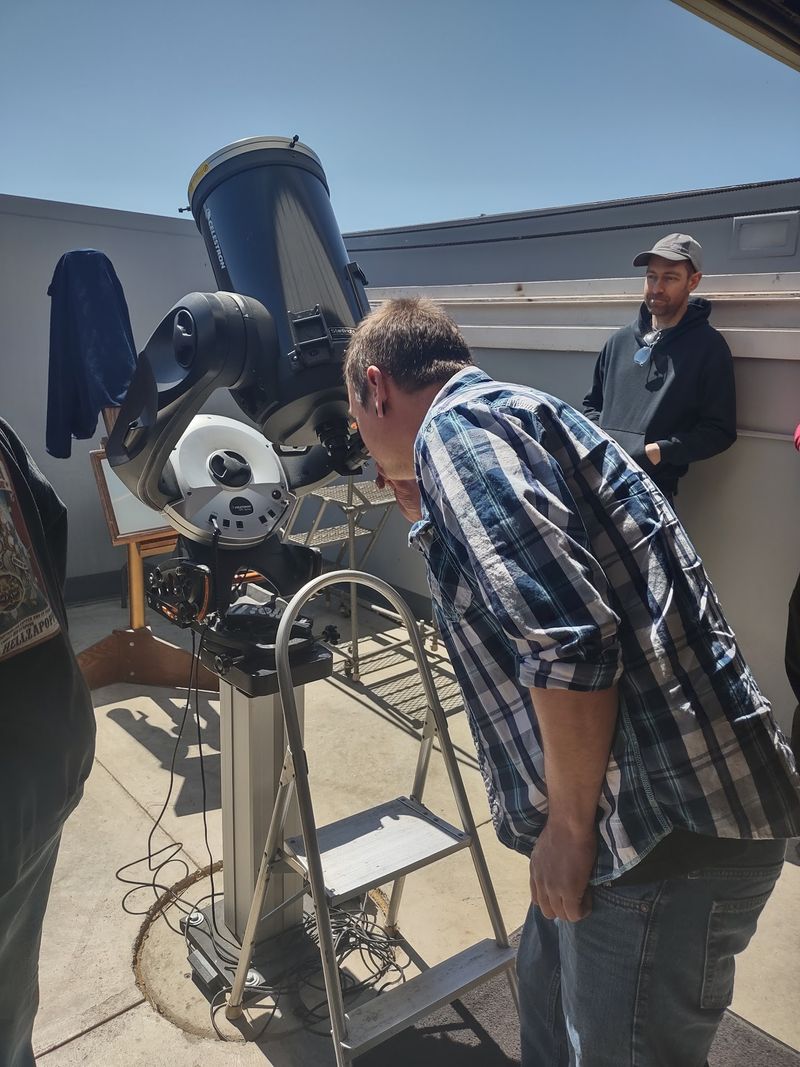
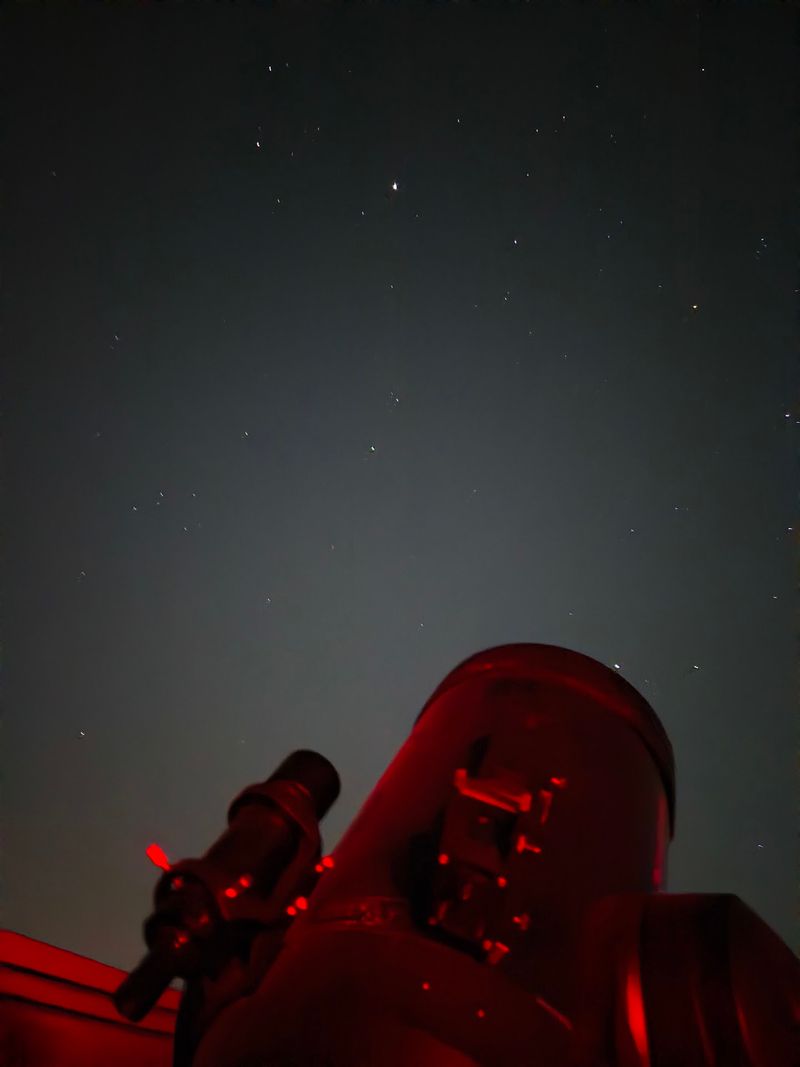
Fourteen inches of glass and mirror make up the biggest instrument on site, a Celestron Schmidt-Cassegrain telescope that gathers far more light than any backyard scope. Next to it sit an 11-inch Celestron NexStar GPS model and a 9.25-inch Schmidt-Cassegrain.
Three telescopes means three different views on a typical night. One might be locked on a planet while another tracks a star cluster and a third sits on the Moon.
You simply move from line to line, taking a turn at each eyepiece.
So what can you expect to see? The Moon and planets are the headliners, and these instruments excel at them.
Craters show sharp shadows along the lunar edge, and Saturn’s rings appear crisp and separate from the planet itself.
Deeper objects are on the menu too. Double stars, glittering clusters, glowing planetary nebulae, and faint distant galaxies can all turn up depending on the season and the sky.
A volunteer usually explains what you are looking at before you lean in, which makes a smudge of light suddenly mean something. Knowing a galaxy is millions of light-years away changes how that fuzzy patch feels.
Planets Up Close, Plus a Classroom for Cloudy Nights
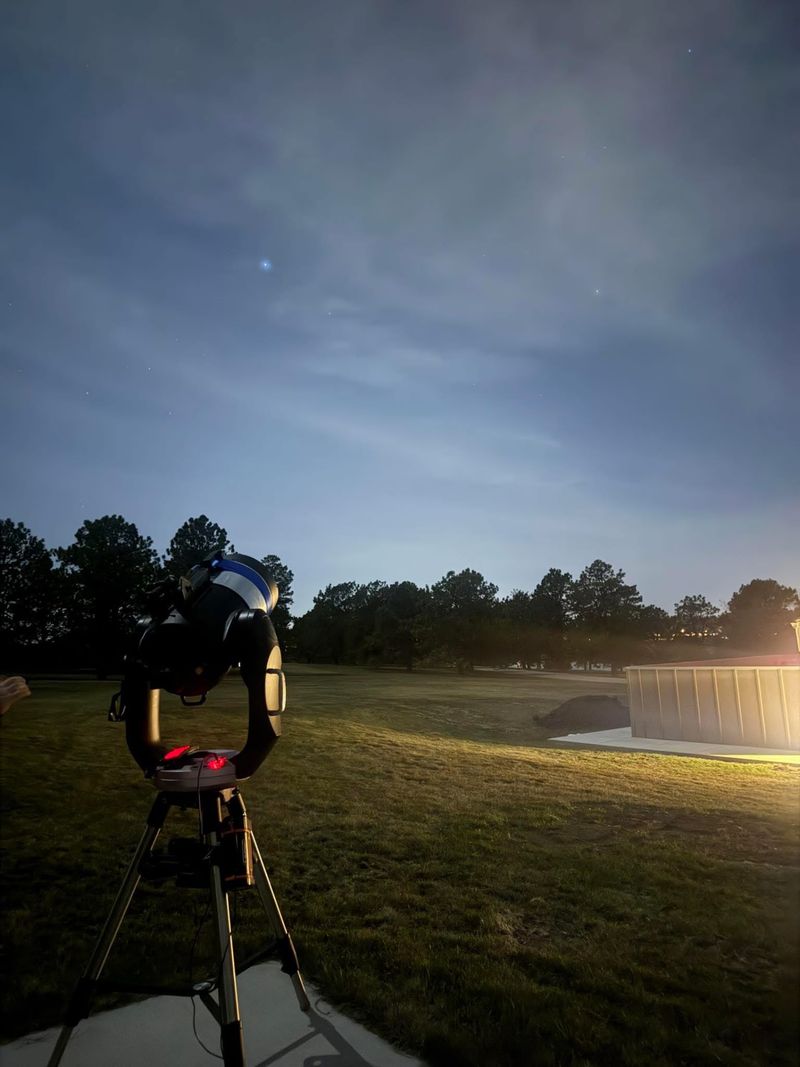
Jupiter showed up even through a thin veil of cloud one recent evening, its bands visible and its moons lined up like tiny beads. Planet nights are the reason many first-timers come, and the payoff is immediate.
Weather in Nebraska does its own thing, though. When drizzle rolls in, the telescopes stay covered to protect the equipment.
That doesn’t end the evening.
A small classroom area in the back keeps the program going. Short films about space play there each week, and volunteers sometimes give brief talks on topics like Saturn or the current night sky.
A monthly star map is also available to carry home, handy for spotting constellations from your own yard.
On partly cloudy nights, the outdoor portion can turn into an informal tour of the sky. A volunteer with a flashlight may trace constellations overhead, pointing out patterns most people drive under every night without noticing.
The mix works well. Clear skies bring the planets, and gray ones bring conversation, video, and a chance to ask every question you’ve been saving.
Checking the forecast before leaving home still helps you plan which version of the night you’ll get.
Volunteers Who Love Every Question
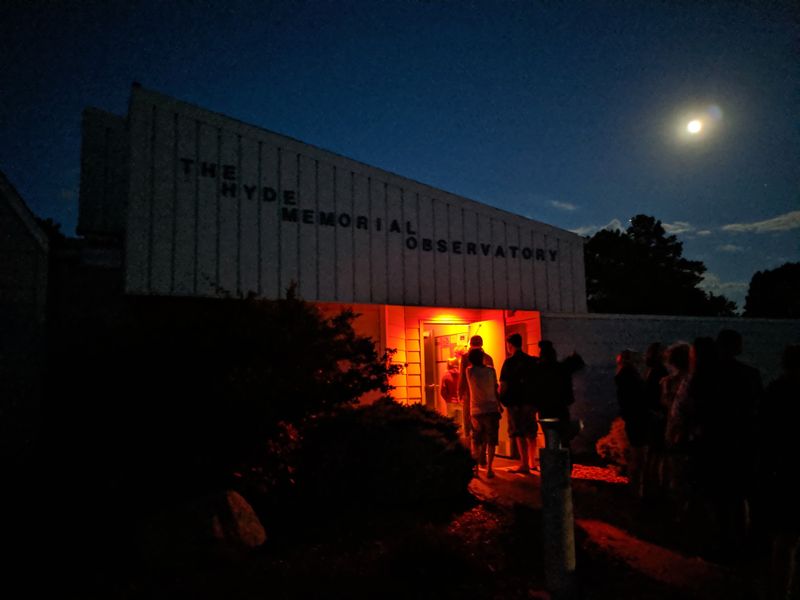
Ask about black holes, the next eclipse, or why Mars looks orange, and someone will light up with an answer. The people staffing Hyde on Saturday nights are patient, well informed, and eager to talk about almost anything related to space.
That energy sets the tone. Nobody rushes you away from the eyepiece or makes a beginner feel silly for not knowing a planet from a star.
Kids are welcome, and the volunteers explain things in plain terms without talking down.
Some of the folks who help today first peered through these telescopes as children themselves. Coming back as adults, now bringing friends for their first look, closes a kind of circle.
It turns the observatory into a tradition passed along rather than a one-time stop.
Special events widen the circle further. During the 2024 solar eclipse, the observatory shared photos and handed out safe viewing glasses to a large crowd, a reminder that this small building can rally a whole neighborhood when the sky puts on a show.
The equipment matters, but the people are the reason the experience sticks. Their enthusiasm is contagious in the best possible way.
Date Nights, Families, and First-Time Stargazers
Tired of dinner and a movie? A Saturday stop at Hyde makes an easy swap, and it costs nothing.
Couples often roll in after an evening out, taking turns at the telescopes and lingering in the classroom for a film.
Low-key is the best word for the mood. Some nights draw a crowd, while others feel almost private, with only a handful of people waiting at each eyepiece.
A short visit of twenty minutes works fine, and so does staying the whole evening.
Families with older children tend to get the most out of it. The later hours can stretch past bedtime for little ones, so younger kids might do better on the earlier end of the schedule.
Grade-schoolers and teens, on the other hand, can soak up the talks and videos.
A few ground rules keep things smooth. Pets are best left at home, since the building uses special lighting and houses expensive equipment.
Red, dim light inside protects night vision, so bright phone screens should stay low.
Winter visits carry their own magic. Cold, crisp air often sharpens the view, so bundling up can reward you with some of the clearest skies of the year.
Planning a Saturday Night at Hyde
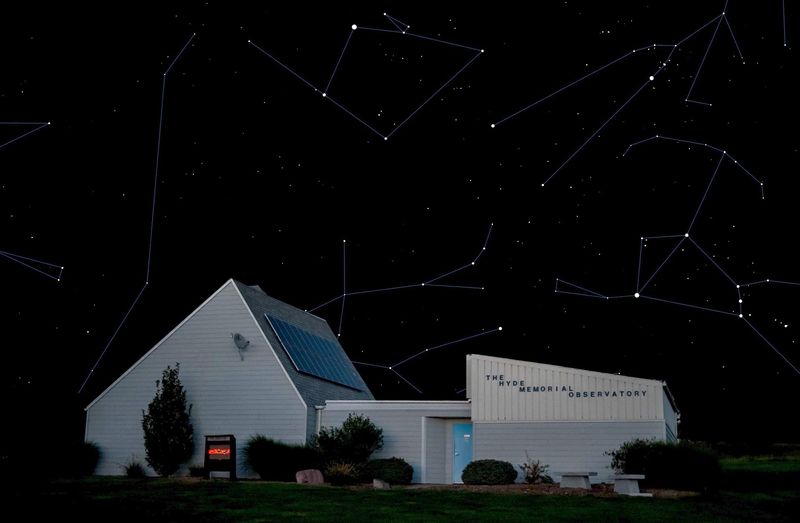
Saturday is the only night the doors open, and the hours shift with the seasons as sunset moves earlier or later. Evening sessions start after dark, so the schedule runs later in late summer and earlier through the colder months.
Because those times change, checking the observatory’s official schedule before you leave is the smart move. Showing up near the end of a posted window can mean finding the door already closed, and nobody wants to cross town for a locked building.
Getting there is simple. The observatory sits at 3701 South 70th Street in Lincoln, inside Holmes Park near the lake, with easy access from the southeast part of the city.
Parking is close by.
Admission is free, full stop. A donation box helps with upkeep for anyone who wants to chip in, but there is no charge to walk in, look through the telescopes, or watch the films.
Arriving during daylight has a bonus. Holmes Lake offers a dock, walking trails, and patches of open prairie where wildlife sometimes appears.
Stroll the shoreline before sunset, then head over to the observatory as the first stars appear overhead.
Why This Lincoln Park Belongs on Your Saturday Plans
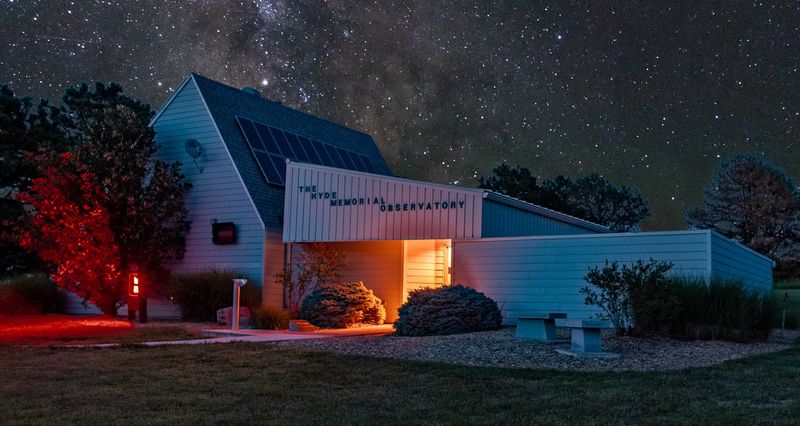
Few things in life are free, and fewer still let you see another planet with your own eyes. That combination alone makes Hyde Memorial Observatory an easy Saturday pick for anyone in or around Lincoln.
Consider what the evening adds up to. A lakeside walk, three serious telescopes, a short space film, a star map to take home, and a room full of volunteers happy to talk astronomy, all without opening your wallet.
It’s hard to find a better deal anywhere in Nebraska.
The experience doesn’t demand much. Bring curiosity, dress for the weather, and check the schedule before you go.
Clear skies deliver planets and clusters, while cloudy nights still offer conversation and learning inside.
Since 1977, the building has quietly done its job, handing the universe to anyone who walks up and asks. Grandparents who came decades ago now bring grandkids, and newcomers keep discovering it for the first time.
Next time a Saturday evening opens up, skip the screen at home. Drive out to Holmes Park, wait for the roof to roll back, and let a volunteer show you Saturn.
The rings look even better in person.