Nearly Two Million People Once Crossed Nebraska Past This Rock Formation Called Courthouse Rock
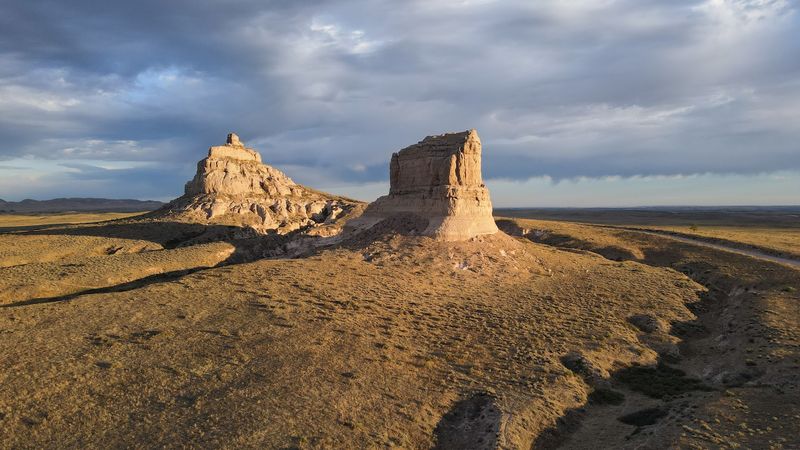
A dirt road, a small gravel lot, and a sign are all you get at first. Then two giant clay towers rise out of the Nebraska prairie, glowing gold in the afternoon sun, and suddenly the drive feels like a discovery.
Long before highways, wagon trains used these same rocks as a signpost pointing west. Standing at their base, it is easy to imagine the dust, the creaking wheels, and the tired families who stared up at the very same view.
Two Towers South of Bridgeport
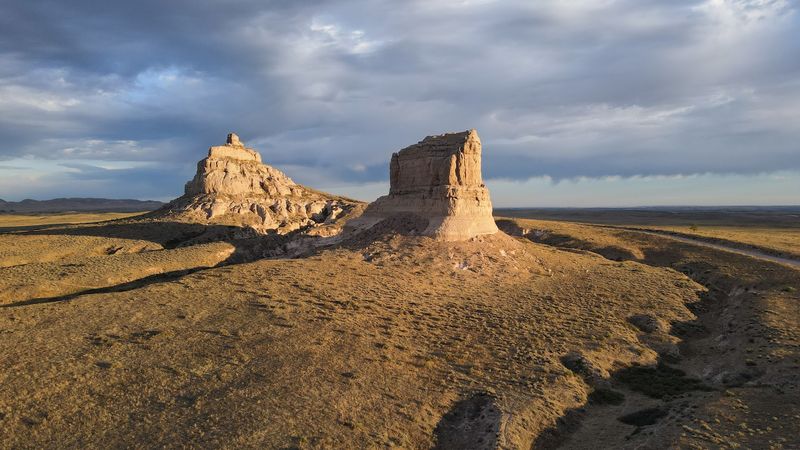
Picture a flat sea of grass in the Nebraska Panhandle, then drop two enormous rock formations right in the middle of it. That is the scene just south of Bridgeport, where Courthouse Rock and its smaller partner, Jail Rock, stand guard over the North Platte Valley.
The pair rises roughly 400 feet above the valley floor and more than 240 feet above nearby Pumpkin Creek. At the top, the elevation reaches about 4,050 feet above sea level, which is a surprising number for a state many people picture as completely flat.
Getting there means following Road 81 to a small parking area. The last stretch is a dirt road, so the approach feels quiet and a little remote, with fields and open sky on every side.
Once the car stops, the rocks feel close enough to touch. There is no gate, no booth, and no building blocking the view.
You simply step out, stretch, and look up. For a place that played such a big role in American history, the setting is refreshingly simple, and that simplicity is part of what makes it stick in your memory long after you drive away.
The First Big Landmark After Weeks of Prairie
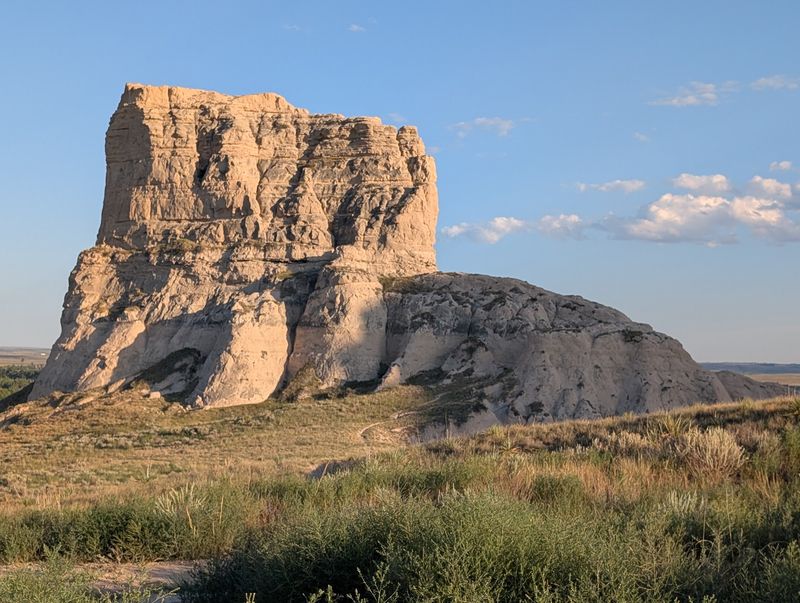
Weeks of walking across endless grass can play tricks on the mind. Pioneers heading west in the 1800s spent day after day crossing the Great Plains, where one mile looked a lot like the last.
Then Courthouse Rock appeared on the horizon. For many emigrants, it was the first major rock formation they had seen since leaving home, and it marked a clear shift from familiar farm country to the rugged, unknown West.
Hundreds of travelers wrote about the rock in their journals and diaries. Some described it as a castle, others as a grand public building, and many simply marveled that something so large could stand alone on the plains.
Their words still survive, giving us a peek into what they felt.
The famous title number, nearly two million people, reflects the huge wave of westward travel that passed along these routes during that era. Not every single traveler walked right up to the rock, of course, but a massive stream of wagons rolled within sight of it.
Standing here now, you are sharing a view with an enormous crowd of people from another century.
Four Historic Trails, One Shared Signpost
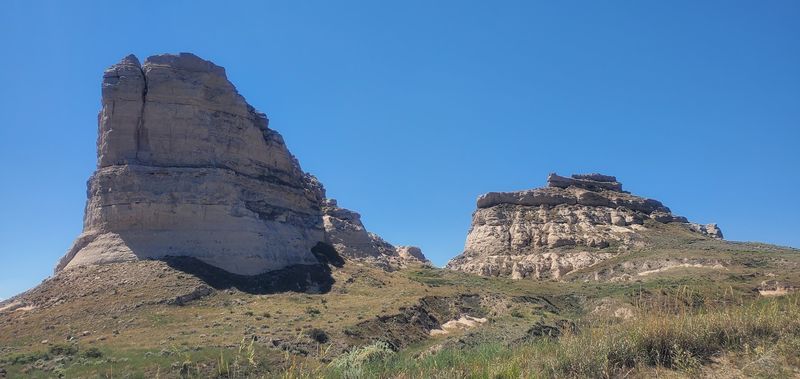
Few spots in America can claim four major trails passing nearby. The Oregon-California Trail, the Mormon Trail, the Pony Express Trail, and the Sidney-Deadwood Trail all ran close to these rocks.
Each route carried a different kind of traveler. Families on the Oregon-California Trail hoped for farmland or gold, while Mormon pioneers were searching for a new home in the West.
Pony Express riders raced mail across the country on fast horses, and the Sidney-Deadwood Trail later carried freight and fortune seekers north toward the Black Hills.
Why did so many paths bend toward the same place? The rocks were easy to spot from far away, which made them a natural guide.
The review signs on site also point out that the formations mark the start of the Wildcat Range, a line of hills used for navigation by wagon trains and settlers.
So when you look at Courthouse Rock, you are really looking at a crossroads. Riders, wagon drivers, and walkers from very different backgrounds all lifted their eyes to this same outline, trusting it to keep them headed the right way across Nebraska.
How a Castle Became a Courthouse
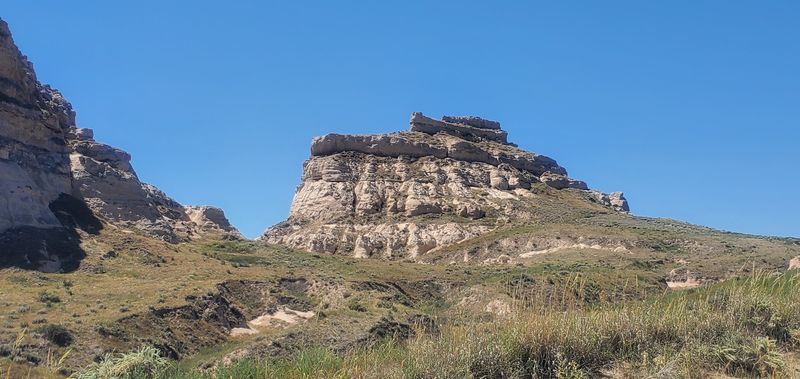
Explorer Robert Stuart recorded the rock back in 1812, but the name we use today took a while to settle. Travelers tried out all kinds of labels first.
Some called it McFarlan’s Castle. Others went with the Solitary Tower, The Church, or The Capitol.
Each nickname came from what people imagined when they squinted at its boxy shape and rounded top, a bit like finding animals in clouds.
The name Courthouse first showed up in 1837, and it stuck for a practical reason. Many emigrants started their journey from Missouri, and the rock reminded them of the courthouse in St. Louis, a building plenty of them had seen with their own eyes before heading west.
Once the big rock became a courthouse, the smaller one beside it needed a matching title. Naturally, it became the Jail, or Jail House.
It is a playful bit of pioneer humor that has lasted for nearly two centuries.
Next time you pass the pair, try it yourself. From certain angles, the courthouse shape jumps right out, and the little jail sits beside it like it was planned that way.
Layers That Read Like a Timeline
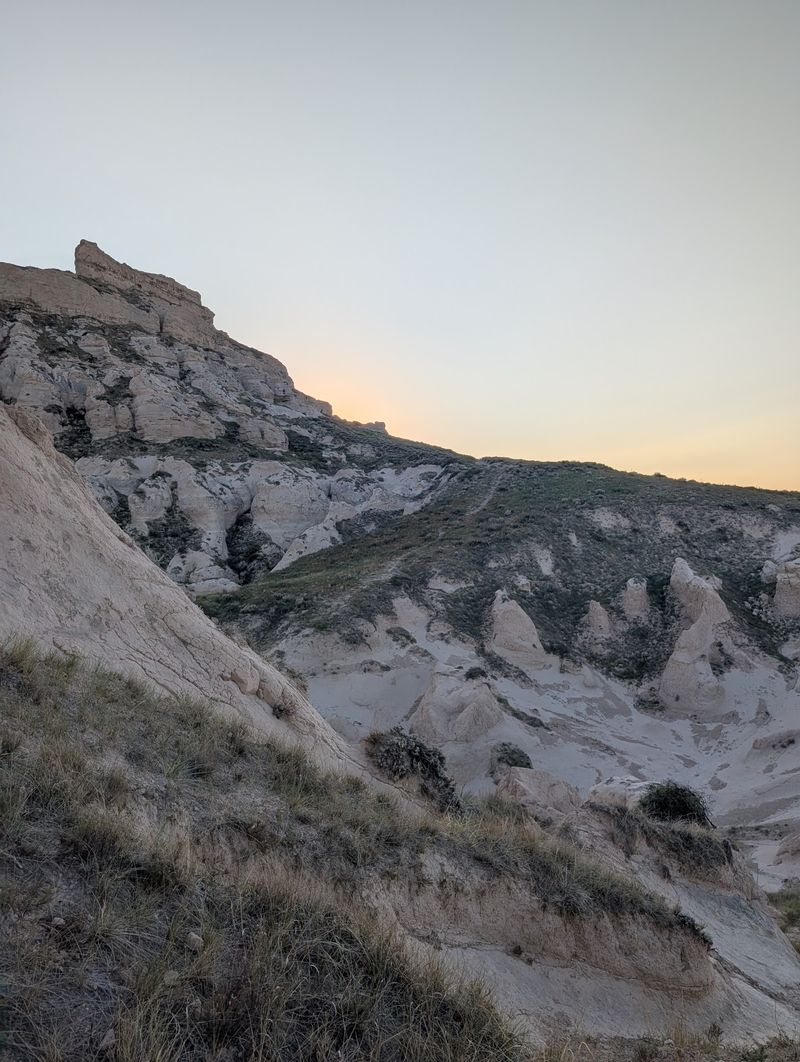
Stripes run across the rock walls like pages in a giant book. Those bands are layers of Brule clay, Gering sandstone, and volcanic ash, stacked up over an almost unimaginable stretch of time.
The sediments near the base date back about 35 million years. That means the bottom of Courthouse Rock was forming long before any human ever set foot in Nebraska, back when the landscape looked completely different.
Volcanic ash is the surprise ingredient here. Nebraska has no active volcanoes, yet ash blew in from eruptions far to the west and settled into these layers.
Over time, wind and water carved away the softer land around the rocks, leaving the towers standing alone.
Kids tend to love this part. Ask them to count the color changes from bottom to top, and you have a free science lesson on the spot.
The same erosion that shaped the rocks is still at work, which is why the formations look a little different with every passing generation.
In short, the rock is both a history marker and a geology classroom, with the lesson printed right on its walls.
Jail Rock, the Smaller Sidekick
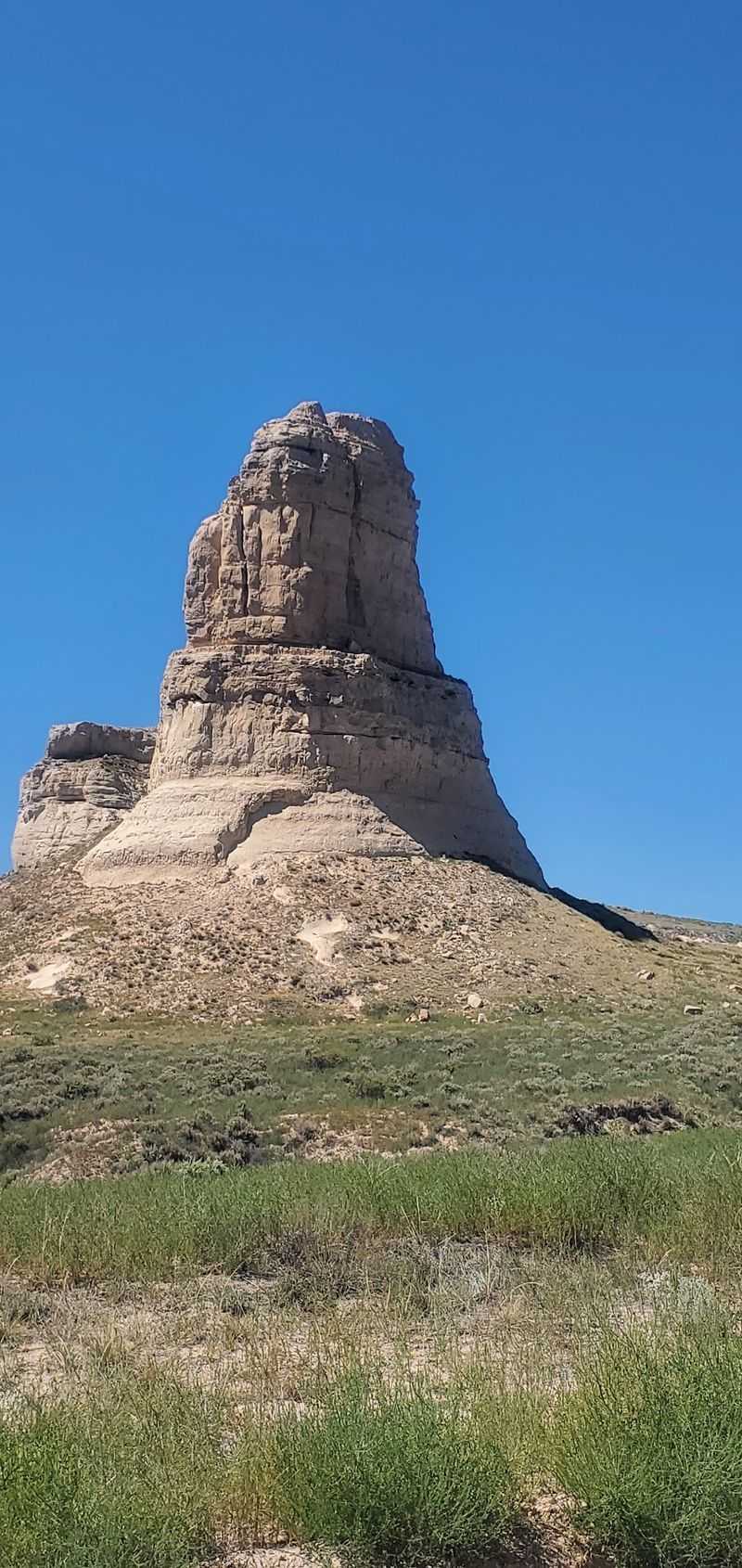
Every famous landmark seems to need a partner, and Courthouse Rock got a good one. Jail Rock sits nearby, shorter and slimmer, but with plenty of personality of its own.
From the parking area, the two look almost like a pair of buildings on a quiet town square. The contrast in size makes the bigger rock seem even grander, while the smaller one adds balance to every photo you take.
Walking the paths gives you a chance to see how their shapes change as you move. From one side, Jail Rock looks like a squat little tower.
From another, it lines up with Courthouse Rock so neatly that the two blend into a single wide silhouette against the sky.
Both formations share the same honors. They are listed on the National Register of Historic Places and on the Nebraska Natural Areas Register, which helps protect them for the future.
Photographers should give Jail Rock some extra attention. Framing it in the foreground with Courthouse Rock behind creates depth and tells the whole story in one shot, the courthouse and its jail side by side on the open prairie.
Short Trails and Side Paths
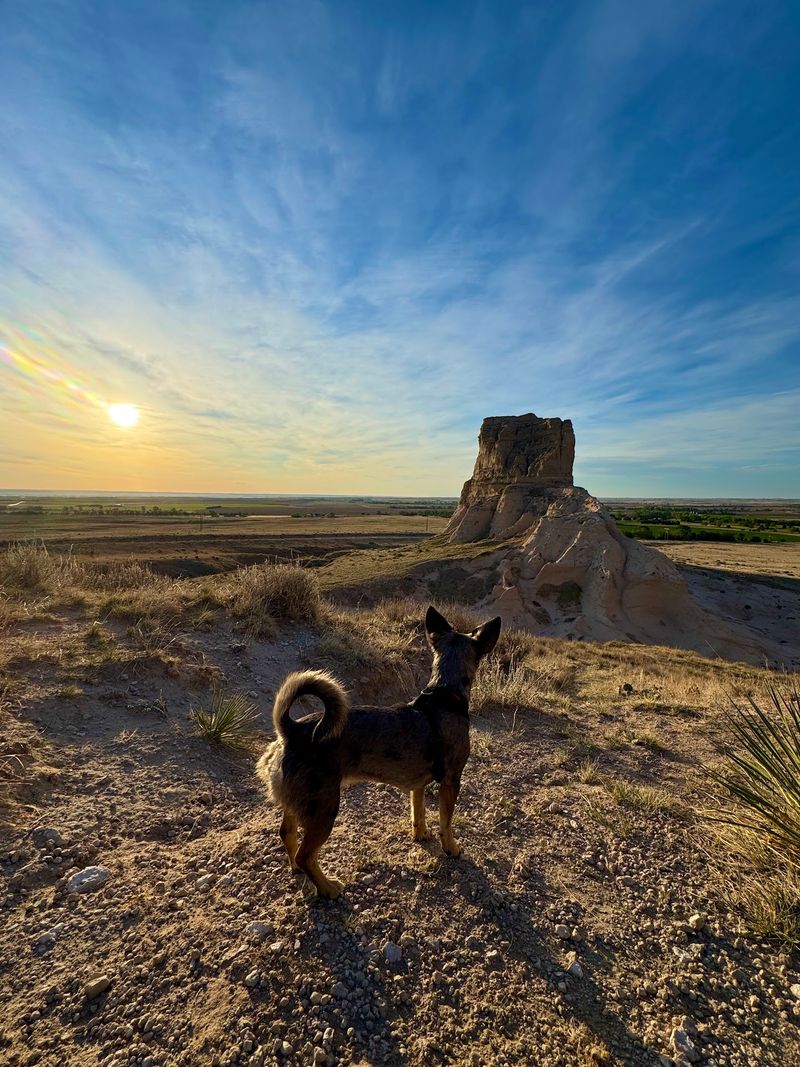
Your legs will thank you after a long drive. A short official trail leads from the parking area toward Courthouse Rock, making it easy to get closer without committing to a long hike.
Beyond the main route, little footpaths branch out in several directions. Each one offers a slightly different angle on the rocks, so wandering a bit pays off with fresh views of the layered walls and the valley stretching beyond.
Some parts of the trail have eroded over time. Sturdy shoes make sense, and it helps to watch your footing on loose or uneven ground, especially after rain.
The distance is friendly for most ages. Grandparents, grade schoolers, and anyone just needing to stretch after hours on the highway can manage a loop and still have energy left for photos.
Since the land is open and grassy, it helps to stay on existing paths to protect the fragile slopes. The rocks have stood for millions of years, and keeping to the trails is a small way to help them last a good while longer.
A quick walk here can easily turn into an hour without you noticing.
Sunset Colors on the Clay
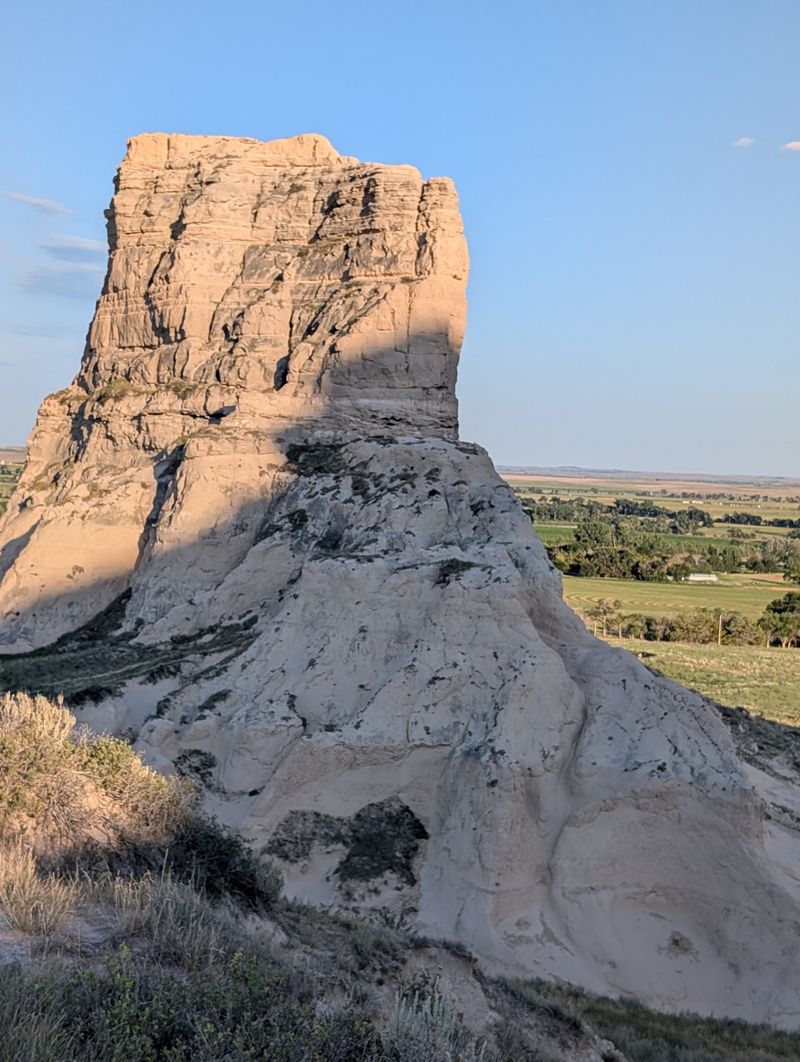
Orange, pink, and deep gold slide across the rock faces as evening arrives. Sunset is one of the best times to come, when the clay seems to glow from the inside.
Daylight hours are the rule here, so timing matters. Arriving an hour or so before dark gives you time to walk the trail, find a good viewpoint, and settle in as the colors shift.
Midday has its own appeal, too. The sun brings out the different tones in each layer, from pale tan to warm rust, and the contrast with blue sky can be striking in photos.
What about clouds? A few scattered ones can make sunset even better, catching light and spreading color across the whole horizon.
The flat land around the rocks means nothing blocks the view in any direction.
Bring a jacket if you plan to stay until the sun dips low, since Panhandle evenings can cool off quickly. Then just stand still and watch.
The same light that painted these rocks for pioneers still does its work every single evening, no ticket required.
Information Signs Instead of a Visitor Center
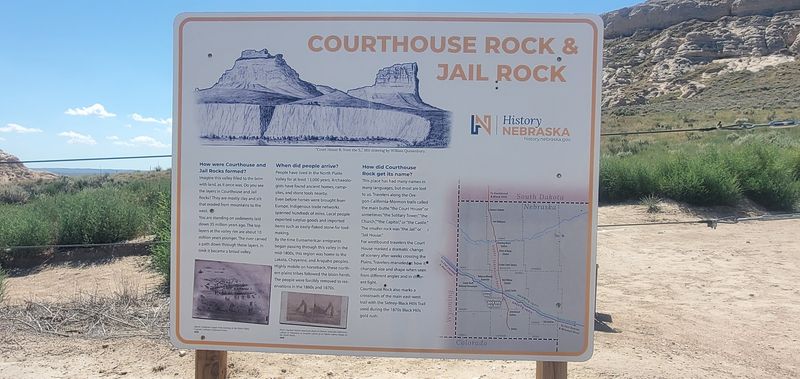
No staff member waits at the lot, and no building offers brochures. Instead, informational signs tell the story of the rocks and how travelers used them.
The signs cover the basics well. They explain the role the formations played in navigation for wagon trains, their connection to the westward trails, and why they stand out so boldly from the prairie.
Reading them first can make the whole stop more meaningful. Once you know that pioneers spotted these towers after weeks of flat land, the view shifts from pretty scenery to a genuine piece of history you can walk around.
For deeper learning, the nearby region holds more trail history. The broader Panhandle has several other landmarks tied to the same routes, making Courthouse Rock a natural first chapter on a longer historical road trip.
Families might turn the signs into a mini scavenger hunt. Challenge kids to find the name of the explorer who first recorded the rock, or the city whose courthouse inspired its name.
It is a fun way to keep young minds curious while everyone enjoys the fresh air and big sky.
A Quiet Stop for Curious Road Trippers
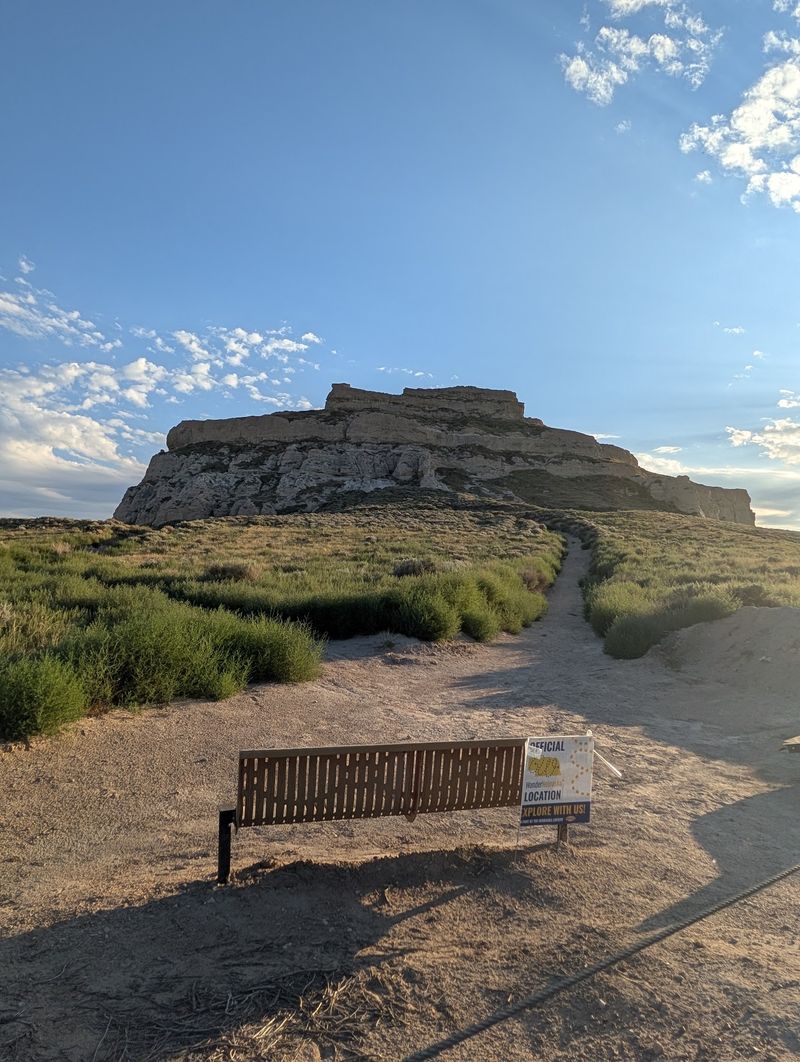
Silence might be the first thing you notice. Out here, the loudest sounds are often wind moving through the grass and the crunch of gravel under your shoes.
The atmosphere suits people who enjoy history without crowds or fuss. Road trippers crossing western Nebraska can pull off for a short break and leave with a much better story than a gas station stop.
History fans get a tangible link to the Oregon Trail era. Photographers find strong shapes and changing light.
Families gain an easy, free outing with open space for kids to move around.
Retirees looking for a relaxed drive with a payoff will find it here, too. The walk is short, the scenery wide, and there is no pressure to rush.
Anyone who grew up in the Panhandle has probably seen these rocks from the road more times than they can count. Pulling in and walking up close, though, feels different.
It turns a familiar shape on the horizon into something with texture, color, and a story that stretches back through generations of Nebraskans and the travelers who came before them.
Planning Your Visit to the Nebraska Panhandle Rocks
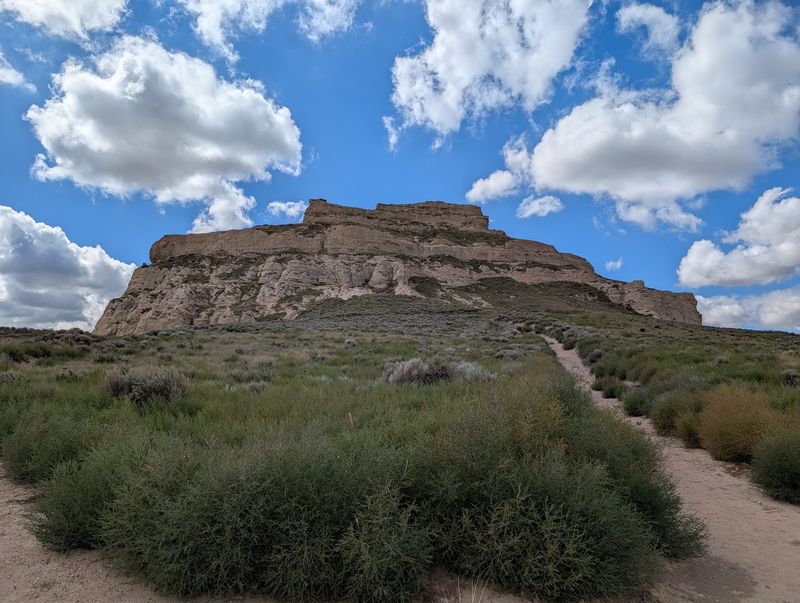
Free is the best price there is. Parking and access cost nothing, with no tickets or entrance fees, so you can walk right up to the rocks whenever the timing suits you.
The site is open year-round during daylight hours. Spring and summer bring green grass, fall adds golden tones, and winter can offer crisp, clear views, though weather may affect the dirt road.
Plan ahead on supplies, because there are no bathrooms, water, or other structures at the site. Filling up water bottles and taking care of restroom needs in Bridgeport before heading out will make the stop much more comfortable.
To get there, head south from Bridgeport toward Road 81. The final stretch is dirt, so drive carefully, especially after rain or snow.
Sunscreen and a hat help in summer, since shade is hard to find on the open prairie. A camera, comfortable shoes, and maybe a small snack round out a simple packing list.
Allow anywhere from a quick half hour to a relaxed afternoon, depending on how much you want to explore the side paths.
Why the Detour Pays Off
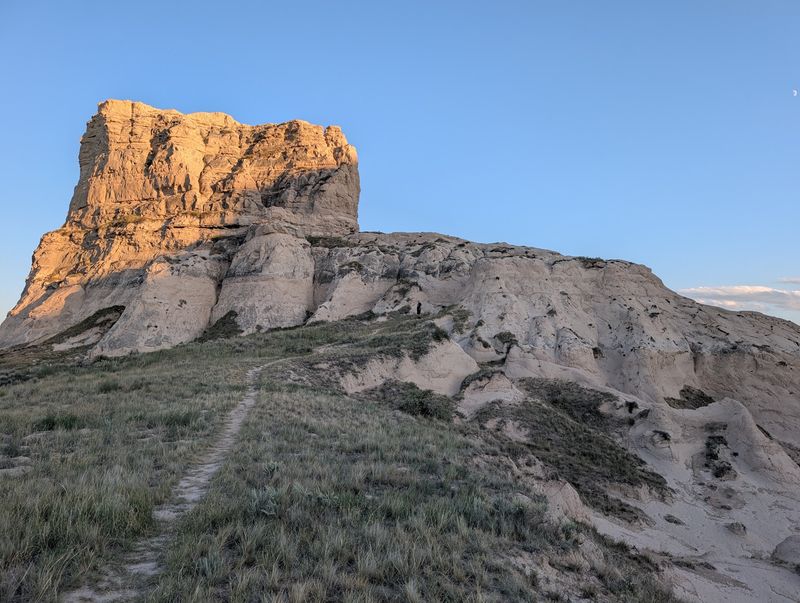
Some places need big buildings and gift shops to make an impression. Courthouse and Jail Rocks do it with nothing more than clay, sandstone, sky, and a story.
Consider what the stop delivers. You get a free walk, a lesson in 35 million years of geology, a connection to four historic trails, and views that shift with every hour of daylight.
That is a lot to pack into a quick detour off the highway.
The lack of facilities means a bit of planning, yet it also keeps the scene close to what pioneers witnessed. No fences crowd the view, and no noisy attractions compete for attention.
Nebraskans often hear that their state is something to drive through rather than stop in. These rocks tell a different story.
For the travelers of the 1800s, this was the moment the journey got exciting, the first sign that the West was truly ahead.
Stand at the base, look up, and you might feel a little of that same spark. It is proof that some of the best parts of Nebraska are sitting right beside the road, waiting for a closer look.