Some Of The Best Pepperoni Rolls In West Virginia Come From A Bakery With Serious Local History
Pepperoni rolls are proof that West Virginia knew exactly how to make lunch portable long before “grab-and-go” became marketing language.
One historic bakery still turns out the simple favorite that became part of the state’s food identity.
Bread wraps around pepperoni, the oils soak into the dough, and somehow something so basic becomes ridiculously satisfying.
The history makes it even better!
These rolls were tied to miners who needed sturdy food they could carry underground, and the idea stuck for good reason.
It is local history you can eat with one hand, which may be the most practical kind of tradition there is.
Where The Story Started
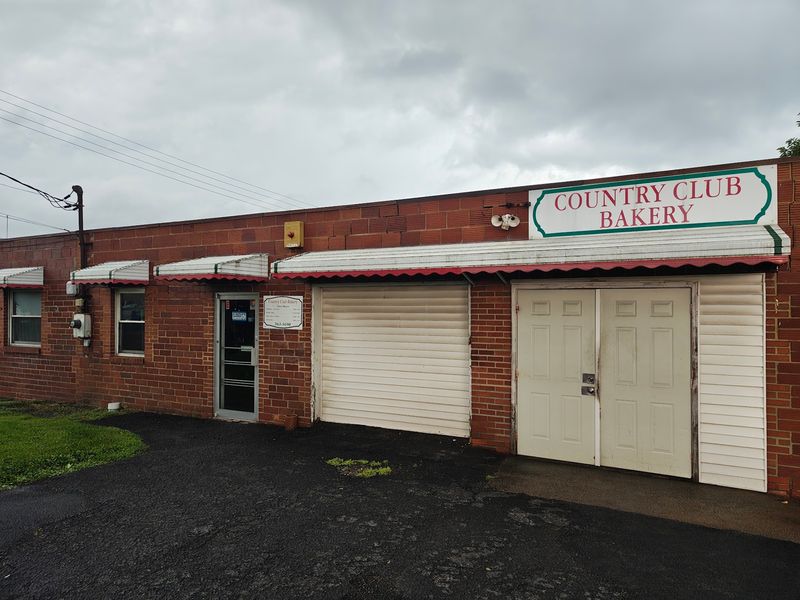
A small bakery can carry a surprisingly big story. Country Club Bakery is closely tied to the early commercial history of West Virginia’s pepperoni roll.
The bakery traces its signature food to Giuseppe Argiro, an Italian immigrant and former coal miner.
Argiro is widely credited with commercializing the pepperoni roll in Fairmont in 1927 after seeing miners eat bread and pepperoni during their workdays.
Baking the two together turned separate lunch-pail staples into one portable roll. The simplicity was part of what made the idea useful.
Fairmont was a fitting place for it to grow. Coal mining shaped the region, while Italian immigrant families brought familiar breads, cured meats, and baking traditions to northern West Virginia.
That background explains more than a recipe. It helps explain why portability mattered just as much as flavor.
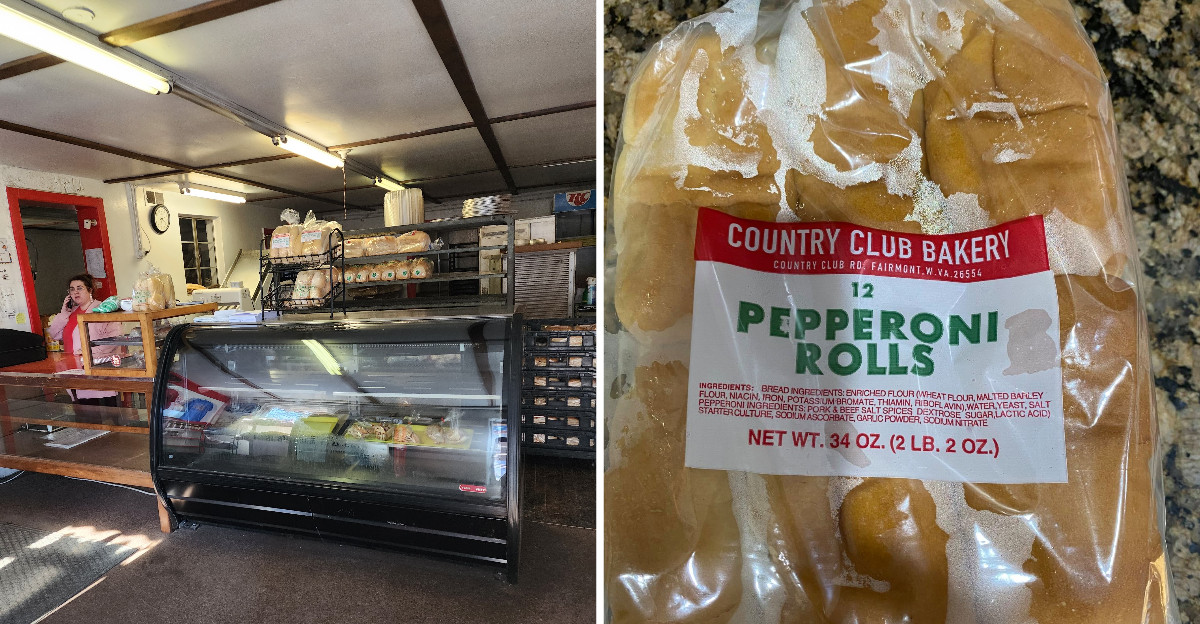
Country Club Bakery continues selling pepperoni rolls from 1211 Country Club Road in Fairmont, nearly a century after the bakery opened in 1927.
Lunch Built For Miners
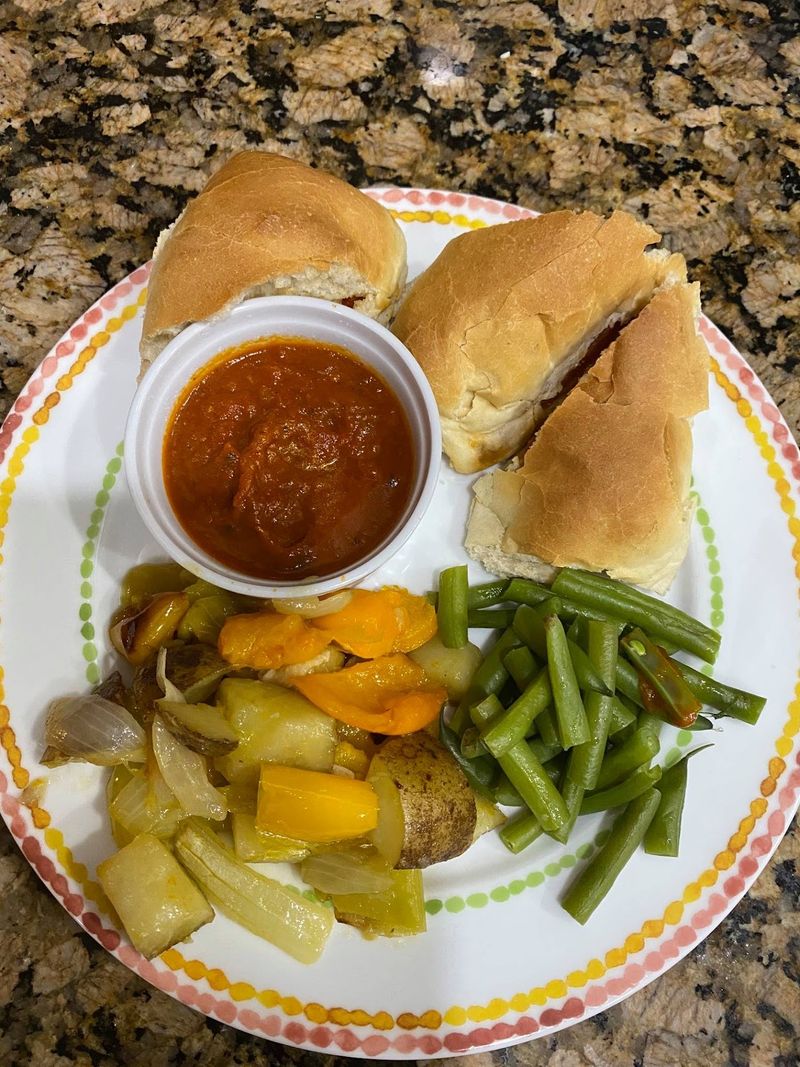
Lunch had to be practical when a workday meant hours underground. The pepperoni roll met that need with cured meat baked directly inside soft bread.
Miners could carry bread and pepperoni together instead of handling two separate foods during a break.
The finished roll fit easily into the lunch-pail tradition associated with West Virginia’s coalfields. No plate, fork, or assembly at mealtime was required.
Country Club Bakery’s history shows how a practical idea could become a lasting food tradition. Argiro had worked as a miner himself, so the lunch habits of coal workers were familiar to him.
Historical accounts describe miners commonly carrying bread and sticks of pepperoni before the bakery began selling the combined version.
The clever part was making those familiar ingredients easier to carry and eat.
That portability remains part of the roll’s appeal today. Country Club Bakery says its rolls contain no preservatives and recommends eating them soon after receiving them or freezing them for later.
The bakery also recommends refrigeration in hot and humid conditions.
Some foods earn attention through complicated recipes. Here, the lasting appeal began with a straightforward answer to an everyday problem.
Bread Does Its Share
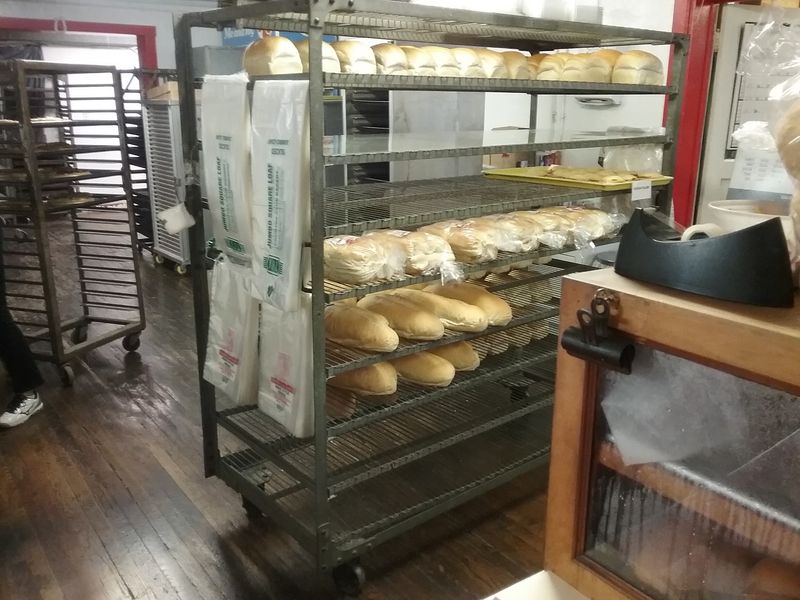
Pepperoni gets top billing, but the bread does plenty of work. Country Club Bakery describes its classic roll as pepperoni baked inside soft white Italian bread.
The bread gives the snack its familiar shape and makes it easy to carry. Its mild flavor also balances the stronger seasoning of the cured meat.
Near the center, the two ingredients become harder to separate.
Baking them together changes the finished roll. As the pepperoni heats, rendered fat seeps into the surrounding dough and carries some of its seasoning with it.
The result is bread flavored during baking rather than a sandwich assembled afterward.
The recipe remains intentionally simple. Bread dough and pepperoni provide the foundation without requiring sauce, cheese, or additional fillings.
That simplicity also makes the traditional Country Club version a useful reference point for comparing the many more elaborate pepperoni rolls now sold around West Virginia.
Sticks Make A Difference
Cut open a traditional Country Club Bakery roll and the filling shows another part of its identity.
The bakery has long used hand-cut sticks of pepperoni rather than spreading thin slices throughout the dough.
That approach distinguishes the classic Fairmont style from versions made with sliced, chopped, or finely distributed pepperoni.
Several sticks run through the soft roll and release their oils as they bake.
Different versions now exist across the state. Some bakeries add cheese, peppers, sauce, or other fillings, while Country Club Bakery remains closely associated with the simpler bread-and-pepperoni approach.
The filling will not necessarily reach every bite in exactly the same proportion, which is part of the structure created by using sticks.
A detail that sounds minor can noticeably change the finished food. Stick pepperoni creates concentrated pockets of meat rather than a uniform layer.
That traditional construction helped turn separate lunch ingredients into one sturdy handheld meal and remains part of the style associated with Fairmont’s earliest commercial pepperoni rolls.
Fairmont’s Edible History
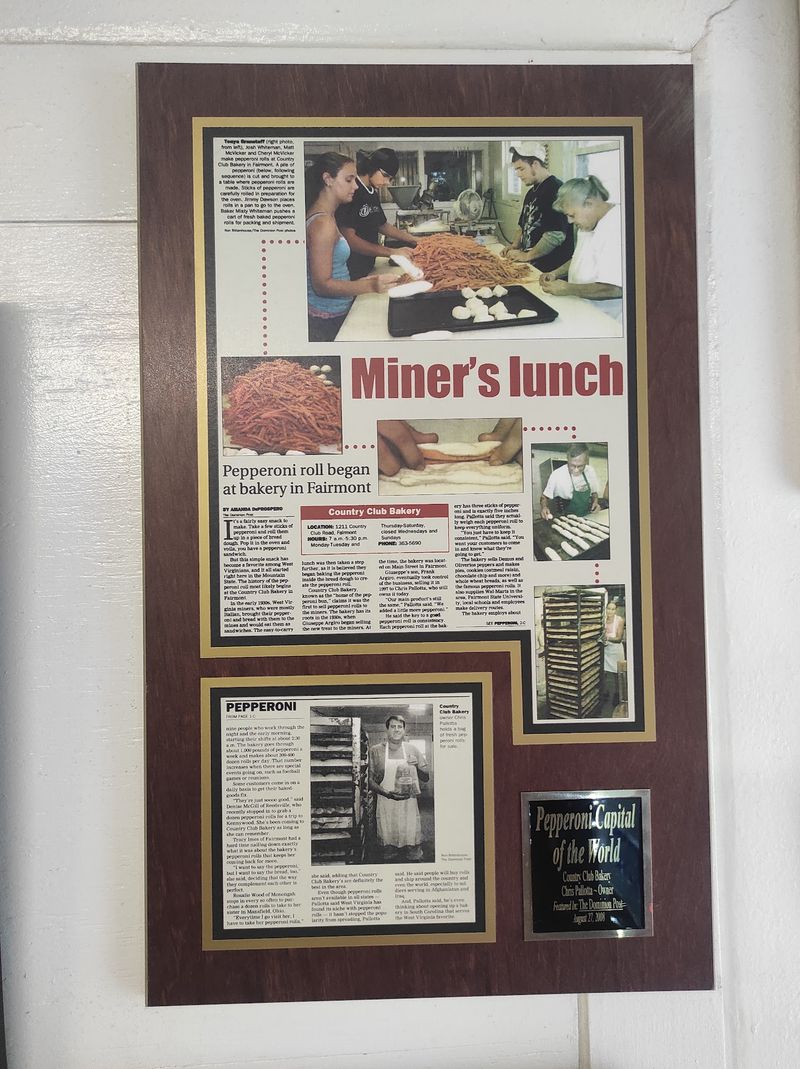
Few foods point back to one West Virginia region as clearly as the pepperoni roll.
Country Club Bakery gives Fairmont a direct connection to the food’s early commercial history.
The roll developed within a community shaped by Italian immigration and coal mining.
Bread and cured meat were practical foods for workers facing long shifts rather than ingredients designed for an elaborate meal.
Portability came first, while statewide recognition followed later.
A Legends & Lore historical marker near Country Club Bakery recognizes those Fairmont roots. Installed in 2019, it describes the pepperoni roll as a West Virginia delicacy created by Italian families in Fairmont to feed local coal miners.
That wording is important because the exact origin is not completely settled.
Country Club Bakery and many historical sources credit Argiro with the 1927 commercial version, while food historians have noted that mining families may have made similar rolls earlier.
The snack eventually spread far beyond its original mining context. Pepperoni rolls now appear across West Virginia in bakeries, restaurants, convenience stores, school menus, and many regional variations.
More Than One Good Bite
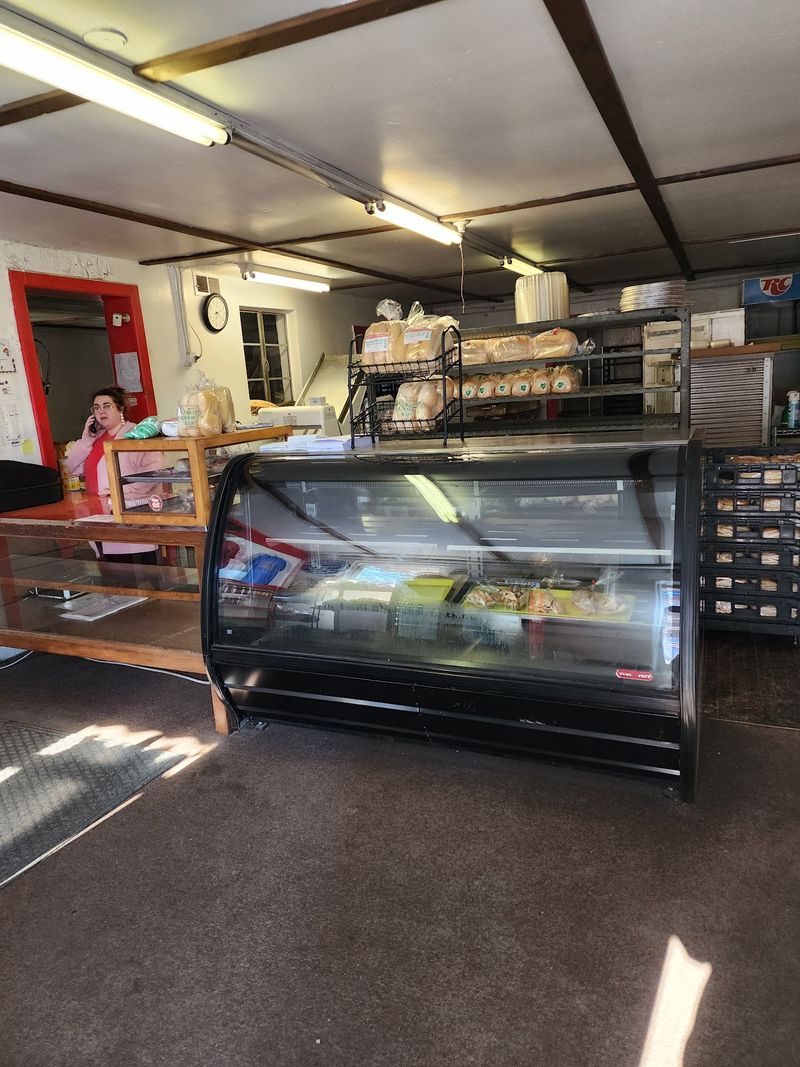
The famous roll may lead the visit, but it does not represent the bakery’s entire current menu.
Country Club Bakery also sells breads, dinner rolls, buns, cookies, cream puffs, and pies.
The available selection gives visitors several options beyond the signature savory item.
Pies currently require advance ordering, while cookies and cream puffs appear on the regular in-store menu.
A dessert can make a useful contrast after the pepperoni roll’s salty, savory center.
Those additional baked goods also show that Country Club Bakery remains a working neighborhood bakery rather than a historical attraction built around one famous recipe.
Bread remains a substantial part of the business as well. Current offerings include homestyle and Vienna loaves, dinner rolls, submarine buns, steak buns, Italian buns, and pizza shells.
Anyone taking pepperoni rolls home should also keep the bakery’s storage guidance in mind. Because the rolls contain no preservatives, the bakery recommends freezing extras that will not be eaten soon.
That advice is especially useful when buying by the dozen rather than stopping for a single roll.
Plan A Tasty Stop
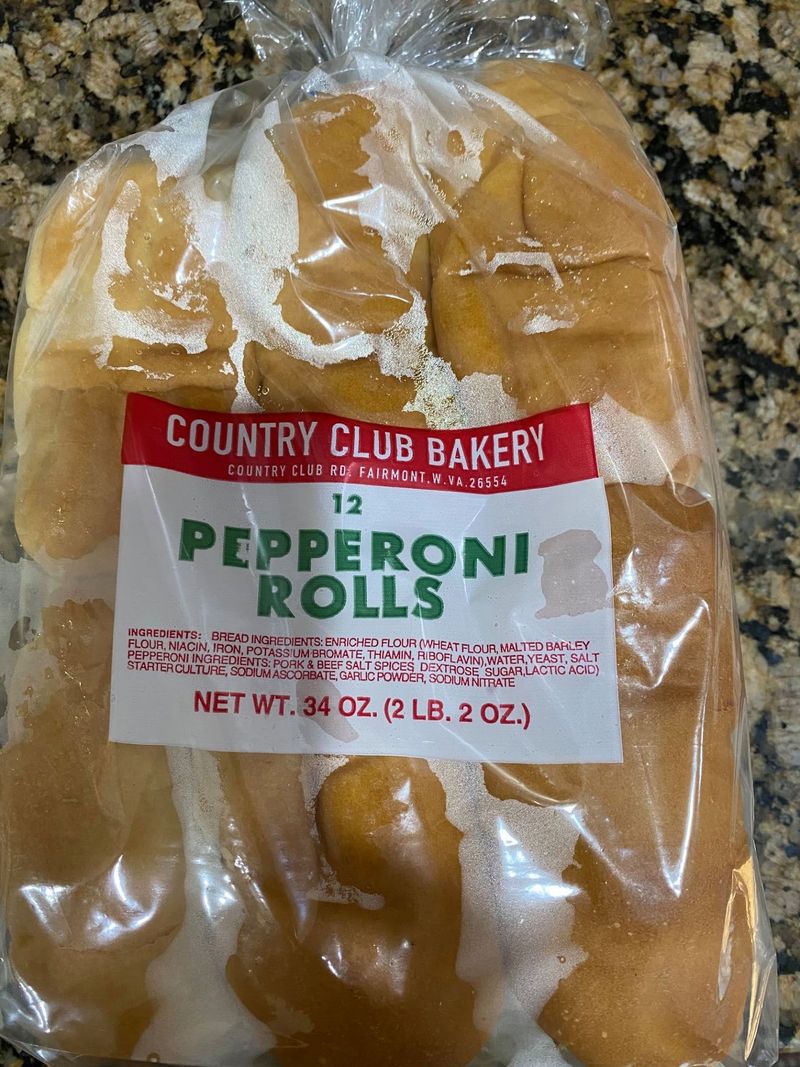
Country Club Bakery works better as a quick bakery stop than as a long restaurant meal.
Its signature product was designed to travel, and the business remains centered on baked goods for pickup.
The bakery’s official site currently lists hours from 7 a.m. to 5:30 p.m. on Monday, Tuesday, Thursday, and Friday.
Wednesday is closed, while Saturday hours run from 7 a.m. to 2:30 p.m.
That schedule makes timing worth considering before a long drive to Fairmont.
Pepperoni rolls are sold individually and by the dozen on the current in-store menu. The bakery also maintains online ordering for larger quantities and shipped orders.
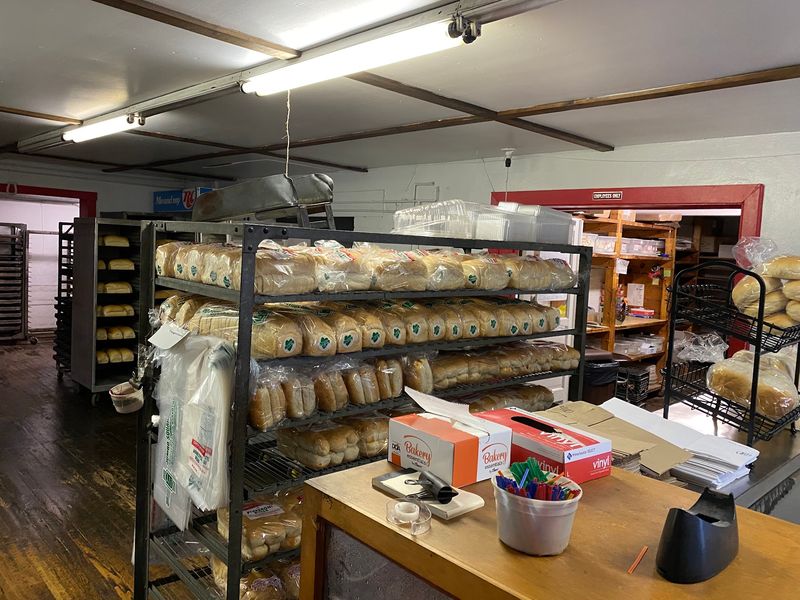
Fresh rolls come out of the ovens throughout the business day. Country Club Bakery says the rolls sold in the store are baked continuously so customers receive them fresh.
The modest setup fits the history of the food. Pepperoni rolls were created around portability rather than a formal table, and the bakery still emphasizes that practical character.
The traditional version is sold without elaborate toppings, allowing the soft bread and pepperoni to remain the focus.
A Tradition That Travels
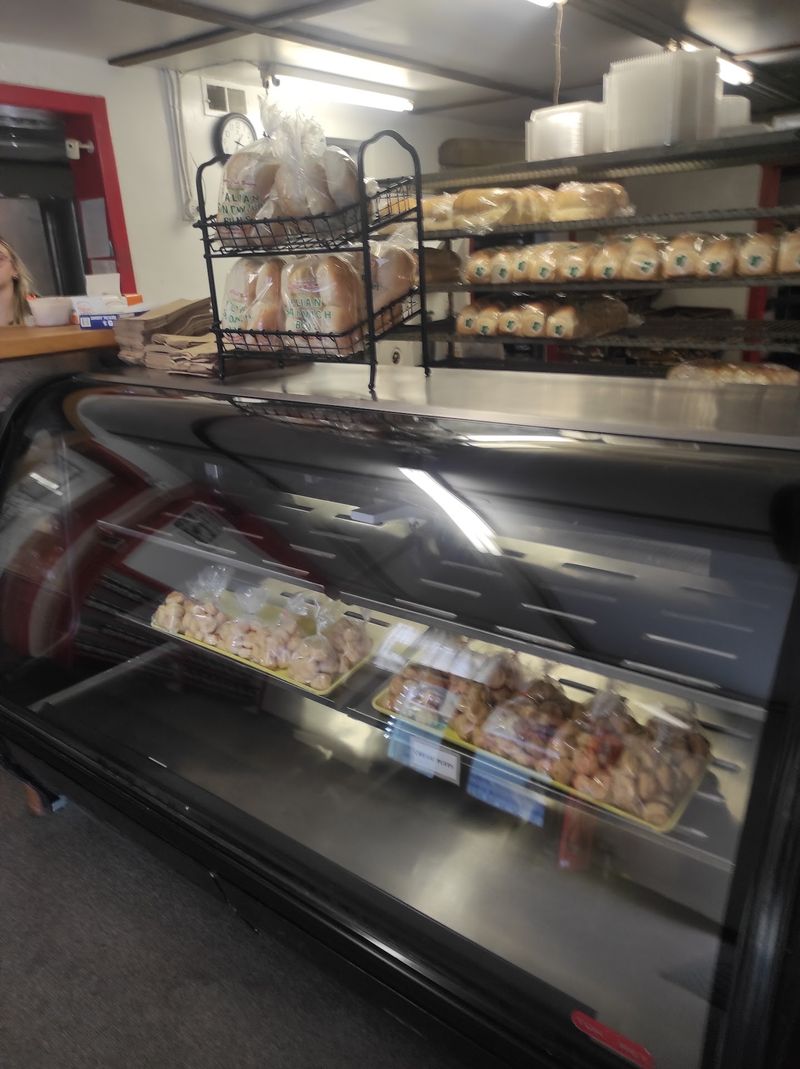
The pepperoni roll began as food designed to travel, and Country Club Bakery still sends its signature product far beyond Fairmont.
The bakery currently advertises shipping several times each week to customers in all 50 states. Its online ordering menu lists one-, two-, and three-dozen shipping options, although product availability can change.
That reach gives people outside West Virginia a chance to try the bakery most closely associated with the commercial beginnings of the pepperoni roll.
Taking rolls home from Fairmont works just as naturally. Their compact shape was part of the original appeal, and the same design makes them easy to carry on a road trip today.
For longer storage, the bakery recommends freezing rolls that will not be eaten shortly after purchase or delivery.
The history comes full circle neatly. A portable food connected to local coal workers now travels across the country for an entirely different reason.
The bakery opened in 1927, became closely identified with Fairmont’s pepperoni-roll tradition, and continues selling the simple bread-and-pepperoni combination that helped the food spread across West Virginia and beyond.