9 Connecticut Churches To Visit For Some Of The State’s Most Unusual Architecture
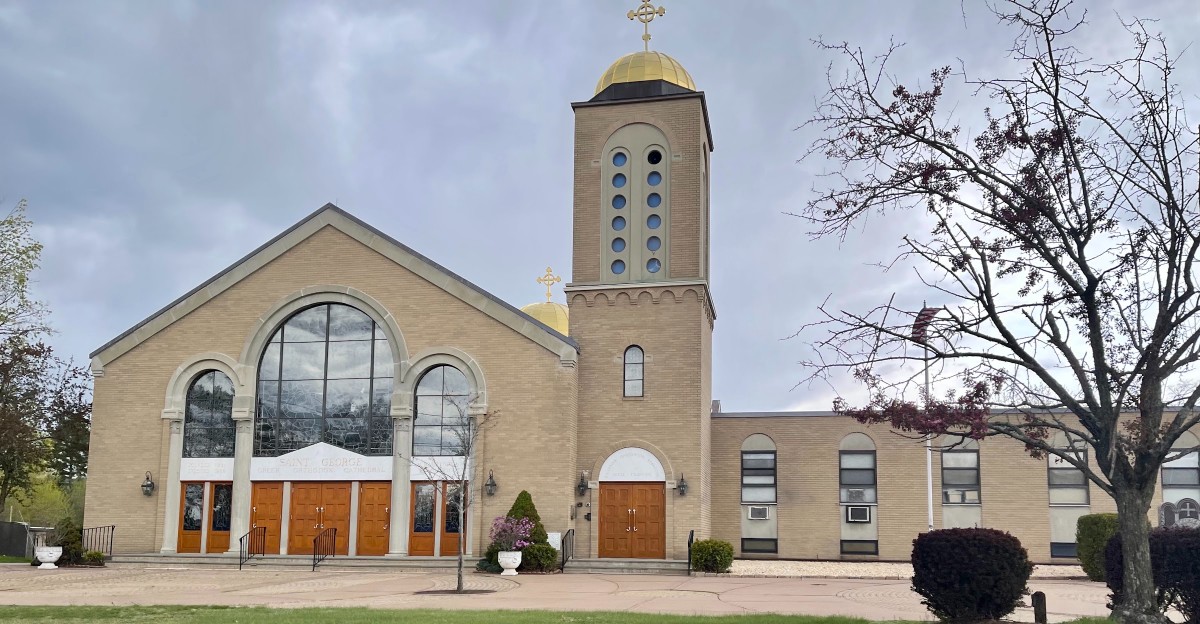
Look up. That might be the best advice when exploring the churches on this list.
Unexpected shapes and striking details can make a building fascinating before you know anything about its history. Some designs immediately stand apart from the familiar white-steeple image associated with New England.
Connecticut has churches where unusual architecture makes the buildings compelling stops for anyone interested in design and local history.
Each reflects different ideas about what a sacred space can look like. That variety is precisely what makes comparing them interesting.
You might notice an unconventional exterior first, then discover that the interior takes the design in another direction entirely.
Architecture can communicate a surprising amount without saying a word.
The churches ahead are worth examining slowly, because the most memorable feature is not always the obvious one. Sometimes the detail that stays with you is hiding high above eye level.
1. Cathedral Of Saint Joseph, Hartford
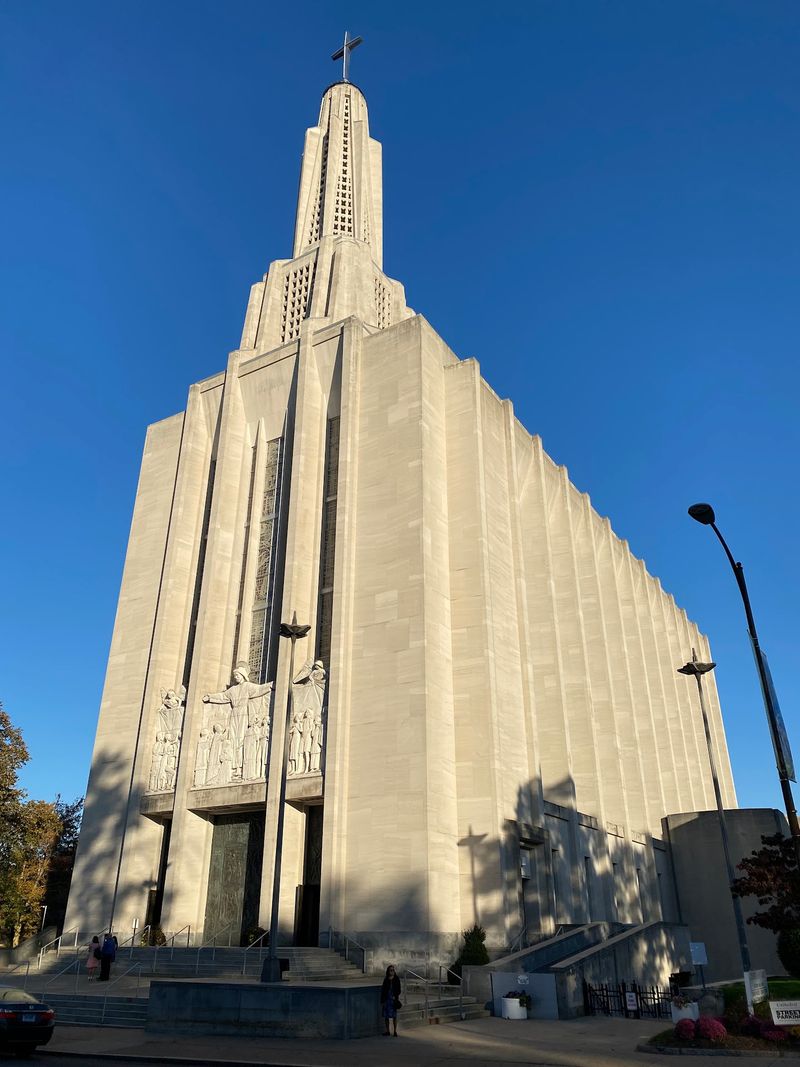
Look up and the scale hits fast. The Cathedral of Saint Joseph rises 281 feet above the sidewalk, crowned by a 25-foot stainless-steel cross that makes the building hard to miss. Yet the real surprise waits beyond its limestone exterior.
Its story began again after the original Gothic cathedral was destroyed by fire on New Year’s Eve in 1956. Rather than recreate the old building, church leaders chose a contemporary design by New York architects Eggers and Higgins.
The completed cathedral was consecrated on May 15, 1962, bringing a dramatically different look to the same historic site.
Inside, the soaring nave feels even larger because supporting pillars do not interrupt the view. Huge stained-glass windows designed by Jean Barillet of Paris rise 67 feet high, using thick pieces of colored glass set into reinforced concrete.
Sunlight turns them vivid, filling the interior with rich color and drawing attention high above the pews.
The cathedral remains the mother church of the Archdiocese of Hartford and an active place of worship. Its address is 140 Farmington Avenue, Hartford, making it an easy architectural stop to add while exploring the city.
A bright afternoon can show off the stained glass beautifully. Check the schedule before visiting so your sightseeing does not overlap with Mass or another special service.
2. Dixwell Avenue Congregational United Church Of Christ, New Haven
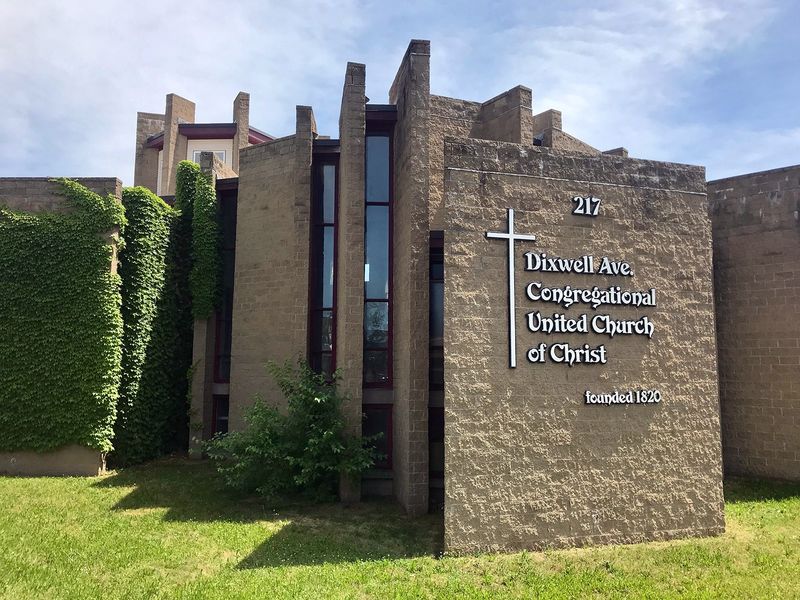
Concrete can tell a story too. At this New Haven church, rough gray walls fan out from the center like the spokes of a wheel, and the result feels more like a modern sculpture than a traditional meeting house.
The building was finished in 1969 during a period of urban renewal in the Dixwell neighborhood. Its design is a strong example of Brutalism, a style that shows off raw concrete instead of hiding it.
The church sits in a sunken plaza, and small bridges lead visitors from the street to the main level, which makes arriving feel like crossing into a special space.
Inside, a roughly circular lantern at the center acts as a light well, pouring daylight down into the sanctuary. The tall window bays along the sides also hold offices, classrooms, and meeting rooms, so the design is practical as well as dramatic.
History makes this stop even more meaningful. The congregation began in 1820 and is recognized as the oldest African American Congregational United Church of Christ in the world, with ties to the Underground Railroad and support for the Amistad Africans.
You will find it at 217 Dixwell Ave, New Haven, CT 06511, and it joined the National Register of Historic Places in 2018.
3. St. Sergius Chapel, Southbury
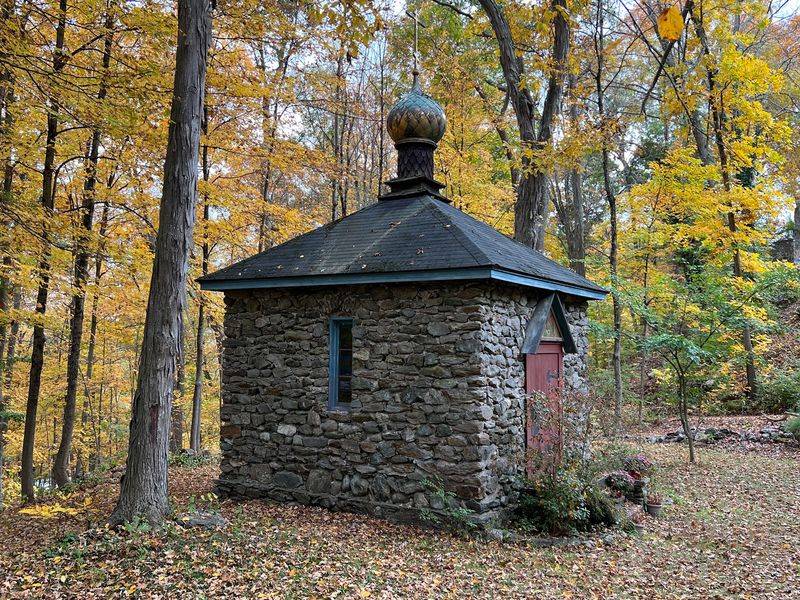
A golden onion dome is not what most people expect to spot on a wooded road in western Connecticut. Yet there it is, shining above a tiny stone chapel that looks as if it traveled straight from the Russian countryside.
The chapel stands in Southbury’s Russian Village Historic District, a community started in the 1920s by Russian emigrants who wanted a place for writers, artists, musicians, and scientists to gather. Residents helped build the chapel with their own hands in the early 1930s.
It was also meant as a memorial to a famous Moscow cathedral that had been torn down in 1931.
Look closely at the walls and you will see rough, uneven fieldstone. A hipped roof rises to the gilded dome, which carries a Russian Orthodox cross on top.
Because the building is so small, the builders added an outdoor amphitheater with curved stone benches facing it, letting a larger group gather under the open sky.
The address is 85 Russian Village Rd, Southbury, CT 06488. This is a quiet residential area, so drive slowly, park considerately, and enjoy the view respectfully.
Visiting in fall adds colorful leaves around the stonework, making the gold dome glow even brighter against the trees.
4. First Church Of Christ Congregational, Farmington
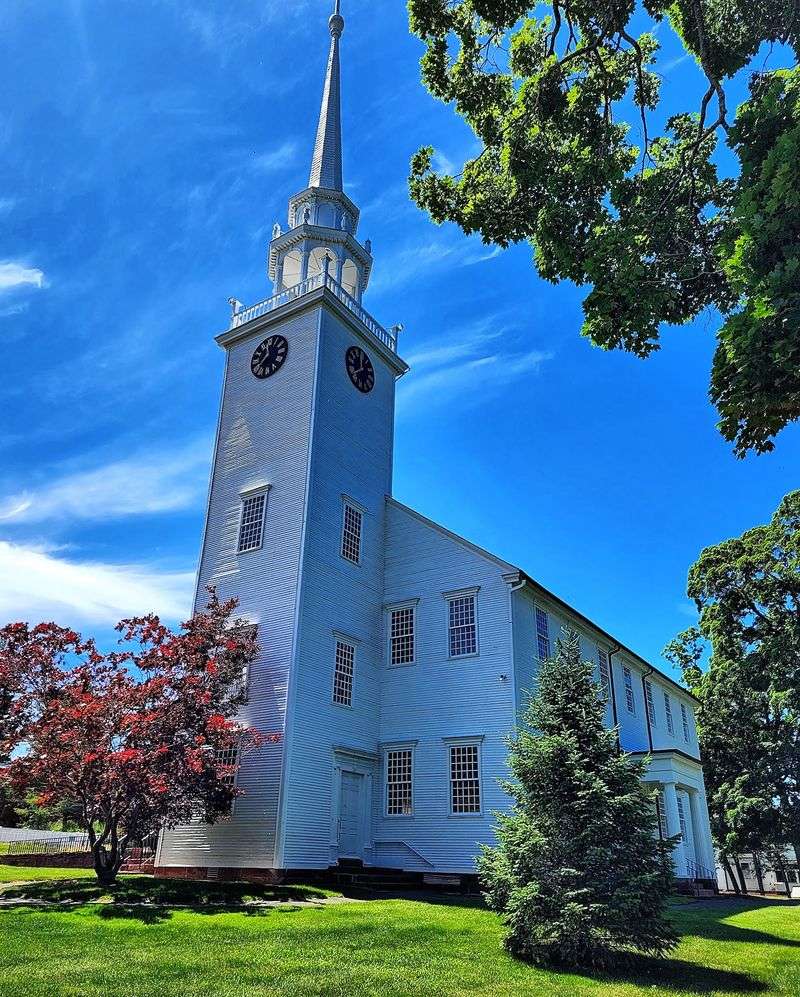
Sometimes the most surprising building is the one that has barely changed in 250 years. Farmington’s white meetinghouse, completed in 1771, still greets travelers with a tall, graceful steeple that ranks among the finest of its era in New England.
What makes it unusual is its survival. Many colonial meetinghouses were torn down, rebuilt, or remodeled beyond recognition, but this one kept its classic form.
The steeple rises in stages, each one narrower than the last, and the wooden details show the skill of local builders working long before power tools existed.
The history inside these walls is just as powerful. In 1841, the Africans freed after the Amistad case lived in Farmington while waiting to return home, and they attended services at this church.
The town became an important stop connected to the antislavery movement, and learning that story adds real weight to a visit.
You can find the meetinghouse at 75 Main St, Farmington, CT 06032, in a village center that is pleasant to explore on foot. Old homes and shady sidewalks make it easy to turn the stop into a relaxed walk.
Since the church still holds services, check ahead if you hope to peek inside.
5. St. Mark’s Episcopal Church, New Canaan
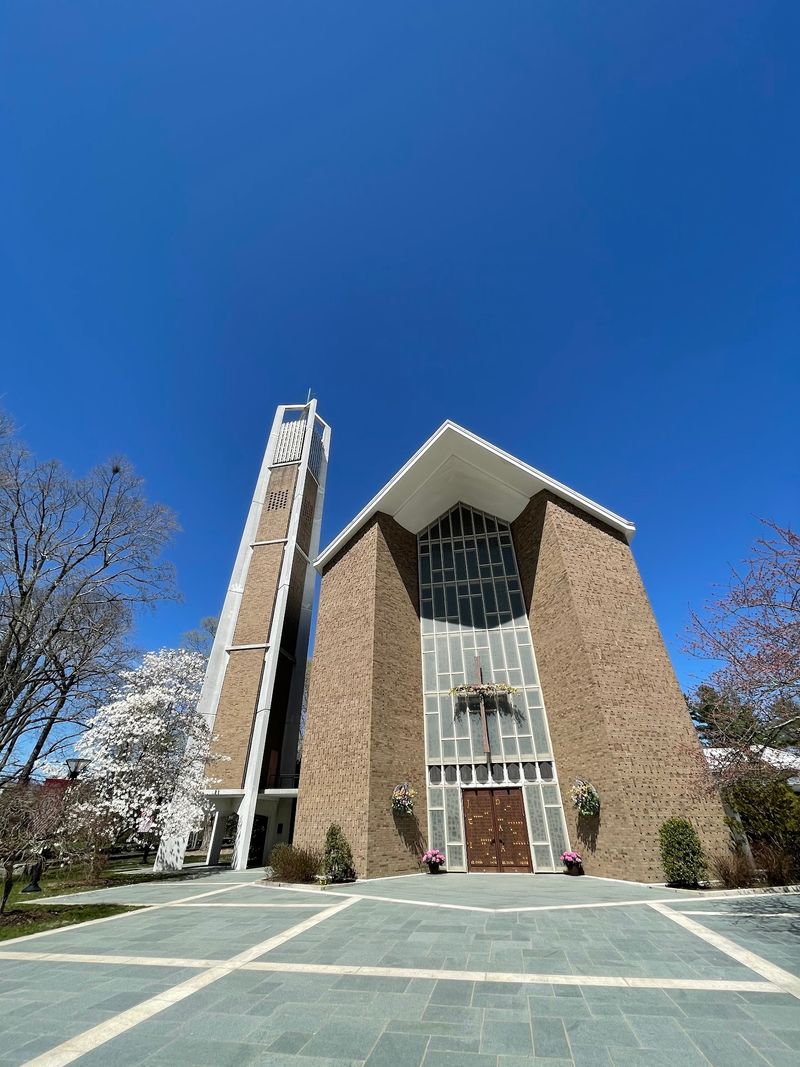
New Canaan earned a reputation in the mid-1900s as a hotspot for modern design, and St. Mark’s fits right into that story. Instead of a copy of an old English parish, the congregation chose a striking contemporary building for its home on Oenoke Ridge.
The church dates from around 1960, a time when architects across the country were experimenting with new shapes for worship spaces. Here, bold rooflines, open interiors, and large expanses of glass invite natural light in and connect the sanctuary to the green surroundings.
The effect is bright and airy rather than dark and heavy.
Why should design lovers care? Because the town is famous for its collection of modern houses, and this church offers a chance to see that same forward-thinking spirit applied to a sacred building.
It makes a great companion stop if you are already exploring New Canaan’s architecture.
Plan your visit to 111 Oenoke Ridge, New Canaan, CT 06840, with the church’s schedule in mind. Like the others here, it is an active parish with services, music programs, and community events.
Weekday afternoons are often calmer, and a quick call to the office can let you know whether the sanctuary is open to guests that day.
6. Christ Church Cathedral, Hartford
Can a church be a trendsetter? This one certainly made an architectural splash.
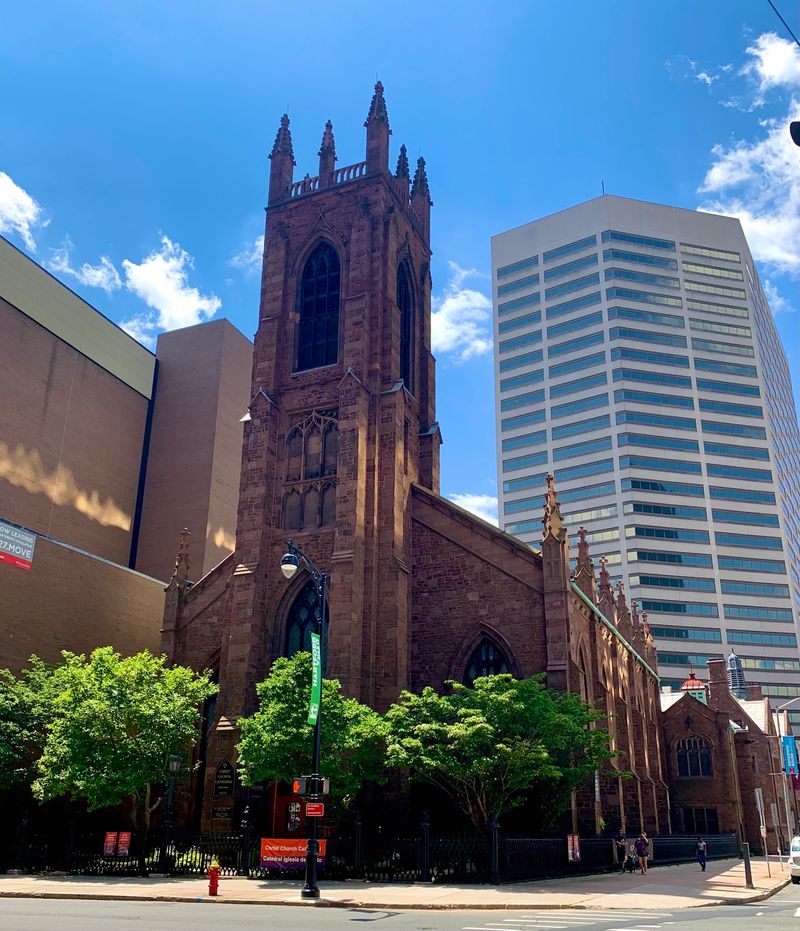
Christ Church Cathedral brought a dramatically different look to Hartford when simple meetinghouses were still a familiar sight across New England.
Built between 1827 and 1829, the church became an important early example of Gothic Revival architecture in the United States. Pointed arches, tall windows, and medieval-inspired details gave people something far different from the restrained church designs common at the time.
Its tower was completed later, adding another defining feature to the exterior.
The cathedral still rewards a closer look today. Head indoors and the Gothic influence continues through the arches, windows, and other architectural details.
It also remains an active Episcopal house of worship, giving this historic building a role that extends well beyond sightseeing.
Its downtown setting makes it especially easy to work into a day of exploring. Christ Church Cathedral stands at 45 Church Street in Hartford, close to several other notable city landmarks.
Parking garages and street spaces can be found around the surrounding blocks. Once parked, exploring this part of downtown on foot is a convenient option.
Give yourself a little extra time to admire the exterior before heading inside, because nearly two centuries later, this church still knows how to grab attention.
7. St. Mary Church, New Haven
Small basement, huge story. One of the world’s best-known Catholic fraternal organizations traces its beginnings to St. Mary’s Church, where Father Michael J.
McGivney founded the Knights of Columbus in 1882 with a small group of parishioners.
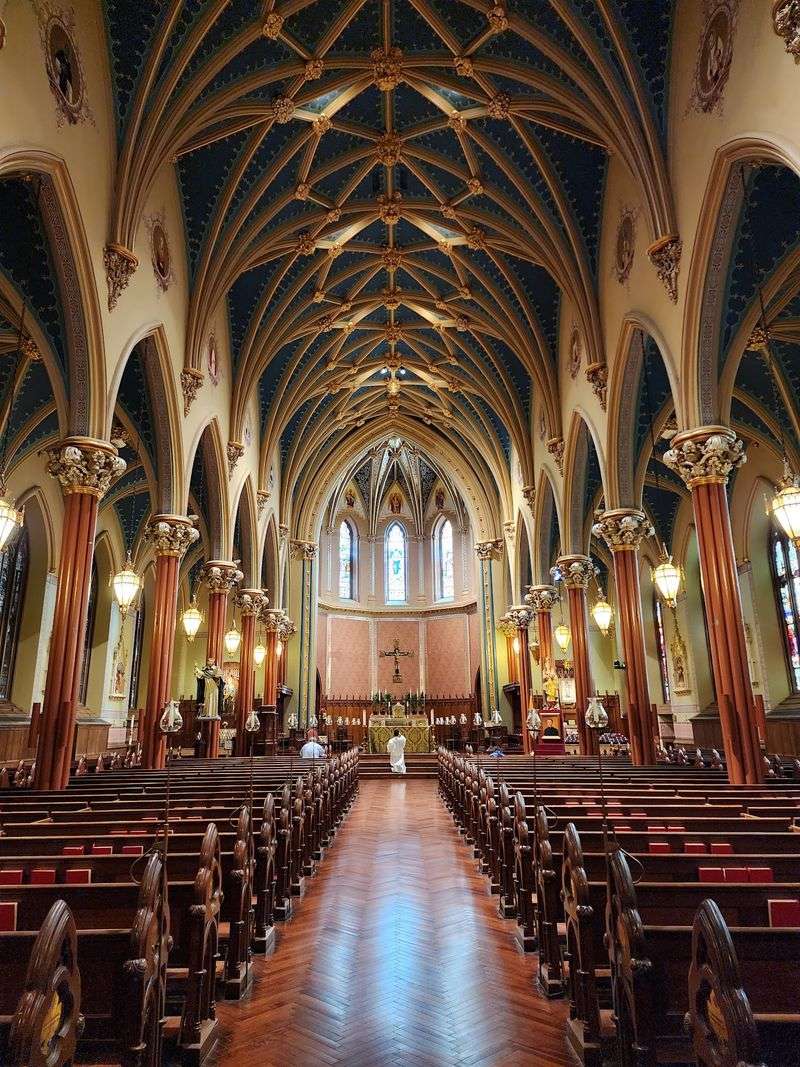
Long before that meeting, the church was already turning heads. Construction began in 1870, bringing an imposing Gothic Revival building to Hillhouse Avenue, a street famous for its grand historic homes.
Pointed arches, intricate stonework, and tall windows give the exterior a strong vertical feel, while stained glass adds color throughout the sanctuary.
The history continues inside. Father McGivney’s tomb is toward the rear of the church, making the building especially meaningful to visitors interested in the Knights of Columbus and its origins.
Archdiocesan priests serve the parish today, and regular worship remains central to daily life here.
You will find the church at 5 Hillhouse Avenue in New Haven. Yale University buildings and historic homes fill much of the surrounding area.
That makes St. Mary’s easy to include during a longer walk through this part of the city. Weekday visits can offer a quieter chance to appreciate the architecture.
Since this remains an active parish, check the schedule and plan sightseeing around Masses and other services.
8. St. George Greek Orthodox Cathedral, Hartford
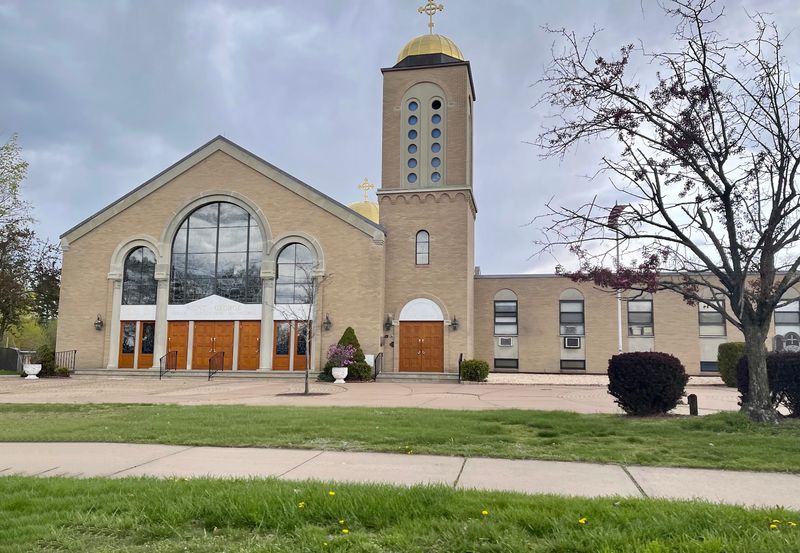
Domes instead of steeples set this Hartford cathedral apart right away. Greek Orthodox churches often follow Byzantine traditions, and St. George brings that ancient look to a city street in state’s capital.
Byzantine design dates back more than a thousand years to churches in the eastern Mediterranean. Its key features include rounded arches, a central dome representing heaven, and interiors decorated with icons, which are sacred paintings of Christ, Mary, and the saints.
At St. George, these traditions shape both the outside profile and the feeling of the worship space.
Inside an Orthodox church, keep an eye out for the iconostasis, a wall of icons that separates the altar area from the rest of the sanctuary. It is one of the most distinctive parts of this tradition, and it often surprises visitors who are used to other kinds of churches.
The cathedral’s address is 433 Fairfield Ave, Hartford, CT 06114. Many Greek Orthodox parishes also host popular cultural festivals with music, dancing, and traditional food, which can be a friendly way to meet the community and see the building.
Since event dates change year to year, check the parish announcements before you go.
9. Canaan Institutional Baptist Church, Norwalk
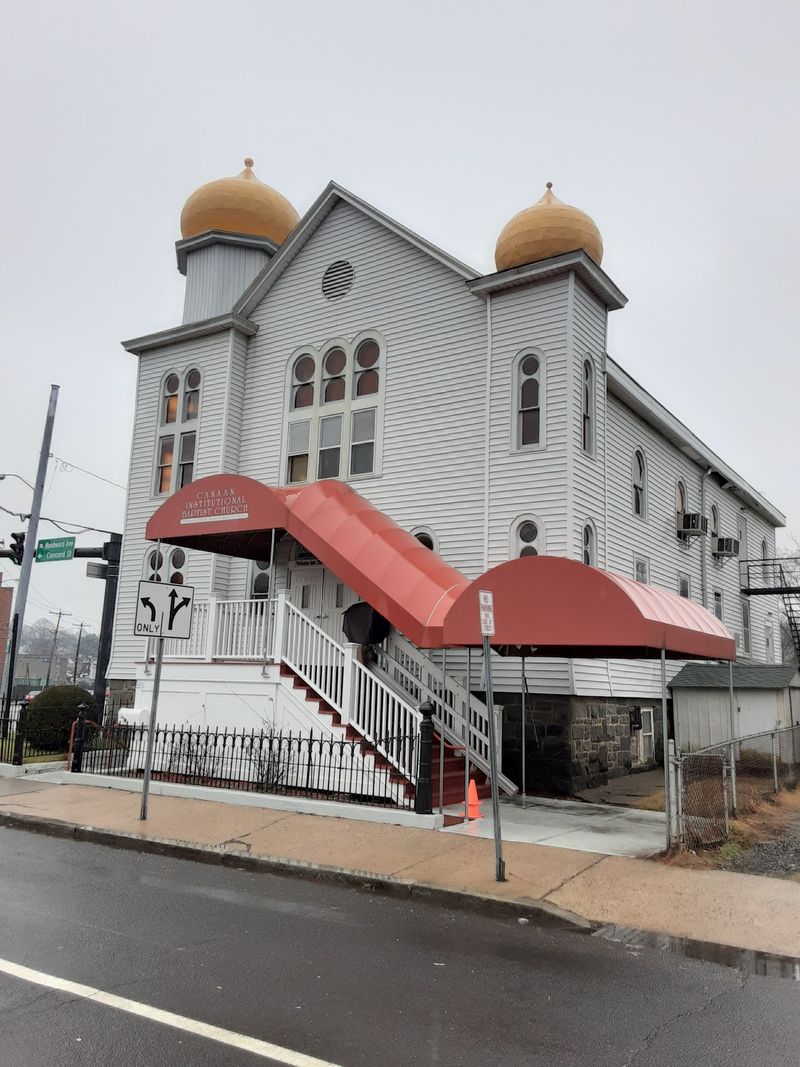
Community is the heartbeat of Canaan Institutional Baptist Church in Norwalk, and that spirit is part of what makes a visit here worthwhile. This congregation has long served as an important gathering place for the city’s African American community.
Architecture on this list ranges from colonial meetinghouses to concrete sculptures, and Canaan adds another piece to the puzzle. Its building shows how neighborhood churches often grow and adapt over time, shaped by the practical needs of the people who fill them each week.
Worship, music, youth programs, and outreach all happen under one roof.
Visiting a church like this offers a different kind of lesson. Instead of focusing only on famous architects or national landmarks, you get to see how a local congregation creates a space that reflects its own history and values.
That is an important part of state’s story too.
The church stands at 31 Concord St, Norwalk, CT 06854. If you plan to attend a service, expect a warm welcome and energetic music, and dress comfortably but respectfully.
Service times and special events can change, so reaching out to the church office first is the best way to make sure your visit lines up with what is happening that week.