This North Carolina Tunnel Sits Along 114 Miles Of Jaw Dropping Fall Color
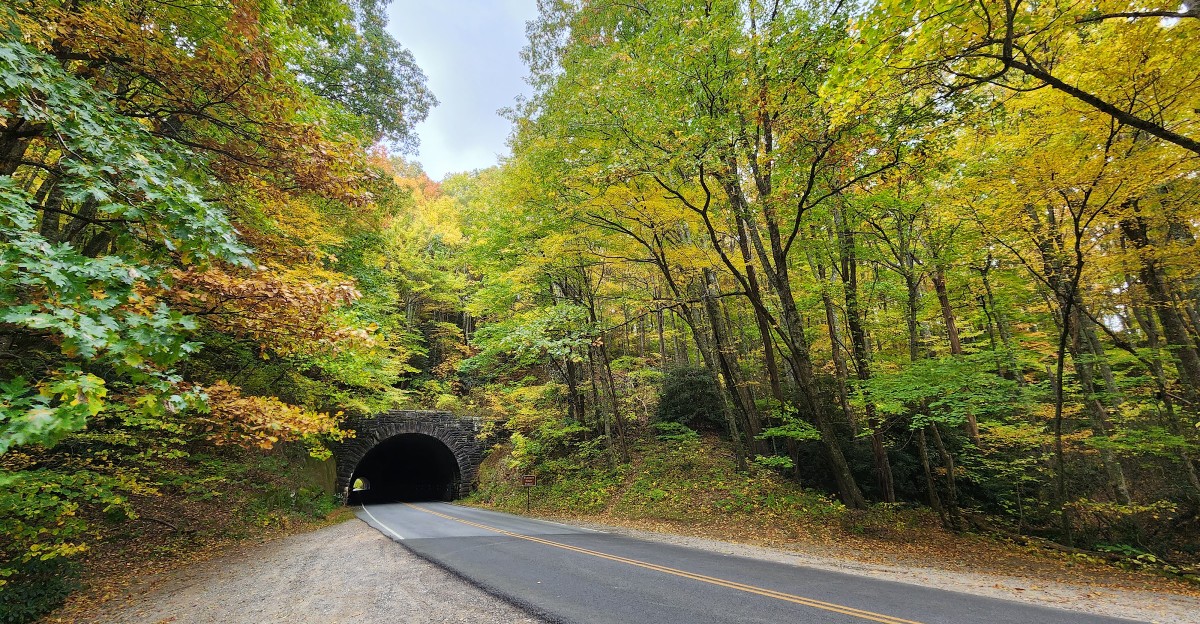
Who knew the light at the end of the tunnel could be this photogenic?
Along the Blue Ridge Parkway, one stone passage turns an ordinary fall drive into a full-blown reveal.
You head toward darkness, disappear for a second, then pop back out to a North Carolina mountainside showing off every shade it owns.
Subtlety has officially left the chat.
The surrounding stretch feels even sweeter now that Helene recovery work has reconnected this long section of road.
Timing the leaves just right makes the tunnel look less like infrastructure and more like autumn hired a set designer.
Honestly, even your GPS may want a photo.
Talk about taking the scenic route through a rough patch.
An 843 Foot Tunnel Disappears Straight Into A Mountain Of Fall Color
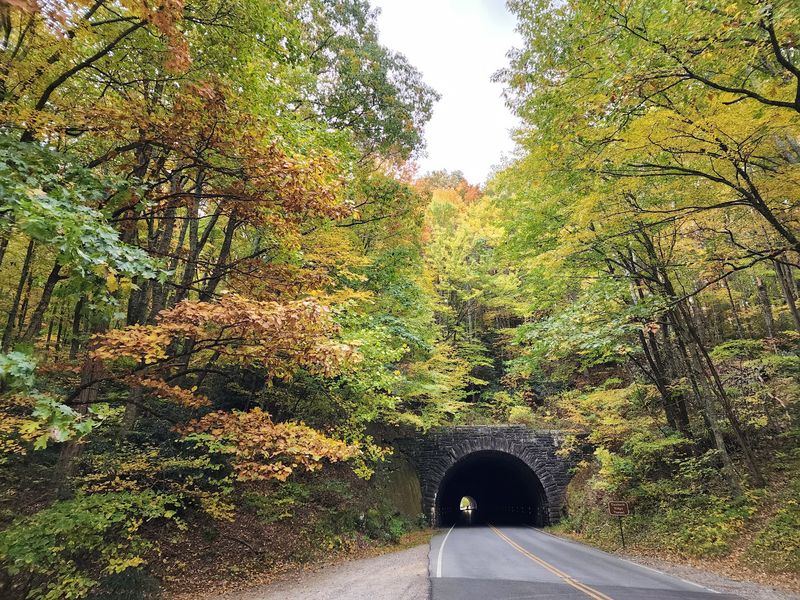
One moment, the road is bright with leaves; the next, it slips into shadow.
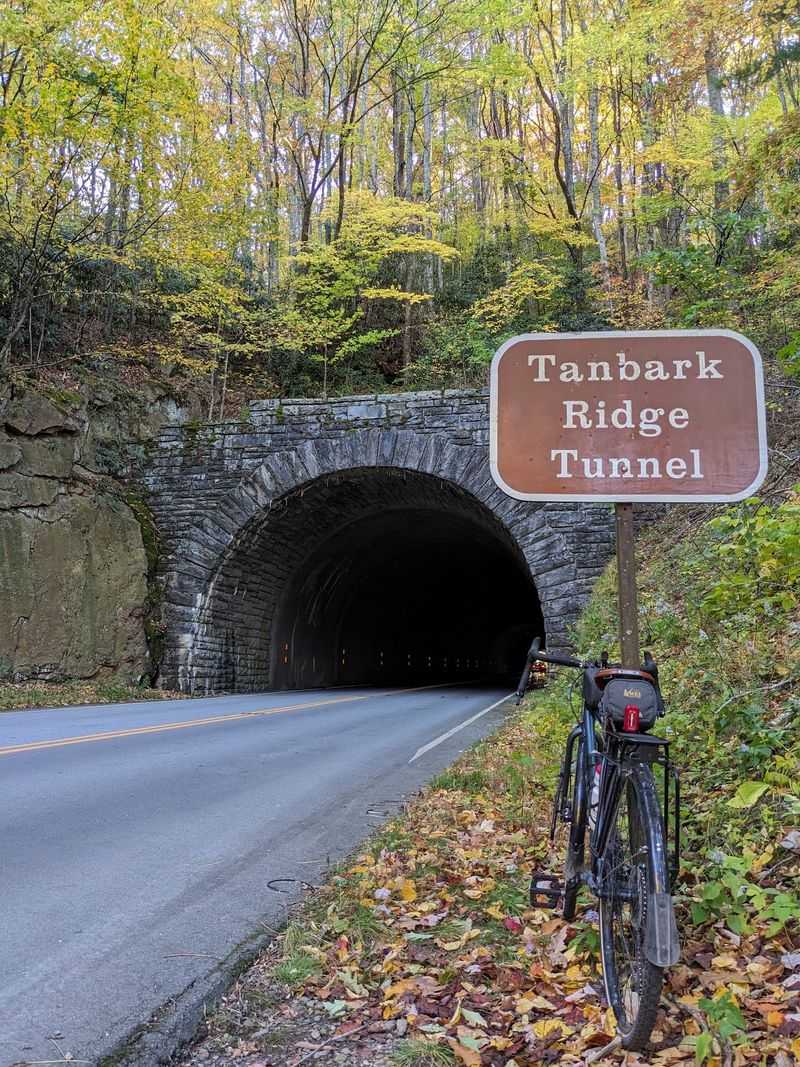
Tanbark Ridge Tunnel cuts through a wooded mountainside at Blue Ridge Parkway milepost 374.4, just north of Asheville.
Its stone-framed opening makes the shift from daylight to darkness feel especially striking in fall.
The passage is commonly listed as 843 feet long, though published measurements vary, so you may see other figures.
The easiest way to find it is by following parkway mileposts rather than relying on a street number. As you approach, slow to the posted speed and turn on your headlights before entering.
Give cyclists plenty of room, and avoid stopping inside the tunnel, even if the view ahead looks tempting.
Your eyes need a moment to adjust when you leave the shaded passage and meet the bright road again.
The best part may last only seconds: a small opening of daylight grows into a broad view of trees. On a clear October day, their colors can seem brighter after the tunnel’s dim interior.
Keep your attention on driving, then use a safe, designated place to pause and enjoy the scene at your own pace.
Look for Tanbark Ridge Tunnel at Blue Ridge Parkway milepost 374.4 rather than relying on a conventional street address.
October Is When The Forest Around The Stone Entrance Really Shows Off
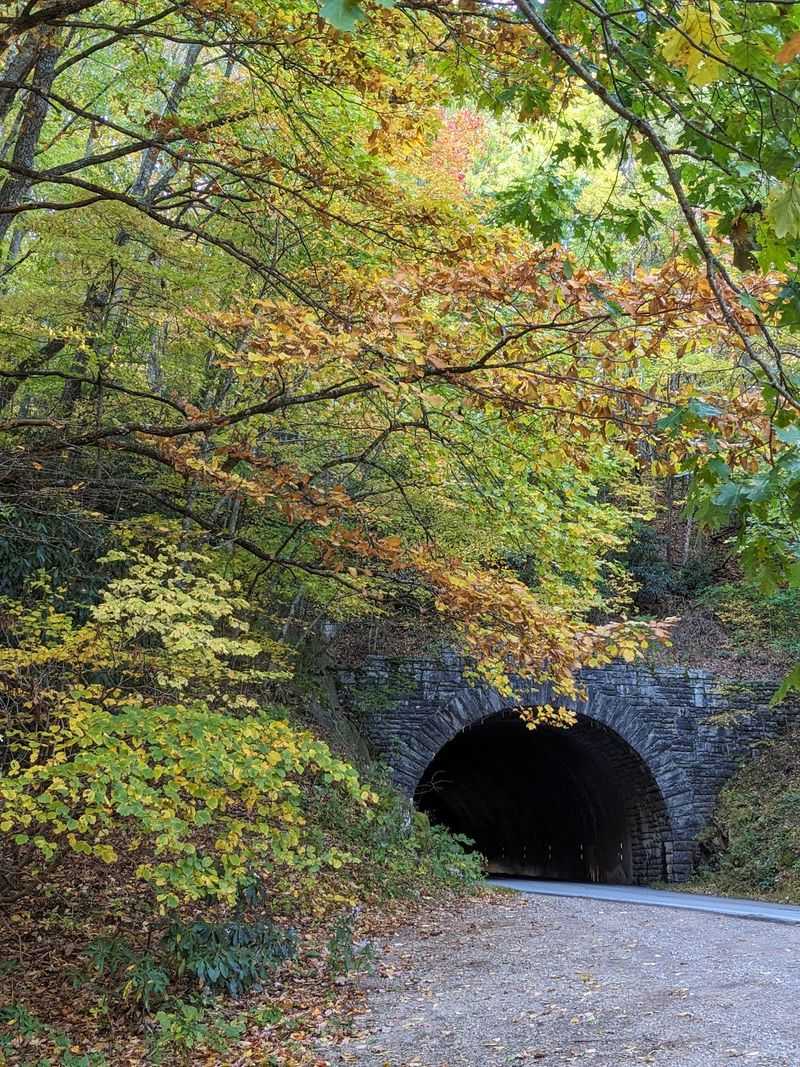
Autumn does not arrive at every tree on the same morning.
Around the tunnel, October often brings a lively mix of yellow, copper, orange, and green, with the balance changing from week to week. That mix can be more interesting than a hillside where every leaf seems to have turned at once.
Weather and elevation shape the show, so a calendar date cannot promise peak color.
Cool nights and sunny days can help bring out strong shades, while wind or heavy rain may clear leaves quickly.
If you can choose your travel day, check a recent foliage report and the weather forecast before leaving.
Morning light can bring out the texture of the stone entrance without making the leaves look washed out. Later in the day, watch how shadows move across the road and the wooded slope.
You might notice fallen leaves gathering along the edges while branches above still hold their brightest colors.
Bring a warm layer, since mountain air can feel cool even when lower areas are mild.
A packed snack also makes a longer fall drive easier for everyone in the car.
Rather than chasing one perfect photograph, take time to notice the changing light, the rough stone, and the brief glow of the forest beyond the opening.
This Historic Passage Is One Of Just 25 Parkway Tunnels In North Carolina
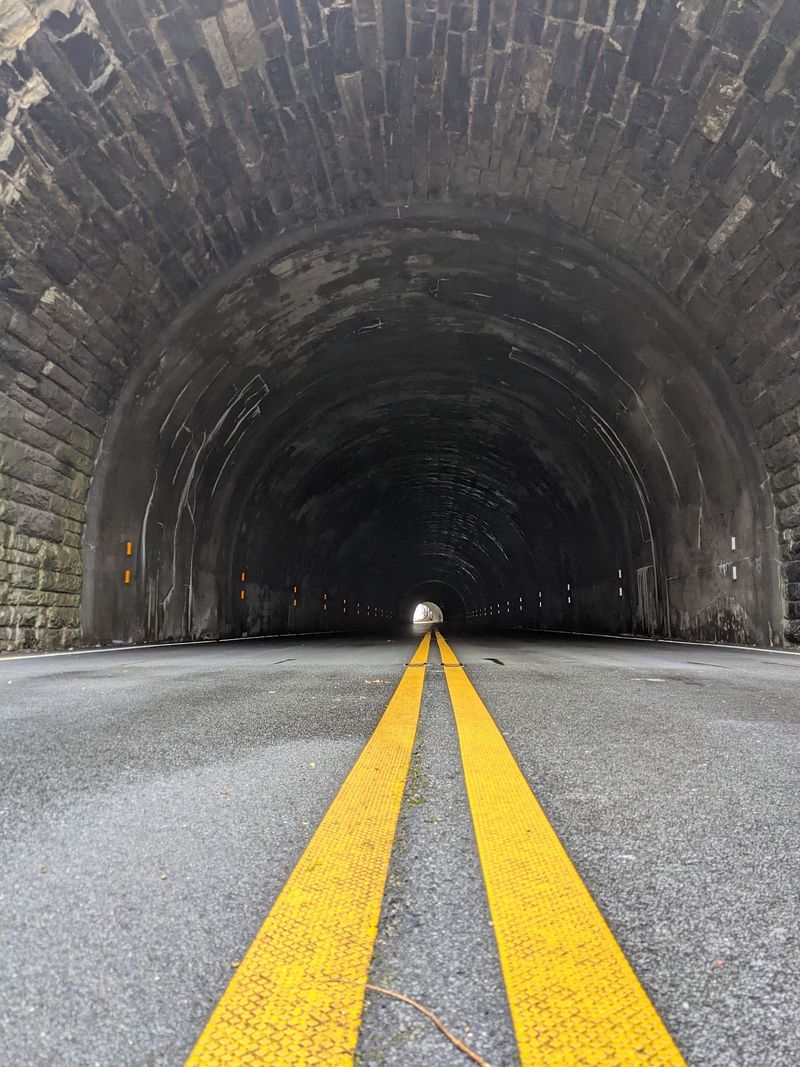
A winding mountain road could have gone around every ridge, but the parkway’s builders sometimes chose to go through.
Tanbark Ridge Tunnel is one of 26 tunnels along the Blue Ridge Parkway; 25 are in North Carolina.
Together, the passages show how the road was shaped to fit steep ground while keeping a scenic drive possible.
Look at the entrance as you pass, and you can see why it feels different from a plain road cut. The stone facing gives the opening a strong, simple outline against the hillside.
In fall, rough gray surfaces make nearby leaves stand out without competing with the natural scene.
These tunnels are working parts of a public road, not exhibits to explore on foot. Stay alert for oncoming vehicles, bicycles, and quick changes in light.
If your group wants a closer look at the stonework, stop only where parking is allowed and view it from a safe place away from traffic.
The historic design rewards a second glance because its purpose remains clear today. It lets travelers cross rugged terrain while leaving much of the wooded slope around the road intact.
That is part of the pleasure of this short passage: the engineering serves the drive, and the mountain remains the star.
Pull Over Safely And The Tunnel Becomes One Incredible Fall Photo Stop
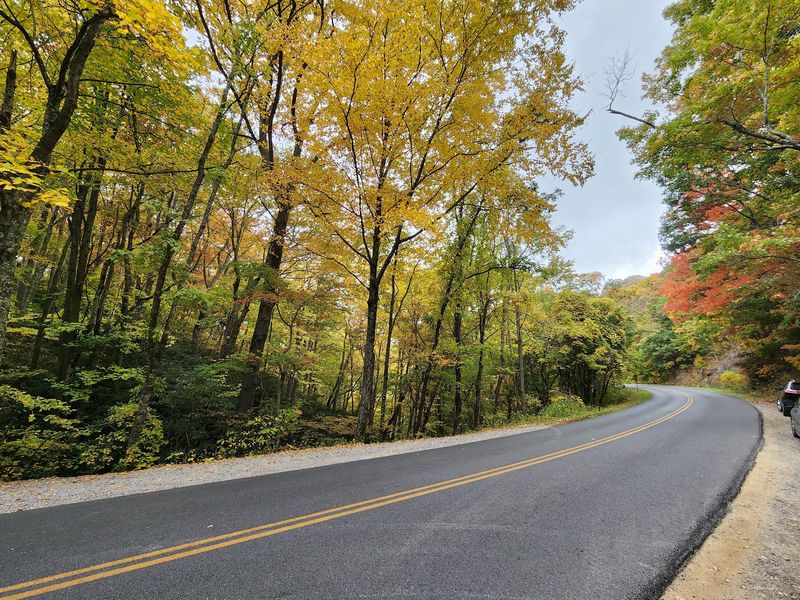
The best tunnel photo begins with a parking decision, not a camera setting.
Space near Tanbark Ridge Tunnel is limited, and a small roadside gravel area may fill on a busy fall day.
If there is no safe place to stop, keep driving and enjoy the view through the windshield.
Before pulling off, signal early and watch for a change between the pavement and gravel. Park fully clear of the travel lane, and make sure everyone can get out on the side away from moving vehicles.
Never stand in the road or at the tunnel mouth for a picture; drivers entering or leaving the passage may have little time to react.
From a safe viewpoint, try including both the stone arch and the trees above it.
A wider frame tells the story of a road crossing a colorful mountain, while a closer view catches the texture of the masonry.
Soft morning or late afternoon light can help show detail in the leaves.
Take a few photos, then put the camera down for a moment.
You may hear passing tires fade into the tunnel and notice leaves shifting in the breeze. Keep your stop short if other drivers are waiting for the space, and leave the roadside as clean as you found it.
The Stone Around The Entrance Came From Less Than 50 Miles Away
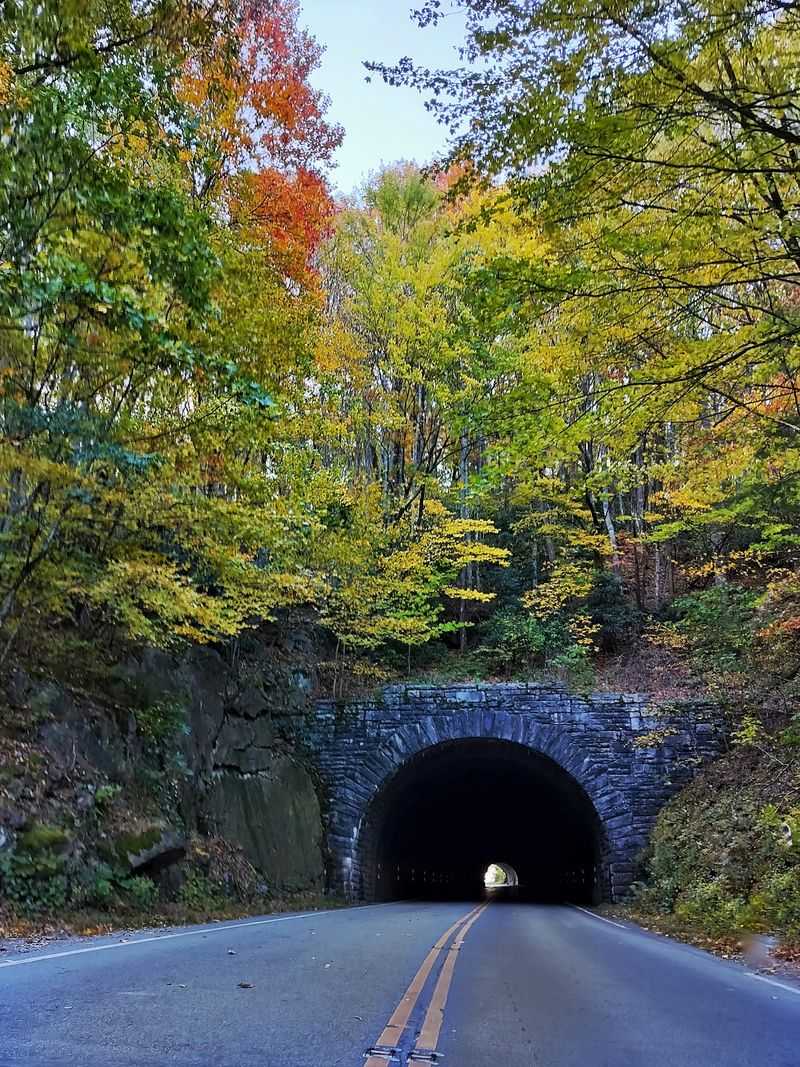
Look past the bright leaves for a quieter detail: the entrance seems to grow out of the hillside.
Parkway design guidance called for stone used in tunnel portals to come from within 50 miles of each site.
That choice helped the masonry suit the surrounding mountain landscape rather than looking out of place. Individual blocks do not all have the same shape or shade.
Their uneven surfaces catch light differently through the day, giving the arch depth even under a gray autumn sky.
The effect is strongest when leaves in warm colors hang close to the cool-toned rock.
You do not need special knowledge to enjoy the workmanship.
From a safe place off the roadway, notice how the stone forms a clear edge around the dark opening.
Compare that edge with the rough slope beside it, and the practical idea behind the design becomes easy to see.
Leave the stone and nearby plants undisturbed so the setting stays welcoming for the next traveler. A photo can capture the contrast without anyone climbing on the portal or stepping into traffic.
As you continue along the parkway, this small material choice may change how you see the whole road: it was built for travel, but also planned to belong in the mountains.
A Trail Beside The Tunnel Leads Toward The Ruins Of An Old Mountain Retreat
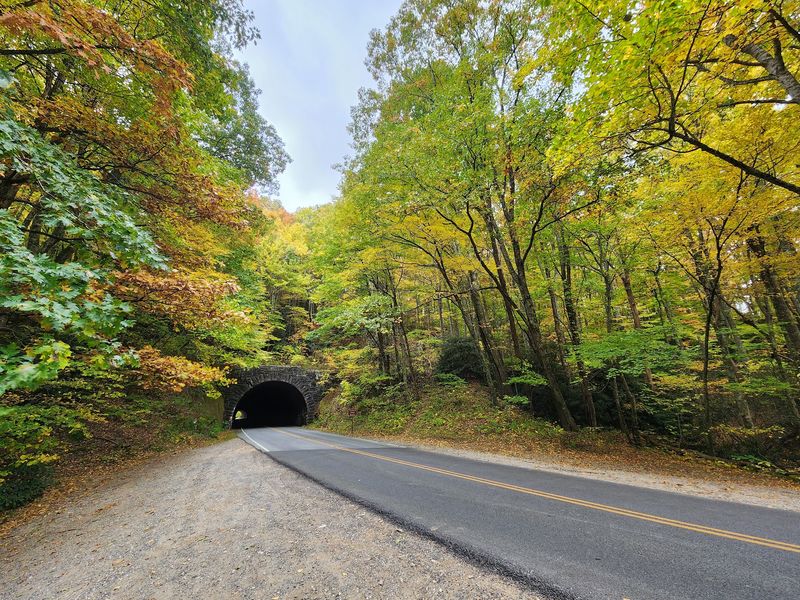
A drive past the tunnel can become a walk into another chapter of mountain history.
A trailhead near Tanbark Ridge Tunnel gives hikers access to the route toward the remains of Rattlesnake Lodge.
The lodge was a summer retreat built in the early 1900s for an Asheville physician and his family.
Today, the ruins offer traces of that former home rather than a restored building.
Reaching them takes a real hike, so allow more time than you would for a quick roadside photo. Check current trail information before setting out, especially after storms, when fallen trees or muddy ground can change conditions.
Wear shoes with good grip and carry water, even if the air feels cool.
Stay on the marked route and leave stones, plants, and historic remains where they are. Near the tunnel, be extra careful as you move between any parking area and the trailhead, since vehicles continue through the corridor.
Along the wooded path, fallen leaves may soften your steps while gaps in the branches reveal pieces of the surrounding ridge.
Walking gives you a slower view of the same landscape that flashes by from the car.
If your schedule is short, simply noting the trailhead for another day can make this stop feel like the start of a future adventure.
Those Brilliant Colors Keep Changing As The Road Climbs And Drops In Elevation
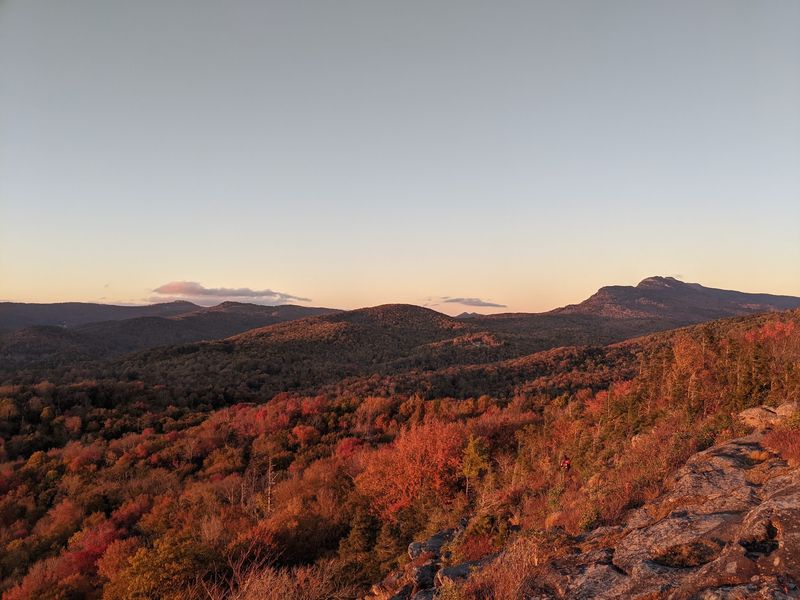
A patch of green beside the road does not mean you have missed the season.
Mountain slopes change color at different times, and elevation is a big reason why.
During a drive near Tanbark Ridge Tunnel, one stretch may show bright leaves while another still looks ready for its turn.
Higher ground often colors earlier than lower ground, though weather can change the pattern. Watch the distant ridges as well as the trees beside your window; a slope may carry several shades from top to bottom.
Sun and cloud cover can change what you see within minutes, even when the leaves have not changed at all.
Give yourself extra driving time instead of planning a tight schedule around one viewpoint. The parkway has curves, slower traffic, and places where you may want to pause safely.
A simple snack and water in the car can make an unhurried afternoon more comfortable without pulling your attention from the road.
Near the tunnel, the short spell of shade adds one more change to the view. When you come back into daylight, compare the colors ahead with those behind you.
There is no need to find a single peak-color date to enjoy the drive; its shifting pattern is part of what makes autumn here so engaging.
Why This Dark Mountain Passage Is One Of The Coolest Stops Along 114 Miles Of Fall
Few seconds of driving can hold so much contrast.
The road narrows into a dark mountain opening, stone surrounds your view, and daylight returns with a fresh spread of fall color.
Tanbark Ridge Tunnel makes that brief change feel like an event rather than an ordinary bend in the parkway. Its setting also tells a larger story about access to the mountains.
Following damage from Hurricane Helene, 114 continuous miles of the Blue Ridge Parkway were restored to travel.
That reopening gave visitors another way to experience the autumn scenery, but road status can change as repairs and weather conditions continue to affect the route.
Before your trip, check the National Park Service’s current Blue Ridge Parkway road closures and alerts. Bring a map or save directions ahead of time, since cell service can be uneven in the mountains.
Once you arrive, follow signs, drive carefully through the tunnel, and save sightseeing for a safe stop. There is plenty to enjoy without turning the visit into a race between mileposts.
Notice the cool shade, the bright exit, and the trees that make the stone entrance stand apart.
Then carry on at an easy pace, ready for whatever color the next curve brings into view.