This North Carolina Cathedral Has A Cornerstone Personally Blessed By Pope Francis
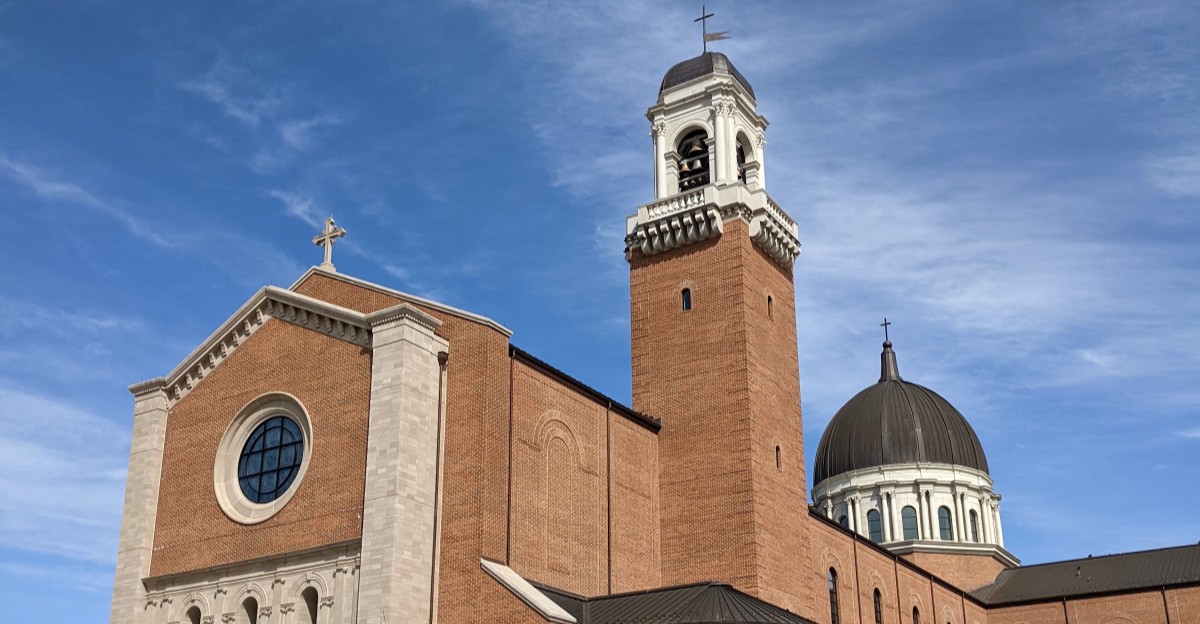
Most people walk past a cathedral entrance expecting stone, silence, and maybe a little awe.
Few expect a small detail beside the door to connect the building all the way to Pope Francis.
That surprise gives this North Carolina landmark a story far bigger than its walls.
The cathedral itself feels built to make visitors look up. Light moves across the interior while tiny architectural details quietly compete for attention.
Even people who know nothing about church design can feel the scale of the place.
The real fun is slowing down enough to notice what others miss. Sometimes the smallest stone carries the biggest story.
See The Cornerstone Personally Blessed By Pope Francis
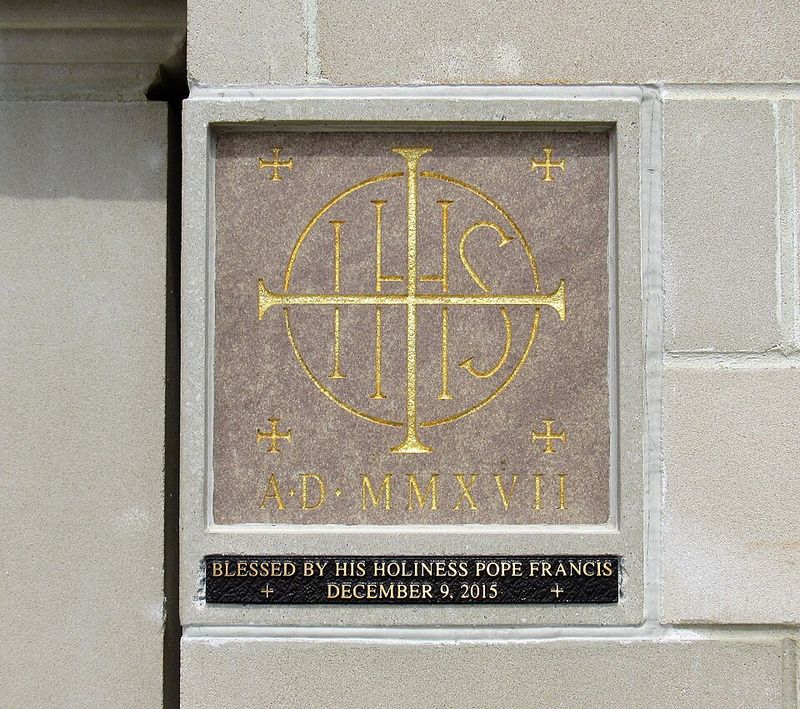
A small stone near the main doors tells a story that stretches all the way to Vatican City.
Look to the right of the entrance for the cathedral cornerstone, made from Santafiora stone from Italy.
Its gold christogram, a symbol formed from letters representing Christ, stands beside Roman numerals marking 2017. The stone has a remarkable travel history.
In December 2015, Bishop Michael F. Burbidge brought it to a general audience in St. Peter’s Square, where Pope Francis personally blessed it.
The cornerstone was installed shortly before the cathedral’s dedication on July 26, 2017.
That makes it more than a date marker: it links the Raleigh building with the wider Catholic Church.
Give yourself a moment at the entrance before heading inside.
From a comfortable distance, try spotting the lettering and the gold design, then think about the path this single piece of stone took before becoming part of the building.
Families can turn it into a simple observation game by finding the year together.
The detail is easy to miss if you hurry through the doors, yet it offers a clear starting point for understanding why the cathedral matters to its community today.
Find it at 715 Nazareth St, Raleigh, NC 27606.
Look Up At The Massive Dome Rising Above The Sanctuary
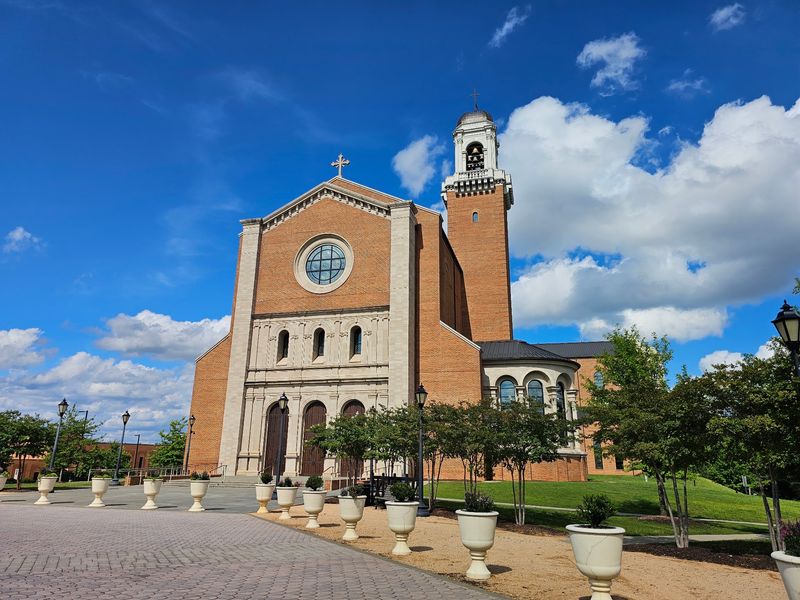
Sunlight from high windows can make the space beneath the dome feel almost weightless.
Yet the copper covered structure above the sanctuary weighs about 162 tons.
Builders assembled it on the ground before lifting it into place with a crane, a striking feat for a feature that now appears so settled. Outside, the dome rises roughly 172 feet above the ground and helps define the cathedral’s outline.
Inside, its ceiling reaches about 137 feet above the floor.
Sixteen arched windows bring daylight into the upper space, where ribs and Corinthian pilasters guide your eyes toward the center.
Stand in a permitted area and look slowly from the windows down toward the sanctuary; the change in scale is easier to grasp that way. The dome is not just a roof with an unusual shape.
It helps organize the whole interior, drawing attention to the place where worship takes place.
Light may shift across its surfaces as the day goes on, so the view can change even while you stand still.
If you are visiting with children, invite them to count the windows rather than rushing ahead.
It is a quiet way to notice how careful design can make a very large room feel connected.
Walk Through A Cathedral Built To Serve Thousands Of Worshippers
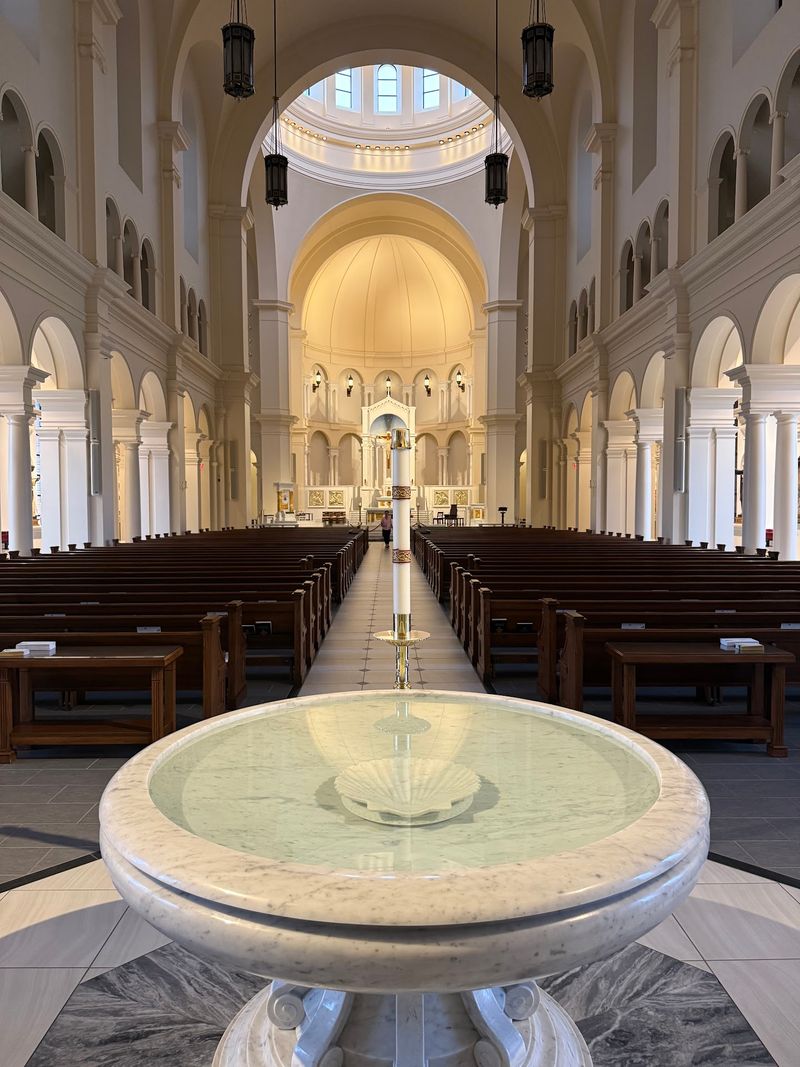
Rows of pews stretch toward the altar, but the size of the room makes more sense once you notice its cross shaped plan.
The long central aisle leads through the nave, while transepts extend to either side.
Together, these spaces allow more than 2,000 people to gather for worship. That capacity answered a real need.
The earlier Sacred Heart Cathedral seated about 300 people, far fewer than the growing Catholic community in eastern North Carolina required for major gatherings.
In the new building, the nave seats about 1,000, and each transept provides room for roughly 500 more.
The arrangement keeps worshippers connected to the sanctuary even across a broad floor plan.
If public visiting is permitted, walk at an unhurried pace and compare the view from the center aisle with the view from a side aisle. You may notice how the pews, sight lines, and crossing guide attention without needing signs.
Keep pathways clear and remember that this remains an active place of prayer, not simply a large building to explore.
Its generous interior speaks to a practical goal: giving a community room to gather now and space to grow in the years ahead.
Notice The Sacred Art And Architectural Details Throughout The Interior
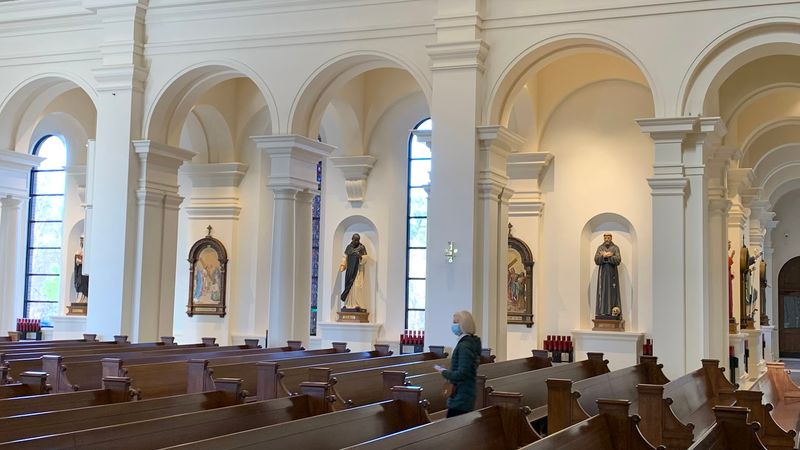
Color arrives in flashes here.
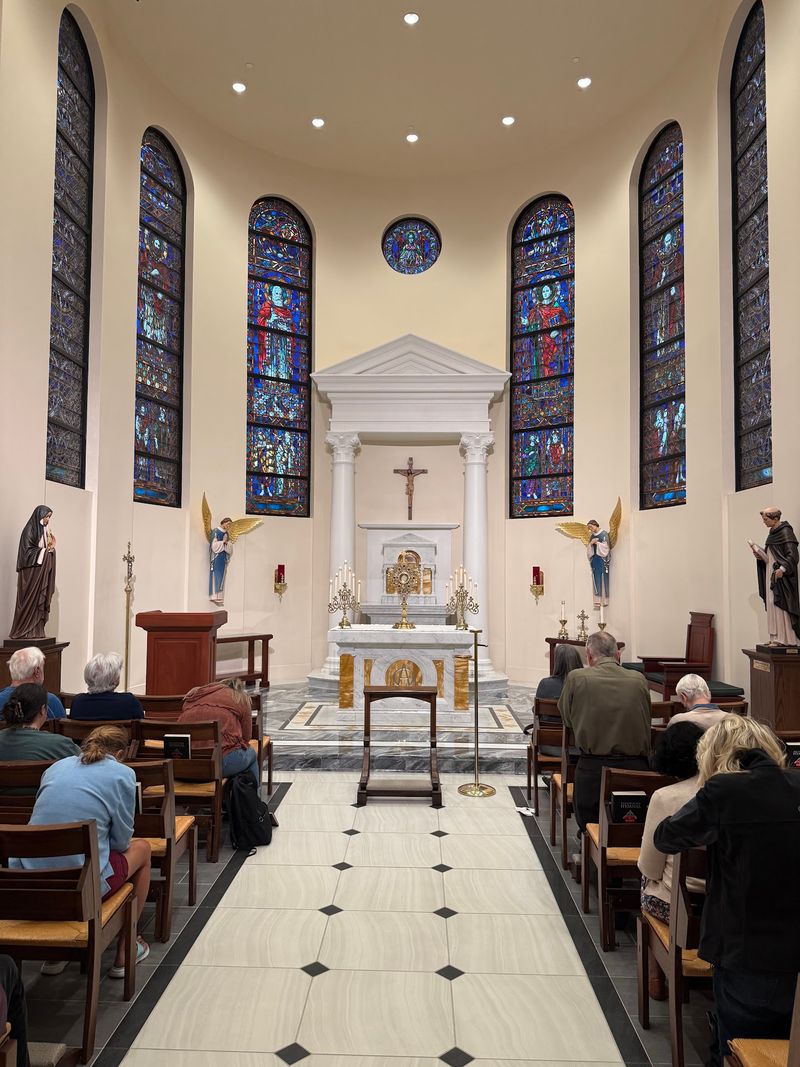
Against the pale interior, restored stained glass gives visitors small scenes to study, while the marble near the sanctuary adds quieter patterns underfoot.
The cathedral has 40 historic stained glass windows acquired from a former Philadelphia church.
Dating from 1927, they show New Testament scenes and archangels. Closer to the sanctuary, notice the altar, ambo, and bishop’s chair.
These furnishings use Italian Bianco Carrara C marble with Giallo Siena accents. The sanctuary floor pairs Bardiglio Nuvolato marble with diamond shaped accents of lighter stone.
Each material has a purpose, helping important areas stand out without filling every surface with decoration.
Along the nave and transept aisles, 14 restored wooden Stations of the Cross offer a sequence of images for reflection.
Shrines honor Our Lady of the Immaculate Conception and St. Joseph the Worker, while saint statues fill niches along the side aisles.
You need not identify every figure to appreciate the care in the carving and painting.
Choose one window or statue, pause, and notice its colors, gestures, or shape. That slower approach leaves room to enjoy the artwork while respecting people who may be praying nearby.
Learn Why This Became The Mother Church Of The Diocese
A special chair helps explain why this church has a special name.
The bishop’s chair, called the cathedra, gives a cathedral its title.
From here, the bishop leads important celebrations for the Diocese of Raleigh, making the building the diocese’s mother church rather than simply another large parish church.
Its story also reflects change over time. Sacred Heart Cathedral, built in 1924, could seat about 300 worshippers.
As the Catholic population grew across eastern North Carolina, that smaller space could no longer serve major diocesan gatherings comfortably.
Holy Name of Jesus Cathedral was dedicated on July 26, 2017, with room for a much larger assembly. The land carries an older connection to local Catholic history.
Father Thomas Frederick Price purchased the Nazareth property in 1896 and established an orphanage there in 1899.
He was the first native North Carolinian ordained as a Catholic priest.
When you visit, the cathedra and the grounds offer two ways to think about the place: one points to the diocese’s work today, while the other reaches back more than a century.
Knowing both stories can make the building feel less like an isolated monument and more like part of a continuing community.
Take In The Scale Of One Of The State’s Most Impressive Catholic Landmarks
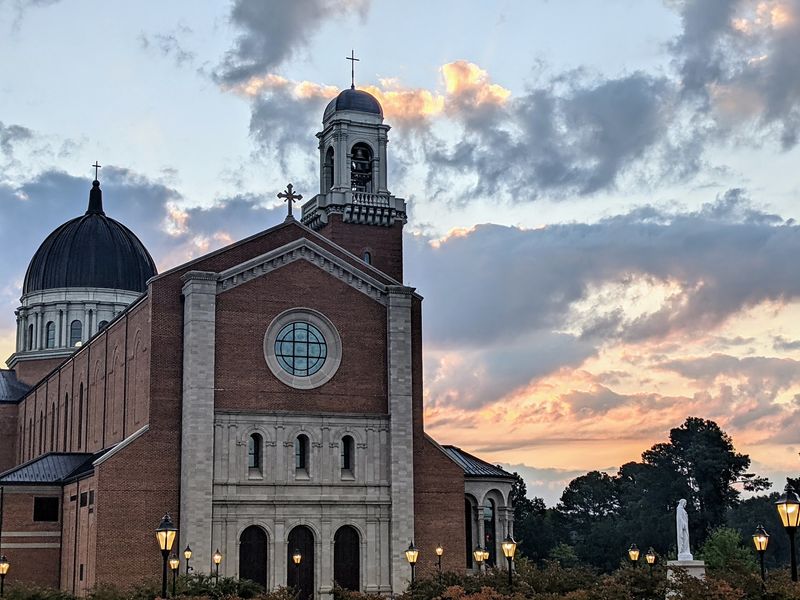
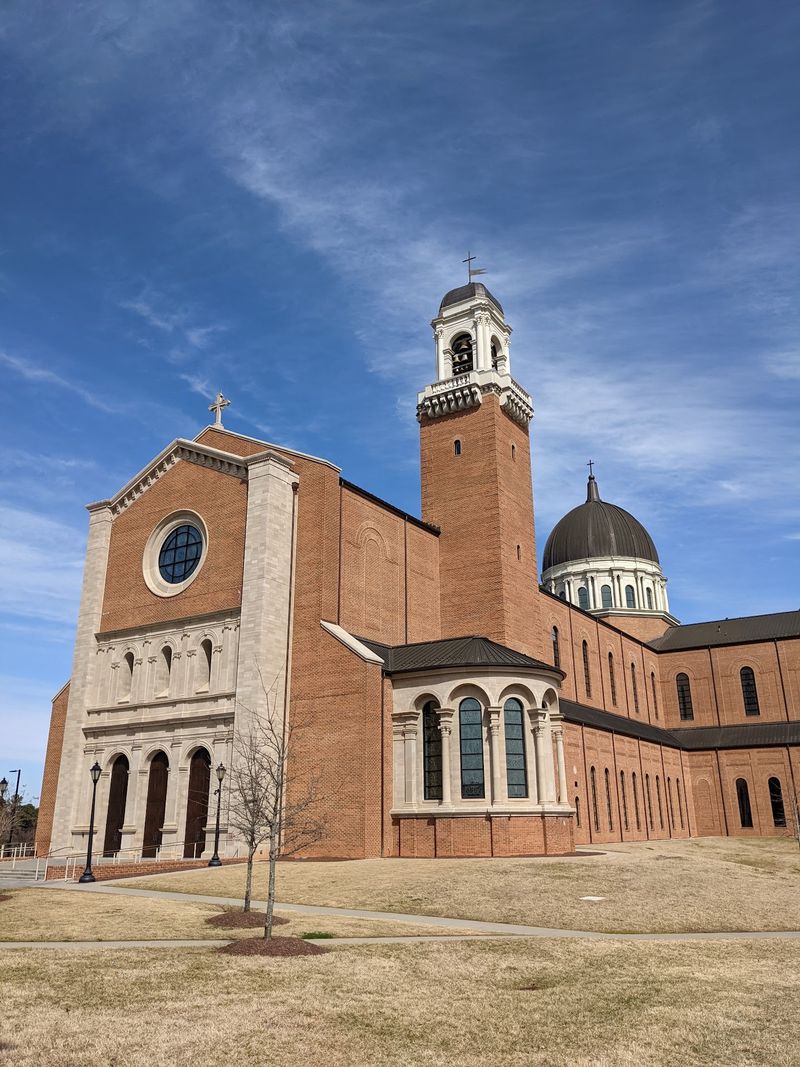
From outside, give your eyes time to travel across the whole building before focusing on any one feature.
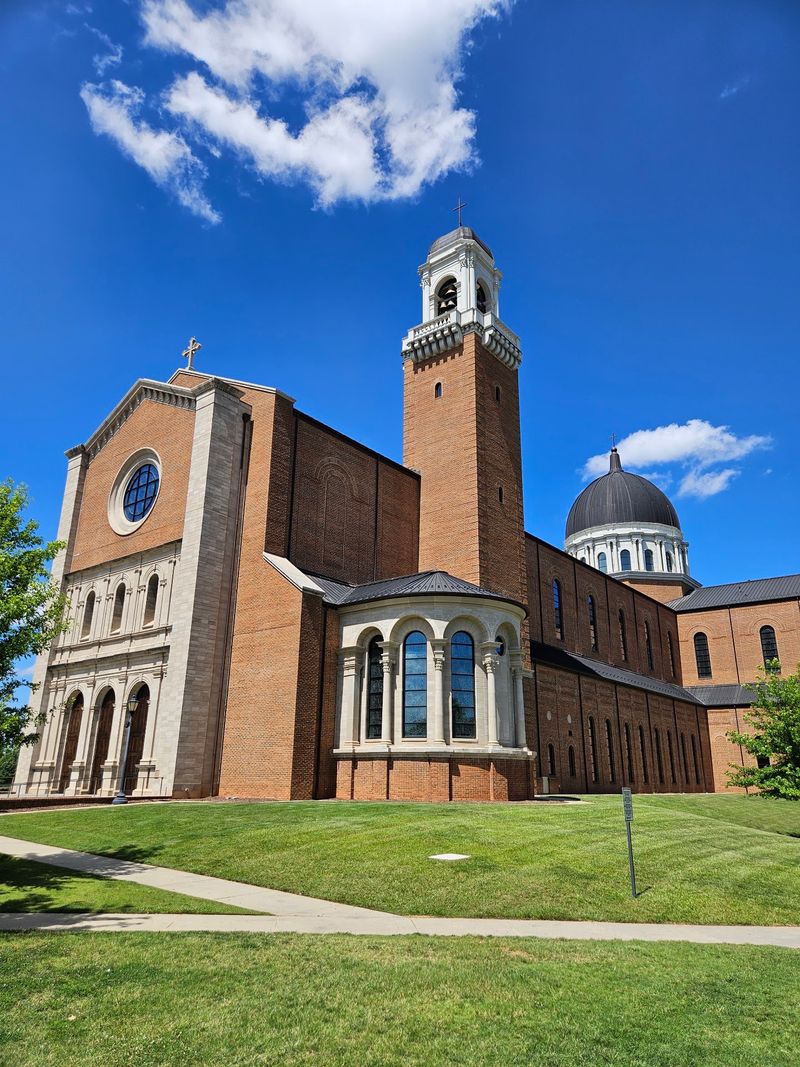
The dome rises roughly 172 feet, while a separate bell tower reaches about 154 feet.
Together, they give the cathedral a strong outline against the Raleigh sky, even from beyond its grounds.
The scale continues indoors.
The cross shaped building covers roughly 43,000 to 44,000 square feet and has space for more than 2,000 worshippers. It is often identified as the fifth largest Catholic cathedral in the United States.
Those figures may be hard to picture on a page, but a walk along the exterior helps turn them into a real sense of distance and height.
Architecture gives that size a clear form. Designed by O’Brien and Keane, the cathedral draws on Romanesque Revival style rather than relying on height alone for its presence.
The bell tower holds a carillon of 50 bells, another detail that adds to the character of the site.
For a broad view, pause where you can see the dome and tower together without blocking paths or entrances.
In North Carolina, few Catholic buildings offer quite this combination of size, craftsmanship, and purpose.
Visit Quietly Outside Service Times To Appreciate The Space
Quiet minutes can reveal details that a busy arrival might hide.
When the cathedral is open for general visits, you can take in the shape of the room, the light through the windows, and the artwork without interrupting a service.
Weekday visiting hours are generally Monday through Friday, from 11 a.m. to 2 p.m., but schedules can change.
Before setting out, check the cathedral’s official website for current public access. Special liturgies, funerals, and other events may affect entry, and an open door does not always mean touring is appropriate.
If a service is underway, visitors should pause sightseeing; those who wish to stay are welcome to join in prayer.
Simple habits help keep the space peaceful for everyone. Set your phone to silent, speak softly, and leave food, drinks, and gum outside.
Photography may be possible during suitable visiting times, but give worshippers privacy and follow any directions posted on site.
Weekday visiting hours are generally the easiest time for an independent look around, while guided tours and other access depend on the cathedral’s current schedule.
A little planning means you can spend less time wondering what is allowed and more time noticing the building’s light, stone, and sense of calm.
Know What To Look For Before Your First Visit
Your first look does not need a complicated plan.
Begin at the main entrance and find the blessed cornerstone to the right of the doors.
Its gold christogram and Roman numerals give you two details to remember before you step inside.
Then look upward outside for the copper dome and the nearby bell tower. Once indoors, let the building guide your route.
The long nave leads toward the sanctuary, while the side arms form the cross shaped layout.
Look for daylight passing through historic stained glass, then notice how the pale walls make the marble and carved figures stand out. The restored Stations of the Cross line the aisles, so you can follow them in order if the space is open for quiet visiting.
Save a moment for the shrines and the saint statues in their niches.
Rather than trying to see everything at once, pick a few details that catch your eye and read any information available on site.
Check current visiting hours before you travel, since services and events take priority.
With comfortable shoes, a quiet voice, and a little curiosity, you can enjoy the cathedral as both a remarkable building and a working place of worship.