Pedal A Bike Over Old Train Trestles And Through Tunnels On This 15-Mile Idaho Rail Trail
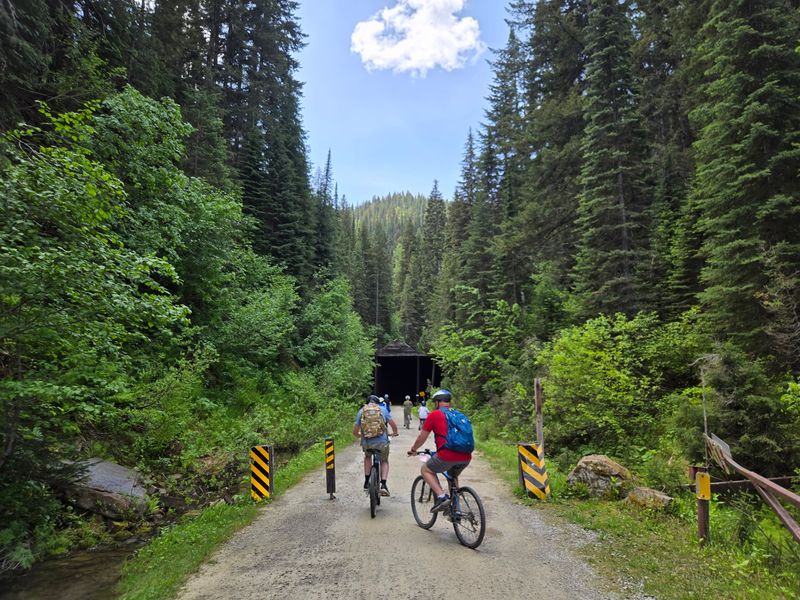
Mud on your back is almost a badge of honor on one old railroad grade in Idaho. Riders roll into a cold, pitch-black tunnel under a mountain, then pop out onto wooden-railed bridges higher than the treetops.
The whole ride tilts gently downhill, so kids and grandparents can do it side by side. It is one of the easiest ways to feel like a kid again in the Idaho backcountry.
A Railroad Grade In The Bitterroots
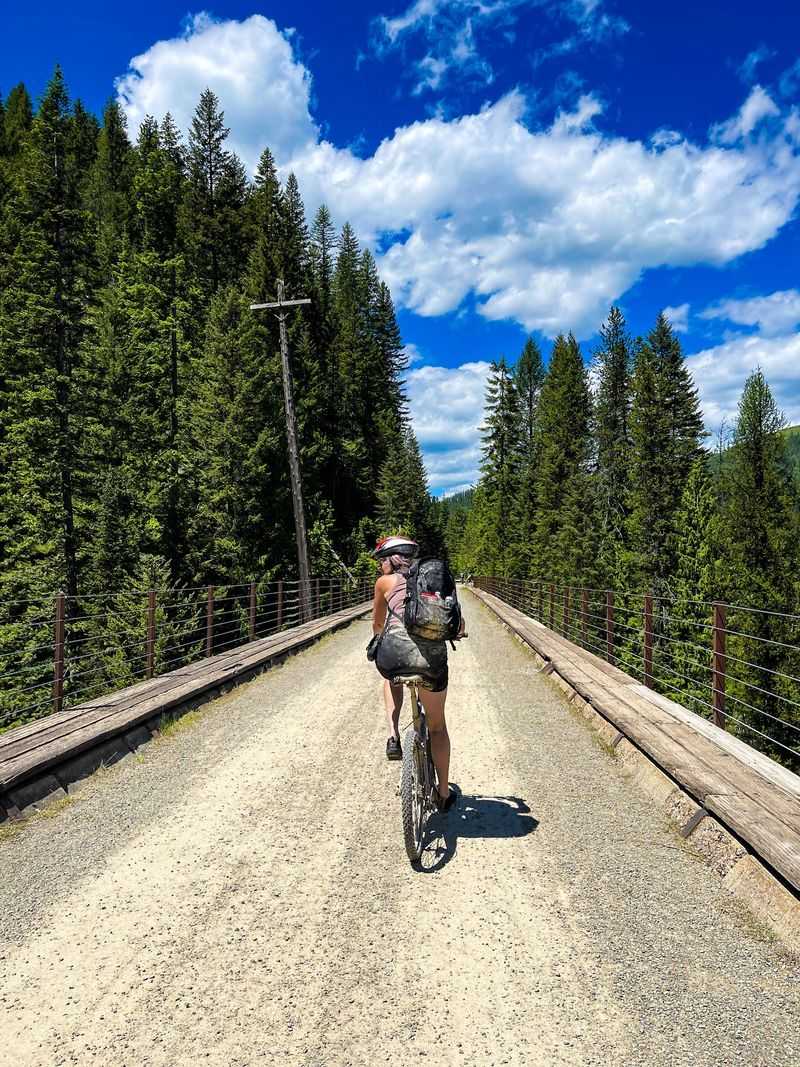
Fifteen miles of old railroad bed wind through the Bitterroot Mountains in Shoshone County, right along the Idaho-Montana line. The Route of the Hiawatha follows the path trains once took, now covered in packed gravel instead of steel rails.
Riders and hikers share the route, which drops steadily through thick forest in the Idaho Panhandle. Along the way you pass through ten tunnels and across seven tall trestles, each one a leftover from a time when passenger trains rumbled through this rugged corner of the state.
Many folks call it the crown jewel of rail trails, and it has earned a spot in the Rails to Trails Conservancy Hall of Fame. That is a big honor for a path that most people outside the region have never heard about.
The mapped starting point sits off Interstate 90 near Mullan, not far from Lookout Pass. From there, the adventure heads into the mountains and quickly leaves the highway noise behind.
Even for Idahoans who have driven I-90 dozens of times, the trail can feel like a secret. You might pass the exit for years before realizing what waits just up the road, tucked into those green ridges.
Rails Built Between 1906 And 1911
Back in 1906, crews began cutting a path for the Milwaukee Road’s Pacific Coast Extension through some of the toughest ground in the country. The official name was a mouthful: the Chicago, Milwaukee, St. Paul and Pacific Railroad.
By 1911 the line was finished, linking Chicago with the Pacific Northwest. Workers blasted tunnels through solid rock and raised trestles over deep gorges, a huge engineering feat for the time.
The stretch through the Bitterroots became known as one of the most scenic rides on any American railroad.
Passengers gazed out at the same ridges and valleys you will see from your bike seat. Some spots, though, were barely visible from a moving train, so riders today actually get a better view than those early travelers did.
Money troubles eventually caught up with the railroad. Trains kept running for decades, but the line was finally abandoned in 1980, leaving the tunnels and bridges quiet.
For a while, it looked like this piece of Idaho history might simply fade into the forest. Luckily, a group of dreamers had other plans for those empty rails and long, echoing tunnels.
From Empty Tracks To Bike Path
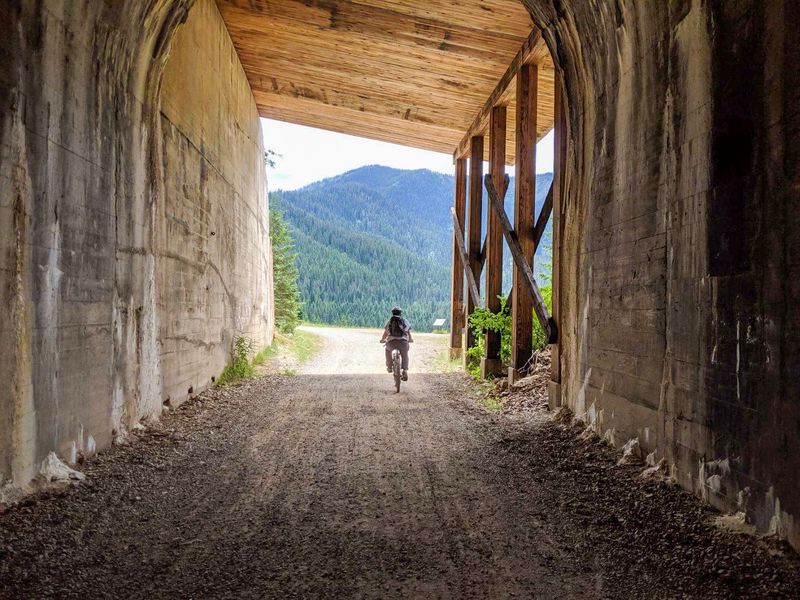
May 1998 marked a turning point. That spring, the first 13 miles of the old line opened to the public as a trail, and bicycles replaced boxcars.
Only three years later, in 2001, the longest tunnel opened for trail users too. That added the most famous piece of the whole ride and turned a nice outing into a true bucket-list trip.
The switch from railroad to recreation says a lot about how this part of Idaho has changed. Mining and rail towns in the Silver Valley once lived on hauling ore and timber.
Now, summer brings bikers, families, and tour groups looking for a day of fresh air.
Instead of letting the old grade crumble, the community gave it a second act. The tunnels still stand, the trestles still stretch across canyons, and visitors keep the history alive just by rolling through.
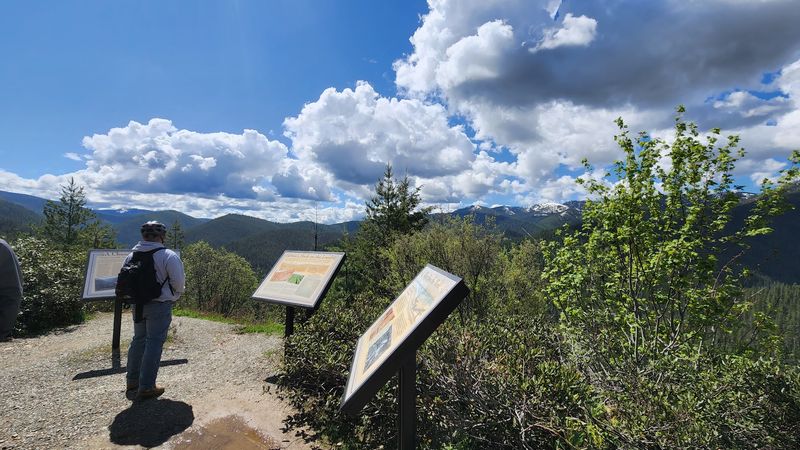
Fifty interpretive signs line the route to explain what happened here. You can pause to read about workers, trains, and fires, then keep pedaling toward the next viewpoint.
Visitors often mention how well researched the markers feel, so it is worth stopping at a few.
Into The Taft Tunnel
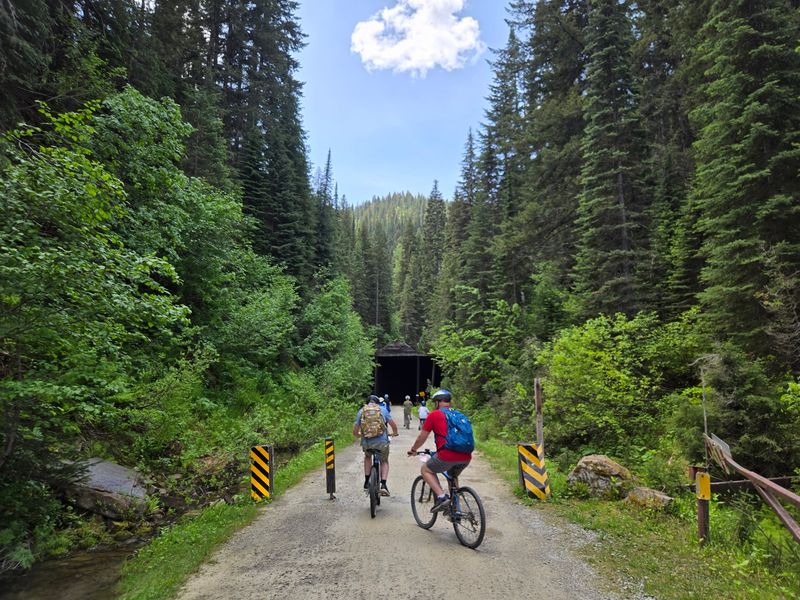
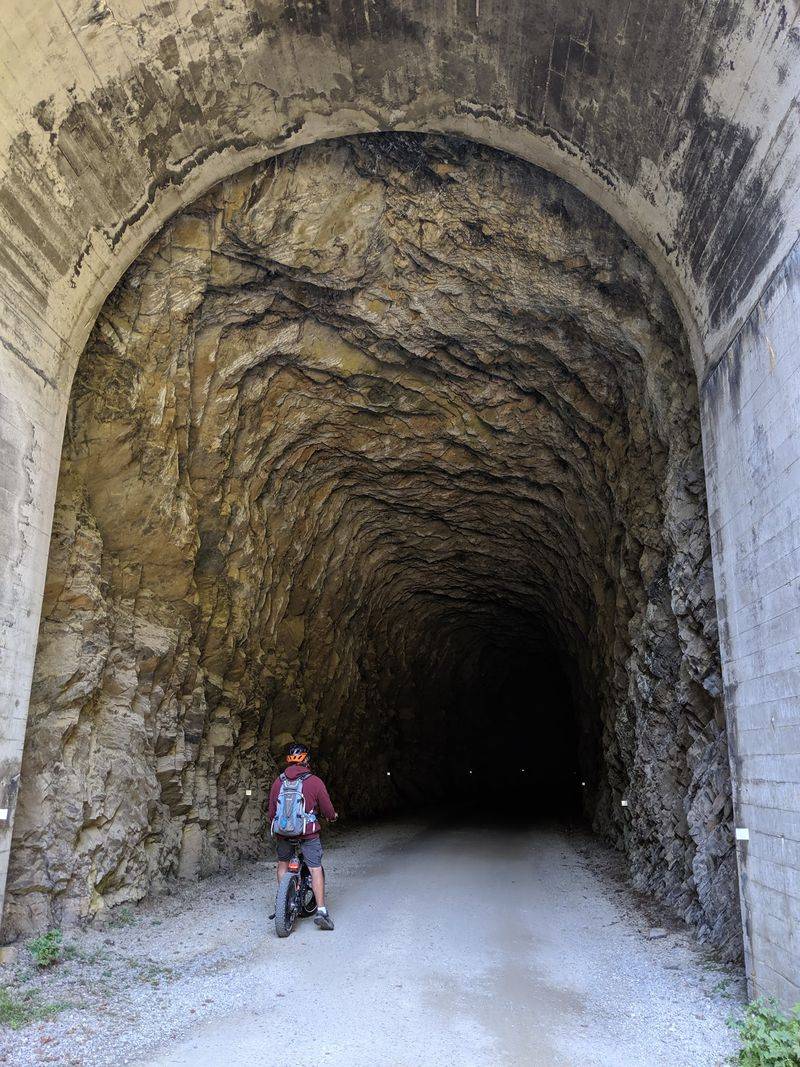
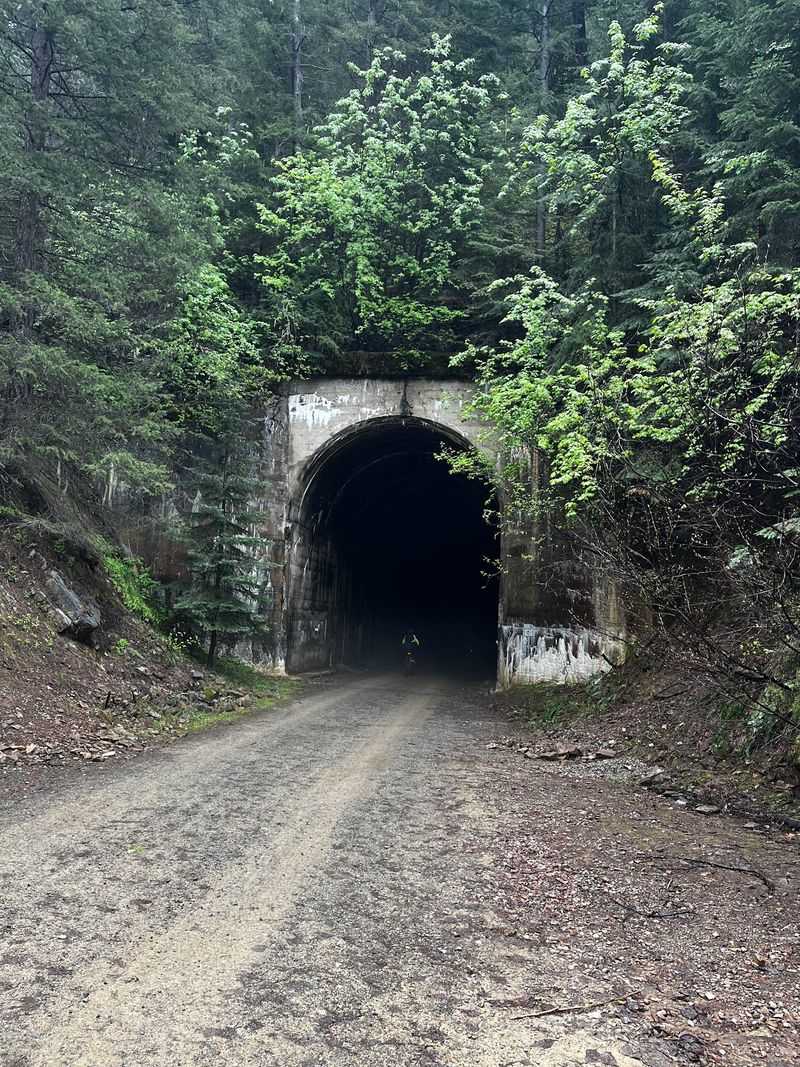
Right off the bat, you disappear into the dark. The St. Paul Pass Tunnel, also called the Taft Tunnel, stretches 1.66 miles, or 8,771 feet, under the Idaho-Montana state line.
Once the daylight fades behind you, the only thing you see is the circle from your light. Water drips from the ceiling, and the air turns chilly fast, dropping to around 40 degrees even on a hot summer day.
Some riders call it creepy at first, while kids often think it is the best part of the whole trip.
The tunnel is not just a spooky ride, though. Crews spent years digging it, and it still counts as one of the biggest achievements of the old railroad.
Many visitors say the second trip through feels easier. The return shuttle drops you back near this same tunnel, so you ride it again to reach your car.
By then, you know what to expect and can pedal with more confidence.
A bright light makes a huge difference here. Riders who brought weak lamps often wish they had packed something stronger before heading underground.
Mud Stripes And Chilly Air
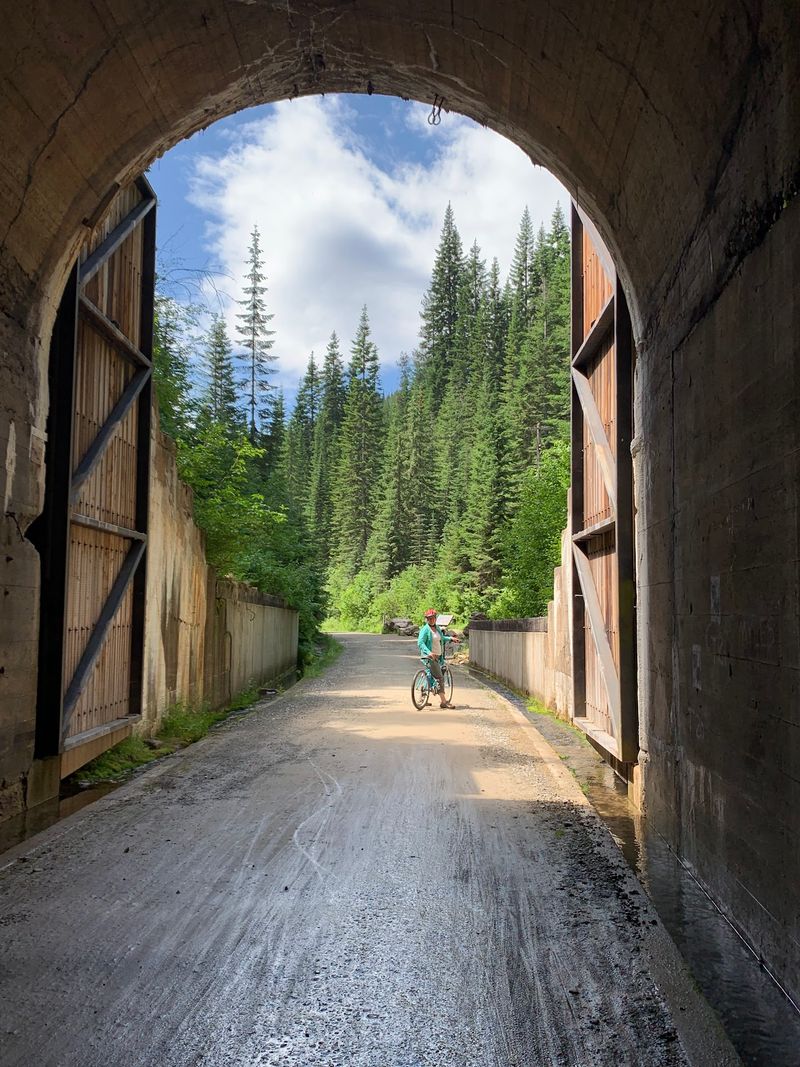
Almost everyone finishes the first tunnel with a brown stripe up their back. A thin layer of mud coats the tunnel floor, and your back tire flings it right onto your clothes.
Riders who go slow tend to stay cleaner. Speedy folks, on the other hand, often look like they rolled through a puddle on purpose.
Some families bring rain ponchos just for the tunnel, which is a clever trick.
Wear clothes you do not mind getting dirty. A change of clothes waiting in the car can make the drive home much more comfortable.
Temperature is the other surprise. Stepping from warm July sunshine into a 40-degree tunnel feels like walking into a refrigerator, and plenty of visitors wish they had packed another layer.
A light jacket or sweatshirt tucked into a small bag solves the problem.
Once you roll back into daylight, you can peel off the extra layer and warm up quickly. Then the next tunnel appears, and you pull it right back on.
These little quirks are part of the fun. Nobody expects a mountain bike ride in Idaho to include an underground cold snap and a free mud bath.
Trestles Above The Treetops
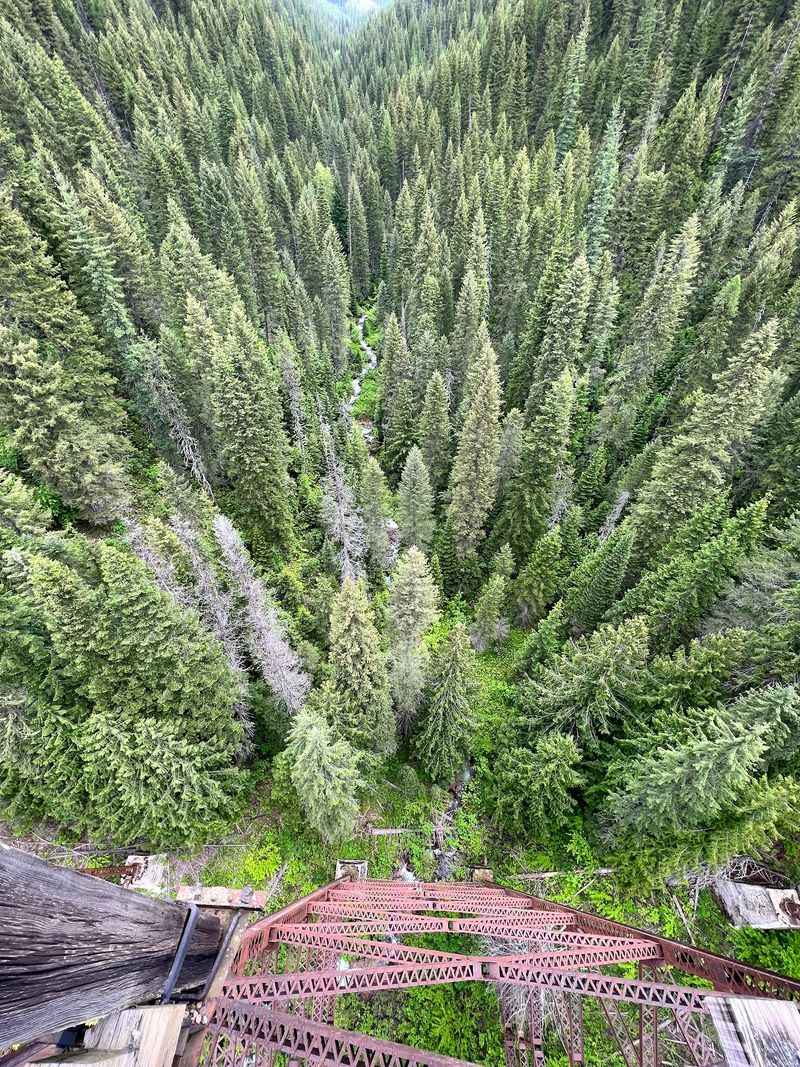
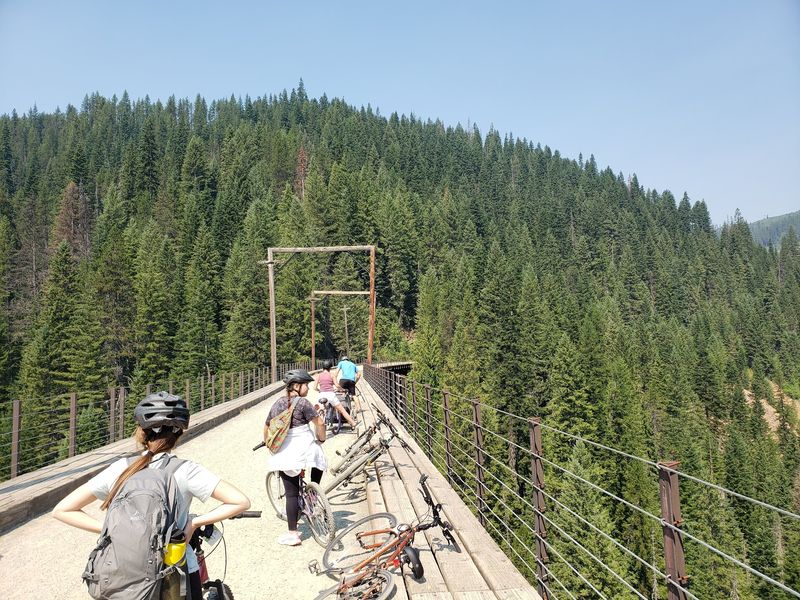
Some of these bridges rise higher than the forest itself. The tallest trestles on the route reach roughly 230 feet above the valley floor.
Seven of them span deep drainages along the trail. Each crossing opens up wide views of the Bitterroot range, with green ridges rolling away in every direction.
After miles of shady forest, stepping out onto a trestle feels like someone opened a giant window.
Guard rails line each bridge, but visitors point out that they are not meant for leaning. Parents with young children should keep a close eye near the edges and on the bridges.
Most riders stop at least once in the middle of a trestle to snap photos. You can see the tops of fir trees below your wheels, which is a strange and memorable feeling.
For folks who get nervous around heights, the crossings can feel a little scary. The surface is wide and solid, though, and taking it slow helps.
The trestles also break up the ride nicely. Instead of one long gravel road, you get a steady rhythm: forest, tunnel, bridge, view.
That keeps the miles passing quickly for everyone in your group.
Gravity Does Most Of The Work
Fifteen miles sounds like a lot until you notice the grade. The trail drops at a gentle 1.6 to 1.7 percent, so you barely need to pedal on the way down.
Railroads could not handle steep hills, and that old engineering rule now helps casual riders. Visitors mention coasting for long stretches without much effort at all.
People of all shapes and ages manage the ride. Families report kids as young as seven finishing without trouble, and one group celebrated a 75th birthday on the trail.
Trikes are available for those who are not comfortable on a regular bike.
Mountain bikes, beach cruisers, and electric bikes all show up. The packed gravel is smooth enough that fancy gear does not matter much.
Still, the route works best for kids who already feel steady on two wheels. Brand-new riders might find the tunnels and gravel a bit tricky.
Energetic cyclists sometimes ride back up instead of taking the shuttle, turning it into a nearly 30-mile round trip. The uphill grade stays shallow, so it is doable for fit riders or anyone on an e-bike.
Most people, though, happily let the bus handle the climb.
Moose, Bears And Mountain Quiet
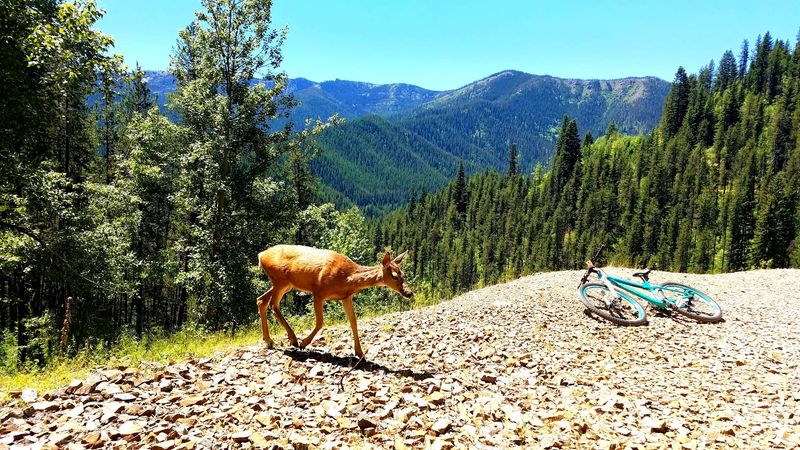
Two moose playing in the water made one moonlight ride unforgettable for a group of visitors. Wildlife sightings add a surprise element to every trip down this backcountry grade.
Bears live in these mountains too. One rider spotted a cub along the route and knew the mother was likely nearby, so some folks now carry bear spray just in case.
Because the trail runs through remote national forest land, cell service is basically nonexistent. That quiet is part of the appeal, but it also means planning ahead matters.
Bring a small repair kit or spare tube if you know how to use one. Riders have mentioned seeing broken-down bikes along the way, and help is not always close by.
Some days, volunteers patrol the trail to assist with medical or mechanical issues, though you should not count on seeing them.
Out here, the soundtrack is wind in the trees, trickling streams, and the crunch of tires on gravel. You will hear laughter echoing out of tunnels and kids shouting from trestles.
It is a real slice of wild Idaho, only a short drive from the interstate, yet it feels far removed from daily life.
Shuttle Rides Full Of Stories
At the bottom of the trail, bikes go into a trailer and people climb onto a bus. The shuttle carries everyone back up to the first tunnel for a fee, so you skip the uphill ride.
Drivers turn the trip into a moving history lesson. Visitors rave about shuttle drivers who share stories about the railroad, point out nature, and toss in jokes along the way.
One rider with serious anxiety said the driver’s talk kept her calm on the narrow, one-lane mountain road overlooking a canyon.
Expect a wait, especially on busy summer afternoons. Many riders reach the bottom around the same time, and lines of an hour or more are common.
Staff sometimes go the extra mile to squeeze bikes onto a packed trailer, saving families from waiting for the next run. Electric bikes cost extra to haul.
Food is sold near the bottom, which helps pass the time while you wait. Grab a snack, find a spot to sit, and trade stories about the tunnels.
For many visitors, the shuttle ends up being a highlight all on its own, not just a ride back.
Rental Bikes, Lights And Helmets
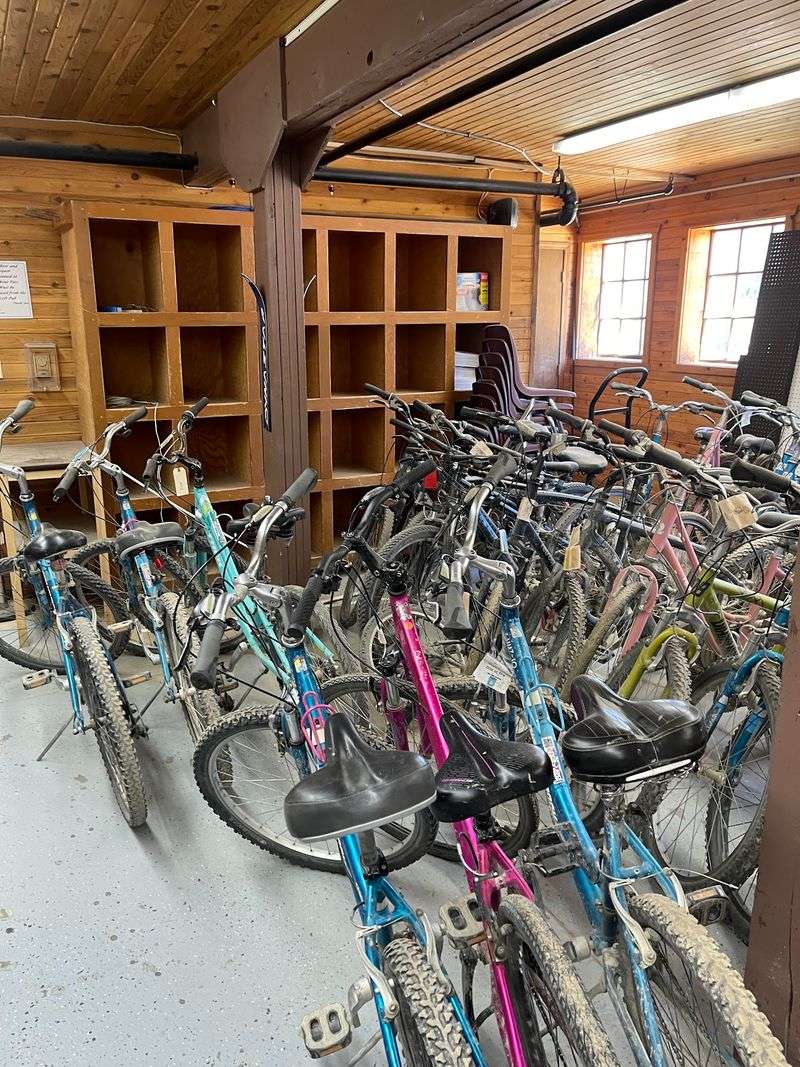
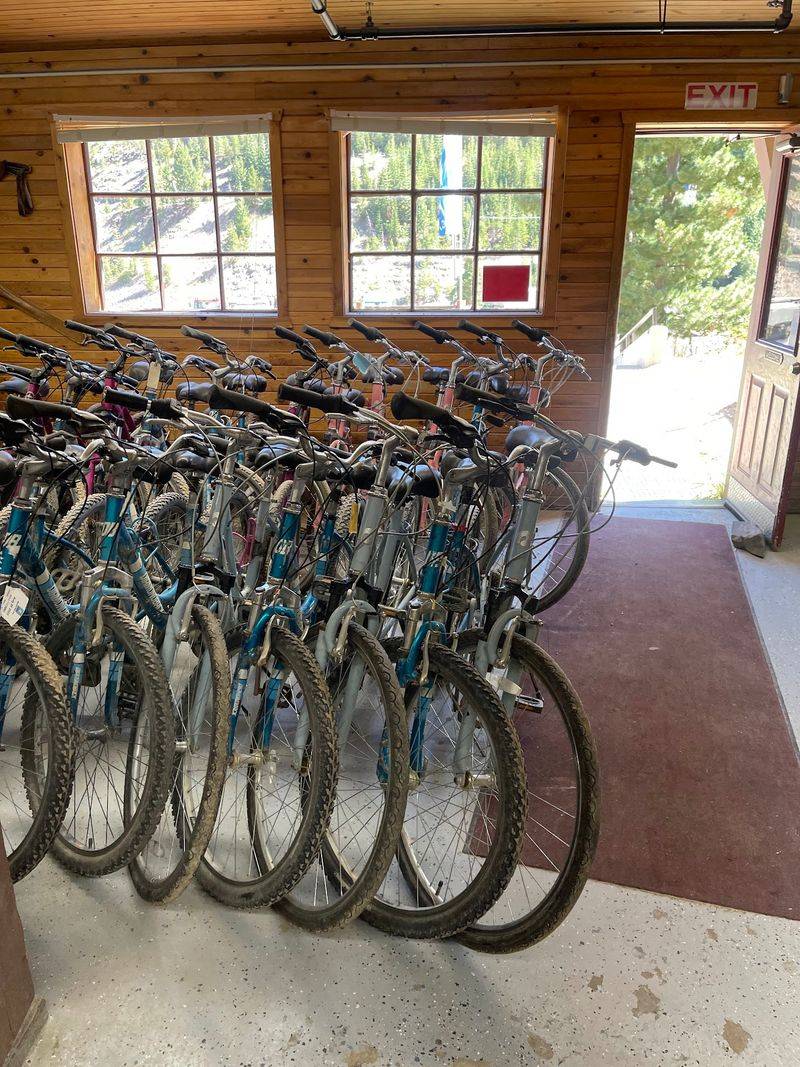
Helmets and lights are required for every single rider. Without a good light, the tunnels would be impossible to navigate.
Rental bikes are popular, and they come with a light attached. Staff help adjust seats, and visitors describe crews swapping out tiny seats for bigger ones on request.
One reviewer even noted that a bike with a problem was fixed by the next day after she mentioned it.
Not every experience is perfect. A few riders have reported shifters stuck in one gear or lights that dimmed before the final tunnel.
Staff suggest switching lights off between tunnels to save battery, but that trick does not always work.
The smartest move is packing your own headlamp as a backup. Charge it fully the night before, and consider bringing two if you have them.
Friendly employees get plenty of praise. Visitors mention workers fixing flat tires quickly, helping with ticket glitches, and even taking group photos on the trestles.
Reserving rentals online ahead of time is strongly recommended. Even with a reservation, you may wait a bit to pick up your bike on busy days, so arrive with some patience.
A Day Out For Every Age
Eleven-year-old twins, a 75-year-old birthday girl, and office teams on a team-building trip have all rolled down this route. Few Idaho outings suit such a wide mix of people.
Families love that nobody gets left behind. Groups can ride together, stop for snacks, and read the history signs without anyone feeling rushed.
Businesses use it for stress-relief outings, and friends plan big group trips around it. Riders say the miles pass faster than expected, even for beginners.
Moonlight rides offer a different twist on the experience. Riders describe a fun evening atmosphere and bonus wildlife sightings.
Season pass holders return again and again. One rider completed the trail five times in two weeks and said each trip revealed something new.
Bathrooms are limited, with one at the start and another around the halfway mark. Plan breaks accordingly, especially with little ones.
Watch younger kids closely near cliffs and bridges. Otherwise, the trail offers a safe, relaxed adventure where grandparents, parents, and kids can share the same thrill of rolling into a dark tunnel and bursting out onto a sunny trestle.
Passes, Seasons And Getting There
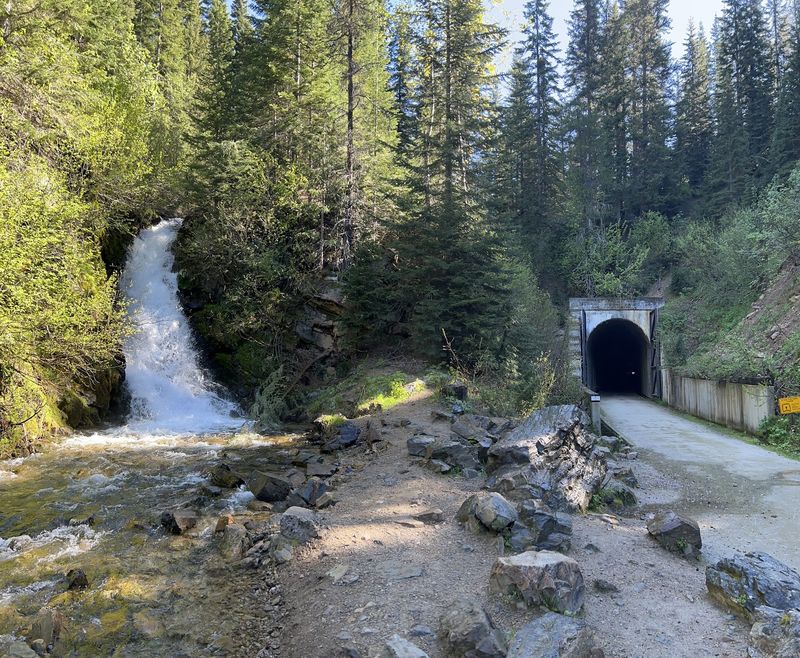
Mid-May through mid-September is the usual riding window, with July and August drawing the biggest crowds. Daily hours typically run from morning into late afternoon during the season, but check before driving.
Every rider needs a trail pass. Lookout Pass Ski Area, right on the Idaho-Montana line off Interstate 90, serves as the main spot for passes and rentals.
Staff there explain maps and options, whether you plan to shuttle or ride back up.
From Lookout Pass, the East Portal entrance is a short drive away. The mapped trail address sits along I-90 near Mullan, Idaho.
Buying tickets online at least a day ahead may save a few dollars per person, according to visitors. It also helps you skip some lines on busy weekends.
Plan on bringing layers, a strong headlamp, snacks, water, and a change of clothes. Parking can get busy during special events, so arrive early.
Historic Wallace sits about 12 miles east of Lookout Pass. Its old brick downtown makes a fun stop before or after your ride, rounding out a full Silver Valley day.
Worth The Muddy Back
Cold tunnels, mud stripes, and long shuttle lines have not scared people away. Visitors keep calling this ride a bucket-list trip, and many come back more than once.
The mix is hard to beat. You get real railroad history, mountain views from high trestles, the thrill of a pitch-black tunnel, and an easy grade that almost anyone can handle.
Small hiccups happen, like tired bike lights or a long wait at the bottom. A little planning, such as packing your own headlamp and an extra layer, fixes most of them.
For Idahoans, this trail offers something special close to home. It shows how an abandoned railroad in the Silver Valley became a place where families make memories every summer.
Whether you grew up near Coeur d’Alene or drive in from the Treasure Valley, the day feels like a genuine Idaho adventure. It is the kind of outing kids talk about for weeks.
So grab a helmet, charge that light, and plan for a summer weekend. The tunnels will be chilly, your back might get muddy, and you will probably grin the whole way down.