This 1850s Mission Church In Idaho Is The State’s Oldest Standing Building
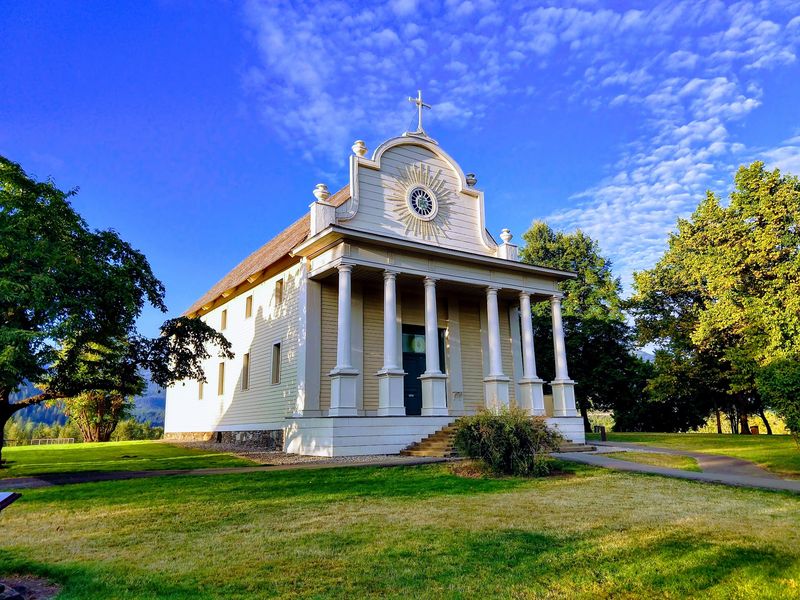
Wooden pegs, river mud, and willow branches hold up the oldest building in Idaho, and it has been standing since the early 1850s. Drivers on Interstate 90 zip past it every day without realizing a hand-built church sits on the hill above them.
Missionaries and members of the Coeur d’Alene Tribe raised it together with simple tools and no nails at all. Stopping here feels like opening a door into the Panhandle’s earliest chapter.
A Hilltop Church Above The River
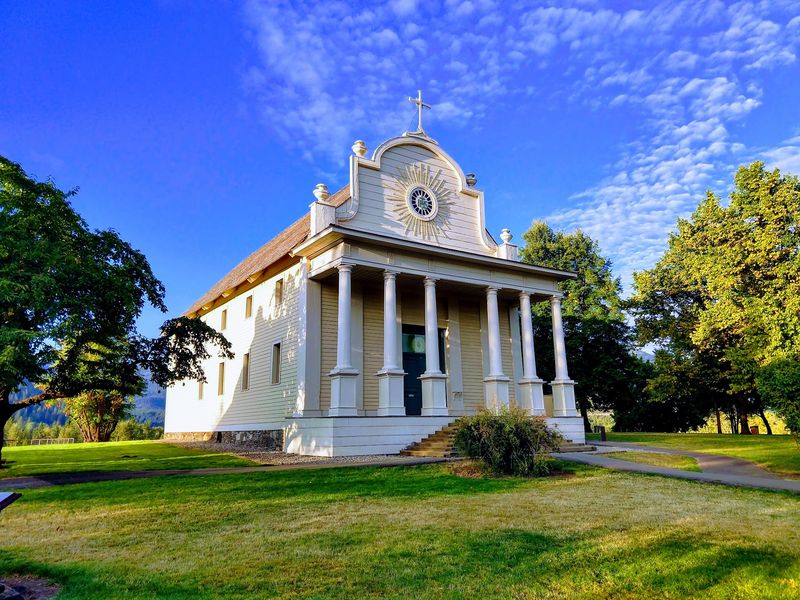
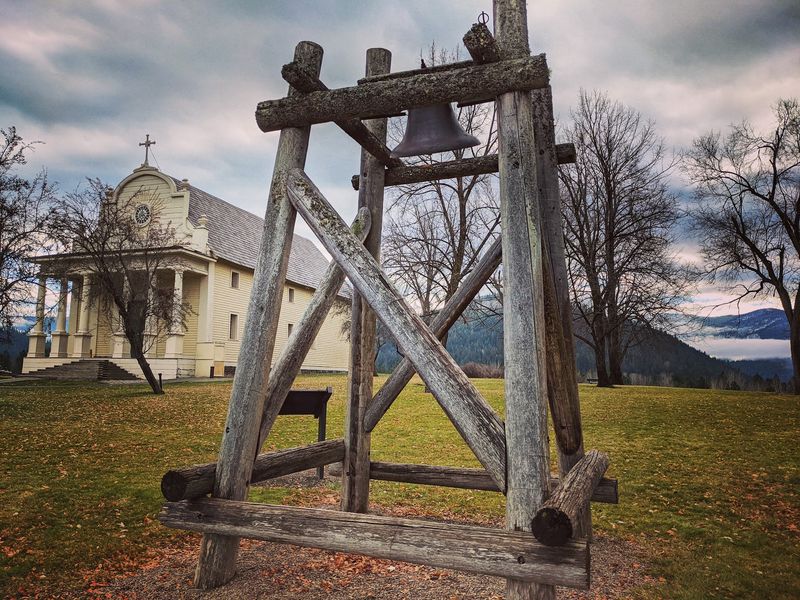
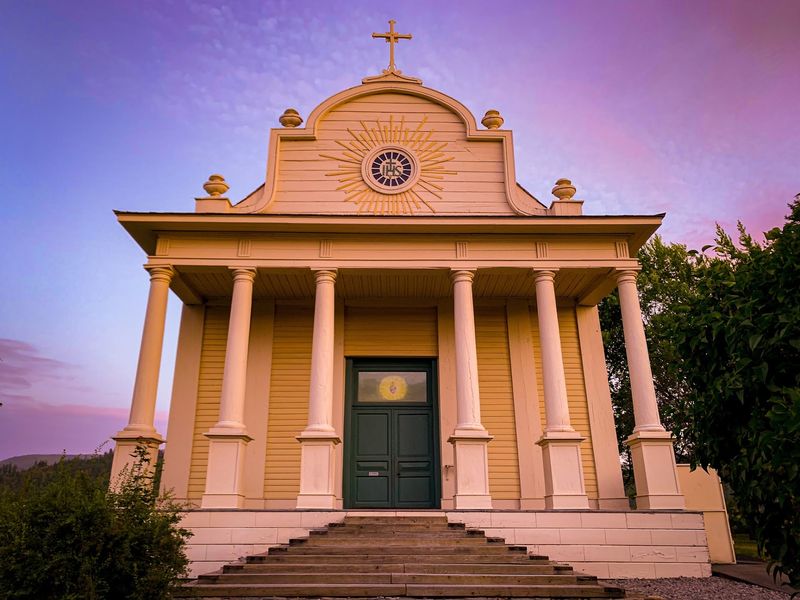
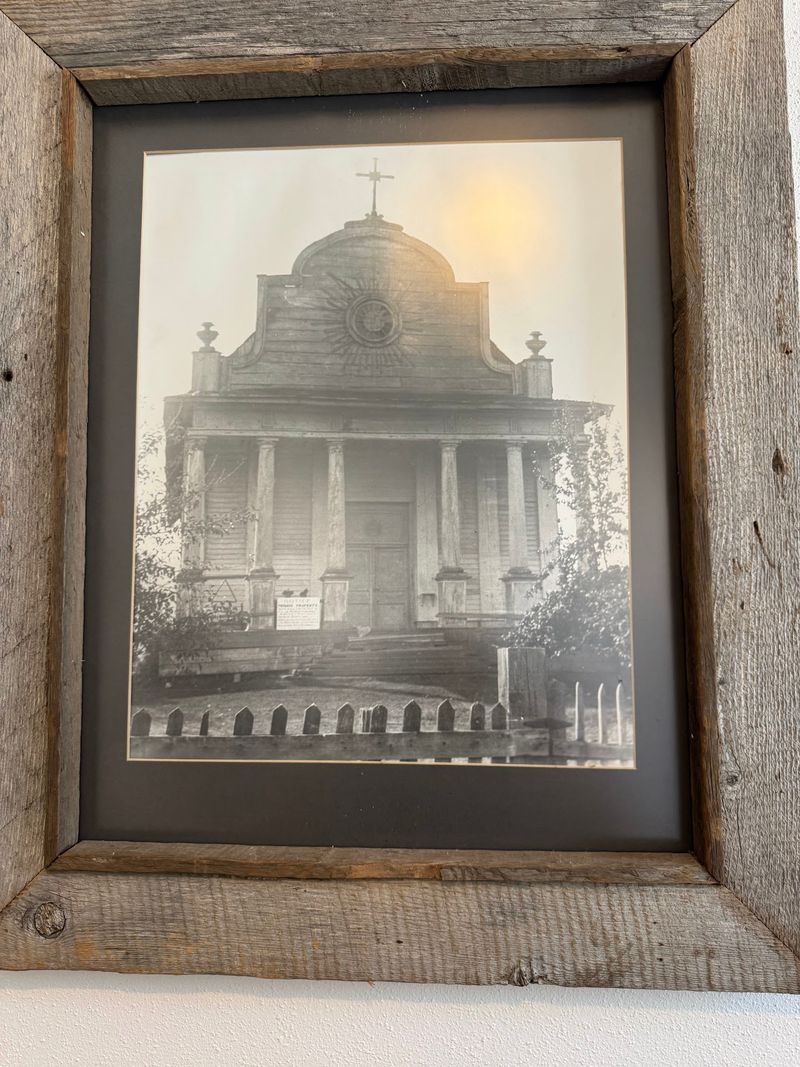
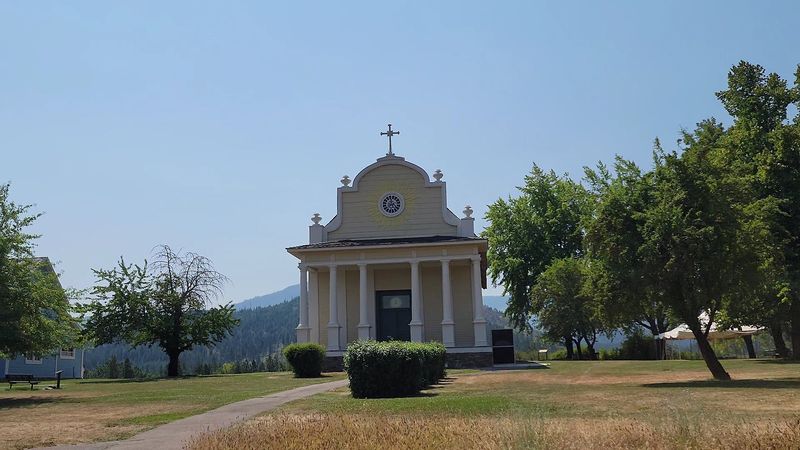
Six white columns catch the light first, rising from a grassy hill above the Coeur d’Alene River valley. Behind them stands the Mission of the Sacred Heart, better known as the Cataldo Mission, and it holds the title of Idaho’s oldest standing building.
The church is the centerpiece of Coeur d’Alene’s Old Mission State Park, set in the Silver Valley stretch of the Idaho Panhandle. It is also counted as the oldest mission church in the Pacific Northwest, which is a big claim for a building made from timber, grass, and mud.
Many travelers admit they drove past the exit for years before finally pulling off. The park sits a short hop from Interstate 90, yet the hill and trees keep it fairly hidden from the freeway, so it surprises people who expect only a roadside sign.
Around the church, visitors find a restored parish house, two historic cemeteries, short nature trails, and a modern visitor center down the slope. Together they make an easy stop that fits into a road trip or a slow Saturday.
Getting oriented takes only minutes, and the payoff starts the moment the church comes into view.
From Floodplain To Higher Ground
Floods pushed this story uphill. The Catholic mission to the Coeur d’Alene people began in 1842 on the St. Joe River, but the water kept rising over the site, so in 1846 the mission moved to its current, higher spot near the Coeur d’Alene River.
Construction of the church ran from 1850 to 1853. Father Anthony Ravalli, a Jesuit priest from Ferrara, Italy, drew up the design, while Coeur d’Alene tribal members and missionaries did the heavy work together.
Once finished, the mission turned into a busy crossroads. Westward travelers, miners, and traders stopped here, and the Jesuits introduced farming practices to the Coeur d’Alene community.
Priests at the mission even helped with talks between the U.S. Army and local tribes during tense years.
Change came in 1877, when the mission relocated to Desmet on the newly created Coeur d’Alene Reservation and left the church behind. The nearby town took its name from Father Joseph Cataldo, who later made the mission his headquarters.
Recognition followed much later. The building became a National Historic Landmark in 1961 and joined the National Register of Historic Places in 1966.
Built Without A Single Nail
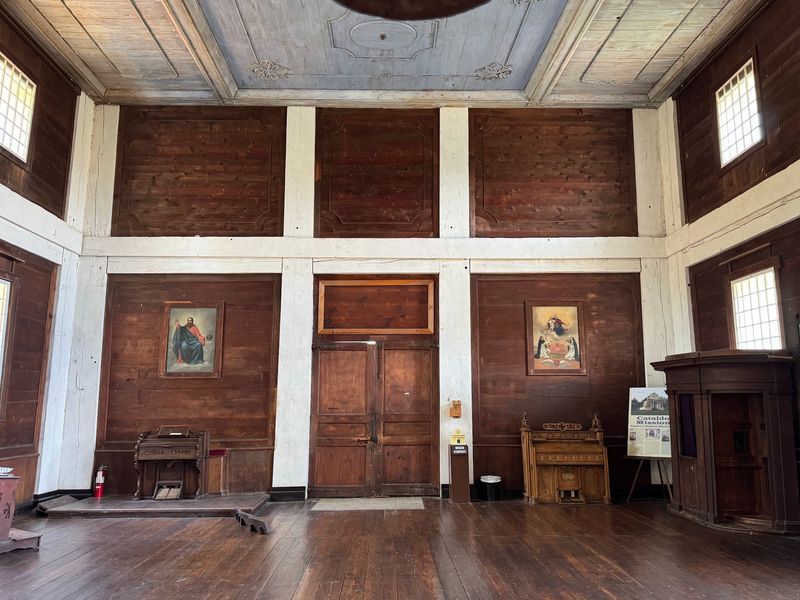
Not one nail went into this church. Wooden pegs hold everything together, and that detail alone makes many visitors stop and run a hand along the old beams.
Workers used broadaxes, a homemade whipsaw, augers, ropes, pulleys, and even a pen-knife to shape local materials. The walls follow the wattle and daub method, with willow saplings woven between heavy timber frames and then packed with wild grass and river mud.
Size matters here too. The church measures roughly 92 feet long, nearly 41 feet wide, and about 52 feet tall, all resting on a rock foundation four feet thick.
Standing inside, it is easy to picture the lifting and hauling it took to raise those frames by hand in the 1850s Idaho woods. The floor, likely added around the 1860s, was made from large hand-hewn planks.
Park staff and rangers sometimes share how the building went up, and those talks bring the tools and techniques to life. Visitors often leave talking about the craftsmanship more than anything else, which says plenty about the people who built it with so little.
Huckleberry Paint And Tin Can Chandeliers
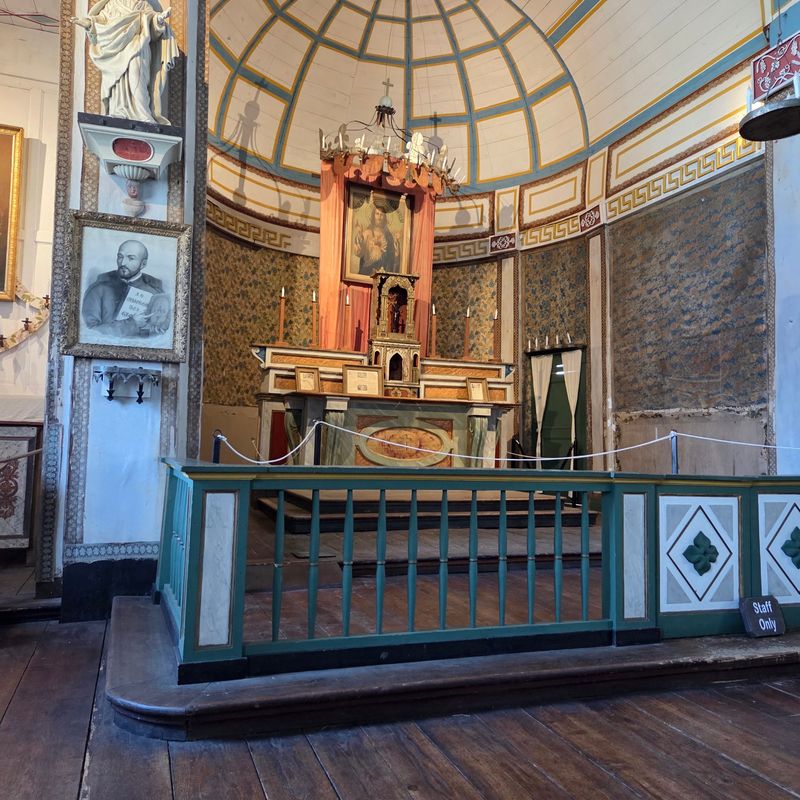
Huckleberry juice on the walls? Yes, and it is one of the best surprises inside the church.
Builders painted the interior with natural pigments, including huckleberry, to imitate the veining of stone.
The chandeliers carry their own clever backstory. They were fashioned from old tin cans, a reminder that the builders made beauty from whatever they had on hand in the Panhandle wilderness.
Outside, the look is surprisingly grand. Father Ravalli called for a simplified Baroque style with a Greek Revival portico, and an Italianate sunburst design circles a bulls-eye window high on the front.
One tip passed along by visitors is to ask a staff member about the blue ceiling. The story behind it adds another layer to the room, and rangers seem happy to share it.
Light slips through the windows and settles on the painted surfaces, making the space feel calm even when a few families are wandering through. Many people remark that the mission is in better shape than they expected for its age.
Give yourself a few quiet minutes in a pew. The details reveal themselves slowly.
The Parish House Next Door
Right beside the church sits a second historic building that often gets overlooked in photos. The parish house, which was the priests’ living quarters, can be toured along with the mission.
The current house dates to 1887, built after an earlier one burned. It has been restored and furnished so visitors can get a feel for daily life on the hill once the church was up and running.
Walking between the two buildings gives a clear sense of how the mission worked as a small community rather than just a place of worship. The contrast between the grand church and the simpler home is part of the fun.
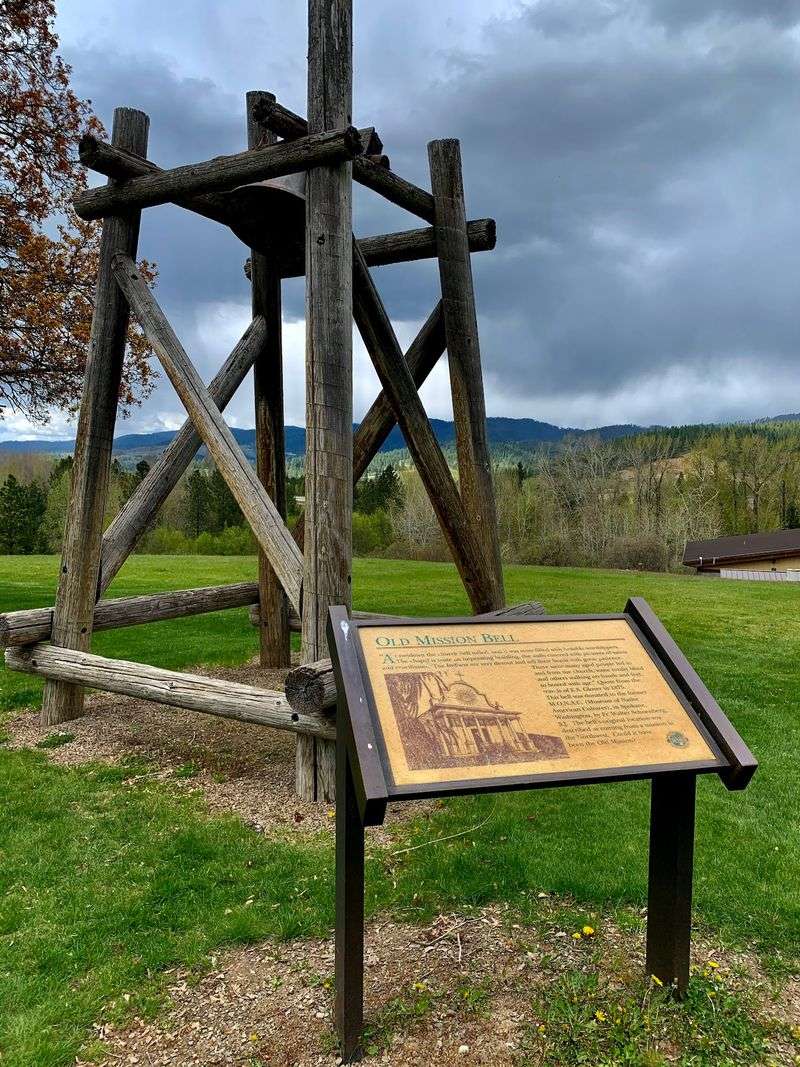
Families say kids enjoy poking around both structures, and the short walk between them keeps little legs moving. The mission bell also stands on the grounds nearby, a favorite spot for photos.
Behind the church, the view opens across the valley, and several people recommend lingering there after the tours. It is a good spot to catch your breath and think about the travelers who once arrived here on foot or horseback.
Plan on stepping inside both buildings, since each tells a different half of the story.
Sacred Encounters In The Visitor Center
Start at the bottom of the hill. Staff recommend the modern visitor center first, where a short film of around 18 to 20 minutes explains the mission’s history and makes the buildings far more meaningful once you walk through them.
The museum here is bigger than most people expect. Its award-winning exhibit, Sacred Encounters: Father De Smet and the Indians of the Rocky Mountain West, covers the Coeur d’Alene Tribe, the missionaries, and the meeting of their worlds.
Inside, the rooms mix written panels, period sketches, Native American artifacts, photographs, and documentary videos. A hollowed-out tree trunk canoe is one of the pieces that catches eyes.
Special exhibits rotate alongside the permanent collection, so return visits can offer something new. The exhibit carries a separate fee from park entry, so budget a little extra if you want to see it.
The building also has clean restrooms and a gift shop, handy before heading uphill. Visitors frequently mention friendly, helpful staff who answer questions and point out easy routes.
History lovers could spend an hour or two here alone. Quicker travelers can still watch the film and skim the highlights.
Trails, Cemeteries, And River Wetlands
Birdwatchers, take note. Short trails wind away from the church, and one leads down to wetlands along the Coeur d’Alene River where waterbirds gather.
Another path heads to the historic cemeteries, two of which sit on park grounds. Interpretive signs along the way add bits of history, so even a short stroll teaches something.
None of the walks are long or hard, which suits families and anyone looking for easy movement after a long drive. The grounds themselves feel spacious, with a bright green hilltop and mature shade trees.
Picnic tables sit beneath those trees, and plenty of visitors pack lunch to enjoy with a view. It is a relaxed place to spread out and let kids explore.
Wildlife fans may want to check a nearby boat launch just west of the mission, which one traveler described as full of riparian birds. The river corridor here in the Silver Valley is lively in the warmer months.
Leashed dogs are welcome in outdoor areas, so four-legged travelers can join the trail time. Bring water and comfortable shoes and give yourself time to wander.
Quiet Grounds For Families And Wanderers
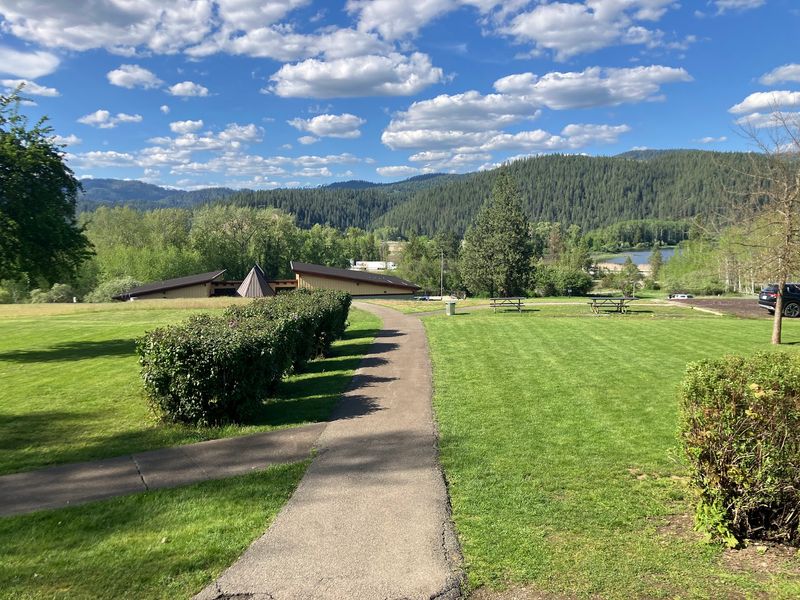
Calm is the word that keeps coming up. People describe the grounds as peaceful and serene, a spot to slow down without feeling rushed.
Families bring kids to learn about Idaho history and the cultures that shaped the state, and school field trips have visited for decades. One former Kellogg resident recalled a childhood field trip and said the mission looked just the same around 40 years later.
That sense of permanence is part of the appeal for locals. Anyone who grew up near Coeur d’Alene or the Silver Valley has likely passed the exit, and many finally stop years later.
History readers, architecture fans, and photographers will all find plenty to enjoy. Road trippers crossing Idaho on Interstate 90 appreciate that a satisfying visit takes only a couple of hours.
Each August, a gathering of the Coeur d’Alene people takes place at the mission, a meaningful event for the community and visitors alike. Check ahead if you would like to plan around it.
Retirees and slow travelers will like the shaded benches and unhurried pace. It is simply a pleasant place to sit, look, and imagine life on this hill long ago.
Planning Your Stop In Cataldo
Finding the park is simple. It sits at 31732 South Mission Road in Cataldo, just off Interstate 90 in Kootenai County’s corner of the Idaho Panhandle, with access from both directions.
Entry is charged per vehicle, typically a few dollars, and an Idaho state park pass covers it. The Sacred Encounters museum costs a bit more, and visitors say the fees help with upkeep.
The park generally welcomes guests from late spring through early fall, and daily hours can shift, so check with Idaho Parks and Recreation before driving. Many travelers mention passing by when the gates were closed, so timing matters.
One helpful tip concerns parking. The lower lot near the visitor center leads to a steep, step-heavy climb, but an upper parking area offers much easier access for anyone using a wheelchair or avoiding hills.
Restrooms are available in the visitor center, with another outdoor restroom near the mission. Two hours covers the film, museum, church, parish house, and a short walk.
For a hand-built church that has outlasted everything around it, Idaho’s oldest building earns that detour off the freeway. Pack a picnic and stay awhile.