This Michigan Church Was Once Famous As The Church Of The Grottos
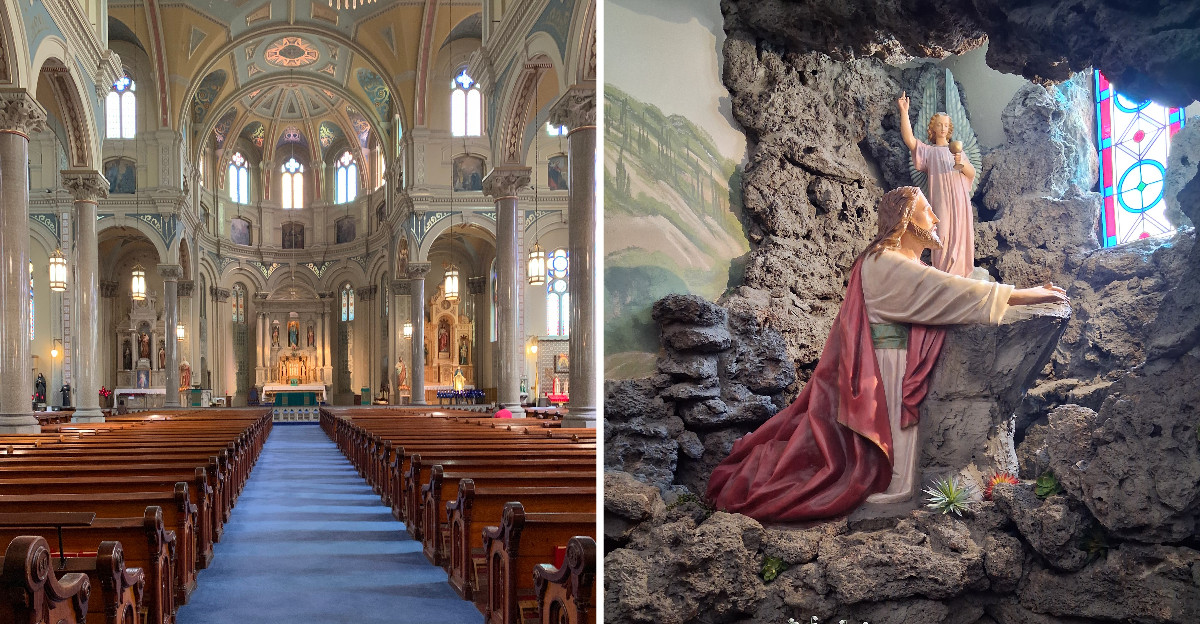
The Church of the Grottos? Tell me that nickname does not make you curious!
One historic Michigan church earned it through unusual prayer spaces hidden inside, giving the building a story that goes far beyond its red brick exterior.
Towers and a rose window grab attention before you enter, but the quieter details inside make the visit more personal.
The grottos add another layer to a place that still serves an active faith community today. That mix matters.
This is not simply an old building frozen in time.
History and worship still share the same walls, which makes the famous nickname feel even more intriguing.
A Parish With Deep Roots
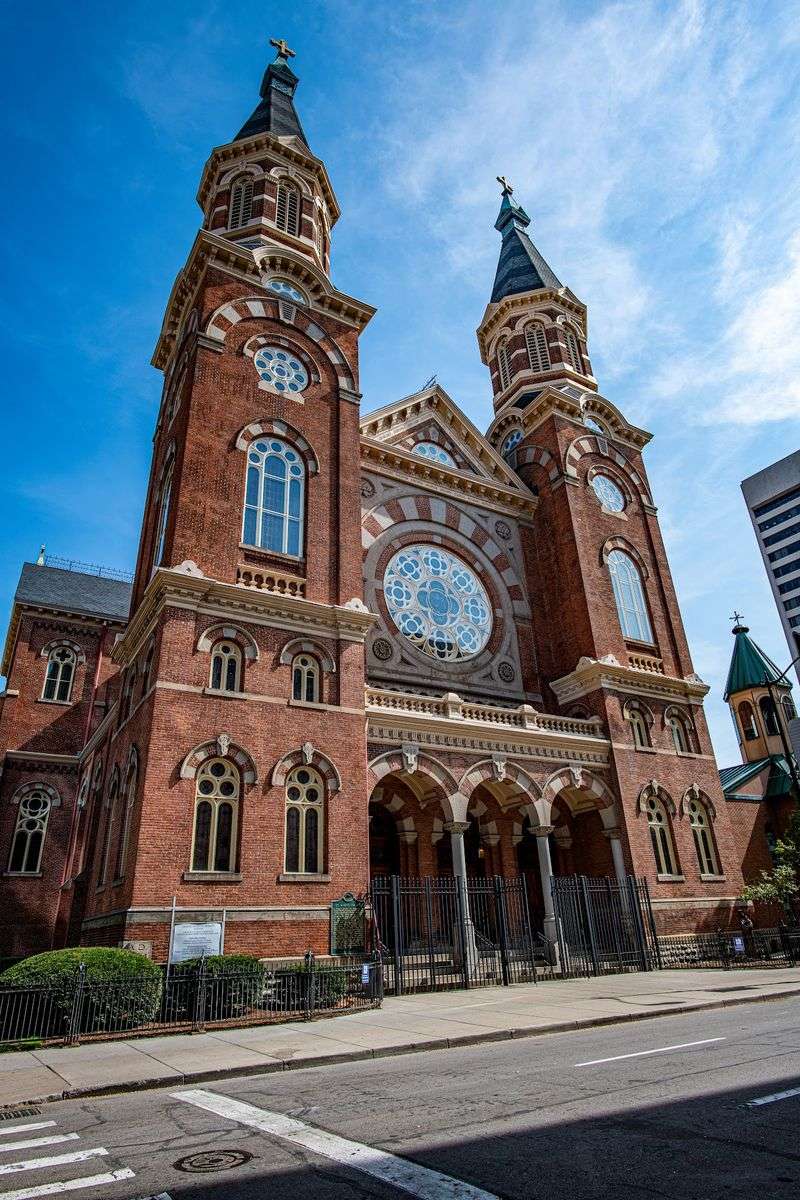
Old St. Mary’s traces its establishment to 1834, when a parish was organized for Detroit’s growing German-speaking Catholic population.
The cornerstone of the first church was laid in 1841, and that building was consecrated in 1843. As the congregation grew, the original church eventually became too small for the community it served.
The present structure replaced it on the same site. Its cornerstone was laid in 1884, and the church was dedicated on August 16, 1885.
That history makes this Detroit’s first ethnic German Catholic parish and one of the city’s oldest Catholic communities.
Other pieces of the historic parish complex predate the current church. The surviving school building dates to 1868–69, while the rectory was completed in 1876.
This Michigan neighborhood changed dramatically around them, but the church remained in what is now the Greektown Historic District.
Religious orders also shaped parish life for generations. The Spiritans served here from 1893 until June 2025, ending 132 years of ministry at Old St. Mary’s.
Today the parish remains active at 646 Monroe Street in downtown Detroit.
Brickwork Worth Looking Up
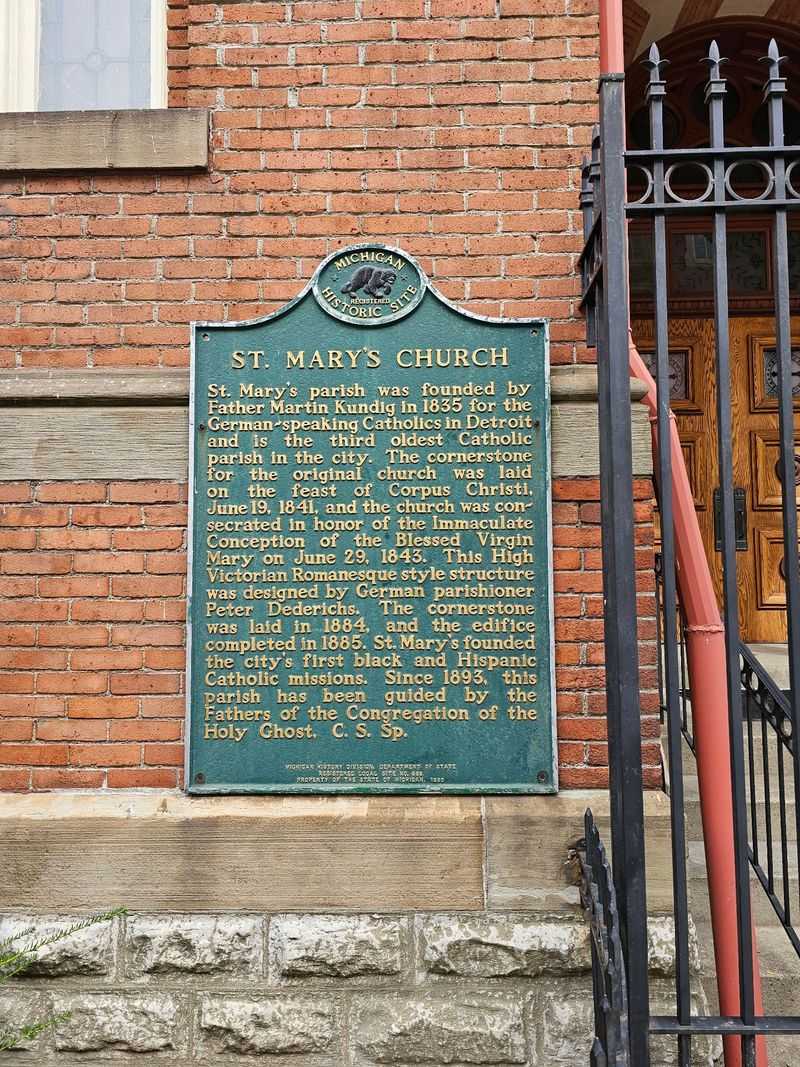
The exterior makes its age obvious without looking fragile.
Red brick covers the large cruciform building, while pale stone details outline arches, windows, and decorative bands. Two towers rise above the front elevation, framing the large circular window at the center.
The present church was designed by German-born parishioner Peter Dederichs.
Historic sources identify its style as Pisan Romanesque, giving the building rounded arches, strong masonry forms, and an imposing symmetrical front.
The church was created for a substantially larger congregation than its predecessor. Historic Detroit notes that the building’s cruciform plan was designed to accommodate about 1,200 worshippers.
Stepping back before entering gives the clearest sense of how the towers, central gable, and rose window work together.
Up close, smaller brick patterns and pale architectural accents become easier to notice.
Old St. Mary’s is also part of the Greektown Historic District, which entered the National Register of Historic Places in 1982. The federal listing recognizes the district’s importance in architecture, religion, commerce, and European immigrant history.
Why Grottos Gave It Fame
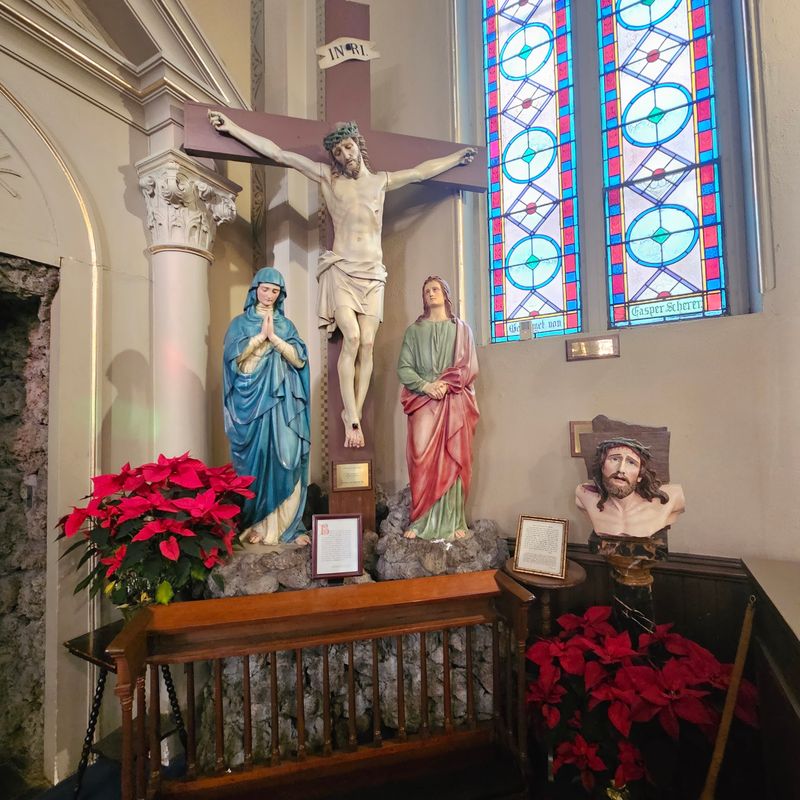
The nickname becomes easy to understand once the three grottos come into view.
Old St. Mary’s parish history identifies a Gethsemane Grotto, a Baptismal Grotto, and a Lourdes Grotto.
They were installed in the early twentieth century under the parish leadership of that era and became distinctive enough to give the church its former nickname.
The Gethsemane Grotto depicts Christ praying in the Garden of Olives.
The Baptismal Grotto represents the baptism of Jesus in the Jordan River and incorporates flowing water into the scene.
Beside it, the Lourdes Grotto reproduces the appearance of the famous French shrine and contains an altar.
Together, those three spaces explain why Old St. Mary’s became widely known as the Church of the Grottos.
They were never intended simply as decorative curiosities. Each one connects to prayer, sacramental life, or a specific Catholic devotion.
That religious purpose still matters during a Michigan visit because the grottos remain within an active house of worship rather than a museum display.
Three Spaces, Three Stories
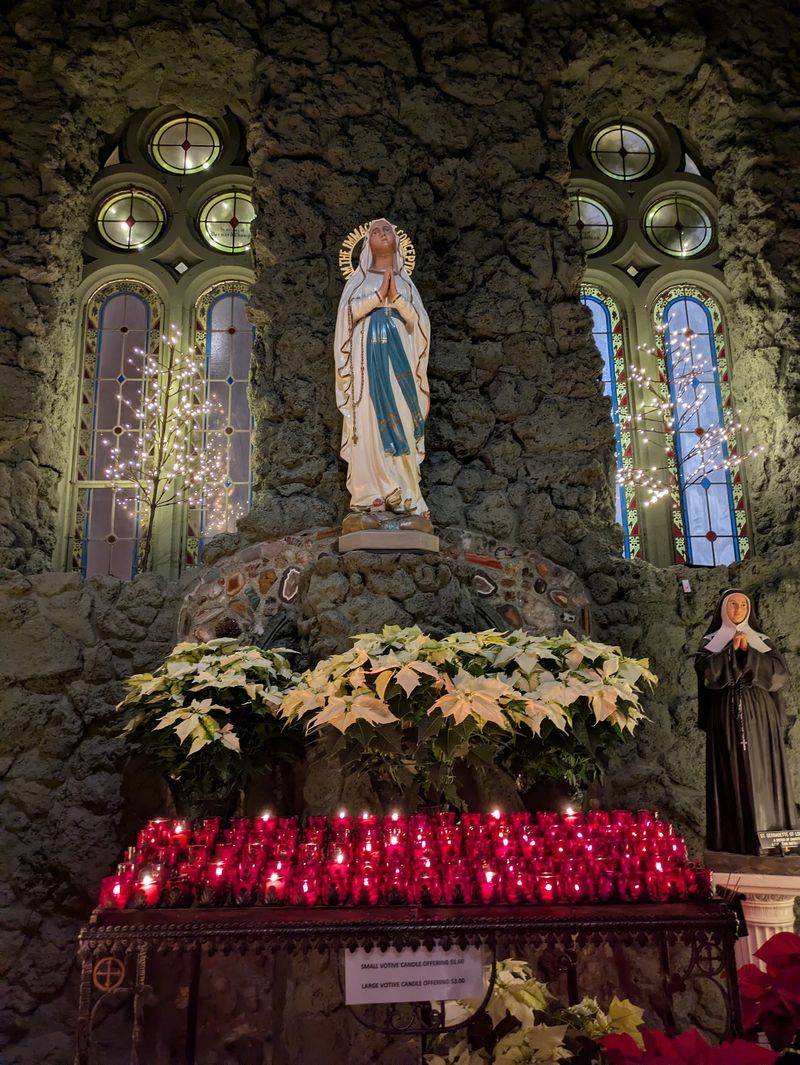
Each grotto tells a separate story, so viewing them individually makes their differences easier to understand.
The Gethsemane setting focuses on prayer before the arrest of Jesus. Figures and rough stonework create a scene meant for reflection rather than simple decoration.
The Baptismal Grotto has a different purpose. Its imagery centers on Christ’s baptism, and parish history specifically notes the flowing water incorporated into the scene.
The Lourdes Grotto draws on one of Catholicism’s best-known pilgrimage sites. It recreates the French shrine in miniature and includes an altar within the stone setting.
A long-standing parish tradition also connects some of its stones with a trip to Lourdes. That detail is best treated as parish tradition rather than a fully documented construction record.
These spaces have also received preservation attention over time. The Lourdes Grotto, for example, was restored and rededicated in 2019 before reopening as a larger area for prayer and visitation.
Access can depend on worship, tours, and parish activities, so the grottos remain devotional spaces first and historic features second.
A Room Full Of Details
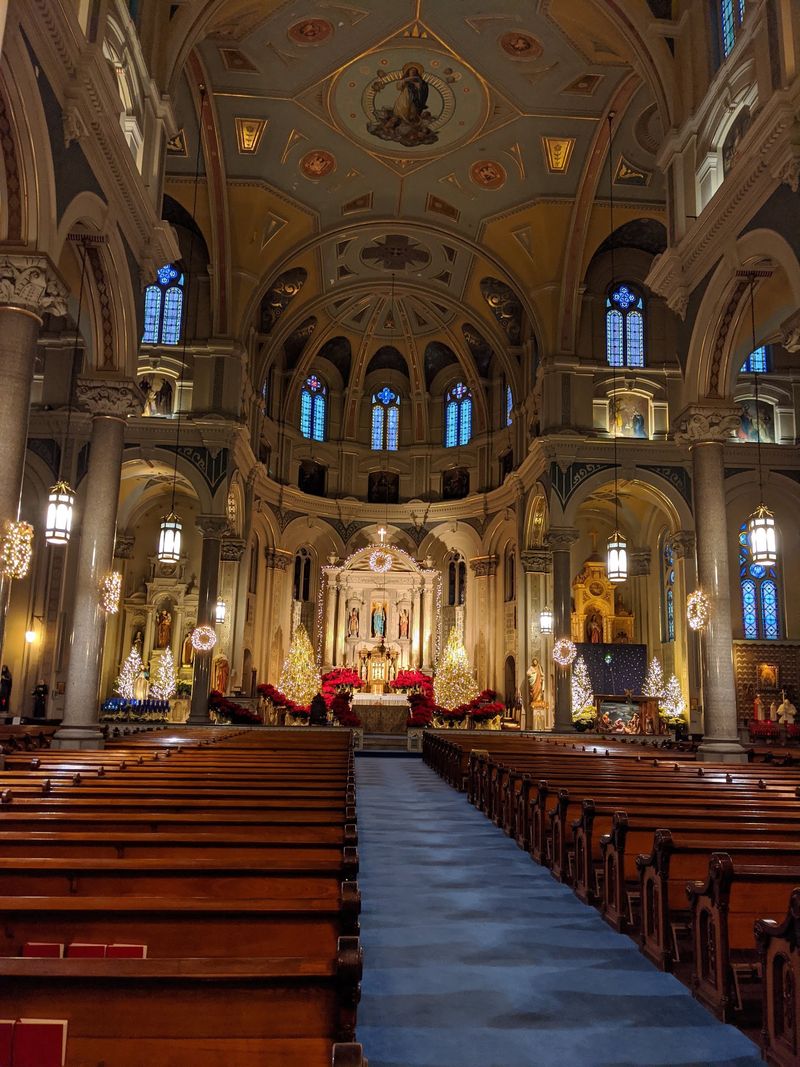
The grottos may explain the nickname, but the main church has plenty competing for attention.
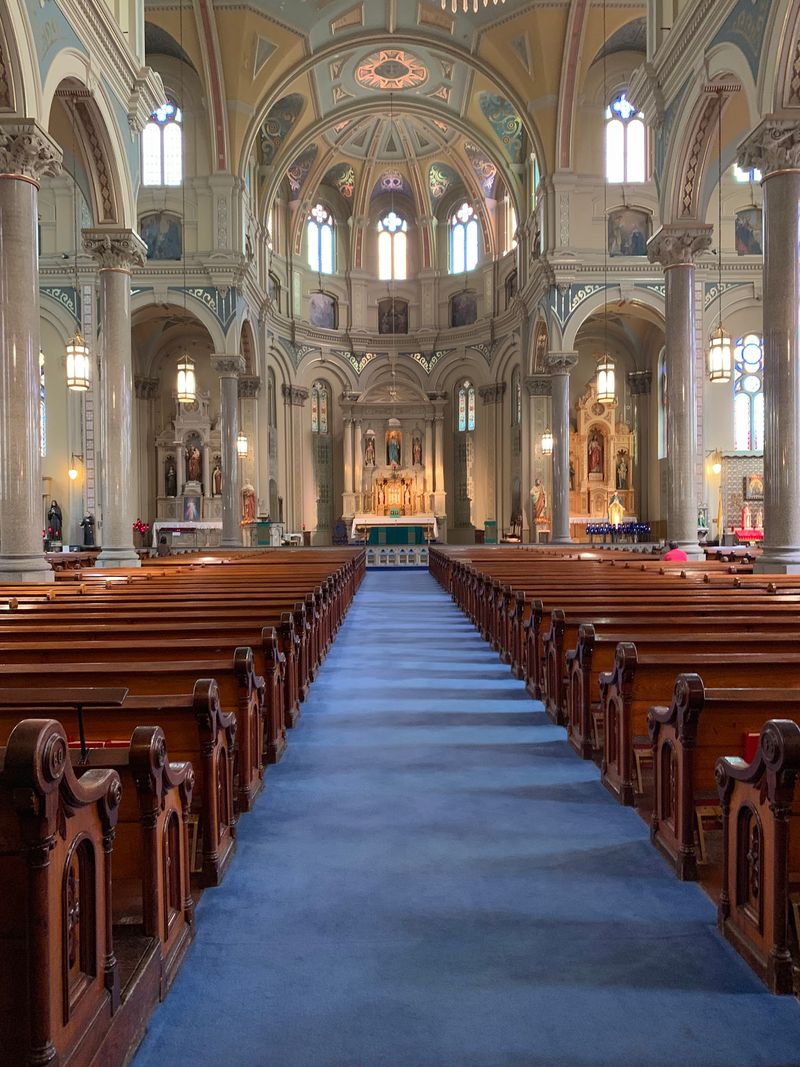
Tall painted ceilings, stained glass, long aisles, sculptural details, and an elaborate sanctuary create a much richer interior than the brick exterior suggests.
Ten polished granite columns divide the central nave from the side aisles.
A popular story has long claimed those columns were originally made for the Michigan State Capitol in Lansing. Historic Detroit identifies that account as an urban legend.
Records instead show that the granite columns arrived in Detroit from Portland, Maine, in July 1884.
That makes them no less impressive. Their scale helps organize the interior while drawing attention toward the sanctuary.
Stained-glass windows add changing color as daylight moves through the church, while the painted vaults reward anyone willing to look above eye level.
The interior also preserves the visual richness expected of a major nineteenth-century Catholic church, with ornament extending well beyond the altar itself.
This Michigan building works best when its features are taken one at a time. The grottos, columns, glass, arches, and sanctuary each tell a different piece of the same story.
Still A Place For Worship
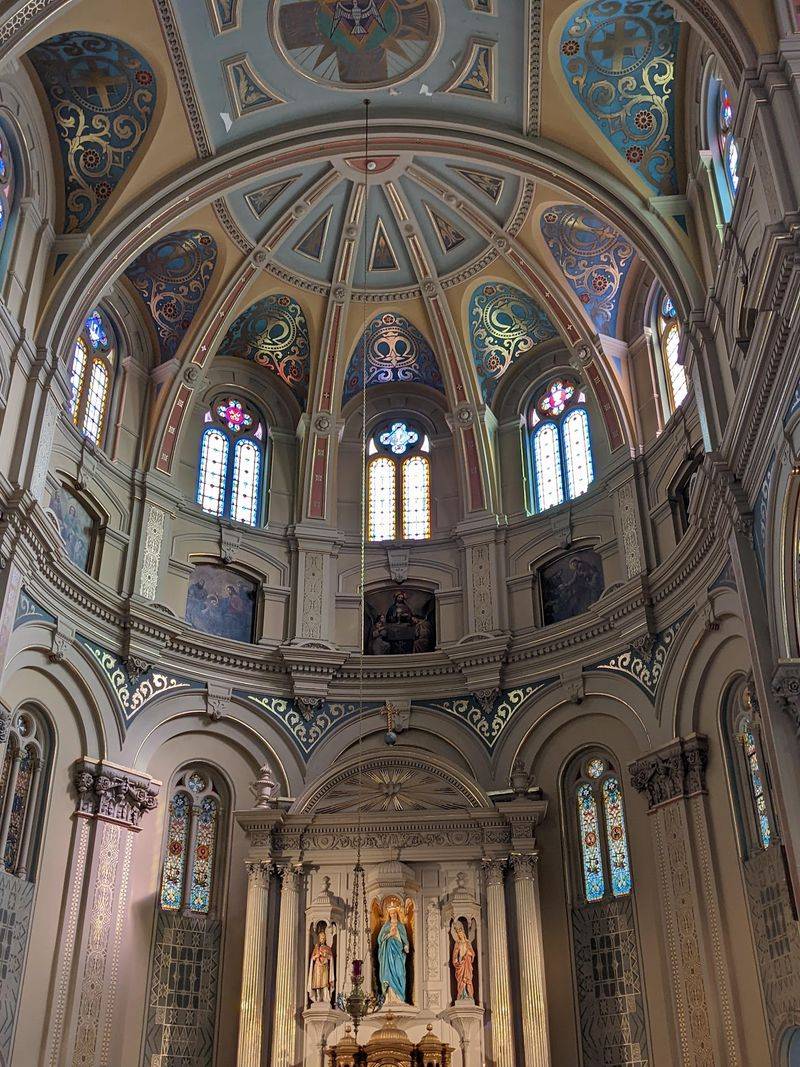
The artwork can make Old St. Mary’s feel like a historic attraction, but its daily purpose remains religious.
The parish continues to celebrate Mass, confession, adoration, baptisms, weddings, and other Catholic rites.
Its current September 2026 schedule lists Sunday Masses at 8:30 and 11:30 a.m., a Saturday vigil at 5:30 p.m., and weekday Masses on Tuesday and Friday at 12:15 p.m.
That active schedule changes how the building should be explored.
A quiet visit respects people who may be praying, preparing for a service, or using the grottos for devotion. Sightseeing should remain secondary whenever worship is underway.
The parish also entered a new chapter recently. After the Spiritans concluded their 132-year ministry in June 2025, Old St. Mary’s continued serving downtown Detroit as an active Catholic community.
Guided tours can currently be arranged directly through the parish during church hours.
That gives visitors a structured way to learn more about the building without assuming that every area will always be available for independent exploration.
Care Behind The Craft
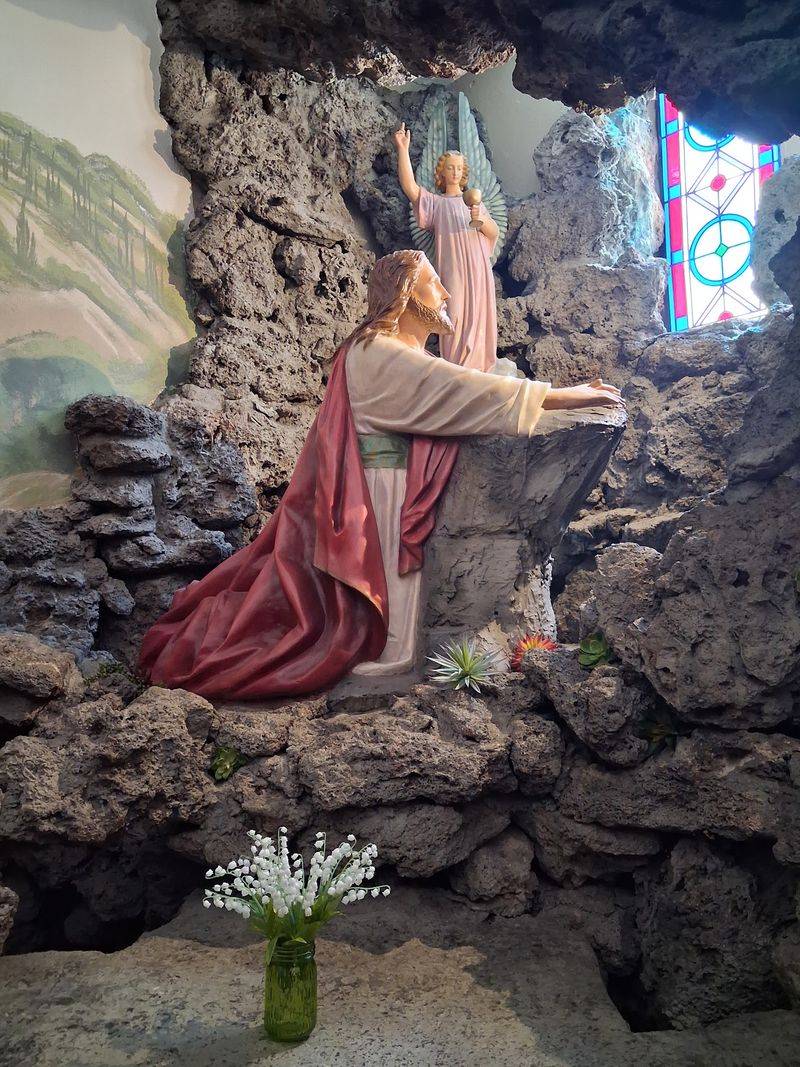
Historic details do not look after themselves, no matter how substantial the building appears.
The grottos, masonry, towers, windows, roof, painted surfaces, statues, and furnishings all depend on ongoing maintenance rather than one finished restoration.
One documented example is the Lourdes Grotto, which underwent restoration before its rededication in 2019.
Preservation has continued beyond that project. A current 2026 parish update refers to numerous repairs undertaken since July 2025, showing that care for the historic property remains an active responsibility.
That matters because many of the church’s most interesting features are also among the easiest to take for granted.
Stone can deteriorate. Stained glass requires specialized work. Older roofs, towers, and decorative finishes need periodic attention even when they appear sound from below.
Preservation is therefore part of the church’s continuing history rather than a chapter that ended years ago.
Visitors do not need to touch the grottos or decorative surfaces to appreciate them. Slow observation reveals plenty, from changing stone textures to the contrast between polished granite and richly decorated walls.
Planning A Thoughtful Visit
Old St. Mary’s sits at 646 Monroe Street in the heart of Detroit’s Greektown Historic District, making it easy to include during a downtown visit.
The parish remains active in 2026, with regular weekend and weekday worship as well as tours arranged through the church.
Services, weddings, parish events, and maintenance can affect which spaces are accessible at a particular time, so unrestricted access to every grotto should not be assumed.
The exterior deserves time of its own. Twin towers, patterned brickwork, the central rose window, and Romanesque detailing give useful context before the interior comes into view.
Inside, the most respectful approach is also the simplest. Quiet voices and appropriate distance allow visitors to appreciate the architecture without disrupting people who have come to worship.
Old St. Mary’s began as a parish for German-speaking Catholics and grew into one of downtown Detroit’s enduring religious landmarks.
The Church of the Grottos nickname may provide the first spark of curiosity, but those three unusual spaces are only one chapter in a story that has been unfolding here for nearly two centuries.