You Haven’t Explored Colorado Until You’ve Walked This Gorgeous Trail With Jaw-Dropping Views
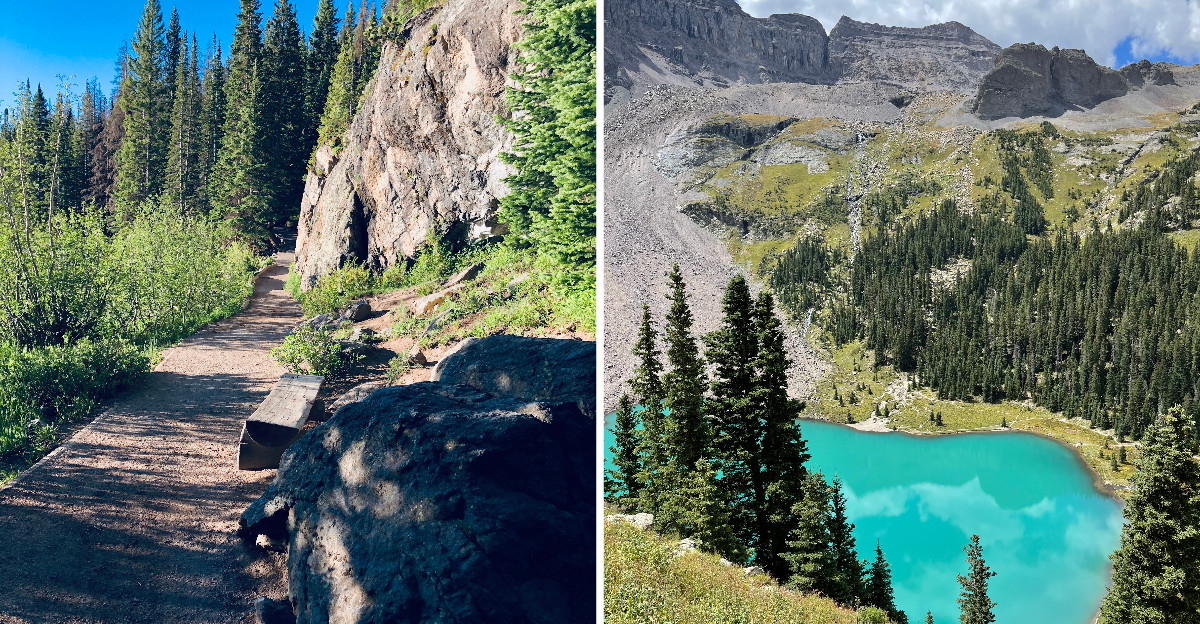
How does a trail this easy get away with views this dramatic?
Colorado somehow squeezes clear water, towering peaks, and classic mountain scenery into a walk that starts rewarding you almost immediately.
There is no long buildup before the good part.
The lake is already there, the mountains are already showing off, and every few steps seem to create another excuse to stop. That makes the whole outing feel wonderfully relaxed.
You can keep the walk simple or let curiosity pull you farther.
Either way, this is proof that a short trail can still deliver one very big “wow” moment after another.
A Lake Within Easy Reach
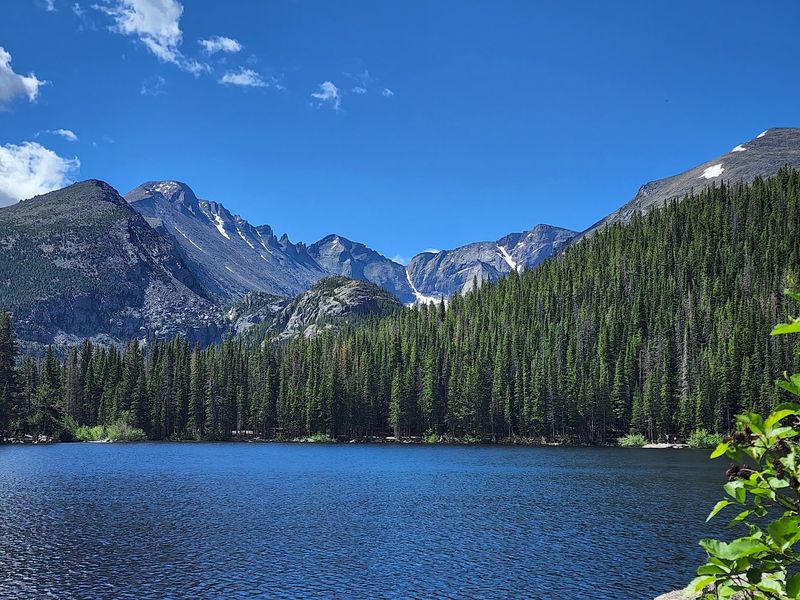
Bear Lake Trailhead sits beside one of the most popular high-elevation destinations in Rocky Mountain National Park, making the first scenic stop remarkably quick to reach.
In Colorado, that kind of payoff is useful when time is limited. The water appears after a short walk from the parking area.
The trailhead sits at about 9,475 feet, so even a modest walk can feel different from one at lower elevation. Drinking water, moving at a comfortable pace, and allowing time to adjust can make the start easier.
There is no prize for rushing past the shoreline.
Several trails begin from this area, and their distances and elevation gains vary considerably. Checking the posted trail information before setting out helps prevent an accidental commitment to a much longer hike.
Groups should also agree on the route before anyone moves too far ahead.
The setting makes a strong first impression without demanding a full day. Wind moves through the trees while Hallett Peak and other surrounding summits rise beyond the water.
The Loop That Delivers
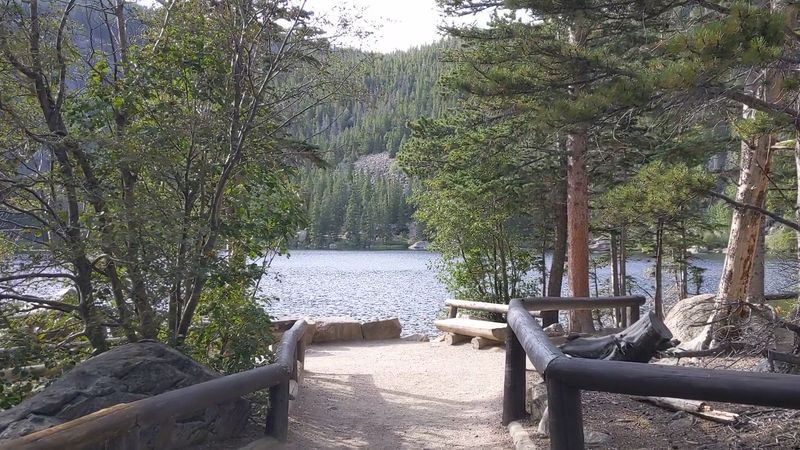
The Bear Lake Loop circles the shore in roughly six tenths of a mile.
Its modest length makes it an appealing choice for visitors looking for mountain scenery without committing to one of the longer routes climbing above the lake.
Extra time is still useful for scenic stops.
The path moves through subalpine forest with spruce, fir, pine, and patches of aspen. Shade can feel pleasant on a sunny day, but roots, gravel, wooden bridges, and uneven sections still require attention.
Stopping along the side rather than in the middle of the trail keeps the route clear for other hikers.
The full loop should not be described as an accessible trail. Current park guidance says it is not designed for mobility devices and includes steep running and cross slopes, 25 log steps, and several other barriers.
Conditions can also change with rain, snow, ice, and seasonal maintenance. Turning around remains an option if any section becomes uncomfortable.
One of the pleasures of the loop is watching the view change as the shoreline curves. Trees briefly hide the water before another opening reveals the lake and mountains from a different angle.
Peaks Above The Water
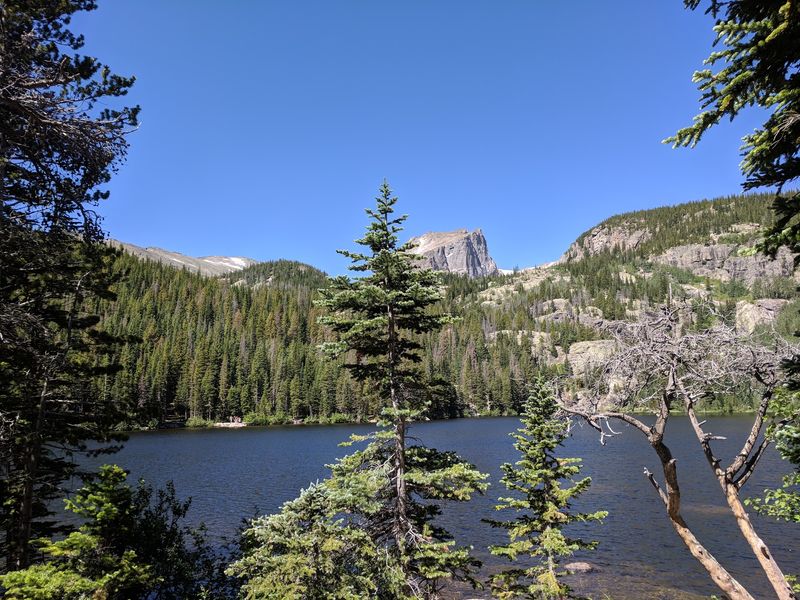
Hallett Peak rises beyond Bear Lake and gives the shoreline one of its most recognizable mountain views. On calm days, the water can reflect parts of the surrounding skyline.
Wind may erase the reflection, but it cannot hide the peak.
Moving around the shoreline changes the composition more than expected. One opening frames the summit with evergreens, while another gives the lake more room in the foreground.
Walking farther also makes it easier to find a clear place to stop without crowding a single viewpoint.
That helps both photography and trail flow.
Light changes the appearance of the rocky slopes throughout the day. Early and late daylight can sharpen details, while clouds and wind can alter the scene within minutes.
This Colorado lake itself changes with those conditions, shifting from darker tones to brighter reflections.
Bear Lake offers those views without requiring a long climb from the trailhead. That quick access is one reason the area remains one of the park’s most heavily visited destinations.
Three Lakes, One Longer Walk
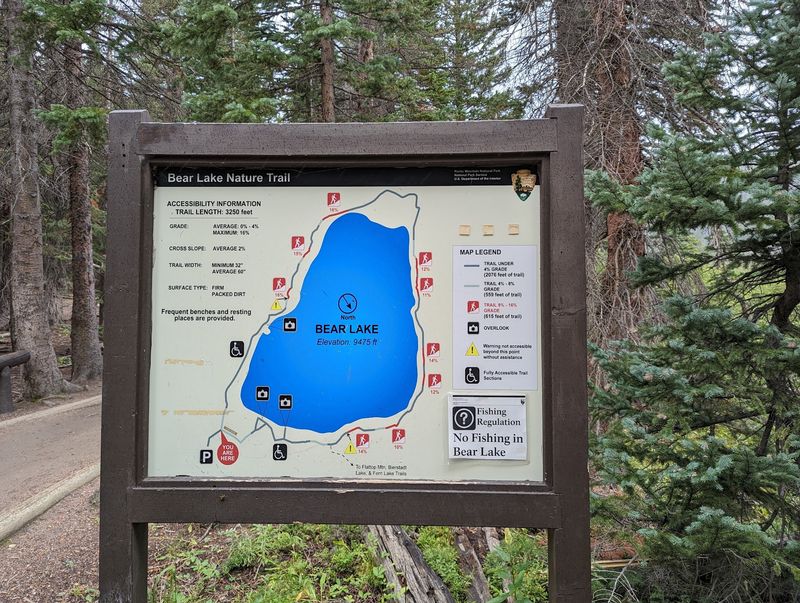
Visitors ready for more distance can continue uphill from Bear Lake toward Nymph Lake, Dream Lake, and Emerald Lake.
Reaching Emerald Lake and returning covers roughly 3.4 miles, with substantially more climbing than the lakeside loop.
The elevation gain becomes more noticeable as the trail continues.
Nymph Lake arrives first and can hold broad lily pads during warmer parts of the year. Farther along, Dream Lake opens toward steep mountain scenery before the route continues toward Emerald Lake beneath rugged slopes.
Each stop gives the hike a different character rather than leaving all the payoff for the end.
Rocky sections, steps, mud, and lingering snow can make sturdy footwear useful. Water, an extra layer, and a check of current trail conditions also matter at this elevation.
Snow and ice can persist into late spring or early summer depending on the year. Enough daylight should be reserved for the return, especially when conditions slow the climb.
Anyone who does not want the full route can turn around at Nymph Lake or Dream Lake instead. Both provide a satisfying destination without requiring the entire trip to Emerald.
A Forest With A Past
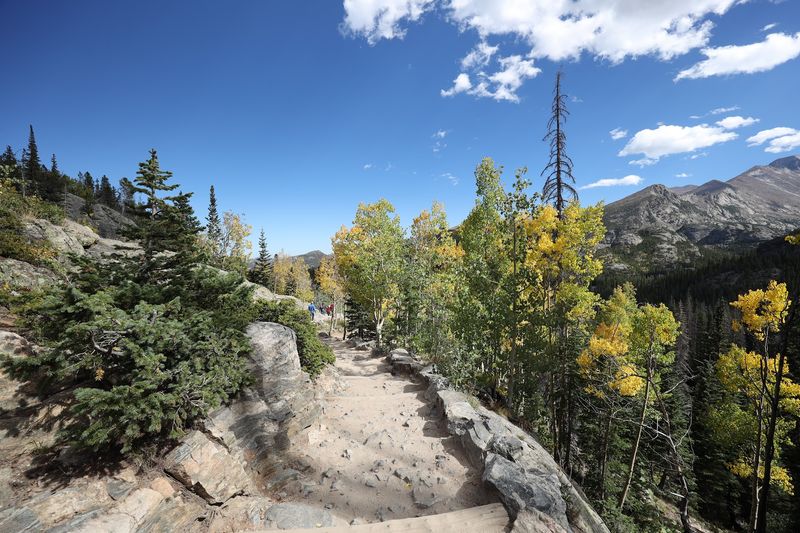
A few steps away from the open shoreline, the trees change the character of the walk. Bear Lake sits within the park’s subalpine zone, where spruce, fir, and pine dominate much of the surrounding forest.
Aspens add lighter trunks and seasonal color in suitable pockets.
The rocks reveal another layer of the landscape.
Ancient glaciers shaped valleys throughout this part of Rocky Mountain National Park, leaving polished rock, grooves, steep slopes, and other features that remain visible around the Bear Lake Road corridor.
That history is easier to notice when the walk slows down.
Staying on established trails protects the vegetation growing beside the route. Small shortcuts may look harmless, but repeated footsteps can widen paths and damage fragile plants.
Natural objects should also remain where they are found.
A fallen needle, exposed stone, or changing patch of forest can reveal plenty without anything needing to be collected.
In autumn, aspen leaves can turn gold and give parts of the forest a completely different appearance. The dramatic Colorado mountain backdrop may command attention first, but the smaller details add texture to every turn around the lake.
Seasons Change The Trail
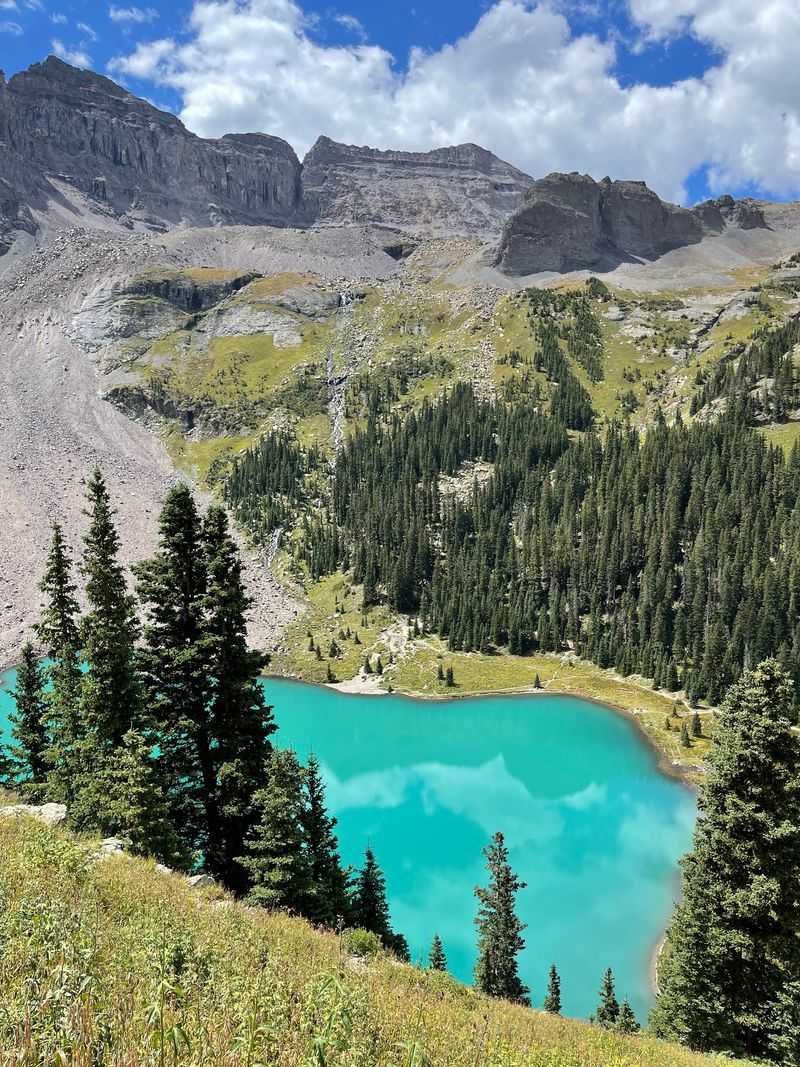
No single packing list works for every Bear Lake visit. Summer can bring pleasant hiking conditions, but high-elevation weather may change quickly during the course of one walk.
A rain layer and a current forecast are sensible starting points.
Building storm clouds or worsening conditions are good reasons to turn back rather than push farther uphill.
Autumn brings cooler temperatures and changing aspen color. Mornings can be cold even when afternoons become comfortable, so layers remain useful.
Sun protection still matters at this elevation on clear days.
Winter requires a different approach. Snow and ice commonly cover the Bear Lake Nature Trail, and the park recommends traction devices and waterproof footwear when those conditions are present.
Routes above Bear Lake may require additional winter equipment depending on snow depth and trail conditions.
Visitors without the right equipment should choose conditions that match their experience rather than relying on ordinary walking shoes.
Spring can mix bare ground, mud, ice, and lingering snow. Bear Lake is scenic throughout the year, but the calendar alone never guarantees easy footing.
A Smoother Start
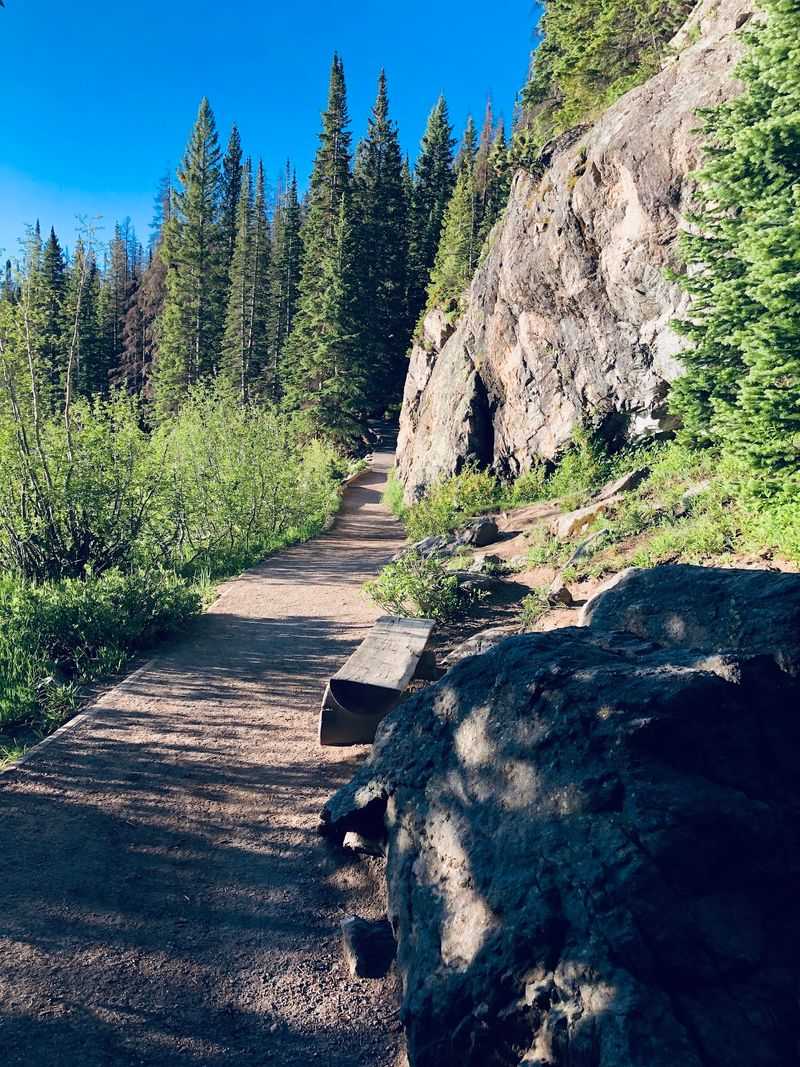
Parking is not the part of a hike anyone wants to remember. Bear Lake is extremely popular, and its parking area often fills early, making the park shuttle a useful alternative during the operating season.
Arriving early may help, but it never guarantees an open space.
Access requirements deserve the same attention. In 2026, a Timed Entry + Bear Lake Road reservation is required to enter the corridor between 5 a.m. and 6 p.m. from May 22 through October 18.
That reservation also provides access to the rest of Rocky Mountain National Park.
The park’s Bear Lake shuttle operates seasonally and connects the Park & Ride area with Glacier Gorge and Bear Lake. Current schedules should be checked before relying on it for the return trip.
Limited phone service can make saved information especially useful.
A downloaded map or screenshot of important details provides a backup when a connection disappears.
The final preparation is simple: water, layers, suitable footwear, and enough time. Small choices before the walk begins can make the entire outing easier.
Room For Wild Neighbors
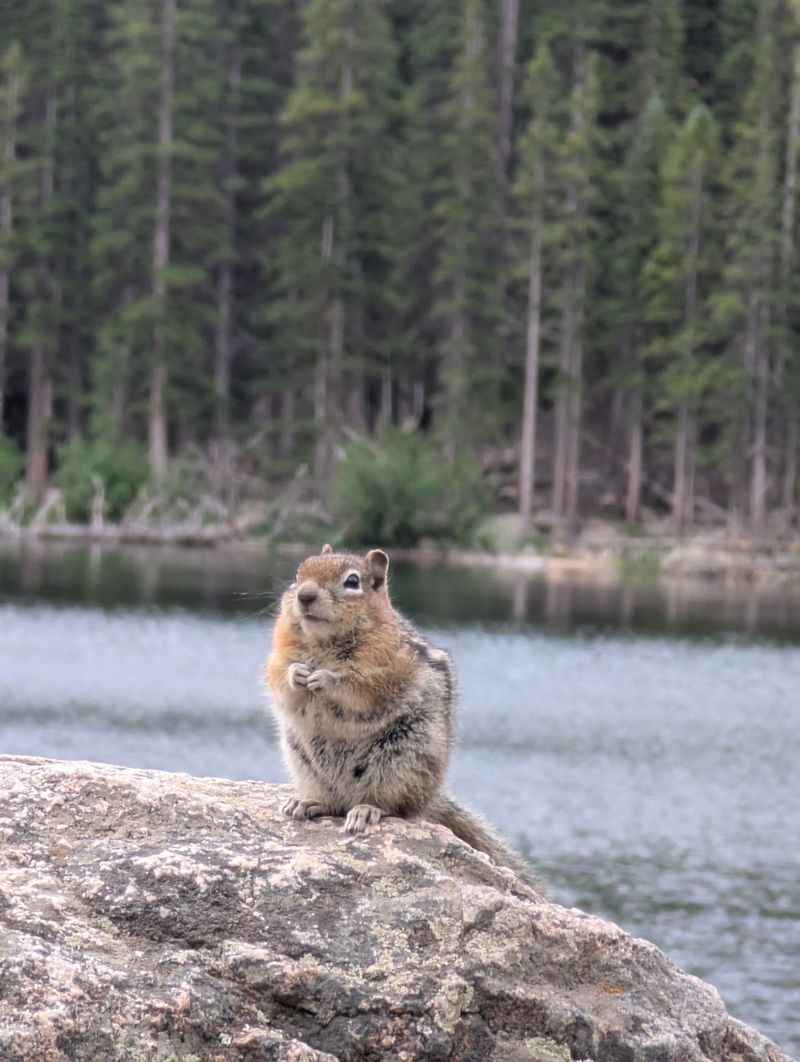
Movement in the branches can occasionally pull attention away from the mountains.
The subalpine forest supports numerous bird species, along with mammals ranging from squirrels and deer to much larger animals elsewhere in the park. Wildlife sightings are never guaranteed.
Watching quietly from a safe distance gives animals room to continue their natural behavior.
Rocky Mountain National Park requires visitors to remain at least 75 feet from most wildlife and farther from animals including black bears and moose.
Following an animal, approaching for a photograph, or offering food can create problems for both people and wildlife. Feeding wildlife is prohibited.
The same care applies to the landscape. Staying on marked paths reduces damage to vegetation along the shoreline, while carrying out wrappers and other trash keeps the area cleaner for everyone.
Stops should also leave enough room for other hikers to pass comfortably. Bear Lake Trailhead offers more than a quick look at a beautiful mountain lake.
It provides a short shoreline loop, connections to longer hikes, changing seasonal scenery, and immediate views of some of Rocky Mountain National Park’s most recognizable peaks.
A walk does not need to cover many miles to feel like a full mountain experience.