Thousands Of Monarch Butterflies Are Passing Through North Carolina’s Mountains This Fall
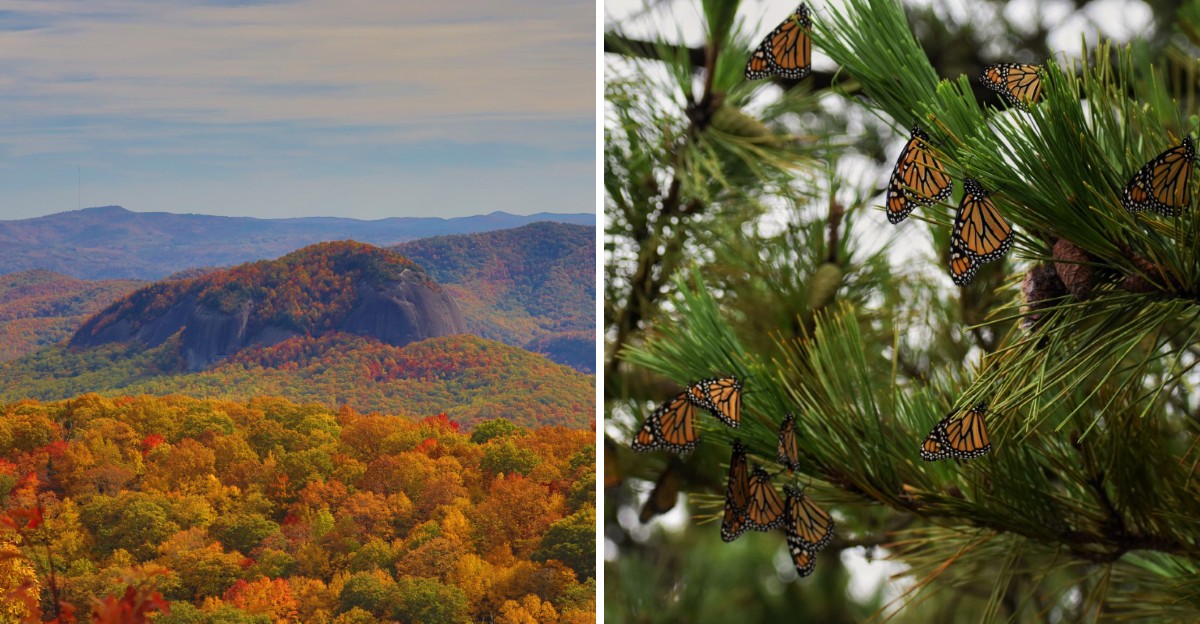
These travelers weigh less than a paperclip and somehow still manage a better fall migration plan than most of us.
Every autumn, monarch butterflies drift south across the North Carolina mountains on a journey that feels almost impossible for something so delicate.
You may not notice the first one. Then another flashes orange against the sky.
Suddenly, a quick scenic stop turns into a waiting game with wings. No boarding pass. No luggage.
Just instinct doing something extraordinary.
The trick is slowing down long enough to spot them.
Blink too fast and the whole little parade may pass right by.
Watch The Sky For Monarchs Riding Invisible Mountain Air Currents
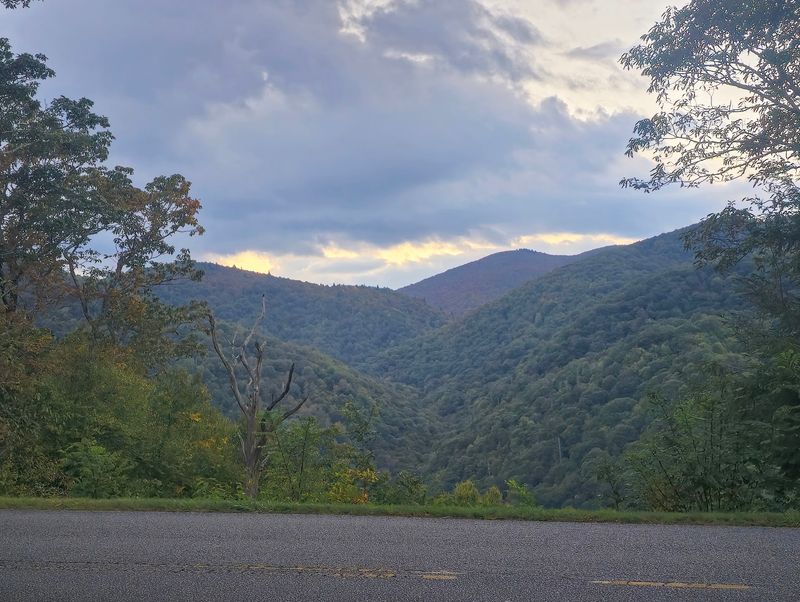
At first, the orange specks may look like leaves caught in a breeze.
Watch how they move, though, and you may see monarchs gliding across the open sky.
Rising air and winds along mountain ridges can help migrating butterflies travel without beating their wings every second. From a safe spot beside the paved pullout, scan above the treetops as well as across the distant hills.
Cherry Cove Overlook gives you room to follow a butterfly against the sky before it disappears over another ridge.
The stop is on the Blue Ridge Parkway at Milepost 415.7, near Canton.
Set your feet well back from the road, then pick one patch of sky and watch it for a few minutes. A steady gaze often works better than looking quickly in every direction.
There is no promise of a sky full of wings on any visit.
Monarch movement changes with wind, sunlight, and the season.
Even a single butterfly offers something remarkable to notice: its dark wing veins, flashes of orange, and calm-looking glide across a huge mountain view.
Give your eyes time to adjust to the distance, and the quiet scene may begin to feel full of motion.
Cherry Cove Overlook, Blue Ridge Parkway Milepost 415.7
Bring Binoculars For A Better Look At Travelers Passing High Overhead
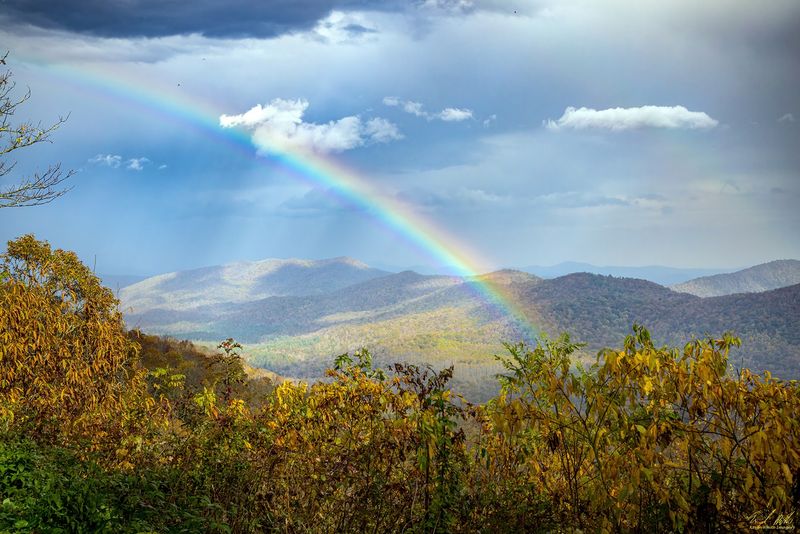
One tiny orange dot can be surprisingly hard to follow against miles of blue sky.
Binoculars make distant butterflies easier to examine, especially when they cross above the treeline.
A small, lightweight pair is enough for a casual stop.
Before searching for monarchs, adjust the focus on a distant ridge so you are ready when a moving speck catches your eye. Try finding the butterfly with your eyes first, then bring the binoculars up without shifting your gaze.
That simple trick is easier than sweeping the whole sky through the lenses.
At Cherry Cove Overlook, the open mountain view offers plenty of room to practice.
You may notice orange wings edged in black, pale spots along the borders, or a butterfly changing direction as the breeze shifts.
Share the binoculars with a travel companion, but keep your attention on your footing near the pullout. Never watch through lenses while walking, and stay clear of moving traffic.
If the sky looks empty, lower the binoculars for a moment and scan with your eyes again.
The goal is not to count every monarch.
It is to catch a closer glimpse of an animal making a journey much larger than it appears from the roadside.
Time Your Visit For The Heart Of The September And October Migration
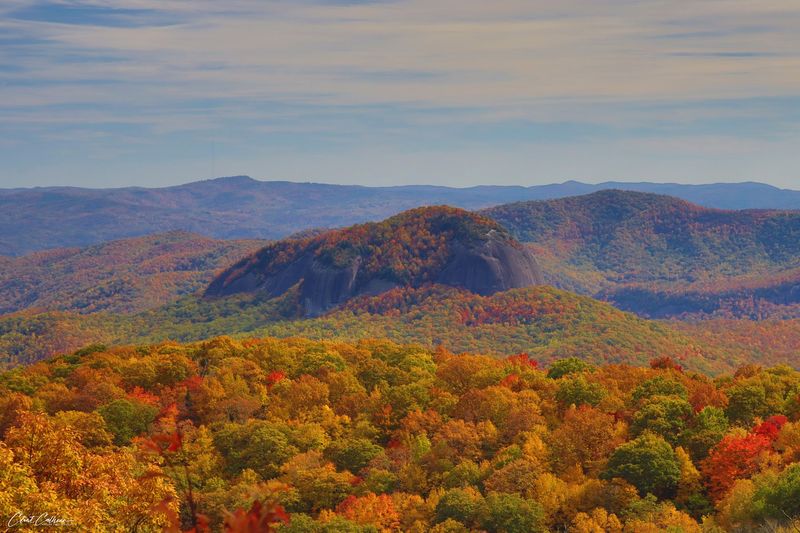
A fall calendar can help, but butterflies do not follow a schedule printed on paper.
In the North Carolina mountains, late September and early October are sensible times to watch for monarchs moving south.
Some travel earlier or later, depending on weather farther north and conditions along their route.
Plan around that window rather than expecting one certain day to deliver a crowd of butterflies. At Cherry Cove Overlook, the changing season adds its own rewards while you wait.
Forested slopes may show patches of yellow, red, and orange, although leaf color varies by elevation and year. Pack a light layer because the air at a mountain pullout can feel cooler than it does in town.
Daylight also becomes shorter as autumn moves along, so allow enough time for a relaxed stop before dusk. One visit might bring only a few passing wings, while another may offer more activity.
If your plans are flexible, check the forecast and consider visiting on more than one day.
Treat each sighting as part of a long journey rather than a show with a set start time.
That approach leaves space to enjoy the view, even when the butterflies remain hard to spot.
Look Among Goldenrod And Asters For Butterflies Taking A Rest
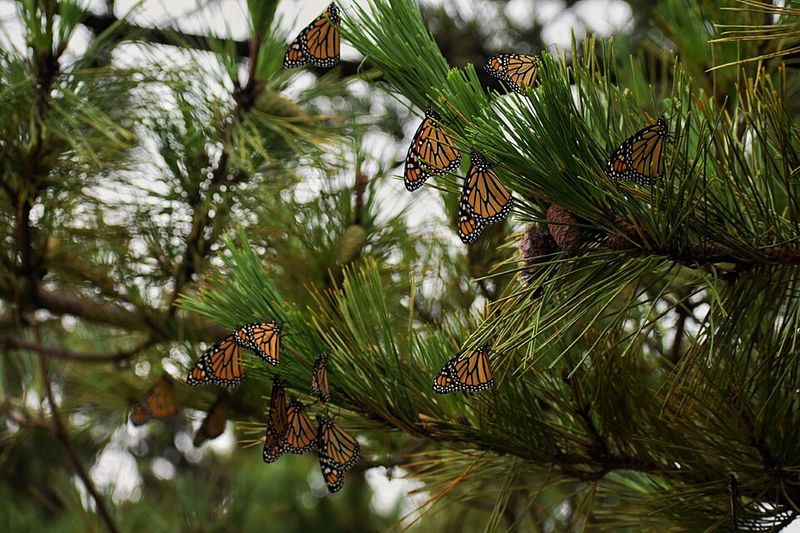
A butterfly on a flower has a different job from one sailing over a ridge.
It may be feeding on nectar, which supplies energy for the miles still ahead.
Goldenrod and asters bloom late in the season and can be useful food sources for migrating monarchs. If flowers are growing near the overlook, take a slow look at their sunny tops before turning your attention to the sky.
Here in North Carolina, autumn wildflowers can brighten roadsides while much of the forest changes color.
Keep to the paved area or other places where visitors are allowed; do not step into plants to get a closer photograph. You can watch a feeding butterfly from a comfortable distance and still see its long, thin mouth reach into a blossom.
Give it space to finish its meal without disturbance.
Not every flower patch will hold monarchs, and blooms at Cherry Cove Overlook depend on the season and roadside care. Look for small movements as well as bright wings, since a butterfly can be partly hidden by petals.
A phone camera or binoculars can help you enjoy the detail without approaching.
When the insect lifts off, its next stop may be far beyond the mountains in front of you.
Stay A While Because The Migration Can Arrive In Sudden Waves

A quiet stretch of sky does not always mean the travelers are gone.
Monarchs can pass an overlook in uneven groups as wind and weather shape their route.
Instead of making a quick stop for one photograph, give yourself time to watch from a safe place.
You may notice a few scattered butterflies before several appear across the same part of the view. Waiting can be part of the pleasure at Cherry Cove Overlook.
Look toward the ridgeline, then let your eyes rest on the layers of forest below.
Bring water and a small snack if your Parkway drive will be long, and take all wrappers with you. The pullout is a scenic stop, not a place to count on for food or other services.
A comfortable layer can also make a longer pause more enjoyable when the mountain air turns cool. There may be no sudden wave during your visit, and large numbers cannot be guaranteed.
Still, a little patience improves your chance of seeing movement you would miss from a car window.
Try watching in short, calm stretches rather than staring until your eyes tire. When a monarch finally crosses the open space, you will have time to follow its path instead of rushing to catch a glimpse.
Pair Butterfly Watching With Sweeping Blue Ridge Mountain Views
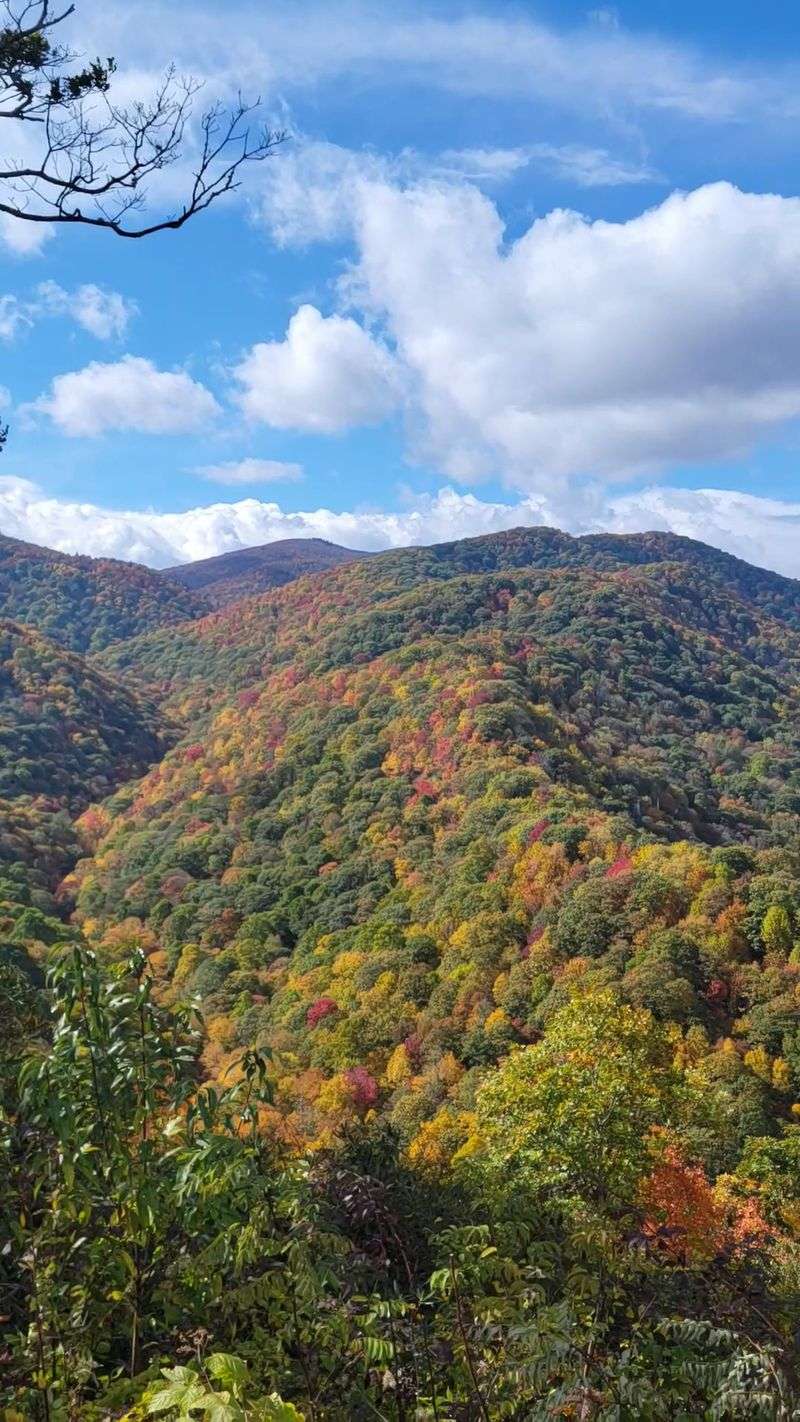
Even when the sky holds no butterflies, the landscape gives your eyes plenty to explore.
Cherry Cove Overlook faces across forested slopes and valleys, with Looking Glass Rock visible in the distance on clear days.
Its broad granite face stands out from the softer shapes around it. The view helps explain why a passing monarch can seem so small against the mountains it must cross.
North Carolina’s Blue Ridge Parkway makes this scene easy to enjoy from a roadside pullout, but parking space is limited.
Pull fully into an available space, watch for other vehicles, and keep children close. Morning light may pick out the shapes of the ridges; later, shifting clouds can soften their edges.
Bring a camera if you like, though taking a moment to look without a screen is just as rewarding. Use the distant rock as a landmark while scanning nearby sky for wings.
Then look lower, where sunlight may catch leaves on the slopes below.
The overlook is best treated as a simple viewing stop rather than a full-service destination.
Whether monarchs appear or not, its open view offers a clear sense of the scale of their fall journey, one ridge fading into the next.
Learn How These Tiny Travelers Journey Hundreds Of Miles South
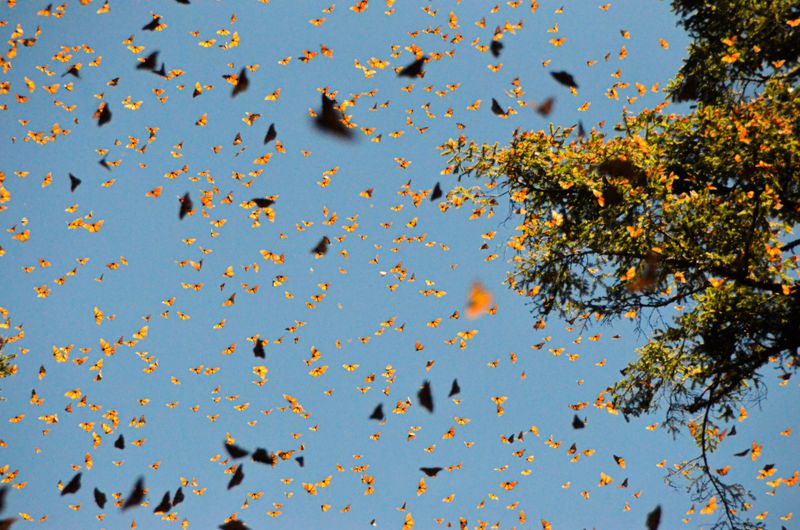
Those wings carry a story much bigger than the butterfly resting in front of you.
Eastern monarchs that head south in fall can travel from breeding areas in the United States and Canada to wintering forests in central Mexico. Some make journeys of thousands of miles.
The butterflies passing a mountain overlook are on their first trip along that route, guided in part by the sun and their own inner sense of time.
Unlike the shorter-lived monarchs of summer, the fall generation can live for several months.
Feeding on nectar helps them build the energy they need for travel and winter.
At Cherry Cove Overlook, a passing butterfly offers a simple opening for a family conversation: Where might it have started, and how many hills could it cross today?
Simply watching an untagged monarch cannot tell you the exact route that individual has traveled. You do not need to catch or touch a monarch to learn from it.
Watch where it flies, notice whether it glides or flaps, and see if it pauses near flowers.
Photographing one from a respectful distance lets it continue its journey.
The more you observe, the more impressive that small flash of orange becomes against the broad mountain backdrop.
Pick A Clear Fall Day For Your Best Chance Of Catching The Migration
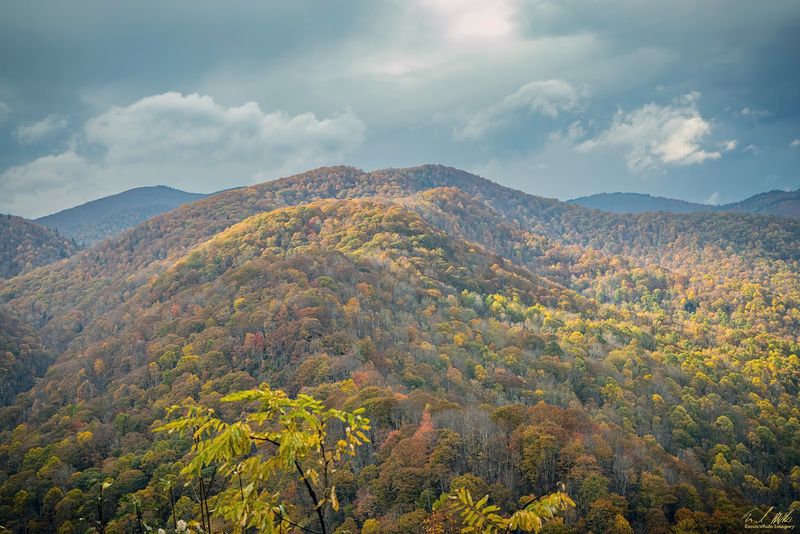
Sunshine makes a mountain outing more pleasant, and it can help monarchs become active.
Butterflies rely on warmth from their surroundings, so a cool, cloudy spell may leave fewer in flight.
For a better chance of seeing them, consider a clear day with manageable winds.
Conditions after a cold front can sometimes favor southbound travel, but wind and butterfly numbers vary from day to day. Before driving to Cherry Cove Overlook, check both the weather and current Blue Ridge Parkway road conditions.
Mountain sections can close when conditions make travel unsafe, and the forecast in a nearby town may not match the air at the overlook.
In North Carolina, fall mornings can start chilly even when the afternoon feels mild.
A jacket, drinking water, and shoes suited to a paved roadside stop make the visit easier.
Once parked, give your eyes a moment to adjust to the bright sky.
Look above the trees, across gaps between ridges, and near any sunlit flowers you can see without leaving the visitor area. If clouds roll in, enjoy the changing view rather than chasing a guaranteed sighting.
A clear forecast improves your plans, but the butterflies still set their own pace across the mountains.