This North Carolina Craft Village Is Keeping An Ancient Basket Weaving Tradition Alive
What looks like a basket can carry far more than whatever fits inside it.
In the mountains of North Carolina, Cherokee artists still shape wood by hand using knowledge passed carefully from one generation to the next.
Watching the process changes the way you see every curve and woven strip.
Nothing happens quickly, and that is exactly the point.
Each movement has purpose behind it.
By the time the shape begins to emerge, the basket feels less like a souvenir and more like a living piece of tradition.
Follow the village paths slowly.
You may leave realizing the most impressive part was never the finished basket at all.
Watch Cherokee Artisans Weave Baskets Using Skills Passed Down Through Generations
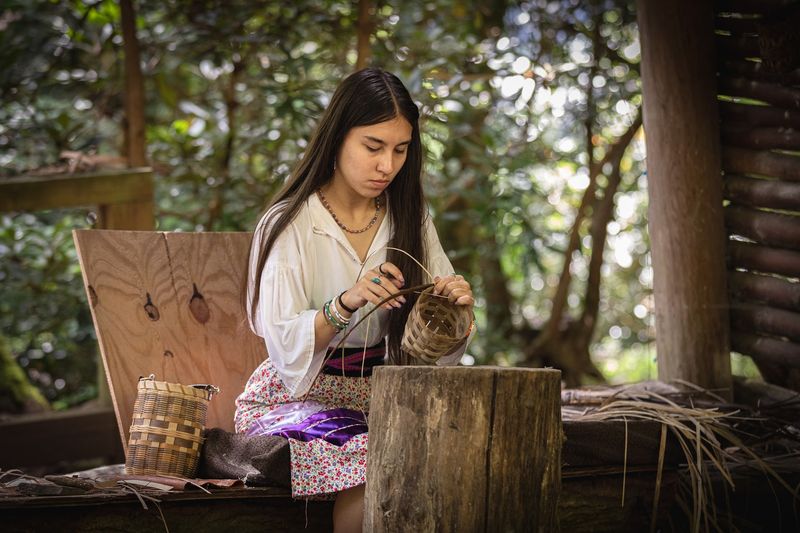
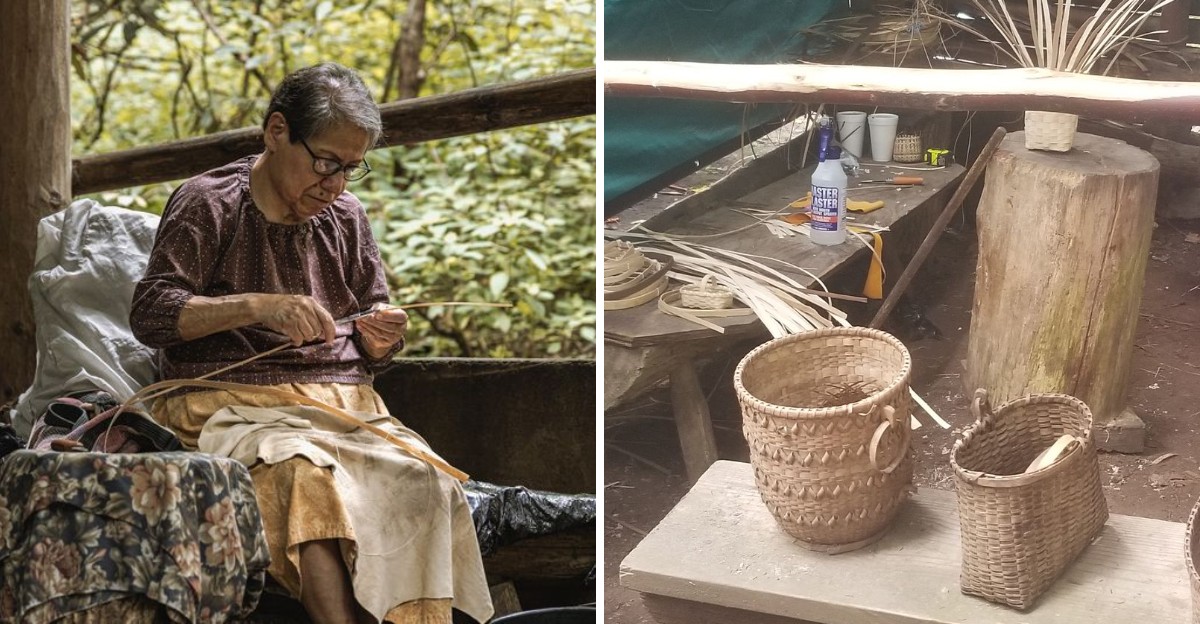
A loose strip becomes part of a basket with one small movement of the hands.
At Oconaluftee Indian Village, Cherokee artisans demonstrate how steady attention turns prepared materials into strong, useful forms.
Watch the spacing between strips as a weaver builds the base, raises the sides, and keeps the shape even. The work may look quiet, but every bend calls for practice.
Oconaluftee Indian Village gives visitors a close view of skills that Cherokee makers continue to learn and share.
Basket weaving is more than a clever way to carry things.
A maker must understand which materials bend well, how to prepare them, and where each strip belongs. Some Cherokee baskets use white oak; others use rivercane.
Their patterns can be beautiful, but their careful construction matters just as much.
If a demonstration is underway, pause long enough to notice how often the artisan checks the basket’s shape.
Children may enjoy spotting a pattern as it grows row by row.
Adults can appreciate the patience behind it.
Leave room for both kinds of discovery, and let the maker’s pace set yours.
Before you arrive, save its address so you head to the village rather than the similarly named visitor center: 288 Drama Rd, Cherokee, NC 28719.
See Traditional Crafts Take Shape Right In Front Of You
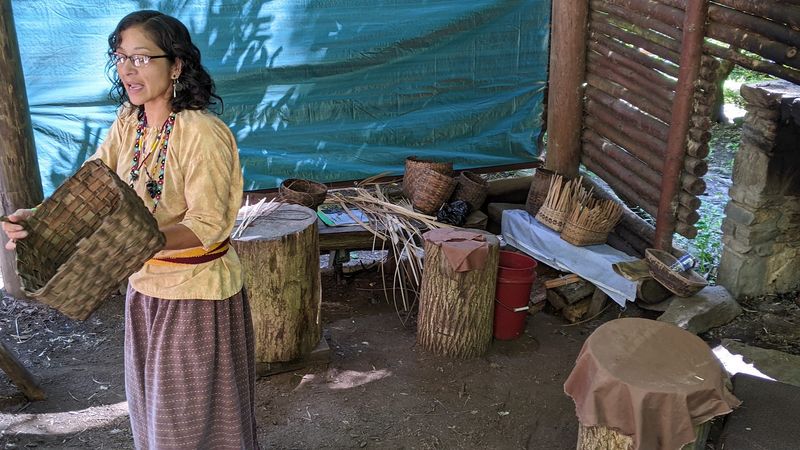
From one work area to the next, the village shows how many kinds of skill helped a community meet daily needs.
Basket weaving may draw you in first, but pottery, beadwork, finger weaving, and woodworking can add new layers to the visit.
Each station offers a chance to see a process, not just a finished piece behind glass.
Look for the small choices makers make along the way.
A hand smooths a surface, adjusts a strand, or checks whether an object will hold its shape. Those steps help explain why traditional crafts take time.
They also show how beauty and usefulness can belong to the same object.
Demonstrations may vary, so enjoy the crafts that are active on the day you come. At an outdoor museum, it is easy to hurry toward the next stop.
Try giving one craftsperson your full attention for a few minutes instead.
Notice the tools, the sound of work, and the way raw material changes under practiced hands.
If children are with you, ask them to pick one step they would find difficult. It is a simple way to turn watching into learning.
The path through this North Carolina village connects the stations, but the work at each one deserves its own moment.
Learn How Natural Materials Become Intricate Patterns And Everyday Objects
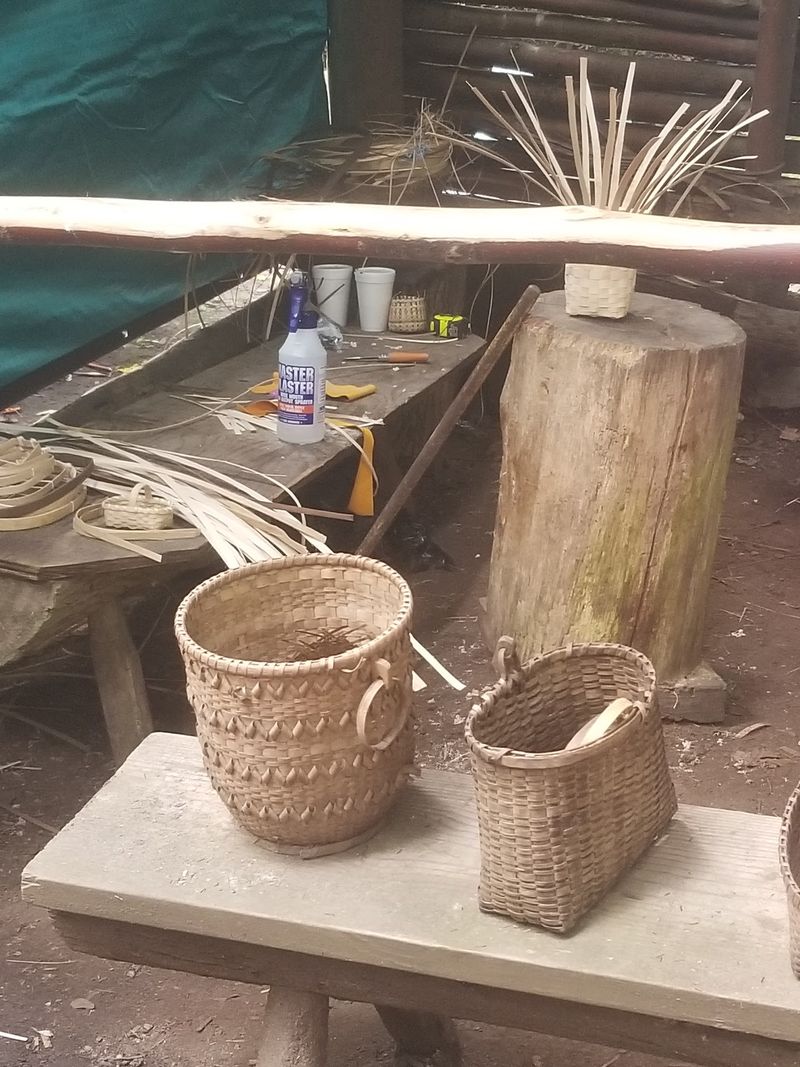
Before a pattern appears, a maker needs material that will bend without breaking.
White oak and rivercane have long been used in Cherokee basketry, and preparing them is part of the skill. What looks like a simple strip must be worked into a size and texture suited to weaving.
At the village, pay attention to the materials beside a basket as well as the basket itself.
Color can tell another part of the story.
Plants have supplied dyes for Cherokee weaving, allowing artists to create contrast within a design.
Ask which materials or colors are being shown rather than assuming every basket was made in the same way.
A dark line beside a pale one may help a pattern stand out, while the tight fit of the strips helps give the object strength. That link between land and craft makes a walk through the village especially interesting.
The wooded setting provides useful context for a tradition built around locally gathered materials such as rivercane, white oak, honeysuckle, and plants used for natural dyes.
Bring your eyes close to the weave, without touching a work in progress. You may spot repeated shapes that were hard to see from across the path.
By the end, an ordinary basket can seem wonderfully complex.
Ask Questions While Artists Explain The Meaning Behind Their Work
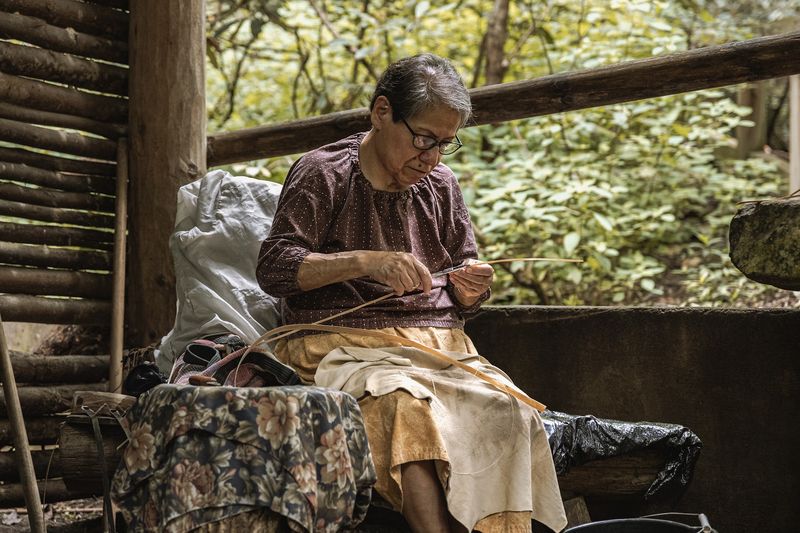
A good question can turn a brief stop into a lasting memory.
When an artist has time to speak, try asking what part of the work takes the most practice or how a material is prepared.
Questions like these leave room for the maker to explain their own process.
They are also easier to answer than a broad request for the meaning of every design. Listen for details you might otherwise miss.
An artist may point out how a basket gets its shape, why a strip must be handled carefully, or how a learned skill changes with experience.
The conversation can help you see a finished object as the result of many decisions.
Remember that the person demonstrating is working, so wait for a natural pause and keep questions brief if others are gathered nearby.
Children can join in without needing special background knowledge.
Encourage them to notice one thing first, perhaps a color, a repeated shape, or a tool. Then let them ask about it in their own words.
A thoughtful exchange respects both the visitor’s curiosity and the artist’s time.
The village offers a chance to learn from Cherokee people who share these traditions.
Let their explanations guide your understanding rather than guessing what an object means.
Explore An 18th-Century Village Built To Bring Cherokee History To Life
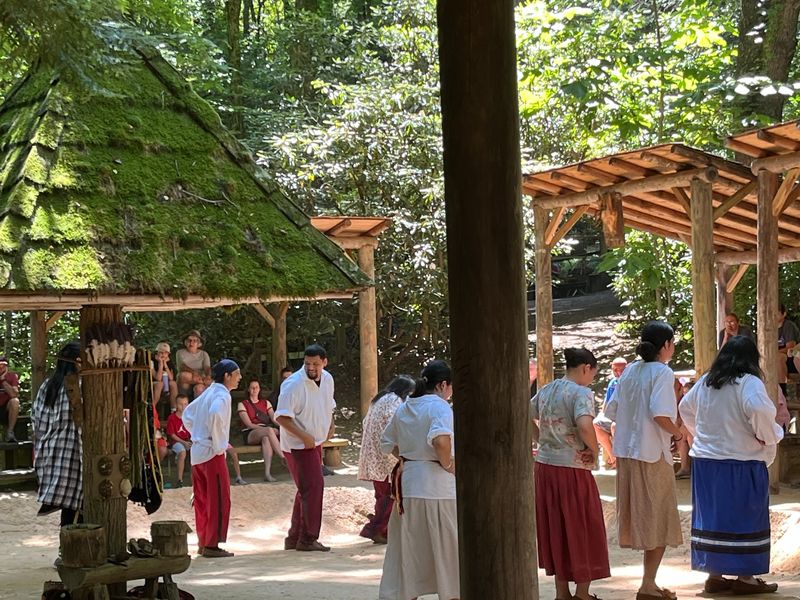
History feels different when you can walk between the places where daily tasks would have happened.
Oconaluftee Indian Village recreates a Cherokee community from the 18th century, with structures and work areas set along outdoor paths.
Rather than treating each building as a photo stop, look at how the spaces fit together.
The arrangement helps you picture people gathering, making things, and sharing knowledge.
Guides add context that buildings alone cannot provide. As you move through the grounds, listen for explanations of family life and the community’s ways of organizing itself.
A recreated village is a teaching space, not an untouched settlement from the past.
Keeping that difference in mind makes the experience clearer and more respectful.
In western North Carolina, mountain trees give the setting a leafy frame, but the details nearest you are just as revealing. Notice building materials, shaded work areas, and the distance between one activity and another.
Paths are outdoors, so comfortable shoes are a smart choice, especially when the ground is uneven.
Let younger visitors compare the spaces with places they use today, such as a kitchen or a gathering room.
A careful walk offers more than a look backward.
It gives the crafts you have watched a place within a wider story.
Stay For Dancing, Storytelling, And Other Cultural Demonstrations
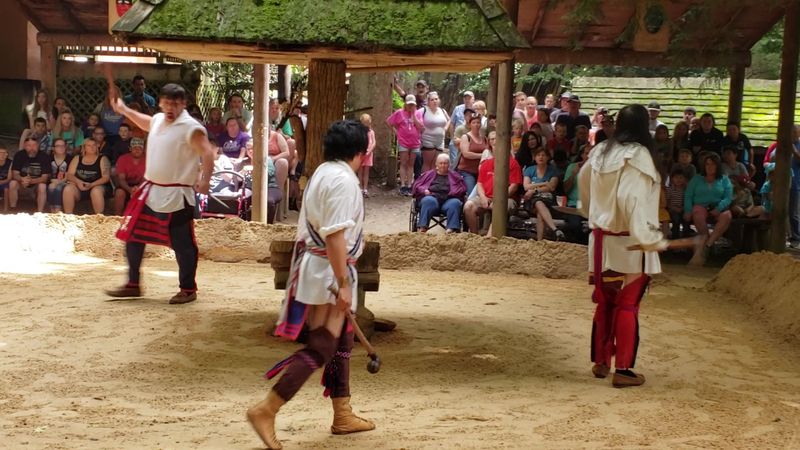
The sound of a spoken story can draw your attention away from the craft stations.
Cultural presentations at Oconaluftee Indian Village may include storytelling or social dance demonstrations, offering another way to learn from Cherokee presenters.
What is offered can change, so ask about the day’s schedule when you arrive.
If a particular presentation matters to your family, checking first can spare disappointment. Settle in and listen for what a presenter chooses to explain.
A story may bring forward ideas that cannot be shown through an object, while a dance demonstration adds movement and shared rhythm to the visit.
Both deserve the same care you would give an artist at work.
Follow any guidance about where to sit, when to move, and whether photographs are welcome. For children, it may help to talk afterward about one detail they remember.
Perhaps it is a movement, a phrase, or something new they learned about community life.
There is no need to quiz them during the presentation.
Giving everyone space to pay attention makes the moment more enjoyable.
If time allows, stay beyond the first demonstration you see.
The village tells its story in different ways, and a change of voice or pace can make the whole visit feel richer.
Take Time To Understand How These Traditions Continue Today
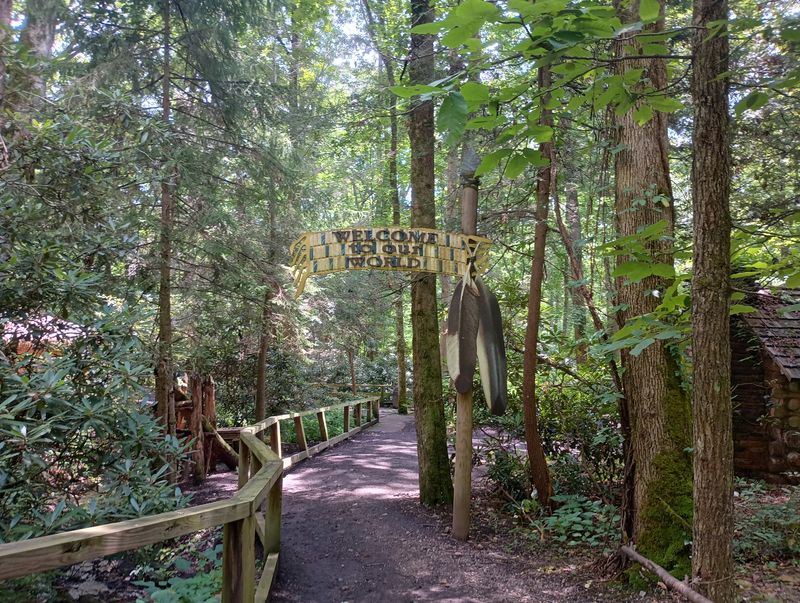
The most important thing to notice may be that the hands making a basket belong to someone here today.
Oconaluftee Indian Village presents an earlier time in Cherokee history, yet the artists and guides sharing their knowledge are present-day people. That difference matters.
It keeps the village from feeling like a story that ended long ago.
Traditional skills can be taught, practiced, and adapted across generations.
Watching an artist at work gives you a direct view of that ongoing effort.
Try to remember the maker along with the object: the decisions they explained, the patience they showed, and the knowledge behind each step. A basket is not simply a sample of the past when an artist continues to make one now.
Visitors can support a thoughtful experience by listening closely and using the names artists use for their work.
Avoid treating every Cherokee design or practice as if it has one fixed meaning.
When you are unsure, ask politely or leave the question open.
The people presenting their culture are the best guides to what they choose to share. Carry that lesson with you as you leave.
Living traditions are shaped by real people, and careful attention is a simple way to honor their work.
Plan Enough Time To Experience More Than Just The Craft Demonstrations
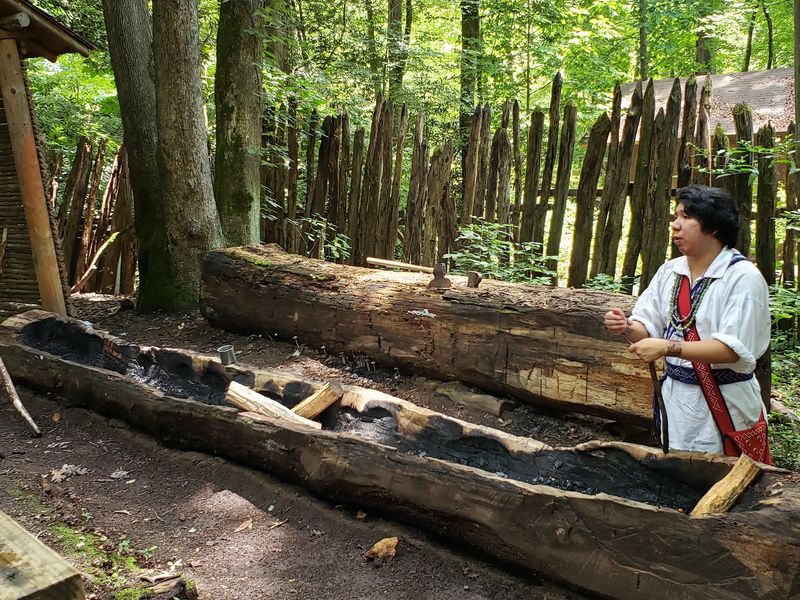
A rushed visit can leave you seeing a basket without hearing the story around it.
Give Oconaluftee Indian Village enough time for a guided introduction, several craft stops, and any cultural presentation offered that day.
A flexible plan works best because demonstrations and schedules can change. Check current opening dates and hours before setting out; the outdoor village operates seasonally.
Walking is part of the experience, not just a way to reach the next station.
Wear shoes that feel steady on outdoor paths, and bring water for a warm day.
If you are visiting with children, build in pauses so they can look closely without feeling hurried.
Ask at arrival about the tour and presentation schedule, then decide where you want to spend extra time. Food need not become a complicated part of the plan.
Since onsite choices may vary, check what is available and arrange a meal around your visit if needed.
That leaves the village itself as the focus.
A full stomach and a little breathing room can make it easier to enjoy a story or watch a slow craft process. Before you go, take one last look at the working areas.
The best memory may be a small detail you had time to notice.