Walk Among Hundreds Of Restored Tractors Lined Up Inside This Nebraska Museum
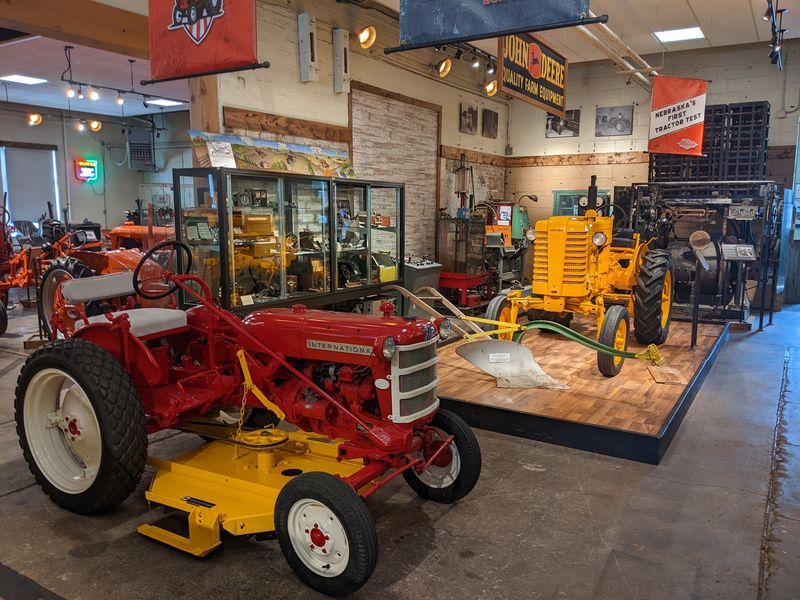
A small white building on a college campus does not look like the place where farm history got rewritten. Step inside, though, and the smell of grease hits first, followed by rows of old iron that once decided which tractors Nebraska farmers could trust.
The story here reaches far past the state line and touches nearly every field in the world. Come curious, and plan to leave knowing a lot more about the machines that fed the country.
A Plain White Building Behind the East Union
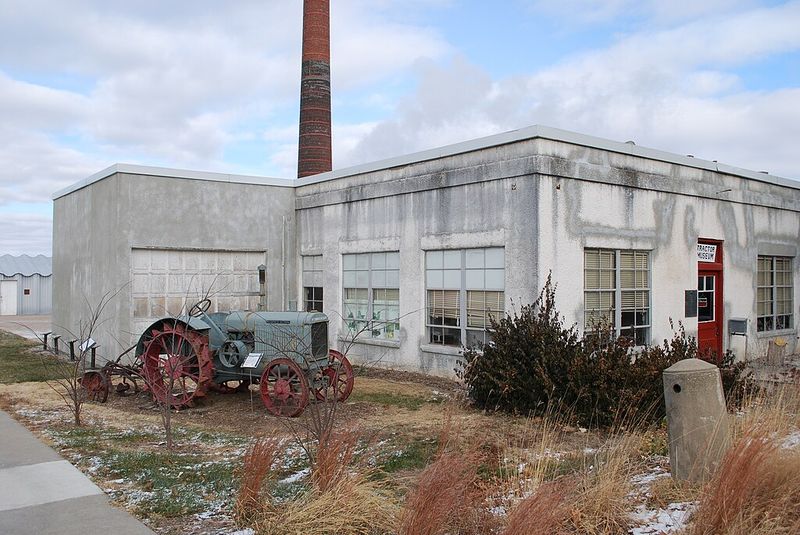
Picture a quiet corner of the University of Nebraska-Lincoln East Campus, just behind the East Union, where a modest white building sits near the corner of North 35th Street and Fair Street. Nothing about it shouts for attention.
A handful of reserved parking spaces out front are the only real clue that something special waits inside.
That building is the Larsen Tractor Museum, and it occupies a historic tractor-testing facility in Lincoln. Instead of a glossy modern hall, the space feels like a working piece of agricultural engineering that happens to welcome the public.
Roughly 40 antique and unusual tractors fill the floor, with more parked outside in the back.
The museum is small by design. It focuses on one big idea: how tractors were tested, measured, and improved over roughly a century.
That narrow focus is exactly what makes it click, because every machine connects to a larger story about honesty, engineering, and the farm families who depended on both.
Admission is free, and donations keep the lights on. For a campus stop that takes an hour or less, it packs in a surprising amount of history.
Why Nebraska Put Tractors to the Test
Here is a fact that surprises plenty of people: in Nebraska, a tractor has to be certified before it can be sold. The rule exists to make sure a machine performs the way its manufacturer claims.
Farmers once had little way of knowing whether an advertised tractor would pull what the brochure promised.
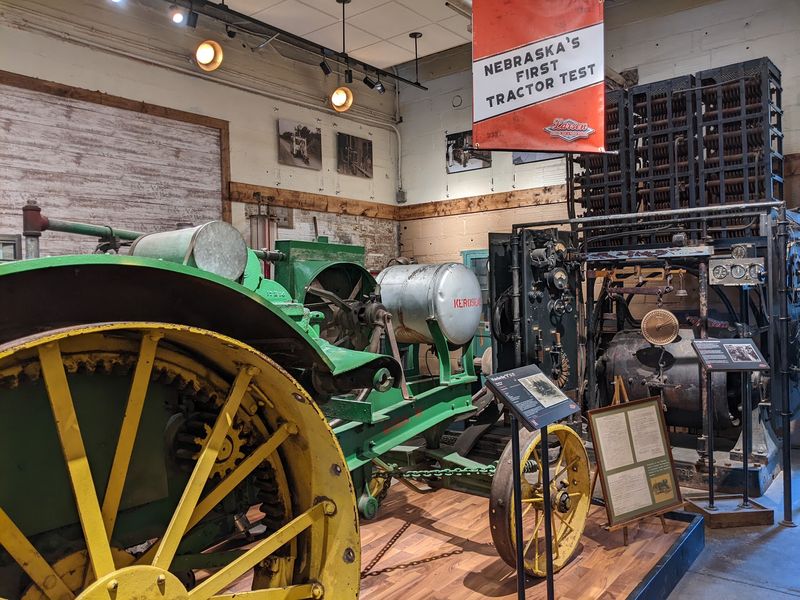
So the state stepped in, and the testing work that grew out of that decision became the heart of this museum. Engineers measured pulling strength, load capacity, and power-take-off output.
Those numbers gave buyers something solid to compare, rather than a sales pitch and a handshake.
The results traveled far. Testing that began as a Nebraska concern ended up influencing tractor design worldwide, pushing manufacturers to build better and more reliable machines.
Displays inside explain how the tractor lab got started and why the program earned recognition across the globe.
Think of it as consumer protection for the farm, long before most people used that phrase. Every panel and every tractor on the floor ties back to this one idea.
Once it sinks in, those rows of old machines stop looking like relics and start looking like evidence in a very long, very practical experiment.
Testing That Still Happens Right Next Door
Engines rumbling on the track beside the building are not part of a show. Tractor testing still takes place here, and a modern machine may be running laps on the test track right at the side of the museum during a visit.
It turns a history lesson into something happening in real time.
Compare it to how passenger cars get tested for fuel efficiency and safety. Somewhere, a lab has to check those claims, and for tractors, this campus is one of those places.
The museum sits beside an active laboratory, which gives the old machines inside a living connection to the present.
Past tours have included a walk across the way into the working test lab itself. Inside stands the enormous device that tested tractors pull against, a massive piece of equipment that makes the scale of this work obvious.
Seeing it helps explain how engineers turned raw horsepower into reliable numbers.
Tours of the lab are not a given, so it helps to ask staff what is possible on the day. Even without one, catching a tractor on the track is a memorable bonus.
Forty Machines, Some Shined and Some Straight From the Field
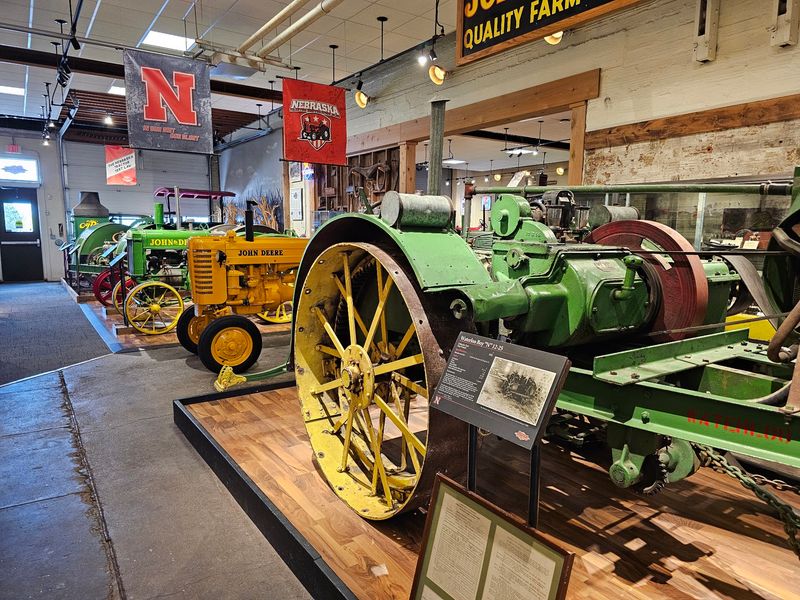
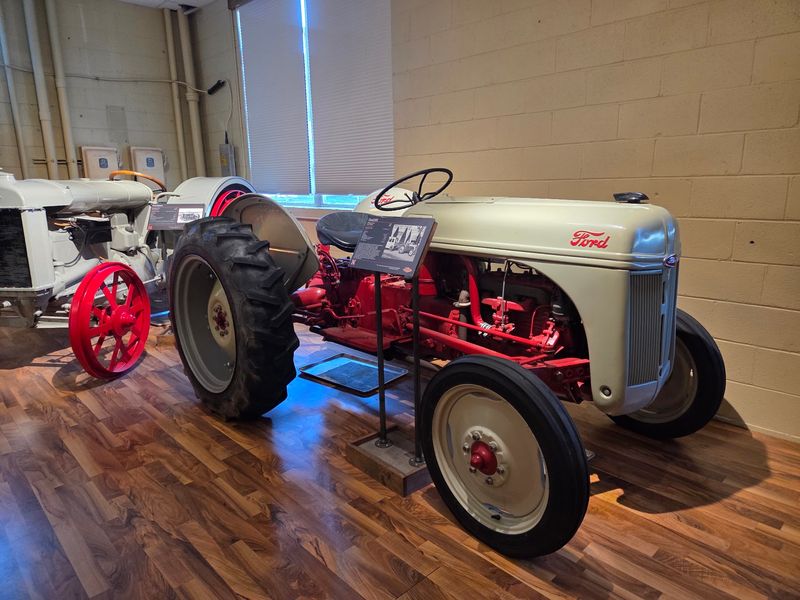
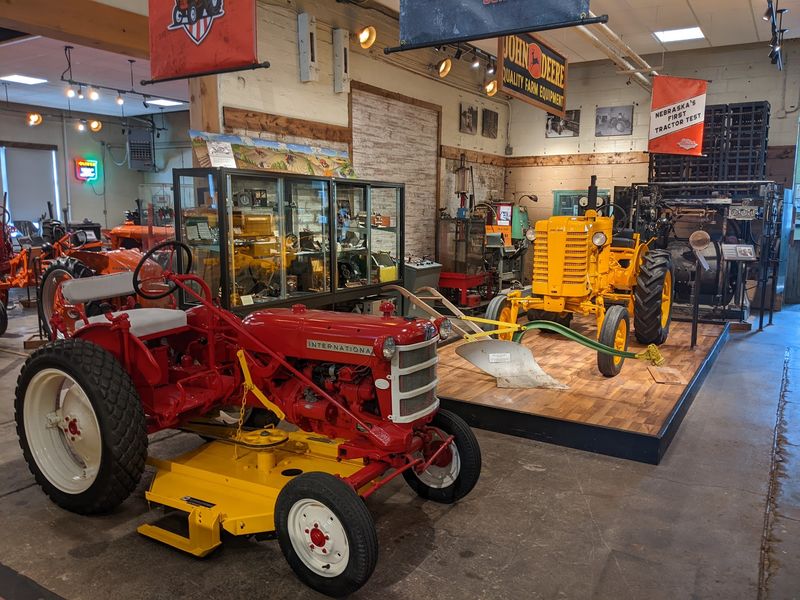
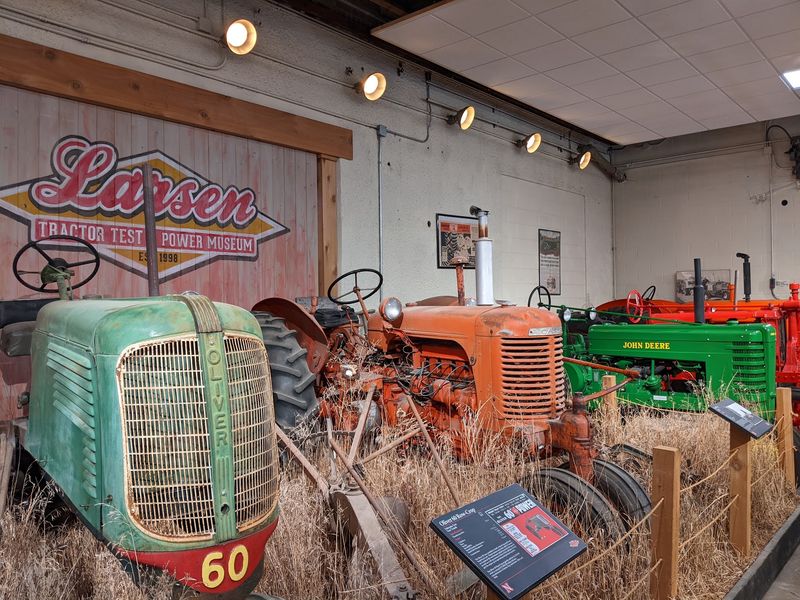
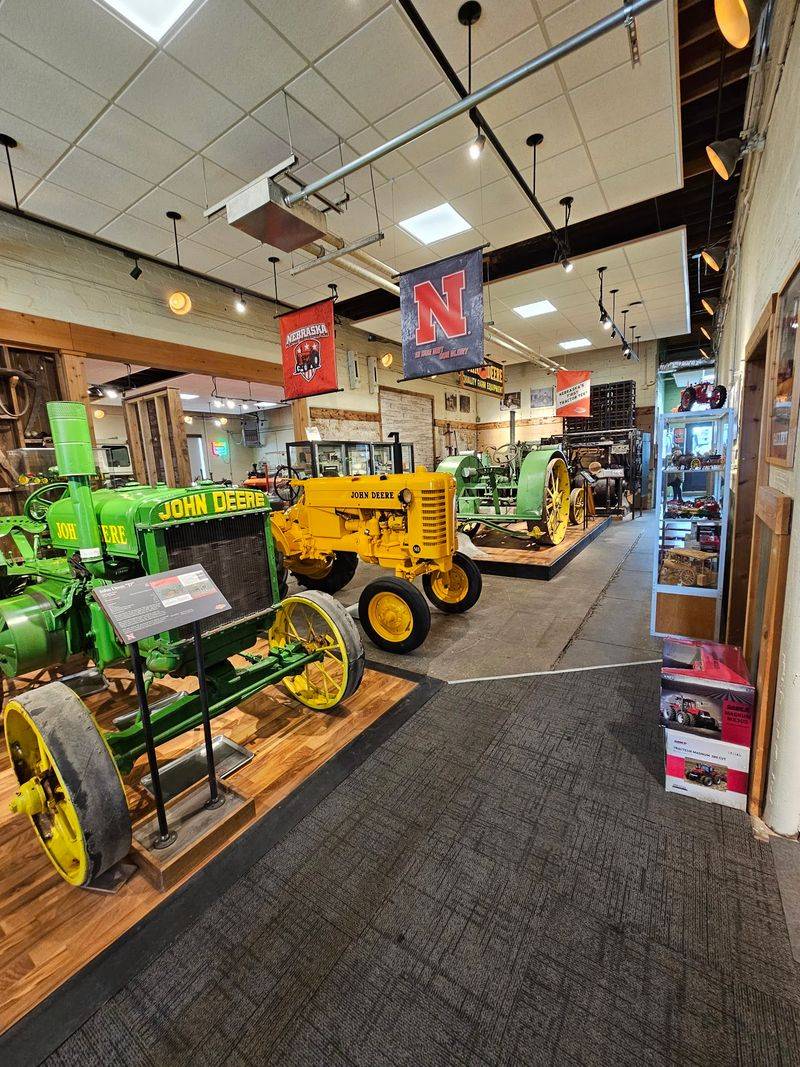
Rows of iron stretch across the concrete, each one representing a different chapter of farm engineering. The collection holds about 40 antique and unusual tractors, a number that feels bigger in person because every machine has its own personality.
Some sit on fancy displays with polished paint and careful lighting. Others look like they just rolled in from a long day of fieldwork, dust and wear left intact.
That mix works well, since it shows both the proud restored version of a tractor and the honest working version side by side.
Walking the rows traces how tractors changed over the last hundred years. Early machines look bulky and simple, while later models grow more refined and powerful.
Anyone who has climbed onto a modern tractor will quickly appreciate how far the design has come.
There is also a nice Model T in the mix, a fun reminder that farm machinery and early automobiles grew up together. More tractors wait outside in the back, so step out before leaving.
For tractor fans, this floor is the main event, and it rewards slow, close looking at every wheel and gear.
Carburetors, Toys, and Farm Art on the Walls
Ever seen a whole gallery of carburetors? Most people have not, and that is part of the fun here.
A dedicated display shows off these small but mighty engine parts, laid out so their shapes and differences are easy to compare.
Mechanical minds will linger longest at that case. Each carburetor reflects a different approach to mixing fuel and air, and seeing them together makes the engineering feel less mysterious.
It is a clever way to show that the big story of tractors also lives in the tiny parts.
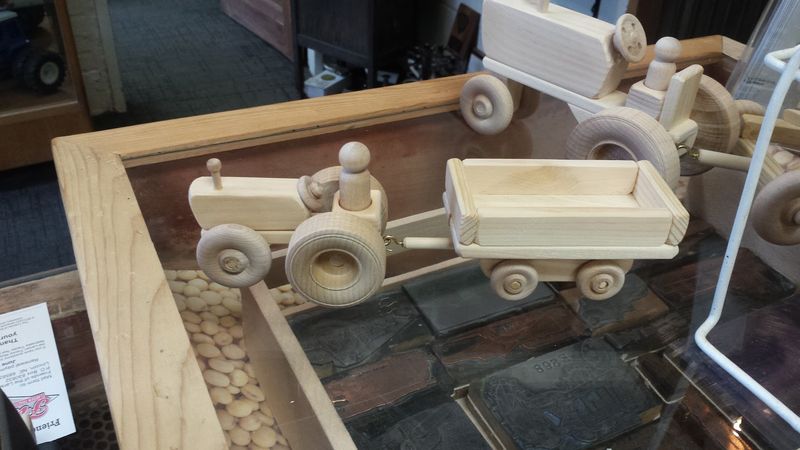
Beyond the engine hardware, the museum brings in art, toys, tools, and implements. Toy tractors add a playful touch and tend to spark memories for anyone who grew up with a miniature version on the living room carpet.
Artwork and tools round out the picture of farm life beyond the driver’s seat.
All of it is well curated for such a compact space. Nothing feels crammed in without reason, and each piece supports the main theme of how farm machinery improved.
Save a few extra minutes for these smaller displays, because the details are easy to rush past.
Quarter-Scale Tractors Built by Students
Not every tractor on display came from a factory. Some are quarter-scale machines built by university students to compete in tractor competitions around the country.
They are small, sturdy, and packed with the same engineering thinking that shaped their full-sized cousins.
These student builds bring the museum’s story right up to the present. The old tractors show where farm technology started, while the quarter-scale models hint at where the next generation of engineers might take it.
It is a neat bridge between history and a campus full of young people learning the trade.
Competition results matter here too. Nebraska teams have taken first place in these contests, and that pride comes through in how the machines are presented.
It fits the campus setting, since students are part of daily life in and around the building.
For kids who love building things, these compact tractors are easy to relate to. They look almost like something that could come together in a garage with enough skill and patience.
That sense of possibility makes them one of the more quietly inspiring corners of the museum.
The Smell of Grease and Diesel
Oil spots on the floor. A faint whiff of grease and diesel in the air.
Before a single sign gets read, the senses already know this is not a typical hushed museum with velvet ropes.
The atmosphere lands closer to a repair shop than a gallery, and that is a big part of its appeal. Tractors belong in places that smell like work, and this building keeps that honest feel.
It makes the machines seem ready to fire up at any moment.
Recent updates have given the space a fresh, tidy look without scrubbing away its character. Displays are clean and informative, yet the working roots still show.
That balance keeps the visit grounded and approachable.
Anyone raised around a machine shed will feel right at home. The smells and sights can bring back memories of a father’s workbench or a grandparent’s barn.
Folks new to farm life get a small, harmless taste of what those spaces feel like.
Wear comfortable clothes and shoes. There is no need to dress up for a room that proudly carries the scent of motor oil.
A Play Area and a John Deere Cab for Little Farmers
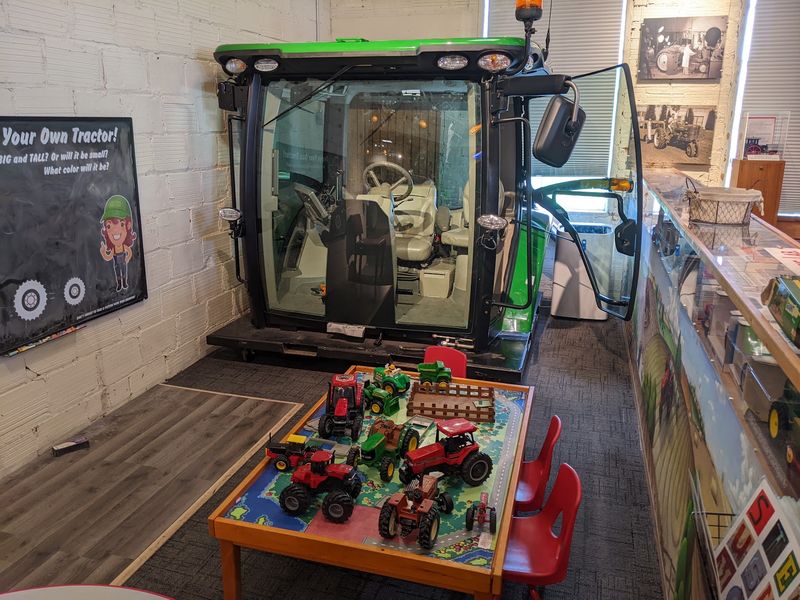
Little ones who spend the car ride asking about tractors will find a spot made just for them. The museum has a dedicated children’s play area, and it gives young visitors a chance to burn off energy between exhibits.
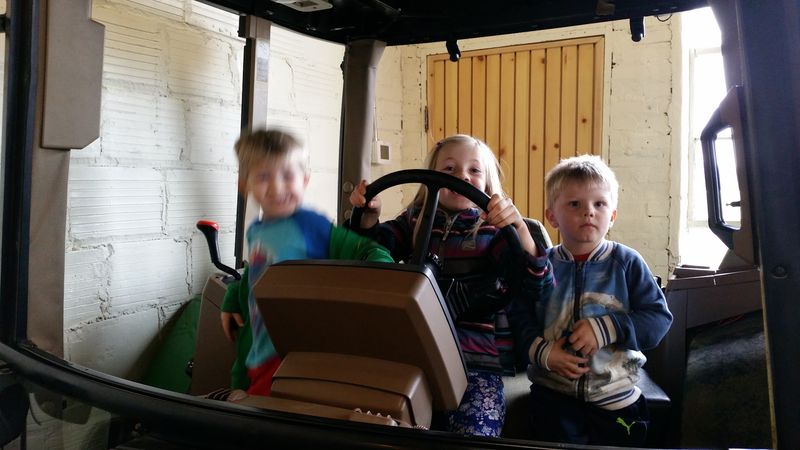
The standout piece is a cab from a huge John Deere tractor. Kids can climb in and sit where a real operator would, gripping controls and looking out the windows.
Grown-ups are welcome too, and plenty of big kids take their turn.
This setup makes the museum a strong pick for families with toddlers and young children. A short attention span is less of a problem when there is a hands-on corner waiting nearby.
Parents can read a few panels while the kids pretend to plow a field.
Grandparents with tractor-loving grandkids have an easy outing on their hands. The combination of real machines and a playful space suits several ages at once.
Free admission helps, since a quick visit costs nothing beyond an optional donation.
Bring a camera for the cab. A small child behind that big steering wheel makes a photo worth framing.
Knowledgeable Staff, a Short Video, and a Donor Brick Wall
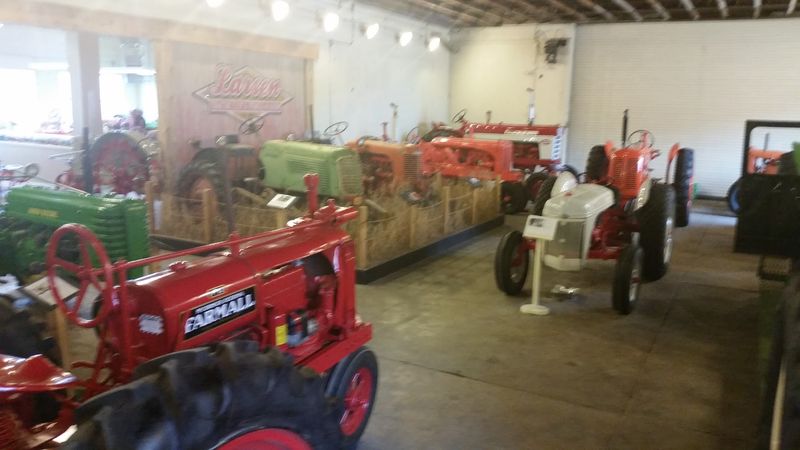
A good guide can turn a row of machines into a string of stories. Staff here share detailed history about how tractors transformed over the last century, and past directors have led tours packed with tales about testing and why it mattered.
Questions are welcome. The team knows the collection well and can explain what makes each tractor unique, from engine quirks to the reasons certain designs succeeded.
Arriving during a quieter time, without a crowd of students, can mean more one-on-one conversation.
A video offering gives extra background for anyone who prefers to watch and listen. It works nicely as a starting point before walking the floor.
On the way out, a small museum store sells tractor-themed gifts and keepsakes. It is a fun place for a souvenir, especially for kids who just climbed into that big cab.
Because admission is free, donations support daily operations. The museum has started a donation brick wall where families can buy an engraved brick and have their name added to this engineering-based collection.
It offers a lasting way to join the story of Nebraska tractor testing.
Planning the Trip: Weekday Hours, Tight Parking, and Nearby Stops
Timing matters most. The museum keeps daytime weekday hours and closes on weekends, so a Saturday drive will not work.
Schedules can shift with the university calendar, so calling ahead before a long drive is a smart move.
Parking takes a little care. There are a few spots set aside for museum visitors, but spaces are limited, and plenty of no-parking signs dot the surrounding campus.
There is no room for travel trailers or large RVs, which makes it a better fit for a regular car or truck.
Plan on roughly twenty minutes to an hour inside. Tractor lovers and families with young kids will likely stretch toward the longer end.
A short visit leaves room to explore more of East Campus.
The International Quilt Museum sits within walking distance, and the campus dairy store serves cheese and ice cream made right at the university. Pairing all three makes for a full, easygoing afternoon in Lincoln for very little money.
Since museum admission is free, the only real cost may be a scoop of ice cream and an optional donation.
A Small Museum With a Worldwide Story
Size can be misleading. A single building on a college campus holds a story that reshaped how tractors are built across the globe, and that contrast is what sticks after the visit ends.
The Larsen Tractor Museum does not try to be everything. It focuses on testing, honesty, and steady improvement, then backs that focus with around 40 machines, a gallery of carburetors, student-built competition tractors, and a playful corner for kids.
The pieces fit together neatly.
Anyone who owns a tractor today may leave with fresh gratitude for how far the machines have come in a hundred years. Families gain a free outing with something for toddlers and grandparents alike.
Engineering fans get a rare look at the lab work behind the numbers on a spec sheet.
A few simple habits help: go on a weekday, call ahead, and arrive in a vehicle that fits a small lot. Add the dairy store and quilt museum for a longer day in Lincoln.
Nebraska has plenty of reasons for farm pride. Few of them fit so much history into such a humble white building on the edge of campus.