7 Connecticut Salvage, Reclaimed Materials And Architectural Resale Shops Packed With Pieces From The Past
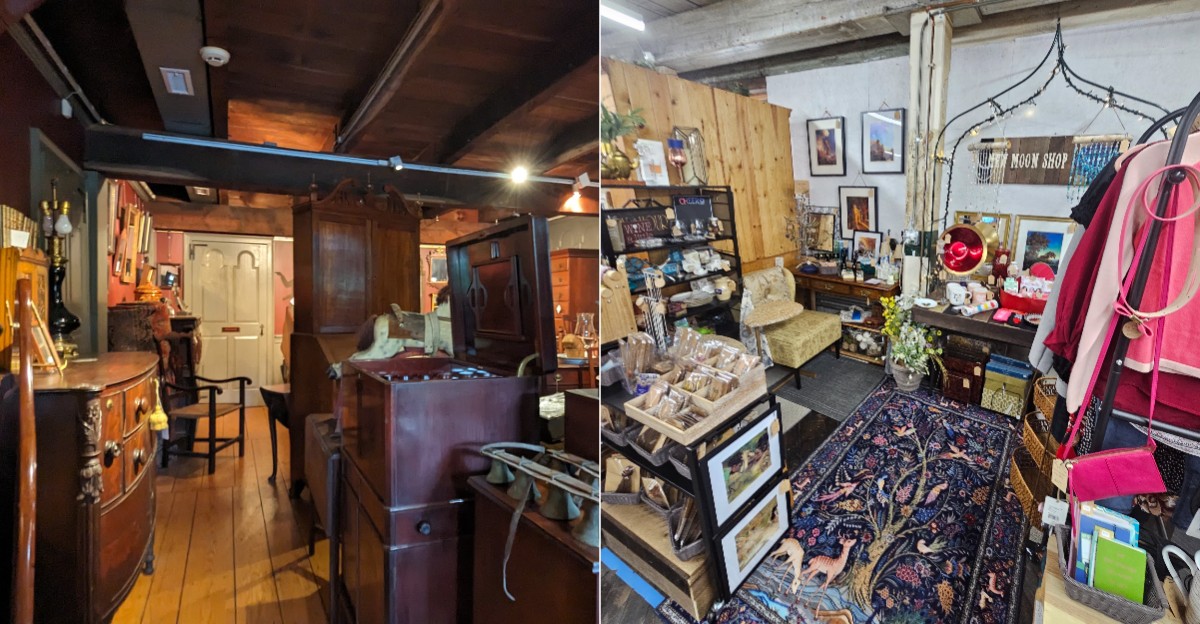
That battered old door leaning against the wall could have spent a century welcoming people into somebody else’s home.
Now it is waiting for another chapter.
Architectural salvage turns renovation leftovers into a treasure hunt, giving beautiful old building pieces a chance to escape the dumpster and become useful again.
Across Connecticut, salvage shops collect pieces from the past for shoppers who would rather reuse something with history than buy another brand-new imitation.
Browsing requires imagination.
A weathered fixture may look strange sitting on a warehouse shelf, then become exactly right once you picture it inside a house. Even people without a renovation underway can get absorbed in figuring out where everything came from.
Every scratch has already happened somewhere else.
That history gives salvage hunting its personality, and the shops ahead offer plenty of opportunities to bring a small piece of an older building home.
1. The ReCONNstruction Center, New Britain
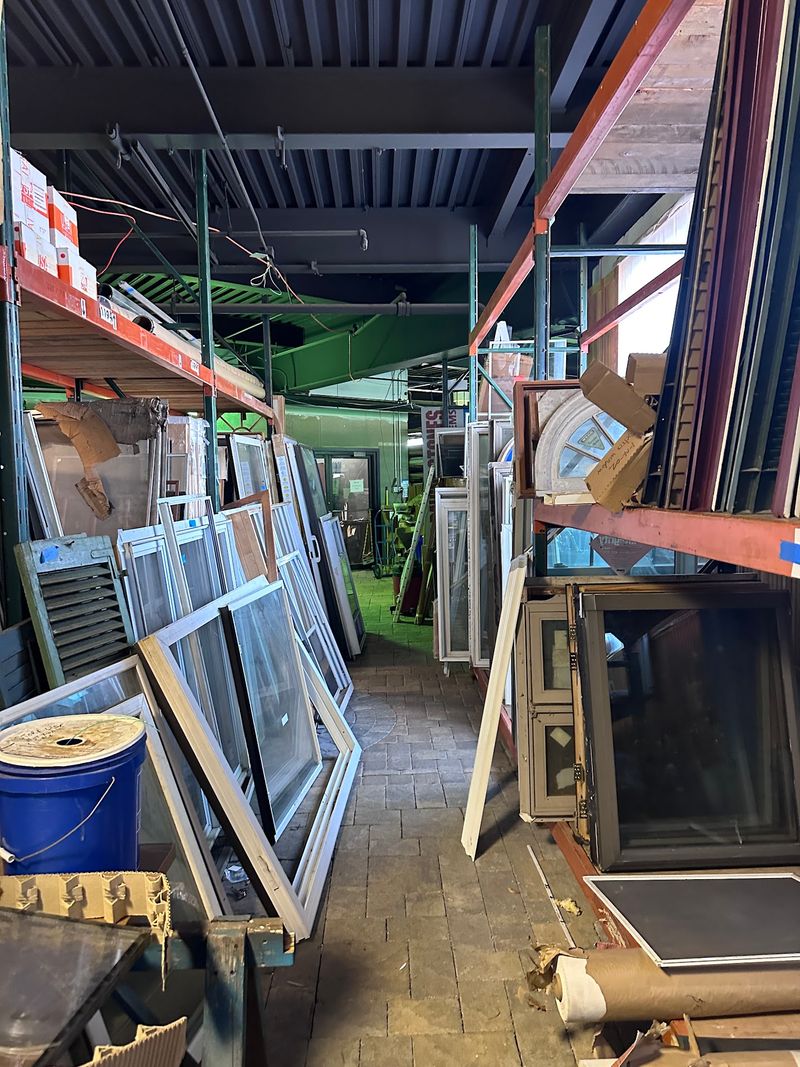
Start with the doors. Then keep digging. Before long, you may be comparing cabinet sets, checking old hardware, or wondering if that unusual light fixture could work back home.
The ReCONNstruction Center turns leftover building materials into another round of possibilities.
This nonprofit environmental organization collects reusable materials and sells them back to the public at reduced prices, keeping useful supplies in circulation rather than sending them to landfills.
Donors range from contractors and manufacturers to retailers and everyday homeowners. The inventory covers much more than architectural odds and ends.
Depending on what has recently arrived, shoppers can come across doors, windows, kitchen cabinets, appliances, lumber, flooring, sinks, lighting, plumbing fixtures, hardware, stone, brick pavers, and other renovation materials.
Items may be new, preowned, antique, or surplus, so this is not the kind of store where every aisle stays identical week after week. That unpredictability makes repeat visits worthwhile.
Someone restoring an older house might be hunting for a door with more character than a modern replacement, while another shopper may simply need cabinets without paying full retail prices. Measurements are especially useful here.
Knowing the exact opening, wall, or floor space you are working with can save plenty of second-guessing when something promising appears.
The organization also promotes deconstruction, which involves carefully dismantling buildings so usable materials can be reused, repurposed, or recycled.
Shopping happens at 65 Burritt Street in New Britain, the address currently listed by the organization itself.
Current store hours are Friday and Saturday from 10 a.m. to 5 p.m. and Sunday from noon to 5 p.m.
Inventory keeps moving, so an unsuccessful hunt today does not mean the same item will not appear next weekend.
Bring measurements, leave some room in the vehicle, and expect the unexpected.
2. Olde New England Salvage Co., Bozrah
What if the salvage piece you wanted was an entire historic structure?
That possibility is very real here. Since 1982, the business has dismantled houses, barns, and outbuildings, saving both complete structures that can be rebuilt and individual components useful for recreating or restoring 18th- and 19th-century spaces.
More than 135 structures had already been dismantled by the company years ago, according to a Bozrah Historical Society program describing owner Glenn Pianka’s work.
That makes Olde New England Salvage Co. considerably different from a conventional antique shop. The focus is on the bones and details of old buildings.
Its documented inventory has included antique flooring, doors, beams, paneling, cupboards, hardware, and stone fireplace mantels, with materials supplied to homeowners, architects, designers, and landscapers.
Some pieces are fascinating even before a project enters the conversation. Hand-worked timbers can carry marks from the tools that shaped them, while early cupboards and paneling show construction details rarely encountered in modern home stores.
The company’s own inventory pages have featured early 19th-century built-in cupboards and other architectural components.
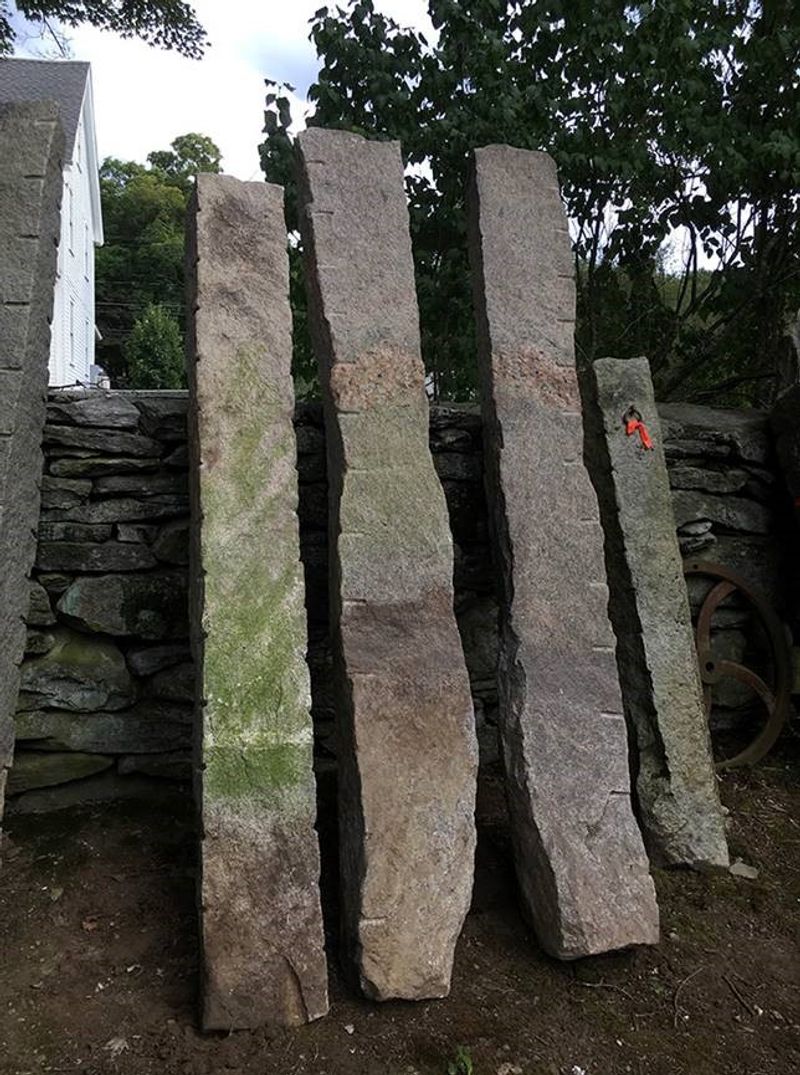
Stone is another notable part of the business. Historic trade listings document granite troughs, posts, steps, and other reclaimed pieces, giving landscape projects another route to genuine period materials.
This is the sort of place where arriving with measurements and a clear project in mind can be especially helpful. A beam, granite step, or old door can be substantial, and transportation deserves some thought before purchasing.
The current business address is 185 Fitchville Road in Bozrah. Olde New England Salvage also remains active locally, appearing in 2026 Bozrah records.
Its long history gives shoppers access to materials that have already survived generations. For a restoration project, that is much more interesting than pretending something new looks old.
3. Art Pappas Antiques, Woodbury
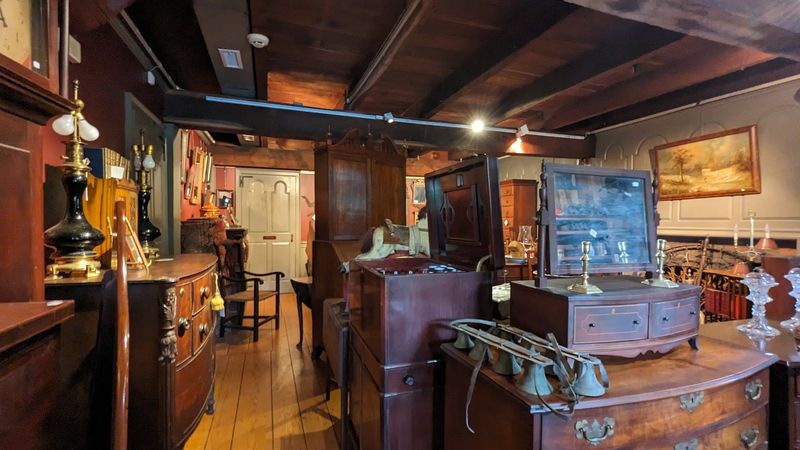
When a house has been around for generations, finding a replacement piece that actually belongs with its character can become an adventure of its own.
Art Pappas Antiques brings genuine old material into that search without limiting the experience to architectural pieces alone.
Owner Art Pappas founded the business in 1983 and has now spent more than four decades working in antiques. His specialties include early American furniture and accessories, architectural antiques, and antique building materials.
Over the years, he has traveled throughout New England and New York buying and selling pieces while building relationships with collectors and dealers.
That background gives the shop a different feel from a warehouse filled exclusively with salvaged construction materials.
Furniture and decorative antiques share the broader focus, making it possible to look for both period furnishings and elements that could complement an older home.
Current visits take shoppers to 161 Main Street South in Woodbury, where Art Pappas Antiques operates at Main Street Antiques Center.
For restoration-minded shoppers, architectural antiques can be especially satisfying because small details often carry a surprising amount of personality.
The right period piece can feel far more convincing in an old house than a newly manufactured copy designed to mimic age.
It also helps to shop prepared. Take measurements before leaving home and keep photos of existing woodwork, furniture, finishes, or architectural details handy. Comparing proportions and styles on the spot is much easier than relying on memory.
Pappas has also exhibited at major antiques events over his career, including the Connecticut Antiques Show, Ridgefield Antique Show, Heart of Tennessee Antiques Show, and Wethersfield Antiques Show.
The business currently describes visits as open by chance or appointment. That makes a little advance planning worthwhile.
Once there, slow down. Decades of experience in the antiques trade can produce a collection that deserves more than a hurried look.
4. Dedstok Relics At The Shops At New Hartford, New Hartford
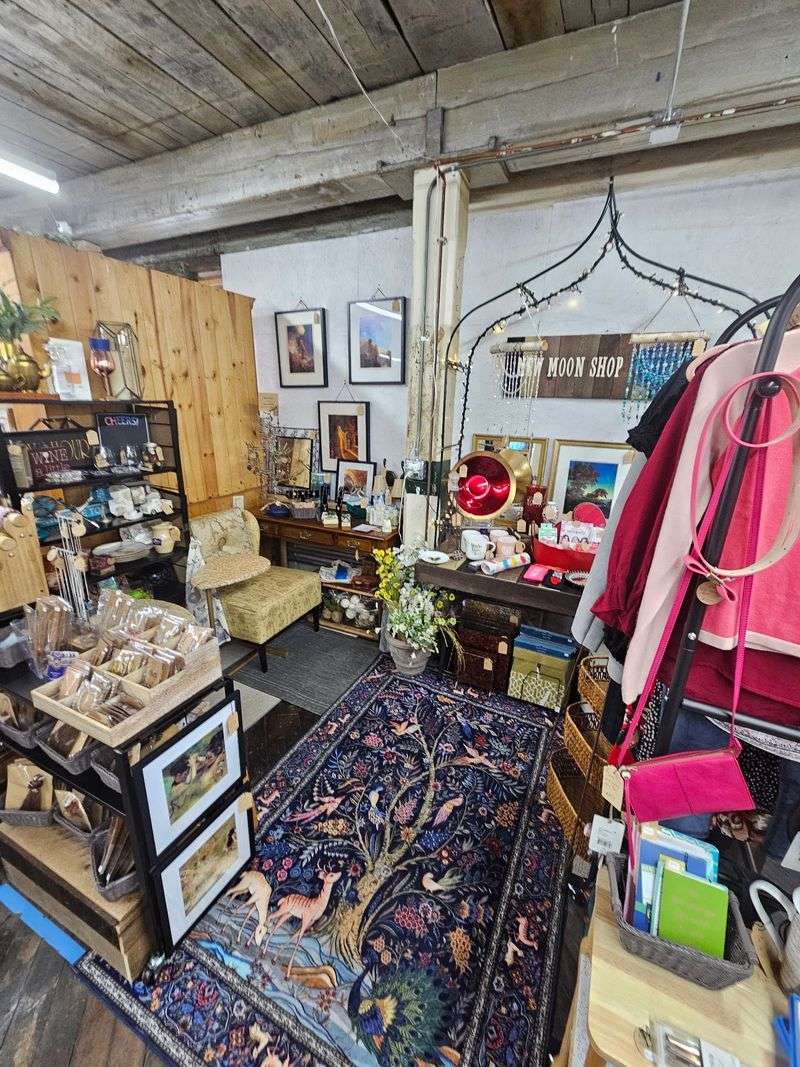
Things get weird here. In a good way. Look closely and the smallest object may have the longest story.
Dedstok Relics calls itself a tiny salvage museum, and that description fits its unconventional approach.
This is an independent booth inside The Shops at New Hartford, a larger multi-vendor marketplace occupying the fourth floor of the historic Hurley Business Park. The collection refuses to stay in one tidy category.
Current descriptions mention architectural salvage alongside vintage posters, old advertising, records, tools, cameras, toys, housewares, vintage clothing, signs, paper ephemera, Hot Wheels and Matchbox cars, and mid-century décor.
There are also objects that resist easy categorization, which is rather fitting for a place built around discovery. Another interesting part is what happens before something reaches the booth.
The owner describes finding objects in places such as basements and estate piles, then cleaning, stabilizing, repairing, or researching them without trying to erase evidence of their previous lives.
Maker marks, handwriting, old catalogs, and local history can all become clues to what an object once was.
That makes careful browsing worthwhile. Instead of racing through with one specific purchase in mind, give yourself time to inspect labels, shelves, and smaller pieces. Inventory changes constantly, so the current assortment is not meant to function as a permanent display.
The larger marketplace adds another reason to stay awhile, bringing independent sellers, makers, antique dealers, artists, and collectors together under the same roof.
Dedstok is on the fourth floor at 37 Greenwoods Road in New Hartford.
Current marketplace hours are Wednesday through Sunday from 11 a.m. to 5 p.m., with Monday and Tuesday closed. Come ready to poke around. Predictability would spoil half the fun.
5. Cook’s Antique Lumber, New Preston
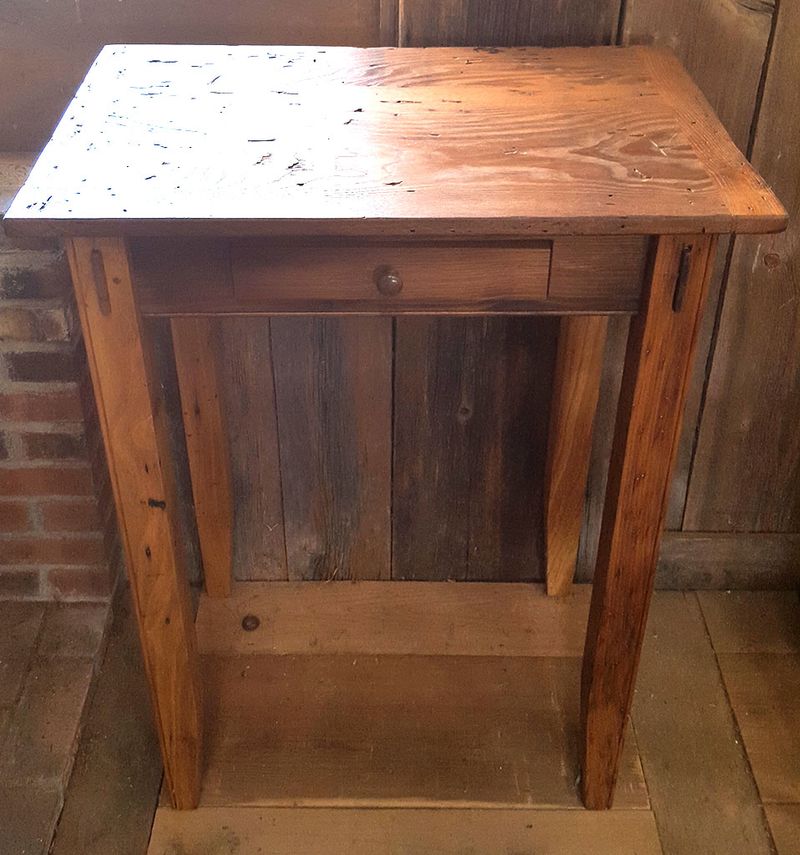
Old wood hits differently. The knots, saw marks, and weathered surfaces have already earned their character.
Cook’s Antique Lumber has built an entire business around giving that material another life.
The company says it has been salvaging antique lumber since 1979, sourcing wood from old barns, houses, and mills rather than trying to manufacture a newly distressed look. Its customers include architects, builders, furniture makers, and homeowners.
The search for material stretches well beyond the local area. According to the company, its sourcing has ranged from Pennsylvania’s Amish country north to Georgian Bay in Ontario.
Boards and beams are individually selected, making this more specialized than simply gathering whatever old lumber happens to become available.
Heavy timber is an especially interesting part of the operation. Cook’s offers hand-hewn barn frames and specializes in white pine frames, with options that include purchasing a frame and materials or using the company’s construction services.
It also works with barn homes and custom equestrian barns.
For smaller projects, reclaimed lumber can take on an entirely different role. Old wood can become furniture or architectural details, and the company’s past work has included furniture made with antique white pine and white oak.
This is a good stop to approach with a project rather than a vague idea. Know your dimensions, consider the species and appearance you need, and remember that reclaimed boards can differ considerably from standardized new lumber.
The company’s current homepage directs visitors to its yard at 168 New Milford Turnpike, Route 202, in New Preston.
It specifically asks visitors to call before coming to the yard. That advance conversation also gives you a chance to explain what kind of material your project requires.
Come for old lumber, but expect to start noticing every saw mark and weathered edge.
6. New Haven County ReStore, Wallingford
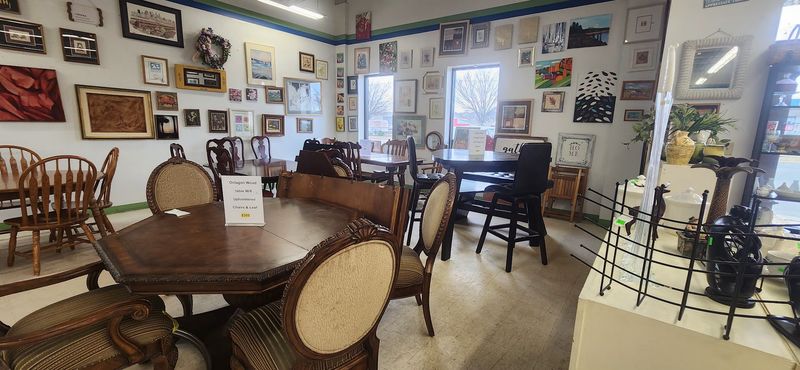
Renovation shopping becomes considerably more interesting when you have no idea what might have arrived since your previous visit, and that changing inventory is a big part of the appeal here.
The New Haven County ReStore is a donation-based retail operation run by Habitat for Humanity of Greater New Haven and is open to the general public.
Money spent in the store supports Habitat’s work building homes in the Greater New Haven region. At the same time, donated household and building items get another opportunity to be useful rather than simply being discarded.
What appears on the floor depends on donations, so browsing can feel very different from shopping at a conventional home-improvement store.
Furniture may be part of the mix one week, while cabinets or renovation supplies catch your attention during another visit.
The ReStore operates at 286 South Colony Road in Wallingford.
Its officially listed merchandise includes appliances, cabinets, building materials, flooring, plumbing items, lighting, furniture, and home décor, with new merchandise arriving every week.
That range makes the store useful even when you are not carrying out a full renovation.
A single light fixture, cabinet, or decorative piece can be enough to change a room, while larger projects may benefit from checking available building supplies before buying everything new.
Preparation helps when something substantial catches your eye. Habitat specifically tells shoppers purchasing glass, marble, or other heavy furniture to bring enough help to move the piece into their vehicle.
Current hours vary by day. The store lists 10 a.m. to 4 p.m. on Sunday, Monday, Wednesday, and Friday, and 10 a.m. to 6 p.m. on Tuesday, Thursday, and Saturday. Since fresh items arrive weekly, repeat visits make sense.
Bring measurements if you have a project underway. The cabinet or fixture you need may already be waiting on the floor.
7. Habitat For Humanity Of Coastal Fairfield County ReStore, Stratford
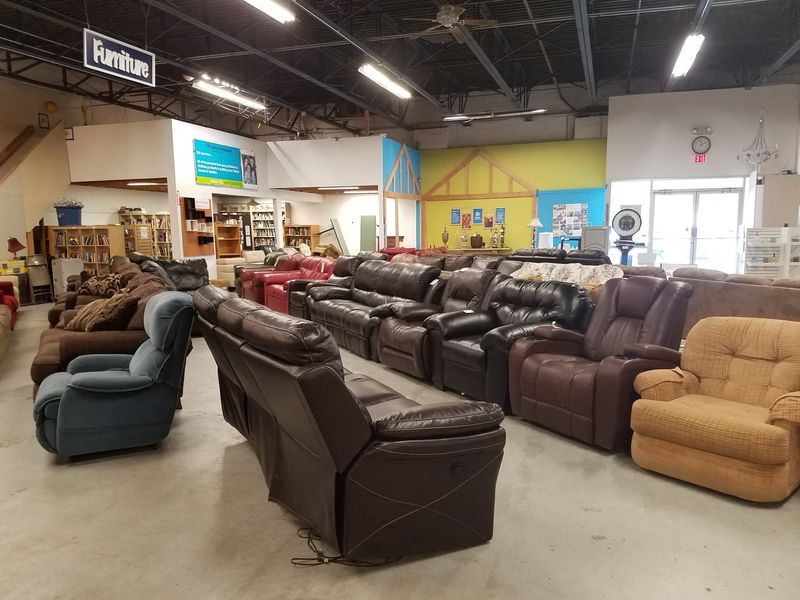
How much can fit inside 45,000 square feet when donations keep arriving?
Quite a lot, as it turns out. Habitat for Humanity of Coastal Fairfield County’s ReStore has grown dramatically since opening in 2004.
The Stratford store originally occupied 16,000 square feet, expanded by another 9,000 square feet in 2013, and reached 45,000 square feet after another expansion in 2016.
Habitat describes it as one of the country’s largest single-location ReStores.
That size leaves room for much more than secondhand furniture. Current store information lists tested appliances, cabinets, windows, doors, plumbing fixtures, building materials, and home décor among the merchandise shoppers may encounter.
Goods are donated by individuals and businesses, and the selection includes both new and gently used items.
The prices are part of the ReStore model as well. Habitat says donated goods are generally sold for 50 to 70 percent less than their original retail value.
Revenue supports the local organization’s affordable-housing work, while reuse keeps materials in circulation.
There is a substantial environmental side to that system. The organization reports that donations to this ReStore keep approximately 975 tons of material out of landfills each year.
Inventory naturally changes with donations, which gives bargain hunting here a little unpredictability. One trip could revolve around cabinets or an appliance, while another might produce an unusual piece of décor.
Shopping takes place at 40 Honeyspot Road in Stratford, the current address confirmed by both the local organization and Habitat for Humanity’s national directory.
Current hours are Tuesday through Friday from 10 a.m. to 5:30 p.m. and Saturday from 10 a.m. to 4 p.m. Sunday and Monday are closed. With 45,000 square feet to explore, rushing would miss the point.