The 10 New York Salvage Yards Filled With Architectural Treasures From Houses That Disappeared
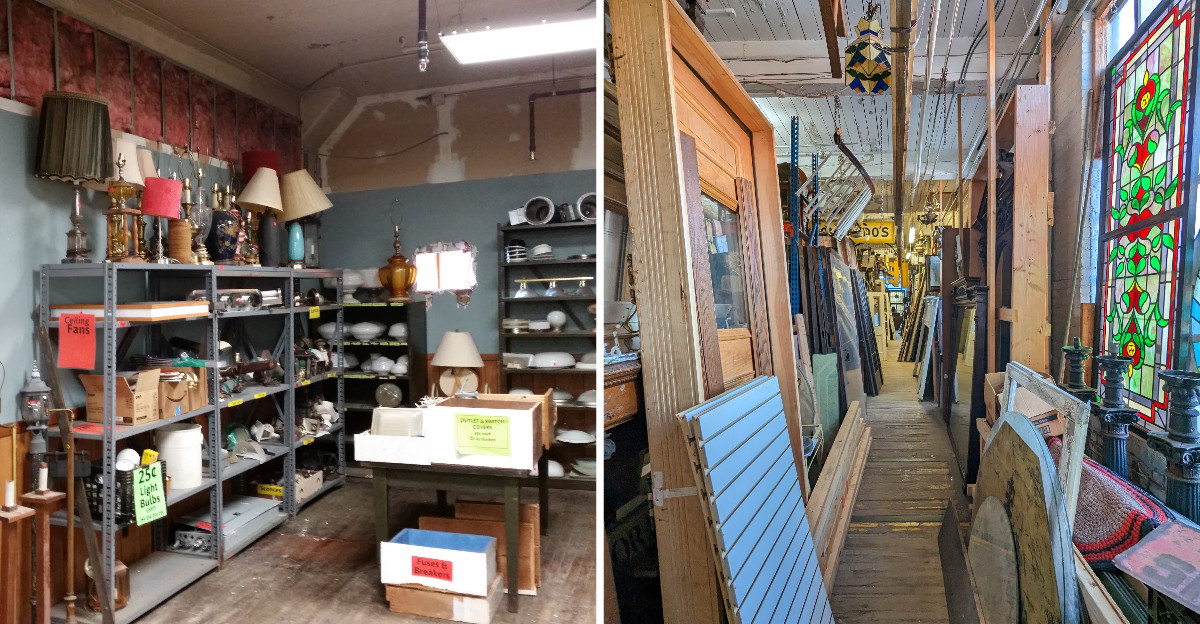
Who knew an old doorknob could cause this much emotional attachment?
Across New York, salvage yards keep stained glass, clawfoot tubs, carved mantels, beams, doors, and little pieces of buildings that no longer exist.
That history makes the hunt addictive. Every object feels like it has something to say, even if nobody knows the whole story.
Where did that window hang? Whose house had that staircase? And why are you suddenly measuring your living room for a century-old mantel?
These places turn shopping into detective work, and the best part is leaving with a piece of the past that gets another life.
1. Olde Good Things, New York City
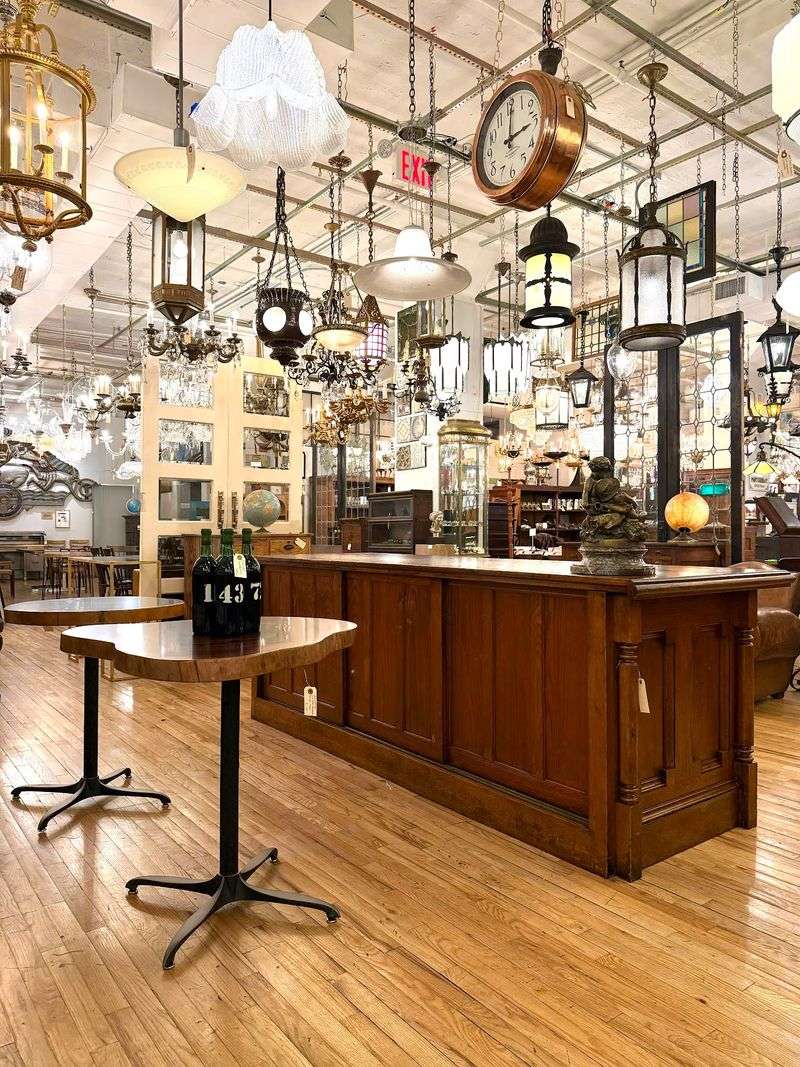
A famous hotel mantel could end up in your living room. Some shopping trips feel more like time travel, and this one proves it.
Olde Good Things now operates its Manhattan showroom at 333 W 52nd St, where architectural salvage from major Northeast buildings sits beside antique hardware, furniture, glass, stonework, and lighting.
The company has recovered material from the Waldorf Astoria, Plaza Hotel, Flatiron Building, JFK Airport, churches, factories, barns, and estates.
Marble mantels from the Waldorf remain a major specialty, and vintage chicken-wire glass salvaged from Rockefeller Center is another distinctive piece of New York history.
Lighting deserves a long look. Chandeliers, sconces, pendants, globes, and industrial fixtures span multiple eras, including vintage Holophane pieces originally developed for efficient light distribution.
Doors, stained glass, decorative iron, terra-cotta elements, hardware, mantels, and reclaimed glass broaden the hunt beyond fixtures alone.
Reclaimed wood also gets another life through custom tables made in the company’s Scranton workshop. Pine, oak, maple, and walnut are among the materials used for those pieces.
Measurements matter before tackling anything substantial. Antique mantels, doors, glass panels, and large fixtures were made for specific buildings, so dimensions can vary sharply.
The 52nd Street showroom brings that mix together in one place, with genuine architectural material sitting beside newly crafted pieces made from salvaged wood.
2. Significant Elements, Ithaca
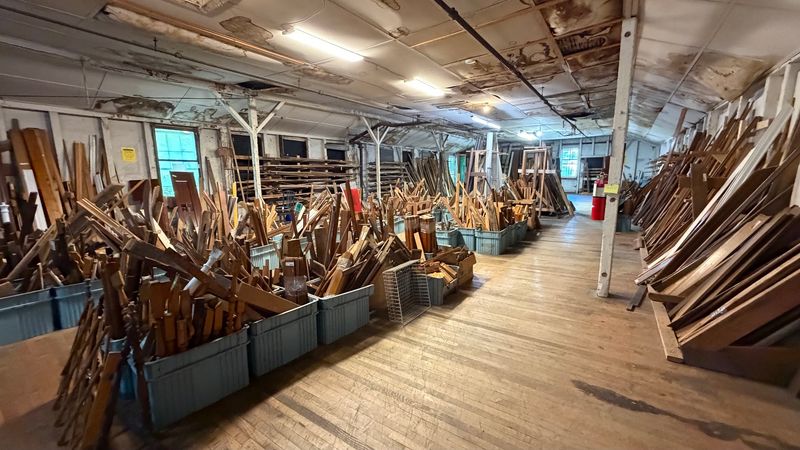
Tiny drawers packed with doorknobs, bin pulls, and old rim locks can stop a restoration hunt cold. One missing hardware piece can stall an entire restoration project.
Significant Elements operates at 212 Center St in Ithaca as the architectural salvage program of nonprofit Historic Ithaca.
The current store fills about 10,000 square feet inside an 1888 industrial building in the Southside neighborhood.
Reclaimed building materials, antique hardware, vintage lighting, furniture, fixtures, and unusual decorative pieces move through the warehouse, giving older components another chance to stay useful.
The three-story building has its own layered history. It began as a hosiery factory and later housed carriage manufacturing, blacksmithing, aircraft-engine work, warehousing, and other businesses before Significant Elements moved in during 2003.
That setting makes the salvage mission visible before shoppers even reach the shelves.
Historic Ithaca also maintains a Library of the Built Environment nearby, with more than 600 books, long runs of city directories, photographs, maps, surveys, magazines, and preservation references available by appointment.
Preservation services include guidance on older buildings, sash repair, furniture repair, and hardware restoration through its training programs.
Because donations and recovered materials arrive unpredictably, exact pieces cannot be guaranteed. Hardware, lighting, doors, windows, lumber, plumbing fixtures, and decor can all appear.
3. Historic Albany Architectural Parts Warehouse, Albany
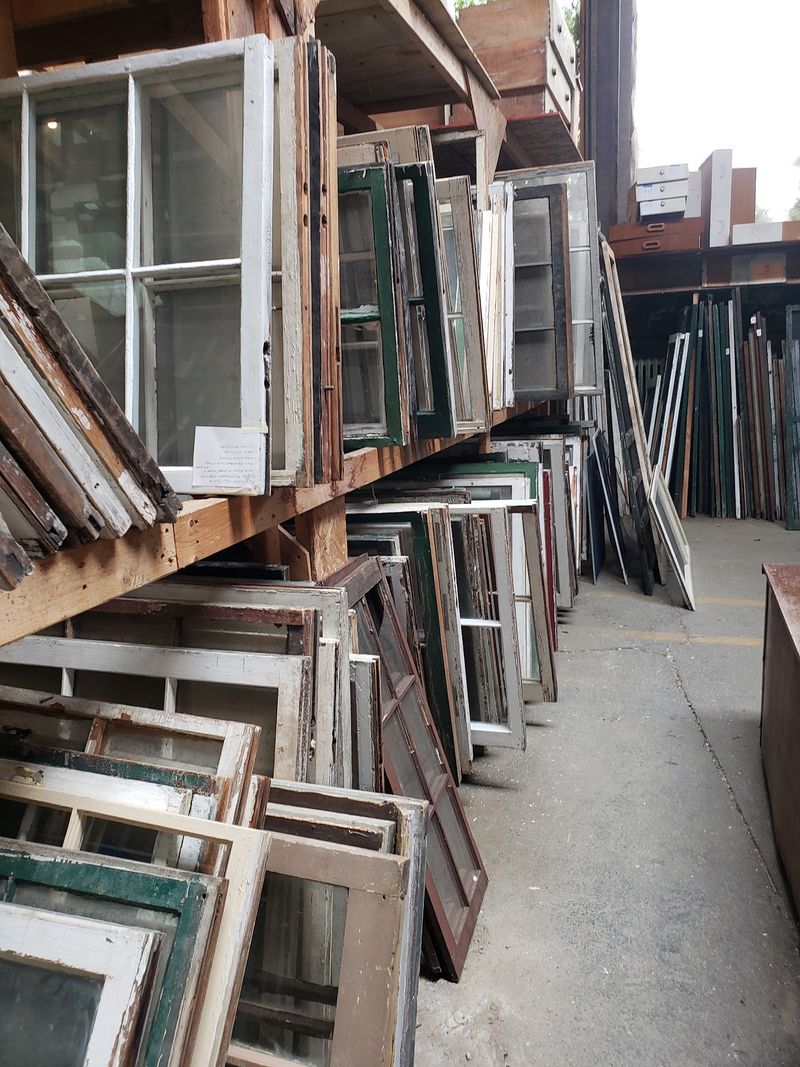
It makes you wonder, doesn’t it, where an old front door has traveled. Some doors have opened for a century before landing in a warehouse.
Historic Albany Foundation’s Architectural Parts Warehouse has operated since 1978 at the center of the Capital Region’s preservation effort.
The nonprofit shop at 89 Lexington Ave was created to keep useful historic building parts from disappearing when structures could not be saved. Donated inventory now comes from Albany and elsewhere in the Northeast.
Doors and matching hardware remain core categories, but the warehouse reaches far beyond entrances.
Wooden windows, storm windows, shutters, glass, balusters, railings, stair parts, bathtubs, sinks, toilets, faucets, tile, mantels, millwork, sconces, lamps, globes, radiators, and radiator covers all appear in the current inventory list.
The operation is especially useful for older properties because modern replacements rarely match historic dimensions or profiles.
A surviving sash, railing section, hinge, or mantel can solve a restoration problem without forcing an entire room to be redesigned.
Everything sold here enters as a donation rather than a purchase by the warehouse, and new material arrives regularly. Bring opening dimensions on any serious shopping trip, especially for doors, windows, plumbing fixtures, and stair parts.
4. Adirondack Architectural Salvage, Keeseville
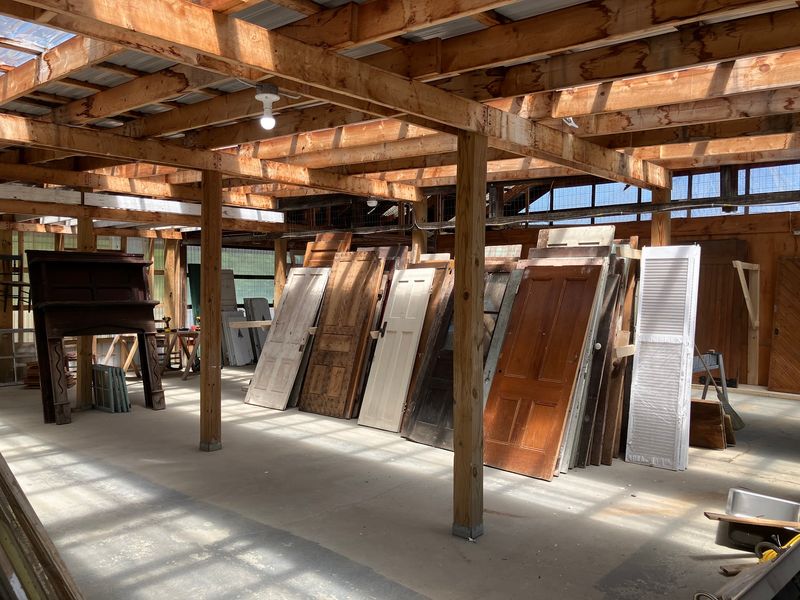
Just imagine for a second a mountain cabin door getting a brand new adventure. Up in the North Country, old materials get a fresh start.
Adirondack Architectural Salvage is one of the newest operations on this list.
Adirondack Architectural Heritage launched the nonprofit warehouse in 2026 inside the former Pray’s Family Farm Market at 397 State Highway 9N in Keeseville.
The project accepts reusable building materials and redirects them toward historic-property repairs, renovation work, and creative reuse.
Windows, bathtubs, doors, doorknobs, light fixtures, brackets, beams, and other architectural parts can move through the inventory.
Some material is old and period-specific, while other reusable building supplies may be newer. That matters for anyone expecting a warehouse made entirely of antiques.
The program also connects salvage with preservation education.
Hands-on trades workshops and other training opportunities are planned alongside the retail side of reuse. Purchases and donations support the broader preservation work of the nonprofit organization.
Because the warehouse only opened in 2026, claims about decades of stock or long-established shopping traditions do not fit.
Inventory is shaped by incoming donations, and public hours are seasonal, with weekday appointments available year-round. The site is less than a mile from Exit 34 of the Adirondack Northway.
5. Historic Houseparts, Rochester
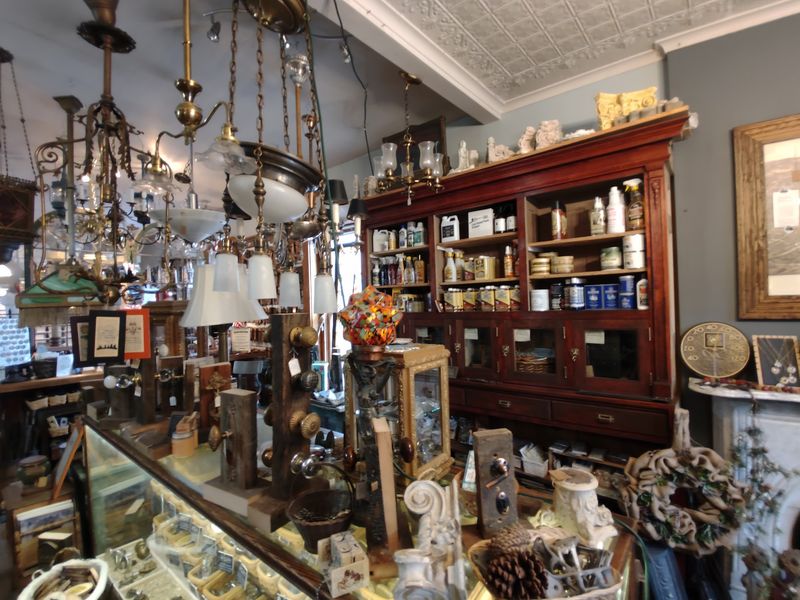
Two restoration shops sitting almost side by side can solve an impressive number of old-house problems. One handles architectural parts, and the other focuses on bathrooms.
Historic Houseparts has operated in Rochester since 1980, combining architectural salvage with reproduction hardware, restoration supplies, refinishing products, and repair services.
Much of its salvaged inventory comes from pre-1940 buildings being demolished in western New York, along with material purchased from people and contractors renovating older properties.
The operation occupies several nearby spaces, including a three-story brick row house built in 1890, a large warehouse, additional storage, and the Period Bath Supply showroom.
Antique hardware, lighting, stained and leaded glass, woodwork, plumbing pieces, and decorative house parts sit alongside reproductions that can fill gaps when an exact original is unavailable.
Period Bath Supply, established in 2010, specializes in antique and new plumbing for historic and vintage interiors.
Bathtubs, sinks, tile, faucets, toilets, mirrors, medicine cabinets, shelves, hooks, and other bathroom fittings move through its changing stock.
Restoration is part of the business as well. On-site services cover stained and leaded glass, lamps, light fixtures, and hardware, giving damaged pieces another option besides replacement.
The main Historic Houseparts address is 540 South Ave, with Period Bath Supply nearby at 528 South Ave.
6. ReUse Action, Buffalo
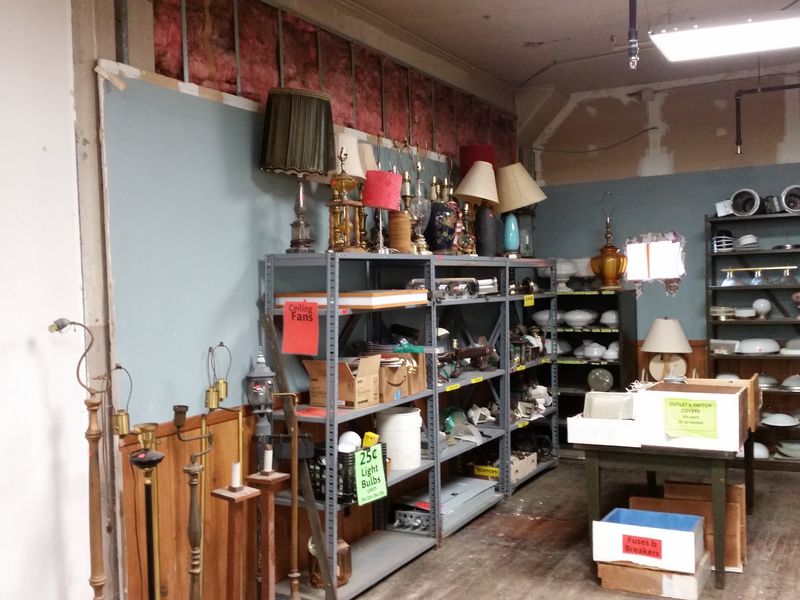
Let’s be real for a second, the greenest board is one already made. Somebody just has to save it before the bulldozer arrives.
ReUse Action operates at 980 Northampton St on Buffalo’s East Side, selling reclaimed and surplus building materials while also working on demolition, restoration, and material-recovery projects.
The team has been reclaiming materials since 2007 and has used the ReUse Action name since 2012. In 2022, it took over material acquisition and retail sales previously handled by Buffalo ReUse.
The current store mixes architectural salvage with construction supplies. Reclaimed barn wood, other salvaged lumber, radiators, kitchen cabinets, house parts, rigid foam insulation, antiques, art materials, and surplus products can all appear.
That range makes the stop useful for restoration work and projects that benefit from reused material.
ReUse Action also works as a licensed contractor. Services include specialty demolition, restoration contracting, clean-outs, material sourcing, and consulting on reuse, recycling, deconstruction, and disposal.
Recoverable pieces can move from an active job site back into circulation rather than entering the waste stream.
Donations, acquisitions, and salvage jobs continually reshape what is available. The current public schedule is limited to selected weekdays and Saturday, making a timing check worthwhile before a long drive.
7. Shaver Brothers Equipment Sales & Salvage Yard, Auburn
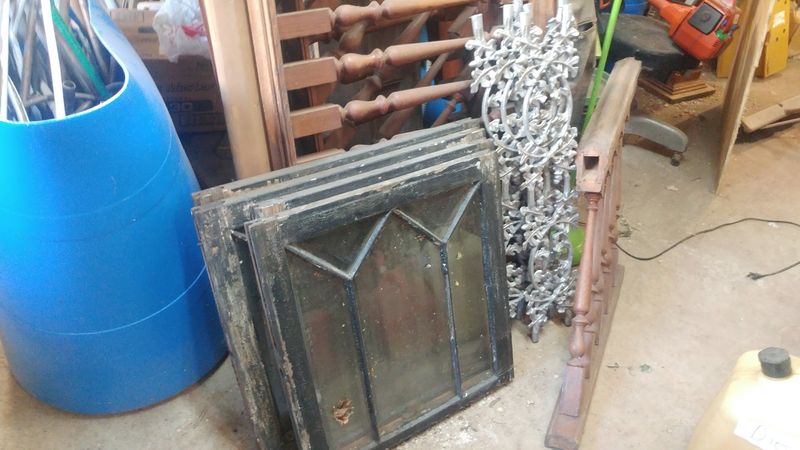
You took the words right out of my mouth if you guessed this yard is huge. Thousands of doors and windows stretch across the grounds.
Shaver Brothers Equipment Sales & Salvage Yard remains at 32 Perrine St in Auburn, with an inventory centered heavily on reusable parts from older homes.
Its salvage list begins with thousands of doors and windows, making those categories an obvious starting point for anyone trying to match an unusual opening in a historic house.
The selection extends into hardware, porch posts, radiators, clawfoot bathtubs, sinks, shutters, hardwood flooring, corbels, stained-glass windows, lighting, fencing, moldings, and antiques.
Those categories cover both major renovation needs and small finishing details that can be difficult to reproduce accurately.
This is a working salvage yard rather than a polished antiques showroom, so practical preparation makes sense.
Exact dimensions help with doors, windows, shutters, radiators, and plumbing fixtures. Sturdy shoes are also useful when inspecting larger pieces.
Salvage depends on what becomes available, so the selection never stays fixed. A specific stained-glass panel or porch post may appear once and never return in the same form. That unpredictability rewards flexibility.
Regular hours are posted for Monday, Tuesday, Thursday, and Friday, with other visits possible by appointment.
8. New York Salvage, Oneonta
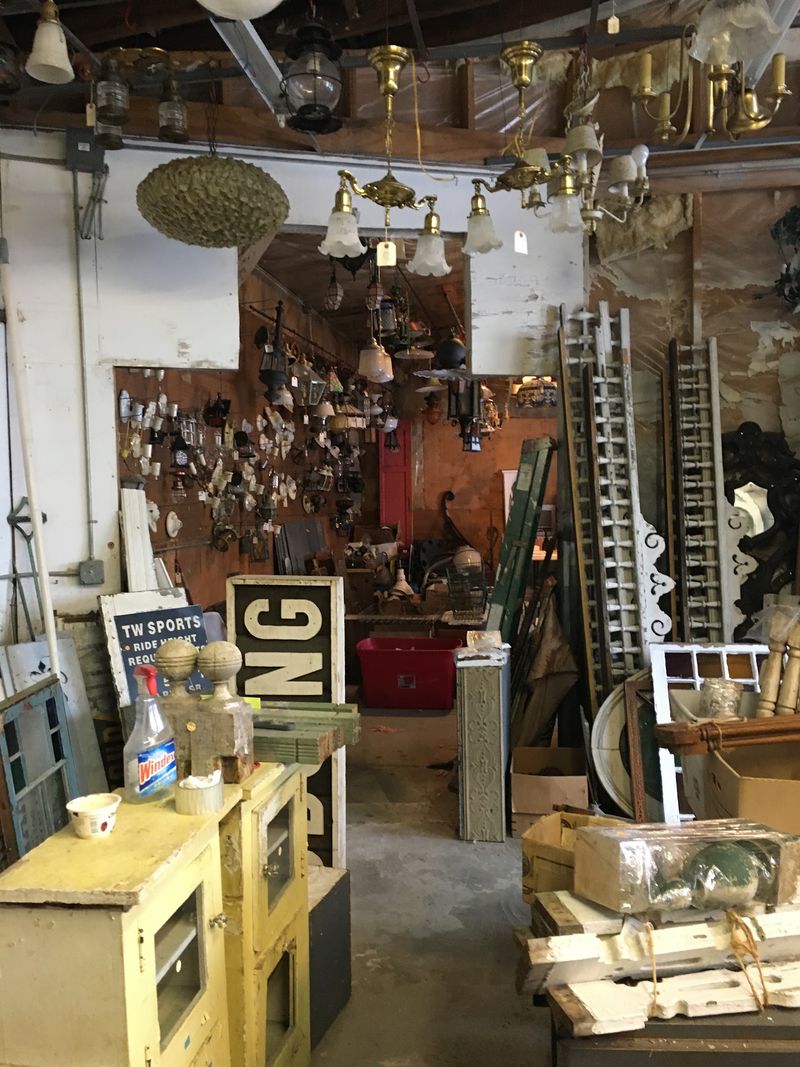
Here’s a crazy thought, what if your floor once held a 1920s dance party? Reclaimed boards carry stories we can only guess.
New York Salvage continues to operate at 35 Otsego St in Oneonta, where the focus is architectural material recovered from older houses.
The current inventory focuses on pre-1970 house salvage, with reclaimed sinks, toilets, lighting, hardware, windows, doors, ceiling tin, wood, and other building parts moving through the shop.
The business dates to 1989, giving it decades of experience collecting components that no longer fit their original structures.
Reclaimed flooring, ironwork, radiators, plumbing fixtures, doors, windows, lighting, and small hardware can support period-sensitive renovations, while industrial and garden pieces broaden the selection.
Reuse also shows up in the shop’s decorative work. Victorian ceiling tin and salvaged wood molding are turned into home accents, allowing fragments too small for a full restoration to become finished pieces rather than waste.
Online listings show individual salvaged pieces continuing to move through the business in 2026, so the selection never stays static.
Measurements remain essential when shopping for anything structural or fitted, particularly doors, windows, sinks, and radiators. A photograph of the existing room or hardware can make comparisons easier.
9. Timeless Building Materials & Salvage, Burt
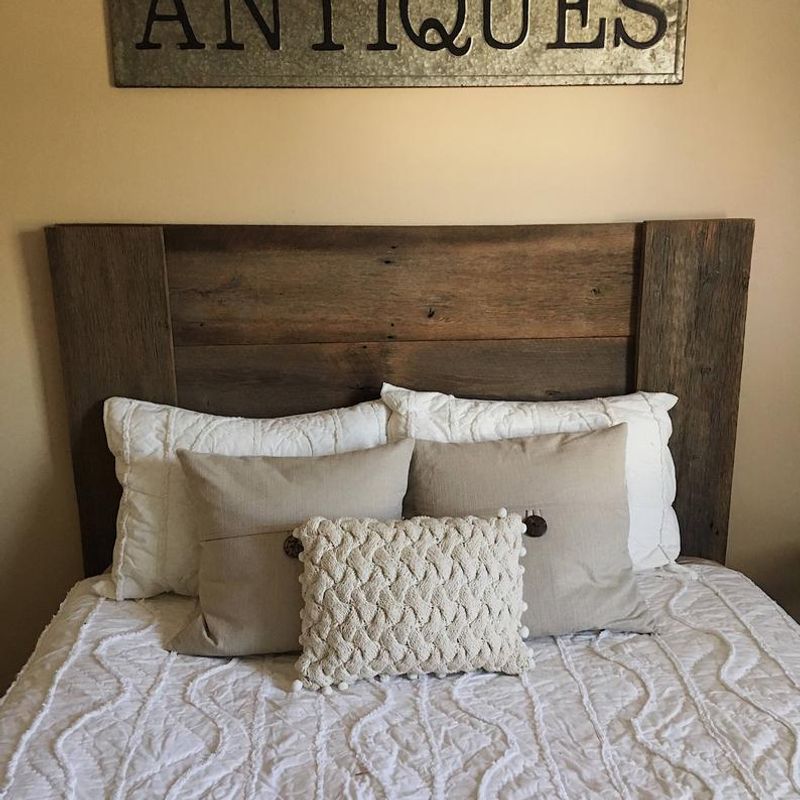
Sounds too good to be true, but whole barns get a second life up here. Weathered boards that faced decades of storms now become tables and walls.
Timeless Building Materials & Salvage operates from 2090 Lockport-Olcott Rd in Burt with a strong emphasis on reclaimed barn material.
Reclaimed barn wood is the core specialty, with usable material recovered from old structures before it is lost.
Barn siding, flooring material, floor and roof joists, hand-hewn and sawn beams, and weathered metal roofing are among the categories currently listed.
Those pieces can move into flooring, wall treatments, mantels, furniture, shelving, or other projects where authentic aged surfaces matter.
Nail holes, notches, twisting, irregular edges, and other marks are normal features of reclaimed wood rather than signs that every board will look uniform.
The business also accepts requests for barn and building demolition, using details about framing, siding, roofing, dimensions, and condition to evaluate a project.
Shopping requires an appointment, so it is not a spontaneous roadside stop.
Project dimensions should be ready before visiting, especially for beams or large runs of siding. Sizes, patina, and condition vary according to what has been salvaged.
10. Zaborski Emporium, Kingston
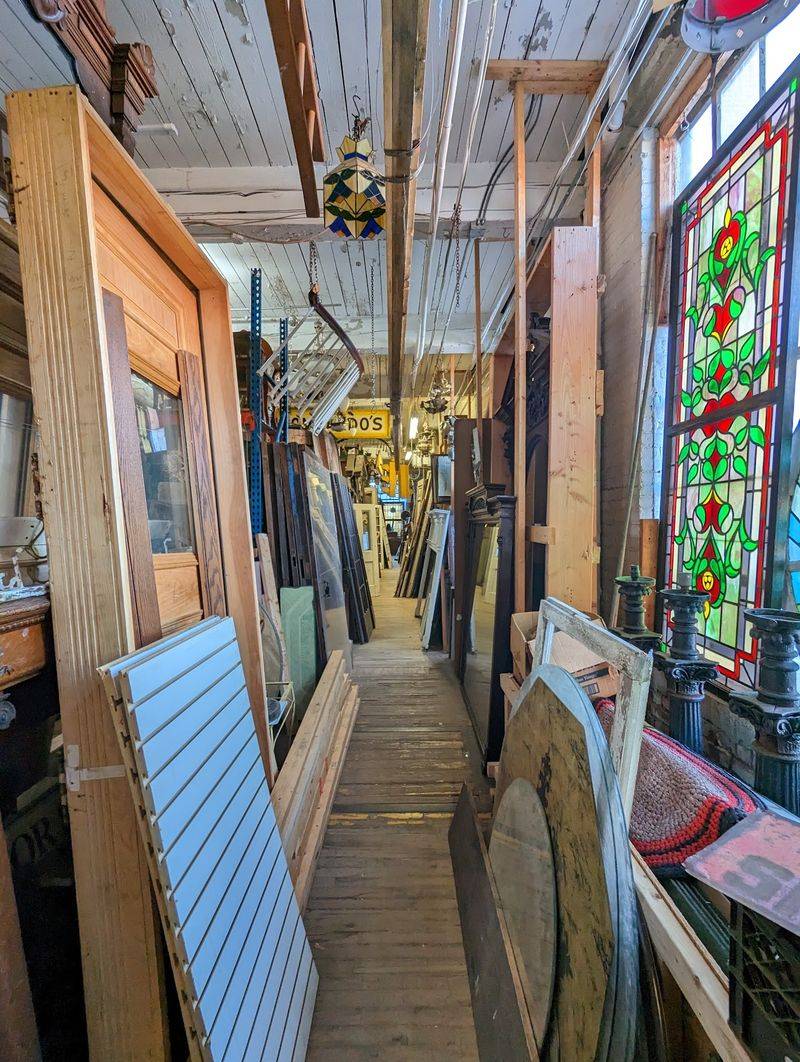
Call it a maze, because four floors of doors, fixtures, and salvage can make direction feel optional. The sheer density is part of the experience.
Zaborski Emporium at 27 Hoffman St in Kingston fills four floors of a roughly 40,000-square-foot former shirt factory with architectural salvage, antiques, furniture, and household pieces.
The former factory gives the collection enough room to spread through long aisles, stairways, and stacked storage areas.
Doors, radiators, bathtubs, stained-glass windows, sinks, light fixtures, hardware, mantels, and other salvaged elements occupy long aisles and stacked storage areas.
Antique furniture and less predictable household objects appear among the building parts, so the experience is broader than a conventional restoration-supply store. The collection has also served professional creative work.
Set designers and prop buyers connected with film, television, and the Metropolitan Opera have sourced material here when they needed period pieces with convincing age and texture. Reproducing that variety from scratch would be difficult.
Comfortable shoes and accurate measurements are useful before tackling four floors. Large pieces may require planning for doorways, vehicles, and installation, while smaller hardware can demand just as much attention to size and pattern.
Current listings show the business active in 2026, with regular midweek-to-Saturday hours.