Lift Your Eyes To The Dome Of The Idaho State Capitol Heated By Geothermal Water Since 1982
Hot water from deep under Idaho has been warming one of the state’s grandest buildings for more than forty years. Most people walking past the sandstone walls have no idea the heat inside comes from about 3,000 feet below their feet.
It is the only state capitol in the country warmed this way, and that alone makes it worth a closer look. Step inside, tilt your head back, and the dome above tells a story of stone, stars, and underground warmth.
A Sandstone Landmark Downtown
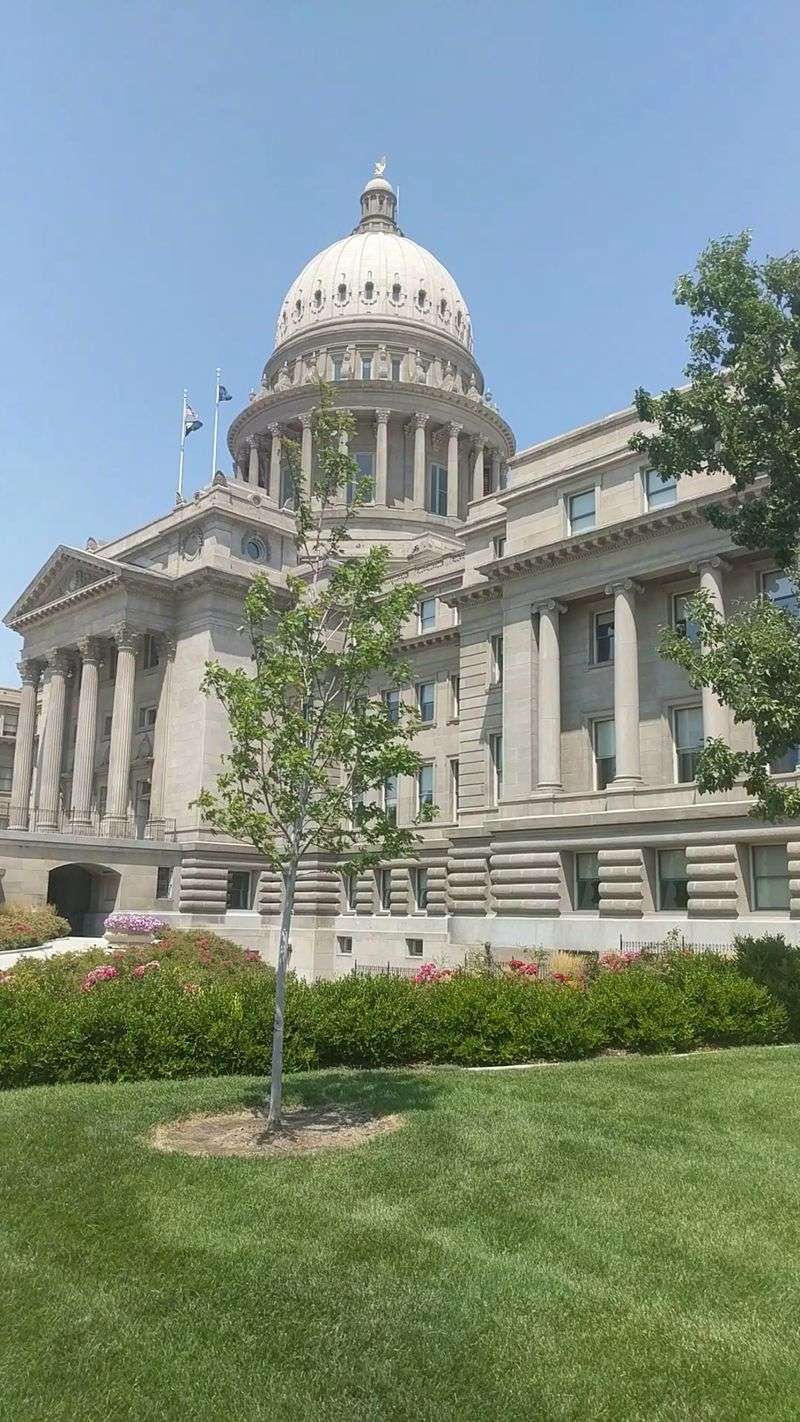
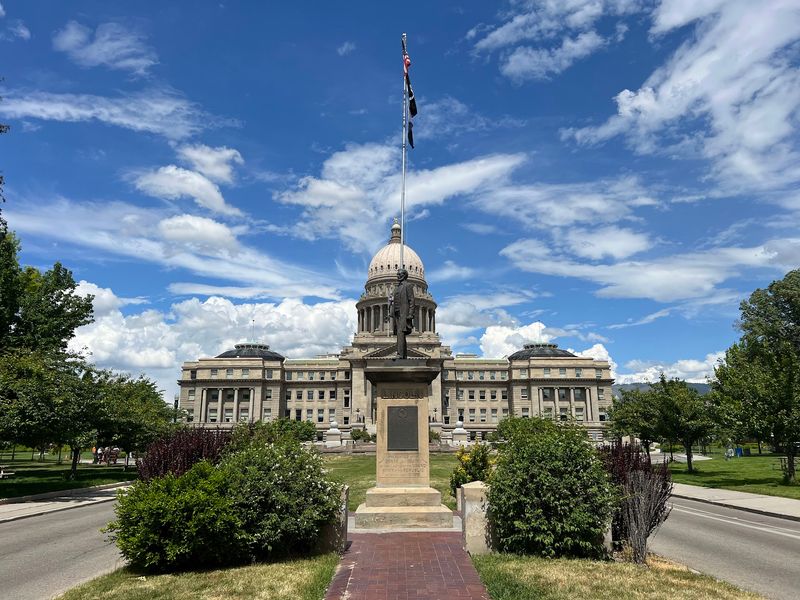
Walk a few blocks north from the busy heart of downtown Boise and the street opens up to a pale sandstone giant with a dome that rises above the Treasure Valley skyline. The Idaho State Capitol sits at 700 W Jefferson St in Boise, and it serves as the working seat of state government, not just a museum piece.
Lawmakers, staff, school groups, and curious travelers all share the same marble halls. During the legislative session, you might pass a legislator or two in a hallway, along with plenty of folks waiting to speak with them.
What surprises many first-time visitors is how open the building feels. Doors are unlocked for the public, the halls are wide, and you can wander nearly every floor at your own pace.
Visitors often say they could explore almost every inch of the place, something not every capitol allows.
The building is not the largest statehouse in the country, and nobody pretends it is. Still, its grand steps, tall columns, and gleaming dome give it a presence that feels much bigger than its size, especially when the afternoon sun hits the stone just right.
Built Stone By Stone, 1905 To 1921
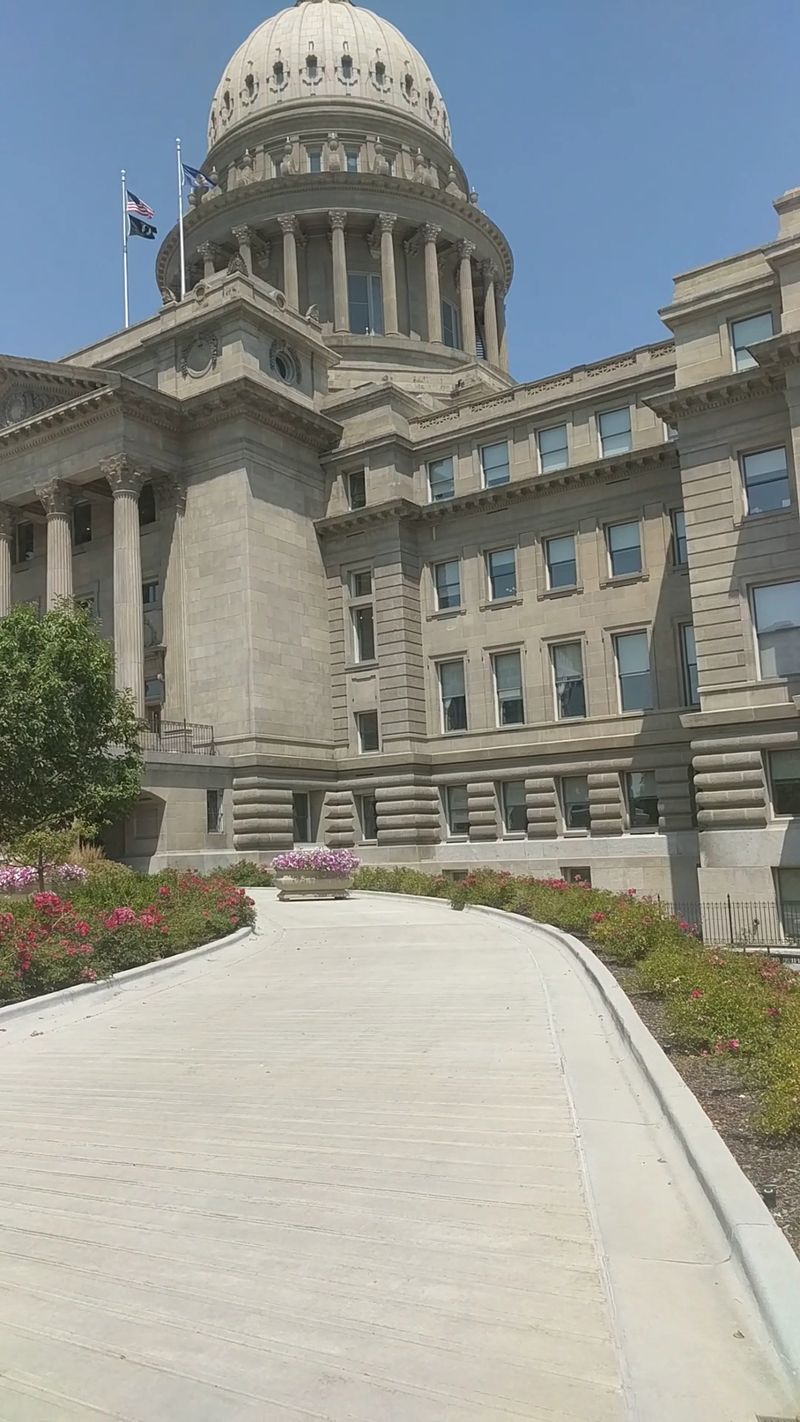
Construction began in 1905, when Boise was still a young city on the edge of the Snake River Plain. By 1912, the central section and the dome were finished, giving the town a centerpiece it could point to with pride.
The job was far from over, though. Workers spent the next several years adding the east and west wings, wrapping up the project in 1921.
That means the building you see today took roughly sixteen years to complete from first stone to final wing.
Architects J.E. Tourtellotte and Charles Hummel guided the design.
Their firm left a deep mark on Idaho, and returning visitors often mention how much they admire the pair’s work in this building.
Much of the exterior sandstone came from a quarry near Boise, likely in the Table Rock area in the foothills just east of town. So when you rest a hand on the outer wall, you are touching a piece of the local landscape that was cut, hauled, and stacked more than a century ago.
Hometown stone, hometown pride, built to last.
Warmth Rising From 3,000 Feet Down
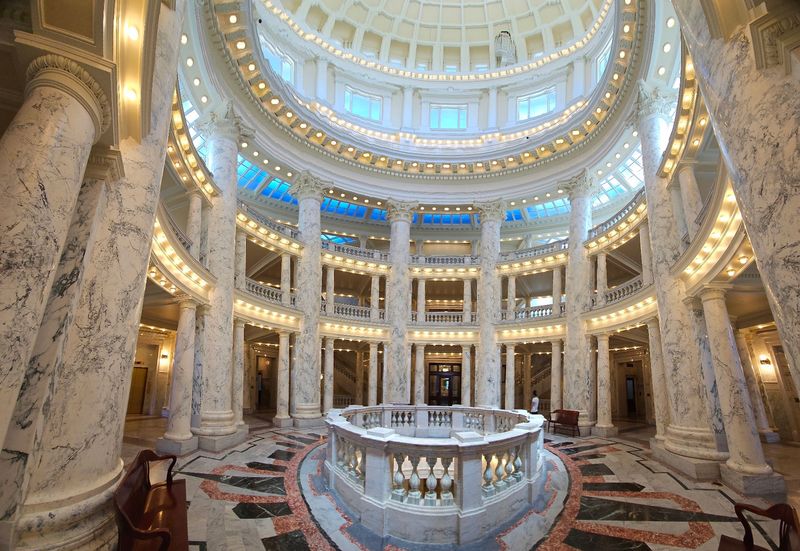
Since 1982, the heat keeping lawmakers comfortable in January has come from beneath the ground. The Idaho State Capitol is the only state capitol building in the United States heated by geothermal energy, a fact that tends to earn a double take.
Here is how it works. Wells reach roughly 3,000 feet underground and draw up water that arrives at around 165 degrees Fahrenheit.
That naturally hot water travels to the Capitol and other buildings in the Capitol Mall complex.
Each building uses its own heat exchanger to pull warmth from the water. The geothermal supply covers about 90 percent of the heating needs for these buildings, which reduces how much natural gas the state has to buy.
After the water gives up its heat, it does not simply drain away. It is collected and sent back down into the aquifer, helping keep the system going year after year.
The state system now heats 11 state-owned buildings totaling around 800,000 square feet. Earlier records described nine buildings at a larger square footage, so the network has shifted over time as the complex changed.
Boise’s Long Love Affair With Hot Water
Long before the Capitol tapped into hot water, Boise had already figured out the trick. Back in the 1890s, the city set up one of the first district heating systems in the nation along Warm Springs Avenue.
Drive that street today and you will pass big, old homes shaded by tall trees. Many of them were among the first houses in the country warmed by water from underground, which gives the neighborhood a quiet bragging right most passersby never hear about.
So when the state turned to geothermal heat for its Capitol in 1982, it was really following a path Boise had walked for nearly a century. The city sits on a fault zone along the edge of the foothills, and that geology delivers warm water closer to the surface than in many places.
For locals, this history adds a fun layer to an ordinary drive. Warm Springs Avenue is only a short trip east of the Capitol, so you can see both chapters of the story in a single afternoon.
Hot water is simply part of Boise’s identity, tucked out of sight but always working.
Thirteen Stars And Forty-Three More
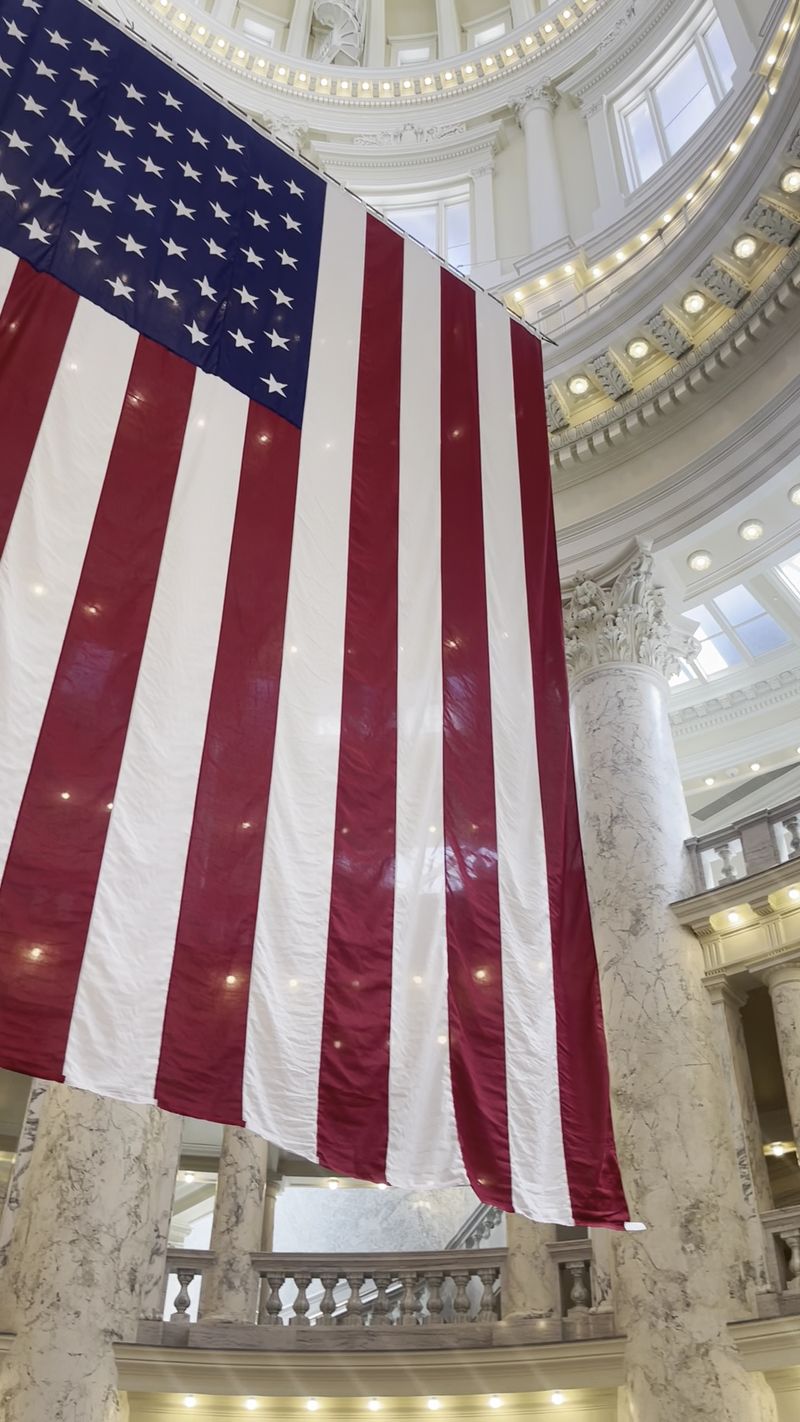
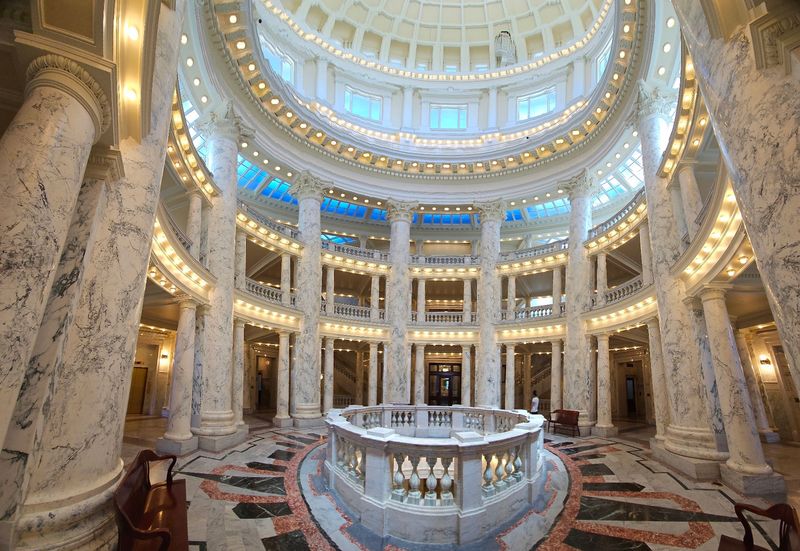
Stand on the first floor, right in the rotunda, and look up. The dome soars to 208 feet, and from below you can spot a ring of stars waiting to be counted.
There are 13 large stars, one for each of the original colonies. Around them sit 43 smaller stars, a nod to Idaho joining the Union as the 43rd state.
Kids love trying to count them all, and adults often find themselves doing the same.
Beneath your feet, the floor carries the Great Seal of the State of Idaho. School groups frequently gather around it for photos, so you may need a moment of patience if you want a clear shot.
Visitors cannot climb up into the dome itself. A video virtual tour inside the building, however, offers a peek upward and explains how each floor came together.
Outside, the dome is crowned by a copper eagle measuring 5 feet, 7 inches. It was freshly covered in gold leaf in 2005, and on a bright day it catches the light from several blocks away.
Marble From Four Corners Of The Map
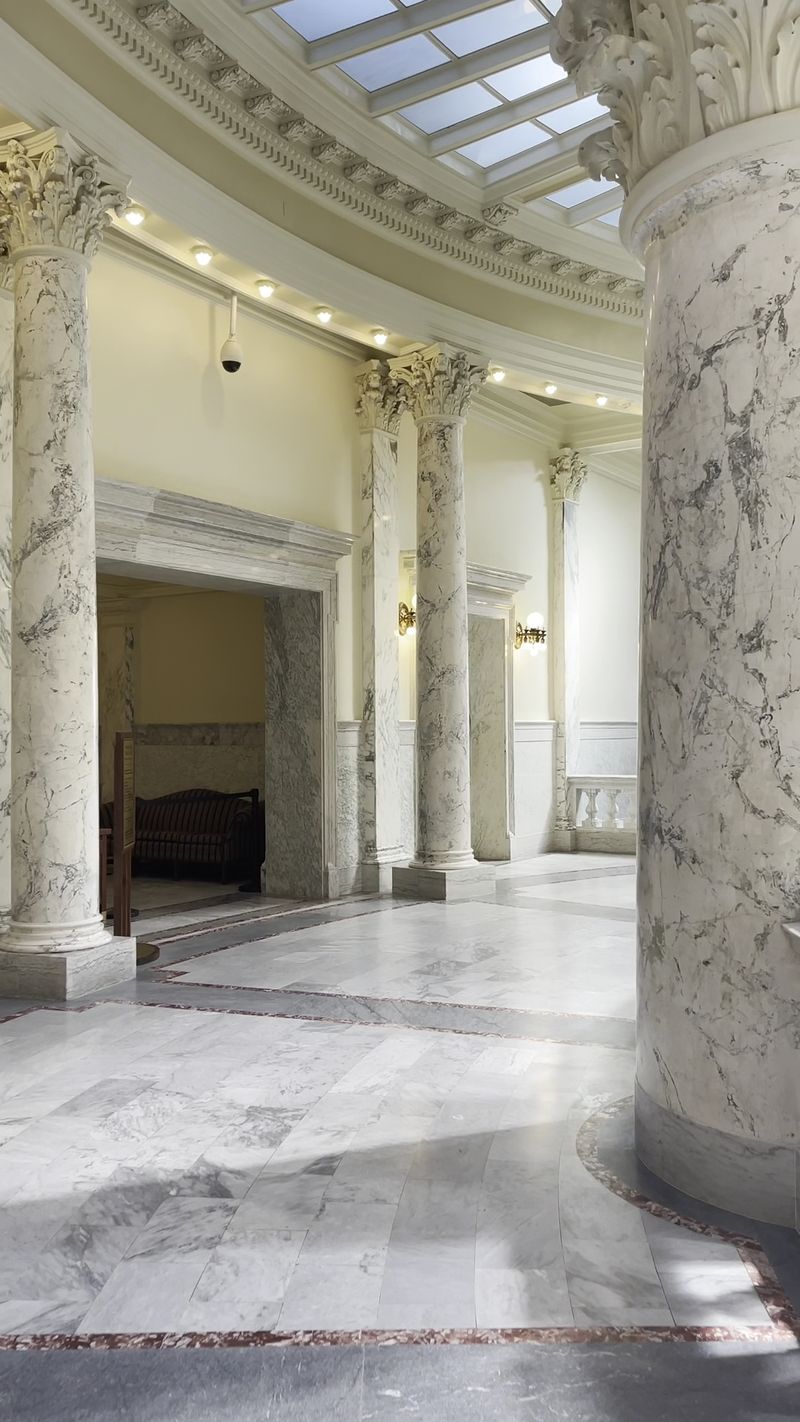
Gray from Alaska. Green from Vermont.
Red from Georgia. Black from Italy.
The Capitol holds more than 50,000 square feet of carved marble, gathered from places far beyond Idaho.
Walking the halls feels a bit like a geography lesson. Each color shows up in floors, walls, and trim, and the mix gives every corridor its own mood.
Many visitors mention the marble first when they describe what they remember.
Here is the sneaky part. Many of the columns are not solid marble at all.
They are made of scagliola, a mixture of marble dust, glue, gypsum, and granite, dyed to look like the real thing.
Try to tell them apart and you may struggle. Guests often enjoy pointing out the faux marble once they learn it is there, turning a stroll into a friendly guessing game.
Hand-crafted woodwork adds warmth against all that cool stone. The combination makes the building feel polished without feeling cold, a balance that keeps people slowing down to run a hand along a railing or study a doorway.
Lessons Waiting In The Basement
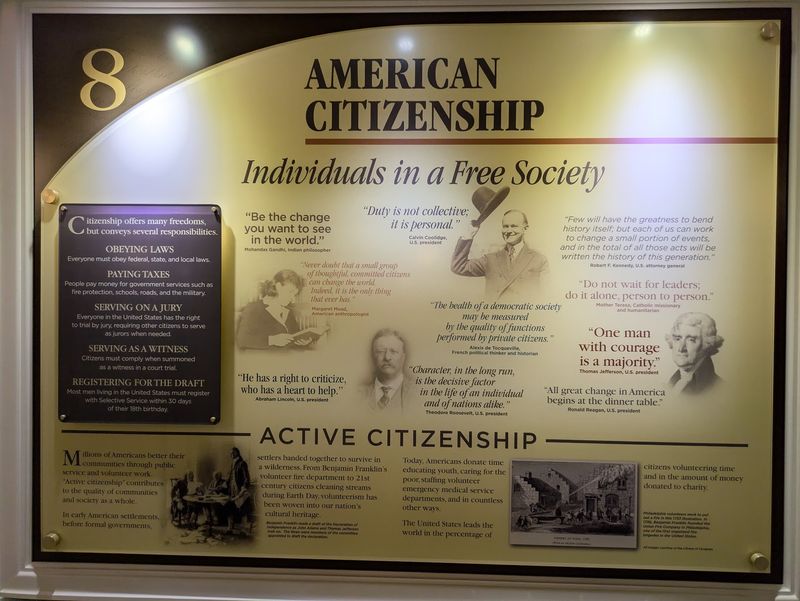
Head downstairs before you head up. The lower level holds a history display that returning visitors say is well made and full of insight, plus a room with an introductory video.
That video is a smart first stop. It walks through how the building was made floor by floor and offers a look up into the dome, which is otherwise off-limits.
Information boards are scattered throughout the building, too. Travelers who have toured several state capitols mention that Idaho provides more learning material than many others, and that the history of U.S. flags on display stands out.
Panels share stories from across Idaho’s past, including the long presence of Native peoples and the journey of Lewis and Clark through the region. It is easy to spend an hour just reading.
Upstairs, near the statues, a small gallery shows dresses worn by Idaho’s first ladies. It is a quieter corner, but it adds a personal touch to all the grand architecture.
Families with curious kids will find plenty to talk about on the drive home.
Chambers, Guides, And Galleries
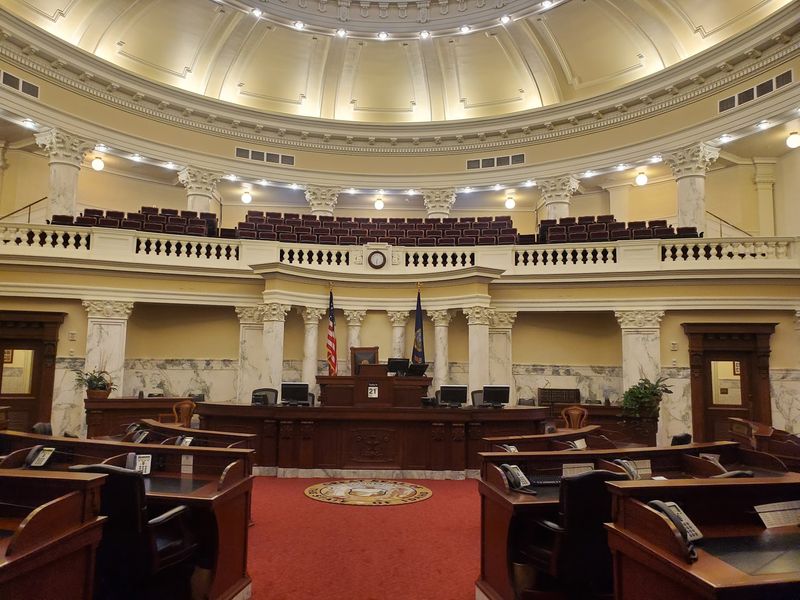
Self-guided wandering works well for most of the building. For a deeper look, though, a guided tour opens doors you might otherwise miss.
Guests frequently describe their guides as friendly and knowledgeable, leading groups to nearly every space visitors are allowed to see. Elevators make the trip between floors easy, which matters if you are traveling with grandparents or a stroller.
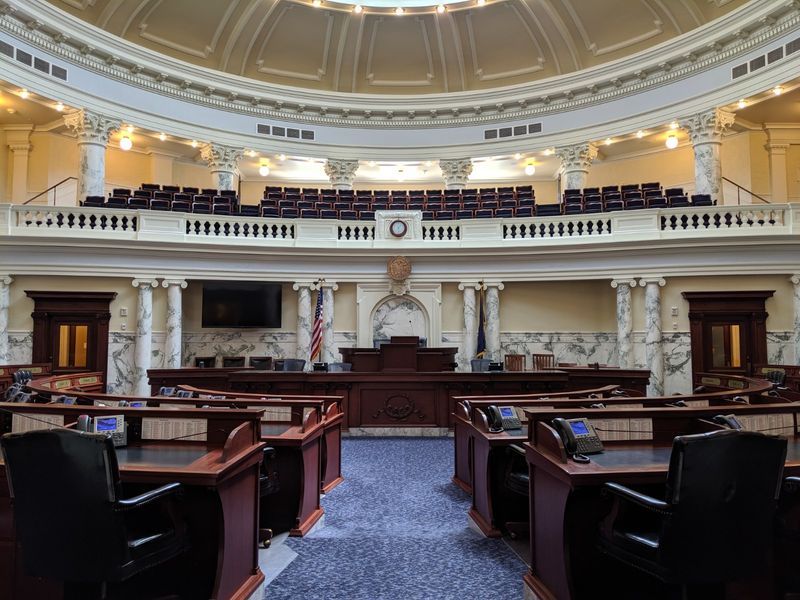
The House and Senate chambers draw the most interest. One visitor noted that during certain times of year, a guided tour is needed to step inside the chambers, so check ahead if seeing them is on your list.
Public galleries let people watch government at work when the legislature meets. Seeing real debates from above turns a civics lesson into something you can actually hear.
Tours are often described as free, but schedules can shift with the legislative calendar. A quick call or look at the state website before driving to Boise can save some disappointment.
Either way, plan to linger. Between the chambers and the galleries, there is more to take in than a quick lap allows.
Lawns, Roses, And A Liberty Bell
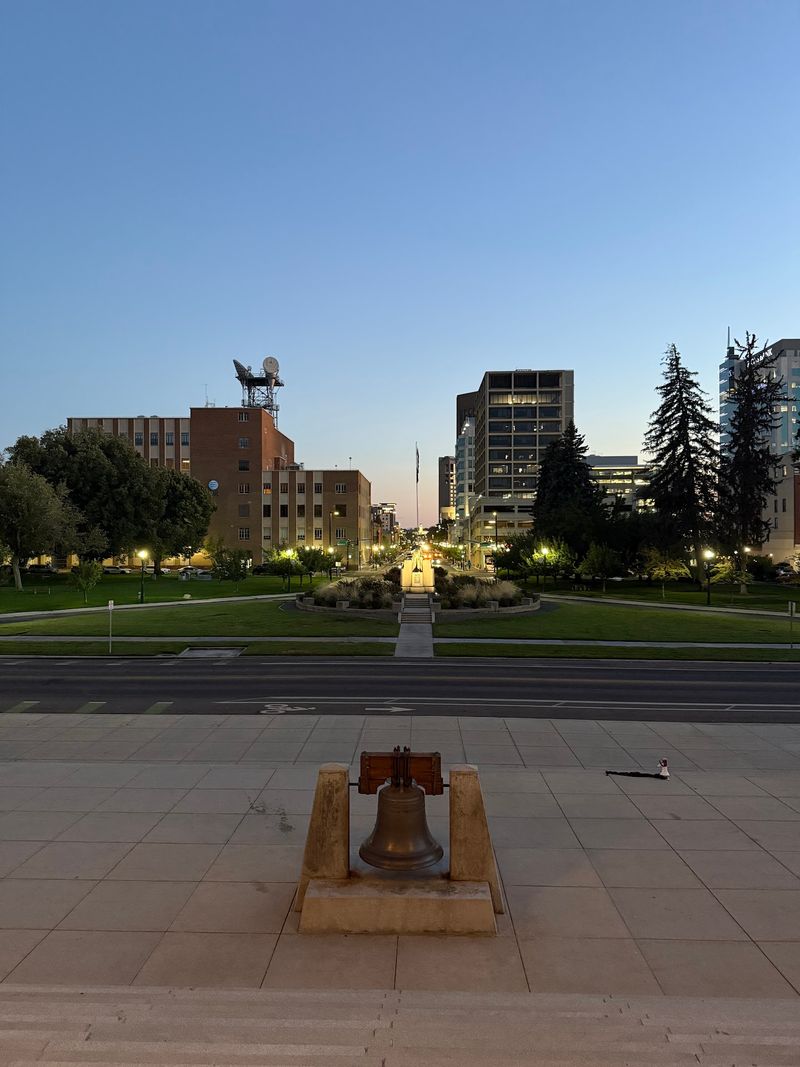
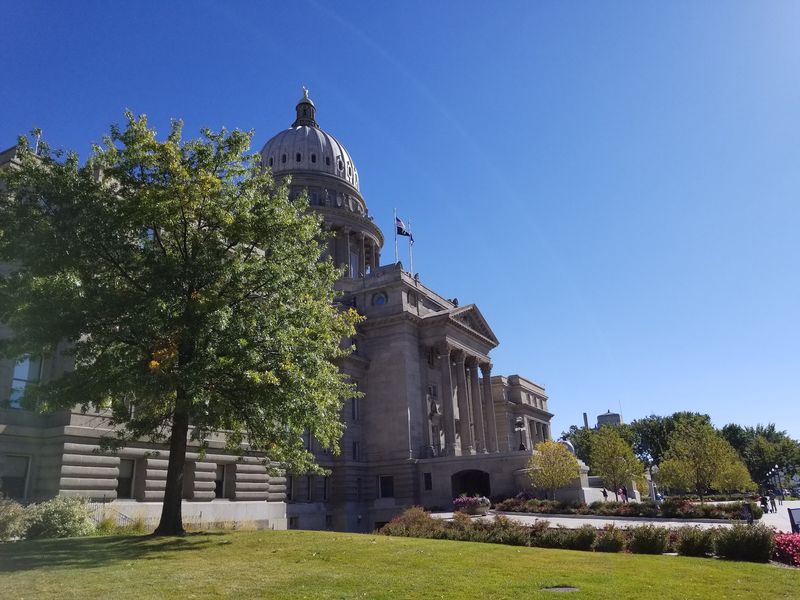
Arrive after the doors close and you still have a reason to stay. The grounds around the Capitol are kept in fine shape, with green lawns, shade trees, and benches made for a slow sit.
Hedges of roses add color during the warmer months. Statues dot the property, and a replica Liberty Bell rests near the foot of the steps, a favorite stop for anyone collecting photos.
Sunset is a popular hour out here. The sandstone takes on a soft glow, and the dome stands out against the sky over the Treasure Valley.
Downtown restaurants and shops sit within an easy walk, so the grounds make a handy start or finish to an evening in Boise. Grab dinner, then stroll back for one more look as the light fades.
Special events bring the lawn to life as well. Visitors have enjoyed watching a July Fourth march with live music, when the whole area fills with families and flags.
Bring a blanket, find some shade, and let the kids burn off energy on the grass.
Where Cameras Love The Light
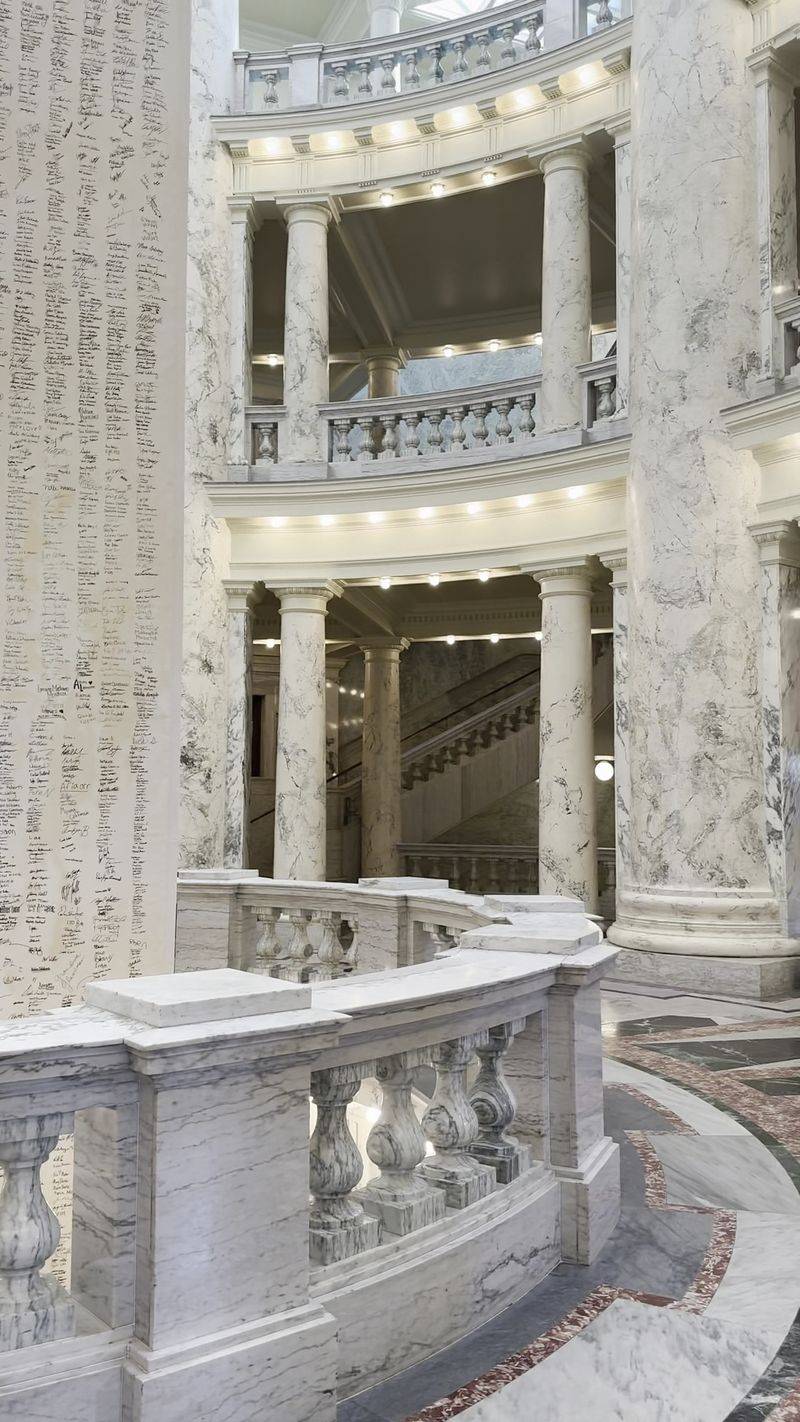
Photographers keep coming back, and it is easy to see why. Marble staircases, tall columns, and streams of window light give portraits a polished, classic feel without much extra effort.
Engagement sessions, bridal portraits, graduation pictures, and even tiny wedding ceremonies happen here. One couple described the lighting on the top level as especially lovely for their small ceremony.
The light changes through the day. Afternoon brings a warm wash across the stone, while early evening creates longer shadows that photographers enjoy using for more dramatic shots.
Several regulars mention that the setting reminds them of an old European hall. It is a fun surprise to find that feeling right in the middle of Boise.
A few manners go a long way. This is still a working government building, so keep hallways clear, stay mindful of school groups, and give staff and lawmakers room to do their jobs.
Even casual visitors with a phone will leave with some great shots. Stand at the rotunda rail, aim upward, and let the dome do the rest.
Planning A Smooth Visit
Early birds are in luck. The Capitol opens in the morning and stays open into the evening, seven days a week, including weekends and some holidays.
Hours can change, so check before you make the drive.
Entry to walk around is free, according to many visitors. You can show up, step inside, and explore at your own pace without a ticket.
Timing matters if you want quiet. One family visited close to closing on a Saturday and had nearly the whole building to themselves, aside from a few school groups in the rotunda.
The address is 700 W Jefferson St in Boise, right at the north end of downtown. Street parking and nearby garages are common options, though spaces fill up fast during the legislative session in winter.
A small gift shop sells keepsakes, and staff there have been praised for going out of their way to help shoppers, even near closing time.
Wear comfortable shoes. With multiple floors, a basement exhibit, and the grounds outside, a visit can easily stretch to a couple of hours.
Worth The Upward Glance
Plenty of state buildings are grand. Few hide a secret quite like hot water rising from thousands of feet underground to keep the halls warm.
That mix of history and practical science gives the Idaho State Capitol a personality all its own. You get marble from four distant places, faux columns that fool the eye, a dome ringed with stars, and an eagle wearing fresh gold.
Families will find free learning around every corner. Retirees can stroll at an easy pace with elevators close by, and history fans may lose track of time in the basement exhibit.
Longtime Boise residents often admit they waited too long to go inside. If you have only driven past on Jefferson Street, consider this your nudge to park and walk up the steps.
The best moment may be the simplest one. Stand in the rotunda, tilt your head back, and remember that the warmth around you started deep beneath the Snake River Plain.
It is a small Idaho wonder, sitting in plain sight, waiting for you to look up.