Want To Travel Back In Time? Check Out These 10 Fascinating Historic Delaware Spots
Delaware may be tiny, but wow, does it know how to stack centuries into a short drive!
Old courthouses, mills, Victorian homes, colonial buildings, and places tied to major moments in American history make the state feel like one giant time machine with better parking.
The fun comes from how quickly the mood changes. One stop feels elegant. The next has creaky floors and a story that sounds too strange to be real.
History gets a lot more exciting when you can walk through it instead of reading a plaque from ten feet away.
Suddenly, a weekend feels like several centuries at once.
1. New Castle Court House Museum, New Castle
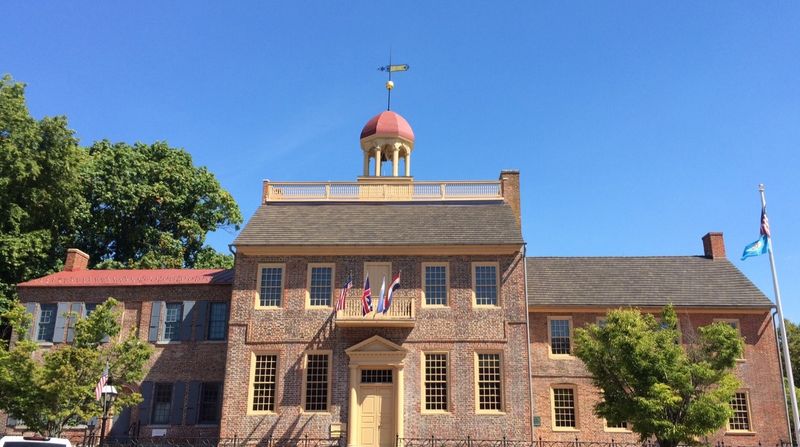
My jaw dropped when I learned what happened inside these brick walls. A decision made here helped create a brand-new state.
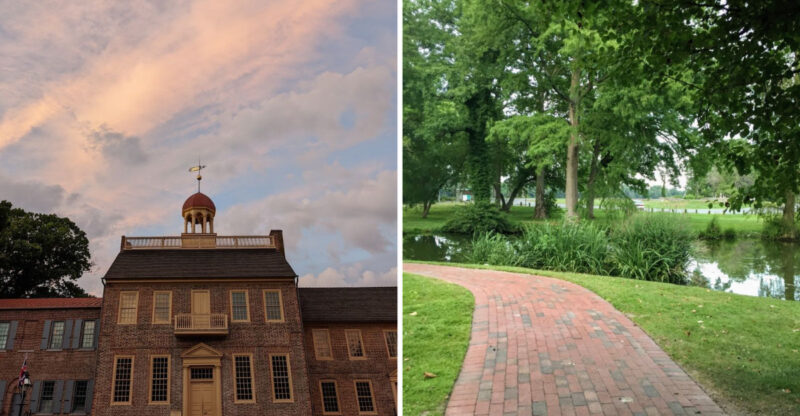
The New Castle Court House Museum dates to 1732 and ranks among the oldest surviving courthouses in the country.
It also served as Delaware’s first statehouse, giving this compact building an outsized role in early government.
On June 15, 1776, the colonial assembly approved a resolution separating the three Delaware counties from both Pennsylvania and Great Britain. A few months later, Delaware’s first state constitution was adopted inside the same building.
Look up at the cupola before heading indoors. By the mid-1700s, it became the official center point of Delaware’s famous Twelve-Mile Circle, the curved boundary that still gives the state map its unusual northern edge.
Inside, guided tours cover courts, government, archaeology, decorative arts, and the many changes made to the structure over nearly three centuries.
Period furnishings and portraits help the rooms feel connected to their original purpose rather than staged as empty shells.
The museum remains active today, with occasional official proceedings still held there. Downtown New Castle adds brick sidewalks, historic streets, and green spaces within an easy walk.
Find the museum at 211 Delaware St. Tours currently run Wednesday through Sunday, with schedules varying by day. Few buildings pack this much history into one address.
2. John Dickinson Plantation, Dover
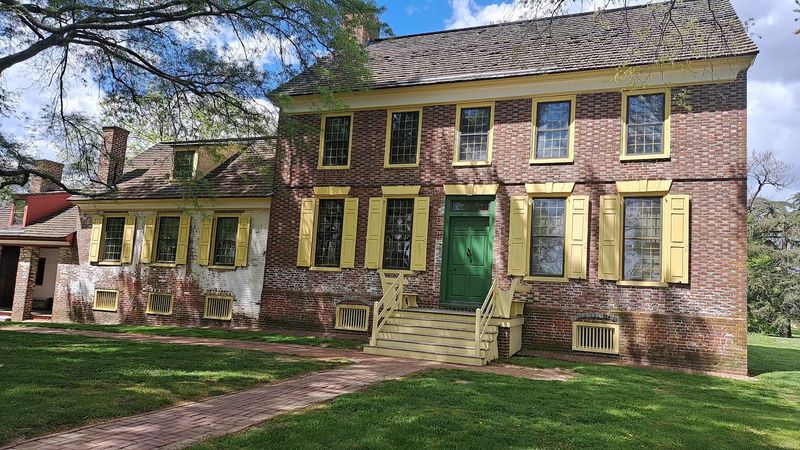
Just imagine for a second waking up to roosters and open fields. Life on an 18th-century farm moved at a very different pace.
The John Dickinson Plantation near Dover preserves roughly 450 acres connected to one of Delaware’s best-known founding-era figures.
John Dickinson spent part of his youth here and later became widely known as the Penman of the Revolution for his influential political writing.
He also helped frame and sign the U.S. Constitution, giving the property a direct connection to the country’s early political development. Today, interpretation reaches far beyond one famous resident.
A newly opened visitor center now introduces the many communities connected to the land.
Its permanent One Land Many Voices exhibit is scheduled to debut on October 10, 2026, using documents, objects, images, and multimedia displays to broaden the story.
Guided mansion tours currently run Thursday through Saturday. The 18th-century house stands alongside reproduction farm buildings that help explain how the property functioned across different periods.
The grounds are spacious enough to reward a slower visit, especially when paired with the indoor exhibits. Comfortable shoes help on the outdoor portions, and seasonal weather can change trail conditions.
The new visitor center is at 250 Kitts Hummock Rd. Admission and regular public programs remain free, making this an easy place to spend several hours exploring the state’s history at your own pace.
3. Zwaanendael Museum, Lewes
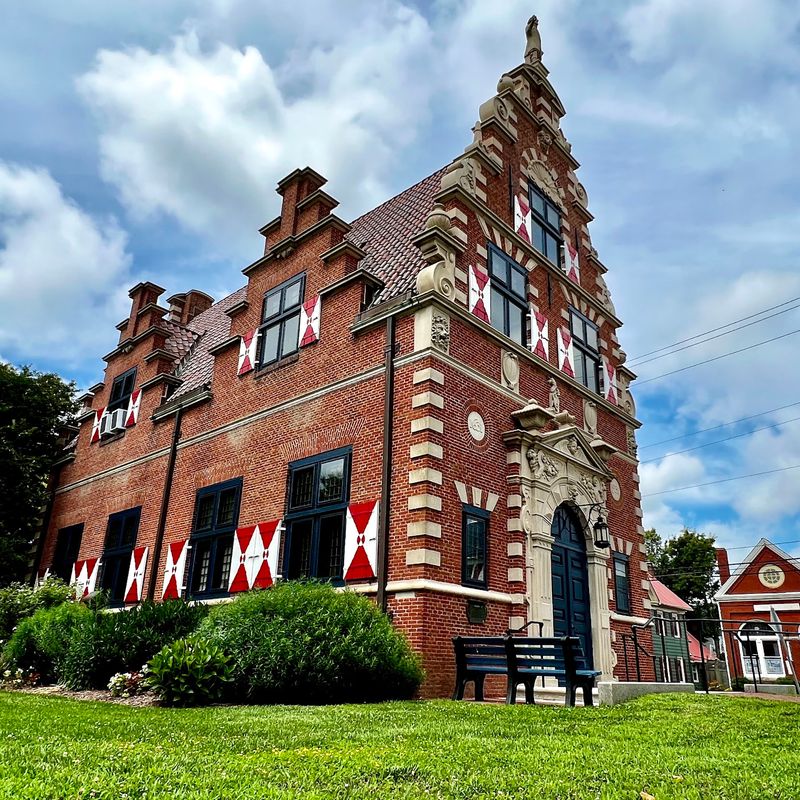
A slice of the Netherlands sits right on a Delaware street.
The Zwaanendael Museum in Lewes was built in 1931 to mark the 300th anniversary of Swanendael, the Dutch settlement established here in 1631.
Its exterior immediately sets it apart from almost anything else in the state.
The building was modeled after the historic town hall in Hoorn, Netherlands. A stepped gable, carved stone details, decorated shutters, and a rooftop figure tied to the early colony give the museum a distinctly Dutch silhouette.
Inside, the focus broadens into the maritime, transportation, military, and social history of the Lewes area.
One major exhibition explores the British vessel DeBraak through preserved hull material, everyday objects, and archaeological evidence connected to late-18th-century life at sea.
Another gallery follows the growth of railroads and the way new lines connected communities with larger markets. Rotating displays add fresh subjects without changing the museum’s strong coastal identity.
Self-guided exploration works well here because staff remain available for questions. Special programs and seasonal DeBraak tours add deeper context at selected times of year.
The museum sits at 102 Kings Hwy, close to central Lewes and Zwaanendael Park. It currently opens Tuesday through Saturday, and regular admission is free.
The architecture alone earns a pause outside, but the exhibits make the stop much richer than a quick photo.
4. Historic Houses Of Odessa
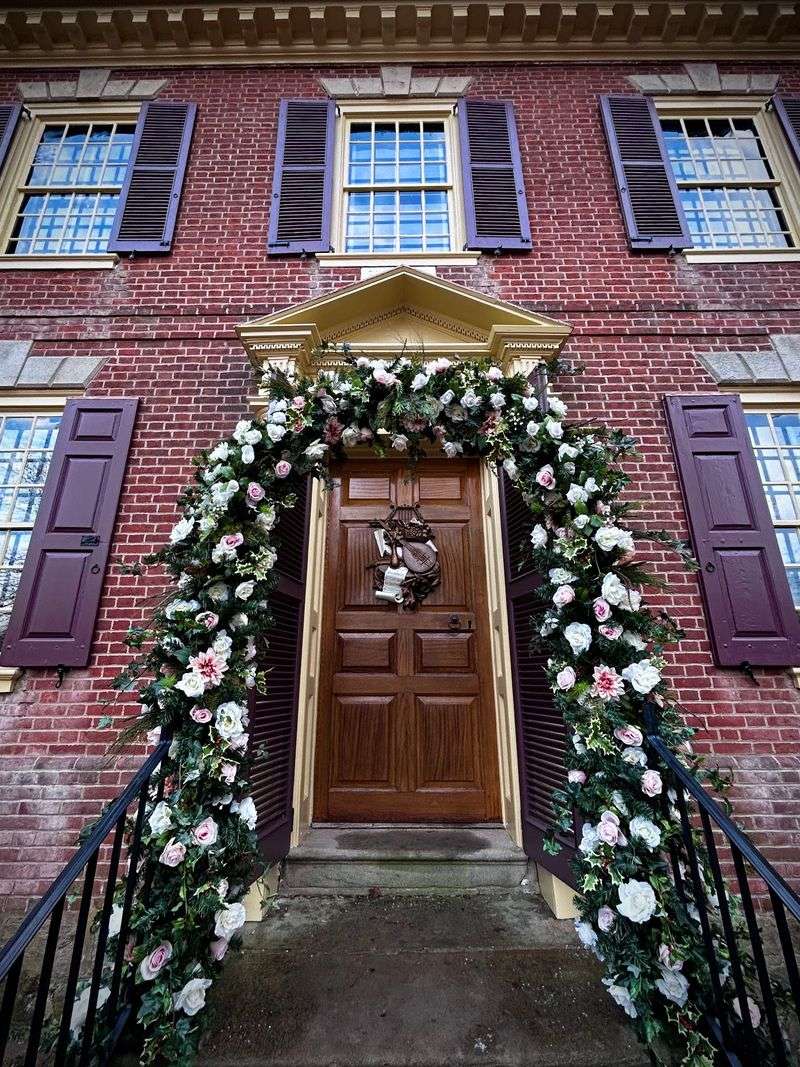
Let’s be real for a second, a whole town frozen in time sounds unreal. Yet one quiet village pulls it off nicely.
Historic Odessa preserves a cluster of 18th- and 19th-century buildings from the community once known as Cantwell’s Bridge, an important grain-shipping port on the Appoquinimink Creek.
Five principal properties now anchor the museum experience.
The Corbit-Sharp House, completed around 1774, is the centerpiece. This National Historic Landmark is a refined Philadelphia-Georgian mansion with rooms interpreted through unusually detailed family inventories and building records.
Next door, the 1769 Wilson-Warner House presents a more restrained version of Delaware-Georgian architecture.
Its interior is furnished using records from an 1829 household sale, giving the rooms a specific historical framework rather than a generic colonial look.
The Collins-Sharp House adds an older layer. Built around 1730 near Taylors Bridge, it was moved to Odessa in 1962 when its original setting faced major development.
The 1822 Cantwell’s Tavern and 1853 Odessa Bank extend the story into commercial life.
Together, the properties hold thousands of objects, including regional furniture, paintings, textiles, silver, and other decorative arts.
Tours run from March through December, with the visitor address at 201 Main St. Tree-lined streets and gardens make it easy to continue exploring after the interiors.
Odessa proves that a small town can preserve several distinct chapters of the state’s history within a remarkably compact walk.
5. Belmont Hall, Smyrna
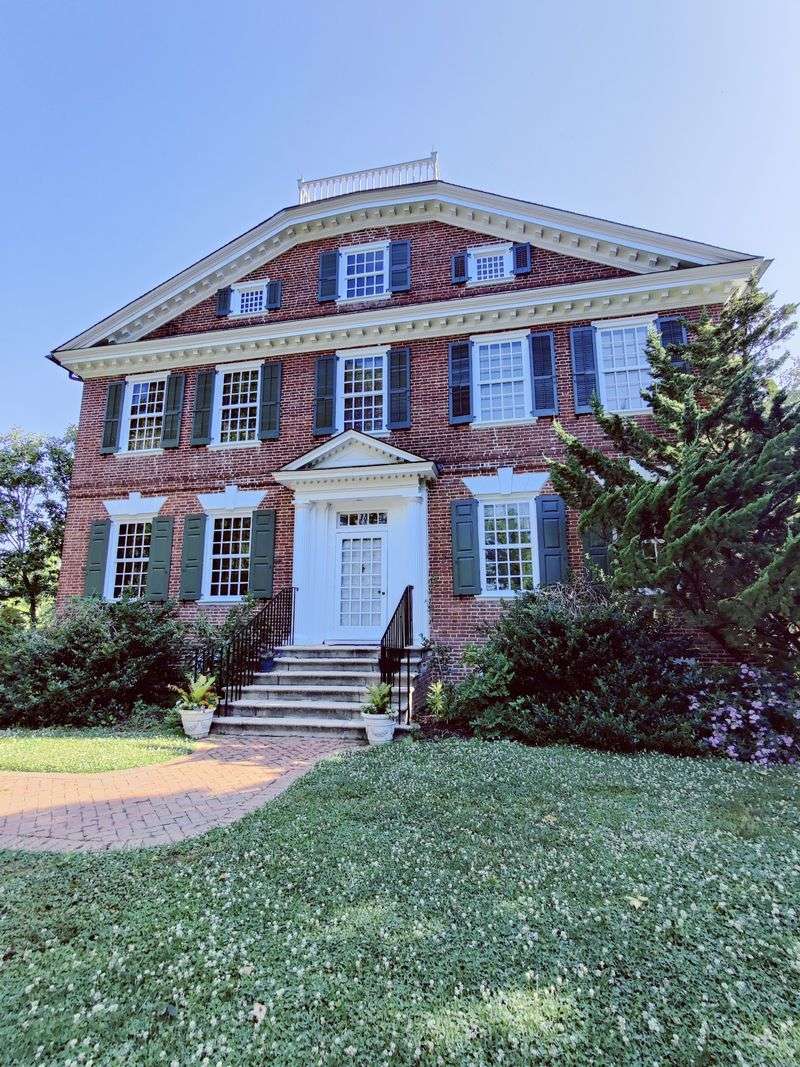
Some old homes simply know how to make an entrance.
Belmont Hall in Smyrna is a grand Georgian mansion completed in 1773 for Thomas Collins, a state figure of the Revolutionary era who later became the state’s eighth president.
Its history reaches even farther back through the land itself.
In 1684, William Penn granted a 600-acre tract known as Pearman’s Choice. Collins acquired part of that property in 1771 and expanded earlier structures into the substantial residence seen today.
The brick façade rises three stories, with a formal central entrance and symmetrical proportions that immediately signal its Georgian design.
Inside, a central hall separates principal rooms, while surviving architectural details reveal how the house changed over generations.
The property also hosted political meetings during the state’s founding era. Later owners introduced Victorian updates before a major restoration in the 1920s returned much of the house to an earlier appearance.
Belmont Hall remained a private residence until the State of Delaware acquired it in 1987. Today, an all-volunteer organization supports public access, preservation, programs, and community events.
The grounds include trees, lawns, and landscaped areas that give the mansion plenty of breathing room. Public events continue in 2026, including seasonal gatherings and Revolutionary-era programming.
Find Belmont Hall at 217 Smyrna-Leipsic Rd. Because general access varies around tours and events, its current calendar is the best guide for planning a visit.
6. Hale-Byrnes House, Newark
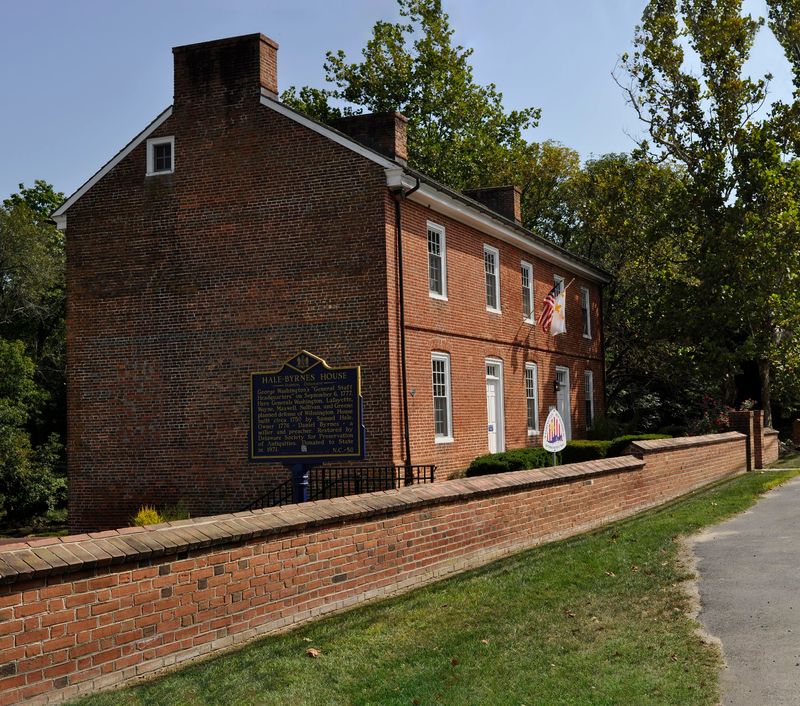
A modest brick house hides a huge secret. Big decisions sometimes happen in small rooms.
The Hale-Byrnes House near Newark dates to around 1750 beside White Clay Creek.
Its best-known chapter came on September 6, 1777, when George Washington met here with senior officers to discuss the defense of the region.
That gathering took place only days before a major campaign moved through the area. The house’s location near important roads and waterways made it a practical meeting point during a tense stretch of the Revolutionary era.
Outside stands the famous George Washington Witness Tree, an American sycamore traditionally associated with that council.
The tree is nearly three centuries old and remains on the property, though preservation groups continue monitoring its fragile condition.
The house itself is a five-bay brick residence with later additions, including a two-story service wing added in the 1770s. Its rooms retain the scale of a working 18th-century home rather than the grandeur of a formal mansion.
The property is listed on the National Register of Historic Places and also lies along the Washington-Rochambeau Revolutionary Route.
Public access is limited but current. The house opens on the first Wednesday of each month from April through December, with additional visits available by appointment.
Use 606 Stanton-Christiana Rd for navigation. The combination of house, creek, and witness tree makes this compact stop unusually layered.
7. Old Sussex County Court House, Georgetown
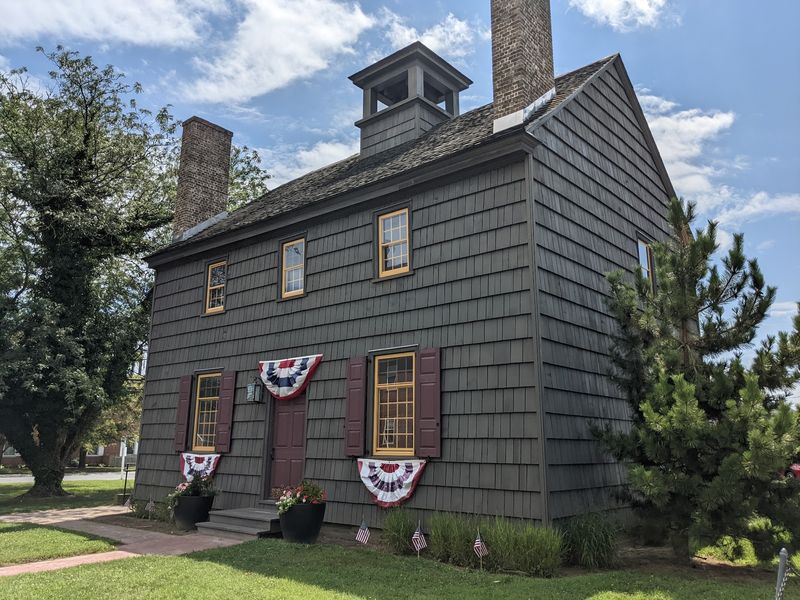
Are you seeing what I’m seeing, a courthouse that moved? Buildings usually stay put, but not this one.
The Old Sussex County Court House in Georgetown was constructed in the early 1790s after the county seat shifted from Lewes to a more central location.
Builders matched the dimensions of the earlier courthouse in Lewes.
The structure originally stood on Georgetown Circle, where government and court business centered around it. In 1837, the wooden building was moved to South Bedford Street so a larger courthouse could take its place.
That relocation gave the original building an unusual second chapter. Over time it served other purposes before preservation work returned attention to its early public role.
A major rehabilitation completed in 2016 repaired the exterior, refreshed interior finishes, restored hardware, stabilized plaster, and returned the cupola bell system to working order.
The project preserved the character of the two-story frame structure without making it feel overly polished.
The courthouse is still used occasionally for special official functions, keeping it more than a museum piece. It is also listed on the National Register of Historic Places.
The Georgetown Historical Society manages access. Visiting hours are limited and can change, so tours follow the current schedule.
Look for the building at 10 S Bedford St, a short walk from Georgetown Circle. Its move across town is almost as interesting as the history inside.
8. Governor Ross Mansion, Seaford
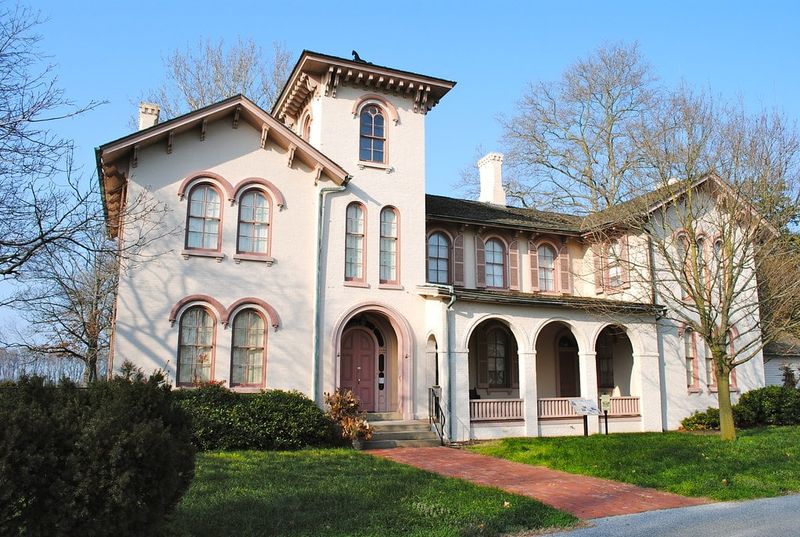
Here’s a crazy thought, a mansion painted to honor peaches. Sweet idea, but that color story is not firmly documented.
The Governor Ross Mansion near Seaford is a rare, well-preserved Victorian Italianate residence completed around 1860.
William Henry Harrison Ross commissioned the home after serving as the state’s governor from 1851 to 1855.
Ross played an important role in bringing railroad service to southern Delaware. That connection helped local farmers reach larger markets more efficiently and encouraged a shift toward produce that could travel quickly by rail.
Architecturally, the mansion makes a strong impression.
Three connected two-story sections form an H-shaped plan, while a three-story central tower marks the main entrance. Interior plasterwork, trim, doors, shutters, and several period details survive.
The historical society has restored and furnished the rooms to reflect mid-19th-century tastes. Outside, the property extends across roughly 20 acres with a formal garden, granary, stable, smokehouse, corn cribs, and a small cottage.
These outbuildings help turn the visit into more than a house tour because they show how a large rural estate functioned as a working property.
The mansion remains open in 2026 on Saturdays and Sundays, with guided tours offered during afternoon hours. Special events can occasionally affect access.
Find it at 23669 Ross Station Rd. Give yourself time for both the interior and the grounds rather than treating this as a quick photo stop.
9. Abbott’s Mill Nature Center, Milford
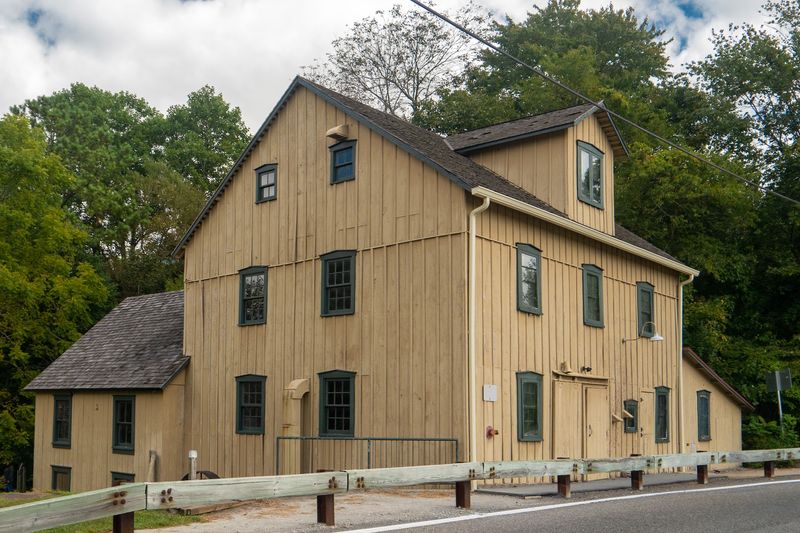
History does not always live indoors. Sometimes it sits beside a quiet pond and towering trees.
Abbott’s Mill Nature Center near Milford combines a gristmill landscape with trails, wetlands, forest, meadow, and a 20-acre pond.
The main nature center sits within a 376-acre section of the larger Milford Millponds Nature Preserve.
The historic mill traces its story to 1795, when milling began beside the pond.
The current structure incorporates later rebuilding and additions, while original foundations and historic machinery connect the site to the state’s agricultural past.
The mill remains a visual centerpiece, although interior access can depend on restoration work and scheduled programs. Nearby trails provide an easy way to shift from human history into the surrounding natural landscape.
Routes pass through deciduous woods, Atlantic white cedar habitat, open meadow, and streamside areas. An accessible boardwalk follows a clear coastal plain stream, adding a gentler option for visitors who want a shorter outing.
Abbott’s Pond supports paddling and regulated fishing, with a public ramp available for personal watercraft. The nature center also features wildlife exhibits and seasonal programs.
Trails remain open daily from dawn to dusk, while indoor hours vary by season. The address is 15411 Abbotts Pond Rd.
This stop works especially well for anyone who wants history without spending the entire day inside. The mill, pond, and trail network make the landscape part of the story.
10. Robinson House, Claymont
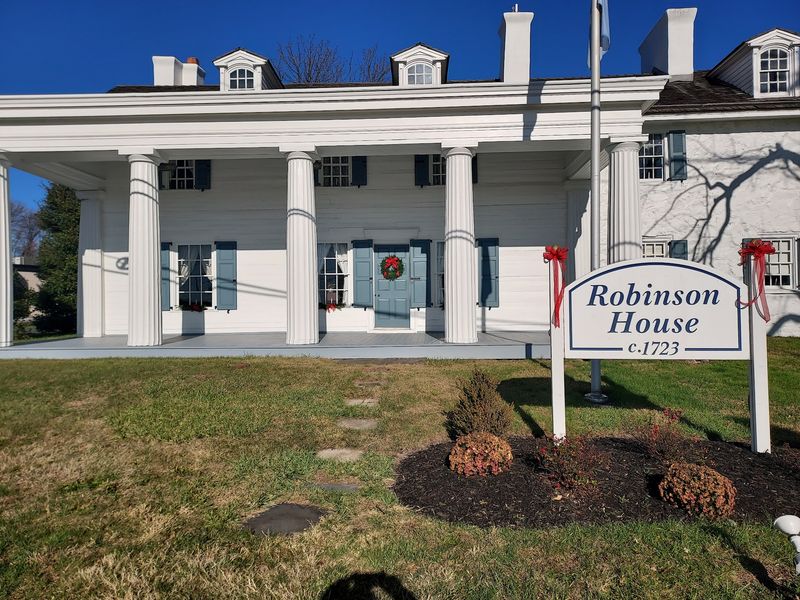
I’m still trying to wrap my head around this guest list. Imagine the conversations once shared around its fireplace.
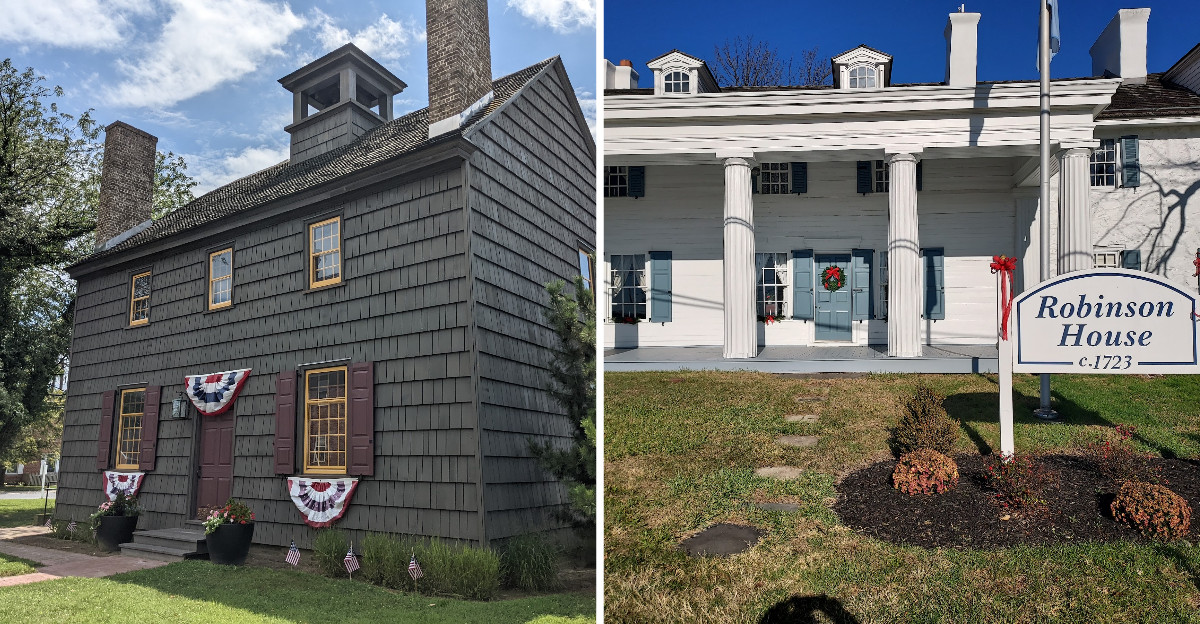
The Robinson House in Claymont occupies a crossroads beside Naaman’s Creek and Philadelphia Pike.
State research places the oldest portion around 1730, slightly later than the 1723 date repeated in older accounts.
Philadelphia merchant Thomas Robinson acquired the property in the 1740s. His family also held a milling operation and landing along nearby Naaman’s Creek, linking the house to an important transportation and commercial corridor.
Tradition connects the property with prominent Revolutionary-era travelers, including George Washington, Anthony Wayne, the Marquis de Lafayette, and Henry Lee.
Preservation records treat those visits carefully, so the house is best understood as a well-positioned landmark along a heavily traveled route.
In the 20th century, the building found a very different use as Naaman’s Tea House, which operated before preservation efforts secured the property. The Robinson House entered the National Register of Historic Places in 1971.
A small stone building nearby is traditionally called the Block House. Older accounts place it in the 1650s, although later architectural research suggests it may be considerably younger, so the exact date remains debated.
Today, the Robinson House serves local historical organizations and opens to the public on the second Sunday of each month from 1:30 to 4 p.m. Find it at 1 Naamans Rd.