9 Retirement-Friendly Maryland Trips Centered Around Lighthouses And Harbor Walks
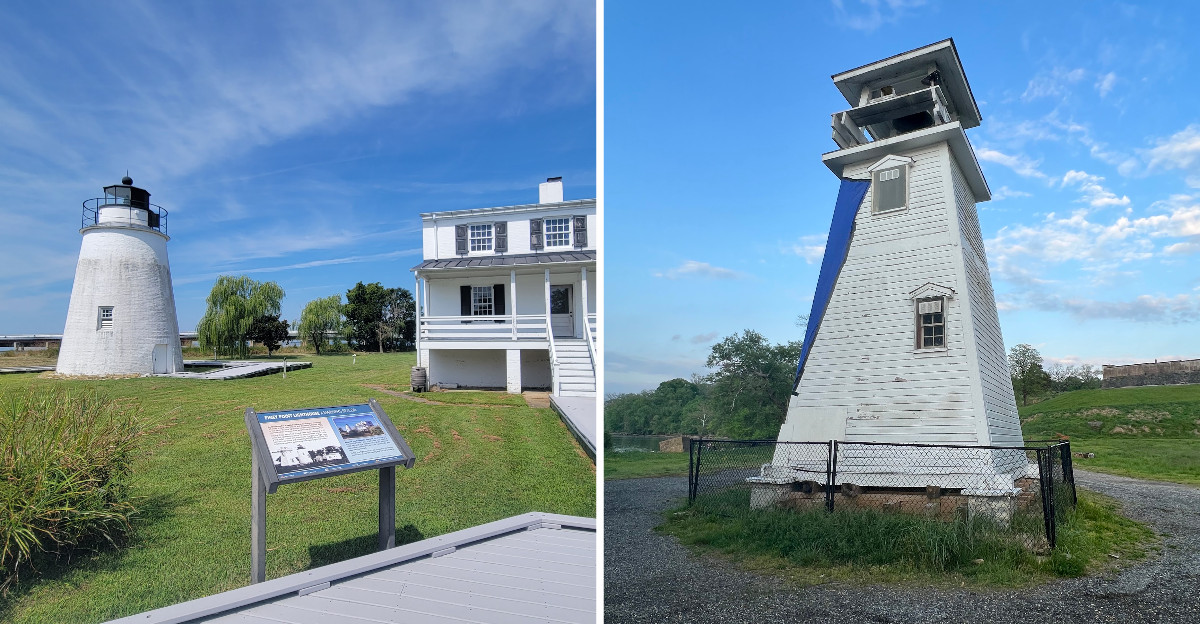
Who says an easygoing day trip has to be boring?
Maryland pairs historic lighthouses with waterfront walks that feel calm, scenic, and pleasantly low-pressure. That is a pretty lovely combination.
A short stroll can lead to a harbor view, a museum, or a lighthouse that has watched boats pass for generations.
There is history, but no need to sprint through it. There is scenery, but no mountain climb required.
You can slow down and still feel like you did something worthwhile.
For retirees who prefer fresh air over packed itineraries, these trips make a strong case for keeping adventure gentle.
1. Concord Point Lighthouse, Havre De Grace
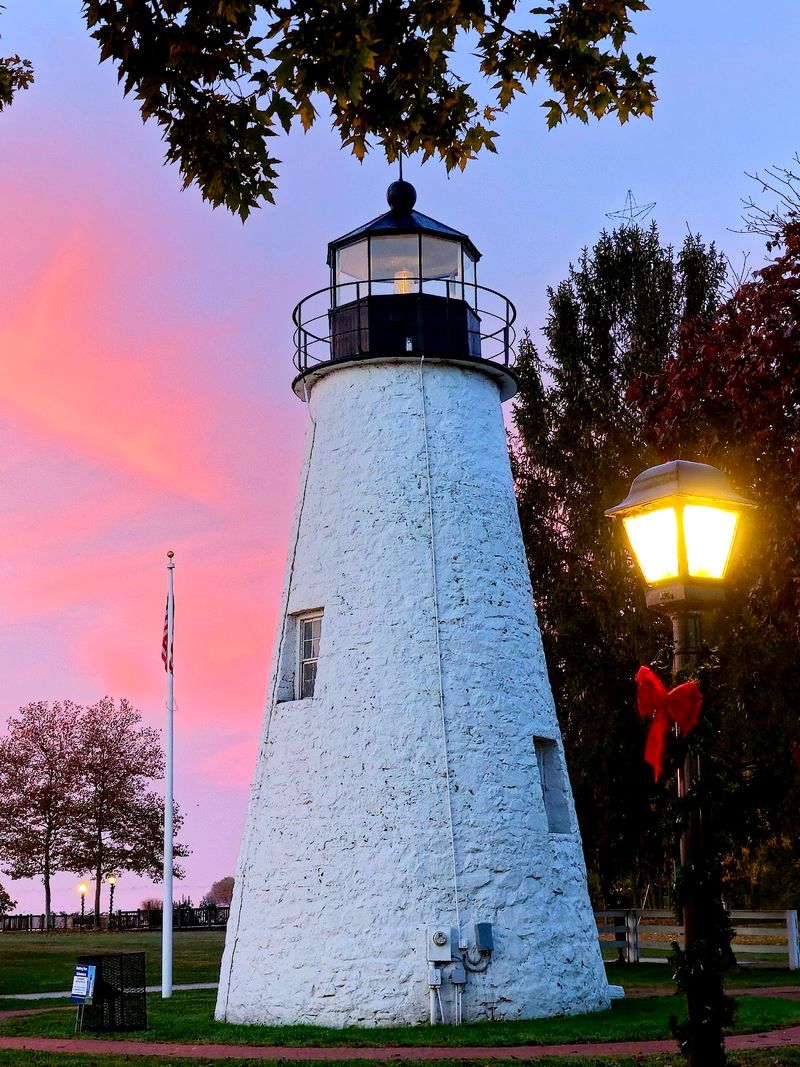
Are you seeing what I am seeing? A stubby stone tower with a hero story attached.
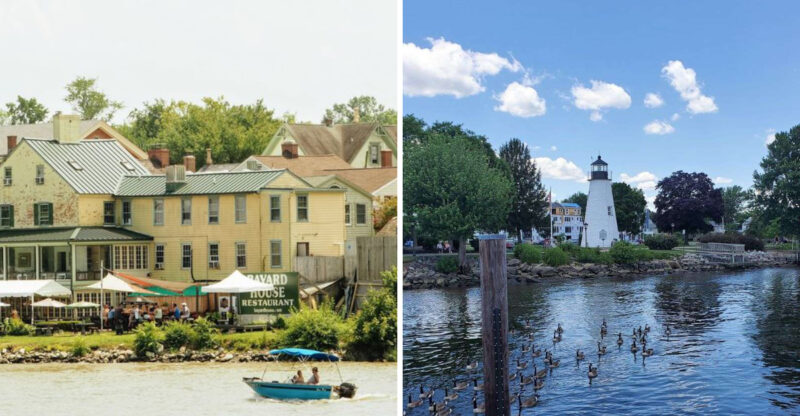
Concord Point Lighthouse has stood at the meeting point of the Susquehanna River and Chesapeake Bay since 1827.
Built from local Port Deposit granite, the compact tower reaches 36 feet to the top of its lantern and is Maryland’s second-oldest lighthouse.
Its first keeper had already earned local recognition for helping defend Havre de Grace in 1813. Four generations of the same family later served at the station, giving the site an unusually continuous connection to one household.
The light remained an aid to navigation until 1975. Today, the restored keeper’s dwelling interprets nearly two centuries of local lighthouse history, while seasonal weekend openings allow visitors to enter the tower when weather and staffing permit.
The climb includes granite steps and a short ladder, so anyone avoiding stairs can enjoy the exterior and museum instead. A particularly easy extension begins beside the lighthouse.
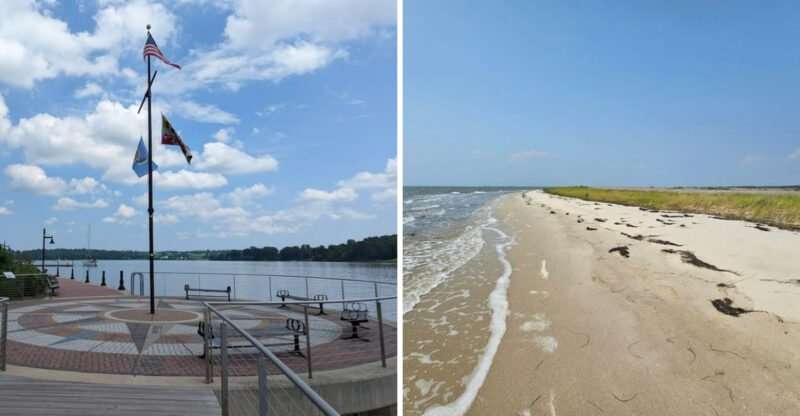
Havre de Grace’s waterfront promenade runs just under a mile toward Tydings Park, with benches and broad views along the way. Birds and passing boats add movement without requiring a demanding route.
The current visitor address is 714 Concord Street. A relaxed visit can combine the museum, waterfront, and nearby park without turning the afternoon into a long, demanding waterfront trek.
2. Choptank River Lighthouse, Cambridge
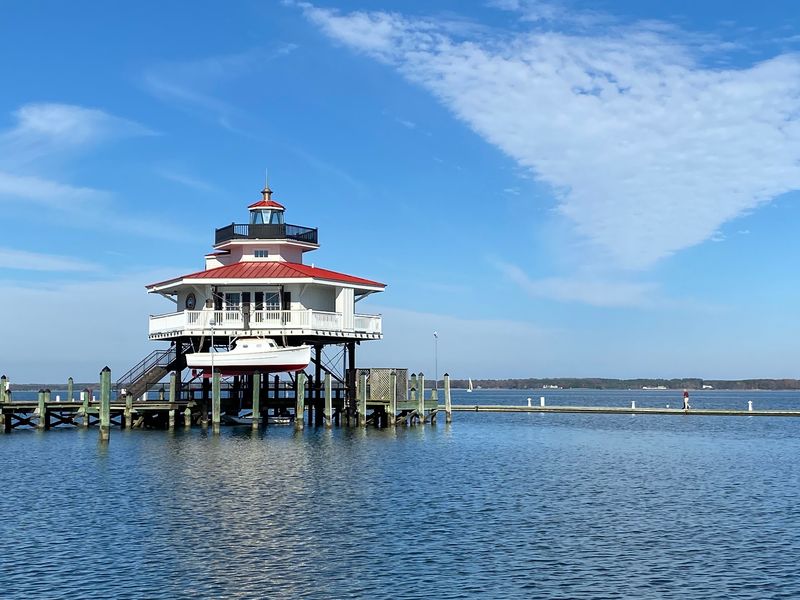
Just imagine for a second a lighthouse built as a love letter to the past. Some replicas truly earn their spotlight.
The Choptank River Lighthouse at Long Wharf Park is a faithful six-sided screw-pile replica completed in 2012.
It stands at the end of Pier A, only a few blocks from historic downtown Cambridge and its brick-paved streets.
The original Choptank River station began operating in 1871. After severe ice damage in 1918, a spare lighthouse from Cherrystone, Virginia, was relocated to the river in 1921.
That structure became the only Chesapeake lighthouse known to have served in two states before it was removed in 1964.
Inside today’s replica, a compact museum explains the station’s history and Dorchester County’s maritime heritage.
The lighthouse is generally open daily from May through October, with off-season visits available by appointment. Elevator access can also be arranged in advance for visitors who prefer to avoid the steps.
Long Wharf Park makes the stop easy to extend without driving again. Sidewalks lead along the waterfront, public seating is nearby, and downtown shops and galleries are within walking distance.
The park also hosts seasonal community events beside the river.
The lighthouse stands at High and Water streets rather than a numbered High Street address. Plan enough time to enjoy the pier slowly, especially when the Choptank is calm and the waterfront feels unhurried.
3. Hooper Strait Lighthouse At Chesapeake Bay Maritime Museum, St. Michaels
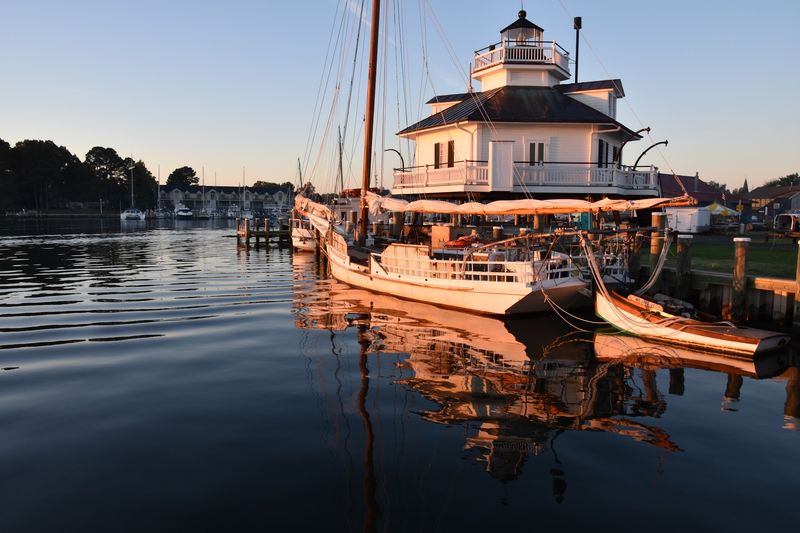
Let’s be real for a second. Not every lighthouse stays where it was built.
Hooper Strait Lighthouse was constructed in 1879 to guide vessels through shallow shoals between the Chesapeake Bay, Tangier Sound, and routes toward nearby rivers.
When the station faced removal in the 1960s, the Chesapeake Bay Maritime Museum acquired the structure and moved it to Navy Point in St. Michaels in 1966.
Today the lighthouse is one of the signature historic structures on the museum’s 18-acre waterfront campus.
Visitors can enter the cottage, climb its stairs, and see exhibits about the routines of keepers who once lived above the water. The experience is memorable, but the lighthouse itself is not wheelchair accessible.
The rest of the campus offers a much easier pace. Gravel and stone paths, boardwalks, working-shipyard views, historic vessels, and waterfront exhibits can fill several hours without requiring a rigid route.
Much of the museum is accessible, including the modern Welcome Center, although some historic structures have stairs.
St. Michaels adds another layer once the museum visit ends. The entrance sits along North Talbot Street, within walking distance of the town’s historic center, shops, and harbor activity.
Use 213 North Talbot Street for the museum. This outing works best when the lighthouse is treated as one part of a broader waterfront day rather than the only destination.
4. Drum Point Lighthouse, Solomons
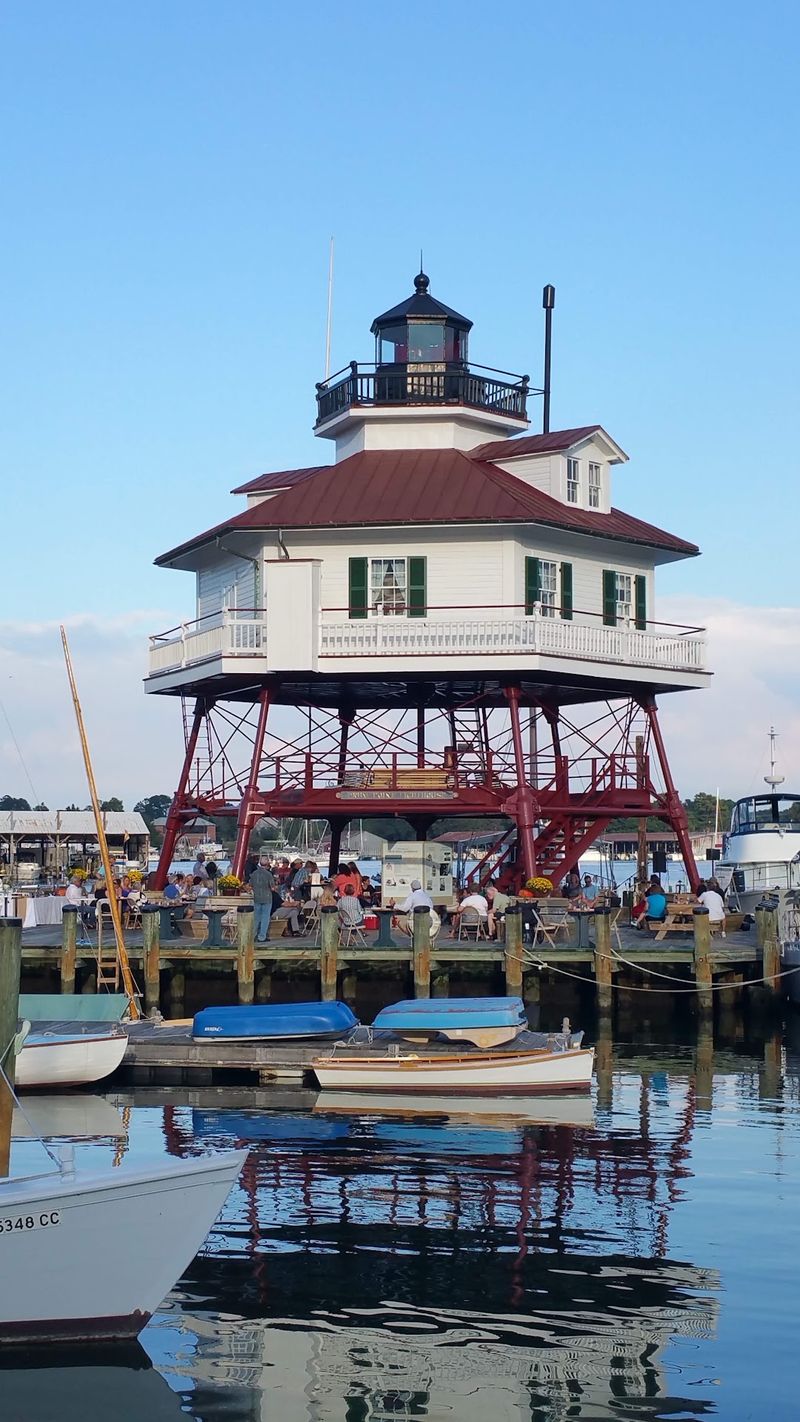
Drum Point Lighthouse first began operating in 1883 near the entrance to the Patuxent River.
The six-sided screw-pile cottage is now one of only three surviving Chesapeake examples of a type once common across the bay.
The light originally stood offshore and sent a fixed red signal visible for about 13 nautical miles in clear conditions.
Families lived inside the compact station, and historical records confirm that at least one child was born there.
After the light was retired, the structure was moved to the Calvert Marine Museum waterfront in 1975. A lengthy preservation effort returned the interior to an early twentieth-century appearance, and the lighthouse opened to visitors after restoration.
A separate exterior preservation project temporarily closed it in spring 2026, but the current museum page again lists it as open year-round when weather and conditions permit.
The surrounding museum keeps the day easy to pace. A low boardwalk crosses the marsh, North American river otters occupy an outdoor habitat, and indoor galleries focus on regional waterways and maritime life.
Through October 15, 2026, the historic Wm. B. Tennison also offers scheduled one-hour sightseeing cruises on the Patuxent.
The museum is at 14200 Solomons Island Road South, making several gentle waterfront experiences possible from one parking area.
5. Cove Point Lighthouse, Lusby
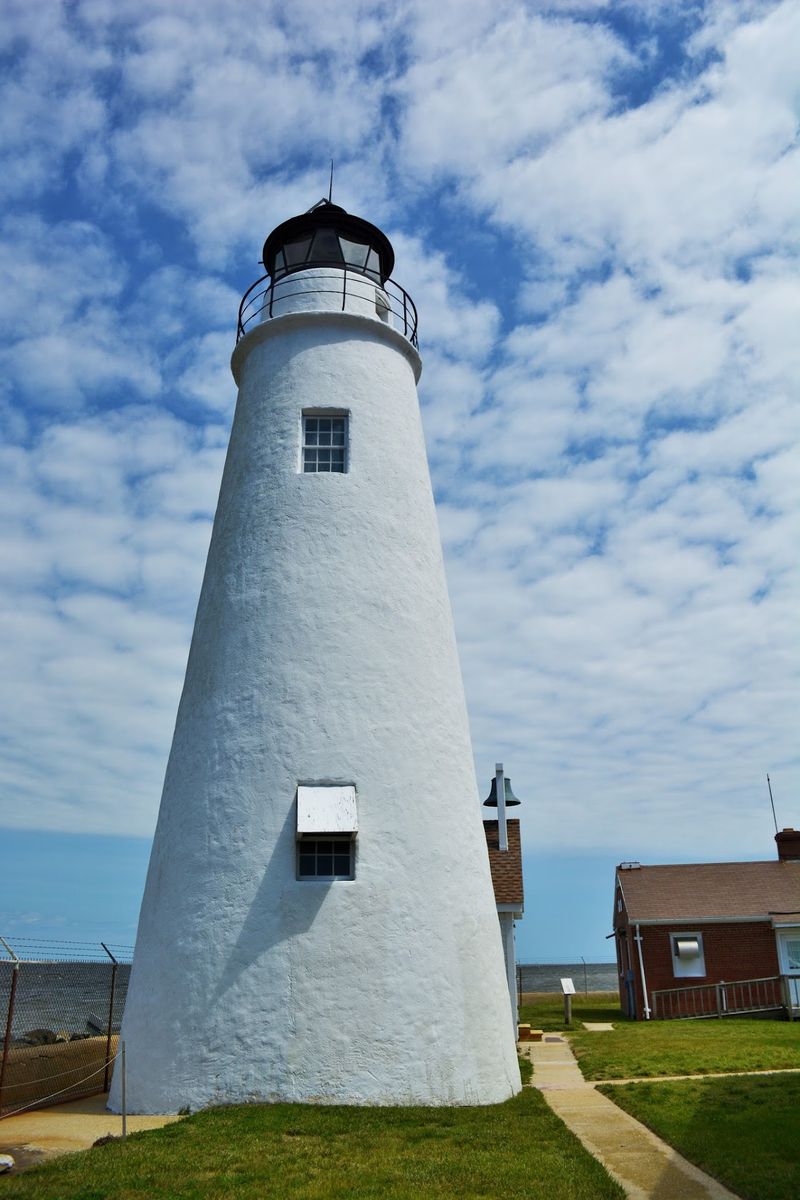
I had to do a double-take. This light has been working since 1828.
Cove Point Lighthouse remains an active aid to navigation on a seven-acre point along one of the narrower sections of the Chesapeake Bay.
It is the oldest continuously operating lighthouse on the bay and one of Maryland’s most enduring maritime landmarks.
The original brick tower was built in 1828 to mark the shoal extending from Cove Point. It was later raised to 51 feet, and a fourth-order Fresnel lens was installed in the nineteenth century.
Electric operation arrived during the following century, while the station eventually became automated.
The keeper’s house has been restored and now functions as vacation lodging that can accommodate larger family groups. The lighthouse grounds and visitor center, however, have a much narrower public season.
Regular public access is scheduled on Wednesdays, Saturdays, and Sundays from May through September, weather and conditions permitting.
That means an autumn or winter day trip should not assume the grounds will be open. When access is available, the visit is compact and does not require a long trail.
Visitors can view the tower base, learn about the station, and look across the bay toward the Calvert Cliffs.
The site is at 3500 Lighthouse Boulevard in Lusby. For a longer outing, nearby Solomons adds additional waterfront walking, museum exhibits, and places to sit beside the Patuxent.
6. Piney Point Lighthouse Museum, Piney Point
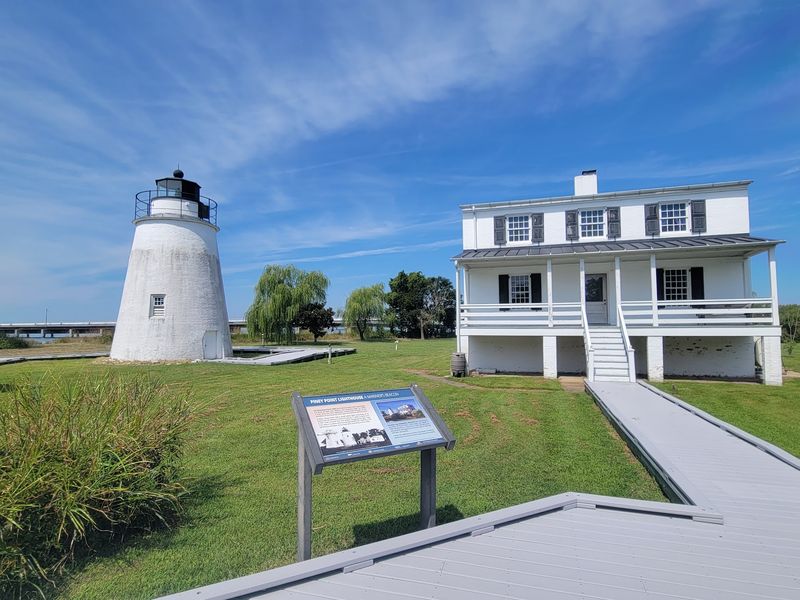
Here’s a crazy thought. Presidents once came to this shoreline to unwind.
Piney Point Lighthouse has long carried the nickname Lighthouse of Presidents because prominent visitors from Washington came to this Potomac River resort area.
Built in 1836, the preserved tower is the oldest lighthouse on the Potomac.
The circular masonry tower stands 35 feet tall and once served vessels moving between the river and Chesapeake Bay. Today, visitors begin at the museum before continuing to the maritime exhibit and lighthouse grounds.
Anyone who wants to climb the tower is accompanied by staff or volunteers, making it easy to ask questions before deciding whether the stairs feel comfortable.
The six-acre historic park offers plenty without a climb. A boardwalk and pier provide river views, benches and picnic tables offer places to rest, and a kayak launch serves visitors who want time on the water.
The museum, maritime exhibit, boardwalk, and pier are accessible.
Inside the maritime exhibit, several historic wooden workboats illustrate the region’s working-water traditions. Other displays explain lighthouse operation and local maritime life.
The grounds remain open from sunrise to sunset throughout the year, while museum hours are more specific. The address is 44720 Lighthouse Road in Piney Point.
For an easygoing visit, combine the indoor exhibits with a slow walk to the pier and save the tower climb for anyone comfortable with stairs.
7. Turkey Point Lighthouse At Elk Neck State Park, North East
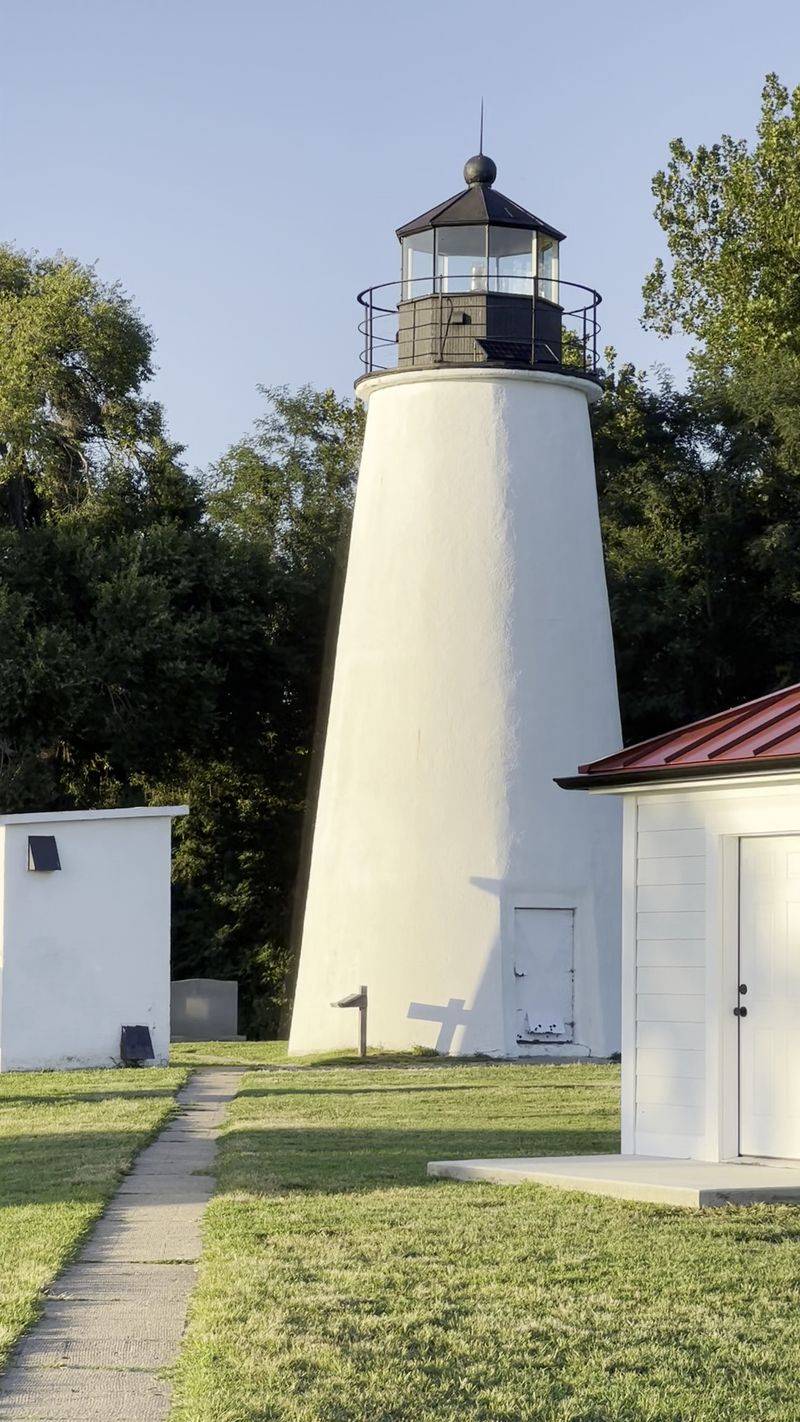
My jaw literally dropped at the top of this trail. The view seems to go on forever.
Turkey Point Lighthouse was built in 1833 on a high bluff at the southern end of the Elk Neck Peninsula. Its setting places the light about 129 feet above the water, overlooking the meeting of the Elk River and Chesapeake Bay.
The brick tower is modest, while the location does most of the visual work.
The station once marked an important turn in the shipping channel toward the Elk River and Chesapeake and Delaware Canal. Four women served as keepers here, more than at any other Chesapeake Bay lighthouse.
Getting there requires more walking than several trips on this list. The lighthouse is reached by trail from the dedicated parking area, and the surface is not suitable for wheelchairs or strollers.
Closed-toe shoes, water, and an unhurried pace are sensible choices.
The reward is an open bluff with bay views and strong birding opportunities. Turkey Point also lies within Elk Neck State Park, where forest, marsh, and shoreline create options for a longer day.
Seasonal weekend tower climbing generally runs from May through October when weather and volunteer staffing allow. The Turkey Point area is open from sunrise to sunset.
Use 4395 Turkey Point Road in North East for the park approach. Parking is limited, especially on weekends.
8. Point Lookout Lighthouse, Scotland
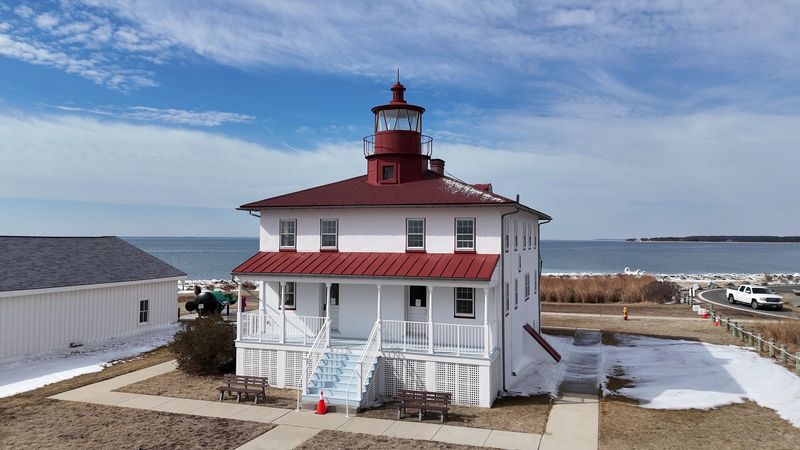
It makes you wonder, doesn’t it? Some buildings carry more stories than they can hold.
Point Lookout Lighthouse stands where the Potomac River meets the Chesapeake Bay at Maryland’s southern tip.
Built in 1830, it is considered the oldest surviving integral lighthouse in the United States, meaning the keeper’s living quarters and light were combined in one structure.
The building changed substantially over time. It was expanded to two full stories in the nineteenth century, and later additions created extra household space while keeping the lantern above the roofline.
A major preservation project covering the lighthouse and adjoining service buildings was completed in spring 2025.
The restored interior contains period furnishings and exhibits about lighthouse operation and family life at the station. During the main summer season, the lighthouse has scheduled daytime hours from Thursday through Monday.
Outside that period, opening depends on seasonal staffing, so an October visit should be confirmed before the drive.
Point Lookout State Park still offers reasons to come when the lighthouse interior is unavailable.
Water views surround the peninsula, and the 710-foot fishing pier operates through much of the year. Shoreline areas also allow a slower walk without a packed itinerary.
The lighthouse is reached through Point Lookout State Park at 11175 Point Lookout Road in Scotland. Keep the day flexible and let current staffing determine whether the museum becomes part of the visit.
9. Fort Washington Lighthouse, Fort Washington
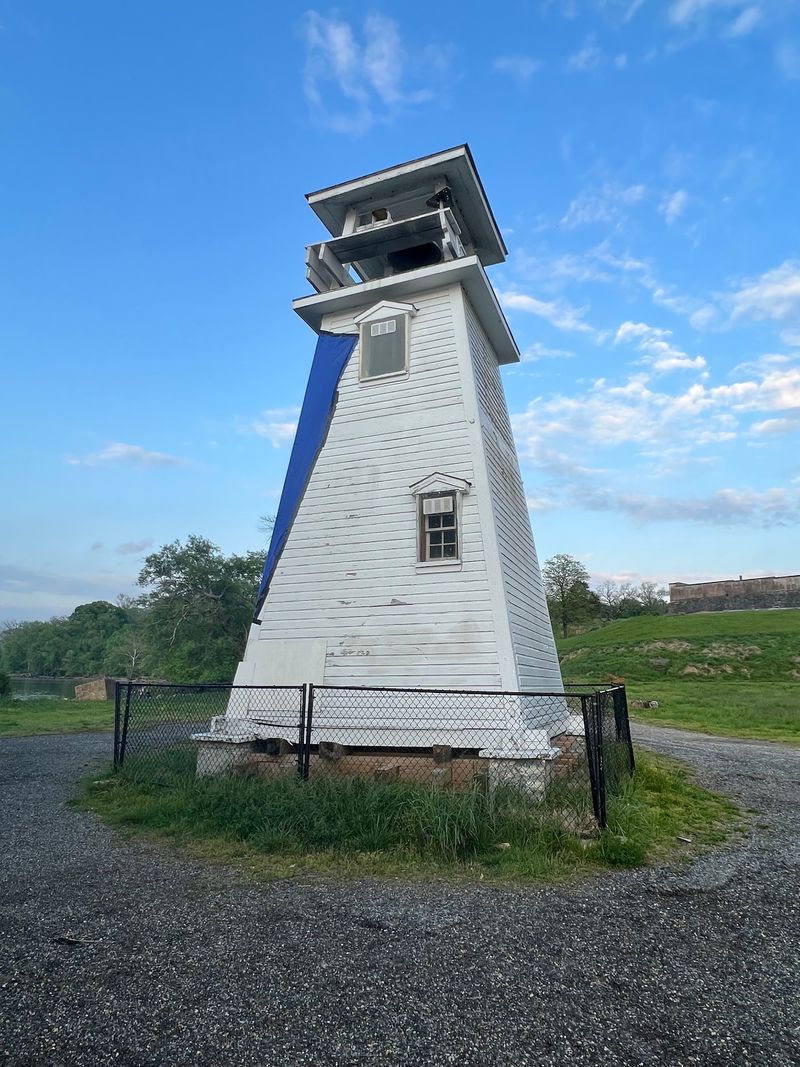
Have you given any thought to how a lighthouse can change jobs? This one guarded a river and a capital.
Fort Washington’s first navigational light was a simple iron post installed in 1857 along the Potomac. A small lighthouse followed in the 1870s, and the surviving structure began as a fog-bell tower in 1889.
In 1901, the light was transferred to that tower after nearby development reduced the usefulness of the earlier beacon.
The station later became automated, and the Coast Guard removed the final navigational light and marker in 2020. The compact white tower remains beside the river.
The lighthouse is not open for interior tours, but it can be viewed from the surrounding park. That distinction makes planning easier for visitors who prefer a low-key stop rather than another staircase.
Fort Washington Park also offers paved areas around the visitor center and historic fort, plus picnic grounds and broad Potomac views.
The full Perimeter Trail is about three miles and includes uneven surfaces, roots, steps, and hills, so it is not ideal for anyone seeking a gentle walk.
A useful alternative is to drive down to the lighthouse parking area for water access and the exterior view, avoiding some steeper terrain.
The park entrance is at 13551 Fort Washington Road. Choose the fort, lighthouse, or riverside scenery according to energy level rather than trying to cover everything.