This Is One Of The Best New York Restaurants To Visit In 2026 If You Love Pasta
Pasta lovers, this one could ruin ordinary noodles for you.
One New York restaurant takes the food of Emilia-Romagna and turns dinner into something playful, rich, and very hard to forget.
The sauces cling. The pasta has real character. Then a dish lands on the table looking simple and somehow tastes anything but.
That is the trick!
Serious technique is happening in the kitchen, but the meal never needs to feel stiff. You can just enjoy it.
By the last forkful, only one question really matters: are you full enough to stop, or curious enough to order one more thing?
A Grandma Inspired Pasta Palace
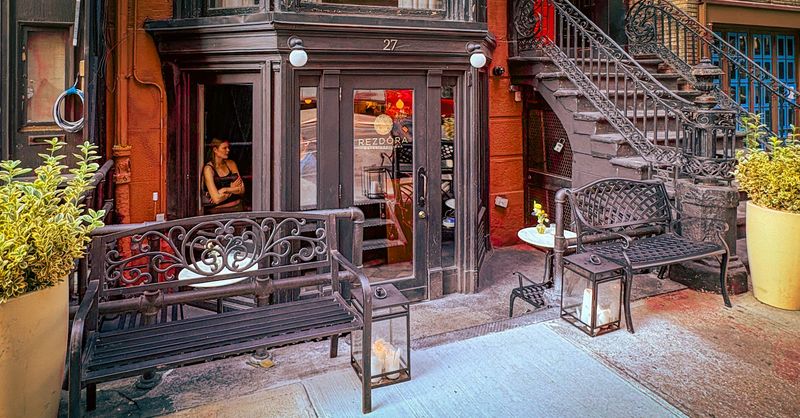
Names matter, and this one carries a sweet family story. Rezdôra means head of the household in the Modena dialect.
Usually, the word describes the grandmother who rolls pasta by hand for everyone. The name points directly to the regional tradition behind the menu.
The restaurant opened in 2019 after its founding chef spent years studying northern Italian cooking.
Training in Modena included time at Osteria Francescana and Hosteria Giusti, where handmade pasta and regional technique were central to the work.
That background still shapes the food. The menu focuses tightly on Emilia-Romagna rather than treating Italian cooking as one broad category.
That means filled pastas, regional sauces, cured meats, Parmigiano Reggiano, and combinations tied to places such as Modena and Parma.
Getting there is simple, since the Flatiron District sits close to several subway lines. Union Square is only a short stroll away, which makes a post meal walk easy.
You will find this pasta haven at 27 E 20th St, New York, tucked on a calm block.
Rolling Pins Rule Here
Forget fancy machines for a moment. Hand-rolled pasta remains central to the kitchen, including dough worked al mattarello with a long wooden rolling pin.
It is slow work, and that is exactly the point. Rolling by hand helps create thin, supple sheets suited to filled and ribbon-shaped pastas.
Traditional sfoglia is judged by its evenness, elasticity, and translucence. Getting there takes repeated rolling, turning, and careful control of thickness.
The result matters because each shape has a different job. Cappelletti need enough structure to hold a filling, while thinner ribbons need to stay delicate without disappearing under sauce.
The current menu still centers on house-made pasta. Several shapes appear at both lunch and dinner, while others change with the season or service.
That flexibility keeps the technique traditional without freezing the menu in one moment. Ingredients can change, but the regional approach remains easy to recognize.
Pay attention to how each shape matches its sauce. That relationship is one of the clearest ways the Emilia-Romagna focus shows up on the plate.
The Famous Golden Egg Raviolo
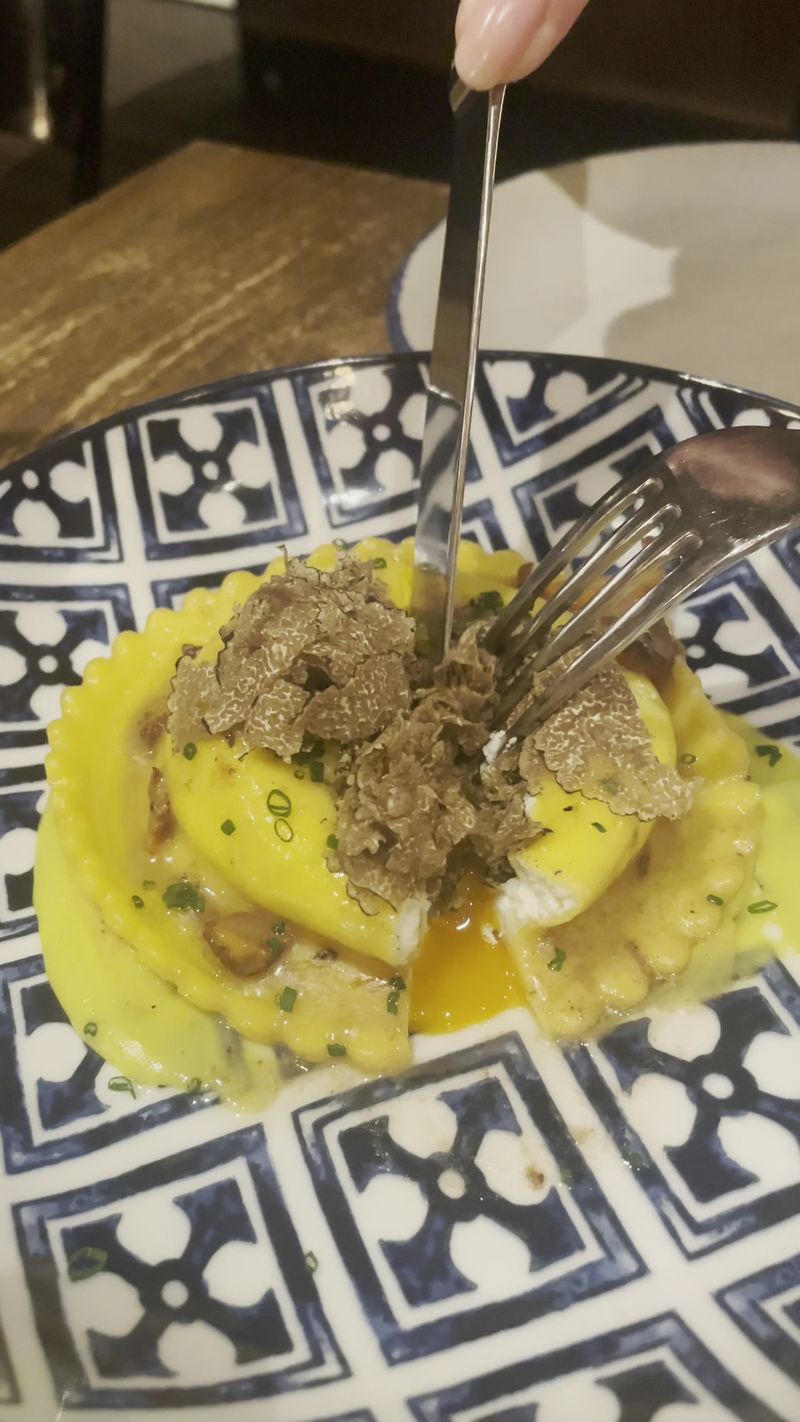
One pasta here gets talked about like a celebrity. Meet the Uovo Raviolo di Nino Bergese, a large filled pasta built around an egg yolk.
Cut into it, and the yolk spreads across the plate. The current lunch and dinner version pairs it with corn, chanterelles, and black truffle.
Seasonal versions can change. The brunch menu, for example, has featured the raviolo with brown butter, morels, and black truffle instead.
The dish honors Nino Bergese, an influential Italian chef associated with a famous egg-yolk raviolo. That historical connection gives the plate a reason for carrying his name.
Texture is the real star in this case. Thin pasta, rich yolk, mushrooms, and seasonal accents create several layers without turning the dish into something overly complicated.
Since the raviolo is rich, sharing can make sense when the table plans to try several pastas. It also works as a single focused course before moving into another shape.
The appeal comes from the contrast. The presentation stays restrained, but cutting into the center changes the dish immediately.
Pasta Names With Big Personalities
Reading this menu is half the fun. Where else can you order Grandma Walking Through Forest in Emilia?
That whimsical title currently belongs to green cappelletti filled with roasted and sautéed leeks. The dish keeps the playful name while letting the pasta shape and vegetable filling do most of the work.
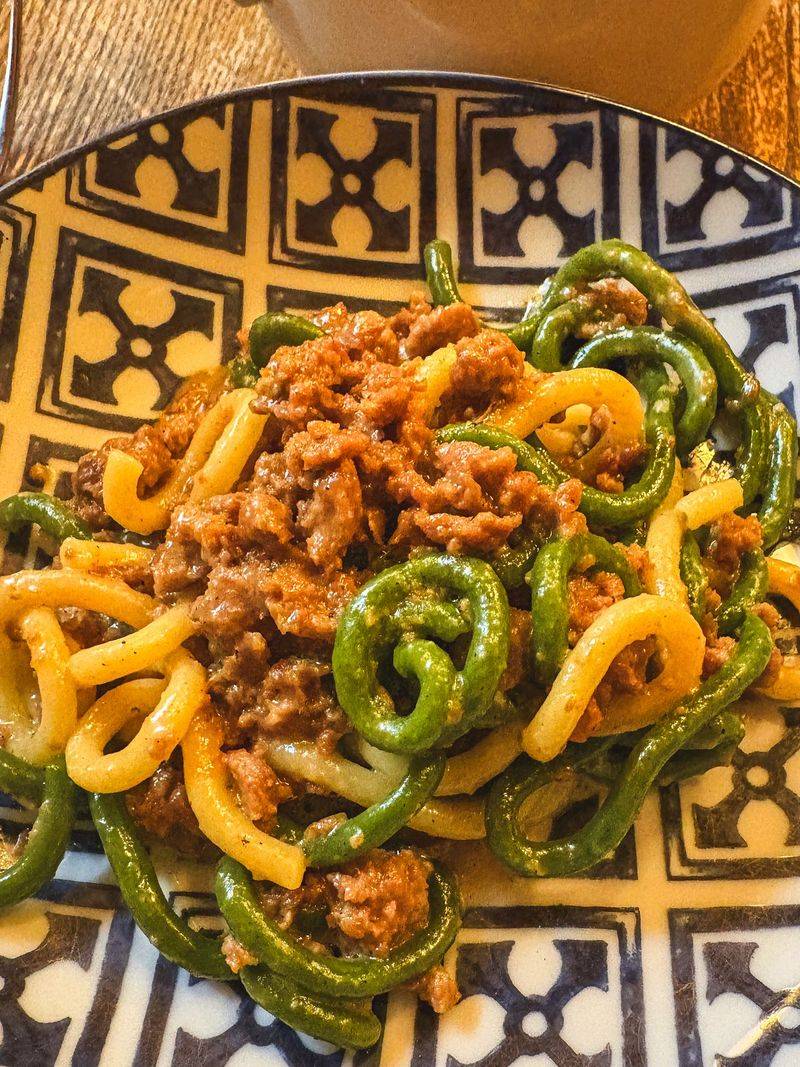
Next up is the Gramigna Giallo e Verde. These short yellow and green strands come with a slow-braised sausage ragu in bianco.
Strozzapreti takes another direction, pairing the twisted pasta with tomato sauce from Emilia, red shrimp, and chives.
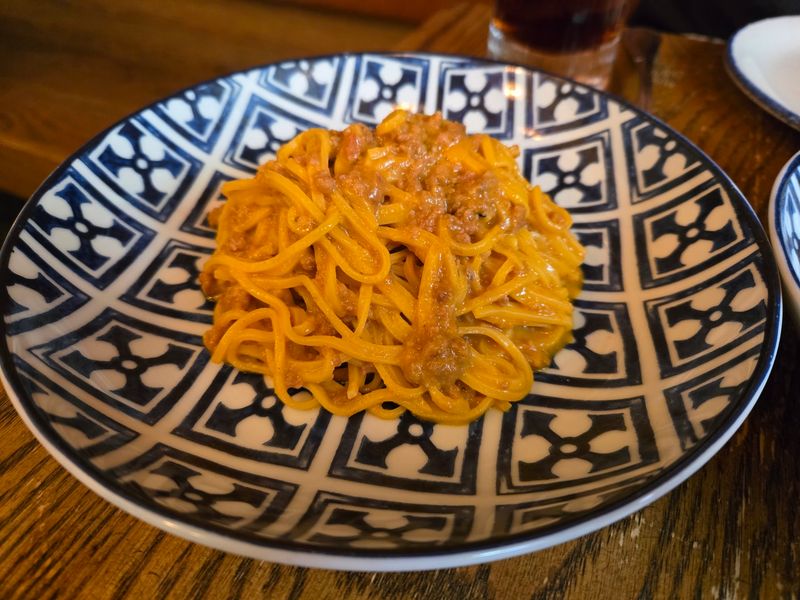
Tagliolini al Ragu from Modena keeps things classic with thin ribbons and a regional meat sauce.
Other current choices widen the picture. Piacentina “Vacationing in Genoa” brings zucchini, basil, and pine nut, while Cappellacci di Friggione centers on onion and tomato.
Cacio e Pepe in Emilia appears on the menu too, but it is currently a salad rather than a pasta. Little lettuces come with pecorino dressing and cracked pepper.
The names may be playful, yet the menu stays closely tied to specific ingredients, shapes, and regional references.
Take The Grand Pasta Tour
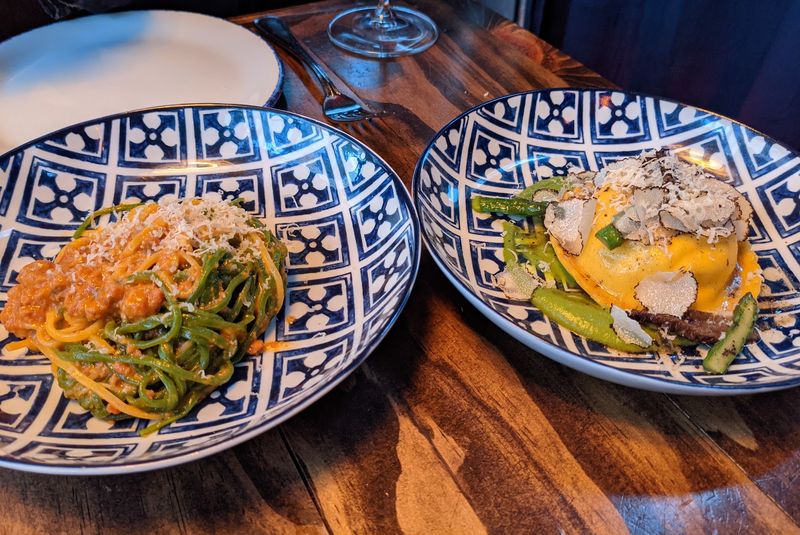
Can’t decide which pasta to pick? The kitchen solved that problem with a regional pasta tasting menu.
The current dinner menu sets aside about two hours for the experience, and the full table must participate. A vegetarian version is also available.
The exact sequence can change, which is part of the point. Rather than promising one fixed lineup, the tasting gives the kitchen room to move through several pasta styles and seasonal combinations.
That format makes sense at a restaurant built around regional pasta. A filled shape can be followed by something shorter and more textured, then by a different sauce or filling.
It also removes some of the pressure of choosing one dish from a long pasta list. The focus shifts from selecting a favorite to seeing how the shapes compare.
Separately, the dinner menu includes a Parmigiano Reggiano tasting built around five different ages of the cheese.
Plan for a relaxed meal, since the tasting is intentionally longer than a standard single-course pasta dinner. The extra time gives each course room to stand on its own.
Starters Worth Saving Room For
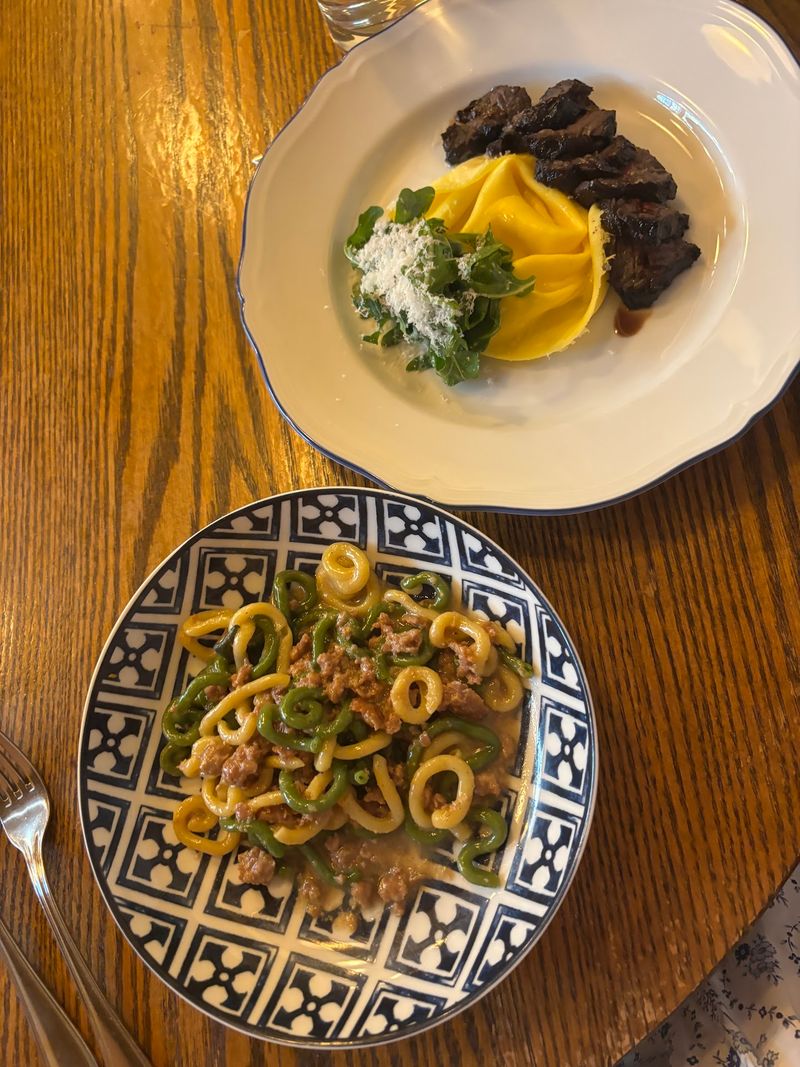
Pasta gets the spotlight, but the opening acts deserve attention too. Gnocco fritto remains one of the clearest links to Emilia-Romagna.
These puffy fried dough pillows are served with Prosciutto di Parma, mortadella, and guanciale. Their airy texture makes them a natural starting point before the heavier pasta courses.
Fett’unta keeps it simple with toasted bread and extra virgin olive oil. Sometimes the most basic combinations give good ingredients the most room to show.
Cheese and cured meat fans can explore the Caseificio and Della Zona sections. Burrata, Parmigiano Reggiano, prosciutto, mortadella, capocollo, and other regional staples appear across those categories.
The Mortazza remains on the lunch menu, combining mortadella, stracciatella, pistachio, and tangy onions.
Main courses extend beyond pasta as well. Cow Grazing in Emilia Romagna pairs sirloin steak with regional sauces and an herb salad, while halibut appears with fennel and tomato.
Vegetables get their own space instead of acting like an afterthought. Sweet-and-sour cipollini onions, seasonal greens, mushrooms, Romano beans, and peppers all appear on the current dinner menu.
Cozy Brick Walls, Warm Glow
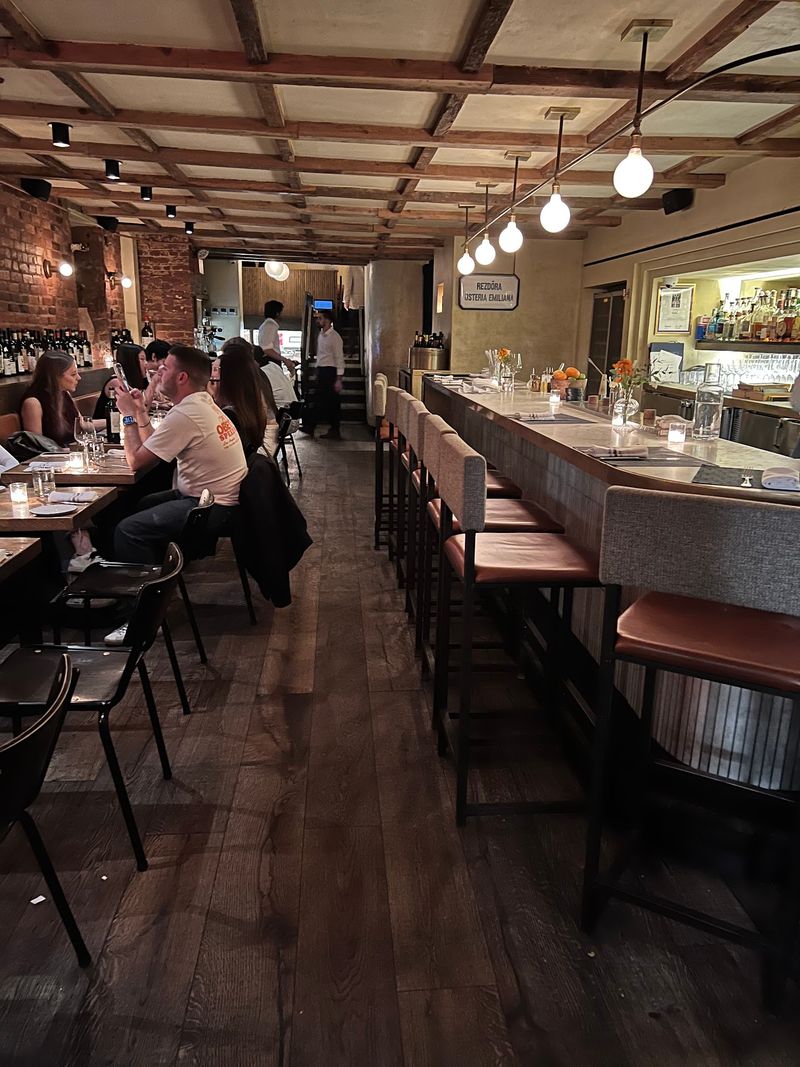
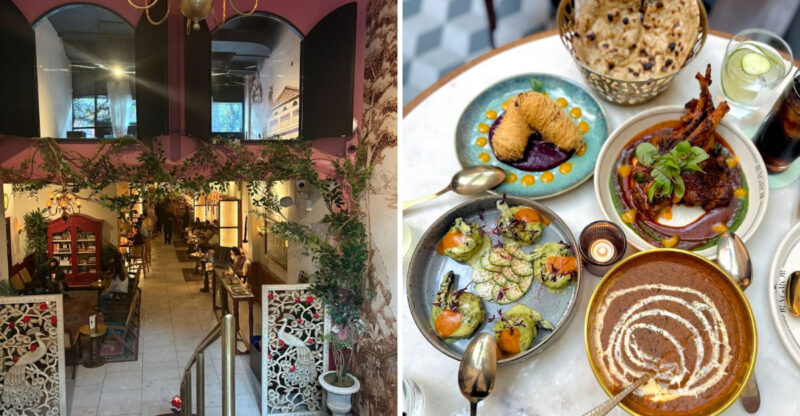
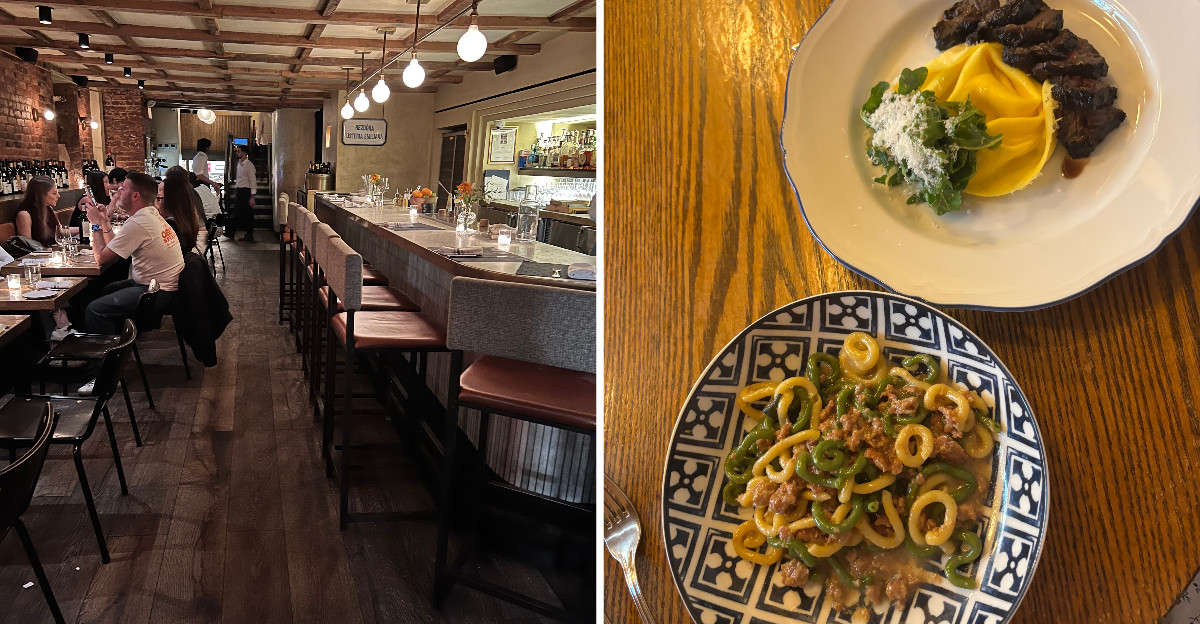
The room wraps around you like a warm blanket on a chilly evening. Brick walls give the narrow dining room a rustic, intimate feel.
Around sixty indoor seats keep the restaurant compact. Small tables line the main room, while leather banquettes add softness along one side.
A marble counter with stools creates another seating option near the front. Smaller dining areas toward the back and upper level make the footprint feel more varied than the narrow entrance suggests.
Outdoor seating is also available. That gives the restaurant a little more flexibility when the weather cooperates.
The lighting stays low and warm, while exposed brick and wood keep the space connected to the osteria idea behind the menu.
The room does not need elaborate decoration to make the concept clear. The food, materials, and compact scale all point in the same direction.
For private gatherings, a separate Test Kitchen can also host reserved events on selected dates.
The result is polished without losing the casual energy that makes a pasta-focused meal feel comfortable.
Sweet Endings And Smart Tips
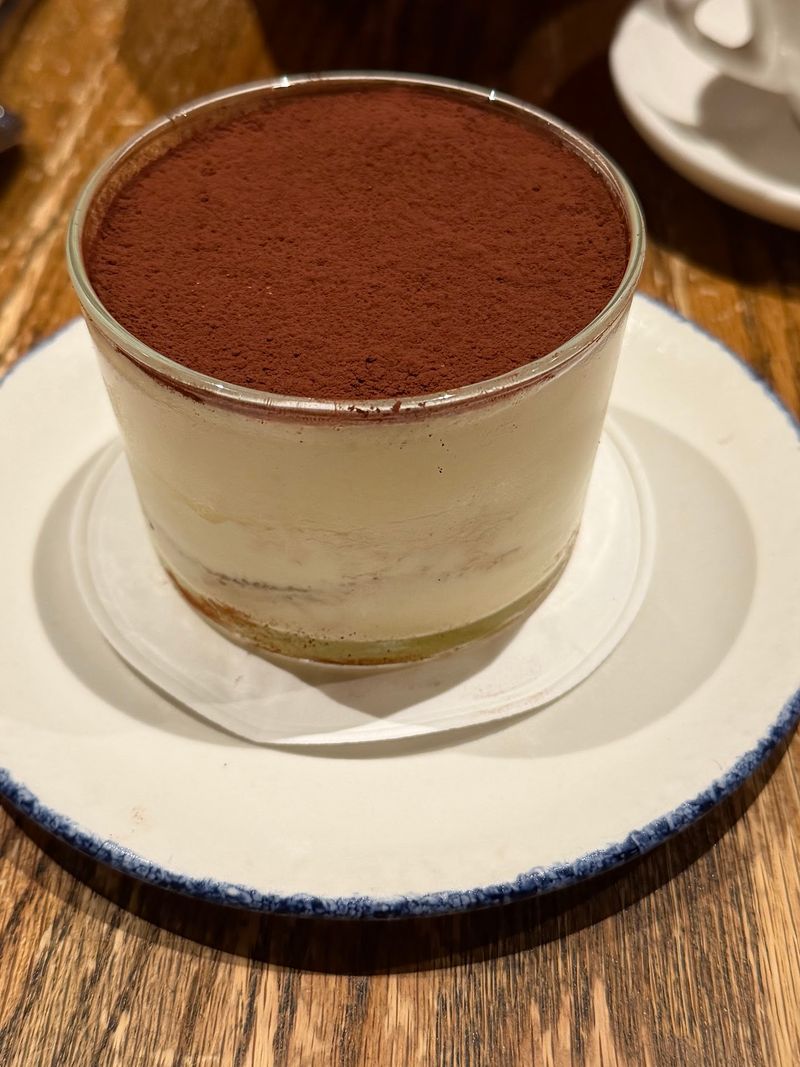
Dessert here is not an afterthought. The tiramisu still carries the playful line, enough for two, better for one.
Torta d’Oliva keeps olive oil at the center and presents it in several forms. Other desserts rotate, so the final choices can change with the season.
House-made gelato and sorbet round things out nicely. The current gelato selection includes chocolate, walnut, and extra virgin olive oil, while other frozen desserts appear separately.
Now for some practical planning tips. Reservations are worth arranging ahead because the dining room is small and the restaurant remains heavily sought after.
Dinner runs nightly. Lunch is served Tuesday through Friday, while Saturday and Sunday bring brunch before dinner service.
The current menu changes between lunch, brunch, and dinner, so a return visit does not have to repeat the same lineup.
Recognition keeps rolling in for this spot. Rezdôra received a Michelin star each year from 2021 through 2025 and remains in the Michelin Guide’s current starred New York selection.
The 2026 edition of 50 Top Italy goes even further, ranking Rezdôra No. 4 among Italian restaurants worldwide.
Pasta lovers visiting New York in 2026 have a very strong reason to keep this Flatiron dining room on the shortlist.