The Coolest City To Visit In South Carolina Might Not Be The One You Expect
Cool does not always mean polished. Sometimes it means sandy feet, salty air, murals, surfboards, and music drifting down the street after sunset.
South Carolina has a beach town with exactly that energy, and it wears the laid-back attitude well.
The shoreline is gorgeous, sure, but the personality is what makes people stay longer.
Morning might start with dolphins. Afternoon belongs to the waves. Then evening rolls in and the whole town loosens up even more.
Sounds pretty good, right?
If your ideal escape involves fewer fancy resorts and more barefoot wandering, this place makes a very strong case for itself.
Three Centuries Of Island Stories
Long before surfboards showed up, this little island was covered in thick, tangled plants. The name Folly actually comes from an Old English word for dense foliage.
The earliest official document mentioning the island dates to 1696, when the land appeared in a royal grant. Members of the Bohicket community lived on the island before European settlement expanded around Charleston.
By the early twentieth century, Folly was becoming a true coastal getaway. Temporary camps gave way to cottages, while a pavilion, pier, boardwalk, and oceanfront hotel helped attract more visitors.
The island also developed an unexpected place in American music history. In 1934, composer George Gershwin stayed on Folly while working on Porgy and Bess and absorbing the sounds and culture of the Lowcountry.
From the 1940s onward, development continued steadily. Ocean Plaza later brought rides, shops, a boardwalk, and another chapter of pier-centered entertainment, while live music became closely tied to the island’s identity.
Folly Beach became its own municipality in 1973.
Where Ocean Meets Wild Marsh
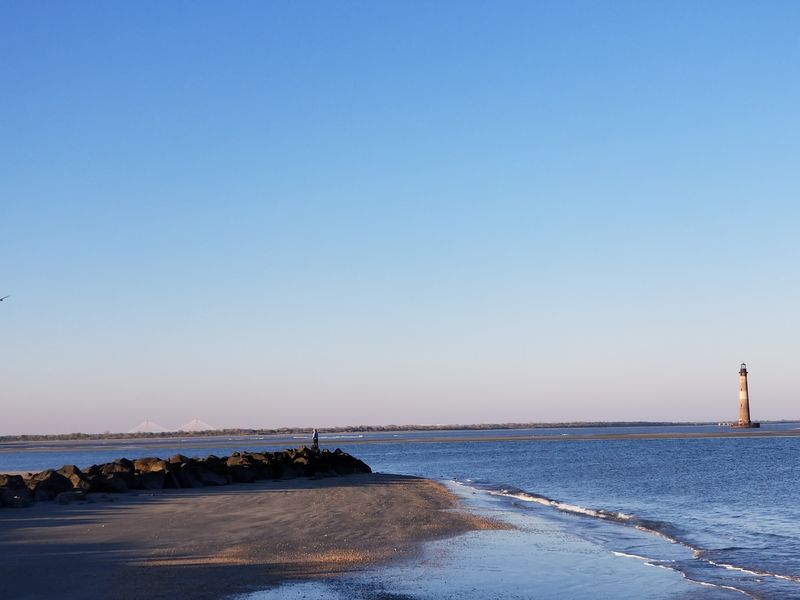
Picture an island with the ocean on one side and quiet marsh on the other. That contrast defines much of Folly Beach.
Six miles of beach face the Atlantic Ocean. On the other side, the Folly River, tidal creeks, salt marshes, and oyster beds create a completely different landscape.
The shoreline keeps a natural edge in many places. Dunes, tide pools, shells, and changing sandbars give beach walks a slightly different look depending on the tide.
Bird lovers should pack binoculars for both ends of the island. Herons and egrets work the marshes, while shorebirds gather around protected habitat near Lighthouse Inlet and the west end.
Folly Beach County Park adds another strong wildlife stop. From its western edge, visitors can view Skimmer Flats and nearby Bird Key, important habitat for coastal birds.
Sunrise belongs to the Atlantic side, while the river and marsh side are known for colorful evening skies. Both make a convincing reason to slow down for a while.
Life On The Edge Of America
The nickname The Edge of America fits the setting perfectly.
Folly Beach sits on a barrier island only a short drive from Charleston, yet the atmosphere feels distinctly coastal and casual.
Bright cottages, surfboards, murals, and weathered beach houses give residential streets plenty of personality.
Center Street adds colorful storefronts and a compact downtown that is easy to explore on foot.
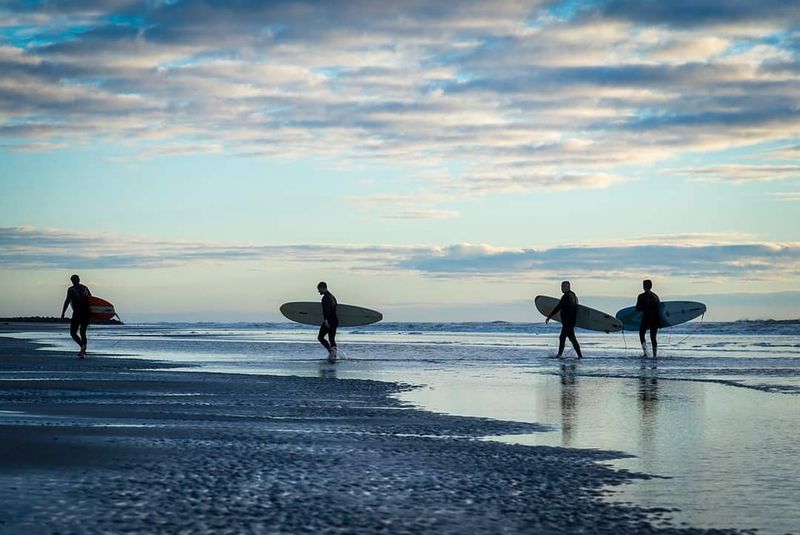
Surf culture plays a major role in the island’s identity. Boards appear outside shops and homes, riders check the water throughout the day, and the ocean remains part of everyday life rather than just a backdrop.
This South Carolina city also keeps a strong independent-business presence. Local shops, restaurants, surf stores, and small accommodations give the central district a character that feels different from a large resort strip.
Even the commercial core stays low-rise, which helps preserve the town’s easygoing beach-town scale.
Busy and quiet versions of Folly can exist in the same day. It depends on which direction you walk.
Catching Waves At The Washout
Surfers know one name especially well around here: The Washout. This stretch near 12th Street East is the best-known surf break on Folly Beach.
Its exposed setting helps produce consistent waves, and conditions can become more powerful than elsewhere on the island.
Intermediate and experienced surfers often gravitate toward it when the water lines up well.
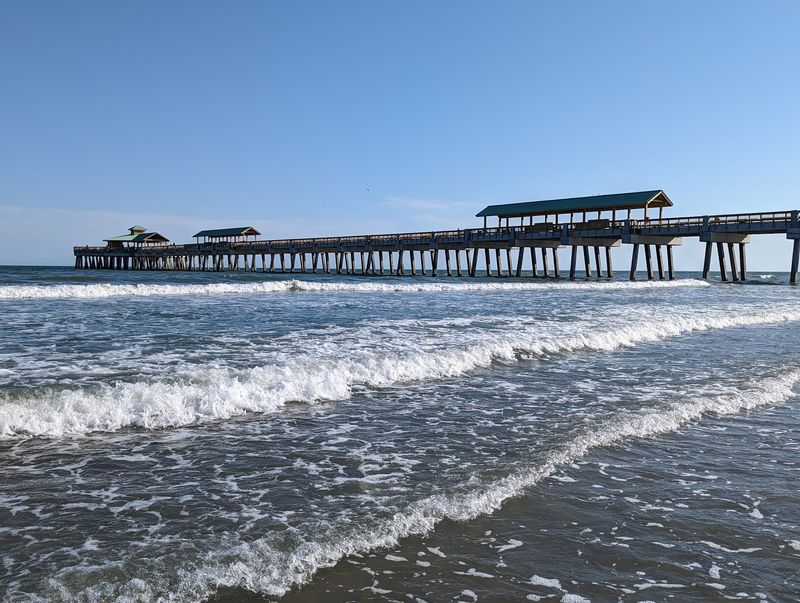
The pier area can also produce rideable waves, although surfing is always prohibited within 200 feet of the fishing pier. Seasonal swimming-zone restrictions apply in the central beach area as well.
Beginners have several local options for lessons and rentals. Learning with an instructor also makes it easier to understand currents, surf etiquette, and the island’s changing conditions.
McKevlin’s Surf Shop has been part of the local scene since 1965. Not into surfing? Swimming, sunbathing, beachcombing, and long shoreline walks fill the day easily.
Always check posted flags and current conditions before entering the water. The ocean here can look calm from shore while currents remain strong farther out.
Strolling The Legendary Fishing Pier
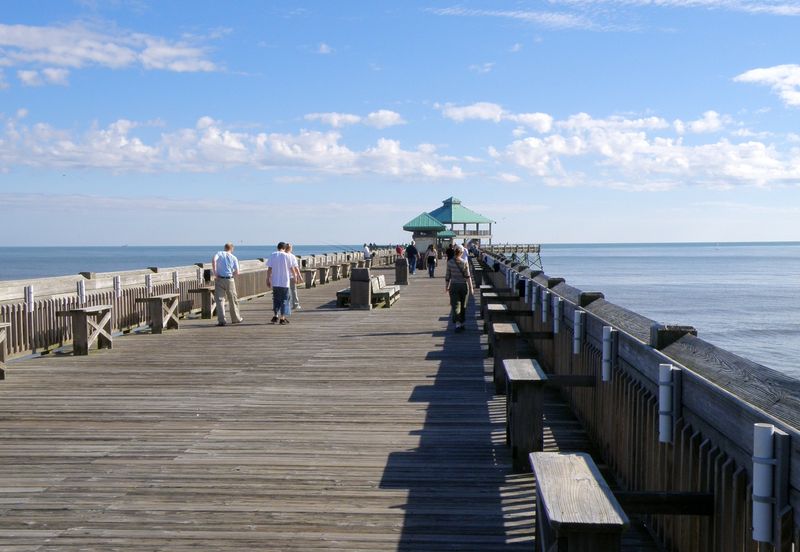
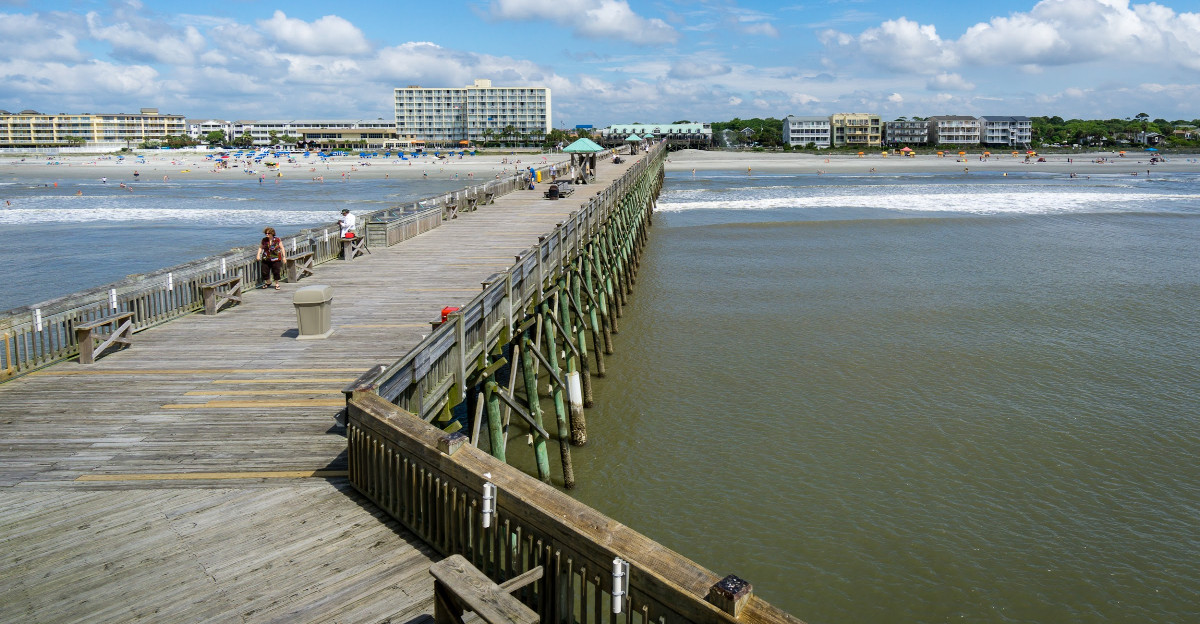
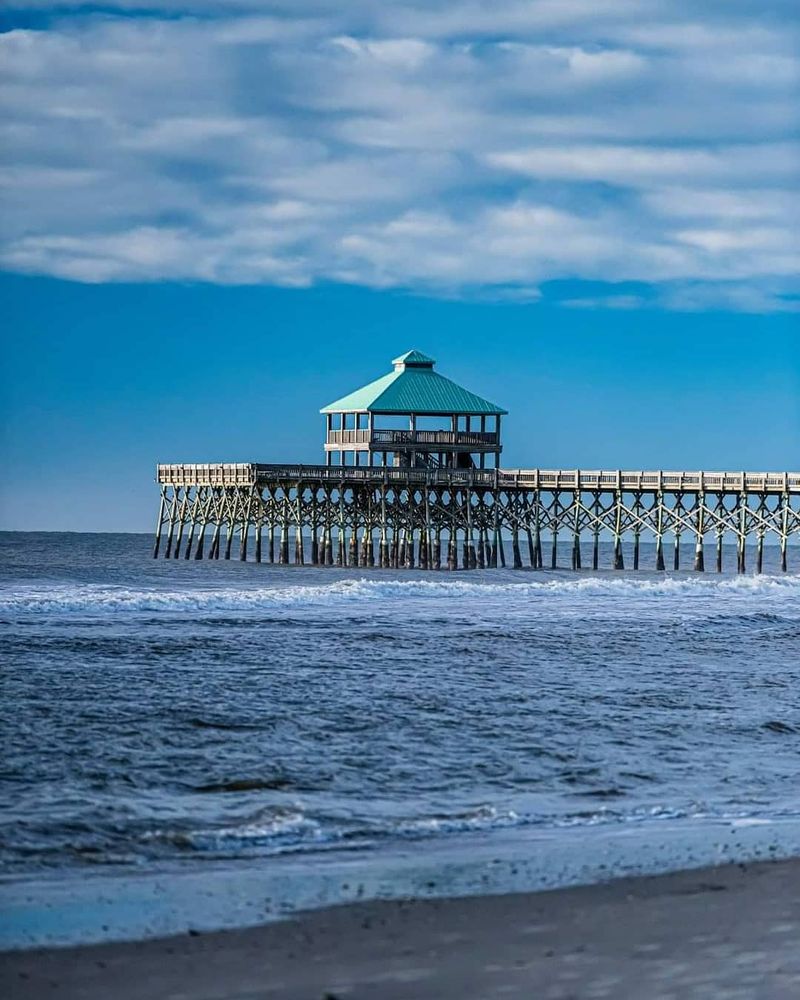
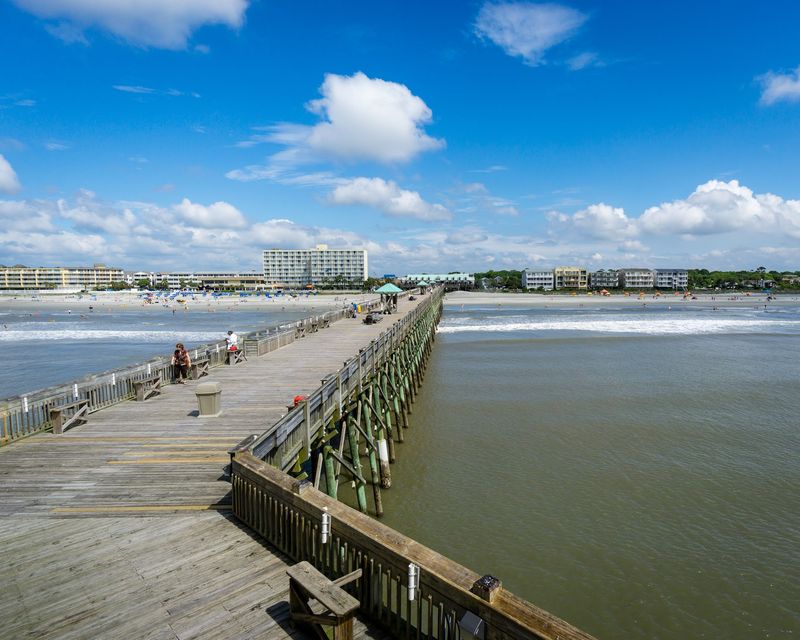
Here is a fun number to remember: 1,049 feet. That is how far the current Folly Beach Fishing Pier stretches into the Atlantic.
Most of the pier is 25 feet wide and stands 22 feet above sea level. Walking toward the end opens broad views over the beach, water, and downtown shoreline.
The current pier reopened in December 2022 after a complete reconstruction. Concrete pilings and a concrete substructure support wooden walkways and railings designed for the oceanfront setting.
Two widened covered sections create extra fishing space along the route. At the far end, a 7,500-square-foot diamond-shaped platform gives walkers and anglers plenty of room to spread out.
The pier’s story reaches back to 1931, when the first version became part of Folly’s growing recreation scene. A later wooden pier opened in 1995 before the newest structure replaced it.
Fishing remains a major draw, and tournaments continue on the calendar. Walking, birding, and ocean views give non-anglers plenty to do too.
The Lighthouse Standing In The Sea
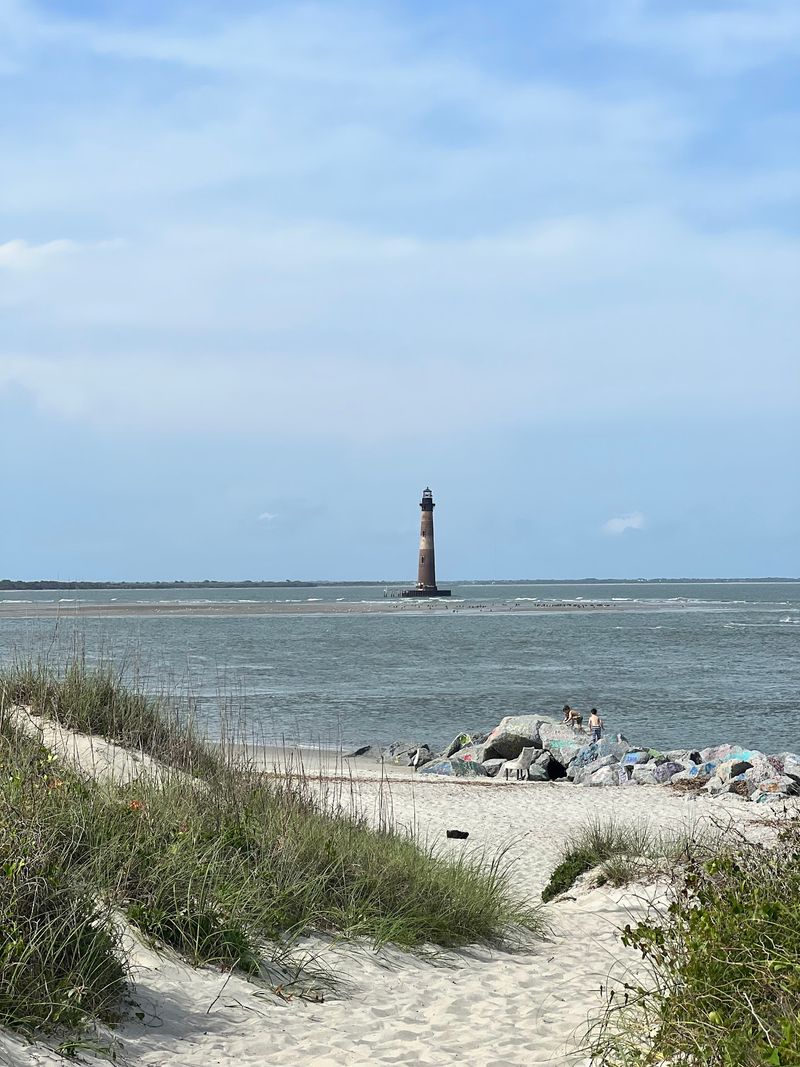
Standing alone in the water, the Morris Island Lighthouse looks almost unreal from the northeastern end of Folly Beach.
The first lighthouse at this harbor entrance was built in 1767. The brick tower visible today was completed in 1876 and rises 161 feet above its base.
The tower originally stood on dry land. Long-term shoreline change eventually left it offshore, creating the unusual view visitors see today.
It stopped serving as an active navigational light in 1962, but preservation work continues. The lighthouse joined the National Register of Historic Places in 1982 and remains one of the Lowcountry’s most recognizable maritime landmarks.
The best land-based viewing spot is Lighthouse Inlet Heritage Preserve at the northeastern end of the island. A short trail leads toward an open shoreline view with the tower across the water.
The South Carolina preserve is also protected wildlife habitat, so visitors should remain on designated routes and give nesting areas plenty of space. Pets are not permitted there.
Water and comfortable walking shoes help in this undeveloped setting.
Center Street Shops And Tacos
Center Street is the busy heart of the island. Locally owned shops, eateries, surf stores, and colorful storefronts line the compact downtown stretch.
Boutiques sell beachwear, gifts, and coastal decor, while surf shops keep the town’s connection to the water visible even a few blocks inland.
Bert’s Market remains one of the island’s best-known everyday stops. The corner market operates around the clock and combines groceries, prepared food, beach supplies, and plenty of practical extras.
For a casual meal, Chico Feo brings open-air seating and a small menu that includes fresh tacos. Live music is also common there, adding another layer to the easygoing Center Street atmosphere.
There is also a newer history stop worth noticing. The Folly Beach Community Center now houses an exhibit about the Porgy House, the 1933 cottage connected to the creation of Porgy and Bess.
The original house still stands on West Ashley Avenue, giving the island’s playful modern personality an unexpectedly deep cultural backdrop.
Smart Tips Before You Go
A little planning can make this trip much easier.
Folly Beach sits about 13 miles from downtown Charleston and is one of several public beaches within a short drive of the city.
This South Carolina trip commonly takes about 20 to 30 minutes when traffic is moving normally. Warmer weekends and holidays can add delays because one primary road handles most traffic onto the island.
Arriving earlier in the day usually makes parking easier. Once a legal spot is secured, much of the central area can be explored on foot or by bicycle.
Parking rules are strict. Vehicles must face the flow of traffic, and all four tires must be completely off the roadway unless marked spaces indicate otherwise.
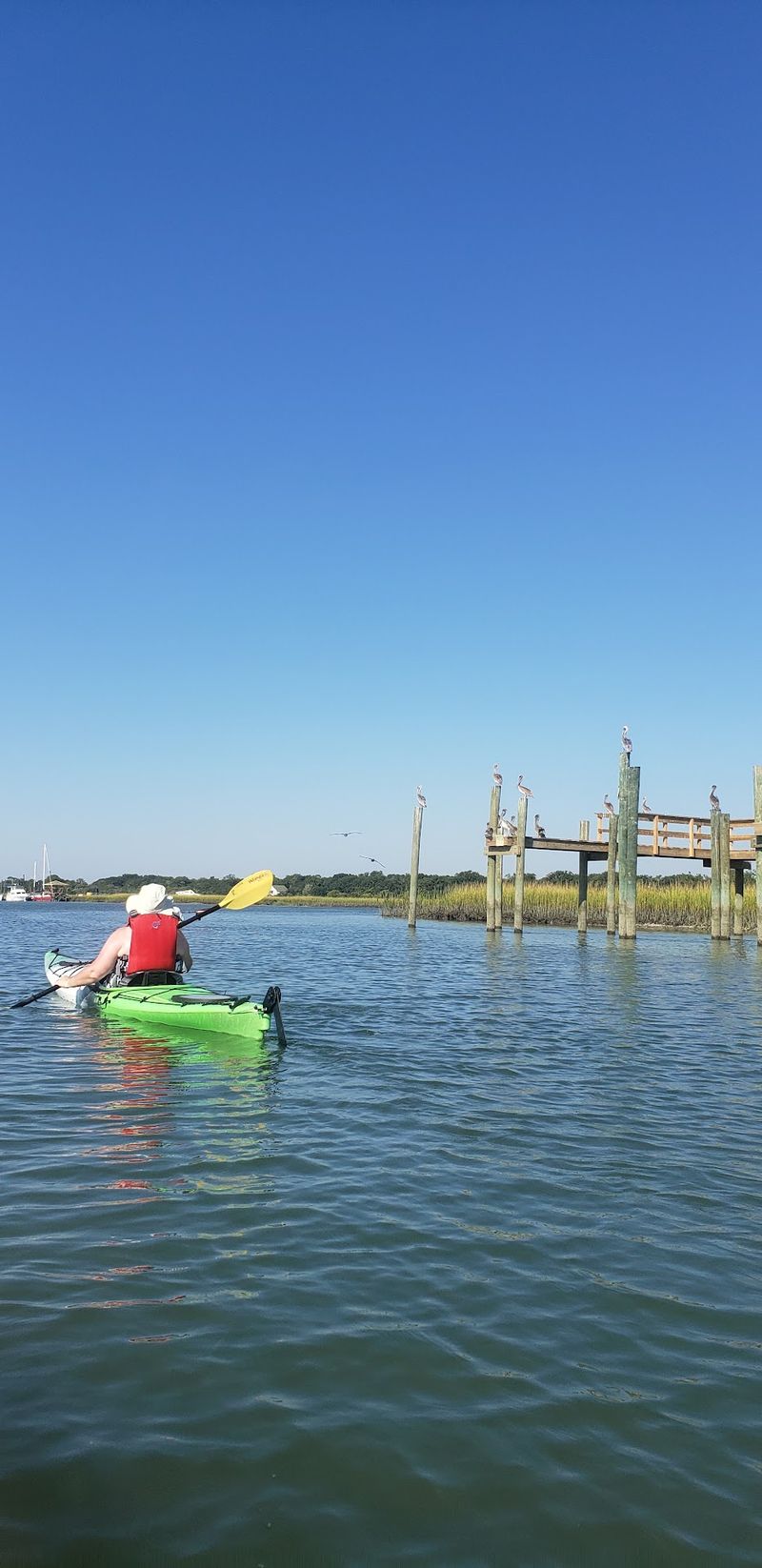
Kayaking and paddleboarding offer another way to see the island. The public boat landing provides access to the Folly River, while local eco-tours explore tidal creeks, wildlife habitat, and nearby waterways.
Dolphin-watching and other sightseeing trips also operate around the island.
Dog owners need to plan around seasonal rules. From May 1 through September 30, dogs are not allowed on the public beach between 10 a.m. and 6 p.m.; outside those hours, they must remain leashed and under control.
Folly Beach is easy to enjoy without overplanning. Park carefully, respect the protected shoreline, and let the island’s surf, marshes, music, and walkable streets set the pace.