Most People Don’t Realize These 10 Charming Hidden Spots In Michigan Even Exist
Michigan has a funny way of hiding its best surprises where nobody is looking.
Skip the obvious route for a while, and suddenly an emerald spring, strange sculpture garden, forgotten ruin, or wonderfully odd roadside stop appears out of nowhere.
That is when a normal Saturday gets interesting!
These hidden spots are not trying to compete with the state’s famous beaches or busy attractions.
They do something better. They make you feel like you found something yourself.
One quiet road leads to another, curiosity takes over, and the map starts filling with places you had never heard of. That is a pretty good problem to have.
1. Kitch-Iti-Kipi At Palms Book State Park, Manistique
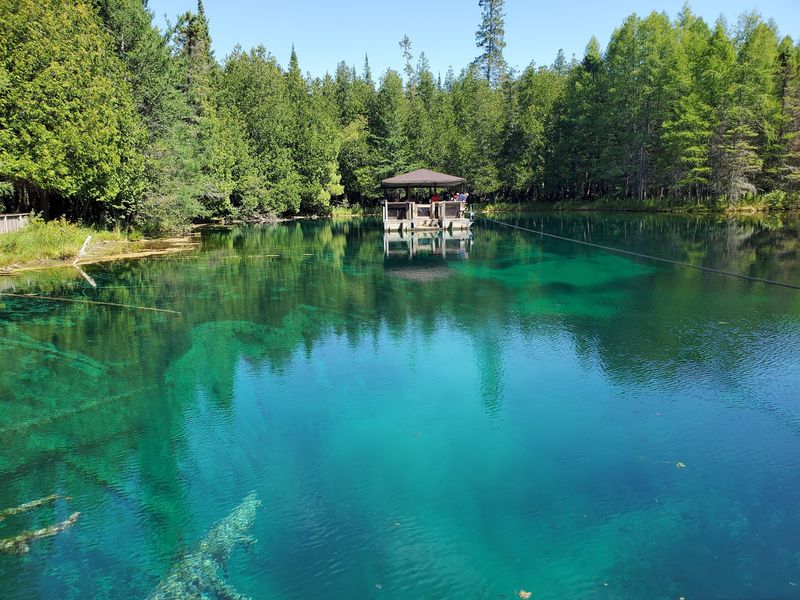
I almost forgot to breathe here. Some water is so clear it hardly looks real.
Kitch-iti-kipi at Palms Book State Park sits northwest of Manistique in Michigan’s Upper Peninsula.
It is the state’s largest natural freshwater spring, with more than 10,000 gallons of water flowing through limestone fissures every minute at a constant 45 degrees.
The main experience centers on the accessible observation raft, where visitors can look through a viewing opening into remarkably clear water.
Ancient tree trunks, lime-encrusted branches, lake trout, shifting sand, and rising spring water are visible below the surface.
As of October 7, 2026, the raft’s drive system is temporarily out of service because of a mechanical issue. Visitors can still walk onto the raft and use the viewing port while repairs are underway.
Swimming, fishing, boating, and placing objects in the spring are prohibited. Drones are also not allowed over the observation raft, helping protect the experience and the site.
Picnic tables, restrooms, a playground, and a seasonal park store make it easy to stay awhile. The surrounding park also provides access to Indian Lake from a separate boating site.
The official entrance is at 1380 Sawmill Road in Manistique.
2. Lakenenland Sculpture Park, Marquette
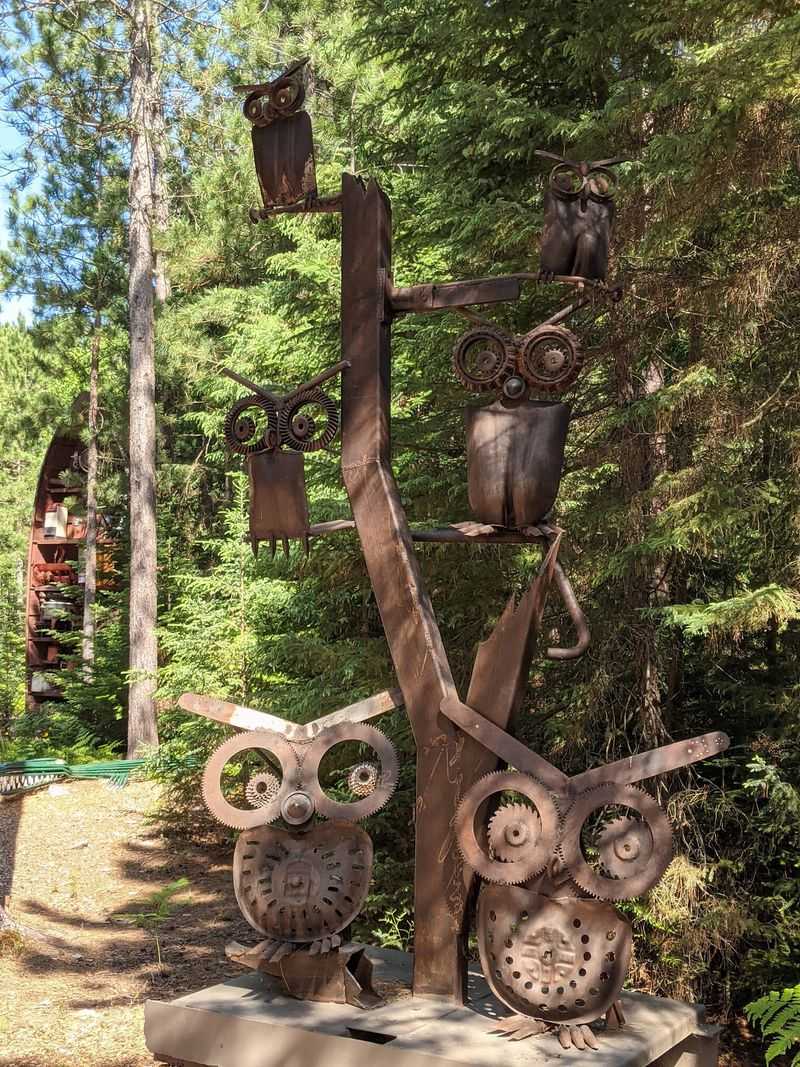
Lakenenland Sculpture Park near Marquette turns junk into pure, rusty personality.
A local metalworker transformed scrap iron into an outdoor collection that now fills a 37-acre wooded property.
More than 100 sculptures line a winding drive and walking route through the park.
Some pieces are playful, while others reflect Upper Peninsula work, local culture, roadside humor, and everyday life in the region.
The setting adds almost as much character as the metalwork. Visitors can explore a bog walk, picnic area, playground, two fishing ponds, and a large timber-frame pavilion with room to stop between sculptures.
Two entertainment stages support seasonal music and community events. The park also connects directly with the North Country Trail, giving hikers another reason to work it into a longer outing.
Access is unusually flexible. Lakenenland remains open around the clock throughout the year, and leashed dogs are welcome.
Snowmobile access also makes the property practical during winter, when the sculptures take on a completely different look against deep snow.
There is no need to hurry through the collection. Details appear in welded faces, tools, machines, animals, and oversized scenes that reward a slower pass.
The entrance is at 2800 M-28 East in Marquette. With art, forest, picnic space, and year-round access in one place, Lakenenland feels more like a discovery than a conventional sculpture park.
3. Hidden Lake Gardens, Tipton
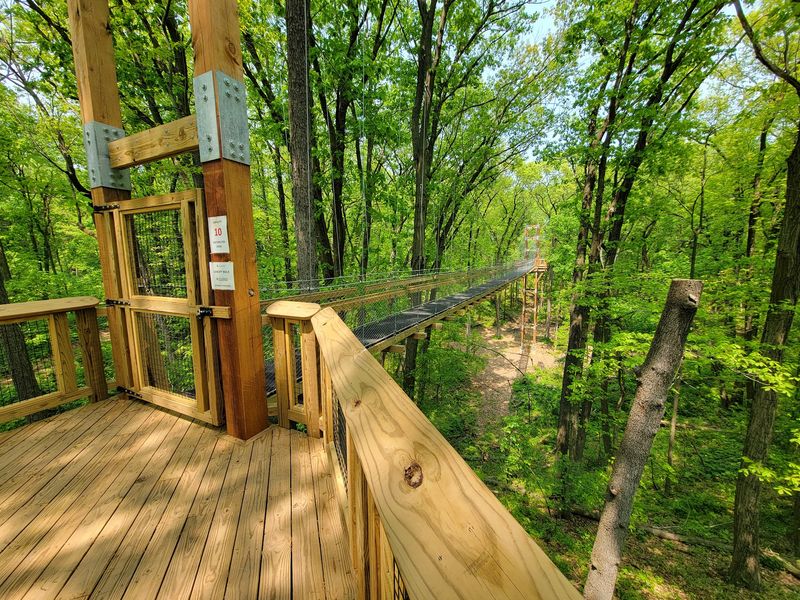
Just imagine for a second strolling through treetops 65 feet up. Birds at eye level suddenly become your new neighbors.
Hidden Lake Gardens in Tipton is a 755-acre botanical garden operated by Michigan State University.
The property began as a private landscape project in 1926 and was donated to the university in 1945 for public education and enjoyment.
The Reach for the Sky Canopy Walk opened in 2023 and rises 65 feet above a glacial kettle hole at its highest point. Its suspension bridge stretches 374 feet, while the complete elevated structure extends 726 feet through the forest.
Wheelchairs, strollers, wagons, and other assistive devices can use the canopy walk. A connecting accessible trail leads from the nearby trailhead area, although other approaches across the property include steeper terrain.
Back on the ground, visitors can explore a conservatory, arboretum, bonsai courtyard, hosta garden, and a major collection of dwarf and rare conifers. The bonsai courtyard remains one of the standout seasonal plant displays.
Twelve miles of hiking trails cross forests and meadows, while six miles of paved roads make scenic driving another option. The gardens stay open through all four seasons.
Fall is especially strong here. As of early October 2026, color is developing across the property, with peak foliage expected later in the month. Find Hidden Lake Gardens at 6214 Monroe Road in Tipton.
4. Shrine Of The Pines, Baldwin
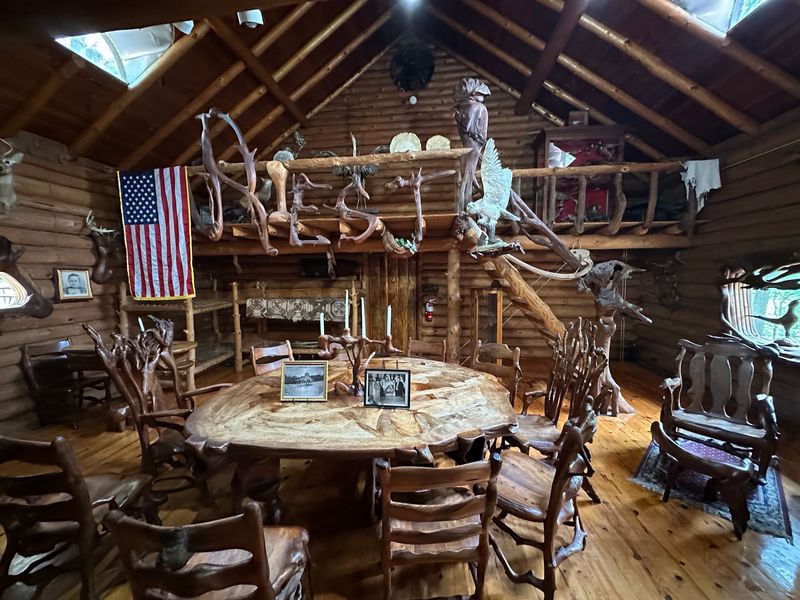
A single craftsman with hand tools built a whole museum of furniture.
Shrine of the Pines near Baldwin preserves more than 200 pieces of rustic white-pine furniture and decorative work inside a log building completed in 1939.
The collection is recognized as the largest assemblage of rustic white-pine furniture of its kind.
The craftsman behind it spent decades shaping roots, stumps, branches, and other pieces left from northern state’s earlier logging era.
Metal fasteners were largely avoided, with wooden joinery carrying much of the structural work.
Several objects show just how far that approach could go. A dining table was formed from a single root weighing about 700 pounds, while an unusually well-balanced rocking chair demonstrates the precision behind the rustic appearance.
Even the finishing methods were inventive. Broken glass, reused sanding material, natural resin, and other simple materials helped smooth and finish surfaces without modern production equipment.
The museum sits near the Pere Marquette River, giving the property a quiet woodland setting that fits the collection. A short nature area adds another reason to slow down before leaving.
Shrine of the Pines operates seasonally rather than year-round. Current local materials continue to list it as an active warm-weather and early-fall attraction, with schedules changing by season.
The address is 8962 South M-37 in Baldwin.
5. Gilmore Car Museum, Hickory Corners
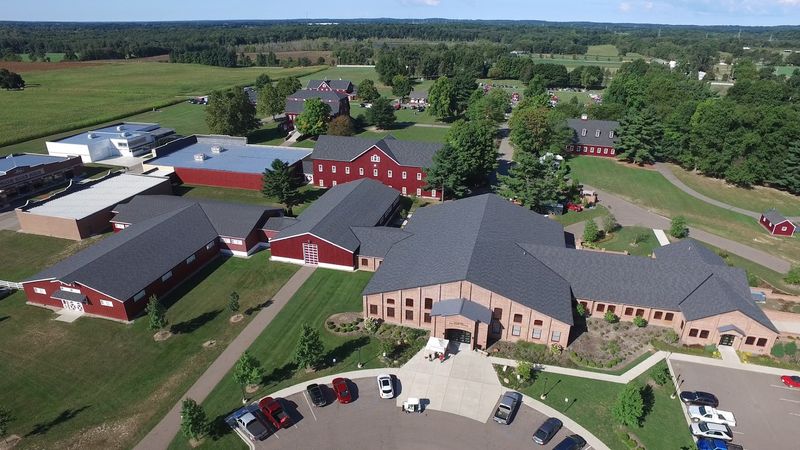
One barn door opens, and shiny chrome seems to stretch across an entire century of design.
Gilmore Car Museum in Hickory Corners is North America’s largest automobile museum, spread across a 90-acre historic campus in the southwest part of the state.
Its current collection includes hundreds of vehicles, with 435 highlighted by the museum in 2026.
The institution opened to the public in 1966 after a private automobile collection grew into a nonprofit museum.
Today, more than 218,000 square feet of exhibit space covers cars, trucks, motorcycles, design history, transportation culture, and changing automotive technology.
The oldest automobile on display is an 1899 Locomobile steam car. Elsewhere, visitors can browse more than 100 vintage pedal cars and a display of over 1,500 automotive mascots and name badges.
Historic settings keep the experience from feeling like one endless showroom. Restored barns, vintage dealership spaces, and a recreated 1930s Shell station place the vehicles in environments connected to their original eras.
A restored 1941 Silk City diner operates on the grounds during the main season, giving the campus another period detail. Rotating exhibitions and regular events change the lineup throughout the year.
The museum currently operates year-round, although some outdoor buildings close during winter. Plan enough time to cover multiple galleries rather than rushing between them.
The address is 6865 West Hickory Road in Hickory Corners.
6. Sanilac Petroglyphs Historic State Park, Cass City
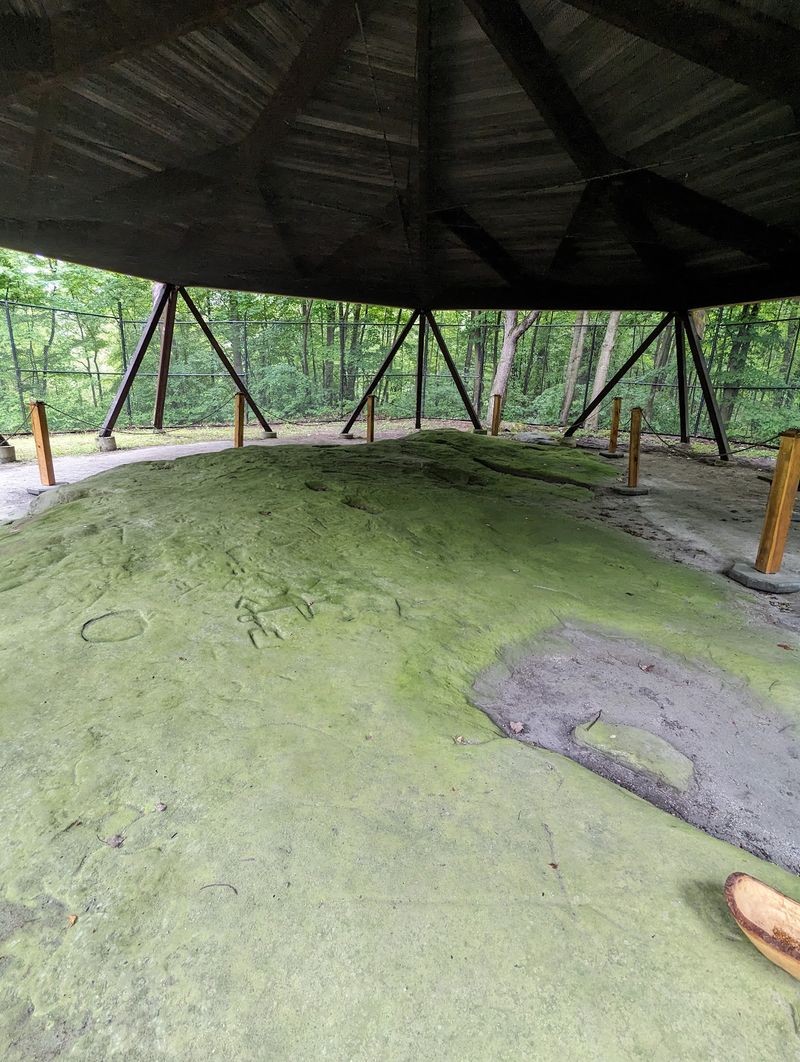
Have you given any thought to the state’s oldest artwork? Some of it is carved right into stone.
Sanilac Petroglyphs Historic State Park near Cass City protects the state’s largest known collection of early Native American teachings carved into sandstone.
In Anishinaabemowin, the carvings are called Ezhibiigaadek Asin, meaning “written on stone.”
More than 100 carvings appear across the sandstone outcrop. They include human forms, birds, handprints, spirals, and other images connected with Anishinabek teachings, oral traditions, daily life, and relationships with the natural world.
Archaeological evidence shows Native people used this area periodically for about 8,000 years. The carvings themselves were likely created within the last 1,400 years, with some possibly added more recently.
The 240-acre park is jointly managed by Michigan agencies and the Saginaw Chippewa Indian Tribe of Michigan. That partnership reflects the site’s continuing cultural importance as well as its archaeological value.
A self-guided trail runs for about a mile through the surrounding forest and along the Cass River. The accessible route from the parking area to the protected petroglyph pavilion is roughly 900 feet.
One important current detail matters for fall visitors. The 2026 guided viewing season for the protected carving enclosure ended September 6, although the state park itself remains open year-round.
Find the park at 8251 Germania Road near Cass City.
7. Michigan Legacy Art Park, Thompsonville
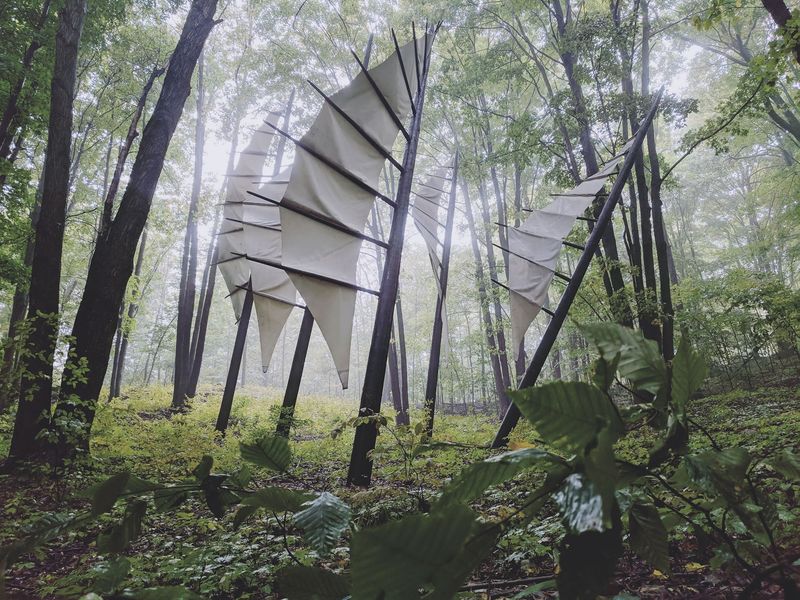
Here is a crazy thought for you: What if an art gallery had trees instead of walls?
Michigan Legacy Art Park in Thompsonville answers that question across a 30-acre forest preserve at Crystal Mountain.
Founded in 1995, the nonprofit park uses outdoor art to explore the state’s landscape, culture, history, and relationship with the natural environment.
More than 50 major artworks appear along roughly two miles of wooded hiking trails. Over 30 poetry stones add smaller moments between the larger installations, turning the route into a mix of sculpture, writing, and forest.
Some works reference the Great Lakes, industry, migration, natural resources, and changing communities. Others use abstract forms that depend on the surrounding woods for part of their effect.
The trail system is hilly in places, so a complete circuit can feel like both a gallery visit and a moderate hike. A shorter accessible route offers an easier option for visitors who do not want the full climb.
Seasonal programming adds another layer. Summer concerts bring live performances into the forest, while guided cart tours operate during part of the warmer season and can continue by arrangement later in the year.
The park remains open daily during daylight hours year-round.
Use 7300 Mountainside Drive in Thompsonville for GPS directions. The combination of trail, sculpture, and hardwood forest makes every section feel intentionally discovered.
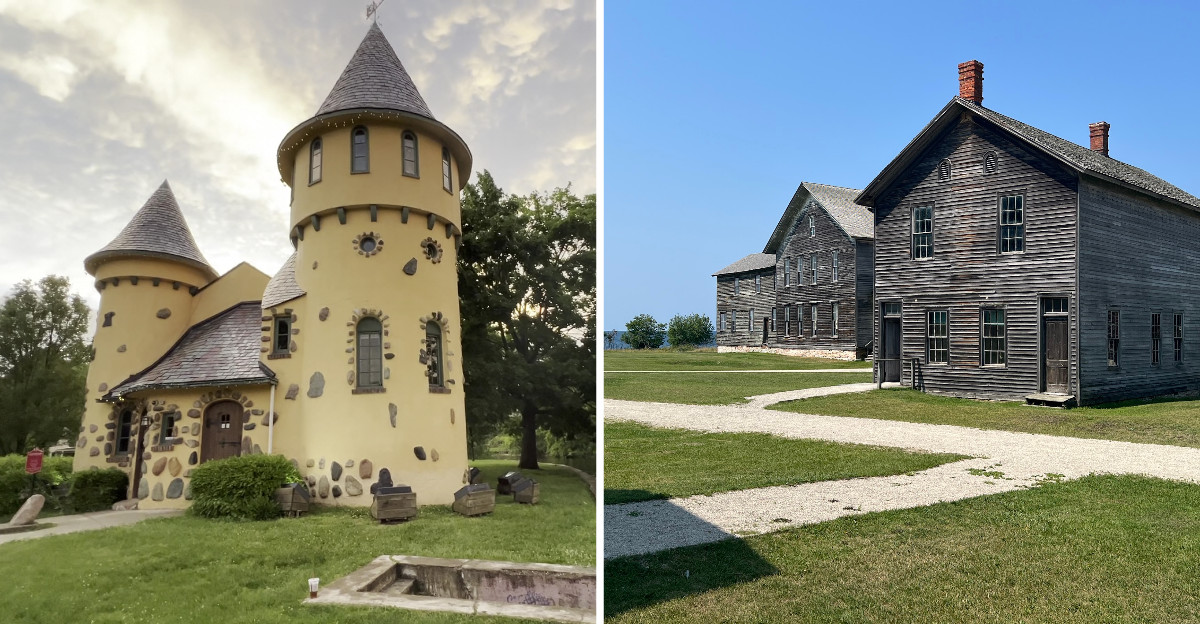
8. Fayette Historic State Park, Garden
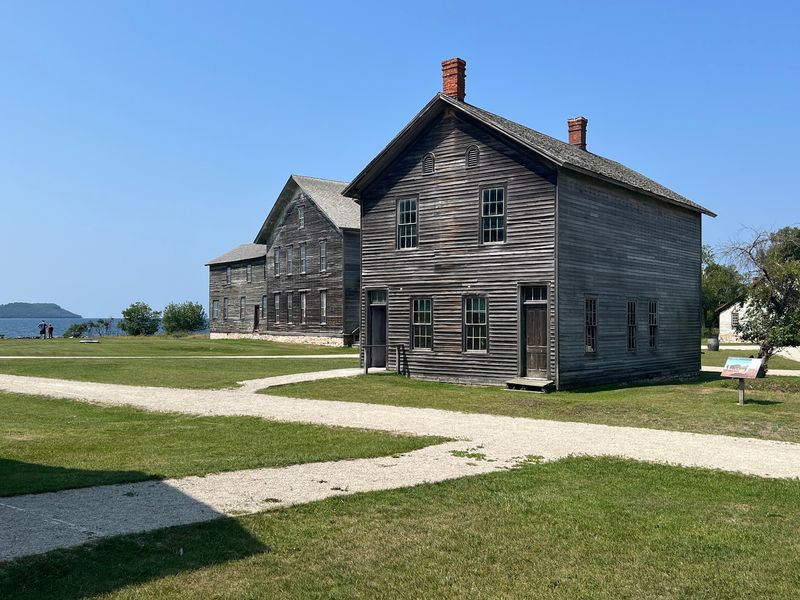
Let me be real for a second. An old iron town should not look this gorgeous.
Fayette Historic State Park in Garden preserves a nineteenth-century industrial community beside Snail Shell Harbor.
The Jackson Iron Company established the town in 1867, using nearby limestone, hardwood forests, and a protected harbor to support iron production.
For 24 years, the community produced nearly 230,000 tons of charcoal pig iron. About 500 residents lived here during its busiest period, creating a surprisingly complete town around the furnaces, company buildings, school, hotel, and homes.
Operations ended in 1891, but many structures remained. Today, about 20 historic buildings are preserved, and 11 contain public exhibits explaining work, family life, transportation, and daily routines in the company town.
The blast-furnace complex remains one of the most striking features. Nearby structures connect the industrial process with daily life.
Nature competes strongly with the history. Five miles of trails cross the park, and limestone cliffs rise about 90 feet above the harbor, opening broad views over clear Lake Michigan water.
Recent state investment also improved historic structures, accessible walkways, and visitor facilities. The townsite operates seasonally within the larger state park.
Set your route for 4785 II Road in Garden. Between the preserved streets, harbor, cliffs, and forest, Fayette feels less like a single attraction and more like an entire landscape preserved in layers.
9. Curwood Castle, Owosso
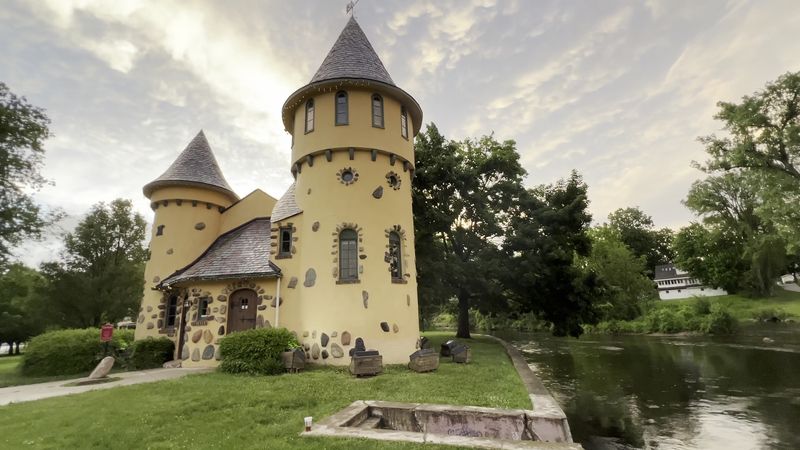
Call me crazy, but castles do not usually pop up in small towns. This one did, and it is charming.
Curwood Castle stands beside the Shiawassee River in Owosso and was built as a writing studio rather than a residence.
Construction began in 1922 and finished in 1923, creating a French-chateau-inspired landmark.
The building belonged to adventure novelist and conservation advocate James Oliver Curwood, an Owosso figure whose books reached a huge audience during the early twentieth century.
Several of his stories were adapted for film, and he used the castle while working on later writing projects.
Today, the building operates as a museum under the Owosso Historical Commission. Exhibits connect the studio with Curwood’s writing, travel, conservation interests, and local history.
The setting adds considerably to the visit. Curwood Castle Park follows the river, with paths, lawns, and a heritage footbridge nearby. Other historic structures within the park expand the stop beyond the castle itself.
The museum’s current season runs from April 1 through December 31, Tuesday through Sunday in the afternoon. The annual Curwood Festival also returns each June, bringing several days of community events to Owosso.
Use 226 Curwood Castle Drive for the museum office and current visitor entrance. The small scale is part of the appeal: this is a writer’s working retreat preserved as a local landmark, not a sprawling estate.
10. Bottle House Museum, Kaleva
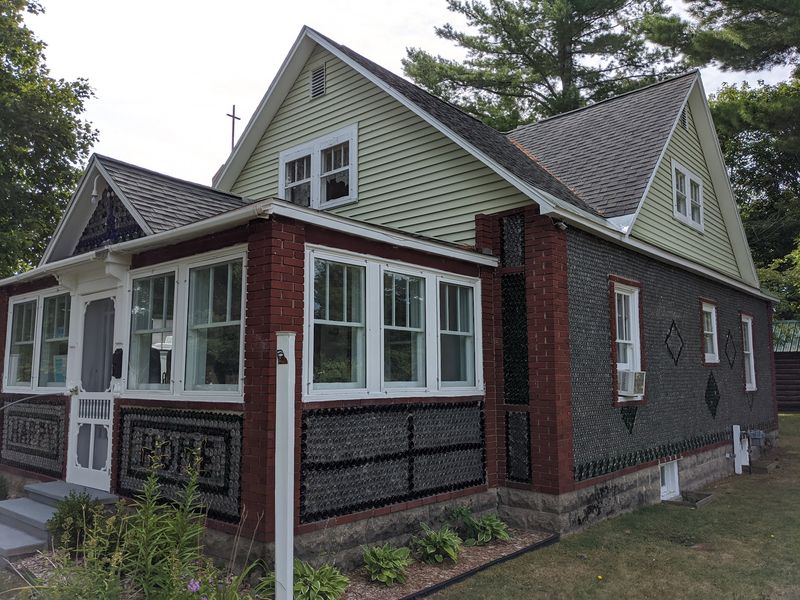
I am still trying to wrap my head around this building. Its walls are made of roughly 60,000 glass bottles.
The Bottle House Museum in Kaleva was completed in 1941 using bottles from a local bottling operation.
Chipped or flawed bottles became building material instead of being discarded, with colored ends forming exterior patterns.
Look above the entrance and the words “Happy Home” appear in contrasting glass. The detail adds a playful note to the historic structure.
The Kaleva Historical Society acquired the property in 1983 and now uses it to interpret the community’s past.
Exhibits focus heavily on Finnish American heritage, early settlement, farming, local businesses, and the traditions that shaped this northern village.
One room explores a local tackle company that began in the 1940s, displaying examples of fishing lures and related products made in Kaleva.
Other exhibits preserve photographs, family histories, community projects, and material connected with the village’s cultural identity.
The Bottle House is listed on the National Register of Historic Places and recognized as a historic site. It remains an active seasonal museum rather than a static roadside curiosity.
The 2026 schedule extends beyond summer, with weekend opening continuing through December 20. The museum is at 14551 Wuoksi Street in Kaleva.