10 Hidden New York Attractions That Can Turn An Ordinary Saturday Into An Adventure

Got a free Saturday and absolutely no idea what to do with it? Perfect.
New York is packed with hidden attractions that can turn a lazy weekend into caves, strange sculptures, waterfalls, odd museums, and stories you definitely did not expect to be telling on Monday.
The fun comes from the surprise. These are not always the places plastered across every travel guide. That’s good!
A little mystery makes the drive better. You pick one stop, then another catches your eye nearby, and suddenly errands are canceled.
Sometimes a weekend adventure needs only one weird place worth leaving the couch for.
1. Storm King Art Center, New Windsor
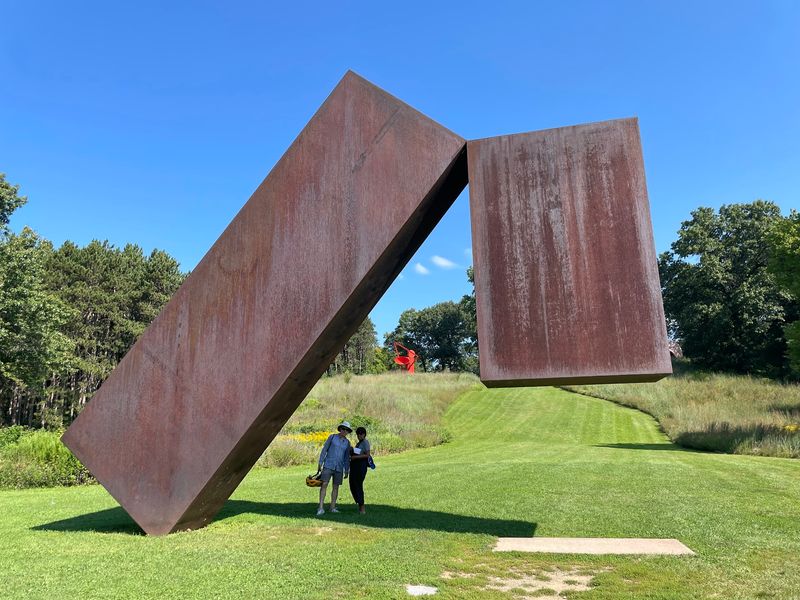
Just imagine art so big you need a bike to see it all. Picture rolling hills where the sculptures are taller than the trees.
Storm King Art Center in New Windsor turns that idea into a full-day outing across 500 acres of meadows, hills, woods, and open sky.
The nonprofit opened in 1960 and originally focused on Hudson River School painting before shifting toward modern sculpture the following year.
Today, more than 100 large-scale works are placed across the landscape with careful attention to surrounding views.
One of the most memorable is Storm King Wavefield, an 11-acre earthwork built from sweeping grassy forms on a former gravel pit.
Wavefield access is currently limited to the 15th through month-end, subject to ground conditions. Distances across the wider site are substantial, so route planning helps.
Rental bikes cover more ground, while a free wheelchair-accessible tram follows a loop with scheduled stops.
Walking remains rewarding too, especially for visitors who want time to notice how each piece changes from different angles.
The terrain includes paved paths, gravel paths, mown grass, slopes, and wooded stretches. Comfortable shoes, water, and weather-ready clothing make the day easier.
The visitor entrance is at 20 Old Pleasant Hill Road in New Windsor. Spring and fall bring cooler temperatures for exploring outdoors comfortably.
2. Opus 40, Saugerties
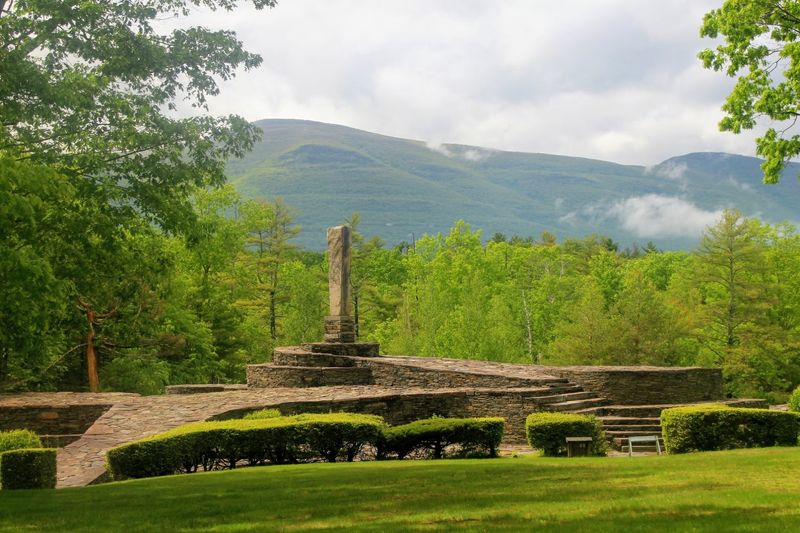
Call me crazy, but one person moving a mountain sounds impossible. Then you see what patience and bluestone can actually do.
Opus 40 in Saugerties is a 6.5-acre earthwork built from finely fitted bluestone inside an abandoned quarry.
Sculptor Harvey Fite began shaping the site in 1939 and worked on it for nearly four decades, using dry-stone construction influenced by local quarrying traditions and ancient Mayan and Aztec stonework.
Ramps, terraces, pools, walls, and narrow passages rise from the quarry floor without mortar. The central monolith gives the sprawling structure a strong focal point, while Overlook Mountain forms part of the larger backdrop.
The sculpture sits within a 63-acre property that also includes walkable quarry trails, meadows, a gallery, and the Quarryman’s Museum.
The historic Fite House is also part of the site, although it is currently being restored and is not yet open as a public interior attraction.
Seasonal events include guided tours, exhibitions, outdoor programs, and performances.
Current 2026 visiting hours change through the fall, with regular public access continuing on selected days until the site closes for the season after November 7.
Sturdy shoes are essential because the stone surfaces and trails are uneven. Find Opus 40 at 356 George Sickle Road.
Leave a little extra time to simply sit and stare. Stones this patient deserve a patient audience.
3. Ausable Chasm
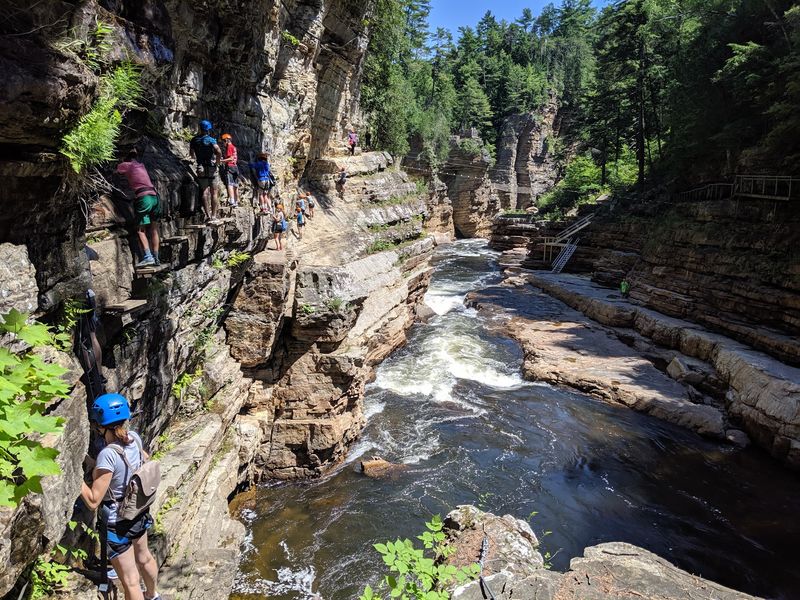
Let’s be real for a second, rivers can be serious sculptors too. Give one enough time, and cliffs start to appear.
Ausable Chasm in the hamlet of Ausable Chasm proves it in dramatic fashion.
The gorge runs for about two miles through ancient Potsdam Sandstone, with walls reaching roughly 150 feet in places. Its formation accelerated as glacial waters receded around 10,000 years ago and the Ausable River cut through fractures in the rock.
The stone itself is far older, formed from sandy coastal environments hundreds of millions of years ago. Ripple marks and other traces remain visible in exposed sandstone, turning the walk into a geology lesson without a classroom.
Visitors can choose from several experiences. The classic option combines hiking through the upper chasm with a seasonal raft float through the lower section.
The Adventure Trail adds cliffside travel, cable bridges, and climbing-style elements for eligible guests. River tubing operates during the warmer season but is already closed for the remainder of 2026.
Trails remain open year-round when conditions permit, while float tours and shuttle service generally run from mid-May through the fall holiday period. Some routes involve stairs, steep ground, wet rock, and uneven surfaces.
The entrance is at 2144 Route 9. Plan at least two hours, wear secure footwear, and expect the river to set the pace.
4. Howe Caverns
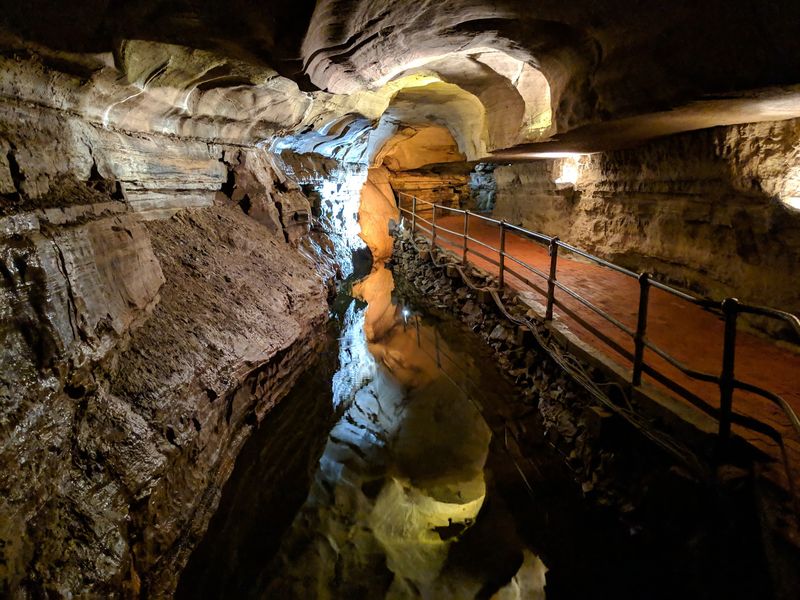
A farmer found this because of his cows. On hot days, they kept crowding near some bushes.
That story remains part of Howe Caverns history. In 1842, a local farmer noticed his herd gathering near a patch of ground where unusually cool air escaped from below.
He investigated the opening with a neighbor and soon began exploring the underground passages.
Today, the traditional tour begins with an elevator ride 156 feet beneath the surface. The standard guided route lasts about 90 minutes and combines roughly 1.25 miles of walking with a short boat ride on an underground waterway.
Visitors also encounter limestone corridors, large chambers, the River Styx, the Lake of Venus, and formations shaped over immense spans of time.
The cave stays near 52 degrees year-round, so a light layer makes sense even during midsummer. Closed-toe walking shoes are required, and the standard route includes 139 stairs.
Howe Caverns also offers additional guided options, including flashlight experiences and the longer Signature Rock Discovery Tour. Those programs use different sections of the cave and may require advance reservations.
The attraction is at 255 Discovery Drive in Howes Cave. Indoor conditions make it a dependable choice when the weather above is hot, wet, or unpredictable.
Down here, the season barely matters. The underground landscape keeps its own remarkably steady underground rhythm.
5. House Of Frankenstein Wax Museum, Lake George

Are you seeing what I’m seeing in that dark corner? Something just moved, and your heart did a backflip.
The House of Frankenstein Wax Museum in Lake George leans fully into classic monster-themed fun.
The seasonal attraction sits at 213 Canada Street in the center of the village and remains open on selected days through October 2026.
Inside, visitors follow a self-guided route through darkened hallways filled with wax figures, moving displays, recorded sound, and traditional special effects.
The presentation draws heavily from classic literature and the old-fashioned wax-museum tradition rather than modern screen-based attractions.
Frankenstein’s creature naturally takes center stage, but the experience is broader than a single character.
Rooms are arranged as separate scenes, so each turn reveals a different setup. Some figures move or speak, while others rely on lighting and staging to create the surprise.
The attraction is intentionally dim, and some displays may feel intense for younger visitors. Current rules require guests under 18 to enter with an adult, making it worth considering the comfort level of everyone in the group before going inside.
Because the museum sits directly on Canada Street, it works easily with a walk through Lake George Village. Hours vary by date during the shoulder season, so checking the current calendar before leaving is important.
It is quirky, theatrical, compact, and completely committed to its theme.
6. Mark Twain Study, Elmira
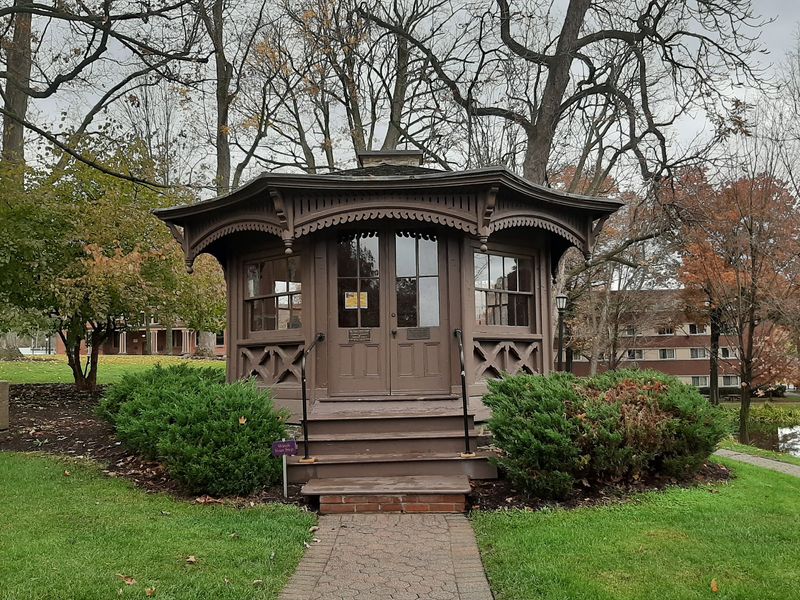
Some of America’s favorite books began in a tiny room. It has eight sides and lots of windows.
The Mark Twain Study in Elmira preserves the small octagonal workspace where the author completed major portions of several important books.
Built in 1874, the study originally stood on a hill at Quarry Farm, overlooking the Chemung River Valley.
During his summers there, Mark Twain worked on major sections of The Adventures of Tom Sawyer, Adventures of Huckleberry Finn, Life on the Mississippi, A Connecticut Yankee in King Arthur’s Court, The Prince and the Pauper, and other writing.
The unusual shape and elevated setting gave him a quiet place away from the main house.
In 1952, the study was moved to the Elmira College campus to help preserve it and make it accessible to the public. During summer, trained student guides staff the site.
In fall, winter, and spring, visitors can still view the exterior and look inside during posted self-guided hours, although the doors remain closed.
The nearby Mark Twain Exhibit in the college library adds manuscripts, books, photographs, and other material connected with his years in Elmira.
Use One Park Place for GPS directions rather than the older 800 Park Place reference. Parking is available near Cowles Hall. This stop is small in scale, but its literary footprint is enormous.
7. Museum Of The Earth, Ithaca
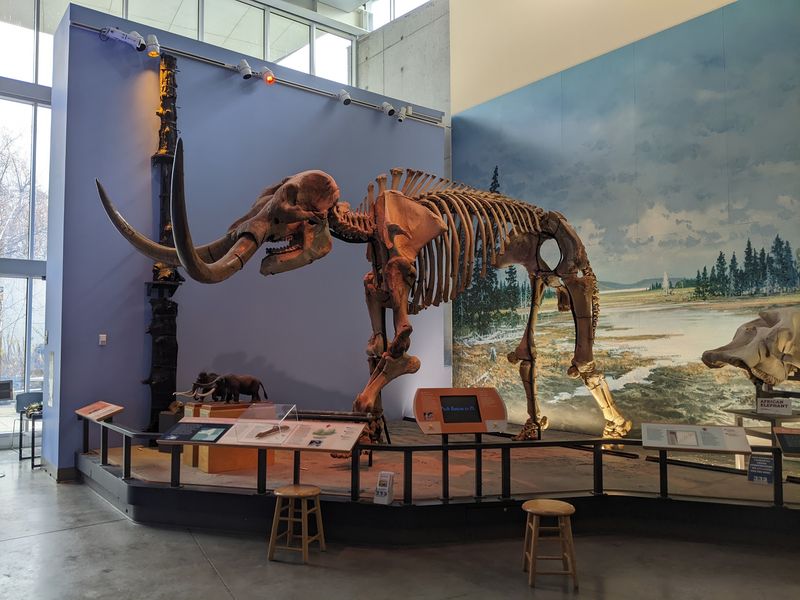
Here’s a crazy thought: billions of years in one afternoon. No time machine needed, just a parking spot.
The Museum of the Earth in Ithaca turns that enormous timeline into an 8,000-square-foot permanent exhibition tracing about 4.5 billion years of planetary history.
It opened in 2003 as part of the Paleontological Research Institution.
One major highlight is the Hyde Park Mastodon, one of the most complete mastodon skeletons ever recovered. Overhead, a 44-foot North Atlantic right whale skeleton adds a completely different sense of scale.
The museum works especially well for visitors who like hands-on learning. The Fossil Lab lets guests search for fossils, while the Dino Zone gives younger visitors a playful introduction to prehistoric life.
Permanent displays are joined by changing exhibitions drawn from a scientific collection containing millions of specimens.
Do not rush past Rock of Ages, Sands of Time. The mural contains 544 tiles, with each tile representing one million years and featuring life-sized fossil imagery.
Newer displays broaden the story with subjects such as changing climate, glaciers, marine life, and New York geology.
The museum is currently open Thursday through Monday and closed Tuesday and Wednesday. It sits at 1259 Trumansburg Road.
A rainy Saturday works especially well here, but the subject matter is big enough to make almost any weather outside feel temporarily irrelevant.
8. Eternal Flame Falls At Chestnut Ridge Park, Orchard Park
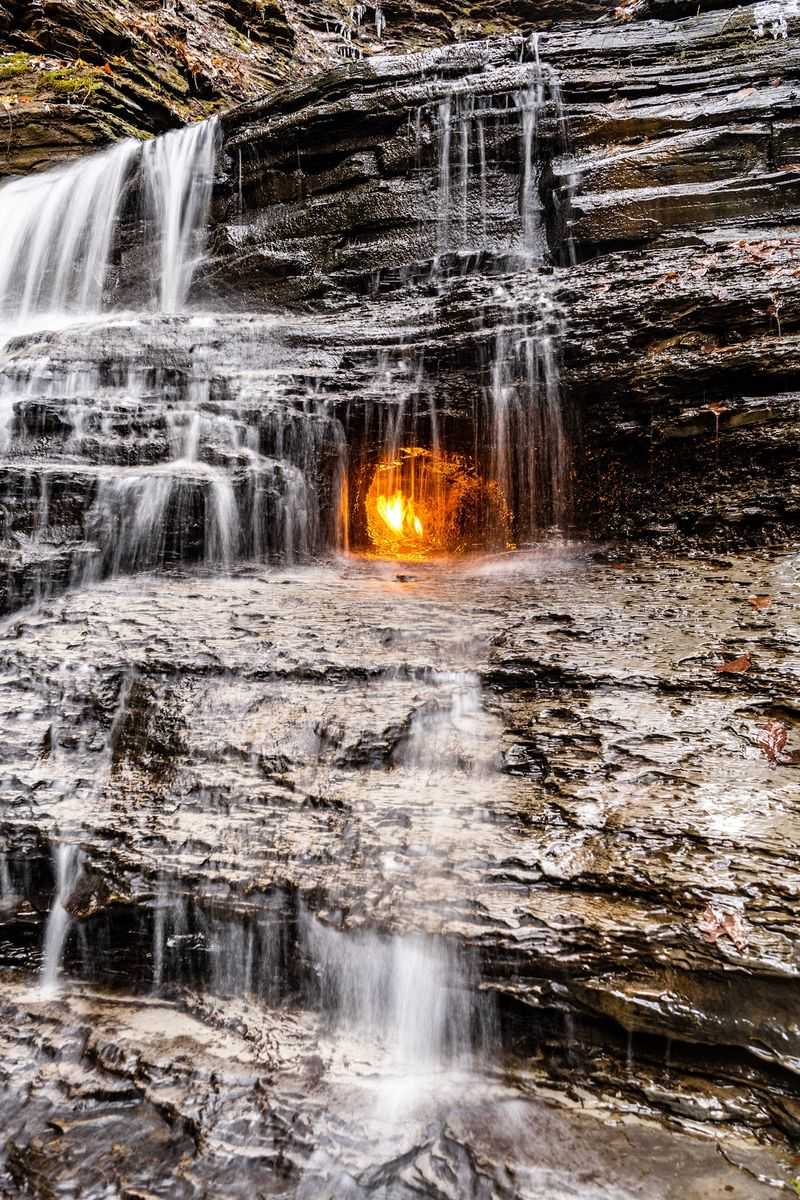
Fire and water, sharing the same tiny ledge?
Eternal Flame Falls sits inside Chestnut Ridge Park in Orchard Park, where a natural gas seep emerges from a small grotto beside a seasonal waterfall.
The combination creates one of western New York’s most unusual short hikes, but the route is rougher than many quick online summaries suggest.
The official Eternal Flame Trail is about 1.12 miles round trip and includes roughly 200 feet of elevation change.
The surface mixes mud, dirt, roots, water, and steep sections, with part of the route following the creek itself. Waterproof or water-ready footwear is a much better choice than casual sneakers after wet weather.
The flame is fed by naturally occurring gas moving through cracks in the shale. It can occasionally go out, especially when conditions are wet or windy, so visitors should not assume it will look identical on every trip.
Waterfall flow also changes with rainfall and seasonal conditions.
Recent trail improvements have strengthened access and wayfinding, but the hike still requires care.
Erie County continues to classify it as a moderate route, and 2026 safety reminders have emphasized sturdy footwear and knowing personal limits.
The trailhead is reached from the Eternal Flame parking area off Route 277. Go for the strange geology, but give the trail itself the respect it deserves.
9. Boldt Castle, Alexandria Bay

Just imagine building a castle as a love letter. Now picture leaving it unfinished for decades.
Boldt Castle rises from Heart Island in the Saint Lawrence River near Alexandria Bay.
Construction began in 1900 as a six-story, 120-room Rhineland-style residence, with tunnels, a powerhouse, Italian gardens, a drawbridge, and a separate tower planned as part of the island complex.
Work stopped abruptly in 1904, and the unfinished property remained exposed to the elements for more than seven decades.
The Thousand Islands Bridge Authority acquired Heart Island in 1977 and has since restored buildings, rooms, gardens, stonework, windows, and other features.
Visitors today can explore the castle, the Power House, Alster Tower, the Hennery, the Arch, and a stone gazebo.
The first floor has been restored to reflect the interior originally envisioned for the residence, while exhibits explain the island’s history and ongoing preservation work across the five-acre island.
Getting there requires a boat. Tour boats, water taxis, and private watercraft can reach Heart Island, and extensive docking is available for personal boats. The attraction generally operates seasonally from mid-May into October.
The official address is 1 Heart Island, Alexandria Bay. It is also recognized as a New York Path Through History site.
The river crossing makes the outing feel like an adventure before the castle doors even come into view.
10. Bannerman Castle Departure At Beacon Waterfront

I had to do a double-take at those castle ruins. Is that really Scotland, floating in the Hudson?
Tours to Bannerman Island depart from the Beacon waterfront at 2 Red Flynn Drive.
The island, also known as Pollepel Island, sits in the Hudson River between Beacon and Cold Spring and holds the remains of an elaborate castle-style complex.
Francis Bannerman acquired the island in 1900 and developed distinctive buildings for his business and family use.
He designed much of the complex himself, giving the structures their dramatic Scottish-inspired appearance and placing the family name prominently into the architecture.
New York State now owns the island, while the Bannerman Castle Trust supports preservation, tours, and cultural programming.
Visitors arriving from Beacon travel aboard the Estuary Steward for a cruise of about 25 minutes before reaching the island dock.
The walking portion requires preparation. There are 72 steps from the dock to the historic trail and event area, surfaces can be rough, and the island is not wheelchair accessible. Comfortable walking shoes are essential.
Seasonal programming includes guided tours, selected self-guided visits, live music, performances, and other outdoor events. Advance booking is required for tours.
Once ashore, the combination of Hudson Highlands scenery, gardens, and castle ruins creates a setting unlike anything on the mainland.
Book ahead, climb steadily, and let the river do the dramatic entrance.