Built By Hand In The 1850s, Idaho’s Oldest Building Still Draws The Faithful To Its Hilltop
Its ceiling got that soft blue color from huckleberry juice. That one detail made me stop scrolling, and the building behind it only gets better.
The walls went up in the early 1850s, held together with wooden pegs instead of nails. Coeur d’Alene people and Jesuit missionaries raised it by hand.
Today it stands as the oldest building in Idaho, still sitting proudly on its grassy hill.
I like how the place refuses to act like a dusty relic. Every August, the Coeur d’Alene Tribe gathers there for a feast day Mass.
That outdoor service honors the ancestors who built the church in the first place.
There’s a museum with beaded buckskin vestments, a short film, and a walking trail with history markers. So how did a hand-built church in North Idaho outlast nearly everything around it?
Idaho’s Oldest Building Sits On A Hill You’ve Probably Driven Past
Plenty of Idahoans have zipped along Interstate 90 without realizing the state’s oldest building was right beside them. The Cataldo Mission, officially the Mission of the Sacred Heart, sits on a small rise in the Silver Valley.
It anchors Coeur d’Alene’s Old Mission State Park, a compact park run by Idaho Parks and Recreation. The setting feels pleasantly far from the freeway once you climb the hill.
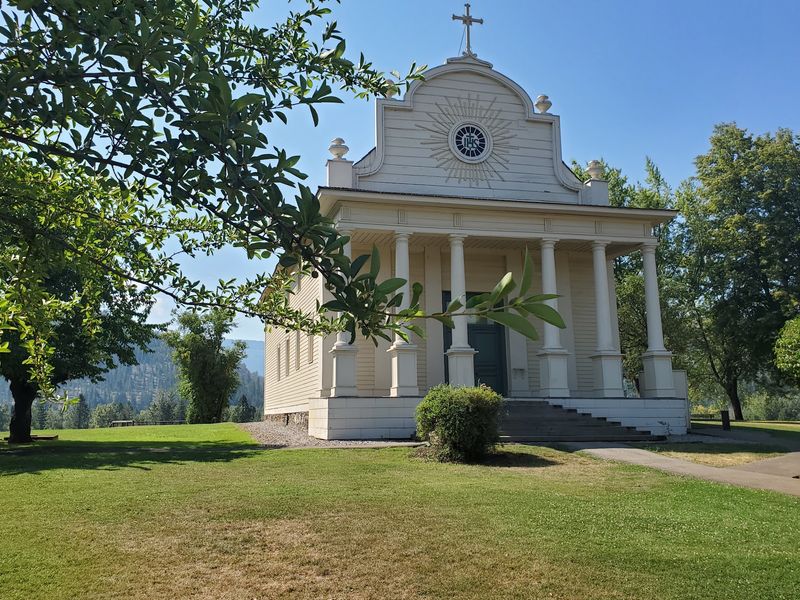
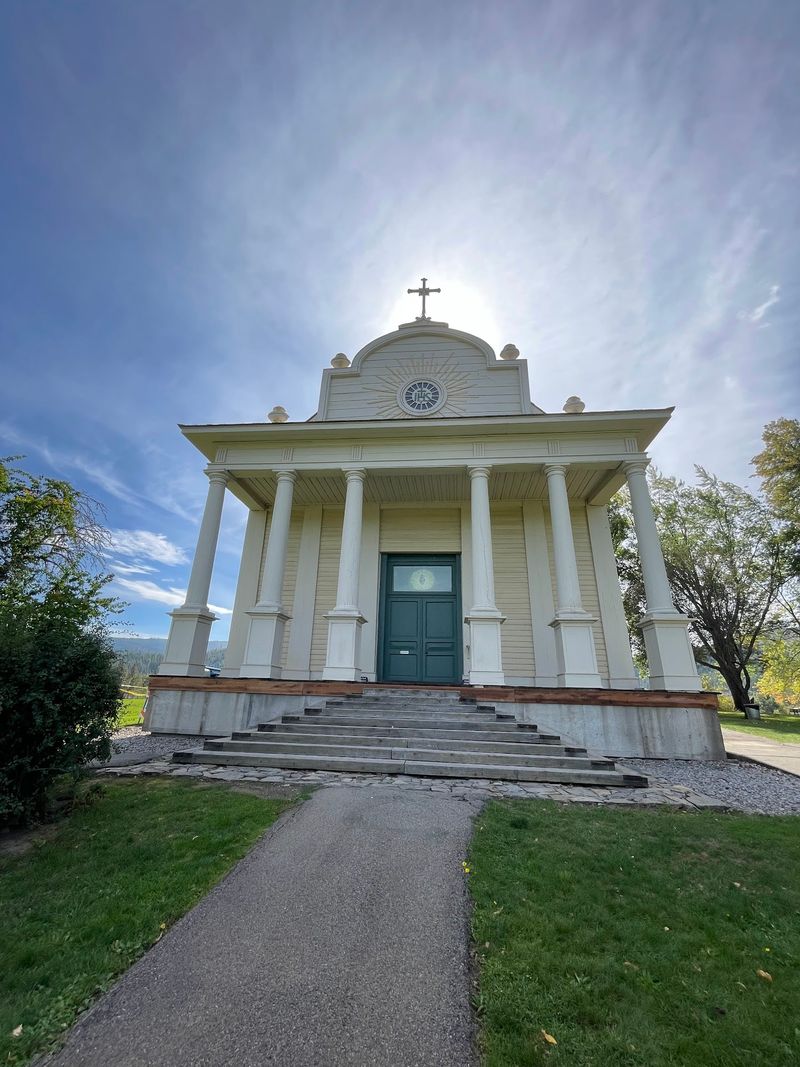
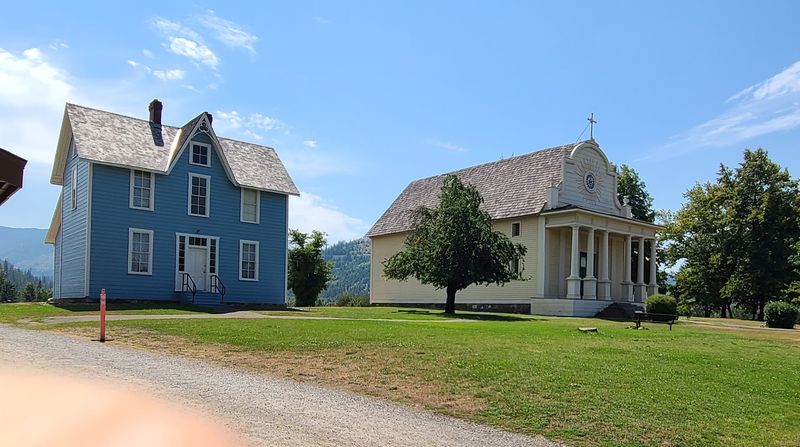
The church itself is a big white building with tall columns across the front. It looks a bit like it wandered out of a Southern plantation postcard and decided to stay in the Panhandle.
That surprise is half the fun. You don’t expect classic columns in a forested river valley, yet here they are, holding steady since the 1850s.
The site also includes a parish house, a modern visitor center, and walking paths around the grounds. Together they turn a quick stop into a real afternoon outing.
For North Idaho families, this is one of those places worth confirming with your own eyes. It sits close enough to Coeur d’Alene for an easy day trip.
It’s also close enough to Kellogg and Wallace for a scenic detour along the way.
Jesuit Plans Met Coeur d’Alene Hands In The Early 1850s
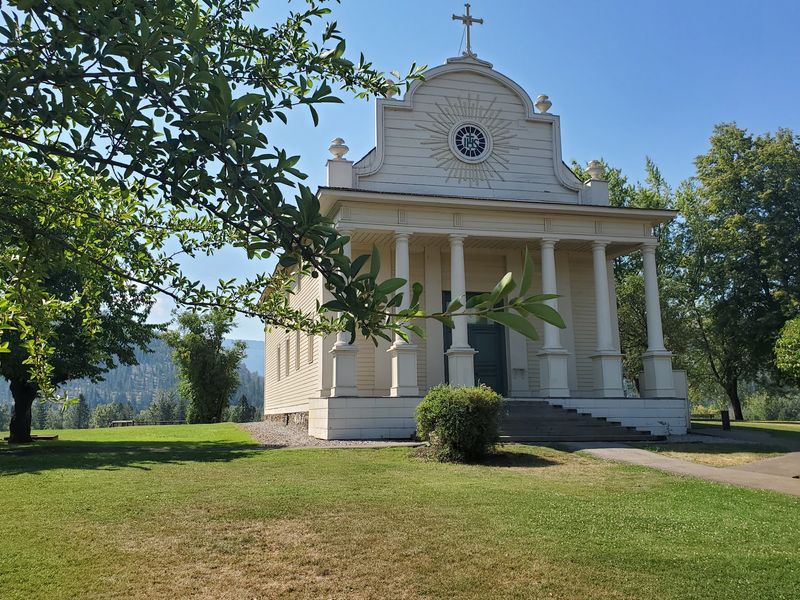
Construction started around 1850 and wrapped up around 1853. That makes the church older than Idaho Territory itself, which didn’t arrive until 1863.
Father Antonio Ravalli, an Italian Jesuit, designed the building. Members of the Coeur d’Alene Tribe, the Schitsu’umsh people, supplied much of the labor that turned his plans into reality.
Picture a crew with very few tools and no hardware store for hundreds of miles. Somehow they still raised a church big enough to impress modern visitors.
The mission became a gathering place for the tribe and for travelers passing through the region. Its location along an early route made it a familiar landmark in the territory.
Eventually the mission moved south to the De Smet area in the 1870s. The Cataldo building stayed behind, and that could have been the end of its story.
Instead, restoration efforts kept it standing for later generations. Today the site is a National Historic Landmark and one of the most significant historic places in Idaho.
The best part is that the story isn’t only about missionaries. The visitor center makes clear that tribal hands and tribal faith are woven through every beam.
Wooden Pegs, Woven Walls, And Zero Nails
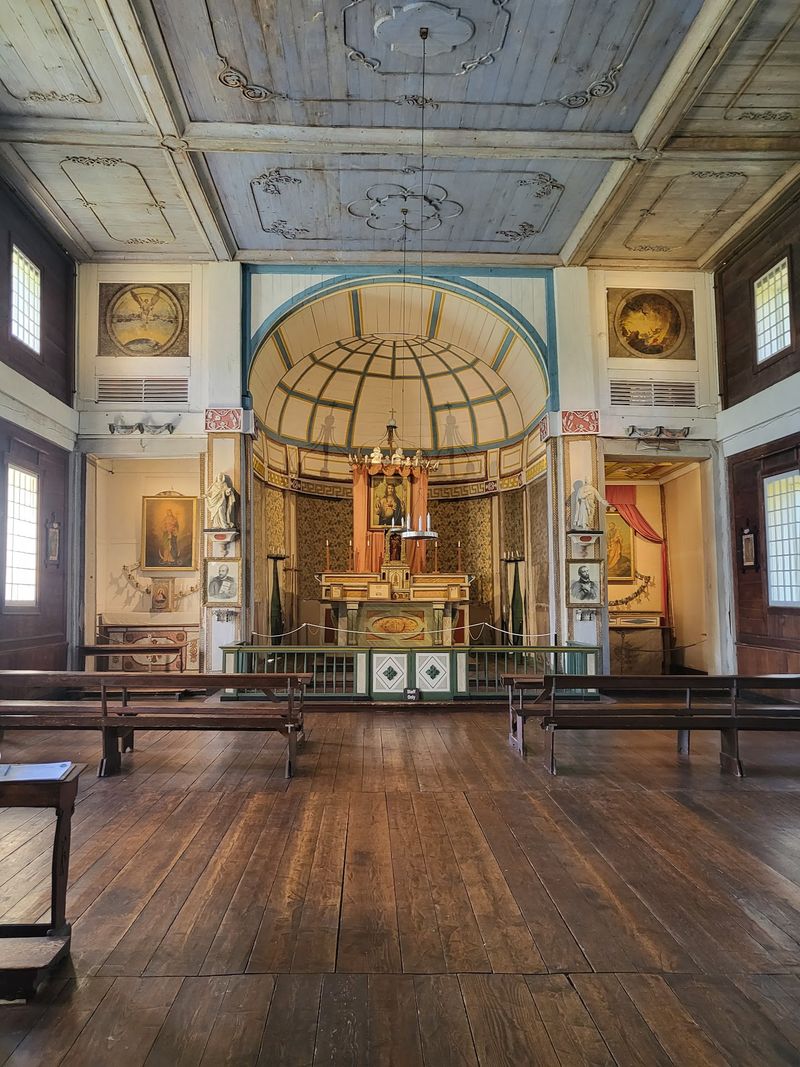
Nails were not part of the plan. The builders held the frame together with wooden pegs, a detail that still makes carpenters raise an eyebrow.
The walls used a method called wattle and daub. Workers wove saplings between the timbers, then packed the gaps with mud to create solid walls.
Huge hand-hewn beams carry the weight of the structure. Standing beneath them, you get a real sense of how much muscle went into every single piece.
That’s what makes the building so remarkable. It wasn’t assembled from ready-made parts but shaped from the surrounding forest and riverbank.
It’s a little humbling for anyone who has struggled with a flat-pack bookshelf. These folks built a church that has outlasted more than 170 Idaho winters without a single nail.
The careful preservation work shows too. The building looks well kept, and it hasn’t lost the rough, handmade character that makes it special.
If you love old construction methods, plan to spend extra time looking up and around. The joints, beams, and wall textures tell a story all by themselves, no plaque required.
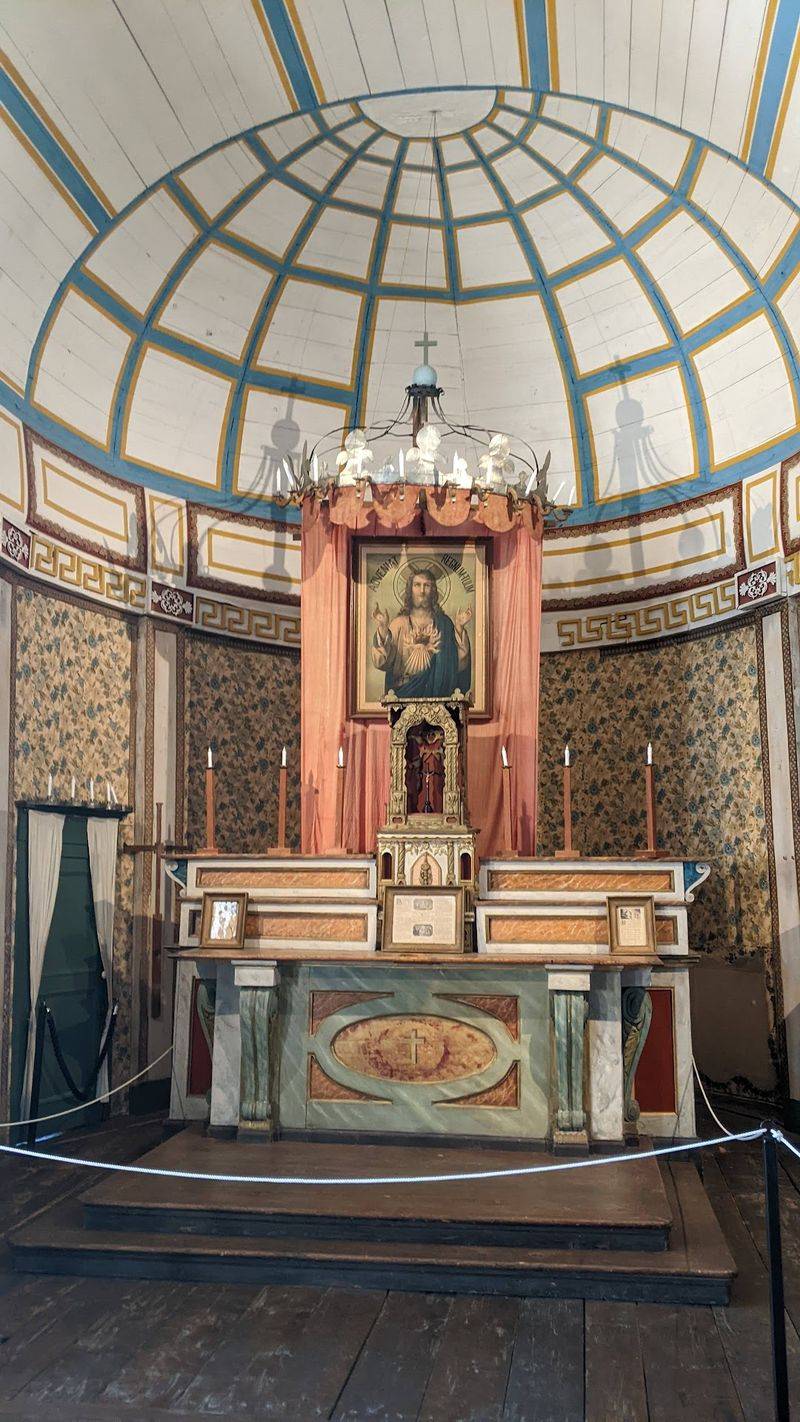
A Blue Ceiling Painted With Huckleberries
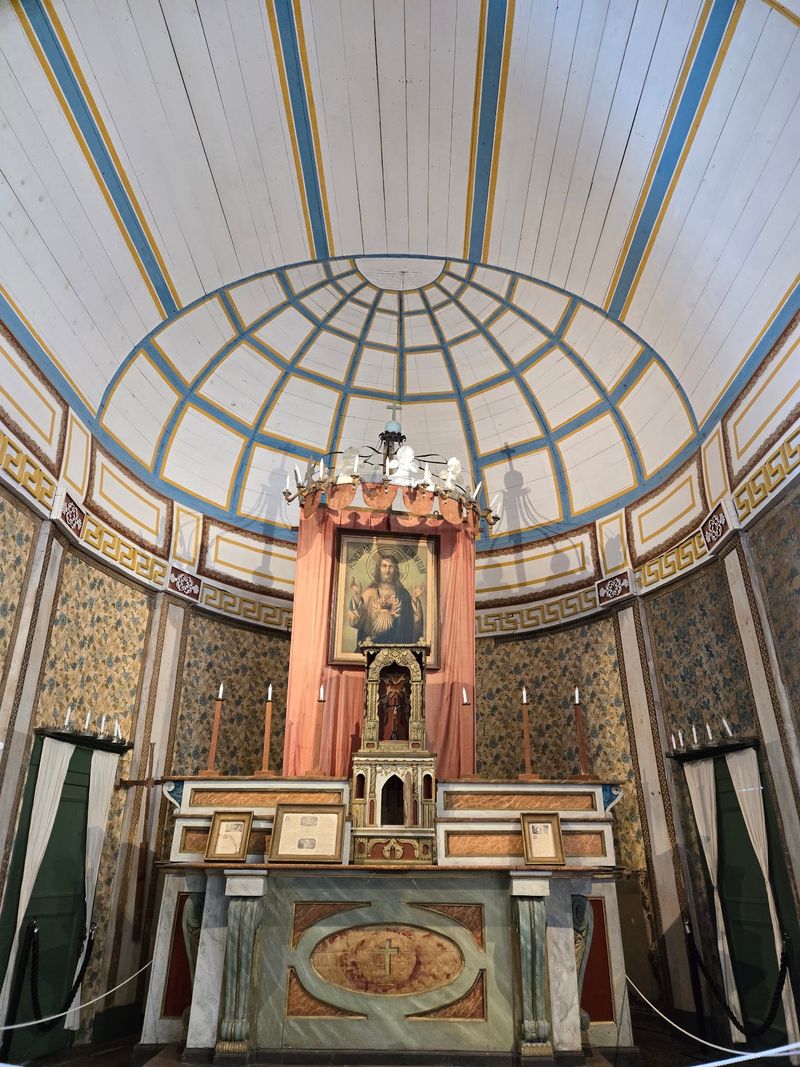
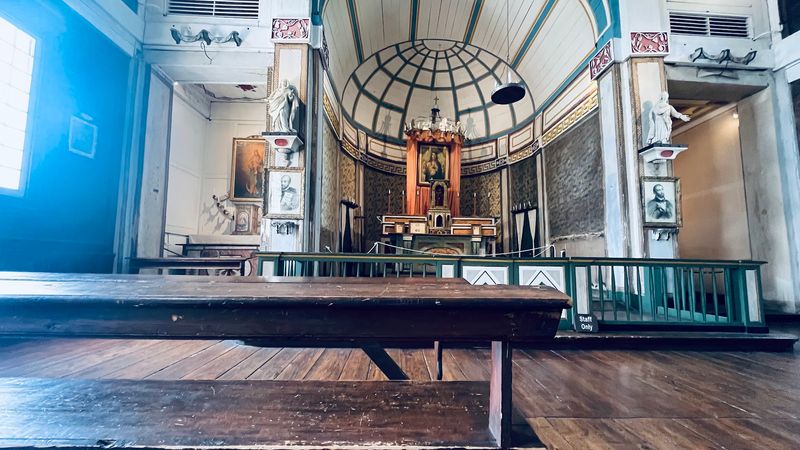
Only in Idaho would a church ceiling owe its color to huckleberries. The blue overhead was tinted with berry juice, and honestly, that’s the most Idaho decorating choice imaginable.
Step inside and the space feels larger than the outside suggests. The room is open and tall, with plenty of room to stand and look around.
Painted details on the walls add color and character to the interior. They’re a reminder that the builders cared about beauty, not just shelter.
Natural materials shaped much of what you see here. Local resources became paint, structure, and decoration, all pulled from the land around the mission.
In summer, the cool interior also offers a welcome break from the valley heat. It’s a quiet room that rewards anyone who slows down.
The visitor center explains these features before you climb the hill. Seeing the exhibits first makes the ceiling and wall paintings far more meaningful when you finally look up.
Bring patience for the details. The longer you stand there, the more you notice, from the woodwork to the carefully preserved painted surfaces.
The Parish House Next Door Deserves Its Own Look
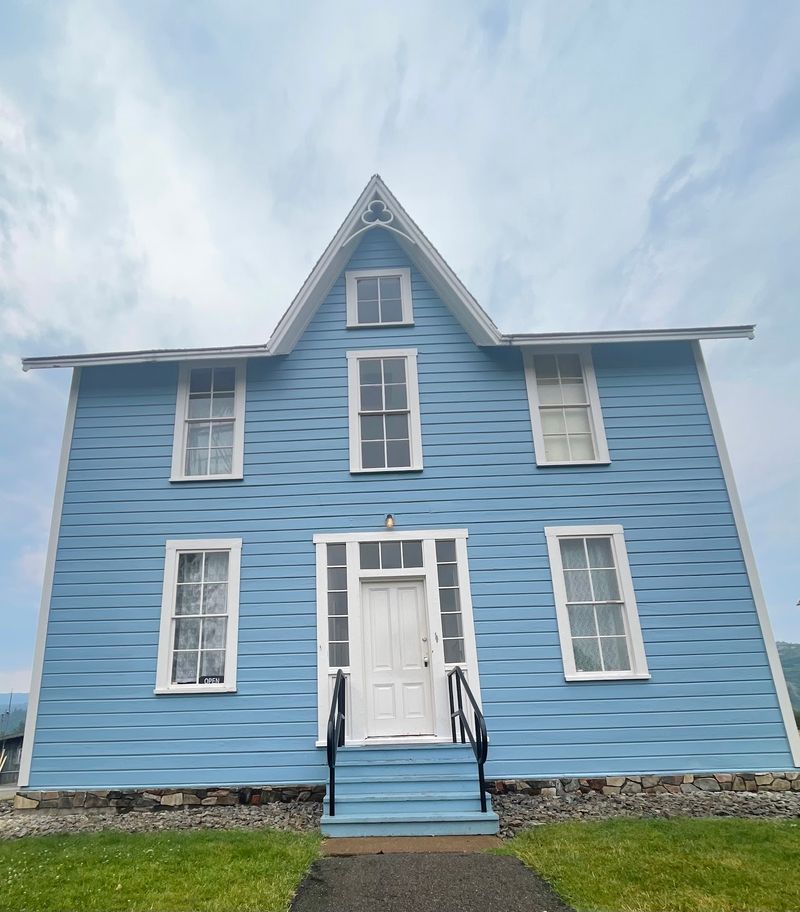
Right beside the church stands the parish house, the mission’s quieter companion. It’s easy to overlook, but it fills in a big piece of the story.
The parish house served as living quarters connected to mission life. Seeing it next to the church helps you understand that this was a working community, not just a Sunday building.
Visitors can typically access parts of it during open hours. Some areas, like the upstairs, have been off limits, so set expectations accordingly.
The house has also gone through preservation work over the years. That ongoing care is part of why the site looks so solid today.
Walking between the two buildings gives a nice sense of scale. The church towers with its columns, while the house feels more practical and lived in.
Together they paint a fuller picture of daily routines on the hill. Prayer, work, and hospitality all happened within a few steps of each other.
History buffs will appreciate the contrast. If the church is the headline, the parish house is the fascinating footnote that explains how everyone actually lived here.
Start At The Visitor Center Before Climbing The Hill
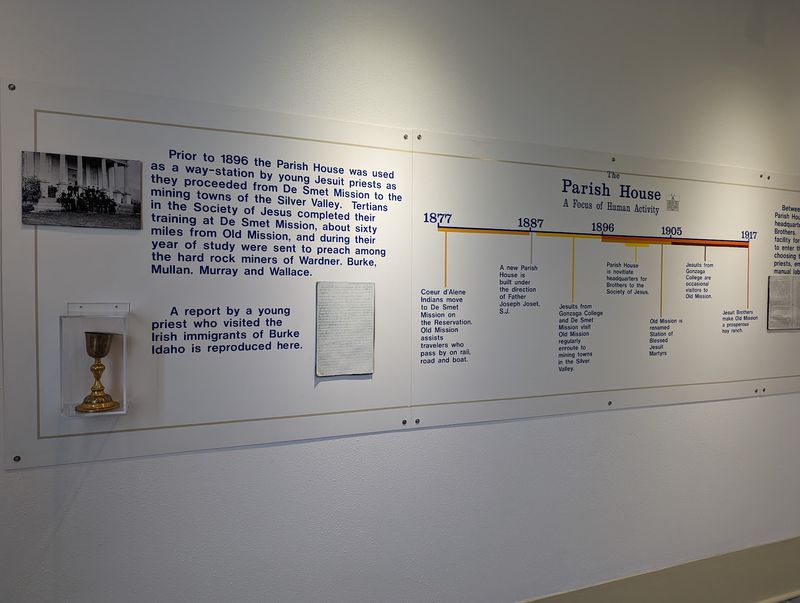
Smart visitors head to the visitor center first. It sits below the mission, and a short walk with some stairs leads up to the church afterward.
Inside, the exhibits explain the mission and the Coeur d’Alene people who built it. There’s a separate admission for the exhibit area, so check current rates before you go.
A roughly 25-minute film plays in the auditorium. It covers the people and the area, and it gives you helpful context for everything on the hill.
One standout display features buckskin and beaded vestments. They show how tribal artistry and Catholic tradition met in a way you won’t see in most museums.
Photography isn’t allowed inside the museum area. That’s a good excuse to put the phone away and actually read the panels.
Staff and docents are on hand to answer questions about the site. Their knowledge adds plenty to a visit, especially for kids with endless questions.
Give yourself time here rather than rushing up to the church. The building makes so much more sense once you know who built it and why.
August 15 Brings The Tribe Back Home
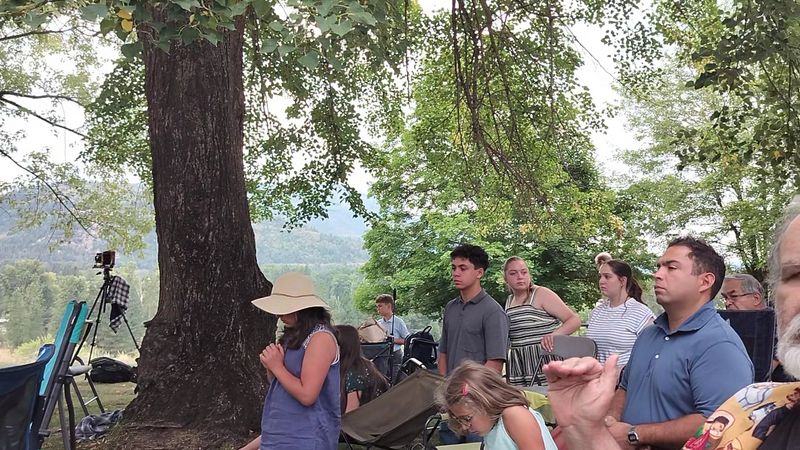
Every year on August 15, the hill comes alive with purpose. The Coeur d’Alene Tribe gathers for its feast day celebrating the Assumption of Mary.
The outdoor Mass honors the tribe’s Catholic heritage and the ancestors who built the church. Tribal members make an annual pilgrimage to the site for the occasion.
Everyone is welcome to attend this service. For anyone interested in Idaho history, it’s a rare chance to see the mission serving its original purpose.
That’s what keeps this place from feeling frozen in time. It’s still a living spiritual home, not only a museum piece behind a velvet rope.
Plan your summer around it if you can. Mid-August in the Silver Valley usually means warm weather, so bring water and sun protection.
Arriving with respect matters here. This is a sacred day for the tribe, so treat it as a guest at someone else’s family gathering.
Watching generations come together on that hill says more about the mission than any plaque. The building’s story keeps going, one August at a time.
Trails, Picnic Tables, And Maybe A Moose
Pack a lunch, because the grounds practically beg for one. Picnic tables sit near the mission, with plenty of room to spread out.
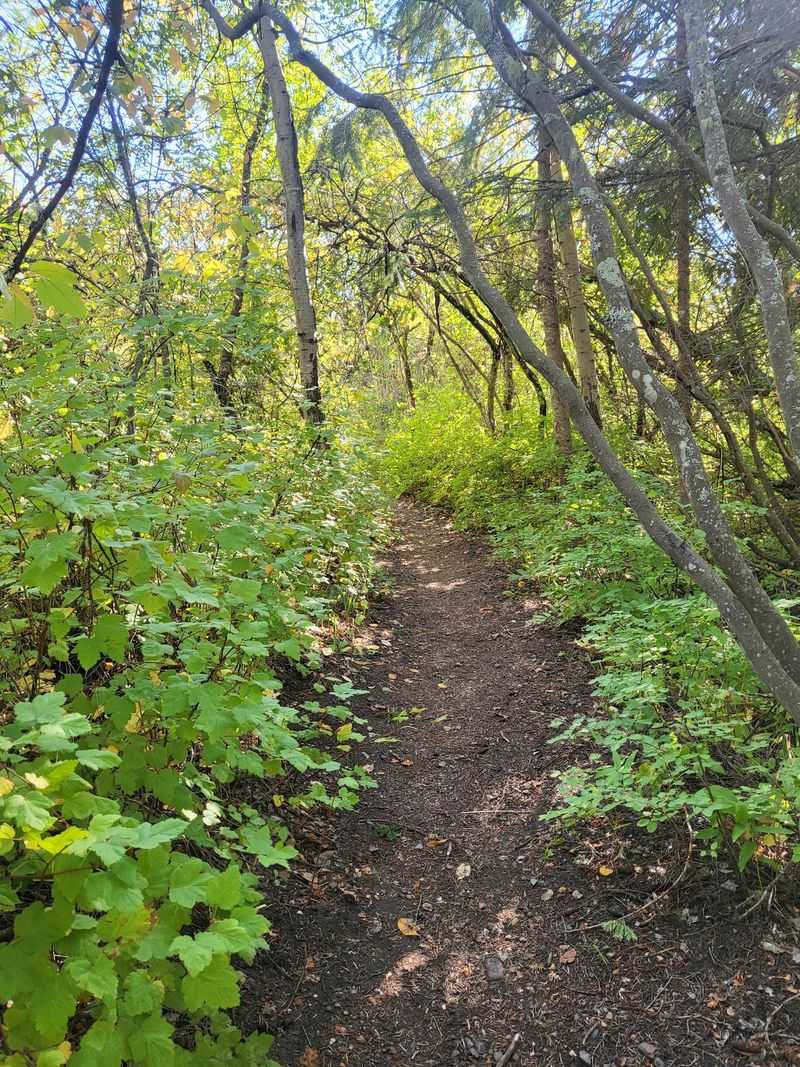
A walking path loops around the site with interpretive signs along the way. Each marker shares a bit of history, so the stroll doubles as an outdoor lesson.
There’s also a nature trail that heads into a quieter part of the park. Wildlife isn’t guaranteed, but moose have been spotted along it.
Give any moose plenty of space if one appears. A cow with a calf is no animal to crowd, no matter how great the photo looks.
Even after the buildings close, the trails and signs offer something to explore. You won’t see inside the church, though, so time your visit carefully.
Kids who get restless in museums usually perk up outside. The open lawn and paths give them room to burn off energy between history stops.
It’s a pleasant spot to stretch your legs on a long I-90 drive. Few rest breaks in Idaho come with a 170-year-old church as the backdrop.
Quiet Enough For History Lovers, Easy Enough For Road-Trippers
History fans will feel right at home here. The site is especially rewarding for anyone curious about Native American history and early relationships between tribes and missionaries.
The atmosphere is peaceful and unhurried. Even with other visitors around, the hilltop keeps a calm feel that suits slow wandering.
Families on a budget will appreciate the setup too. A vehicle fee covers park entry, and an Idaho parks pass covers that part entirely.
Grandparents and grandkids can share this one easily. The buildings are close together, and the visitor center offers seating during the film.
Faith plays a real role in the experience for many people. Others come simply for the architecture and the craftsmanship, and both reasons fit.
Photographers will find plenty to frame outdoors. The white columns against North Idaho’s evergreen hills make a classic shot in any season.
It’s not a thrill-ride kind of stop. Instead, it’s the sort of place that sticks with you on the drive home, when everyone suddenly has questions about who built it.
Getting There, Paying Up, And Planning Your Time
Finding the Cataldo Mission is refreshingly simple. It sits at 31732 S Mission Rd in Cataldo, Idaho, just off Interstate 90.
That puts it roughly between Coeur d’Alene and Kellogg in the Silver Valley. Exit signs point the way, so navigation stress stays low.
Expect a per-vehicle park fee, which runs a few dollars. Holders of an Idaho State Parks Passport or annual pass may skip that charge.
The visitor center exhibit has its own separate fee. Prices change, so check current rates with Idaho Parks and Recreation before driving.
Grounds access and building hours aren’t the same thing. The church and visitor center keep set hours, which can shift by season.
Arrive too late and you’ll only see the outside. Calling ahead or checking the park’s page saves a disappointing walk up the stairs.
Budget two to three hours to see everything properly. That covers the film, the exhibits, the church, the parish house, and a picnic break.
Enter the museum through the correct side, too, since it isn’t always obvious. A quick question to staff sorts it out fast.
Why This Hilltop Church Earns A Spot On Your Idaho List
Some road stops fade from memory by the next exit. The Cataldo Mission tends to linger much longer than that.
Think about everything packed into one small state park. You get Idaho’s oldest building, a no-nails construction story, and a huckleberry-tinted ceiling.
Add a thoughtful museum, a short film, and walking paths with history markers. Suddenly a quick detour becomes a full afternoon.
The deepest draw, though, is the people behind it. Coeur d’Alene tribal members helped build this church, and they still return every August.
That connection gives the hill real heart. It’s history you can visit, and also history that keeps happening.
For North Idaho locals, it’s an easy outing that never really gets old. For travelers on I-90, it’s a perfect excuse to stop moving for a while.
Go when the buildings are open, bring a picnic, and leave time for the film. Then stand under that blue ceiling and appreciate what patient hands built with mud, timber, and pegs.
Not bad for a building that’s been standing since before Idaho was even a territory.