This Colorado Korean Restaurants Is Worth Going Out Of Your Way To Find
You could drive past this strip without realizing one of the most distinctive Korean meals in Colorado is waiting inside.
Nothing about the exterior gives away the bubbling stone pots, handmade tofu, or table filled with small side dishes beyond the door.
The menu rewards curiosity without requiring expertise. Familiar rice bowls sit beside soups, grilled fish, pancakes, dumplings, and dishes built around tofu made on site.
That detail changes the whole experience. Texture becomes part of the story, not an afterthought.
The meal can be simple or sprawling, depending on how much you order. Either way, this is the kind of stop that turns an ordinary drive into a destination.
The Secret Is Made In The Kitchen
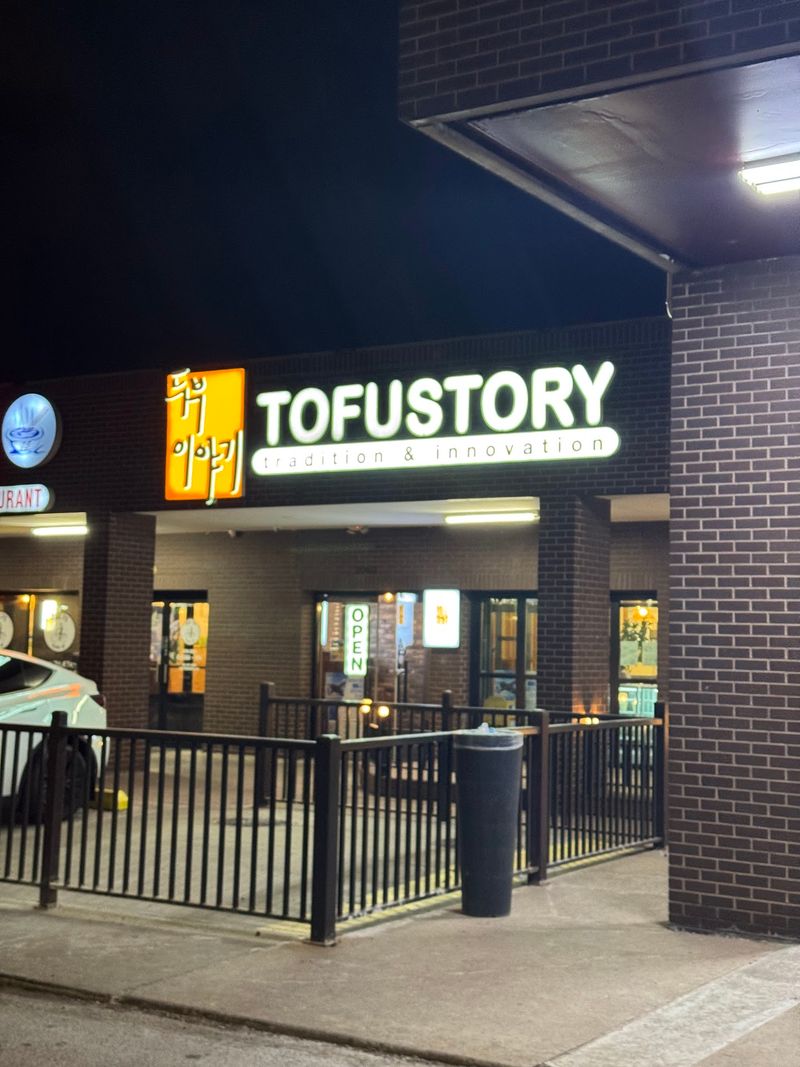
The name can finally come out: Tofu Story opened its Colorado location in January 2023 with one feature that immediately set it apart.
The tofu is made in house rather than arriving ready to use.
Soft, firm, and black varieties are prepared for the menu, and some are also available to take home.
That matters because tofu is not treated as a background ingredient here. It shapes the soups, stir-fries, side dishes, and several of the restaurant’s most distinctive plates.
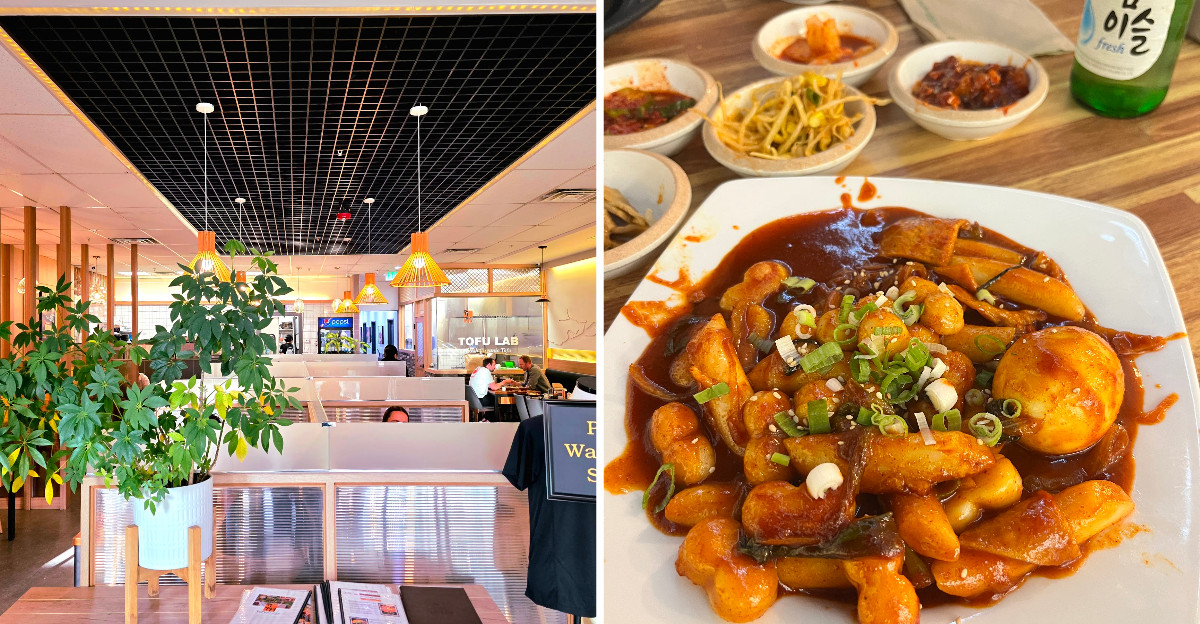
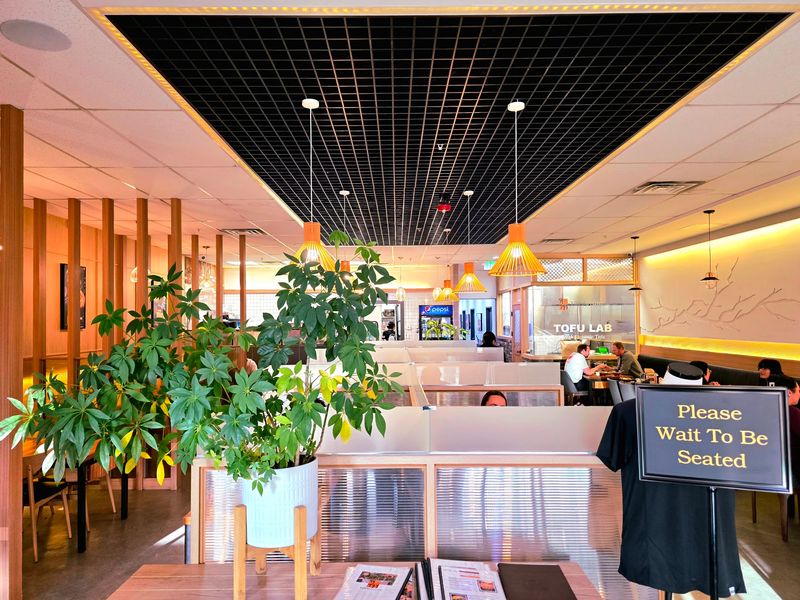
The dining room itself keeps the focus where it belongs, with warm wood tones, clean lines, and partitioned seating that feels modern without becoming stiff.
This is not a place that needs a long explanation before the food makes sense. A bubbling pot of soft tofu stew tells most of the story immediately. Then the rest of the menu starts filling in the details.
What looks like a specialized tofu restaurant at 2060 South Havana Street in Aurora from the outside turns out to be a much broader introduction to Korean comfort food once you sit down.
Fresh Tofu Changes The Texture
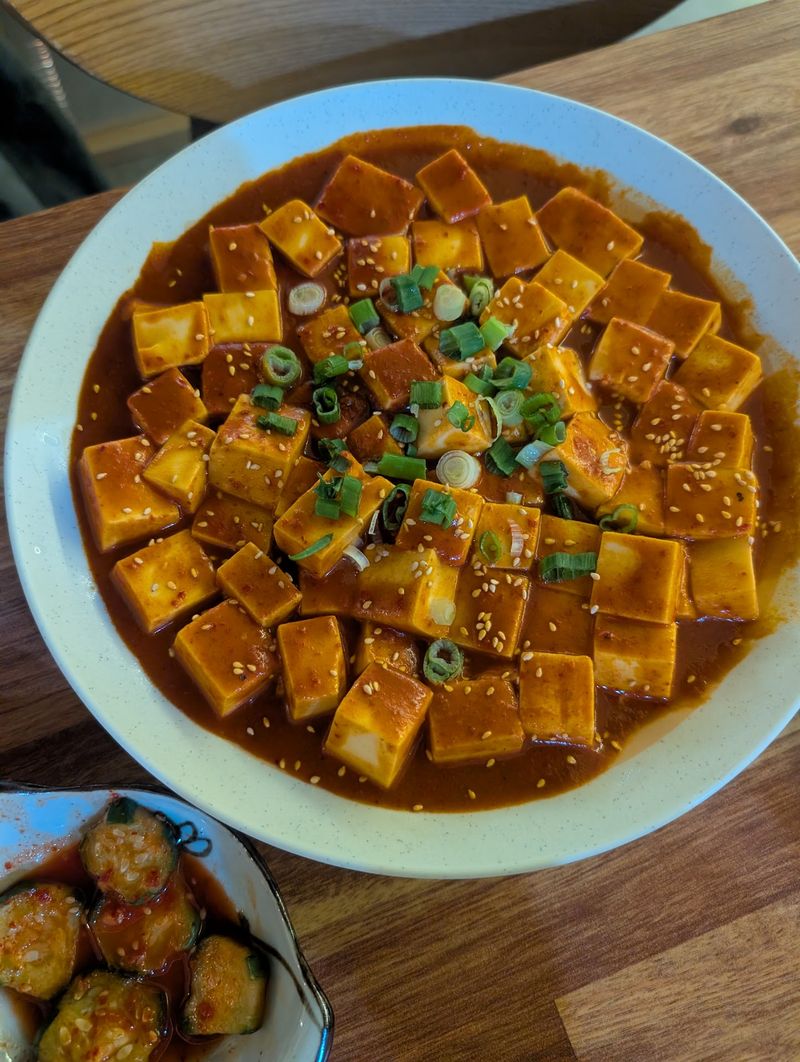
The daily tofu process starts long before a stone pot reaches the table.
Organic, non-GMO soybeans are soaked until they soften, then passed through a Korean-made stone grinder that separates soy milk from the pulp.
The soy milk is curdled and steam-cooked to create the soft tofu used in the restaurant’s bubbling stews.
For firm tofu, those curds are pressed into a denser texture that holds up in dishes such as pan-fried tofu and tofu with kimchi.
Even the leftover soybean pulp has a purpose, becoming the base for a creamy soybean stew instead of simply being discarded.
That careful process helps explain why the menu can move tofu through so many different forms without making every plate feel repetitive.
One version is silky enough to break with a spoon. Another can take a crisp exterior. Another works as the substantial center of a vegetable-heavy meal.
The technique is unusually labor intensive for a restaurant kitchen, but it gives the ingredient a freshness that packaged tofu cannot imitate in exactly the same way. Here, tofu is not a substitute. It is the point.
Start With A Bubbling Stone Pot
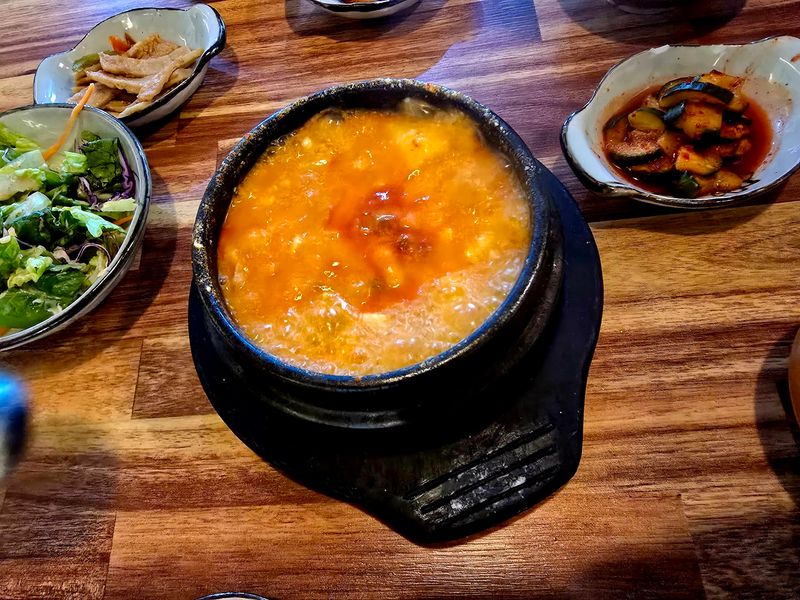
Soon tofu is the clearest place to begin because the menu builds an entire section around it.
Beef, pork, kimchi, seafood, vegetables, mushrooms, dumplings, and combination versions give the same soft tofu base completely different directions.
Heat is adjustable too, ranging from a pepper-free white broth through mild, regular, spicy, and extra spicy levels. That makes the dish easier to approach than its bright red surface might suggest.
The broth arrives still bubbling in a dark stone vessel, while rice and side dishes give you something cooler to alternate between spoonfuls.
Seafood brings shrimp, squid, and mussels into the mix, while mushroom and vegetable versions keep the focus on earthier flavors.
Dumplings make the bowl feel especially substantial. The tofu itself stays delicate even as the broth remains hot, which is exactly where the house-made version earns attention. It does not need heavy garnishes or complicated presentation.
The appeal comes from contrast: soft tofu, hot broth, chewy additions, rice, and crisp side dishes landing on the table together. It is comforting food with enough choices to make a second visit feel completely different.
The Menu Goes Far Beyond Soup
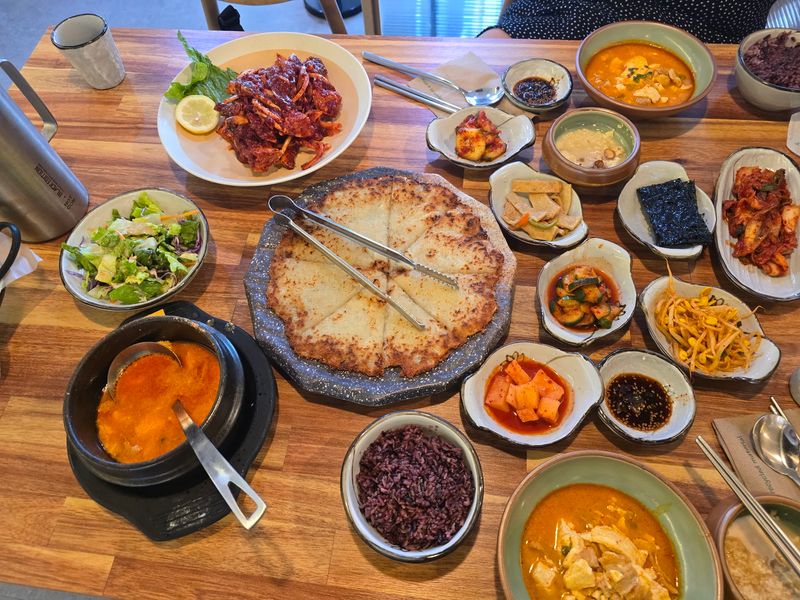
Stopping at tofu stew would miss a large part of the menu.
Potato pancakes come crisp-edged and chewy, while seafood pancakes fold green onions into a broader savory bite.
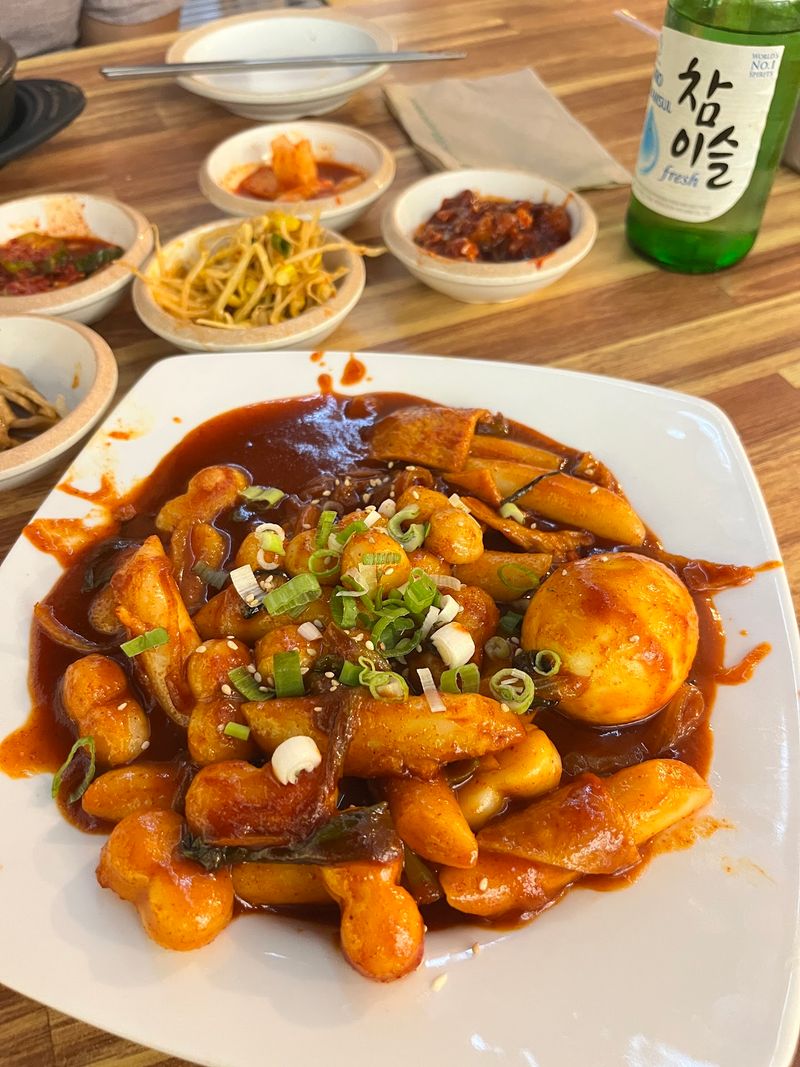
Pan-fried dumplings, steamed vegetable dumplings, spicy rice cakes, steamed egg, and glass noodles make it easy to build a table from smaller dishes before anything larger arrives.
Tofu appears again as a crisp battered appetizer and as pan-fried slices, showing how much its texture can change with a different cooking method.
Hot-stone bibimbap moves in another direction, layering rice with vegetables and a choice of protein before the bowl develops those prized crisp edges against the heated surface.
For a Colorado dining room with such a focused name, the selection is surprisingly wide. That range helps mixed groups because nobody has to commit to the same kind of meal.
One person can stay with tofu and vegetables, another can order beef or chicken, and someone else can work through dumplings and pancakes.
Sharing a few dishes first also makes the meal feel less like ordering separate entrées and more like building the table together.
Grilled Fish Adds Another Side Of The Menu
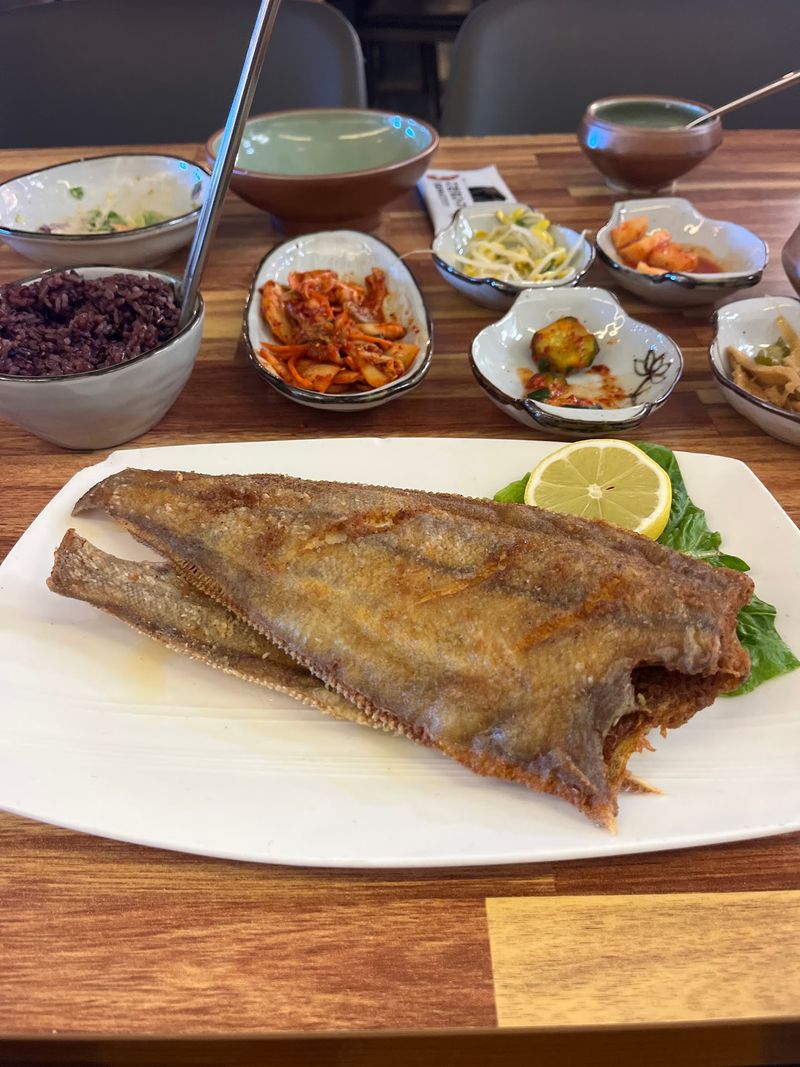
Whole and filleted fish give the table a completely different rhythm from the soft stews.
Current choices include grilled mackerel, dried pollack, yellow croaker, and pan-fried flounder, each served with rice and side dishes.
These plates work especially well when the table already has something saucy or bubbling, because the firmer texture and direct seasoning create contrast. Larger hot pots are another route for groups.
Mushroom, tofu, dumpling, and potato with pork bone versions are built for sharing rather than individual portions, turning lunch or dinner into a slower meal that unfolds in the center of the table.
The restaurant also offers braised short ribs and monkfish among its larger house specialties. That breadth matters because it keeps the experience from becoming a one-dish novelty.
Someone could return several times without repeating the same style of cooking. A first visit might revolve around soft tofu. The next could lean toward grilled fish, a shared hot pot, or a sizzling rice dish.
Rice And Banchan Complete The Table
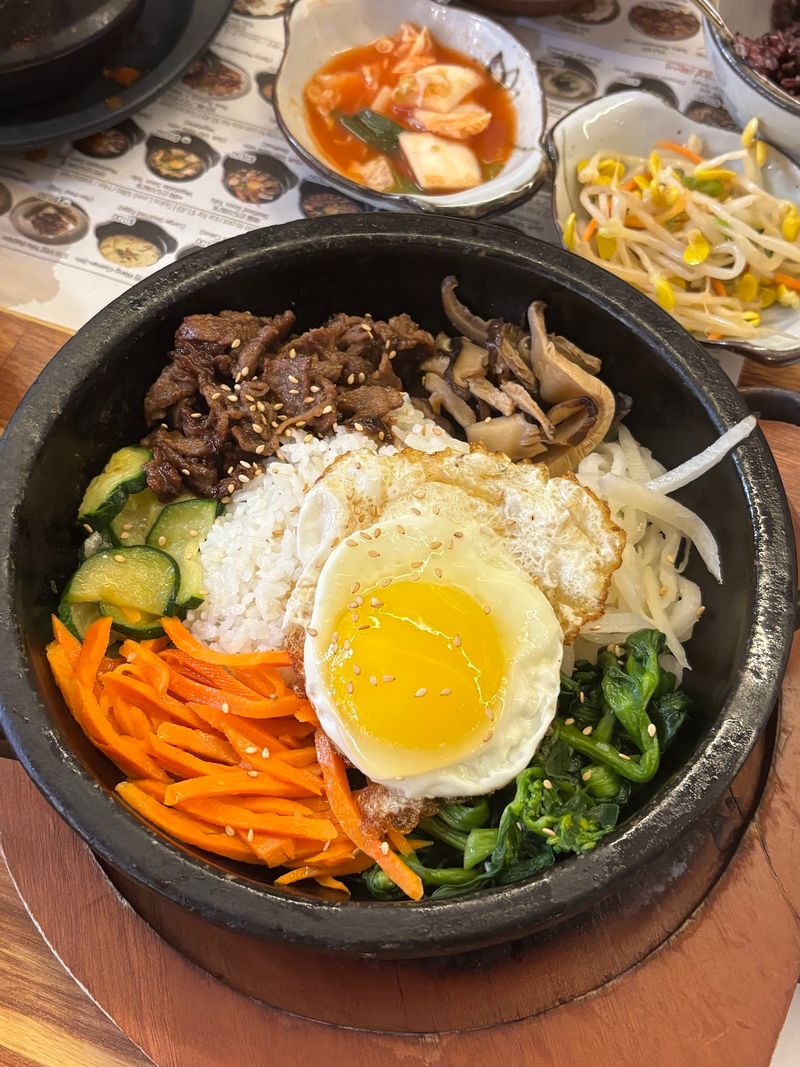
The side dishes are not decoration waiting for the main course.
They change the pace of the meal one bite at a time, bringing cooler, sharper, crunchier, or more fermented flavors between richer spoonfuls.
Rice matters just as much. Soon tofu is served with white or purple rice, while an individual pressure-cooked option adds a creamier texture and a more interactive finish at the table.
That pairing makes sense because the hottest, strongest dishes benefit from something plain enough to reset your palate.
In Colorado, where Korean dining often gets reduced to tabletop grilling, this quieter structure feels especially worth noticing.
A bowl of stew does not stand alone. It arrives as part of a small ecosystem of rice, banchan, vegetables, and condiments that can be combined differently from one bite to the next.
The result is a meal that feels varied without needing a huge number of separate orders. It also gives first-time diners room to explore gradually.
Try a side dish, return to the stew, add rice, then move somewhere else on the table. The experience builds through contrast rather than spectacle.
Recognition Came From More Than One Dish
The restaurant’s reputation has grown around the same thing the menu keeps proving: specialization does not have to mean limitation.
In 2025, 5280 included Tofu Story among its 25 Best Restaurants in Denver, pointing to the house-made tofu, simmering stews, grilled fish, marinated seafood, crisp tofu preparations, and pressure-cooked rice as reasons it stood out.
Warm wood paneling, simple furniture, and softly divided seating create a calm setting for food that can arrive sizzling, bubbling, or spread across several plates. Nothing needs theatrical decoration to make the meal feel distinct.
The strongest visual moment is often the food itself, especially when a stone pot is still simmering beside bowls of banchan and rice. The room works for a quick lunch, but the menu makes more sense when nobody is watching the clock.
A shared pancake followed by stew, grilled fish, or bibimbap gives the table enough movement to turn an ordinary meal into something more deliberate. That is where the detour starts to justify itself.
Make The Detour Work For You
Tofu Story is open daily at 2060 South Havana Street in Aurora, with the current official schedule running from 11 a.m. to 9 p.m.
Reservations are available through the website, which can be useful when the meal is part of a longer day around the Denver metro area.
The address also places it along a stretch of Havana Street known for a dense concentration of Korean businesses, so the drive can easily become more than a single stop.
Still, the restaurant gives you enough reason to make it the destination. Start with soon tofu if the house-made specialty is new to you, then add one contrasting dish rather than trying to conquer the menu in one sitting.
A pancake, grilled fish, or hot-stone rice bowl changes the texture of the table immediately. Save the larger shared hot pots for a group.
For anyone curious about Korean cooking in Colorado, the strongest reason to go out of the way is simple: the kitchen turns one humble ingredient into several genuinely different experiences without losing sight of the broader cuisine.