This Connecticut Town May Be One Of The Poorest But Its Small-Town Character Tells Another Story
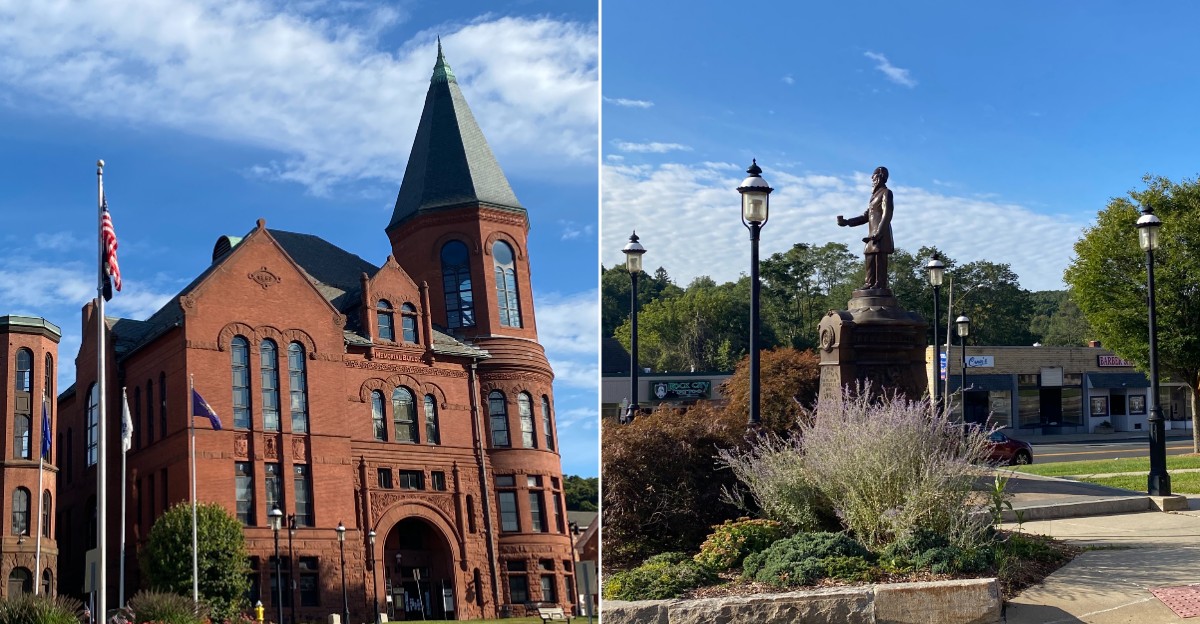
A town’s income statistics cannot tell you what it feels like to spend an afternoon walking through its streets.
They certainly cannot capture every part of its personality.
Older buildings may hold generations of memories, while familiar neighborhood businesses continue serving people who have known the area for years. Those everyday details often get overlooked when a community is discussed only through economic figures.
In Connecticut, places facing financial challenges can still have strong local identities and histories worth getting to know.
That does not make the challenges disappear.
Lower incomes can affect daily life in serious ways, and residents may have plenty of concerns about the future. But reducing an entire community to a ranking misses the people who live there and the places they care about.
So what lies beyond the numbers?
A closer look reveals a town with a story that deserves more attention than its financial standing alone might suggest.
1. An Old Mill Community With Plenty Of Character
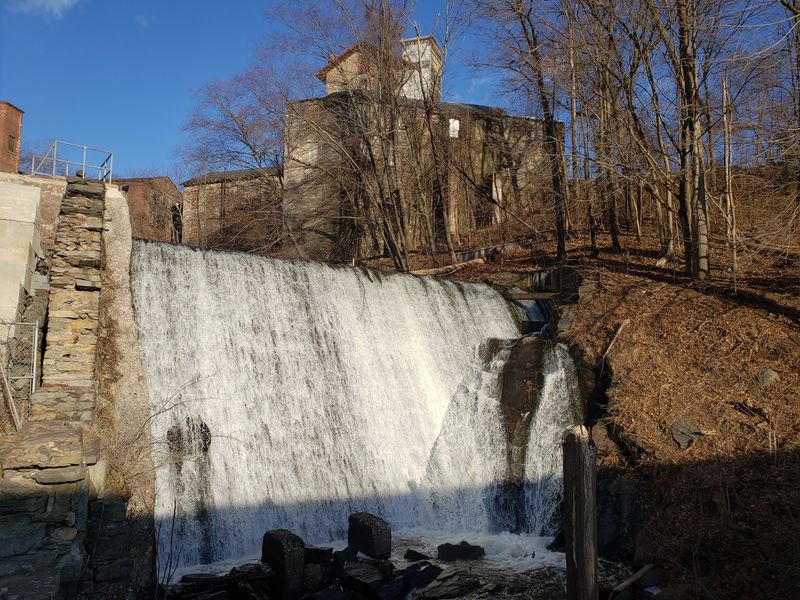
Long ago, people here would say they were going to the Rock. That phrase pointed to a natural stone dam on the Hockanum River, and it slowly became the name of the whole village.
The river was the real reason Rockville grew into an important industrial community in Connecticut. Along a stretch of about a mile and a half, the Hockanum drops more than 250 feet.
That steep fall made strong, steady water power, which was exactly what early factories needed to turn their machines.
The first big step came in 1821, when the Rock Mill, also called the McLean Woolen Factory, was built. By 1823 it was running, and workers began arriving to fill jobs.
More mills soon followed along the riverbanks, and the village filled with homes, shops, and churches to support them.
Rockville became so tied to weaving that it earned the nickname Loom City. Its wool gained a national reputation for quality, and that pride still shapes how locals talk about their home.
For visitors, the best way to feel this history is simply to follow the river. Listen for the water, look for old stone walls, and notice how the buildings crowd close to the current that once powered everything.
2. Historic Streets In The Town Of Vernon
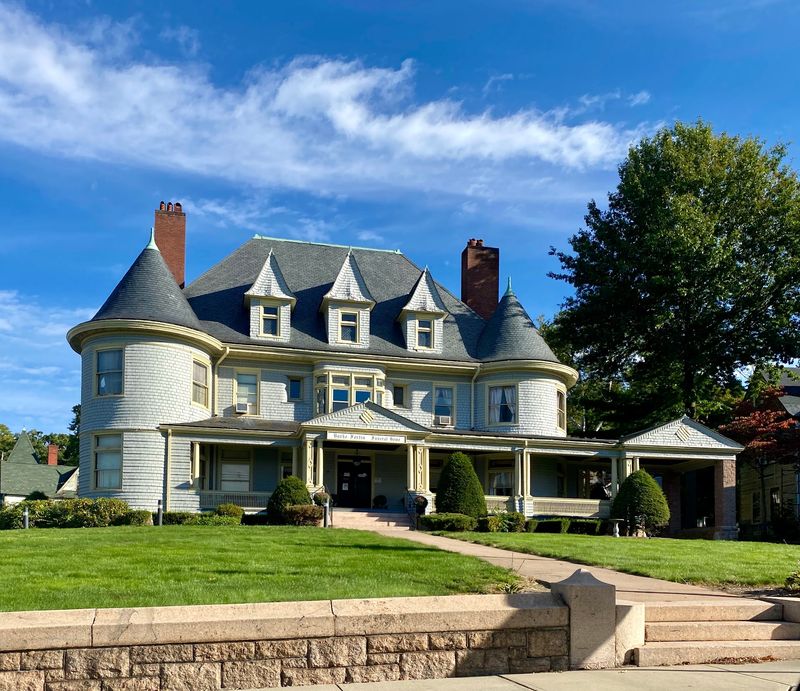
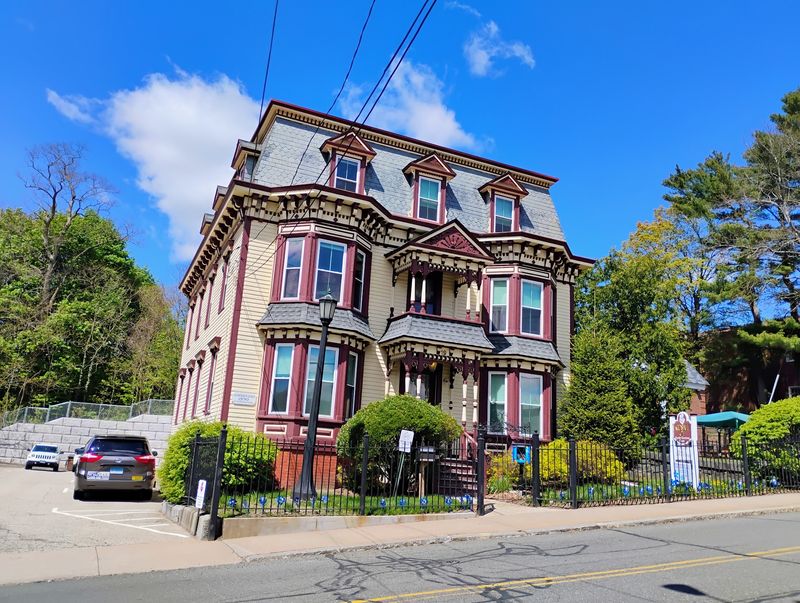
Some streets feel like a trip back in time. Rockville has plenty of them, with grand Victorian houses and historic buildings that still reflect the town’s busy industrial past.
Much of that character is protected within the Rockville Historic District, which joined the National Register of Historic Places in 1984. Covering more than 550 acres, the district includes hundreds of buildings, with approximately 87 percent considered historically significant contributors.
The neighborhood’s story goes beyond its architecture. Rockville became an incorporated city in 1889 before consolidating with Vernon in 1965.
Today, it remains a distinct community within the larger town, holding onto much of its original identity.
Some especially interesting homes stand near Talcott Park, along Elm Street and nearby Park and Prospect streets. Wealthy mill owners once lived in this area, leaving behind impressive houses that reflect the prosperity of the late 1800s.
Exploring on foot is a lovely way to appreciate those details, although the hills can make walking surprisingly energetic.
Downtown occupies a low area surrounded by higher ground, so comfortable shoes are worth bringing.
As the streets climb, views open toward old rooftops and church steeples.
Take your time wandering. The architecture alone offers plenty of reasons to stop and look around.
3. Industrial Roots Still Visible Today
Not every old factory town gets a second act, but Rockville keeps finding new uses for its mills. By 1951, most of the mills had stopped running as textile work moved to the South and synthetic fabrics took over.
Many of the big buildings stayed standing, though. The Minterburn Mill, an industrial site since 1834, became the Loom City Lofts apartments in 2016.
Its 1906 building is an early example of reinforced concrete construction, which makes it a quiet piece of engineering history.
The Florence Mill, built in 1864, later made envelopes and now serves as senior housing. The Hockanum Mill, dating back to 1814, is the oldest surviving wood-framed mill structure in Rockville.
Not everything survived. The Saxony Mill was lost to fire, and its name lives on in Saxony Park.
Meanwhile, the large Amerbelle complex, which includes former Belding Brothers buildings, the Fitch Mill, and the Stone Mill, still rises over the skyline.
Work is underway to redevelop the last vacant mill complex, made up of Daniel’s Mill, Amerbelle, and Anacoil, with state grants helping clean up the site. It is a hopeful sign for downtown’s future.
4. Victorian Buildings And Architectural Details
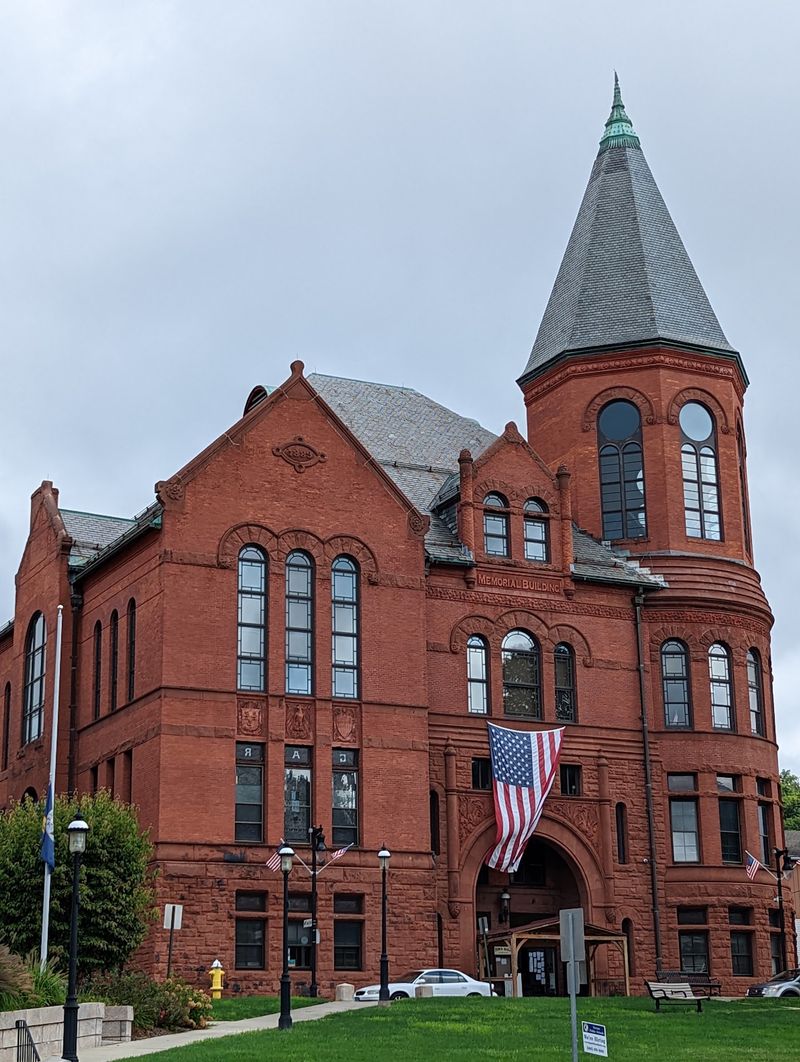
Look up. In Rockville, some of the best details sit above eye level, in carved brackets, pointed rooflines, tall arched windows, and decorative trim.
The village works almost like an outdoor architecture lesson. Early 1800s Greek Revival homes stand near Gothic Revival and Italianate designs.
Then come the playful, mixed styles of the 1880s and 1890s, when builders loved towers, porches, and fancy woodwork.
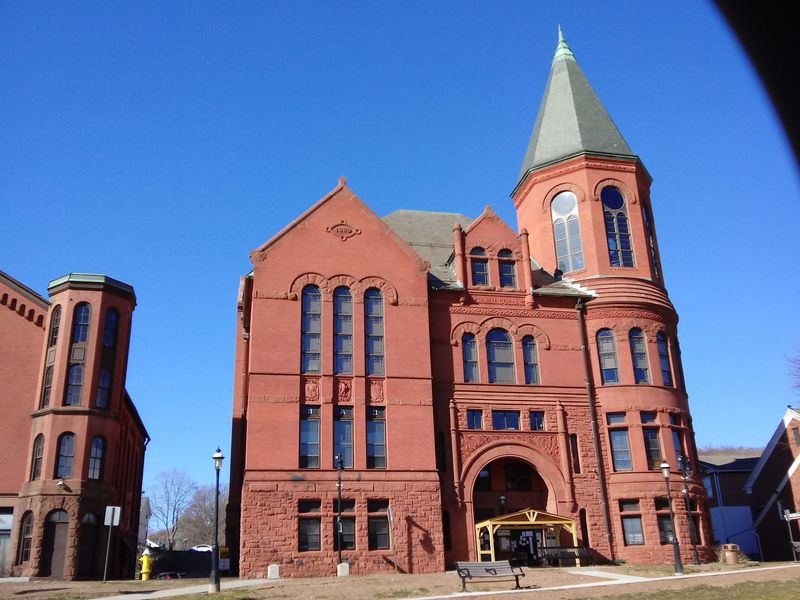
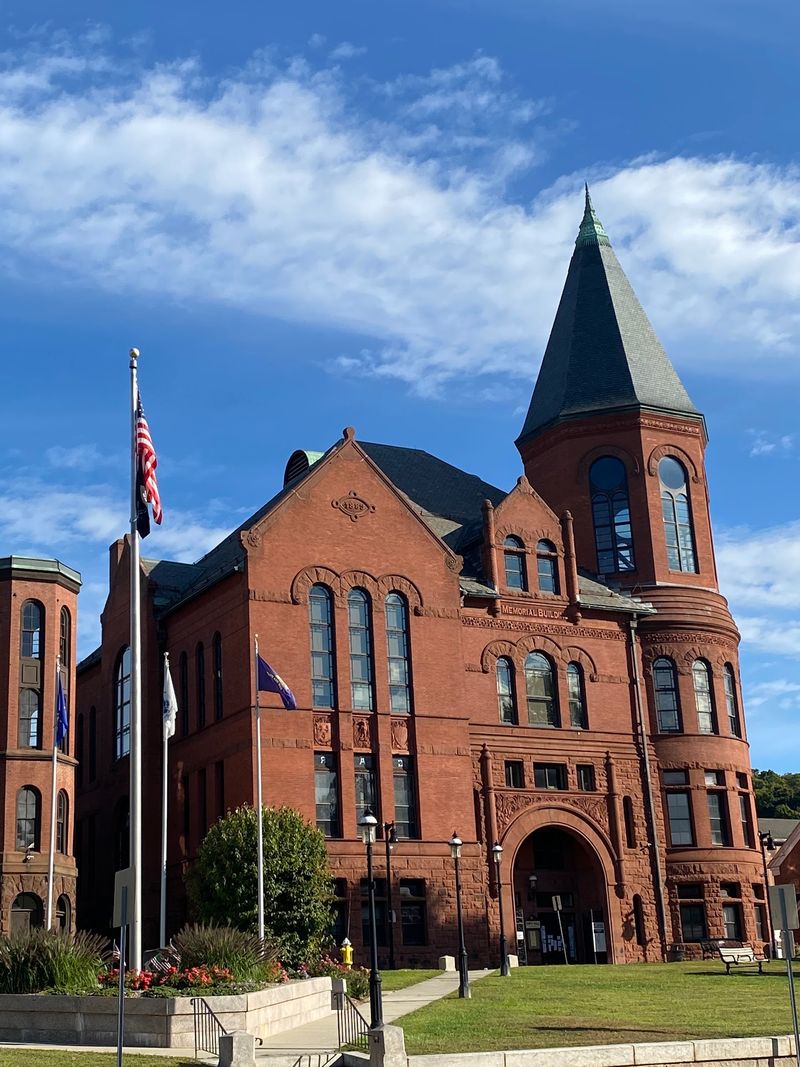
A few buildings deserve extra attention. The Memorial Building went up in 1889 as a town hall and a tribute to Civil War veterans, and it now holds the New England Civil War Museum.
The Rockville Union Congregational Church shows off the Italianate style, while the George Maxwell Memorial Library adds more historic grace to the downtown.
Why do so many of these buildings still look the way they did? Much of the area was built up densely by the early 1900s.
Because so many structures remain, entire streets keep a strong sense of their original look.
Fun idea for families: turn a walk into a scavenger hunt. Count the turrets, find a round window, or spot the fanciest porch.
Kids and adults both start noticing details they would normally miss.
5. A Downtown Shaped By Textile Manufacturing
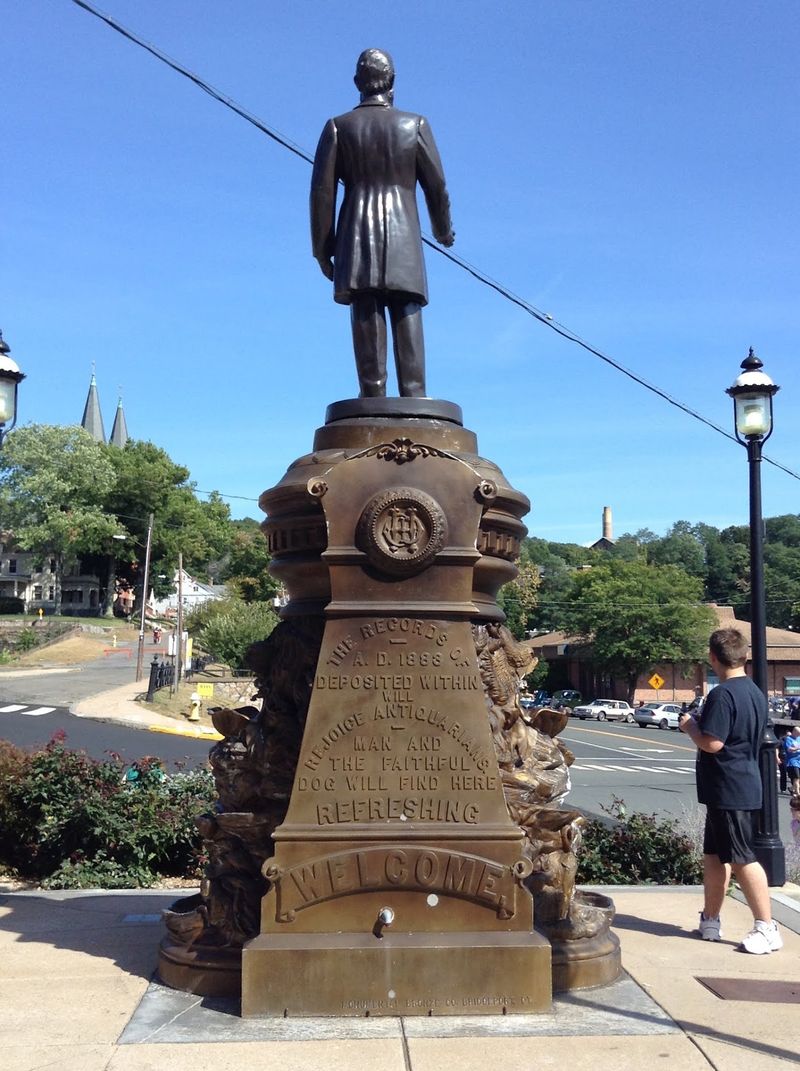
Here is a fun fact to share: fabric from Rockville’s mills was chosen for the inauguration suits of three U.S. presidents. One of them was William McKinley, whose 1897 suit was made at the Hockanum Mill.
That kind of success shaped the whole downtown. The mills needed workers, workers needed homes, and families needed stores, churches, and schools nearby.
The result was a tightly packed center that grew right alongside the factories.
Walk downtown today and you can still read that pattern. Commercial blocks line the main streets, while homes climb the surrounding hills.
In places, the Hockanum River flows underground through the center of town before appearing again, a reminder of the power that started it all.
The mid-1900s brought big changes. Urban renewal removed some early mills and commercial buildings, which left gaps in the older streetscape.
Even so, much of the historic center stayed in place.
Today, the focus is on looking forward while respecting the past. A planned mural called Threads of Community on East Main Street aims to celebrate the area’s history and spirit.
The name fits perfectly for a place built on weaving.
6. Local Shops And Familiar Gathering Places
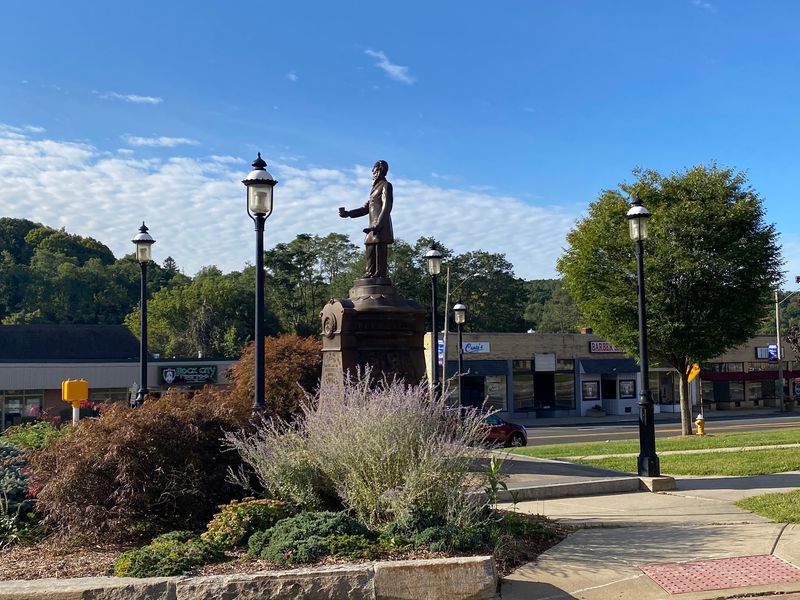
What makes a small town feel like home? In Rockville, it might be the friendly conversations, familiar gathering spots, or community events that bring neighbors together throughout the year.
The Rockville Public Library plays a big part in that atmosphere. Beyond its bookshelves, the library hosts activities and special programs, including creative events that give residents another reason to visit.
History lovers have plenty to explore, too. The New England Civil War Museum, housed inside the Memorial Building at 14 Park Place, offers an interesting look at the state’s involvement in the conflict.
Outdoor time is just as rewarding. Henry Park has walking paths and the Fox Hill War Memorial Tower, which honors military veterans.
Autumn brings colorful foliage to the surrounding hills, making the park especially appealing for a leisurely afternoon.
Downtown has also earned recognition as Tolland County’s first state-designated cultural district. Its boundaries include several community parks, historic buildings, and businesses connected to local arts and culture.
Events such as July in the Sky and Living History Day help keep that community spirit going.
The Rockville Spur trail offers another enjoyable outing, following a former railroad route with views of the river.
After exploring, local cafes and pizzerias provide an easy place to relax and enjoy a meal.
7. Economic Challenges Behind The Small-Town Appeal
Numbers can tell part of a town’s story, so let us be honest about them. Recent data shows that about 30.6 percent of Rockville residents live below the poverty line, far higher than the national average of around 12.5 percent.
The median household income is roughly $51,232, which is lower than the national figure. Childhood poverty is also higher than in most American neighborhoods, with close to 30 percent of children living below the federal poverty line.
Housing shows a similar pattern. Only about 22.7 percent of homes are owner-occupied, compared to a national average of around 65 percent, so many families rent.
The median property value was about $218,700 in 2024, and the housing vacancy rate sits near 10.7 percent.
Much of this traces back to the loss of the mills, which once supplied steady jobs for thousands. Today, many residents work in retail, manufacturing, and food services.
Here is the hopeful side. Lower home prices can make Rockville more reachable for first-time buyers and young families.
Combined with mill redevelopment and the cultural district, the village has real tools for building a stronger future.
8. A Community With Stories Worth Discovering
Every old building in Rockville seems to hold a secret, and the fun is in finding them yourself. A stone dam gave the place its name.
A rushing river built its fortune. Presidents wore suits made from its wool.
What stands out most is how the community keeps holding onto those stories. Old mills are turning into homes.
Parks carry the names of the people and places that shaped the village. A museum keeps Civil War memories alive in a building raised to honor veterans.
Plan a visit in stages rather than rushing through. Start with a downtown walk to see the architecture, then follow the river past the mills.
Finish with a climb into Henry Park for a wide view of the village below.
Fall is a wonderful season to come, when the hills glow with color. Check event calendars too, since community happenings like Living History Day add extra life to the streets.
Rockville may not top any wealth rankings, but it offers something money cannot easily buy. It has a deep sense of place, real history, and neighbors who care about where they live.