10 Sleepy Virginia Towns That Time Nearly Forgot
What if your weekend came with zero traffic, no packed schedule, and absolutely no reason to hurry?
Virginia has towns where golf carts cruise past porches, river walks replace rush hour, and mountain roads practically beg you to slow down. That pace changes everything!
You can wander through historic streets, cross old bridges, catch a quirky local festival, or spend an afternoon beside the water without checking the clock.
The charm feels real because these communities never learned how to rush for attention.
By Sunday evening, you may start wondering why everyday life insists on moving quite so fast.
1. Tangier, Chesapeake Bay
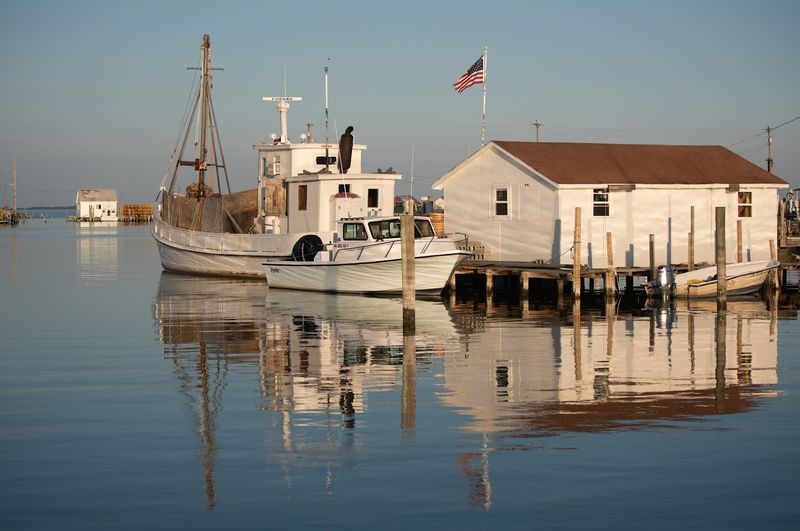
I’m still trying to wrap my head around a town with almost no cars. Golf carts and bicycles rule the narrow lanes instead.
Tangier sits low in the Chesapeake Bay, several miles from the mainland, and reaching it requires a boat or small aircraft.
A few hundred residents live among three inhabited ridges surrounded by marsh, creeks, and working waterfronts.
Crabbing and oystering remain central to island life, and the harbor makes that connection obvious. Small boats, crab houses, docks, and weathered homes give the community a rhythm shaped more by tides than traffic.
The Tangier History Museum is the best place to understand how settlement, seafood work, transportation, and changing shorelines shaped the island.
Swain Memorial United Methodist Church is another longstanding landmark tied closely to community life.
A walk through town can include the museum, waterfront, narrow residential lanes, and the island’s quiet beach. Bike and golf-cart rentals are also available for visitors who want to cover more ground.
Passenger service is seasonal and conditions can affect schedules. Regular Onancock ferry runs are currently suspended, while other options operate from Reedville and Crisfield, so transportation should be confirmed before leaving.
Summer offers the broadest range of visitor services, but the island’s appeal is its slower pace.
2. Cape Charles, Eastern Shore
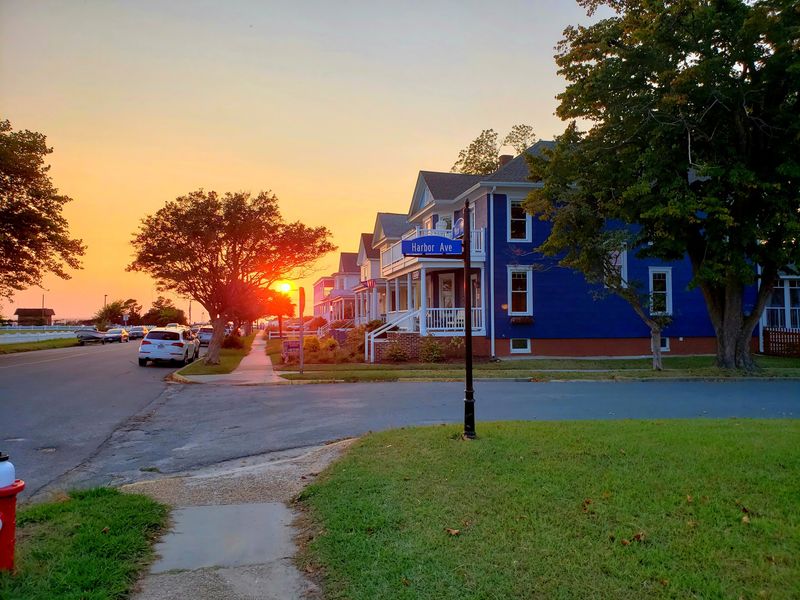
Just imagine for a second strolling down a street named after a fruit. Plum, Peach, and Strawberry streets are real, and they are charming.
Cape Charles was laid out as a planned railroad community in 1884 and incorporated two years later on Virginia’s Eastern Shore. The original grid survives, with east-west avenues named for statesmen and north-south streets named for fruits.
The historic district preserves late nineteenth- and early twentieth-century buildings, including Victorian, Queen Anne, Colonial Revival, Craftsman, Gothic Revival, and Neoclassical examples.
Railroad history remains easy to find at the Cape Charles Museum and Welcome Center.
The museum occupies a historic power plant and displays photographs, artifacts, rail equipment, ferry models, and other pieces tied to the town’s transportation past.
The public beach along Bay Avenue adds a different reason to linger. Because the shoreline faces west across the Chesapeake Bay, evening light can turn a waterfront stroll into the day’s main event.
The current Cape Charles Lighthouse stands on nearby Smith Island. Built in 1895 and rising 191 feet, it is the tallest lighthouse in the state, although it is not a walk-up downtown attraction.
Mason Avenue supplies shops and galleries, while Central Park gives the historic grid a green center. Late spring and early fall balance comfortable weather with enough activity for a relaxed weekend.
3. Monterey, Highland County
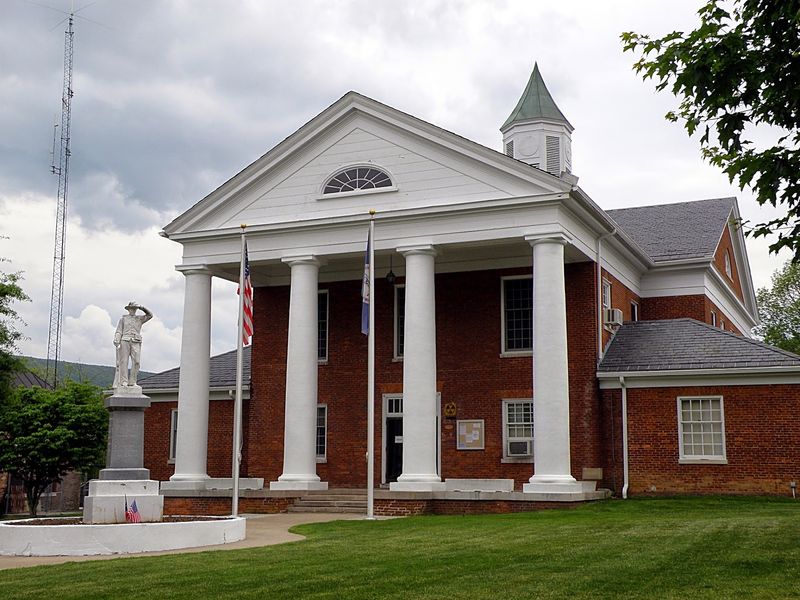
Would you believe me if I told you a whole county throws a party for syrup? Sweet tooths, this one is for you.
Monterey is the small county seat of Highland County, with a 2020 population of 165. Mountain roads and compact blocks make the town feel quieter outside major seasonal events.
Each March, the Highland County Maple Festival spreads across the county for two weekends.
Sugar camps open their doors, visitors watch maple production, and Monterey becomes a central gathering point for the official state maple festival, a tradition that began in 1959.
Historic Main Street has its own reasons to slow down. The Charles Pinckney Jones House Museum, built in 1850 and opened as a museum in 2023, preserves period furnishings, family history, and a garden behind its porch.
The county’s barn quilt trail turns surrounding back roads into a scenic drive, with painted quilt blocks brightening rural buildings.
For a bigger view, Sounding Knob Fire Tower sits just outside town. More than 100 steps lead to the top, and the restored tower is open daily from sunrise to sunset.
The Highland Farmers’ Market runs Fridays from May into early October at the Highland Center pavilion.
The Highland County Museum is a drive away in McDowell and includes a Maple Museum. Monterey works best when the schedule stays loose and the mountain roads become part of the outing.
4. Warm Springs, Bath County
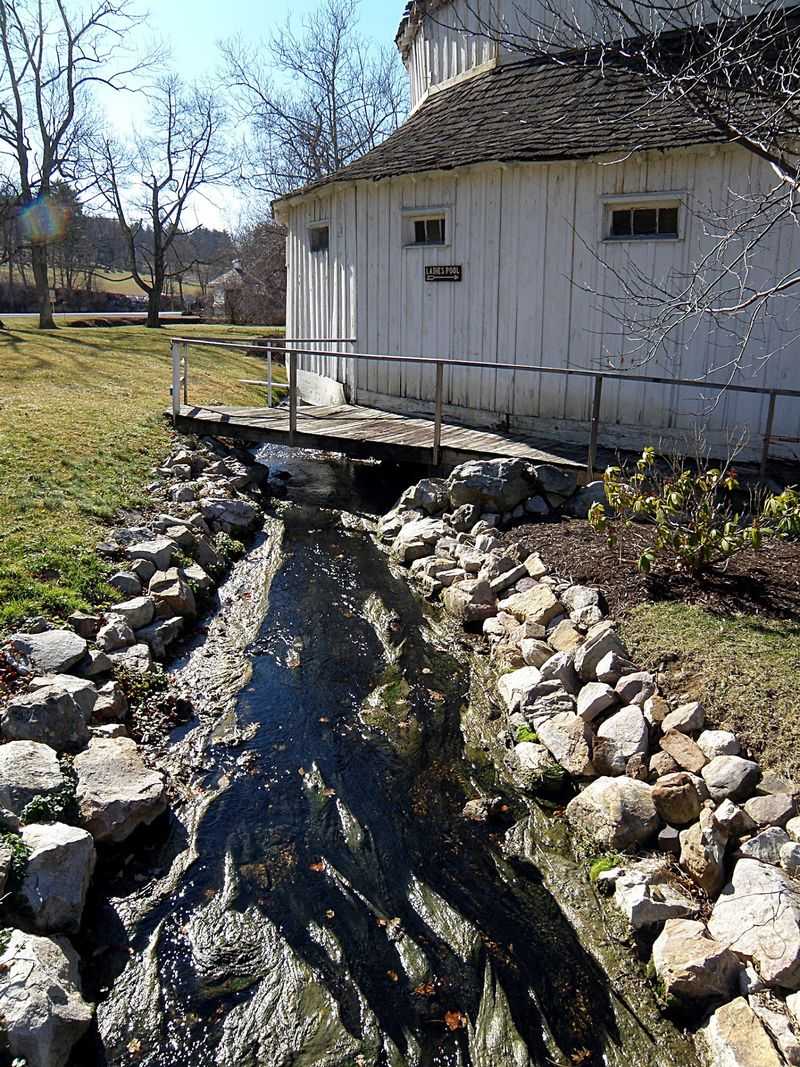
It makes you wonder, doesn’t it, why people have soaked here for centuries? The answer bubbles up right out of the ground.
Warm Springs grew around naturally heated mineral water, drawing visitors to Bath County for generations. The Warm Springs Pools remain the town’s defining landmark and continue Virginia’s oldest spa tradition.
The pools stay around 98 to 99 degrees throughout the year. Their historic bathhouses surround spring-fed basins, with the oldest stonework dating to 1761 while later structures preserve the open-roofed design.
Thomas Jefferson spent several weeks taking the waters here, helping inspire the long-used Jefferson Pools nickname.
After a major rehabilitation, the historic name Warm Springs Pools returned to the forefront, and the facilities remain open for scheduled soaking sessions.
Across the road, the Inn at Warm Springs occupies an 1843 building originally constructed as Bath County’s first courthouse. Its history adds another layer to the village.
The Bath County Historical Society keeps local collections on Courthouse Hill, while Warm Springs Gallery brings contemporary regional art into the mix. Together they broaden a visit beyond the pools.
Outdoor options spread quickly beyond the village. Lake Moomaw, forest trails, overlooks, and mountain drives are nearby.
Autumn adds color to the ridges, while cooler spring days suit walking especially well. Warm Springs rewards visitors who give one compact place an unhurried amount of time.
5. Buchanan, Botetourt County
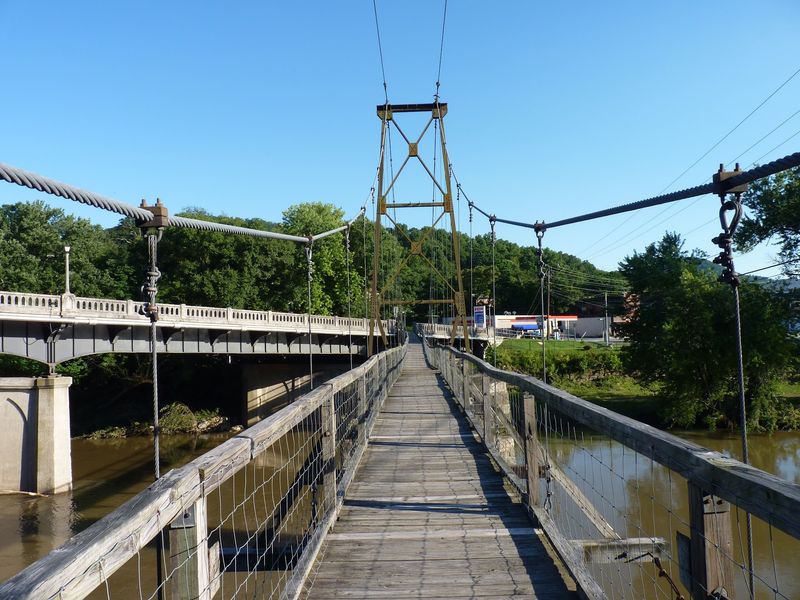
Let’s be real for a second, few bridges make your knees wobble on purpose. This one sways just enough to make a stroll memorable.
Buchanan sits beside the James River between the Blue Ridge and Allegheny Mountains, with a compact Main Street reflecting its transportation history.
The Buchanan Swinging Bridge is the town’s signature landmark.
It stretches 366 feet across the river, and parts of its stone support system trace back to nineteenth-century crossings. The current pedestrian bridge dates to 1938 and remains the only bridge of its type spanning the James.
Historic Main Street adds plenty before or after the crossing. The Buchanan Theatre opened in 1914 and still screens movies and hosts events beneath its vintage neon sign.
Nearby, the 1839 Wilson Warehouse survives as a community landmark with original woodwork and cargo-handling features.
The river keeps the town from feeling like a museum. Buchanan Town Park has a boat ramp, picnic areas, a riverside greenway, and direct access to the Upper James River Water Trail for canoeing, kayaking, and fishing.
Mountain trails sit close enough to extend the day. The Appalachian Trail and Blue Ridge Parkway are both about four miles from downtown.
Summer works well for time on the water, and fall brings mountain color. Start with the bridge, wander Main Street, then decide whether the river or ridges deserve the rest of the afternoon.
6. Scottsville, Albemarle County
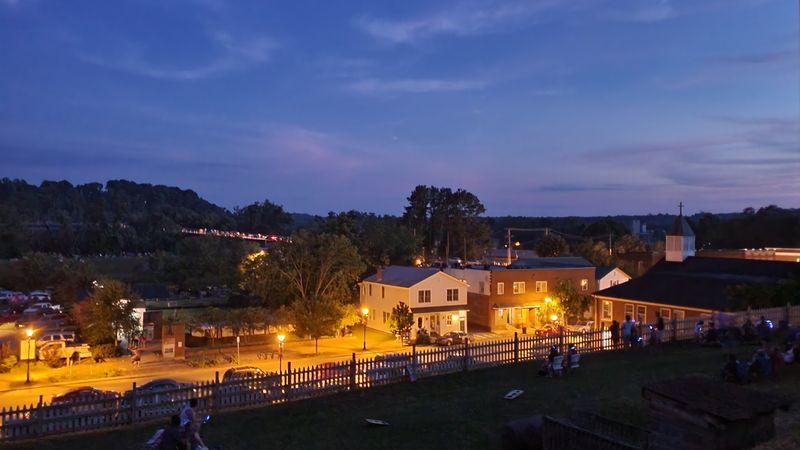
I’m right there with you if old river towns make your heart skip. Few spots celebrate their waterfront past quite like this one.
Scottsville bends around the James River in Albemarle County, with roots reaching back to the 1740s. The town was incorporated in 1818 after decades as an important river crossing and commercial landing.
Its history makes more sense once you reach Canal Basin Square. Replica batteaux, signs, and displays explain how flat-bottomed boats moved goods along the river and connected with the canal system.
Across the street, the Scottsville Museum continues that story inside a former church building.
Its main exhibit follows the town’s relationship with the James, from early settlement and commerce to floods, transportation changes, and modern recreation. The museum opens weekends from April through October.
A slow downtown walk reveals another layer. More than 50 local buildings predate 1860, and Main and Valley streets still preserve the scale of an older river community.
The James remains an active part of a visit. Paddling, tubing, and guided batteau outings connect the town with the water that shaped it.
Nearby Hatton Ferry preserves river history, but operating dates should be confirmed before planning around a crossing.
7. Urbanna, Middlesex County
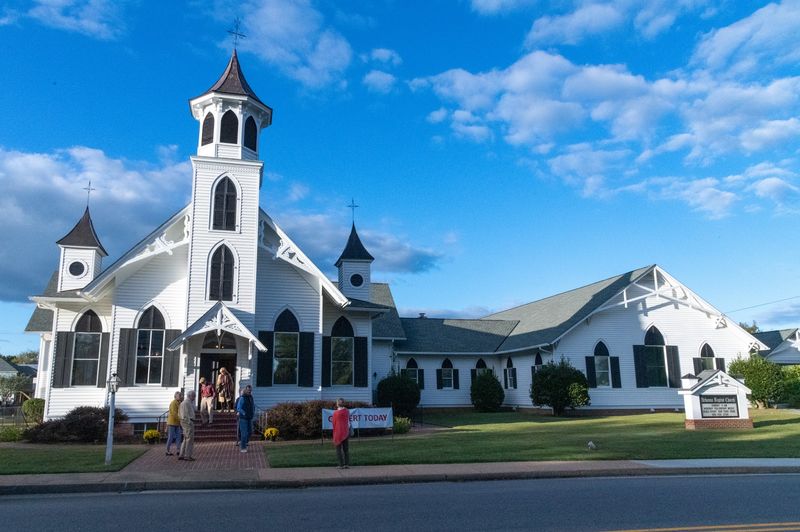
A colonial seaport from 1680 sounds like a time machine. Trade ships once crowded this quiet creek.
Urbanna began as one of twenty port towns created by colonial legislation in 1680, then received its name in the early 1700s.
Its sheltered creek gave merchants direct access to the Rappahannock River and wider Chesapeake trade routes.
The historic district contains 65 buildings spanning several centuries. Seven buildings around town have remained in use since the colonial period, adding architectural depth to a short walk.
Start at the James Mills Scottish Factor Store, built around 1765. The surviving commercial building now serves as the town museum and visitor center, where a 1755 Mitchell Map and exhibits explain Urbanna’s commercial past.
A short walk uphill reaches the 1748 colonial courthouse, one of only eleven surviving examples of its kind in Virginia.
The self-guided Museum in the Streets route uses 18 historical markers, adding context without forcing a fixed schedule.
The harbor is a natural place to pause. Waterman’s Park and the marina put the creek at the center of the experience, while compact streets make it easy to continue on foot.
Oysters became part of town identity, and that tradition still drives Virginia’s official Oyster Festival. The 2026 celebration takes place November 6 and 7.
8. Tappahannock, Essex County
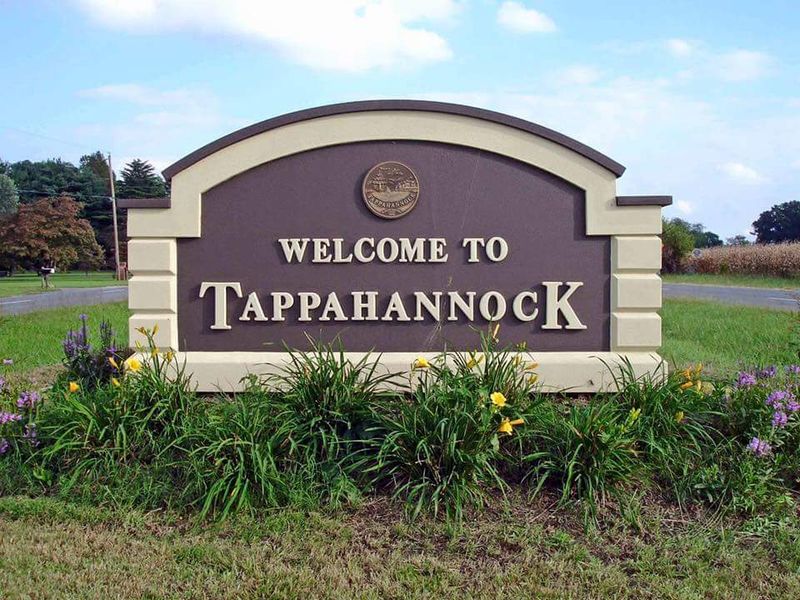
Tappahannock rests along the Rappahannock River in Essex County. The colonial legislature established it in 1680.
That long timeline is still visible downtown. The Tappahannock Historic District preserves eighteenth- and nineteenth-century buildings, including the 1848 Essex County Courthouse and several earlier structures around the old town center.
A self-guided historical walking tour links 13 buildings in and near the waterfront district. The route suits an unhurried morning because the streets combine easily with shops, murals, and river views.
The Essex County Museum at 218 Water Lane adds broader context. Exhibits cover the region’s Indigenous heritage, river transportation, community life, archaeology, and centuries of local change.
Next door, a landscaped courtyard offers benches and outdoor interpretation.
When indoor history feels like enough, Rappahannock River Park shifts the focus back to the water. The park on Newbill Drive has river views, picnic space, and benches suited to a quiet pause.
Central Park provides another walking stop in the heart of town, with open green space, a walking path, courts, and a playground. Downtown murals add color between destinations.
Golfers can extend the outing at Hobbs Hole, while boating and fishing remain closely tied to the river.
Spring and fall are especially comfortable for walking, but the waterfront gives the town character in every season.
9. Onancock, Accomack County
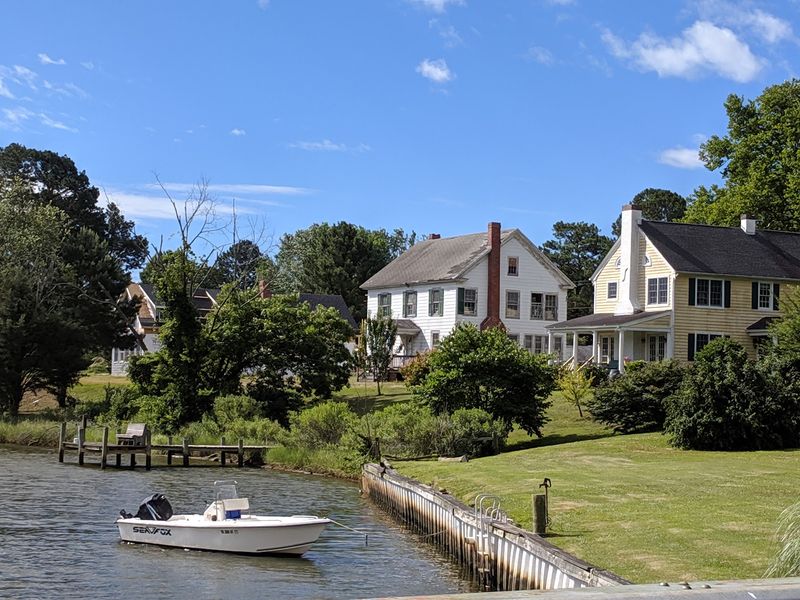
What if your harbor town had a documented visitor from 1608? Early Chesapeake exploration passed this shoreline.
Onancock sits along Onancock Creek on the Eastern Shore, with a compact downtown built around a working wharf and historic homes, churches, shops, and galleries.
The town wharf makes the layout easy to understand. Kayaks, small boats, and local excursions use the creek, while the marina provides a natural starting point for a waterfront walk.
Regular passenger ferry service from Onancock to Tangier is currently suspended, so that connection should not be treated as a guaranteed day-trip option.
A few blocks inland, Ker Place preserves one of the Shore’s finest Federal-period houses.
Built around 1800, it now serves as a house museum and headquarters for the regional historical society, with exhibits and a garden adding context to the port town outside.
The Historic Onancock School has a different energy. The 13-acre campus supports artisan studios, recreation, and a nature trail along the creek.
The Eastern Shore Watermen’s Museum and Research Center is also based there, focusing on skills and traditions tied to surrounding waters.
Evenings do not shut the town down. Roseland Theatre continues to show films, while North Street Playhouse stages live productions.
10. Sperryville, Rappahannock County
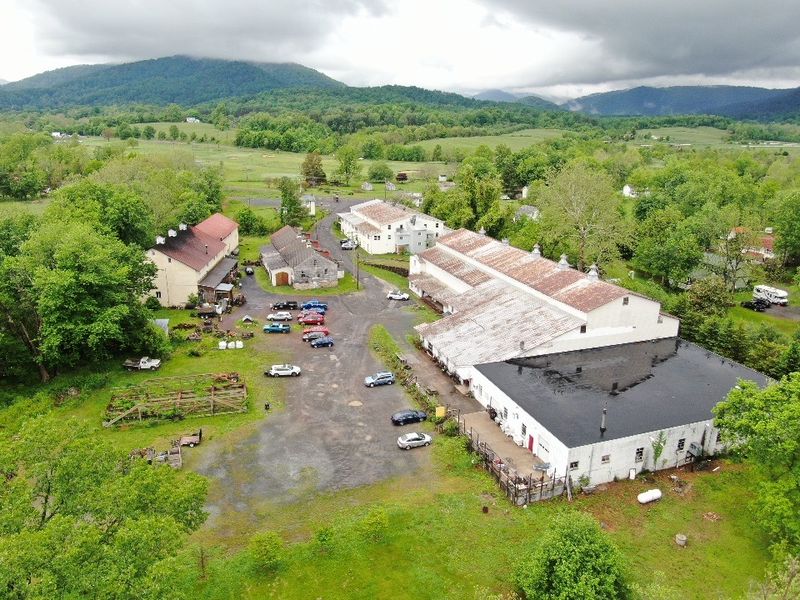
Mountain views make everything better. This village sits right at the Blue Ridge foothills.
Sperryville was laid out in 1820 beside the Thornton River and has changed little in its historic core since the early twentieth century.
That continuity helped place it on both the state landmarks register and National Register of Historic Places.
The historic district follows the main roads through town rather than forming a polished tourist square, helping preserve its working-village character. Art has become a major part of the modern mix.
The Sperryville ARTist Cooperative operates in the River District at 3 River Lane, with rotating work by painters, craftspeople, photographers, and mixed-media artists. Seasonal exhibitions also animate the riverfront area.
Central Coffee Roasters continues to roast small batches just west of the village, making it an easy pause before or after time outdoors.
Shenandoah National Park sits close by, and Old Rag and Whiteoak Canyon are the best-known hiking draws. Old Rag requires a day-use ticket from March through November, and visitors should check current parking information before setting out.
Fall brings the heaviest foliage traffic, while spring feels calmer and greener. Sperryville works just as well without a major hike: walk the historic streets, browse local art, follow the river, and let the mountains remain the backdrop.