Thousands Of Snow Geese Blanket This Washington Valley Every Fall In A Spectacle You Won’t Forget
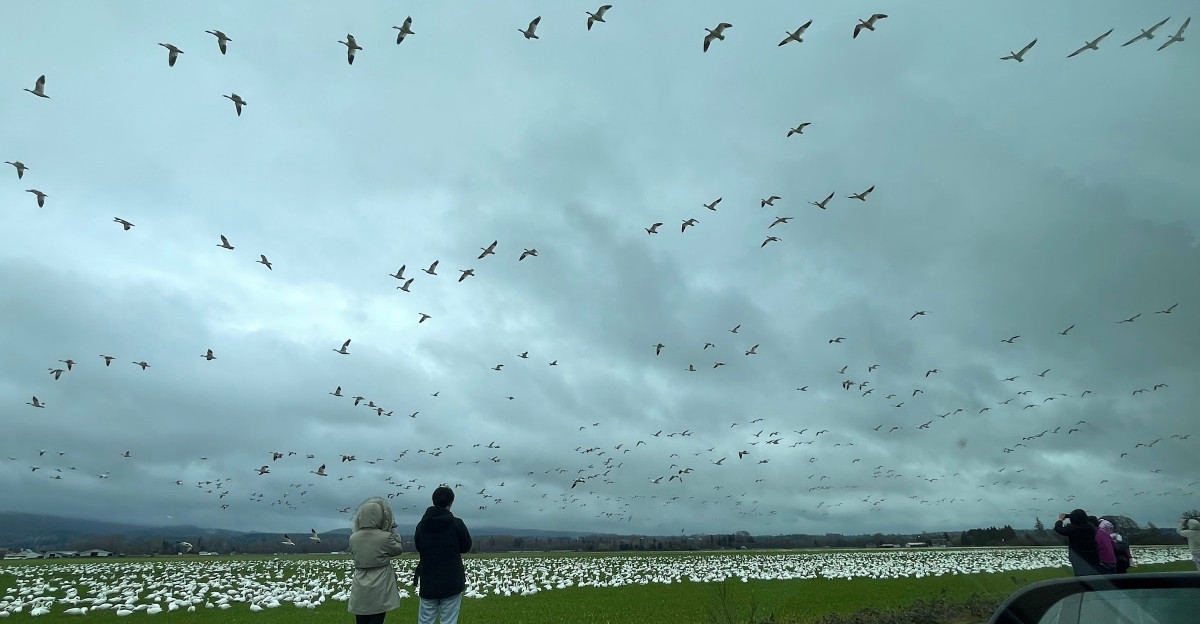
Thousands of white birds can make an ordinary Washington farm field disappear almost overnight.
Then, without much warning, the entire field seems to explode into the sky.
Wings roar overhead, honking fills the air, and everyone nearby reaches for a camera!
These snow geese travel all the way from the Arctic before gathering in the Skagit River delta each cold season.
The spectacle gets even wilder when bald eagles, swans, and hawks appear nearby.
You do not need a ticket to watch any of it. You just need good timing, because catching one enormous liftoff can become the kind of moment you talk about for years.
A Valley Turned Snowy White
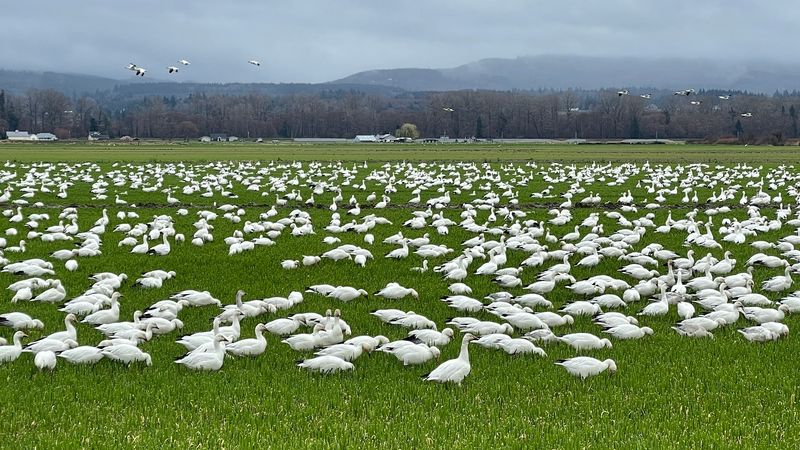
At first glance, a packed field can look like a surprise snowfall until the “snow” starts moving and calling.
Each fall, lesser snow geese settle onto farm fields and wildlife lands around Fir Island. Their bright white feathers stand out against dark soil, winter crops, and the flat agricultural landscape of western Washington.
Look closely, and you will spot black tips on their wings. Their feet and bills are a rosy pink, adding another easy field mark when the birds are close enough to see well.
A single bird may disappear into the landscape from a distance, but tens of thousands gathered together can transform an entire field.
A recent Skagit-Fraser survey estimated just over 71,000 geese in the broader flock, although the number visible in one field changes constantly as birds move between feeding and resting areas.
Most begin arriving around October and remain through early spring. That long window gives visitors more than one chance to catch a large gathering.
Fir Island Farm Reserve is reached from Fir Island Road, about 2.7 miles west of the South Fork Skagit River bridge in Conway.
Frequent Flyers From The Arctic
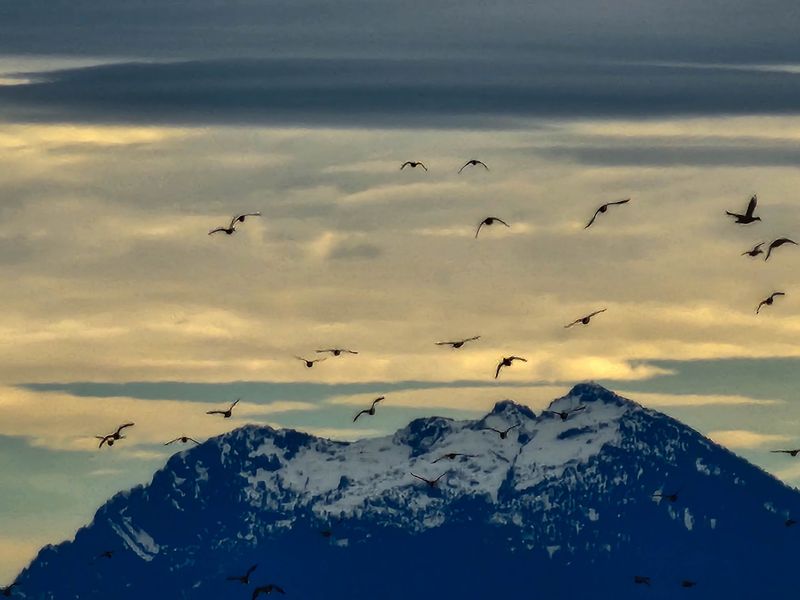
Talk about earning frequent flyer miles. These birds travel several thousand miles between their wintering grounds and Arctic breeding areas.
Many of the geese wintering around the Skagit and Fraser deltas belong to the Wrangel Island population of lesser snow geese.
They breed on Wrangel Island in Russia and move south through the Pacific Flyway before reaching Washington and other wintering areas farther south.
Winter farmland matters because the birds spend much of the season feeding and building energy reserves. Those reserves support the long spring migration and the breeding season that follows.
The birds follow a route called the Pacific Flyway. Large flocks use traditional stopover and wintering areas along that broad migration corridor.
Their annual movement connects landscapes that seem impossibly far apart. Arctic tundra, coastal deltas, agricultural valleys, and estuaries all become parts of the same cycle.
Knowing that journey changes the scale of the scene. A flock resting in a Skagit field is only one chapter in a migration spanning thousands of miles.
Farmers And Geese Share Lunch
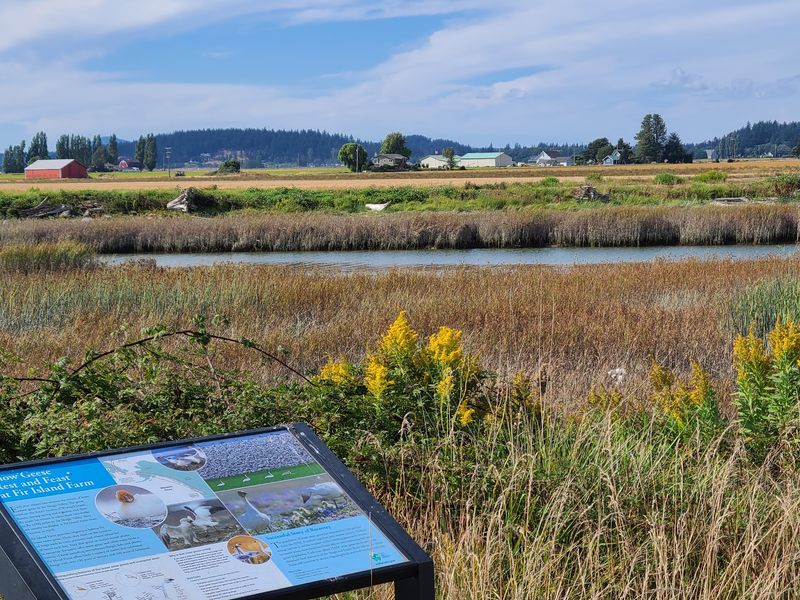
Here is a fun twist: part of the feeding ground is still managed agricultural land.
Fir Island Farm Reserve belongs to the larger Skagit Wildlife Area and was acquired in 1995 to provide an undisturbed feeding and resting area for wintering snow geese.
The entire unit now covers about 280 acres. After the 2016 estuary project, roughly 100 acres continued to be managed as farmed waterfowl forage while 131 acres were restored to tidal marsh and channels.
A local farming partnership keeps the agricultural portion productive. A commercial crop is grown and harvested during the regular season, followed by an overwintering cover crop of winter wheat that provides forage for snow geese.
The reserve itself functions as a protected refuge, giving geese, shorebirds, and other waterfowl a dependable place to feed and rest beside Skagit Bay.
Public access is intentionally limited to the entrance road, designated parking area, and short dike-top walking trail. That setup gives visitors a clear viewing area while leaving most of the reserve undisturbed.
Working farmland, managed wildlife habitat, and restored estuary all meet within one compact reserve.
Eagles, Swans, And Sneaky Owls
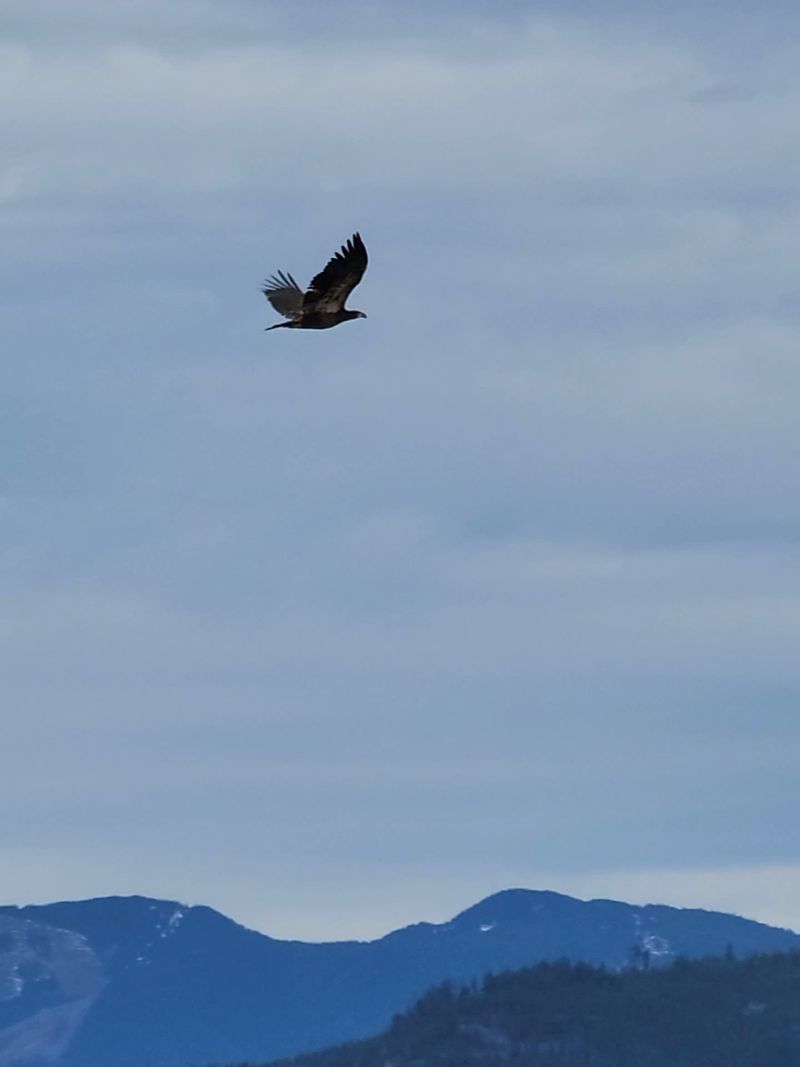
The geese may be the headliners, but the other winter birds deserve attention too.
Trumpeter swans and tundra swans use the Skagit lowlands in winter, and both can appear in the same broad agricultural landscape as the geese.
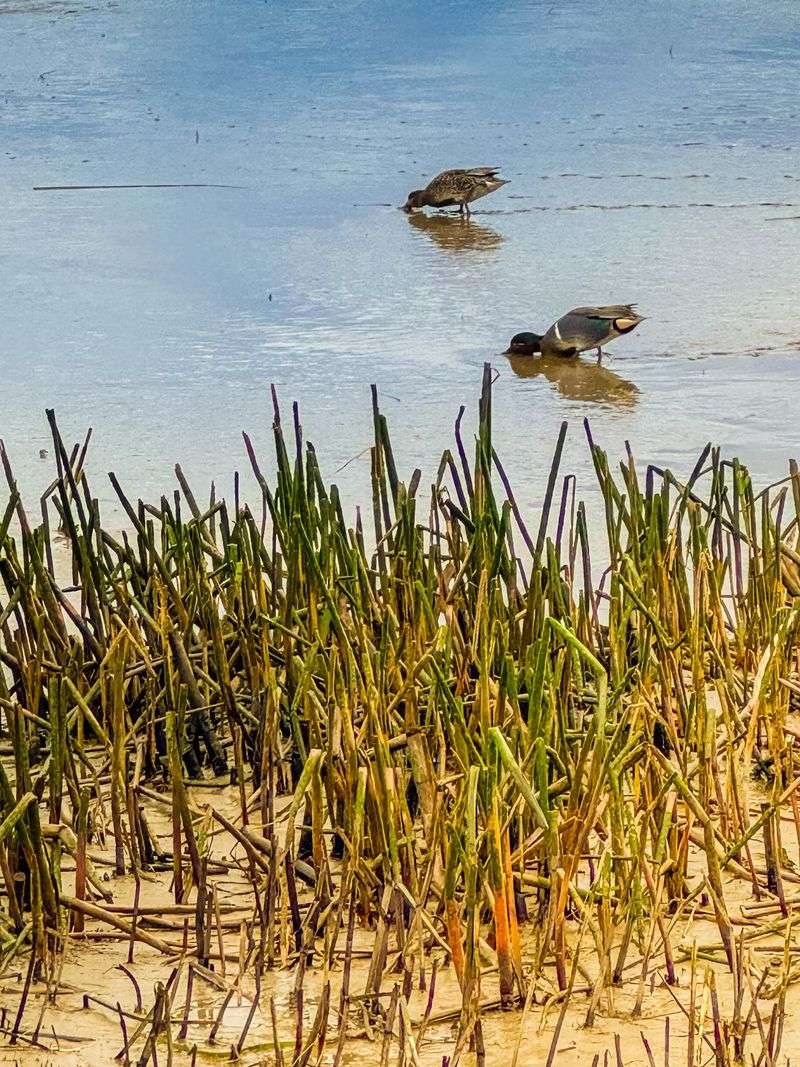
Ducks and shorebirds also move through the wildlife area, especially around wet fields, tidal channels, and estuary habitat.
Raptors add another layer. Bald eagles, northern harriers, and red-tailed hawks are regular winter visitors, and an active bald eagle nest sits near the reserve entrance road during nesting season.
Short-eared owls also occur across Fir Island and nearby Skagit Wildlife Area units. They favor open grasslands and marshy fields and can appear low over the landscape during the cooler season.
The variety makes binoculars useful even when the snow geese are far away. One scan may start with a white flock and end with a harrier gliding just above the grass.
A simple bird guide or identification app can help sort out the mix. The reserve is small, but the surrounding delta supports a much broader winter birding experience.
Where River Meets Salty Bay
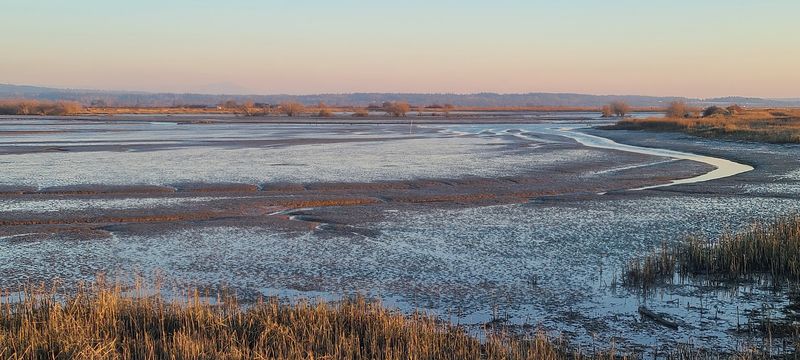
Fir Island sits in the Skagit River delta, where river water meets Skagit Bay.
This landscape was historically tidal marsh. Beginning in the late 1800s, dikes and drainage systems converted much of the estuary to agricultural land.
A major habitat project completed in 2016 restored 131 acres at Fir Island Farm Reserve to tidal marsh and channels. Crews set back about 5,800 feet of dike while adding drainage and flood-protection infrastructure for nearby farmland.
The restored channels now provide rearing habitat for juvenile Chinook salmon and other fish. Monitoring has confirmed that young Chinook use the site at levels comparable with other areas in the Skagit tidal delta.
The project was designed to support both habitat recovery and agriculture. Tide gates, a drainage storage pond, and a pump station help protect neighboring farms while natural tidal processes move through the restored marsh.
That makes the view more complicated than it first appears. Farm rows, managed goose forage, tidal channels, and salmon habitat all fit into the same working landscape.
Timing The Great Goose Liftoff
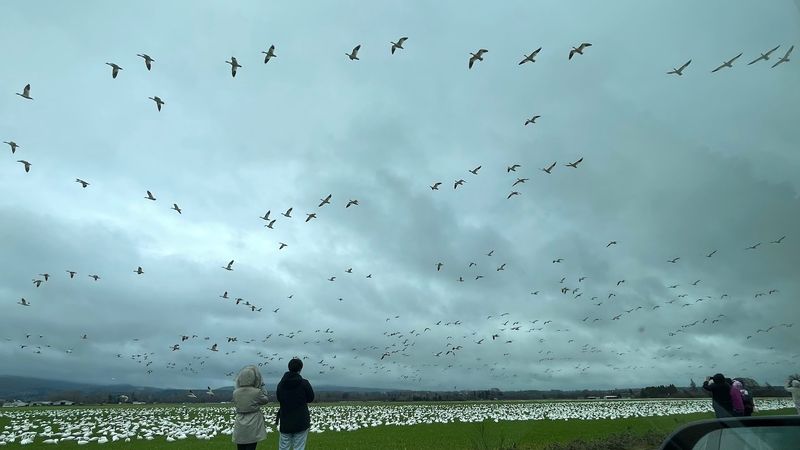
There is no guaranteed hour for the biggest show.
Snow geese move between feeding areas and resting sites throughout the season, and flock locations can shift from one day to the next.
Early morning and late afternoon can be productive times for bird activity, but a mass liftoff can happen whenever a large group decides to move.
That uncertainty is part of the appeal. One moment a field may look settled, and the next thousands of white wings can fill the air.
Large flock movements can be brief, so keeping binoculars ready helps. A longer camera lens is also useful because visitors should watch from designated public areas rather than approaching the birds.
The strongest season generally runs from mid-October through early spring. Numbers build after fall arrival and remain impressive through much of winter.
Conditions on neighboring lands can change where the birds choose to feed, so a quiet field on one visit does not mean the spectacle has ended.
Patience matters more than chasing a precise timetable. The Skagit flocks are mobile, and sometimes the best view comes simply from staying put long enough.
Pack Smart For Muddy Fields
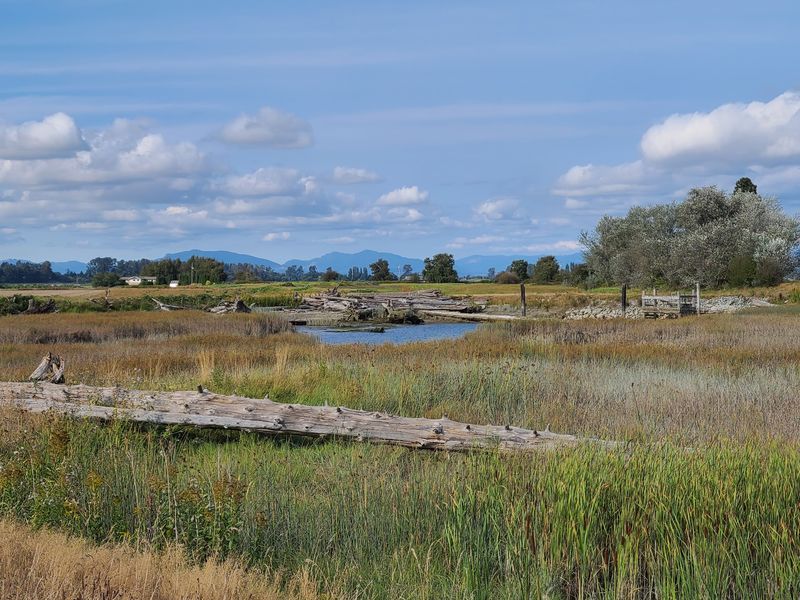
A little planning goes a long way out here.
A Discover Pass is required for vehicle access to this state wildlife property unless the vehicle already carries an eligible access pass. That requirement applies across many Washington wildlife lands.
Use the designated parking area and stay within the public access zone. The reserve is closed during hours of darkness, and there is no public restroom.
The walking route is short, following the entrance area and dike-top trail rather than winding deep into the fields. Two accessible parking spaces are available, but conditions can still feel damp, windy, and exposed during the colder months.
Layers, a warm hat, and weather-resistant footwear make the visit much more comfortable. Binoculars and a camera with a longer lens allow close-looking without moving toward feeding flocks.
Dogs are not allowed at Fir Island Farm Reserve, which reduces disturbance around wintering birds.
Keep voices low and give wildlife plenty of room. Snow geese need uninterrupted feeding time to maintain the energy reserves that carry them through winter and migration.
More Skagit Birding Nearby
One flock can easily turn a quick visit into a full birding day.
The Skagit Headquarters Unit, often called Wylie Slough, has long been a nearby option for wetland and estuary birding.
Access there can be interrupted during the ongoing Island Unit restoration project, so current closure notices are worth checking before leaving Fir Island.
Padilla Bay National Estuarine Research Reserve offers another easy extension. Its trails and parking remain open, and the short accessible route from the interpretive center leads to an observation deck over the bay.
Raptor fans can continue north toward the Samish Flats. The Samish River and Samish units are known for winter hawks, bald eagles, northern harriers, and short-eared owls across the open fields.
Farther up the Skagit River, winter also brings concentrations of bald eagles around Rockport and Marblemount. The annual Skagit Eagle Festival adds another reason to return during January.
Together, these sites make Washington’s north Puget Sound lowlands one of the easiest places to build a winter birding loop.
Fir Island Farm Reserve still delivers the most dramatic contrast: ordinary farm fields suddenly covered in white, followed by thousands of wings rising together.