This Old-School Jewish Deli In New York Serves Whitefish Locals Keep Coming Back For
New York mornings feel a little better when they begin with smoked fish, hot coffee, and a bagel piled exactly the way you like it.
This Upper West Side institution has been doing breakfast that way since 1908, and people still return like it is part of the weekend ritual.
The famous sturgeon gets plenty of attention, but whitefish, latkes, and other old-school favorites make staying for another plate very tempting.
White-coated waiters keep everything moving, while regulars settle in and enjoy the familiar rhythm.
Nothing here feels rushed or reinvented. You simply sit down, order something classic, and let more than a century of New York tradition do the rest.
A Deli Older Than Sliced Bread
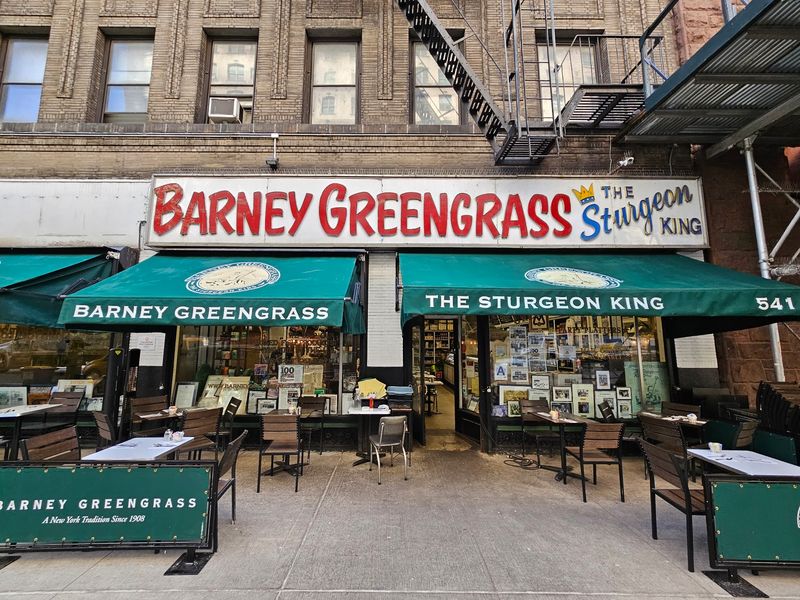
Barney Greengrass opened its first store in Harlem in 1908 at 113th Street and St. Nicholas Avenue, years before commercially sliced bread became commonplace.
The original goal was straightforward: build a specialty food store around quality ingredients and carefully prepared appetizing foods.
In 1929, the business moved to 541 Amsterdam Avenue, where it remains today. The move placed the shop firmly within New York’s Upper West Side and gave the growing business a permanent home.
The current location expanded in 1938 to include a restaurant section. That same year, a state senator gave the founder the nickname The Sturgeon King, a title that became part of the business identity.
Family stewardship continued across generations, and the business remains in the same family more than a century after it began.
The storefront still looks modest beside newer businesses on Amsterdam Avenue. Inside, the combination of deli counter, dining room, smoked-fish displays, and closely spaced tables keeps the experience connected to its earlier decades.
The address is 541 Amsterdam Ave, between West 86th and West 87th streets.
Whitefish Worth Waking Up For
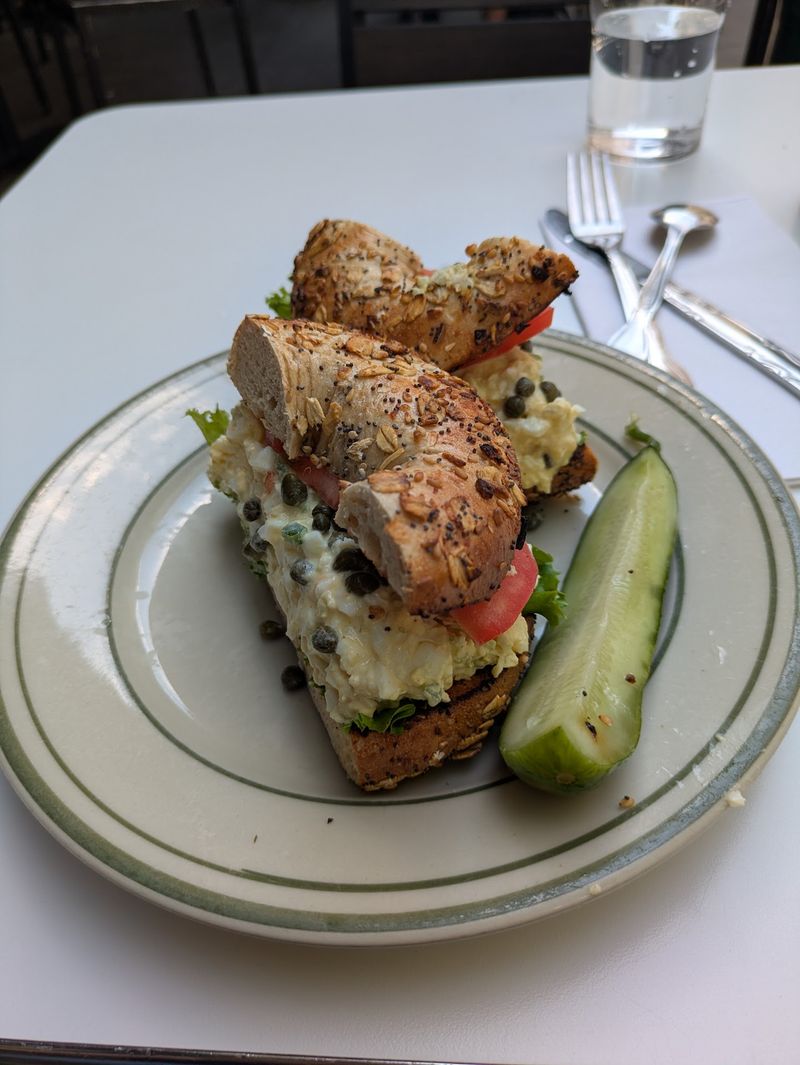
Whitefish is one of the clearest reasons to focus on the smoked-fish side of the menu.
The fish comes from cold-water lakes and is hickory-smoked fresh, giving it a firm but tender texture and a pronounced smoky character.
It can be ordered on its own, paired with Nova Scotia salmon, served on a platter, or built into a sandwich. Sandwich choices include rye, pumpernickel, bagels, and bialys, with butter or cream cheese available alongside.
The house whitefish salad takes another route. Smoked whitefish is chopped by hand and mixed with celery, onions, green peppers, and a small amount of mayonnaise.
That combination adds crunch without burying the fish. It also gives the salad enough structure to work especially well on a bialy or bagel.
Bialys have a softer texture than bagels and carry a mild onion flavor, making them a natural match for smoked fish.
Capers, tomato, onion, and scallion cream cheese can add sharper or fresher notes depending on the order.
Whitefish may share the counter with more famous choices, but it remains one of the foods that keeps this appetizing tradition distinctive.
A Dining Room That Still Looks The Part
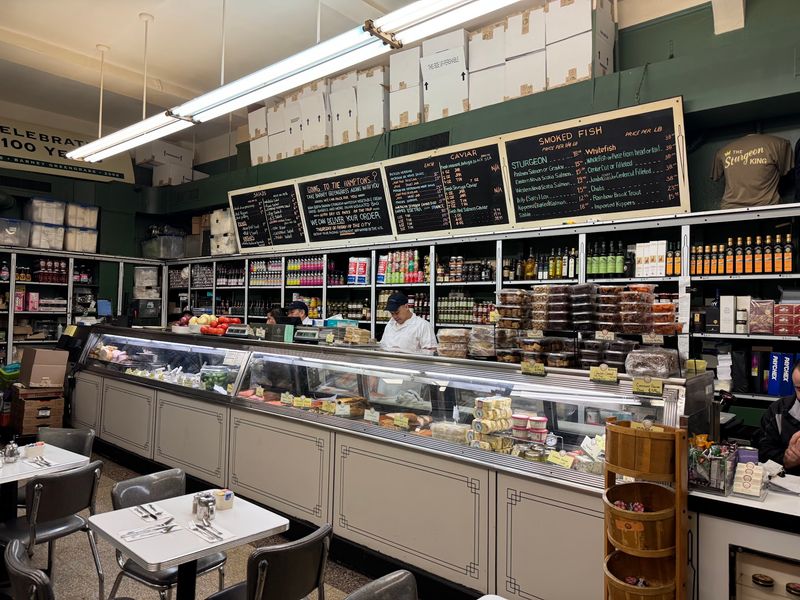
The dining room has never depended on polished modern design to make an impression.
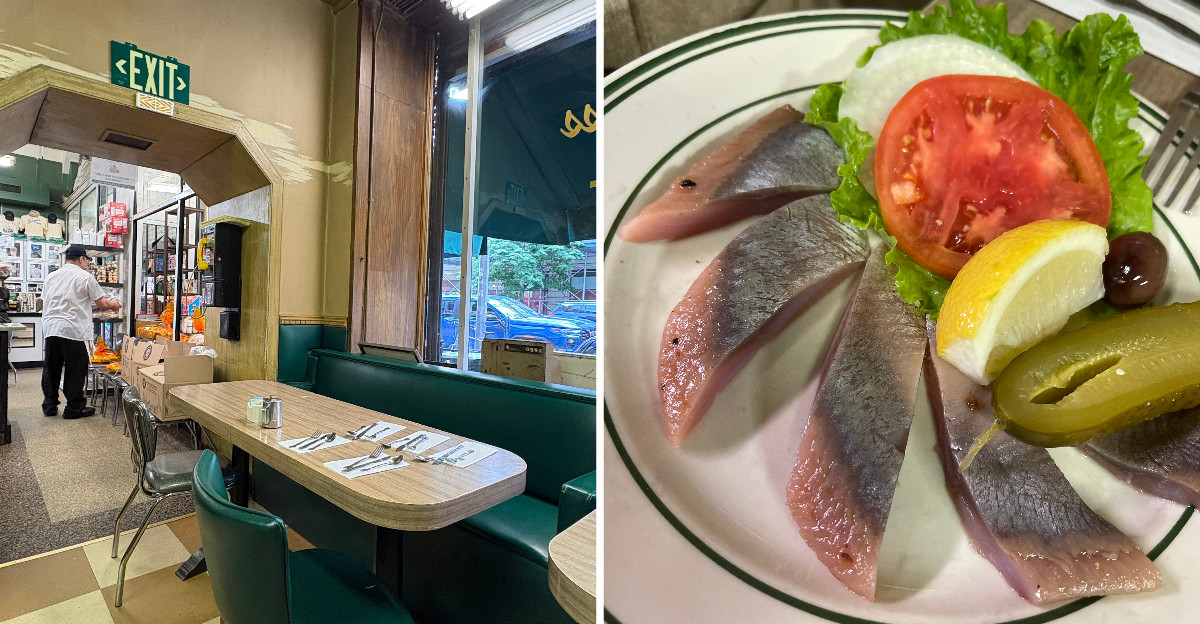
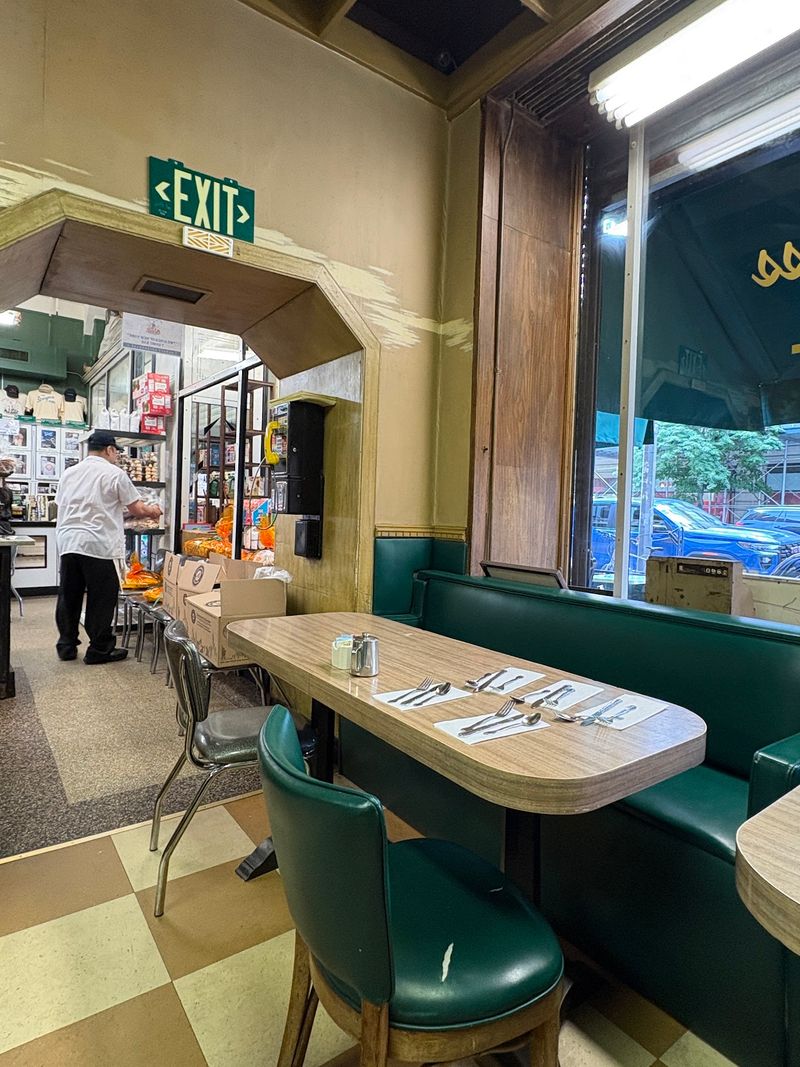
Vintage New Orleans-themed wallpaper dates to the mid-20th century, while Formica tables and older linoleum reinforce the sense that the room has changed gradually rather than all at once.
Tables sit close together, and the deli counter remains part of the visual experience instead of being hidden behind a separate dining area.
That compact layout gives the restaurant a naturally busy feel during popular breakfast and brunch hours.
White-coated servers remain part of the dining-room routine, moving between tables with coffee, plates, and smoked-fish orders.
The setting works because the food and surroundings belong to the same era of city dining culture. Nothing needs a decorative theme when the room already has decades of its own character.
For a quieter look at the details, weekday mornings generally offer more breathing room than the busiest weekend periods.
The atmosphere is old-fashioned without feeling staged, and the room still functions as a working restaurant rather than a preserved display.
Sturgeon Still Holds The Crown
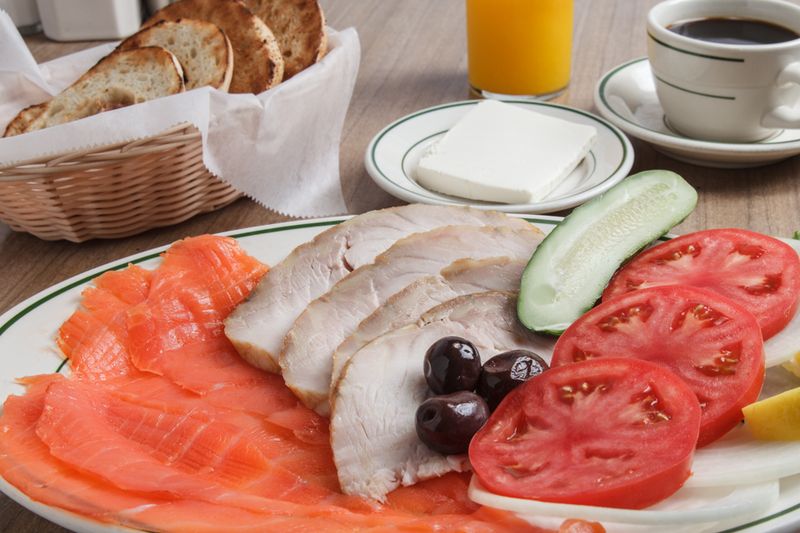
Whitefish may be the focus here, but sturgeon remains the signature fish most closely tied to the restaurant’s history.
The current menu serves it in several forms, including smoked-fish platters, sandwiches, and scrambled eggs with onions.
That egg preparation is one of the simplest ways to understand why smoked fish works so well at breakfast. The richness of the eggs softens the salt and smoke while the onions add sweetness.
A combination of sturgeon and Nova Scotia salmon can also be scrambled with eggs and onions, giving diners two distinct textures in one plate.
Sandwiches can be served on rye, pumpernickel, a bagel, or a bialy. Sturgeon can also be paired with Nova Scotia salmon or sable for anyone interested in comparing several smoked fish styles.
The menu keeps those preparations uncomplicated. Bread, fish, cream cheese, onion, tomato, and capers do most of the work.
That restraint is part of the point. The reputation was built on slicing and serving smoked fish well rather than hiding it under complicated additions.
More than eight decades after the Sturgeon King nickname appeared, the fish is still central to the counter.
Latkes And Other Old-School Favorites
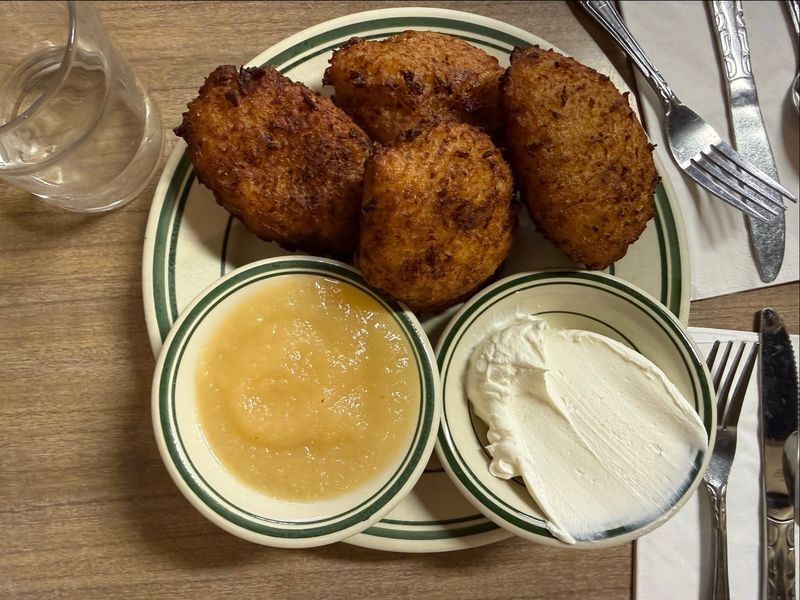
The menu extends well beyond smoked fish.
Latkes remain part of the specialty selection, alongside cheese blintzes, gefilte fish, knishes, borscht, and matzo ball soup.
The latkes fit naturally beside eggs or smoked fish, adding a crisp potato element to a meal built around softer textures.
Matzo ball soup offers a different kind of classic comfort, while cheese blintzes bring a lightly sweet dairy option to the table.
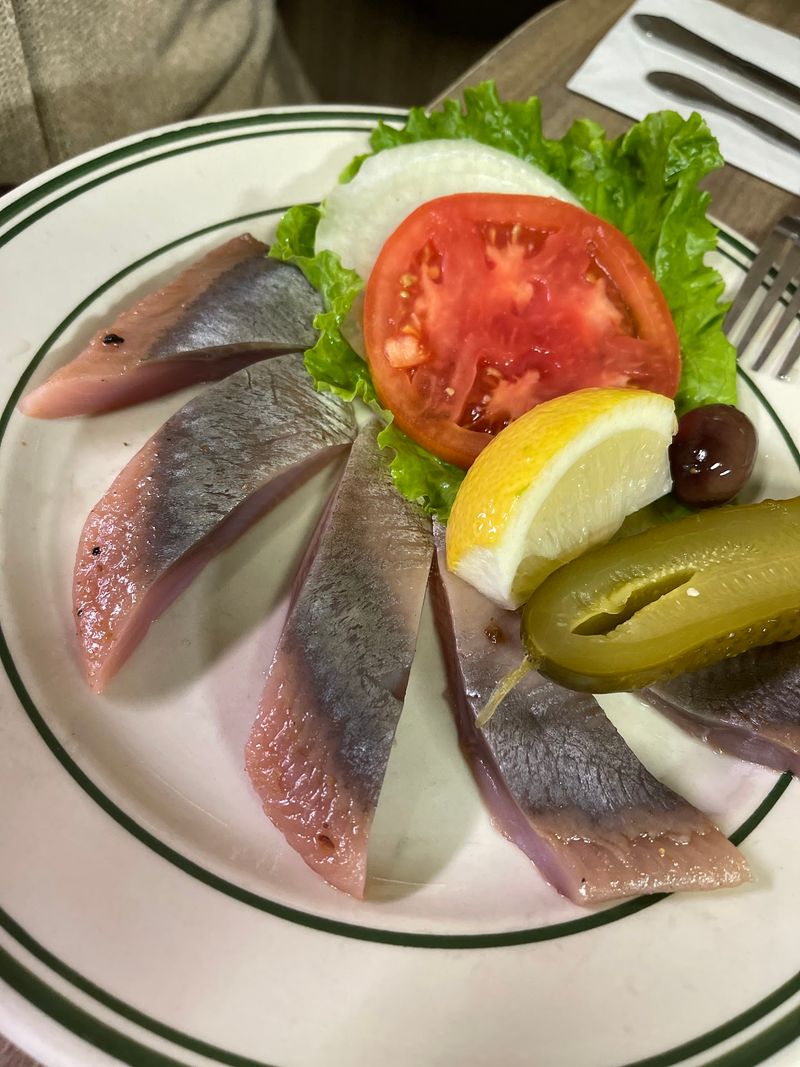
The restaurant menu also includes chopped chicken liver, egg salad, herring preparations, corned beef, pastrami, roast beef, tongue, and several sandwich combinations.
A pastrami Reuben remains available for anyone leaning toward the deli side rather than the appetizing counter.
Black-and-white cookies, rugelach, babka, macaroons, and other sweets extend the selection past breakfast and lunch.
The black-and-white cookie is an especially recognizable city finish, with its split icing and soft cake-like base.
Taken together, the menu shows why Barney Greengrass does not fit neatly into only one category. It preserves the smoked-fish focus of an appetizing shop while also carrying many dishes associated with a traditional Jewish deli.
What Appetizing Really Means
Appetizing is more than a description of the food. It refers to a specific Jewish American food-store tradition that developed in New York.
Historically, kosher dietary rules kept meat and dairy apart.
Delicatessens focused mainly on meats, while appetizing stores specialized in foods such as smoked and cured fish, cream cheese, herring, eggs, pickled vegetables, and other items commonly served with bagels or bialys.
Fish could fit naturally into that second category because it is neither meat nor dairy under Jewish dietary law.
The distinction explains why smoked fish became so closely connected to Sunday breakfast and holiday tables.
Hundreds of appetizing stores once operated across the city, especially during the middle decades of the twentieth century. Far fewer survived as shopping and dining habits changed.
Barney Greengrass remains one of the best-known examples of the tradition, even though its modern menu also includes meats and other deli dishes.
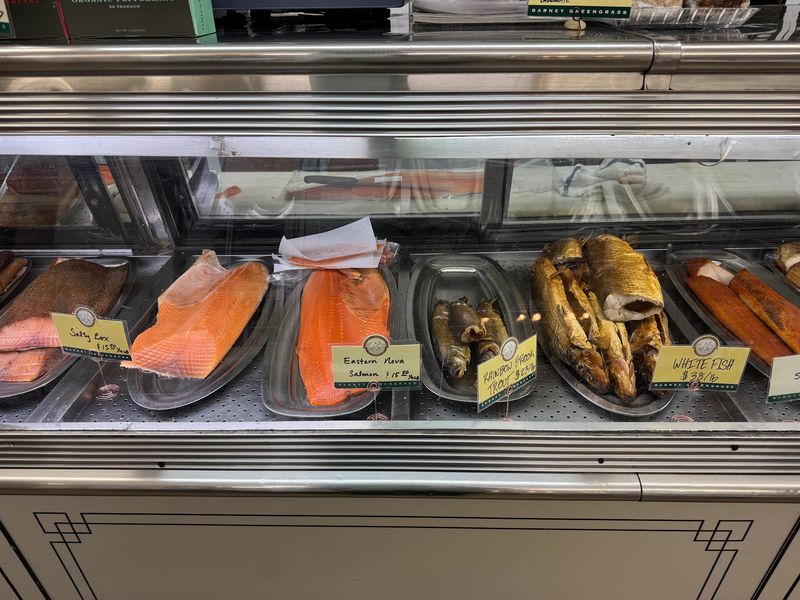
The display counter still reinforces that history. Whitefish, sturgeon, salmon, herring, spreads, bagels, bialys, and pickled foods remain core parts of the business.
Understanding that background makes the menu feel less like a collection of unrelated classics and more like a surviving piece of New York food history.
Recognition Without Changing The Formula
National recognition eventually followed the restaurant’s longevity.
In 2006, the James Beard Foundation honored Barney Greengrass as one of America’s Classics, an award associated with longstanding establishments deeply connected to their communities and culinary traditions.
By 2007, the business had also recorded a decade-long run at the top of a major city deli ranking.
More recently, the restaurant has continued to appear on prominent lists of notable city restaurants, but the underlying format remains remarkably familiar.
Smoked fish still anchors the menu. Orders still move through a compact dining room. The original Amsterdam Avenue location remains the center of the operation.
That continuity matters more than a long list of accolades.
The restaurant has lasted because the core products remain recognizable: sliced fish, eggs, onions, bagels, bialys, soups, salads, sandwiches, and sweets served without unnecessary reinvention.
For a business founded in 1908, maintaining that identity is an achievement on its own.
Plan Smart, Eat Happy
The retail counter and restaurant keep slightly different schedules.
The store is open Tuesday through Sunday from 8 a.m. to 5 p.m. The restaurant opens at 8:30 a.m., closing at 4 p.m. Tuesday through Friday and at 5 p.m. on Saturday and Sunday. Monday is the regular closing day.
The dining room currently operates on a cash-only basis, so arriving prepared avoids an extra stop after the meal.
Outdoor seating may be available when conditions allow, while the compact indoor room handles most of the classic sit-down experience.
The business also ships smoked fish, salads, breads, sweets, and other specialties around the country. Local delivery is available across much of Manhattan as well.
Holiday periods can bring especially heavy demand for bagels, smoked fish, spreads, and other foods associated with family gatherings, so advance planning is useful around major Jewish holidays.
For anyone exploring New York, the easiest approach is to arrive with time for a proper sit-down meal rather than treating the restaurant as a quick grab-and-go counter.