This California College Ranked No. 1 Among Small Colleges And Offers An Education That Can Be Surprisingly Affordable
Students at this school once hijacked a Rose Bowl card stunt so a stadium crowd saw the word Caltech. I love that. It tells me a lot about the place before any ranking does.
The school has fewer than 1,000 undergrads. Yet it sits at No. 1 among small colleges on major lists. Its people have earned dozens of Nobel Prizes. That ratio still blows my mind.
Now for the part I find hard to ignore. Families earning under a certain income can get aid that covers tuition, housing, and food.
No loans required. You read that right, and it’s happening in California.
I believe more parents should know about this. Brilliant science, wild pranks, and a price tag that can shrink a lot. So how does a tiny campus pull off that combo?
Say Hello To The Tiny School That Topped The Big Rankings
Small can be mighty, and the scoreboard proves it. The California Institute of Technology, better known as Caltech, ranks No. 1 among small private colleges in Forbes rankings.
Niche agrees, too. It names Caltech the Best Small College in America, which is a pretty nice trophy shelf.
So what counts as small here? Caltech has roughly 987 undergraduates and around 2,430 students in total.
That number is lower than many big-city high schools. You could fit the whole undergrad crowd into a modest concert hall with seats to spare.
The school focuses hard on science and engineering. Its private research setup dates back to 1891, so it has had time to practice.
Why should you care about size? A small school means fewer students compete for the same professors, labs, and chances.
At Caltech, that tiny head count pairs with world-class research power. It is a rare mix that bigger campuses struggle to match.
Thinking about colleges for yourself or your kid? Don’t skip a school just because the student body looks tiny.
Sometimes the smallest name on the list carries the biggest punch. Caltech is a clear example of that.
Your Wallet Will Like How Caltech Handles Financial Aid

Sticker shock is real, but sticker prices are not always the final word. Caltech meets 100 percent of each student’s demonstrated financial need.
That aid comes as a blend of grants, scholarships, work-study jobs, and some loans. The goal is to close the gap your family can’t cover.
Here comes the part that makes parents sit up straight. Families with typical assets and incomes under 100,000 dollars a year can often get a no-loan package.
For qualifying families, that package can cover tuition, fees, housing, and food, although additional expenses such as books and personal costs may remain.
Families earning under 200,000 dollars with typical assets can also expect aid that covers tuition. That is a big relief for many middle-income households.
For the fall 2026 class, the average grant was nearly 69,000 dollars. Grants don’t need to be paid back, which is the best kind of money.
Somewhere around half or more of Caltech students receive some form of aid. You would not be alone in asking.
My advice? Run the net price calculator before crossing a dream school off your list. The real number might surprise you in a good way.
Your Bank Account Stays Out Of The Admissions Room
Money talks in plenty of places, though not in this admissions office. Caltech uses need-blind admissions for domestic students.
That means your family’s finances don’t affect whether you get accepted. The school looks at you, not your parents’ paycheck.
Why does this matter so much? Some students skip applying to top schools because they assume they can’t afford them.
Need-blind policies remove one big worry from the process. You can apply based on your talent and curiosity.
Of course, getting in is still tough. Caltech is known for an extremely low acceptance rate, so strong grades and a love of science help.
Still, a hard admissions process is different from a closed door. Plenty of admitted students come from families who never expected to afford a school like this.
Here is a practical tip. Fill out your financial aid forms carefully and on time, even if you think you won’t qualify.
Many families underestimate how much help they could receive. A few hours of paperwork can open up a surprising amount of support.
Dream big, apply honestly, and let the numbers come after. That order works in your favor here.
You Get Three Students For Every Professor, And That Changes Everything
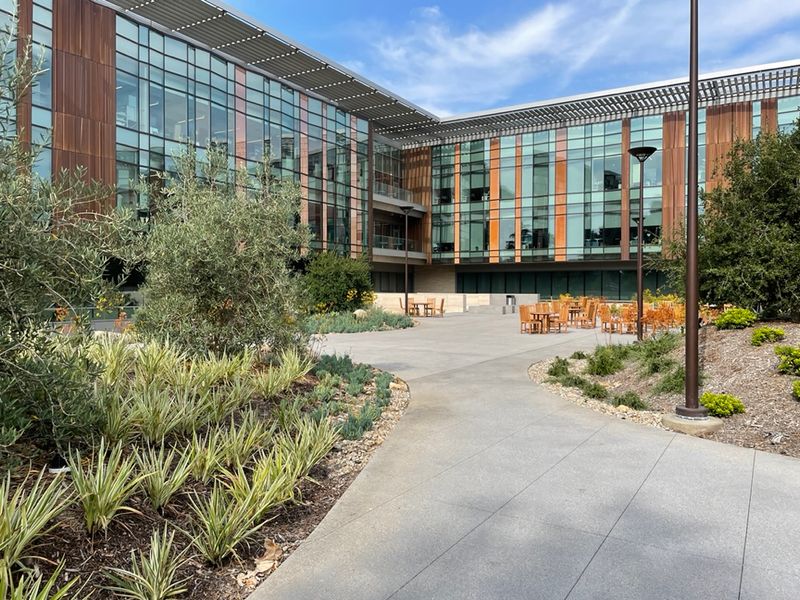
Three to one. That is the student-to-faculty ratio at Caltech, and it sounds almost made up.
At many big universities, intro classes can fill giant lecture halls. Here, core classes often have around 12 to 14 students.
Picture asking a question and actually getting a real answer. Your professor might even remember your name by week two.
That kind of attention helps when the material gets tough. And at Caltech, the material gets very tough.
The school is famous for a rigorous curriculum in science and engineering. Small classes make that challenge easier to handle with support nearby.
Students also learn to work in teams. Close group work helps ideas bounce around faster than a ping-pong ball.
There is a fun bonus for first-year students. Freshman pizza seminars introduce them to cutting-edge research over slices.
Learning about new science while eating pizza? That sounds like a solid Tuesday plan to me.
If you learn best by talking things through, this setup could be a great fit. Small rooms mean big conversations.
Real Research Starts Way Earlier Than You Think
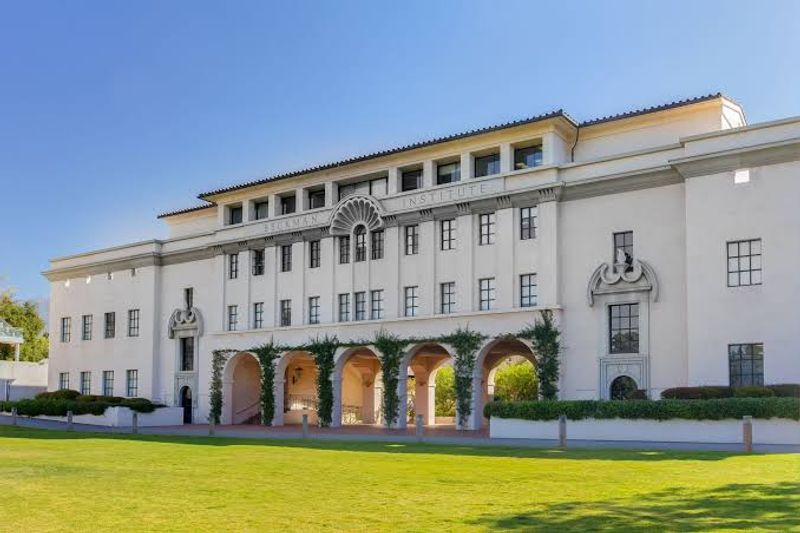
Lab coats are not just for grad students on this campus. Nearly every Caltech undergraduate takes part in serious research.
That means real projects with real faculty. You are not just washing test tubes in the corner.
The school’s research record speaks for itself. Caltech scientists developed the Richter scale for measuring earthquakes.
The first empirical proof of antimatter, the positron, also came out of Caltech work. Not bad for a small campus in Pasadena.
More recently, Caltech helped detect gravitational waves for the first time. It co-founded and co-manages the LIGO observatory with MIT.
Researchers have discovered dwarf planets too. They have even built bionic jellyfish to collect ocean data.
Today, teams work on quantum computing, artificial intelligence, and sustainability science. Those fields will shape the next few decades.
Faculty and alumni have earned 46 Nobel Prizes. They also count 58 National Medal of Science winners.
For a curious student, this is gold. Early research builds skills, confidence, and an impressive resume before graduation.
Space Fans, Get Ready To Meet NASA’s Jet Propulsion Laboratory
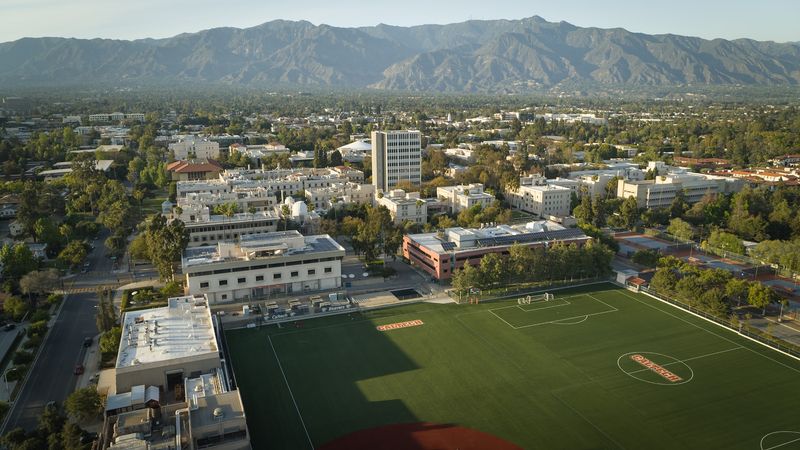
Mars rovers have a connection to this college. Caltech manages NASA’s Jet Propulsion Laboratory, better known as JPL.
JPL leads many robotic space missions. Students get a rare doorway into that world of space exploration and research.
Most colleges can only dream about a link like this. At Caltech, it is part of the package.
Love rockets, planets, or telescopes? This connection gives you chances to learn from people who send machines across the solar system.
Curious kids who stare at the night sky often grow into the scientists who explore it. Caltech gives them a running start.
The school offers 28 undergraduate options, which is Caltech’s word for majors. They span six academic divisions.
Students also take a strong core in humanities and social sciences. Writing and clear thinking matter, even for future rocket builders.
That balance makes sense to me. A great idea needs a great explanation to get funded and shared.
If space makes your heart race, keep this school high on your list. Few places in California put the stars this close to the classroom.
Prepare To Laugh At Some Of The Cleverest Pranks In College History

Some schools are famous for football, and Caltech is famous for pranks. Brilliant minds clearly need a creative outlet.
In 1961, students secretly changed the University of Washington’s card stunts at the Rose Bowl. The crowd ended up spelling Caltech.
Then came 1987. Caltech students altered the Hollywood sign to read CALTECH, using temporary coverings over parts of the original letters.
In 2005, Caltech students visited MIT’s preview weekend and distributed about 400 prank T-shirts. The front said MIT, and the back said Because Not Everyone Can Go To Caltech.
Ouch, but also hilarious. The rivalry between these two science schools is a long and funny one.
Back in 1972, a student’s dorm room vanished. Pranksters filled it with crumpled paper, plastered it over, and repainted the wall.
Another time, students replaced 76 chairs outside a campus cafe with toilets. Lunch got a lot more awkward that day.
What do these stunts show? Planning, teamwork, and a lot of engineering skill, all used for laughs.
Honestly, I think that playful spirit makes the school feel human. Genius and goofiness can share a campus just fine.
Join A House With Cannons, Pumpkins, And Pie At 1:59 A.M.
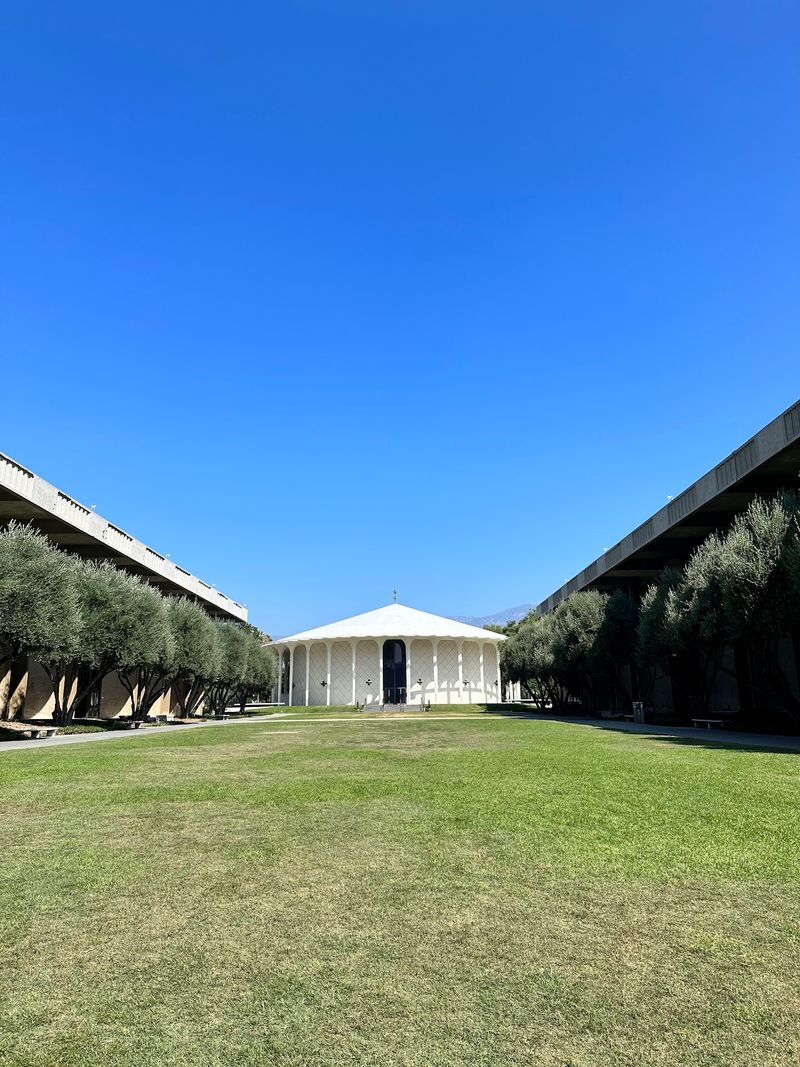
Forget fraternities. Caltech undergrads join one of eight houses, each with its own customs and family-style dinners.
Think of it like a big extended family. You eat together, celebrate together, and probably study together late at night.
Fleming House fires its cannon several times a year. Yes, a real cannon, and yes, people notice.
Every Halloween, Dabney House drops pumpkins frozen in liquid nitrogen from Caltech Hall. Students hope to spot triboluminescence, a tiny flash of light when things crack.
Before winter break, Lloyd House strings lights down the nine stories of Caltech Hall. The result is a glowing light tree.
Pi Day on March 14 gets special treatment. Students celebrate at 1:59 a.m. with 26 kinds of pie and paper chains showing pi’s digits.
Seniors have Ditch Day, too. They leave tricky puzzles for underclassmen to solve before commencement.
Interhouse Parties feature student-built dance floors and light shows. Engineers clearly know how to throw a party.
Sports are friendly here, with many teams using a no-cuts policy. A joke T-shirt even brags that Caltech football is undefeated since 1993, the year the team ended.
Stroll Past Turtles And Jacarandas On A Campus Built For Wandering
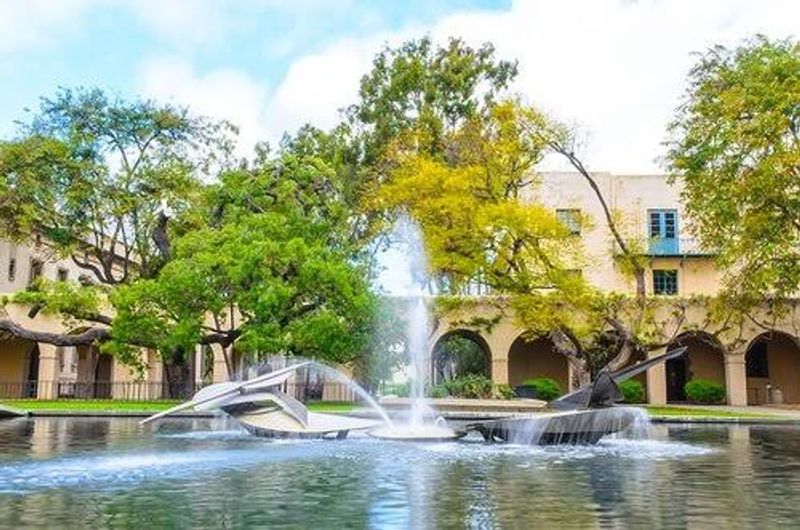
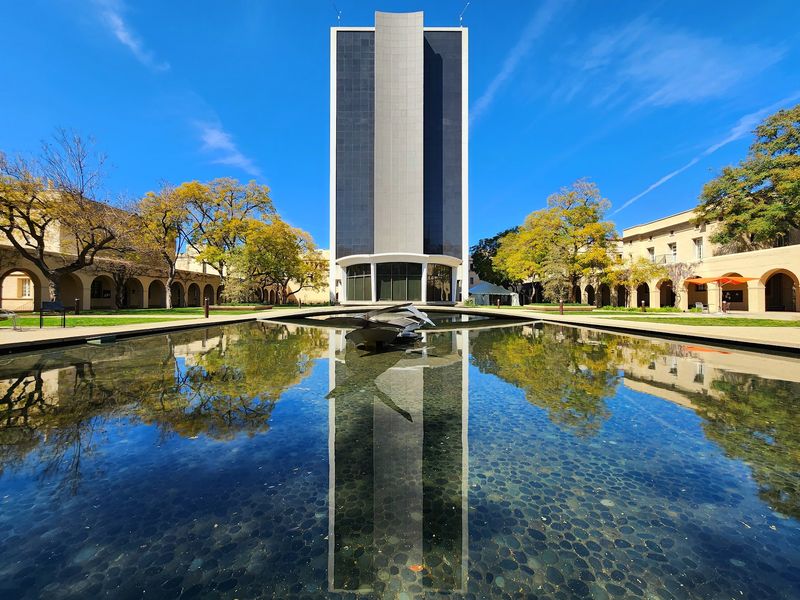
Turtles sunbathing near a world-famous science lab? That is a normal afternoon at Caltech.
The campus sits at 1200 E. California Blvd. in Pasadena, California. It covers 124 acres of lush grounds.
The turtle pond is a favorite stop. Fountains, historic buildings, and groves of eucalyptus and jacaranda trees fill out the scene.
Much of the architecture draws on traditional Spanish mission style. Arches and shady walkways give the place a calm, timeless feel.
Here is a fun bit of history. The Athenaeum, a faculty club on campus, once hosted Albert Einstein during his visits.
Walking where Einstein walked is a pretty cool bragging right. It makes a simple stroll feel a little more special.
The grounds are open to the public. Caltech offers a self-guided walking tour map online, plus guided tours.
Planning a visit? Weekday offices run on standard business hours, and summer days can get hot.
Bring water, comfy shoes, and some curiosity. Even if you never apply, this campus makes a lovely Pasadena outing.