10 Places In Maryland That Feel Like You’ve Traveled Far Beyond The State
A weekend gets more interesting when the itinerary starts feeling like it belongs in three different countries.
Maryland packs that kind of surprise into places that can change the mood of a day.
Wild horses, elaborate gardens, historic streets, and unusual landmarks keep the plan wonderfully unpredictable.
That is where the fun kicks in.
You may leave home expecting a simple outing and end up with photos that look like they came from a much bigger trip.
The real challenge is choosing which escape feels most transportive, because a few of these stops may have you checking the map twice.
1. Ladew Topiary Gardens, Monkton
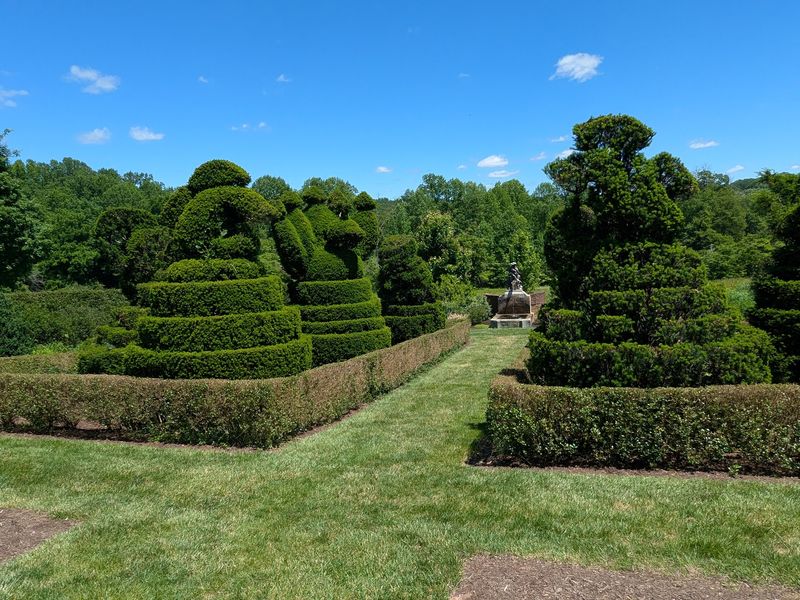
Just imagine for a second a hedge that gallops. Picture green hounds chasing a green fox across the lawn.
That scene is real at Ladew Topiary Gardens in Monkton, where 22 acres hold more than 100 clipped sculptures, a historic manor, formal garden rooms, and a one-mile Nature Walk.
The famous Hunt Scene reflects founder Harvey S. Ladew’s interest in fox hunting and the topiary traditions he encountered during travels in England.
Fifteen themed garden rooms create a surprisingly varied route, shifting from bold color schemes to roses, sculpture, lawns, and carefully framed views.
The house adds another layer to the visit. Its rooms preserve furnishings and collections connected to Ladew’s life, while the gardens outside keep changing through the growing season.
For a quieter stretch, the self-guided Nature Walk crosses woodland and wetland habitat, with interpretive signs, a boardwalk, and a bird blind along the way.
This corner of Maryland feels playful without becoming gimmicky. The formal design is precise, yet the living sculptures keep the mood light.
Ladew is open seasonally from spring through October, and the property is at 3535 Jarrettsville Pike. Comfortable shoes make sense because the best visit involves more than one loop.
A camera helps too, although the foxhunt topiary may steal most of the attention before the rest of the garden gets a fair chance.
2. National Shrine Grotto Of Our Lady Of Lourdes, Emmitsburg
You would take the words right out of my mouth by calling this calm. A hush settles over the forest the moment you arrive.
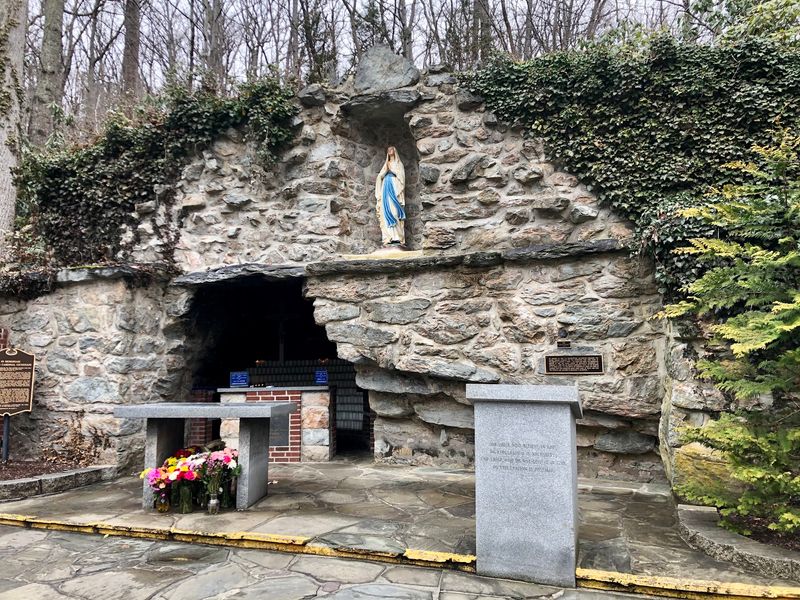
The National Shrine Grotto of Our Lady of Lourdes rises on St. Mary’s Mountain near Emmitsburg, where wooded paths connect devotional spaces, gardens, chapels, and overlooks.
Its story reaches back to the early 1800s, when a simple cross marked a natural grotto on the mountain. Saint Elizabeth Ann Seton later spent time here and taught children near a large rock that remains part of the site’s history.
The stone reproduction of the Lourdes grotto in France came later. Mount St. Mary’s seminarians built it in 1875, only seventeen years after the Lourdes apparitions.
Above the trees, the Pangborn Memorial Campanile adds a dramatic vertical landmark, crowned by a large statue of Mary. Benches appear throughout the grounds, making it easy to pause between the shrines and garden paths.
This is an active Catholic pilgrimage site, so a respectful pace and quiet voice suit the setting.
Plan at least forty-five minutes, though a visit can stretch longer. The shrine is at 16330 Grotto Road, and the wooded setting makes the short climb feel removed from everyday traffic.
3. Brookside Gardens, Wheaton
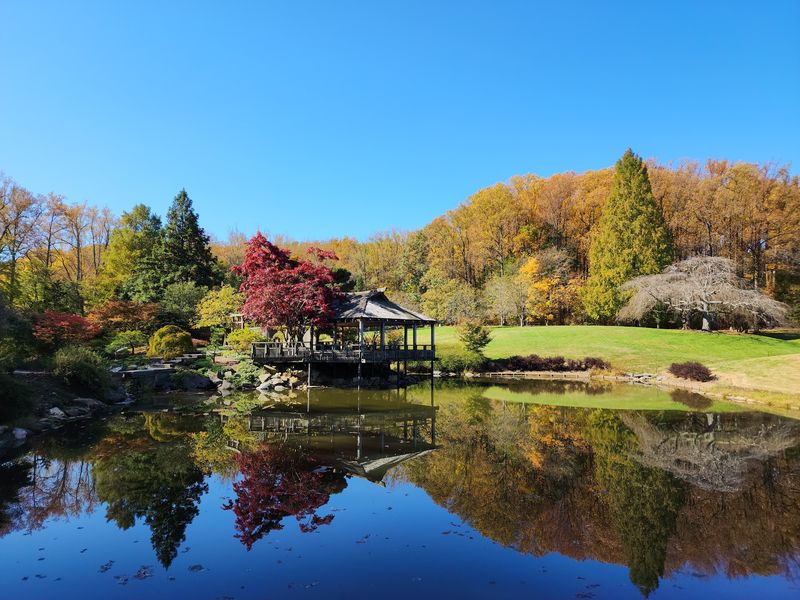
It makes you wonder, doesn’t it, how tulips sneak into suburbia? One minute you see traffic, and then rows of color appear.
Brookside Gardens in Wheaton spreads across about 50 acres inside Wheaton Regional Park, with formal gardens, ponds, wooded paths, two conservatories, and varied seasonal displays.
Spring bulbs fill the beds first, while the Idea Garden alone features more than 10,000 flowering bulbs before summer plantings take over.
The Gude Garden shifts the mood completely. Rolling hills, ponds, a Japanese-style teahouse, and an accessible viewing platform create a quieter corner for slowing down.
Nearby, the Aquatic Garden centers on water-loving plants, while the Azalea Garden carries hundreds of varieties through a long spring bloom period.
The conservatories keep color going year-round with tropical plants and rotating seasonal displays.
From April through early September 2026, the South Conservatory also hosted the Butterfly Experience, a renamed and refreshed version of the former Wings of Fancy exhibit.
Winter brings another transformation when Garden of Lights fills the grounds with illuminated displays.
General garden admission remains free, although some seasonal events require separate tickets. Outdoor gardens are open from sunrise to sunset, and the main entrance is at 1800 Glenallan Avenue.
Paved and accessible routes make this one of the easier garden stops to explore comfortably, even when the flower beds tempt you into a second lap.
4. Swallow Falls State Park, Oakland
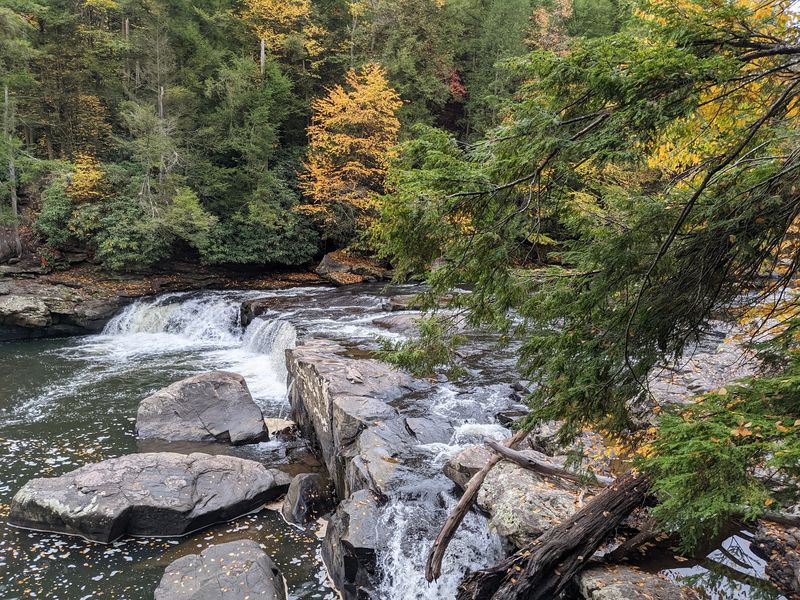
I had to do a double-take at the first roar of water. Maryland mountains hide some serious wild-country drama.
Swallow Falls State Park near Oakland is built around rushing water, steep ravines, and an old-growth stand of eastern hemlock and white pine.
Some trees in this forest are reported to be at least 360 years old, giving the short Canyon Trail a scale that feels much bigger than its mileage.
Muddy Creek Falls is the centerpiece. The water drops 53 feet, making it the highest free-falling waterfall in the state.
The 1.25-mile Canyon Trail also passes Upper and Lower Swallow Falls before looping through rocky forest beside the Youghiogheny River.
Wet weather can make the route slick, so sturdy footwear matters more here than the modest distance suggests.
The park remains open for day use in 2026, but the campground and shelter are closed from May through early December during paving and culvert work.
Summer weekends and holidays also use a day-use reservation system, which is worth planning around before a long drive west.
Picnic areas make an easy break after the loop, and a separate 5.5-mile trail connects the park with Herrington Manor through Garrett State Forest. The GPS entrance is 2470 Maple Glade Road.
5. Assateague Island National Seashore, Berlin
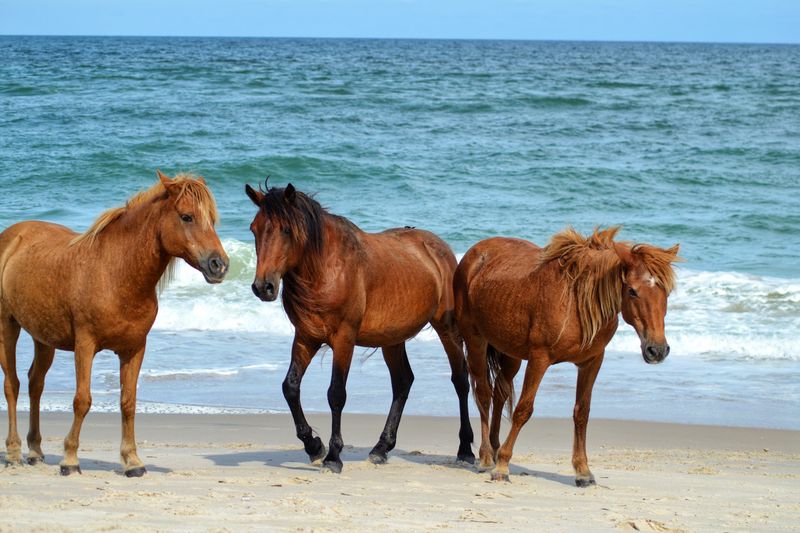
Would you believe me if I told you horses roam the beach? They wander past beach towels like they own the sand.
Assateague Island National Seashore stretches along a barrier island where ocean beach, salt marsh, maritime forest, and dunes all fit into one coastal landscape.
The free-roaming horses are descendants of domesticated stock living on the island for centuries, and the National Park Service manages the northern herd separately from the herd farther south.
The old story that the horses arrived from a wreck at sea remains unproven. Historical evidence instead points toward mainland owners placing livestock on barrier islands as early as the seventeenth century.
Today, the animals move freely through campgrounds, roadsides, marshes, and beach areas, so distance matters. Keep at least 40 feet away and never feed or touch them.
Wildlife extends well beyond the horses. Ghost crabs appear along the sand, shorebirds work the waterline, and bayside routes open quieter views across the marsh.
Kayaking, surf fishing, swimming, and camping change the pace with the season.
Spring and fall usually bring milder conditions, while summer adds heat, insects, and larger crowds. Food should stay secured whenever it is not being eaten because wildlife can be persistent around campsites.
The visitor center is at 11800 Marsh View Lane near Berlin. Few coastal stops combine open beach, marshland, and free-roaming horses this naturally.
6. Glenstone, Potomac
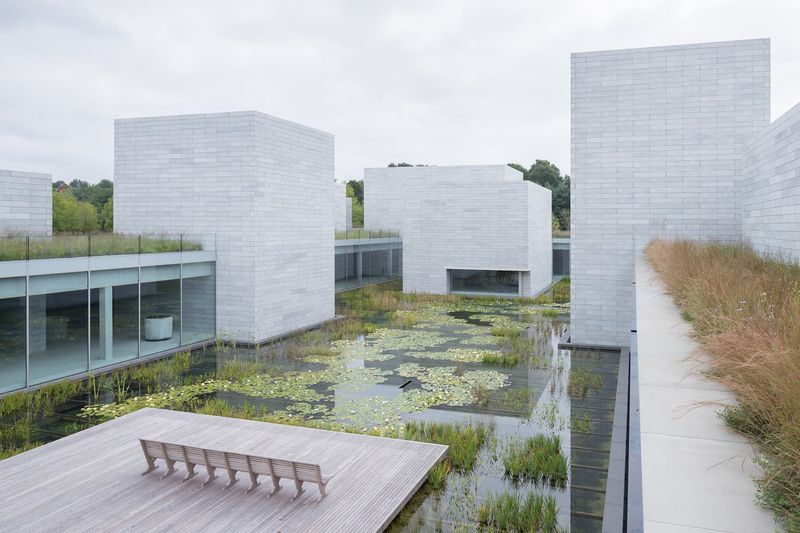
I’m still trying to wrap my head around how quiet art can feel. Here, meadows and sculptures share the same breath of air.
Glenstone in Potomac brings modern and contemporary art with architecture across more than 230 acres of meadows, woodland, streams, and carefully shaped paths.
The original Gallery opened in 2006, while the Pavilions followed in 2018, with eleven rooms around an 18,000-square-foot Water Court.
The grounds are part of the museum experience rather than scenery between buildings. Thousands of native trees have been planted across the property, and outdoor works appear gradually along the routes.
One recognizable example is Split-Rocker, a 37-foot flowering sculpture planted with tens of thousands of live plants.
Inside the Pavilions, changing light and the central water garden create a much quieter rhythm. Photography is not allowed indoors, keeping the focus on the artwork. Outdoor photography is permitted within the visitor guidelines.
Admission is always free, but timed tickets are required and are released monthly. Glenstone welcomes visitors age twelve and older, so this one works best for teens and adults rather than younger children.
Comfortable shoes help because the campus is large and much happens between buildings. Parking is also free.
The entrance is at 12100 Glen Road. A half-day visit gives the art, architecture, and landscape enough room to work together without turning the outing into a race.
7. Rawlings Conservatory & Botanic Gardens, Baltimore
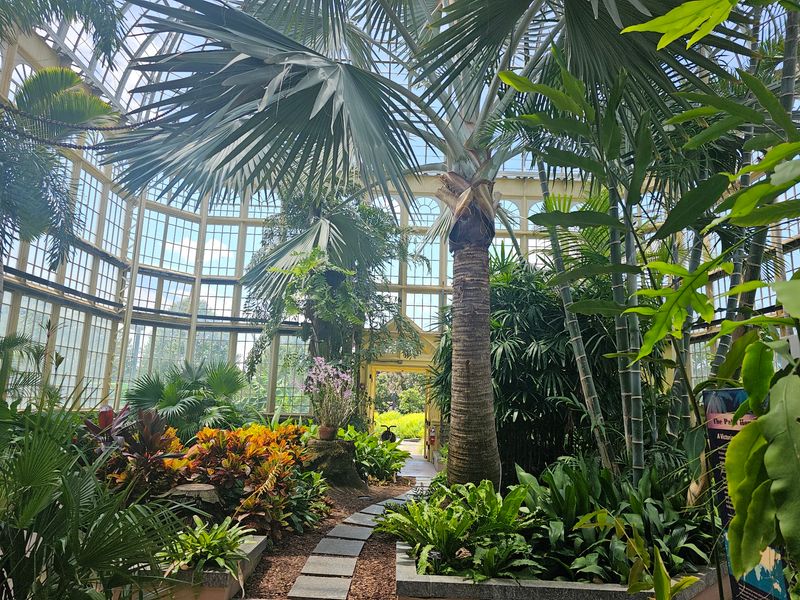
Call me crazy, but a tropical getaway can hide in Baltimore. Winter outside melts away once the warm air hits.
The H.P. Rawlings Conservatory & Botanic Gardens stands inside Druid Hill Park, where its original Palm House opened in 1888.
The glass-and-iron complex now includes five greenhouse environments: the Palm House, Orchid Room, Mediterranean House, Tropical House, and Desert House.
The Palm House remains the architectural centerpiece, with soaring glass that makes room for tall tropical specimens.
Nearby, orchids rotate according to bloom, while the Mediterranean House favors plants adapted to dry summers and mild winters. The Tropical and Desert houses push the climate contrast even further, making a single visit feel surprisingly varied.
Outside, planted beds add seasonal color from spring through fall. Winter shifts attention indoors, when the conservatory’s holiday display brings poinsettias and other seasonal plants into the glasshouses.
The site also forms part of the Druid Hill Park Historic District on the National Register of Historic Places.
The conservatory is currently open Wednesday through Sunday, with longer weekend hours, and free parking is available nearby.
Find it at 3100 Swann Drive. This Baltimore landmark delivers an easy climate change, moving from desert textures to humid tropical foliage in the space of a few rooms.
8. Historic London Town & Gardens, Edgewater
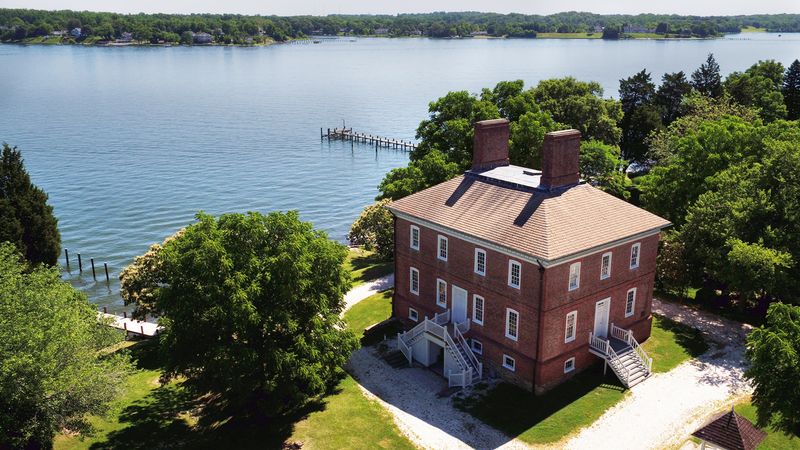
Let’s be real for a second, time travel sounds fun. A colonial port town is about as close as it gets.
Historic London Town & Gardens in Edgewater covers 23 riverfront acres along the South River, combining archaeology, reconstructed buildings, a landmark house, and gardens.
London Town was established by legislation in 1683 and became a county seat and trading port before changing transportation patterns reduced its prominence.
The c.1760 William Brown House is the only surviving historic structure from the old town.
It began as an upscale tavern and later served other public purposes, while reconstructed buildings nearby help interpret trades and daily routines from the colonial period. Archaeology continues to add detail to the site’s story.
The horticultural side is large enough to stand on its own. Woodland and ornamental gardens cover about ten acres, with camellias, magnolias, azaleas, hollies, shaded ravines, and a formal lawn overlooking the river.
The property is also a Level II accredited arboretum and a UNESCO Site of Memory.
Programs range from garden tours to living-history weekends, so the experience changes seasonally. Regular public hours currently run Tuesday through Saturday, and leashed pets are welcome. The entrance is at 839 Londontown Road.
9. Historic St. Mary’s City
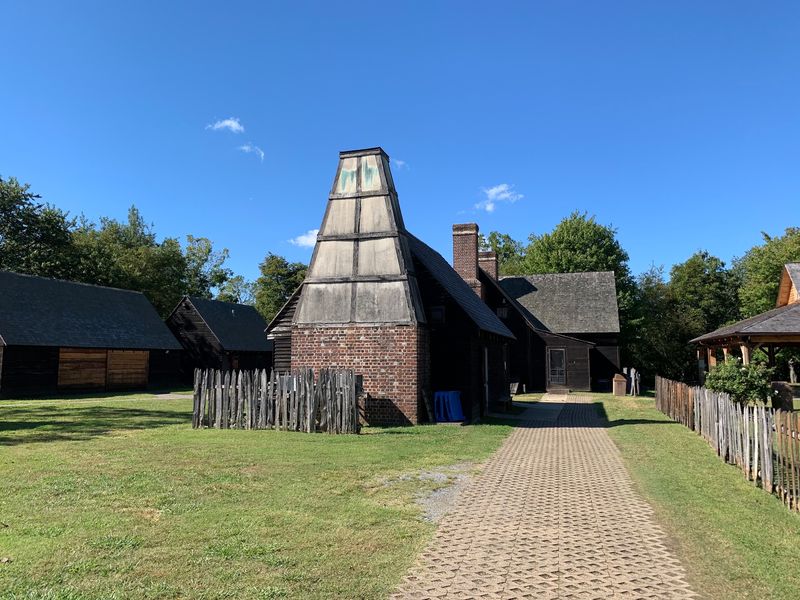
Have you given any thought to where Maryland began? The answer involves tall ships, archaeology, and a vanished capital.
Historic St. Mary’s City preserves the site of the state’s first capital and one of the earliest permanent English colonial settlements in North America.
The outdoor museum stretches across hundreds of acres, with reconstructed buildings, archaeological sites, waterfront exhibits, and living-history spaces linked by paths.
A major draw is the modern reproduction of Dove, completed in 2022 to reflect the seventeenth-century vessel that accompanied the first English settlers.
The Woodland Indian Hamlet interprets the lives and skills of the Yacocomico people and neighboring communities, while the Godiah Spray Plantation explores early colonial farm life.
The reconstructed Brick Chapel represents the colony’s early experiment with freedom of conscience. Archaeology remains central too, and excavations at St. Mary’s Fort continue adding detail to the story of the 1634 settlement.
A one-mile loop connects several major exhibits, although some sites sit farther apart and may be easier to reach by car. Most visitor areas are accessible, with a few exceptions involving stairs, uneven ground, or boarding the ship.
The main Visitor Center is at 18751 Hogaboom Lane. Public hours currently run Tuesday through Saturday during the main season.
10. Blackwater National Wildlife Refuge, Cambridge
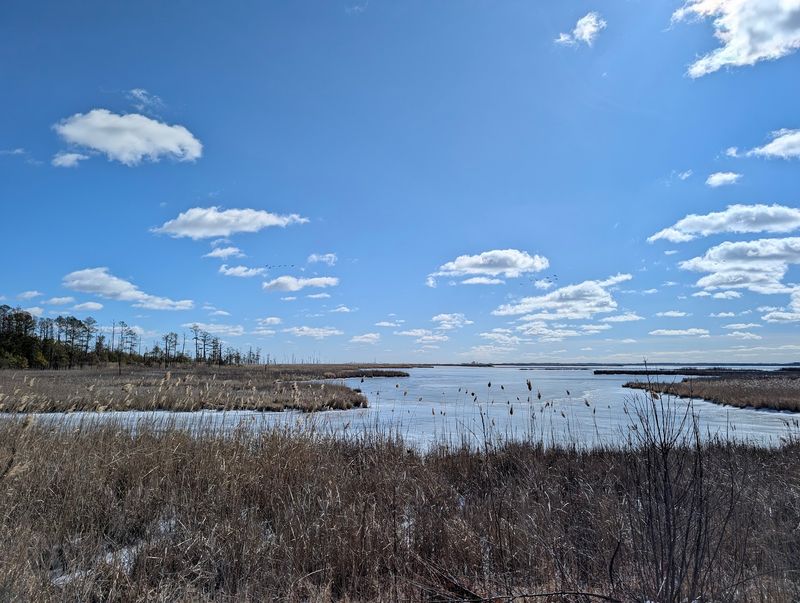
It came completely out of left field seeing so many eagles. Look up long enough, and white heads start appearing everywhere.
Blackwater National Wildlife Refuge near Cambridge now protects more than 32,000 acres of tidal marsh, forest, shallow water, and managed wetlands on the Eastern Shore.
Established in 1933 as a sanctuary for migrating waterfowl, it remains an important stop along the Atlantic Flyway.
Birdlife is the obvious headline, but the scale is what surprises most. The refuge supports a high concentration of nesting bald eagles on the Atlantic coast and the largest natural population of Delmarva Peninsula fox squirrels.
Winter brings especially strong waterfowl activity, while spring and fall add migration movement across the marsh.
The four-mile Wildlife Drive gives visitors the simplest overview. It can be traveled by car, bicycle, or on foot, with pull-offs opening wide views across water and grassland.
Trails and observation areas add quieter ways to explore away from the road.
The Visitor Center includes refuge exhibits, an upstairs observation area, an eagle nest display, and views across nearby habitat.
Outdoor public areas remain open from dawn to dusk year-round, although sections can close on specific management dates.
Find the Visitor Center at 2145 Key Wallace Drive. Patience matters here more than mileage.