This Western Maryland Bookstore Holds Thousands Of Books
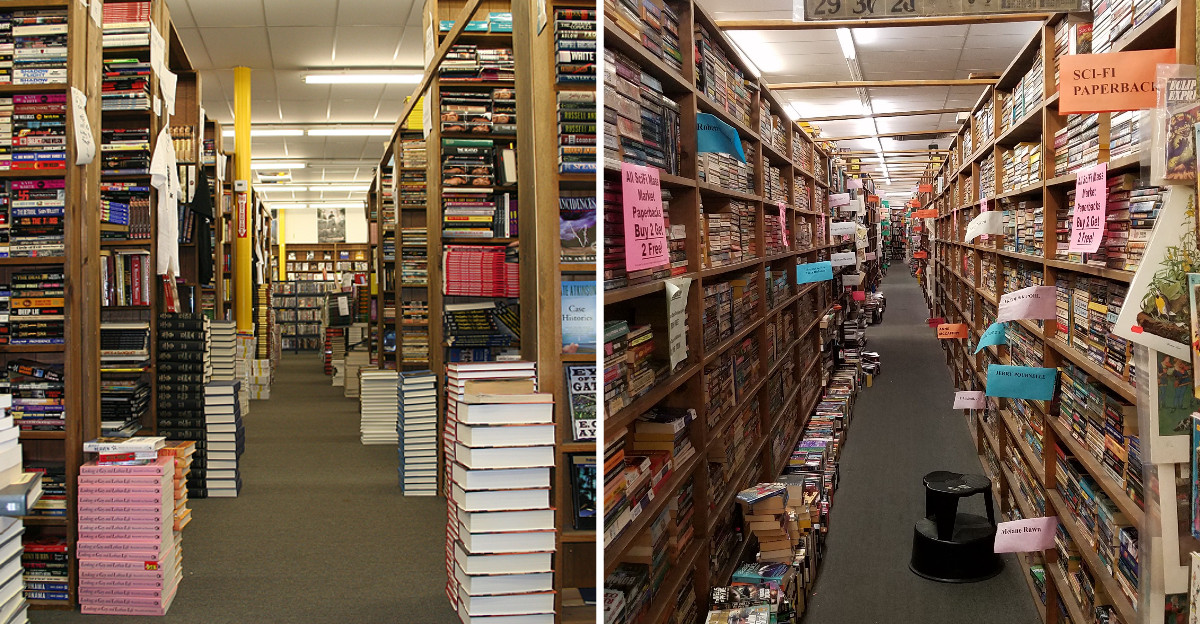
Getting handed a map inside a bookstore tells you that a quick browse may be wishful thinking.
This Maryland destination has shelves and sections that make wandering off course feel almost encouraged.
Books share space with comics, records, DVDs, and video games, which makes the hunt less predictable. One forgotten title can send the visit sideways.
The fun comes from letting curiosity win. You arrive with a plan, spot one odd shelf, and suddenly the clock stops mattering.
A store this packed makes restraint difficult, especially when the next aisle might hold the find you did not know you wanted.
A Bookseller Born in 1980
Long before online shopping became routine, Wonder Book began as a bookselling business in 1980.
The operation later expanded online in 1997 and now includes three retail stores along with a large Frederick warehouse. That broader network keeps books moving between local shelves, online buyers, and larger bulk markets.
Books remain the center of the business, from ordinary reading copies to collectible editions and publisher overstocks.
Movies, music, video games, comics, and other media broaden the selection without changing that book-first identity.
The Hagerstown shop is one piece of a much larger Maryland operation. Wonder Book now works across retail sales, online orders, bulk books, exports, and decorative book projects.
That scale makes the Dual Highway location feel less like an isolated used bookstore and more like one doorway into a much bigger circulation system.
Parking is available at the store, which helps when a browsing trip produces more than one armful. The address is 607 Dual Highway in Hagerstown.
Millions Of Pages Waiting
The numbers behind Wonder Book are much bigger than the title of this article suggests.
Across the entire operation, more than four million books move through retail shelves, online inventory, bulk sales, and specialty orders. That scale makes it easy to wander well beyond the section you originally came to browse.
The Frederick warehouse now spans 111,000 square feet and supports internet, bulk, designer, and export sales.
The three retail stores hold a substantial browsing inventory, while more than a million books are also offered through online marketplaces.
Hagerstown’s exact in-store book count is not published, so the safest promise is also the easiest one to support: there are thousands of books to browse, with stock arriving and changing continually.
Categories span fiction, history, cookbooks, children’s books, art, reference works, collectibles, and many other subjects. Used copies sit beside newer publisher overstocks and less common editions.
This is a store that rewards a loose plan. Start with a favorite subject, then leave enough time for the neighboring shelves to interfere.
Records, Movies, Comics, And Games
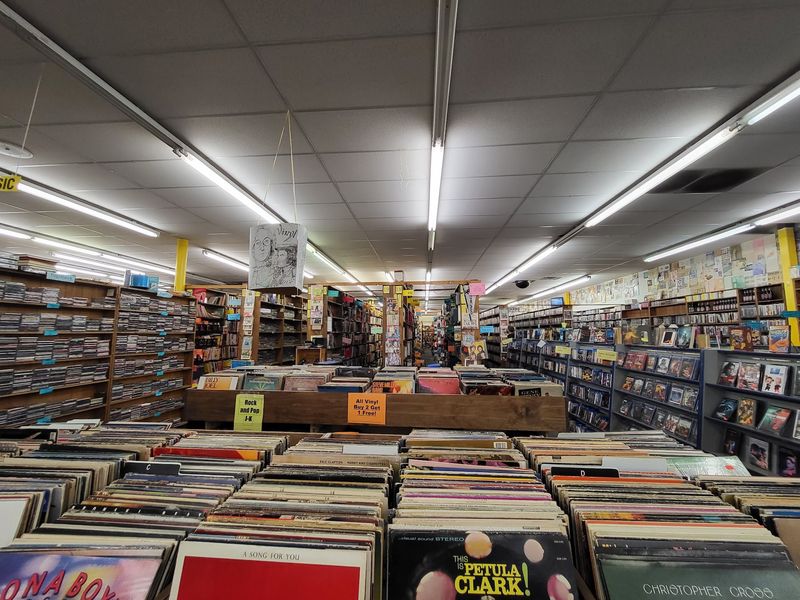
Books may dominate the floor, but they are not the only reason to browse.
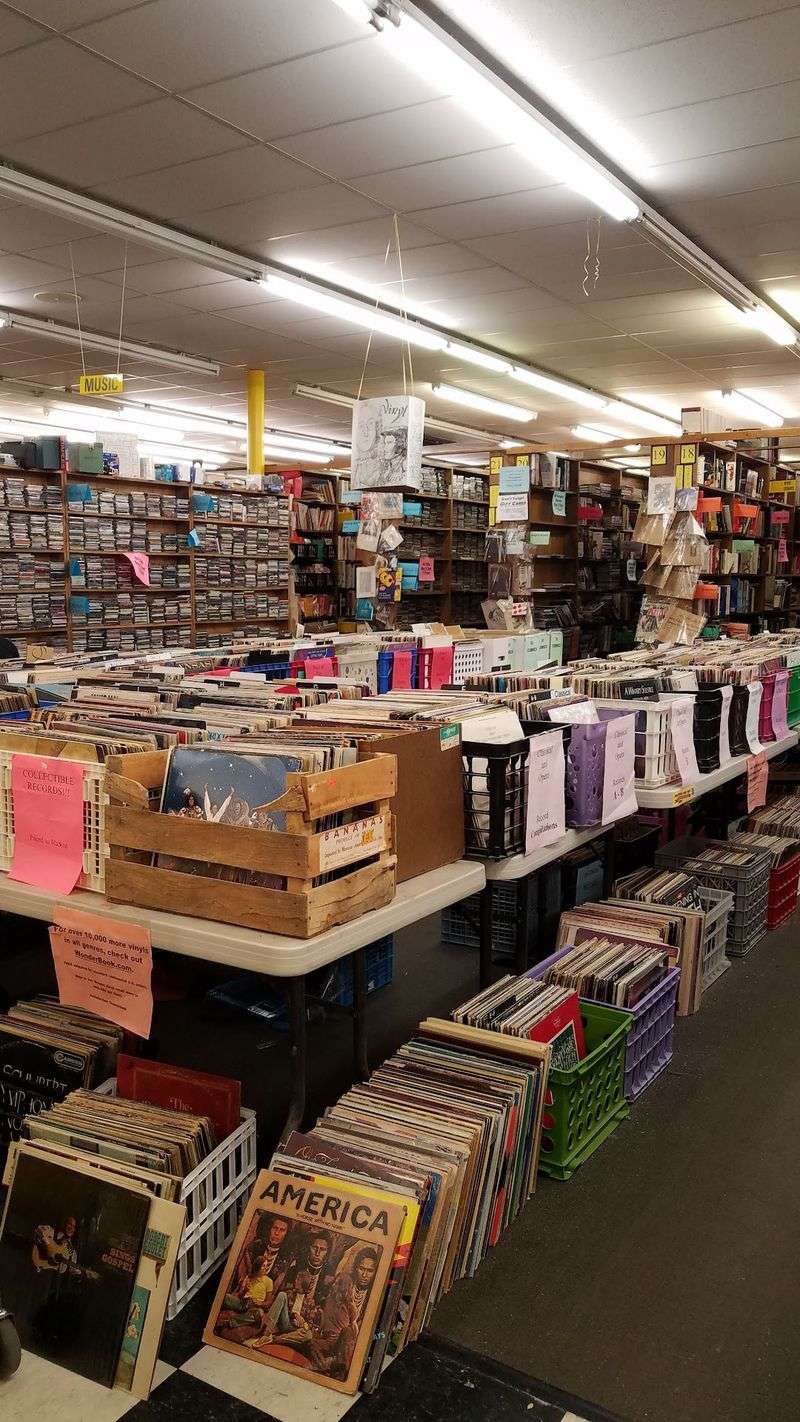
Wonder Book sells DVDs, Blu-rays, CDs, vinyl records, video games, comics, and other media alongside its book inventory.
That mix gives the Hagerstown store a broader secondhand-media feel rather than the narrower rhythm of a traditional bookstore.
Vinyl can pull music collectors toward one section while film shelves send another shopper in a completely different direction. Comics add another category for anyone who wants illustrated storytelling between longer reads.
The selection changes as material comes in through the buying program, so exact titles and formats are never guaranteed. That turnover is part of what keeps repeat visits from feeling identical.
The Hagerstown store is best approached as a place to buy and browse physical media, with plenty beyond books to keep the search going.
A good strategy is to leave the media sections until after the books. Otherwise, one record bin can quietly consume the time meant for three aisles of fiction.
The Mission Of Book Rescue
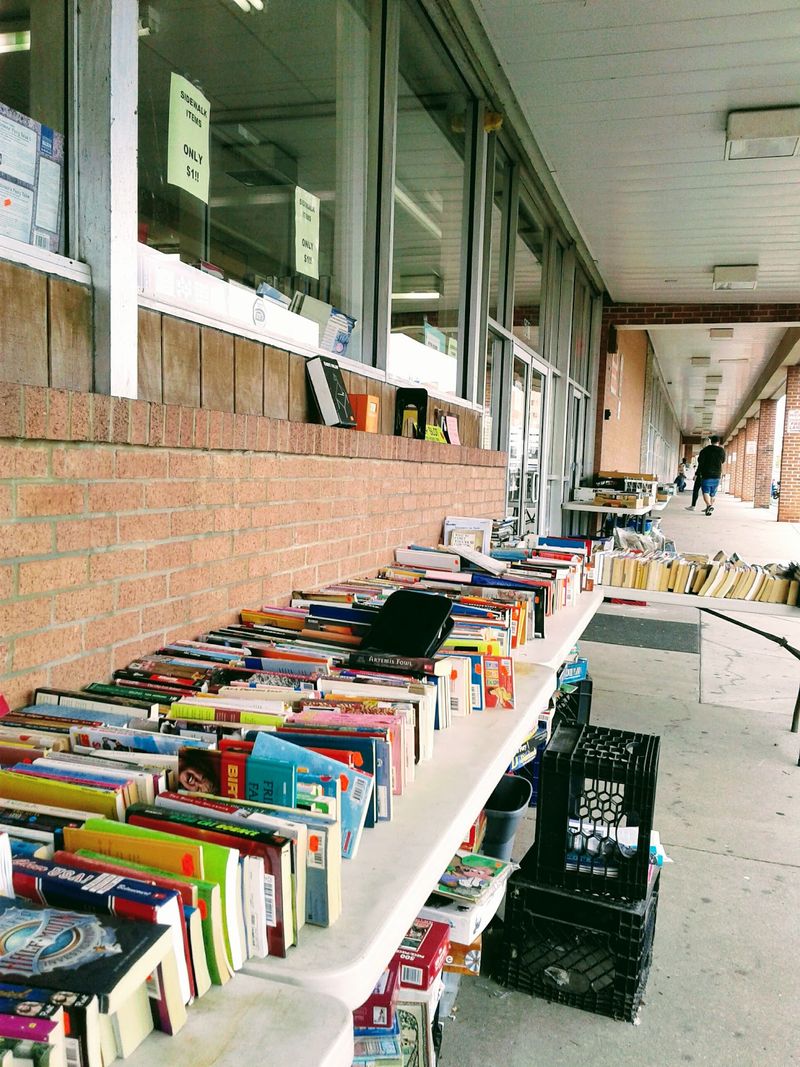
Wonder Book uses the term Book Rescue for a system designed to keep books moving toward new homes and new uses.
The business buys books, movies, and music from the public every day during designated buying hours. Larger collections also arrive from schools, libraries, institutions, and the remains of charity sales.
At the Hagerstown location, sellers bring material to the buying area and receive an offer for the collection as a whole. Payment can be taken as cash or store credit.
Not every book ends up on an ordinary retail shelf. Some move online, some become part of bulk orders, and others are repurposed through decorative book programs.
Millions of pounds of books move through the larger resale and reuse system each year, with additional volumes sent through export and recycling channels.
For Western Maryland readers clearing crowded shelves at home, that buying program adds a practical second purpose to a visit. A box can arrive full and leave the car empty, just in time for the browsing to begin.
Shelves Sold By The Foot
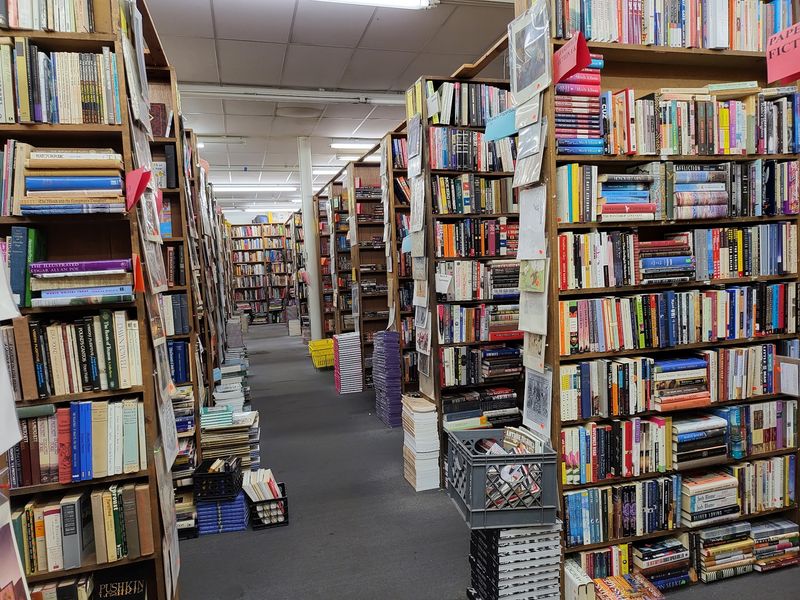
A bookshelf does not always begin with a reading list.
Wonder Book’s Books by the Foot division creates collections measured by shelf length and selected for visual qualities such as color, age, binding style, or subject.
The service supplies books for homes, offices, classrooms, displays, stage productions, film sets, and other spaces.
That gives older volumes another route back into use. A book that may not fit a conventional reader’s search can still contribute texture, color, and character to a room.
Orders can be built around a vintage appearance, a particular palette, a subject, or a type of binding. The books are then assembled to match the requested look rather than a list of exact titles.
The program has reached far beyond the retail stores. The New York Times featured Books by the Foot in 2011, drawing attention to the unusual idea of building an instant library by measurement.
It also connects neatly to the larger reuse model. Reading remains the obvious purpose of a book, but display, design, and creative projects give thousands of additional volumes somewhere useful to go.
Measuring a shelf before buying books sounds backward until this service enters the conversation.
National Attention For Local Shelves
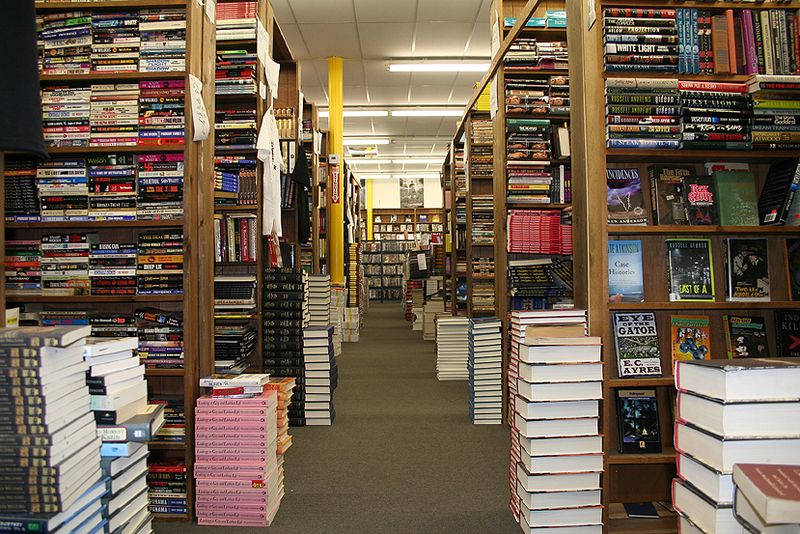
Wonder Book’s reach has attracted national attention more than once.
USA Today included the retail stores among its 10 Great Old Bookstores in 2002. That recognition came more than two decades after the business began and well before today’s warehouse reached its current scale.
The Washington Post examined the internet bookselling operation in 2008, focusing on how a large used-book business was adapting to online commerce.
C-SPAN followed with coverage in 2009, and the Books by the Foot program later received attention from The New York Times.
Those stories capture different phases of the same business. The retail shelves came first, online selling widened the audience, and bulk and decorative books created additional paths for material that might otherwise be difficult to place.
The Hagerstown store still keeps the simplest part of that story intact. A person can show up, browse physical shelves, choose something interesting, and carry it home.
For a business with millions of books moving through a large system, that part remains pleasantly uncomplicated.
Signs, Sections, And Treasure Hunts
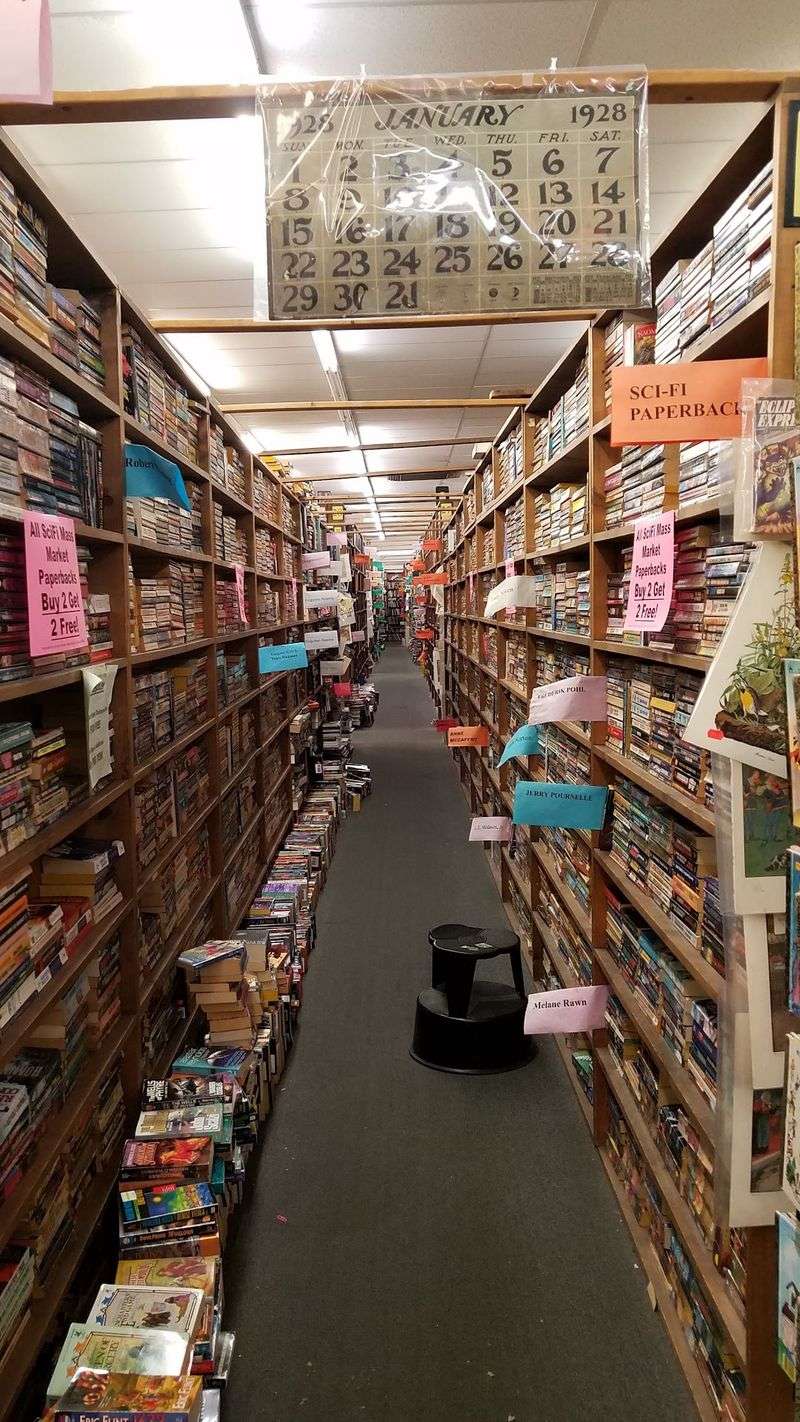
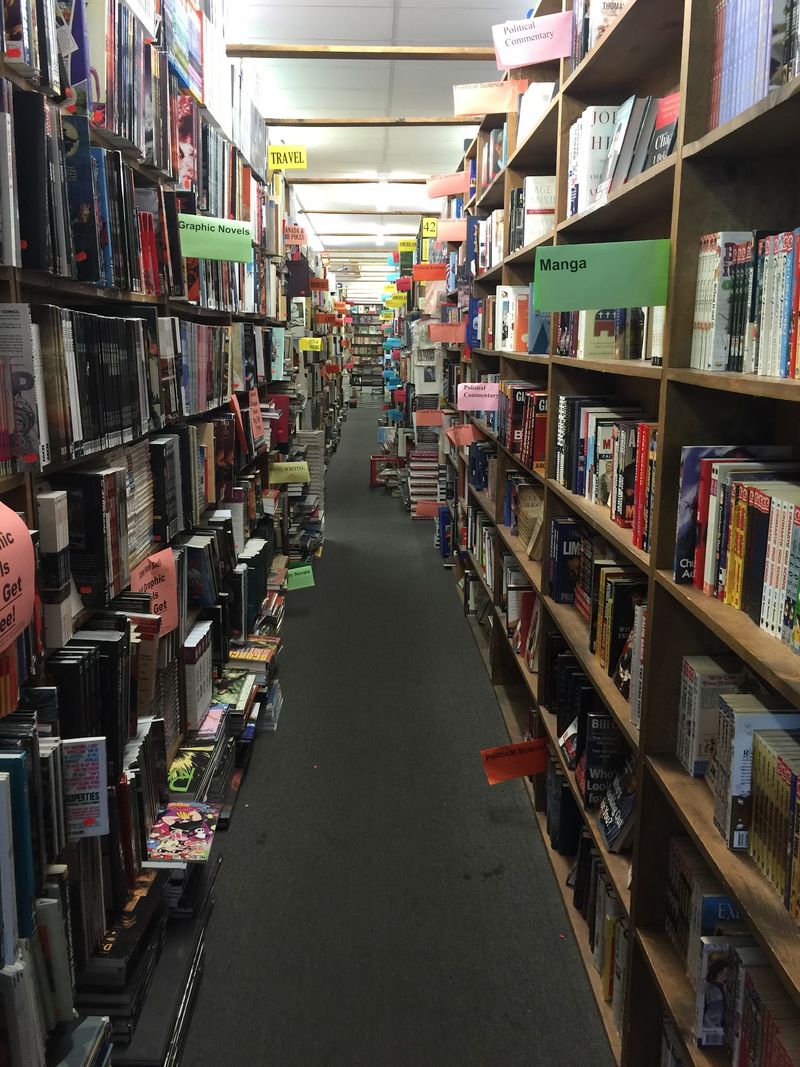
Rows of tightly stocked shelves make a little orientation useful.
Subject labels divide much of the inventory, while different parts of the store move from books into music, movies, comics, and games.
The categories give browsing some structure without removing the possibility of finding something unexpected nearby.
Some shelves hold familiar authors and common editions. Others bring together older titles, unusual subjects, collectibles, or books that have simply waited longer for the right reader.
Anyone searching for one exact title can use the online inventory first, but internet stock is separate from the books sitting inside individual retail locations.
That distinction matters. The physical shop works best as a browsing destination, while the online catalog is better for tracking a particular edition or title.
Store pickup is available for online orders, so the two systems can still work together when a specific book matters.
The most enjoyable approach remains simple: choose a section, follow the labels, and leave enough room in the plan for a complete change of direction.
Smart Tips Before You Go
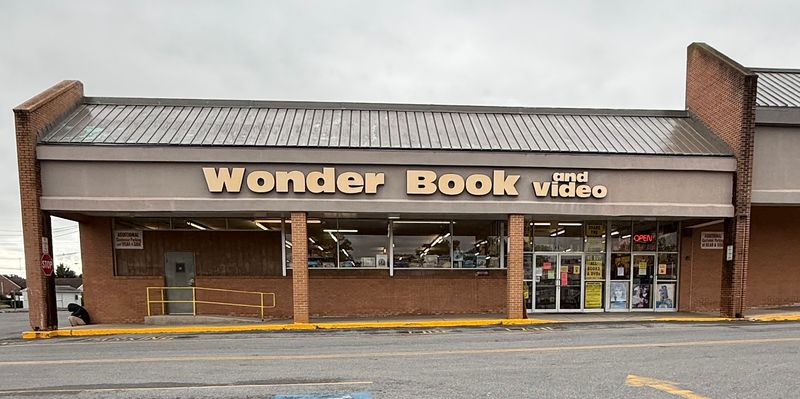
This Maryland store is open every day from 10 a.m. to 8 p.m. Buying hours for books, movies, and music run from 10 a.m. to 6 p.m.
That generous schedule makes the shop easy to fit around lunch, errands, or a longer afternoon devoted entirely to browsing.
Shelves cover enough categories that a quick stop can easily turn into a much longer search. Frequent inventory changes also give repeat visitors a reason to check back for titles that were not there before.
The broad selection rewards anyone willing to browse beyond the section they originally came to see. Unexpected finds can easily become the best part of the visit.
Anyone bringing items to sell should keep them in the vehicle at first. The buying process begins outside, where a buyer examines the collection and makes an offer for the lot.
For a specific title, the online catalog can save time before the trip. Orders can also be sent to a retail store for pickup, combining the broader warehouse inventory with an in-person stop.