Walk Inside A Sod House Built The Way Nebraska Homesteaders Stacked Prairie Into Walls
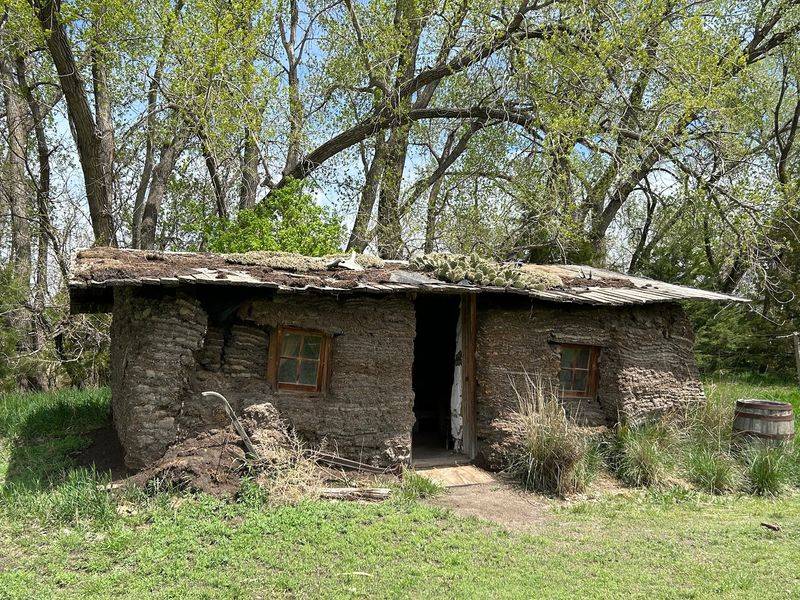
A buffalo made of barbed wire stands guard outside a house built from stacked chunks of prairie. That alone made me stop scrolling.
The house walls are thick blocks of sod, cut and piled the way early settlers built when trees were scarce.
Nearby, a horse and rider shaped from wire look real until you get close. A stagecoach and wagon round out the scene, and dogs are welcome on the grounds outside.
I like how this stop sits right along a road trip across Nebraska. It’s small, friendly, and run by volunteers who clearly love local history.
I can’t imagine a better way to stretch your legs between long highway miles.
So what was life really like inside walls made of dirt and grass? The answer is waiting just off the interstate.
A Prairie House Waiting Right Off Your Road Trip Route
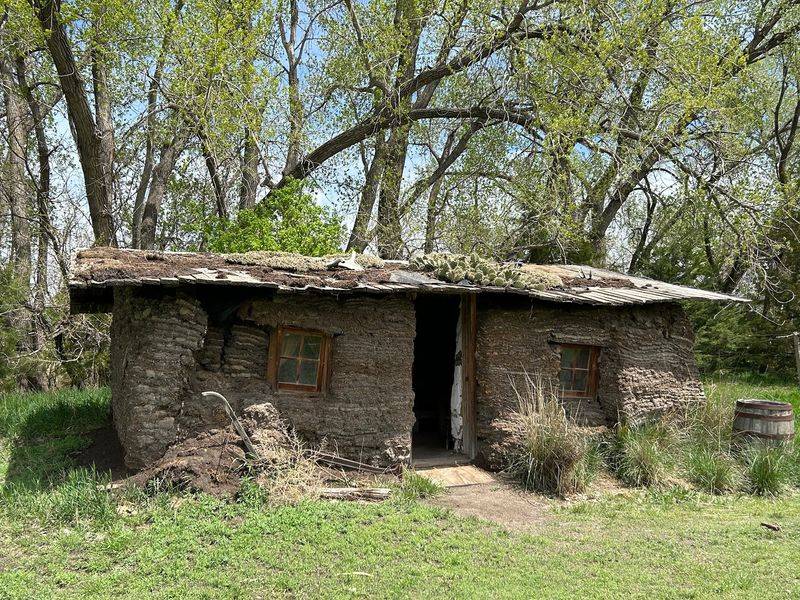
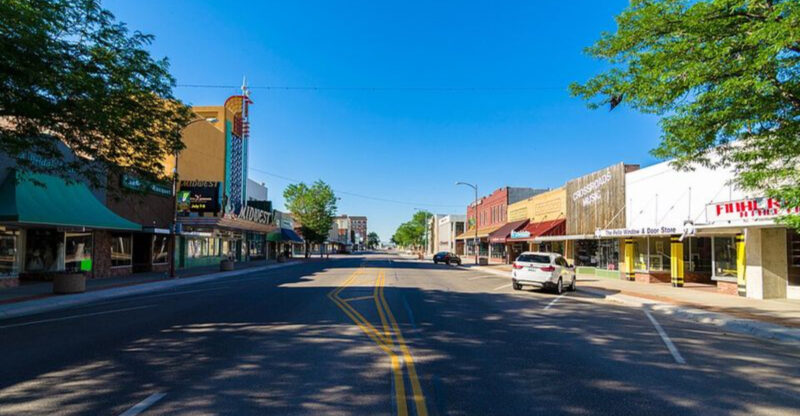
Gothenburg hands travelers a quick history lesson, and it sits closer to the highway than you’d guess. The Sod House Museum is a small outdoor and indoor stop built around one big idea: walls made from the prairie itself.
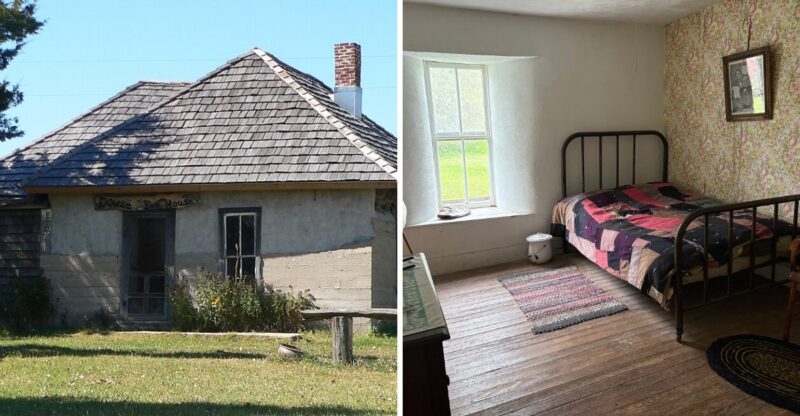
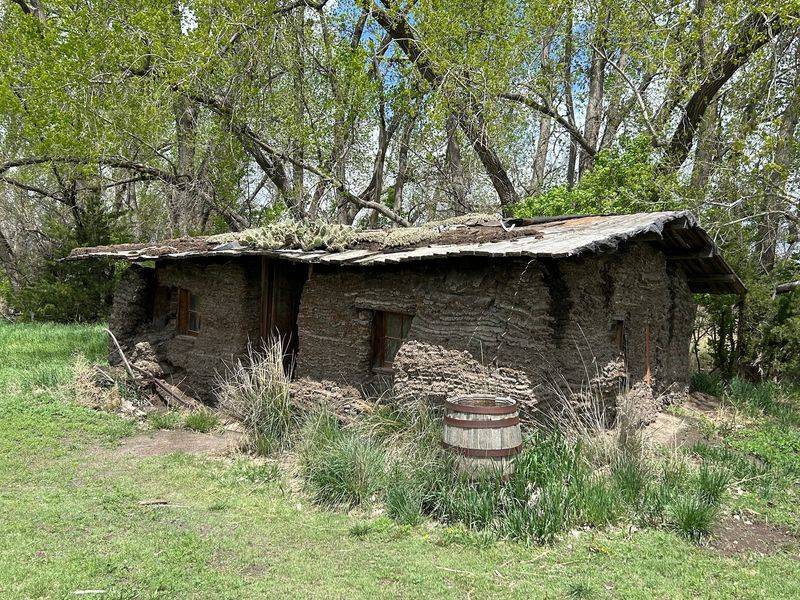
The star is a sod house, built the old way with stacked blocks of earth and grass. It’s been standing for close to 40 years now, a working example of how settlers built when lumber was scarce.
Around it, the grounds fill up with surprises. Barbed wire sculptures, a stagecoach, and a wagon turn a short stop into a proper wander.
Inside the museum building, you’ll find era artifacts, local history, and a little gift shop. Volunteers keep the doors open and the stories flowing.
The whole place feels like a snapshot of Nebraska before paved roads and power lines. It’s compact, so you won’t need a full day to see it.
That makes it ideal for road-trippers who want a real taste of the town. Families, history buffs, and anyone curious about pioneer life will find plenty here.
Small footprint, big story. Not a bad trade for a quick exit off the highway.
Grass Roots Turned Into Building Bricks
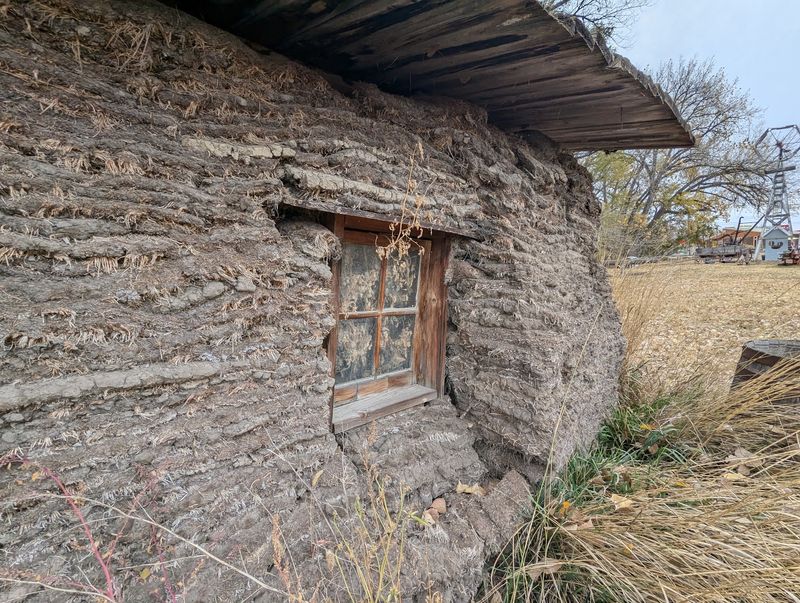
Trees were hard to come by on the open Nebraska plains. So homesteaders looked down instead of up, and the ground became their lumber yard.
Prairie grass grows thick, tangled roots that hold soil together like rebar. Settlers cut that tough turf into long strips, then chopped the strips into heavy blocks.
Those blocks got stacked row by row, a bit like oversized bricks. Offsetting each layer helped the walls stay strong and steady against wind.
The result was a wall far thicker than anything in a modern home. That thickness worked like natural insulation, holding warmth in winter and keeping summer heat at bay.
Plenty of folks grow up hearing the phrase sod house without picturing it. Seeing actual stacked sod clears that up fast, because the layers are right there in front of you.
The house at the museum shows off that clever design up close. Those thick walls are the first thing you notice, and honestly, they’re pretty impressive.
It’s a smart answer to a tough problem. When the prairie is all you’ve got, you build with the prairie.
Thick Walls That Have Weathered Plenty Of Storms
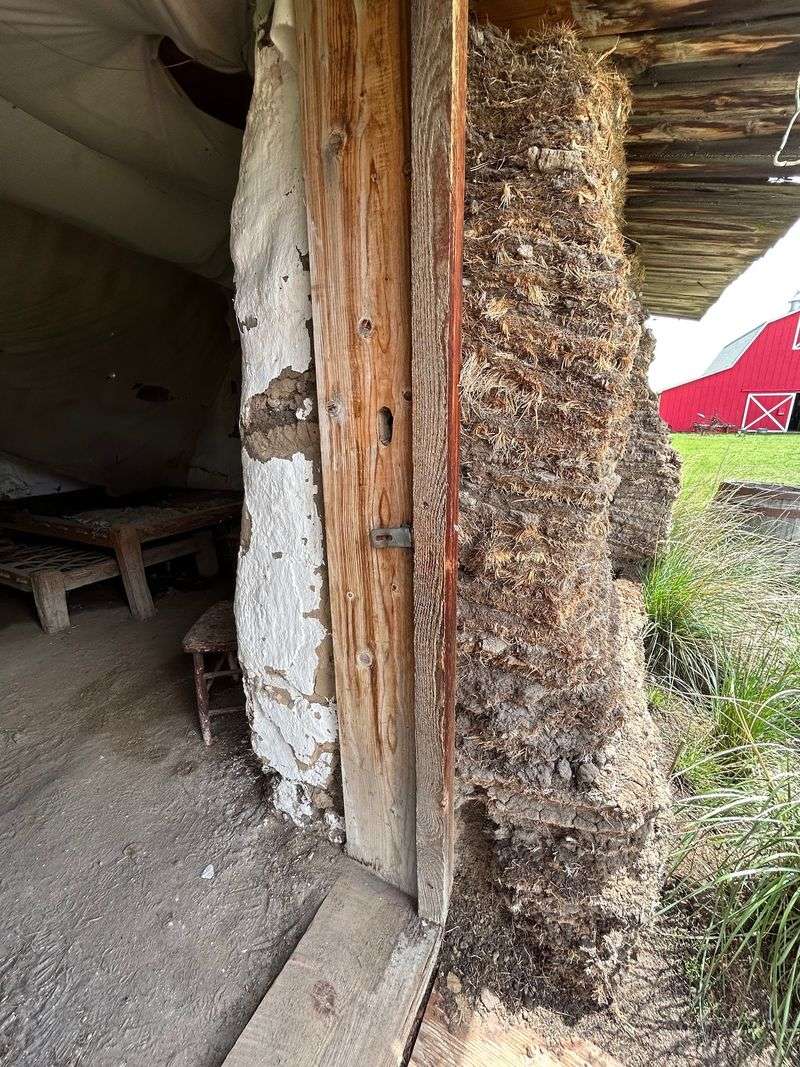
Earth makes a sturdy wall, but it isn’t invincible. Wind and rain chip away at sod over the years, and this house has felt both.
Big storms have left their marks on the walls at the Sod House Museum. Still, the house stands, which says plenty about how tough this style of building can be.
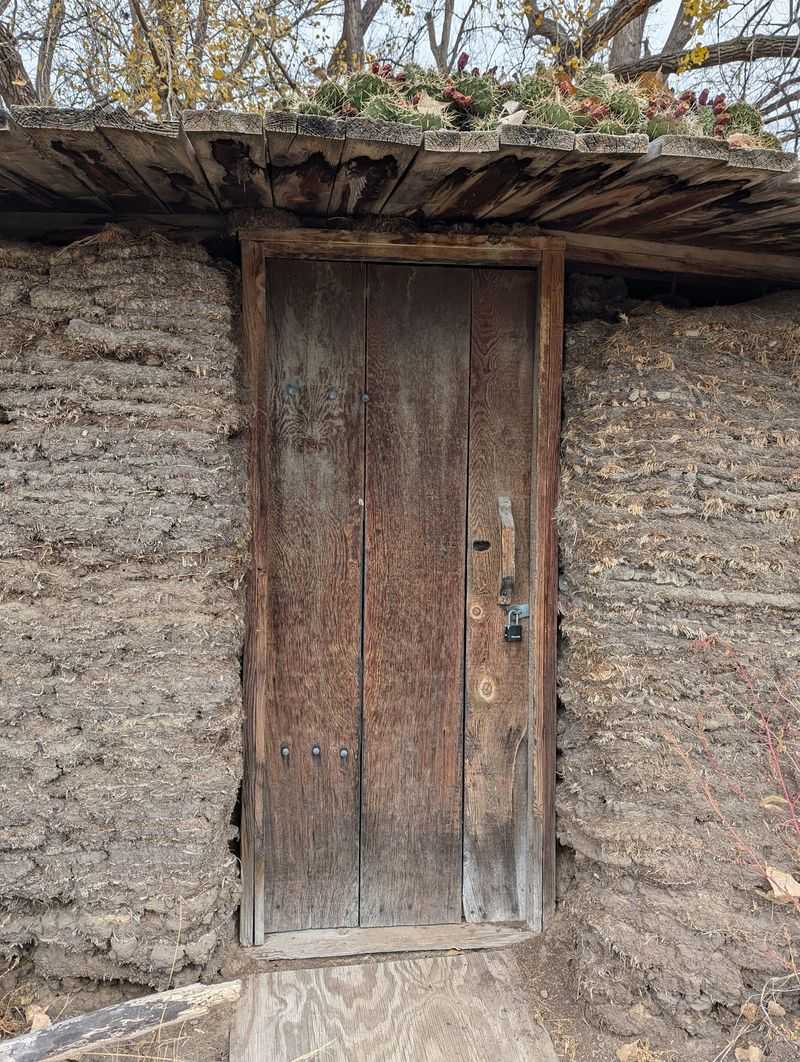
Repairs have been underway more recently, so the interior isn’t always open. If the door happens to be locked, the outside still tells a great story.
You can walk right up to the walls and study the stacked layers. It’s one of the few places where touching history feels completely natural.
Stepping inside, when it’s open, gives a real sense of settler life. You get a feel for how small, snug, and practical these homes were.
Kids especially tend to light up at the idea of a house made of dirt. Parents often catch themselves just as curious.
Every crack and patch is part of the lesson. Pioneer homes needed constant care, and this one still does today.
Barbed Wire Art That Fools Your Eyes From A Distance
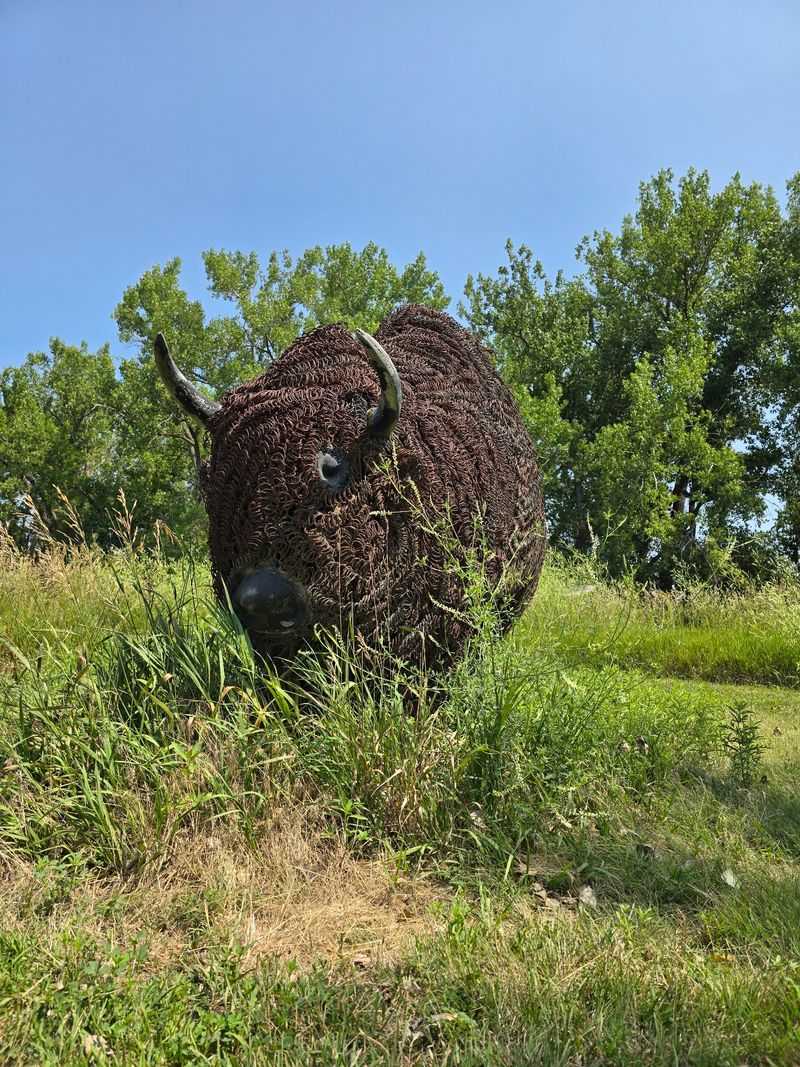
Fencing wire usually keeps cattle in line. Here, it got promoted to fine art, and the results are wonderfully strange.
A bison shaped from wire and springs stands on the grounds like it wandered in from the plains. It’s big, bold, and easily one of the most photographed spots at the museum.
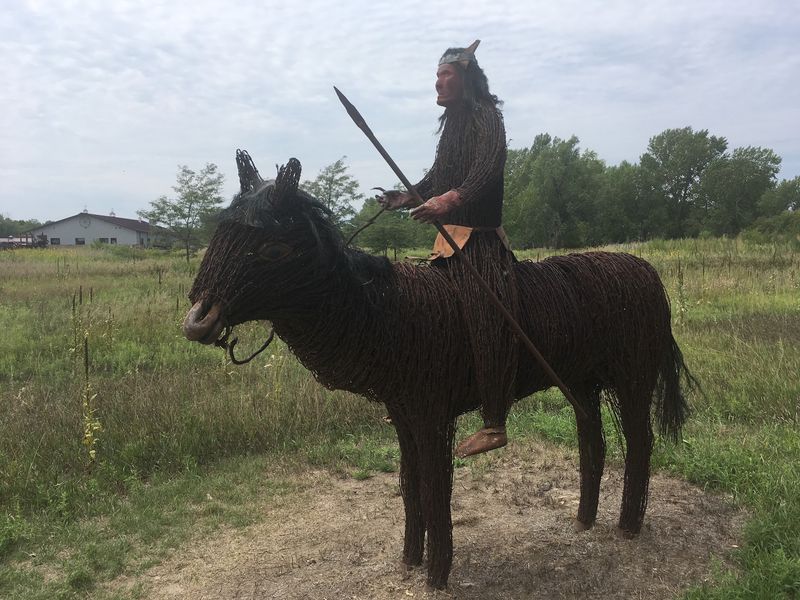
Nearby, a horse and rider sculpture looks shockingly real from a distance. Get closer, and the wire details start to reveal themselves.
A Native American figure made of barbed wire joins the lineup too. Together, the sculptures nod to the people and animals who shaped this land long before towns appeared.
Barbed wire carries its own Nebraska story, since it changed how ranchers and farmers managed the open range. Turning it into art feels like a clever bit of local pride.
Bring your camera, because these pieces practically pose for you. Evening light makes the wire glow, which only adds to the effect.
Even if you arrive after closing, the sculptures are right there outside. That’s a sweet bonus for late-arriving travelers.
Wagons, Stagecoaches, And A Pony Express Connection
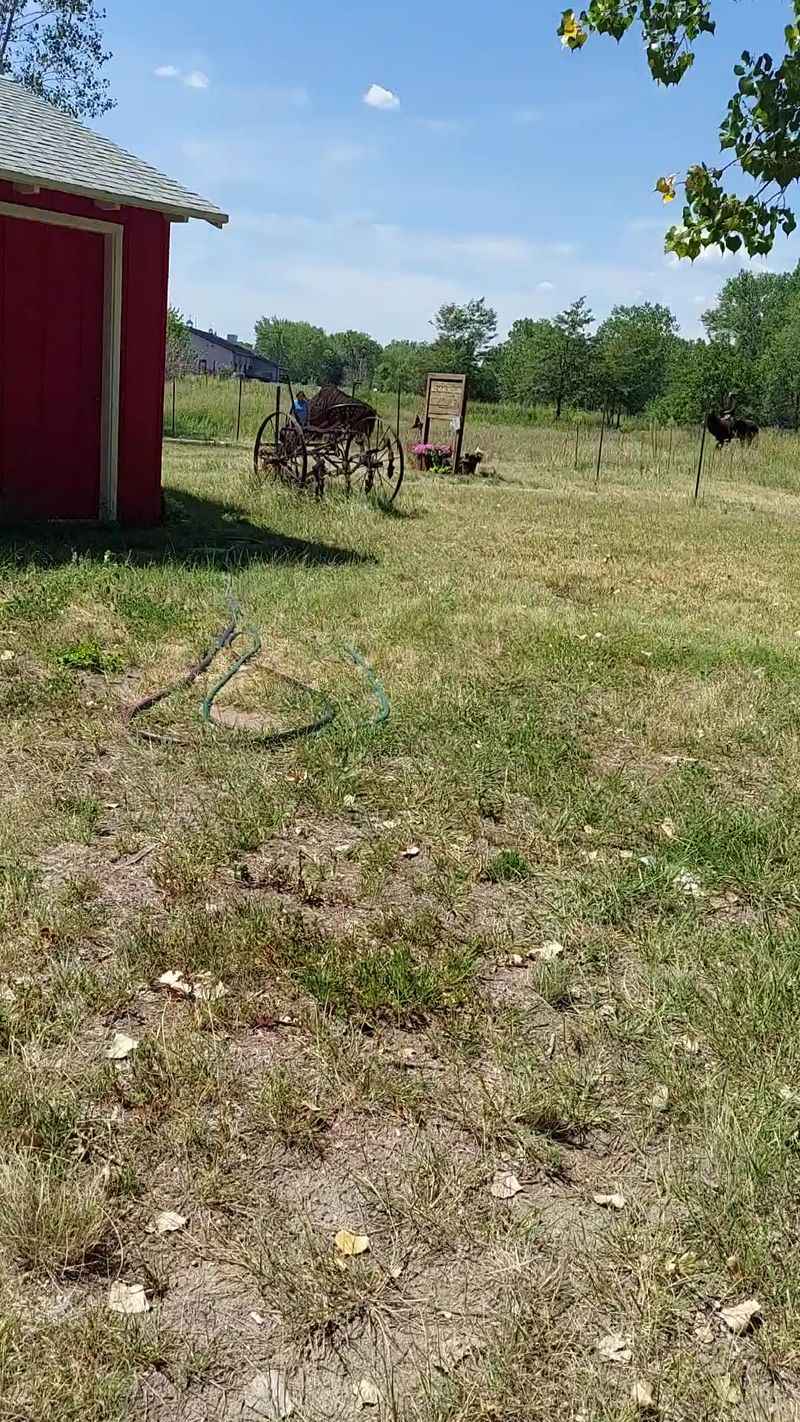
Getting around the frontier took serious grit and a sturdy set of wheels. The museum grounds show off both with a stagecoach and an old wagon.
Standing next to them, you realize how bumpy travel must have been. No cushioned seats, no climate control, just wood, iron, and a long road ahead.
Gothenburg holds a proud spot in Pony Express history, and the museum shares a bit of that story. It’s a nice tie-in for anyone fascinated by those famous riders.
The vehicles help connect the sod house to the bigger picture. Settlers didn’t just build homes; they hauled everything they owned across the plains to reach them.
Kids love imagining themselves in the driver’s seat. Grown-ups usually start doing math about how many miles a day those horses covered.
Together with the house and sculptures, the wagons make the grounds feel like a small frontier scene. Every corner adds another layer to the tale.
It’s history you can walk around rather than read about. That makes it stick in a way textbooks rarely manage.
Local Honey And Handmade Finds In A Tiny Gift Shop
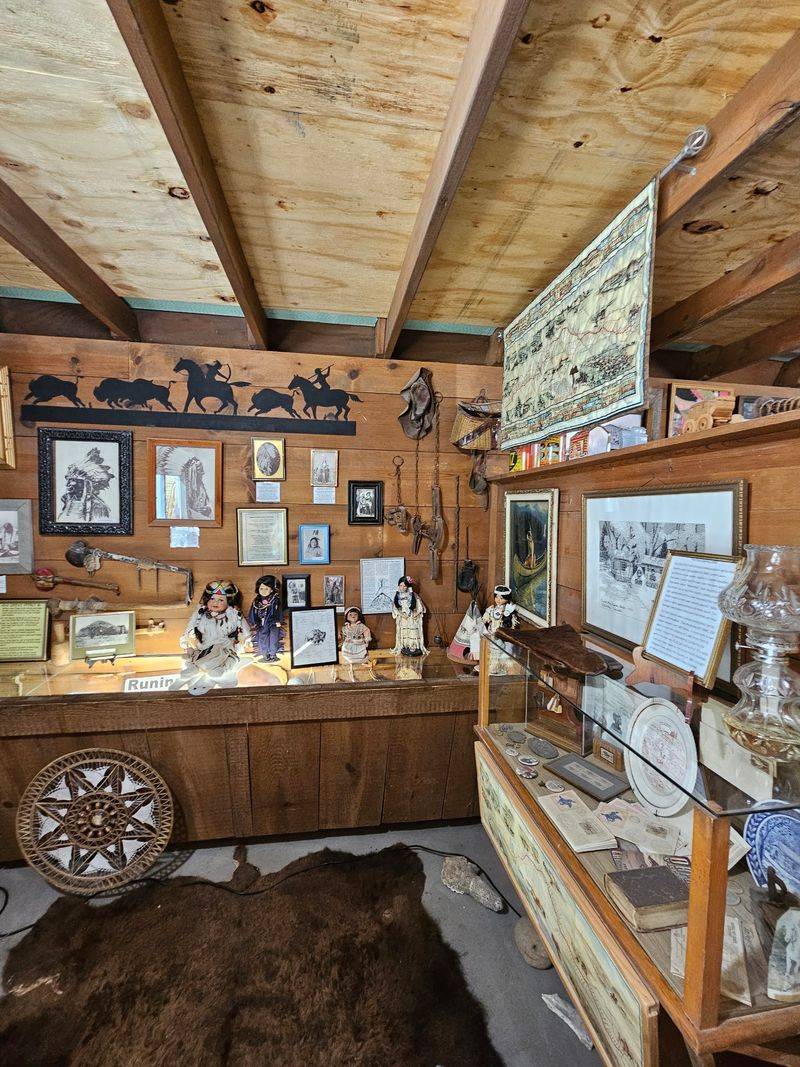
Souvenir shopping doesn’t have to mean plastic keychains. The little gift shop here leans local, and that’s a pleasant surprise.
Shelves hold artisan items made by people from the area. Honey has shown up too, including some from a local FFA student, which is about as Nebraska as it gets.
It’s a small section, so browsing won’t take long. But it’s the kind of spot where you grab something you can’t find at a truck stop.
Inside the museum building, era artifacts and family history from the Gothenburg area share the space. Old photos and items help put faces to the pioneer story.
Visitors with roots in town often stop to trace their own family connections. Reunions and hometown visits pair nicely with a quick look through the collection.
A Gothenburg history magazine has been handed out to curious travelers as well. It’s a handy guide for exploring the rest of town afterward.
Buying local here supports the folks keeping the place running. That’s a souvenir with a little extra meaning baked in.
Volunteers Who Treat History Like Family Business
Some museums hand you a brochure and wave goodbye. At the Sod House Museum, the people behind the counter would much rather chat.
The property is owned by a local family, and they’re deeply invested in its future. They took it over a few years ago and have been working to care for it ever since.
Volunteers run the day-to-day, and they know their stuff. Ask a question about settlers, sod, or Gothenburg, and you’ll likely get a detailed answer.
Some of these folks come from long local lineages. Their stories add a personal touch you simply can’t get from a plaque on the wall.
They’re also happy to point you toward other spots in town. Think of them as an unofficial welcome center with a frontier twist.
Families with kids get a warm reception, and so do solo travelers passing through. Nobody needs to be a history expert to feel welcome.
That friendly spirit turns a short stop into a real conversation. You’ll probably leave knowing more than you planned to learn.
Picnic Tables, Happy Dogs, And An Easy Stop To Find
Road trips run on snacks and stretch breaks. Lucky for you, this museum handles both with surprising ease.
You’ll find the Sod House Museum at 300 Lake Ave, Gothenburg, NE 69138. It sits behind a service station, which makes it easy to spot after a fuel stop.
Electric vehicle drivers get a perk too, since fast chargers are within walking distance. Charge the car, then go meet a wire bison.
Picnic tables dot the grounds, so grab carryout from town and eat outdoors. Evenings here feel especially relaxed with the sculptures catching the light.
Dogs are welcome on the outdoor grounds, which isn’t common at museums. Your four-legged co-pilot gets to sniff some genuine Nebraska history.
The museum is open daily, generally during regular daytime hours. Hours can shift with repairs or volunteer schedules, so calling ahead is smart.
Even after closing, the outdoor displays stay visible to wander past. That makes it a flexible stop no matter when your route rolls through town.
Why This Small Stop Earns A Spot On Your Nebraska Map
Not every great stop needs a giant parking lot. Sometimes a dirt house, a wire buffalo, and a friendly volunteer do the trick.
The Sod House Museum packs a lot of story into a small space. You get pioneer building methods, frontier wagons, and art made from fencing wire, all within a few steps.
It works for history lovers who want to see sod walls up close. It also works for families needing a quick break that keeps kids curious.
Dog owners and picnic fans get extra points here. So do drivers who want more than a gas station view of Gothenburg.
Keep expectations right-sized and you’ll have a great time. It’s a modest spot with ongoing repairs, but the heart of it shines through.
The house itself is the reminder that Nebraska settlers built homes from grass and grit. Seeing it makes those old stories feel real.
Next time I-80 stretches out ahead, this exit is worth taking. A wire bison and a house of prairie don’t show up every day.