You Will Be Surprised To Find This Breathtaking Italian Renaissance Church In The Heart Of Kentucky
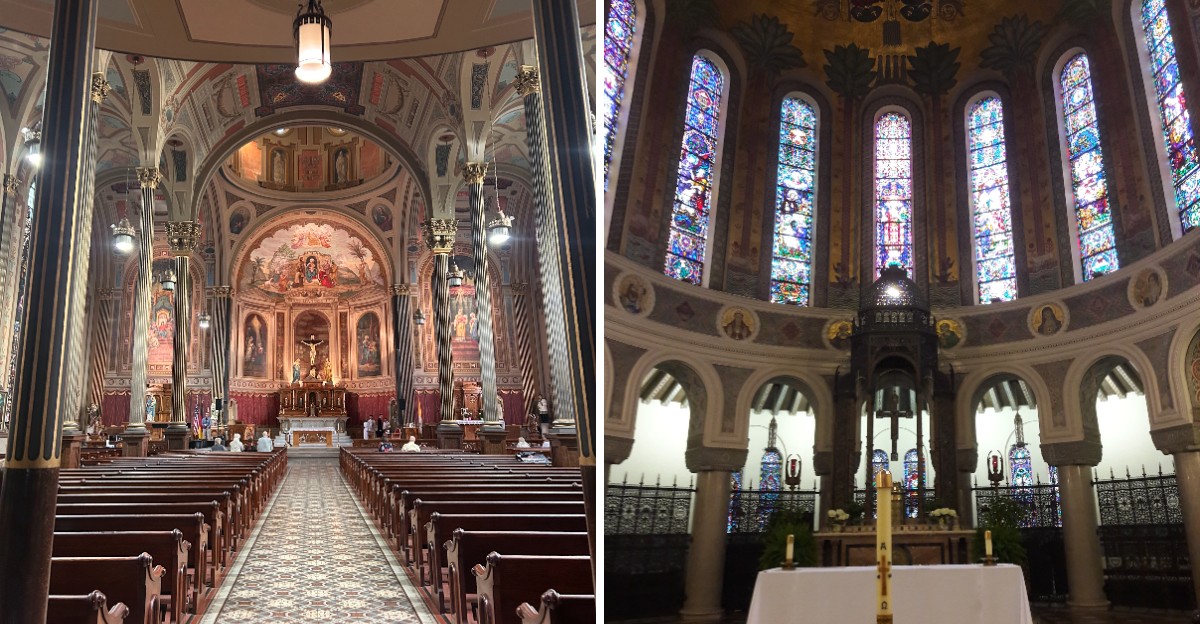
Twin bell towers rise 200 feet over this church, and they stood as the tallest structures in their city for nearly a century. That’s a long time to be the tallest kid in class.
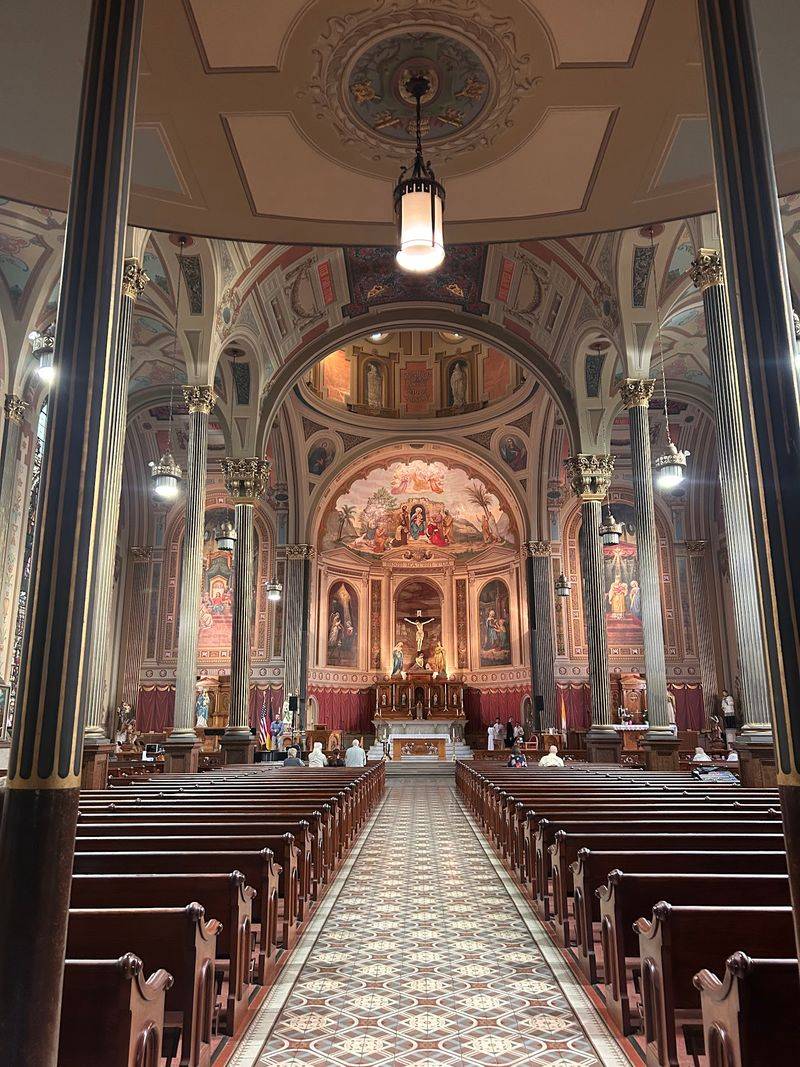
Inside, five huge murals come from the man who gave early lessons to famous painter Frank Duveneck. Duveneck was baptized here as a baby.
He now rests in the parish cemetery.
Imagine the place that feels borrowed from Italy, yet it was built by German immigrants in Kentucky. The stained glass came all the way from Munich.
The dome climbs 150 feet to its cupola.
I can’t imagine strolling past it without stopping for a long look. A tornado even tore at its roof in 1986, and the parish rebuilt it.
So what keeps a landmark like this standing tall after all these years?
Those Twin Towers Ruled The Skyline For Nearly 100 Years
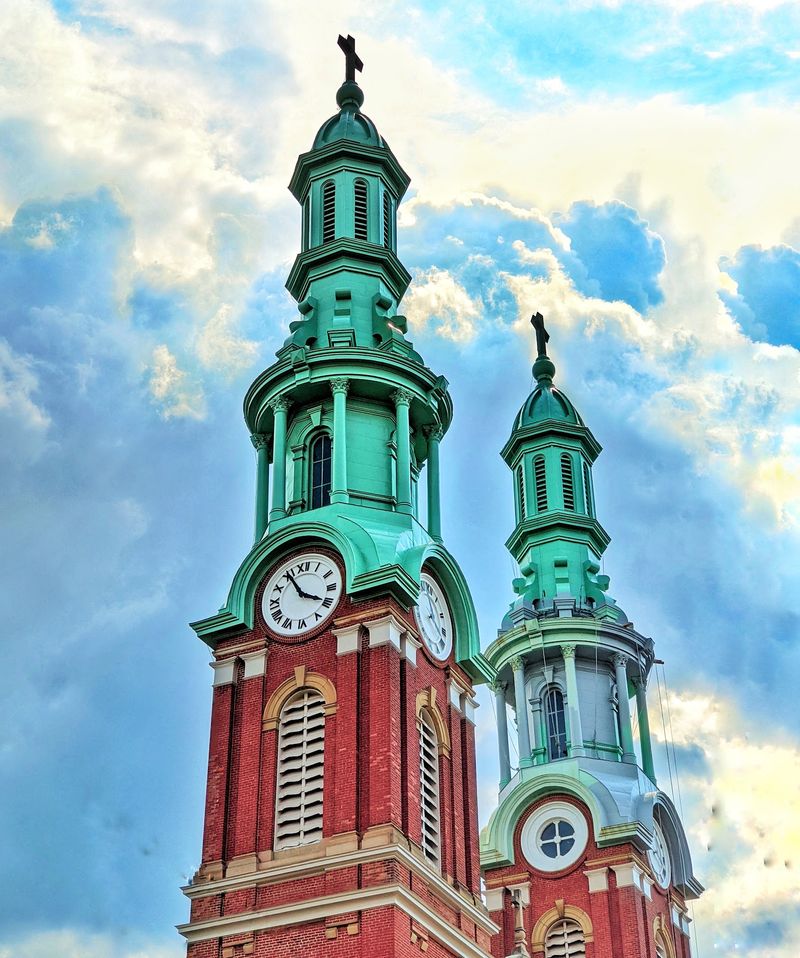
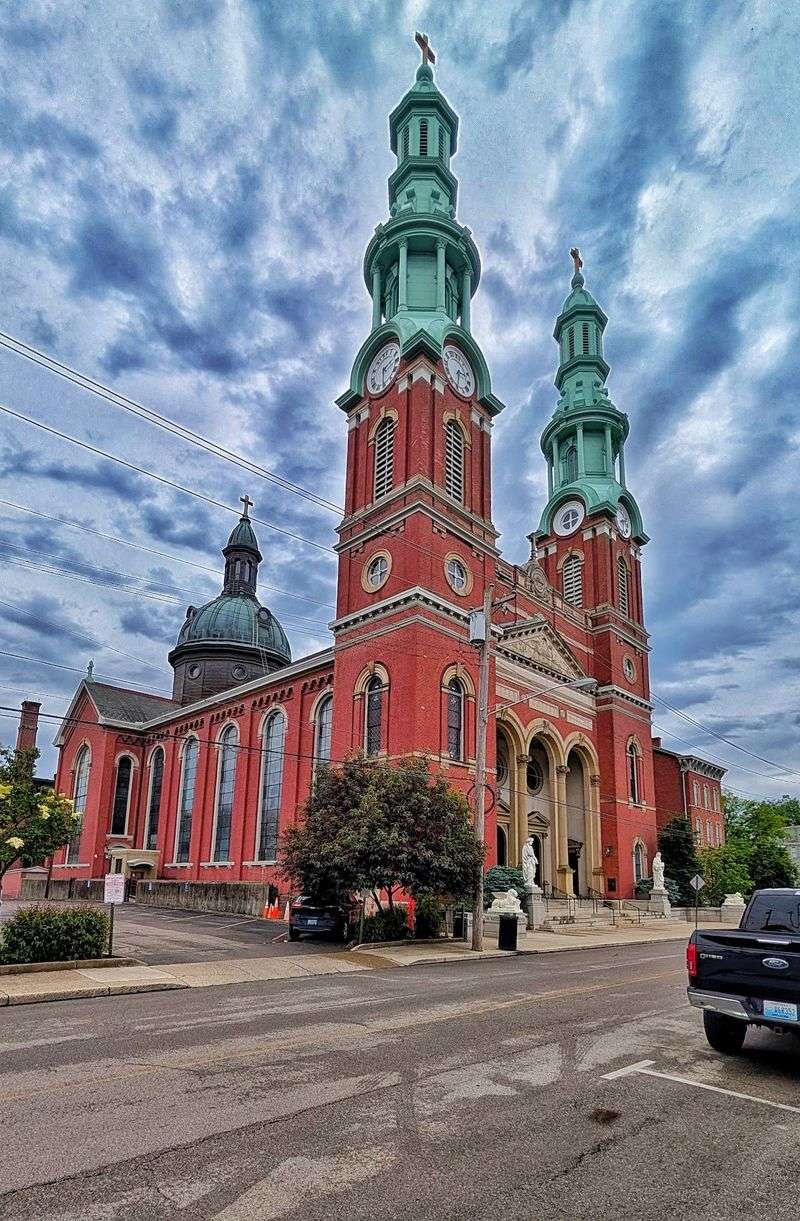
Two bell towers, each 200 feet tall, frame the front of Mother of God Roman Catholic Church. For nearly a century, nothing else in Covington stood taller.
The building follows the Italian Renaissance Revival style. That means balanced shapes, grand columns, and a look that feels plucked from an old European city.
A central dome rises 100 feet above the floor. Add the cupola, and the full height reaches 150 feet.
Out front, a large portico rests on four Corinthian columns. Those are the fancy ones topped with carved leaves, so they never look plain.
The Cincinnati firm Walter and Stewart designed the church. Workers laid the cornerstone on July 3, 1870.
Things moved quickly after that. The church was dedicated on September 10, 1871, just over a year later.
Here’s a tip for photos. Step back across 6th Street to fit both towers and the dome into one frame.
Getting close is great for details, but the full picture needs distance. Your neck will thank you too, since looking straight up at 200-foot towers gets old fast.
You’ll find the church at 119 West 6th Street, Covington, Kentucky.
German Immigrants Built This Italian-Style Beauty From Scratch
Back in 1841, a group of German immigrants wanted a parish of their own. Under Reverend Ferdinand Kuhr, they organized one in Covington.
It became the second Catholic parish in the city. Their first church building was dedicated on October 10, 1842.
The parish grew fast. Soon it served as a mother parish to several other German congregations in the area.
That explains the German name you might still hear today. Some folks call it Mutter Gottes Kirche, which means Mother of God Church.
The official name is even longer. It’s The Annunciation of the Ever Virgin Mary, Mother of God, which is quite a mouthful for a church sign.
So how did German families end up with an Italian-style church? They chose a grand Renaissance design for their second, much larger building.
That mix is part of the fun here. It’s a German story told through Italian architecture in the middle of Kentucky.
The surrounding neighborhood now carries the name too. It’s called the Mutter Gottes Historic District, a nice nod to the families who started it all.
Look Up, Because The Murals Have A Famous Connection
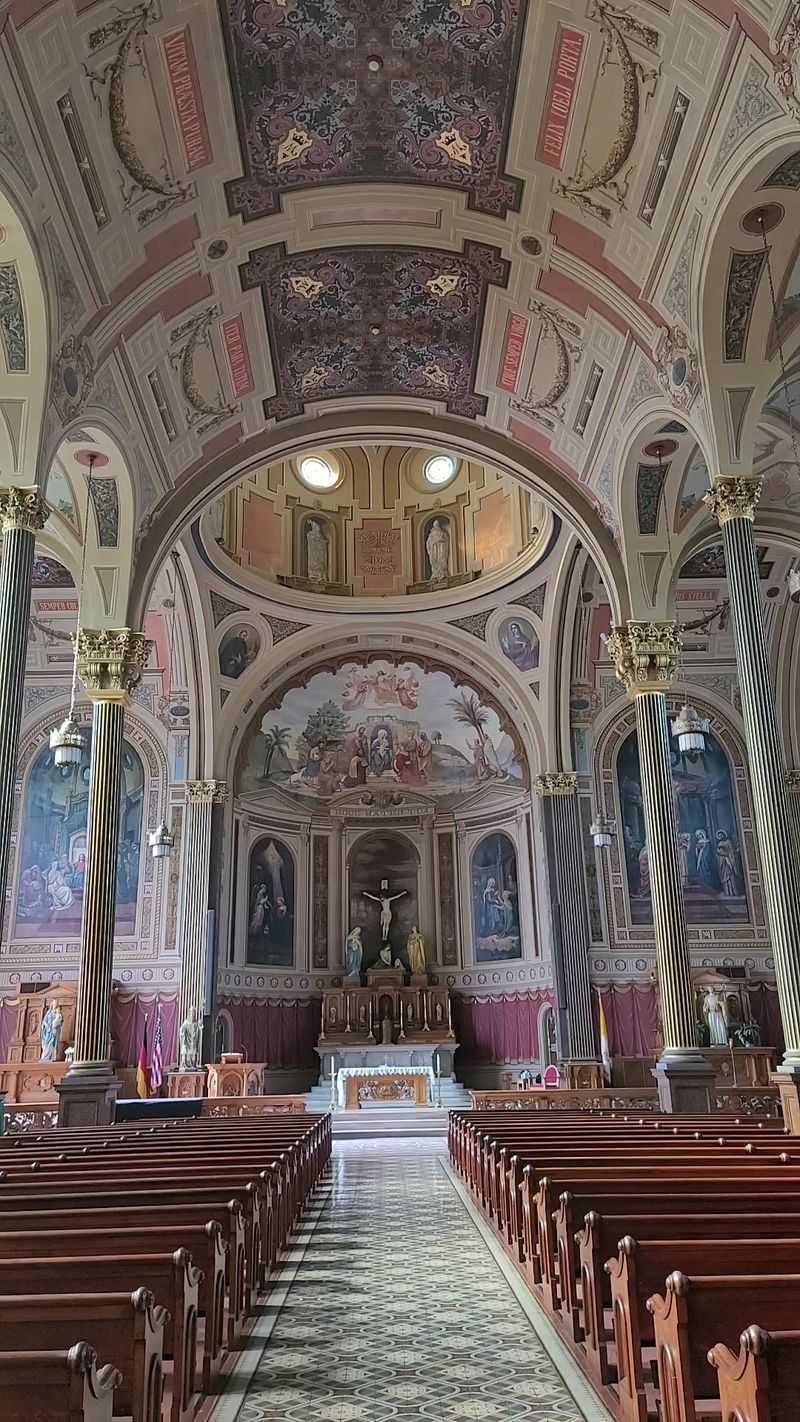
Johann Schmitt painted five large canvas murals for Mother of God Roman Catholic Church. He also taught a young Frank Duveneck early on.
Duveneck went on to become a world-renowned painter. His story ties straight back to this parish.
He was baptized here in 1848. Today he is buried in the church cemetery, which makes the murals feel even more personal.
Think about that for a second. A future art star likely studied the same kind of brushwork hanging on these walls.
The connection earned the church a special title. Historical Marker number 1460 calls it the Cradle of the Arts.
That’s a big name for a parish church, yet it fits. Few places can claim such a direct link to a famous American painter.
When you visit, give the murals real time. Look at the colors, the figures, and how each scene fills its space.
Art lovers might want to read about Duveneck before going. Knowing his story makes each painting feel like a chapter in a bigger tale.
Stained Glass Straight From Munich Lights Up Every Wall
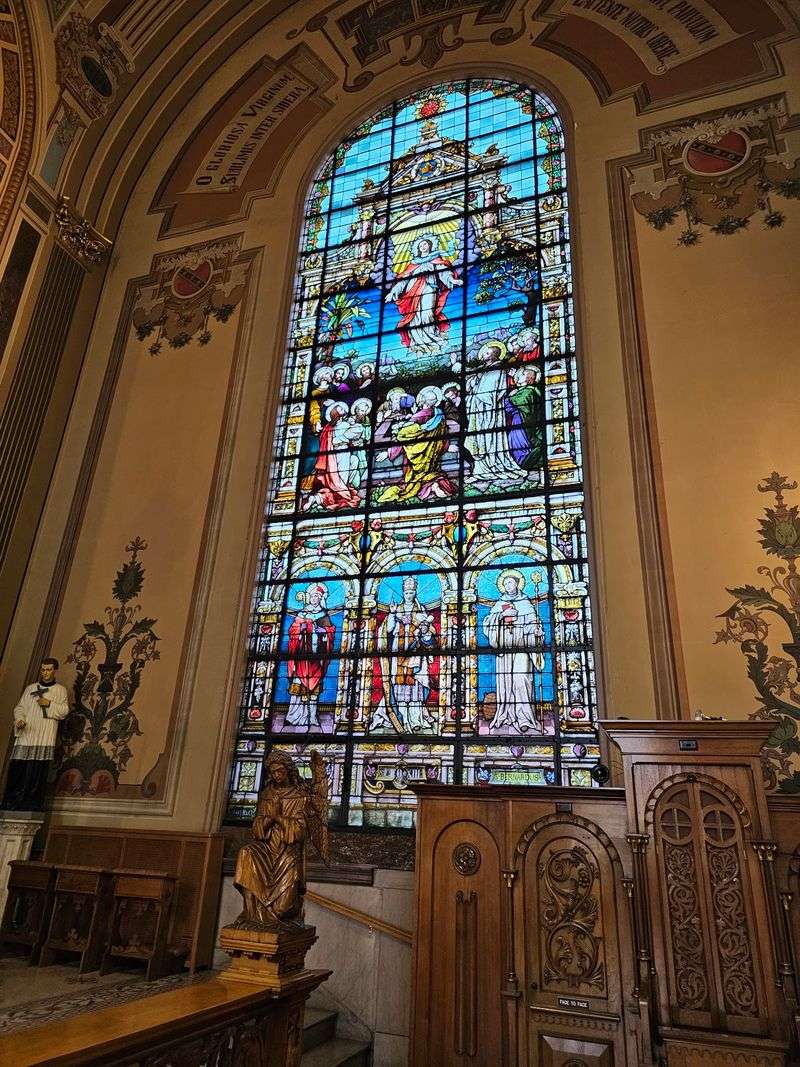
Munich, Germany, is a long way from Kentucky. Still, that’s where the stained-glass windows at this church came from.
Mayer and Company of Munich made them. The firm was known for rich, detailed religious glass work.
Shipping fragile glass across an ocean in the 1800s took serious faith. Somehow it all arrived ready to shine.
The same company also created the hand-carved wooden statue group above the altar. So Munich craftsmanship shows up in more than one spot.
Natural light changes how the windows look through the day. A morning visit and an afternoon visit can feel surprisingly different.
Bring a camera, but also just stand still for a bit. Colors on glass are hard to capture fully on a phone screen.
The glass pairs with the murals and frescoes around it. Together, they turn the whole interior into one big work of art.
Be respectful if a service is happening. Quiet observation from the back works best when people are praying, and the view holds up nicely from there.
Every Inch Of The Ceiling Seems To Tell A Story
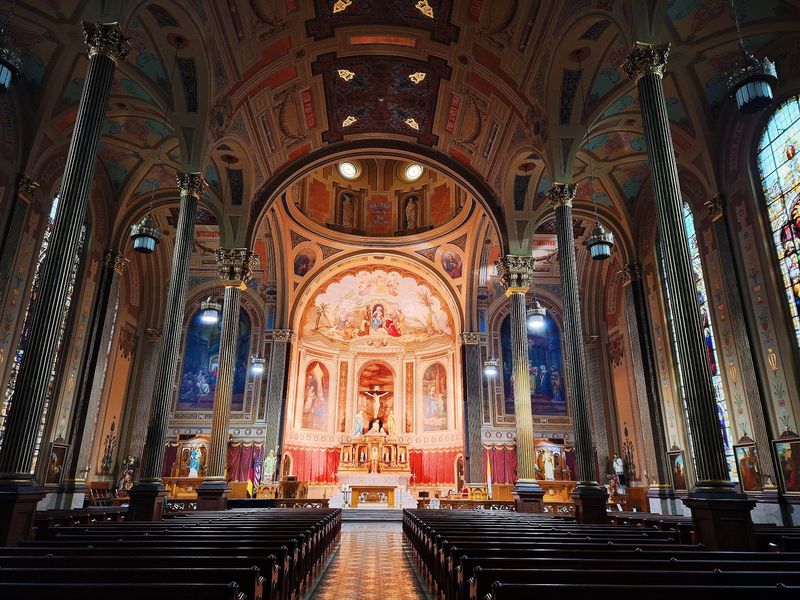
Neck stretches might be a smart warm-up here. The ceiling frescoes by Wenceslaus Thien deserve plenty of attention.
Up near the dome, you’ll spot the four evangelists. Wilhelm Lamprecht painted them on the pendentives.
Pendentives are the curved triangle shapes that help hold up a dome. They make perfect canvases, apparently.
Much of this artwork came during an 1891 remodel. The parish added new art to celebrate its 50th anniversary.
Some families celebrate birthdays with cake. This parish celebrated with frescoes, and honestly, that lasts longer.
Look closely along the walls too. The fourteen Stations of the Cross are by Melchior Paul von Deschwanden.
A large crucifix comes from Covington sculptor Ferdinand Muer. It’s a nice local touch among all the European names.
Plan to move around slowly. Each angle shows something new, from the dome to the side walls, so a quick glance just won’t cut it.
Carved Altars And Mosaic Floors Steal The Spotlight Up Front
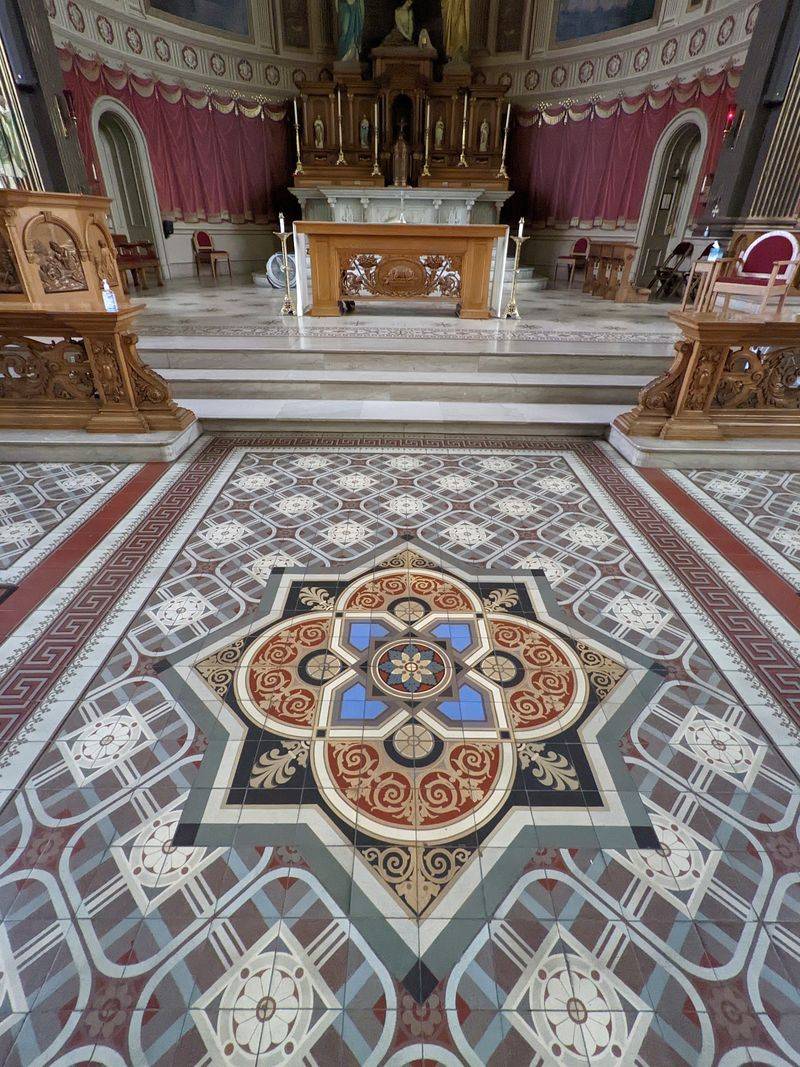
Wood carvers from Cincinnati left their mark in the sanctuary. The Schroder Brothers hand-carved the wooden altars.
Hand-carved means no shortcuts. Every curve and detail came from skilled hands and plenty of patience.
Now look down. The sanctuary floor features English mosaic work installed in 1903.
Then there’s a German Mettlach tile floor from 1921. Mettlach tiles are known for their tough build and lovely patterns.
So the floors alone tell a story. English mosaic, German tile, and a Kentucky church holding it all together.
Above the altar sits that carved statue group by Mayer and Company. It adds height and drama to the front of the church.
Most people focus on walls and ceilings in old churches. Here, the floors deserve equal credit.
Take a moment during your visit to notice the craftsmanship underfoot. It’s easy to miss, and it’s been quietly impressing people for more than a century.
The Balcony Organ Has Been Playing Since The 1870s
Music fans, this one’s for you. A 38-rank Koehnken Organ sits in the church balcony.
It was installed in 1875 or 1876. That makes it one of the older pieces in the building’s long story.
A rank is a set of organ pipes with one sound. Thirty-eight of them means a lot of musical color.
Want to hear traditional organ music? Try the 9:30 a.m.
Sunday Mass at Mother of God Roman Catholic Church.
The 11:30 a.m. Sunday Mass goes a different direction.
A contemporary ensemble leads the music at that one.
That later Mass also offers ASL interpretation. The parish says it’s the only church in the Tri-state area offering this service.
It’s a thoughtful touch. Everyone gets a chance to fully share in the Mass.
Weekday Masses happen at 12:05 p.m. on Monday, Tuesday, Thursday, and Friday. There’s no Mass on Wednesdays, so plan around that.
Coffee, Donuts, And A Warm Welcome Wait After Sunday Mass
Donuts after church never hurt anyone. Mother of God Roman Catholic Church serves coffee and donuts after both Sunday Masses.
It’s a simple way to meet people. Newcomers get a friendly reason to stick around and chat.
Getting inside is easier than you might expect for an 1871 building. Ramps sit at both the east and west entrances.
An elevator helps too. It gives access to the church hall and restrooms below.
Planning a visit for prayer? Confession is offered Tuesdays and Saturdays from 11 a.m. to noon.
Adoration takes place on Tuesdays from 11 a.m. to 11:45 a.m. It’s a quiet window for reflection in a stunning space.
Need to reach the parish office? It’s open Monday, Tuesday, Thursday, and Friday from 9:30 a.m. to 4:30 p.m.
The office closes on Wednesdays. Checking ahead before a visit is always a smart move, especially if you’re hoping to see the interior.
A Tornado Couldn’t Keep This Landmark Down For Long
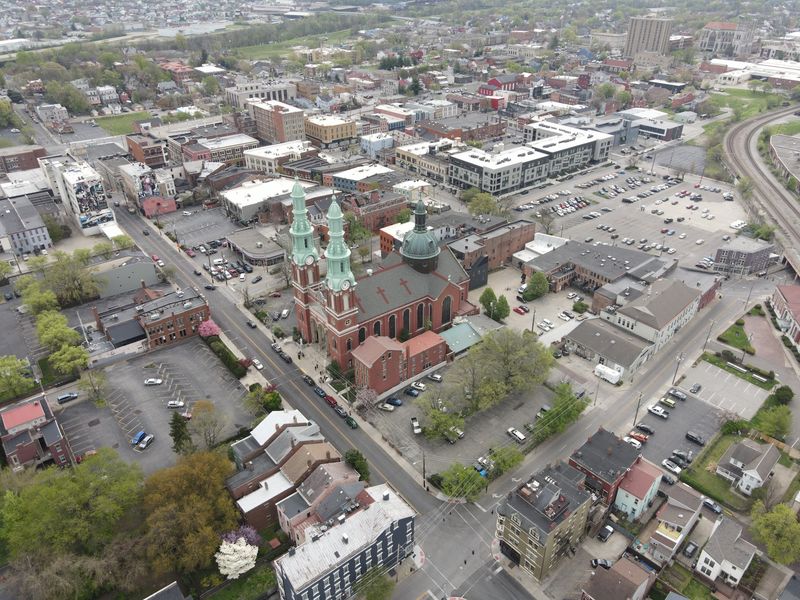
In 1986, a tornado damaged the cupola and roof. The parish didn’t waste time feeling sorry for itself.
The church was promptly rebuilt. It was also restored to look the way it did around 1890.
That’s a bold choice. Instead of modernizing, they brought back its golden-era look.
Official recognition came well before the storm. The church joined the National Register of Historic Places in 1973.
In 1980, it became part of the Mutter Gottes Historic District. That protects the character of the surrounding area too.
It sits just across the river from Cincinnati.
That makes it an easy stop for anyone exploring northern Kentucky. Pair it with a stroll through the historic district nearby.
Old brick streets and grand towers make a lovely combo. Kentucky has plenty of surprises, but an Italian-style church built by German families might top the list.