Japanese Lanterns And A Koi Pond Fill This Quiet Idaho Garden Gifted By A Sister City
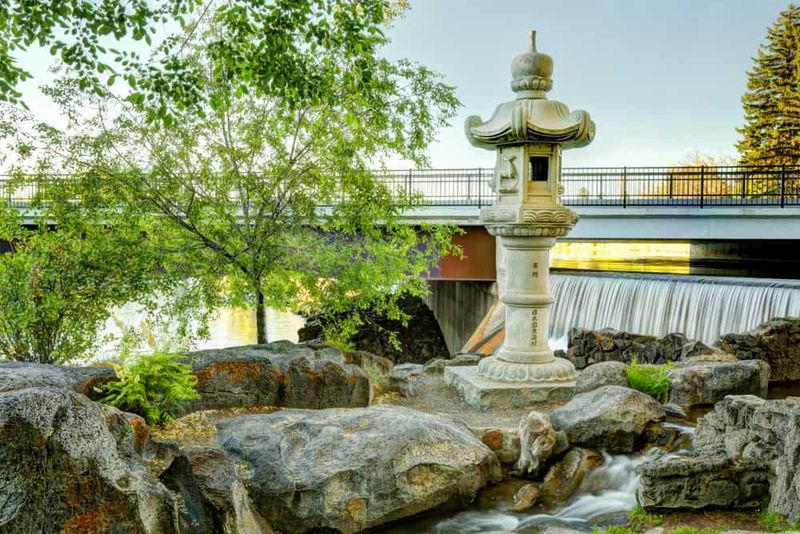
A stone lantern from a village in Japan has been standing in Idaho since the early 1980s. Today it watches over koi ponds on a rocky island in the middle of a river.
The lantern came first, as a gift between two towns. A whole Japanese garden grew up around it decades later, built by volunteers.
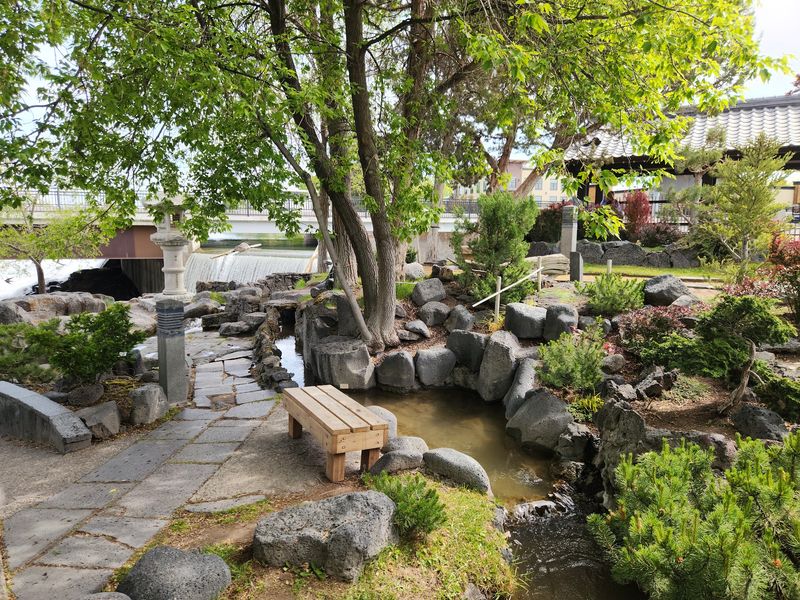
There’s a stone path called the Dragon’s Path that crosses a pond. There’s also a pavilion that looks straight at a waterfall.
I like how small this place is. You can wander every path in under an hour and still feel like you went somewhere far away.
Admission costs nothing, and nobody needs a reservation.
So how did a Japanese garden end up on a Snake River island in eastern Idaho? The answer involves a friendship that’s more than forty years old.
A Pocket Of Japan Floating In The Snake River
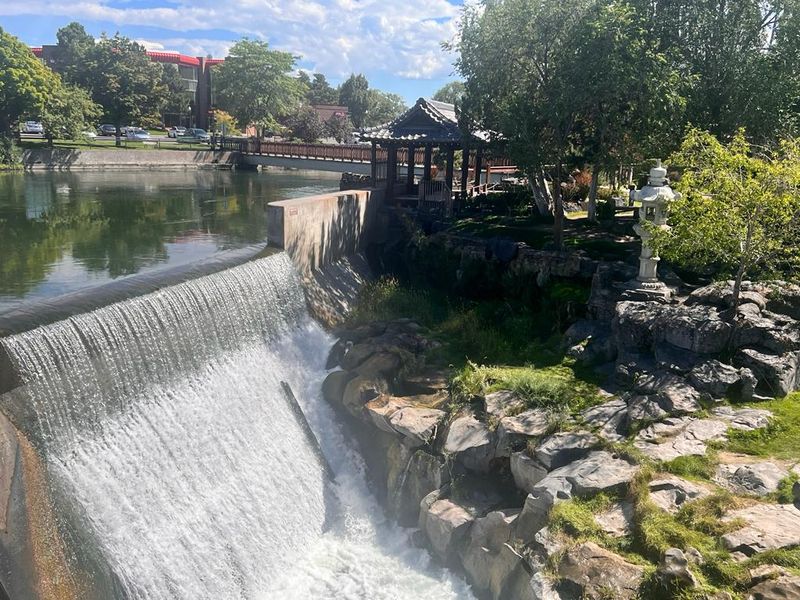
Most city parks sit on a patch of grass beside a parking lot. The Japanese Friendship Garden in Idaho Falls sits on a rocky island in the Snake River instead.
That setting does a lot of the heavy lifting. Water rushes on every side, and the city’s famous falls spill right past the edge of the garden.
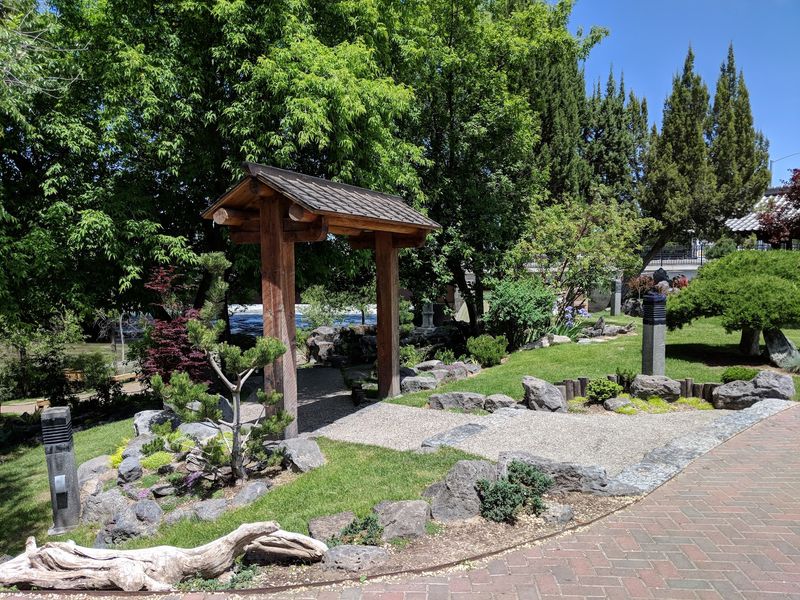
The garden is small and walkable, built in a traditional Japanese style. You’ll find stone lanterns, koi ponds, a garden gate, pagodas, and Japanese fencing.
Stone paths connect it all, winding between rocks and water features.
It’s run by the Idaho Falls Department of Parks and Recreation. The garden also connects to the Snake River Greenbelt, the riverside trail that loops through downtown.
Think of it as a quick trip to Japan without the long flight. Most people spend around 45 minutes exploring the whole thing, which makes it an easy add-on to any Idaho Falls afternoon.
Small doesn’t mean plain, though. Every corner holds a different feature, from a dragon-shaped path to a calm Zen Garden.
The rest of this article walks through them one at a time, so you know exactly what’s waiting on that island.
Two Towns, One Ocean Apart, And A Friendship That Stuck
Back in 1981, Idaho Falls made a new friend across the Pacific. The city formally became sister cities with Tokai-Mura, a village in Japan.
On paper, the pairing makes a lot of sense. Both communities have deep ties to nuclear research, with Idaho National Laboratory just west of Idaho Falls.
Tokai-Mura is home to major nuclear research facilities in Japan.
Sister city programs connect people through culture, education, and exchange visits. Some fade after a few years.
This one kept going.
By 2011, the two towns had reached thirty years of friendship. Idaho Falls wanted something lasting to mark the milestone, and a Japanese garden fit the moment perfectly.
I believe that’s what makes the garden feel different from a regular park. Every lantern and stone path carries a bit of that long-distance bond.
Kids can learn about it too. Ask a young visitor how far Japan is from Idaho, and then point out that friends from there helped inspire this spot.
It’s a pretty good lesson in keeping in touch. Thirty years is a long time to stay pen pals, and the garden proves the effort paid off.
Built For An Anniversary, Dedicated With A Heavy Heart
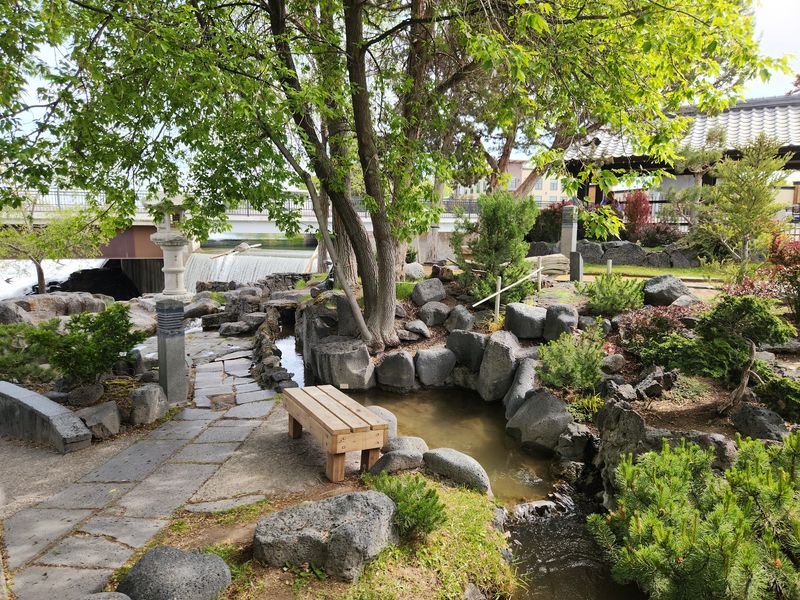
Creation of the garden began in 2011, the thirtieth anniversary year of the sister city bond. It was meant to be a celebration.
Then March 2011 arrived. A massive earthquake and tsunami struck Japan, and the sister city relationship suddenly meant something even deeper.
When the Japanese Friendship Garden was dedicated in 2012, it became more than an anniversary project. It also stands as a tribute to the people lost in that disaster.
That history adds weight to a quiet stroll. The calm water and careful stonework feel like a thoughtful message sent back across the ocean.
You don’t need to know any of this to enjoy the garden. Still, knowing it changes how the place feels as you walk the paths.
Japanese gardens are traditionally designed for reflection. Here, that purpose fits the story almost too well.
Families visiting with older kids might use the garden as a gentle starting point for talking about Japan. The 2011 disaster is a real part of recent history, and the garden offers a peaceful way to remember it.
Celebration and remembrance sit side by side here. Somehow, the small island has room for both.
An Island That Held The First Bridge Across The River
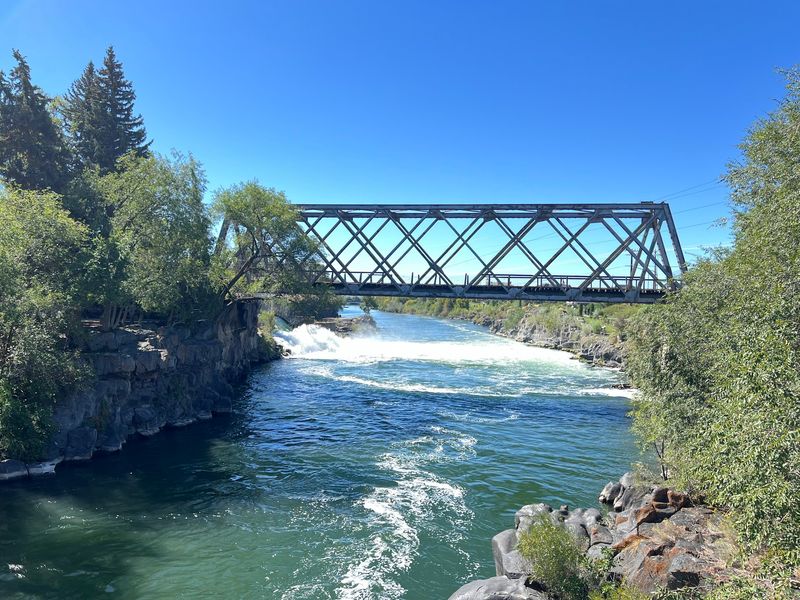
Long before koi swam here, this rocky island had a much more practical job. It was the site of the first bridge to span the Snake River in eastern Idaho.
Picture early travelers trying to cross that wide, fast water. A bridge here was a big deal for the whole region.
Later, the spot became known as Sportsmen’s Park. Longtime residents of Idaho Falls may still remember it by that name.
So the garden is a classic Idaho story of change. An old crossing point and a former park turned into a Japanese garden that looks nothing like its past.
History buffs get a bonus nearby. Interpretive signs in the area share Idaho Falls history, including the city’s first hydroelectric plant from 1912.
The surroundings still carry hints of the past. An old railroad trestle bridge sits within view of the riverbank, along with the lower falls.
Modern traffic rolls over the Broadway bridge right beside the garden today. That’s a little ironic, since the island has always been tied to getting across the river.
Not many Japanese gardens can claim roots in pioneer-era river crossings. In Idaho, this one can.
The Big Lantern That Arrived Decades Early
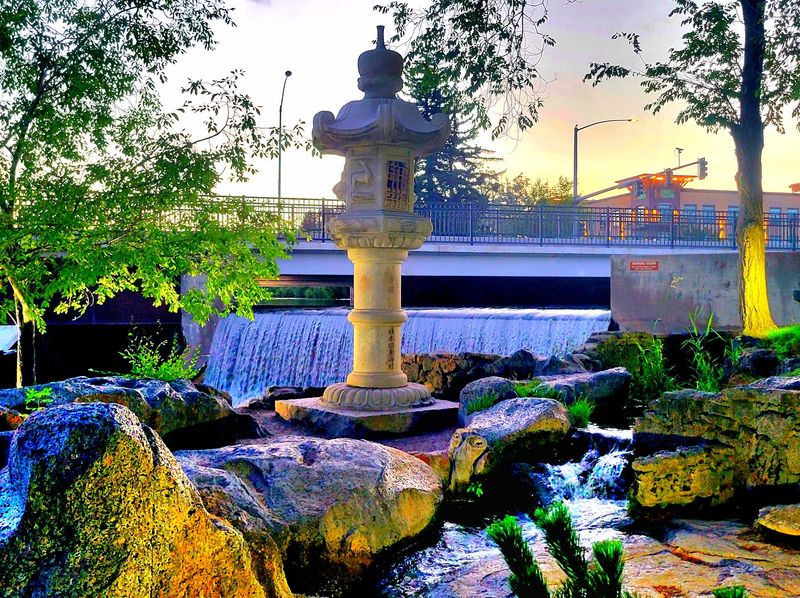
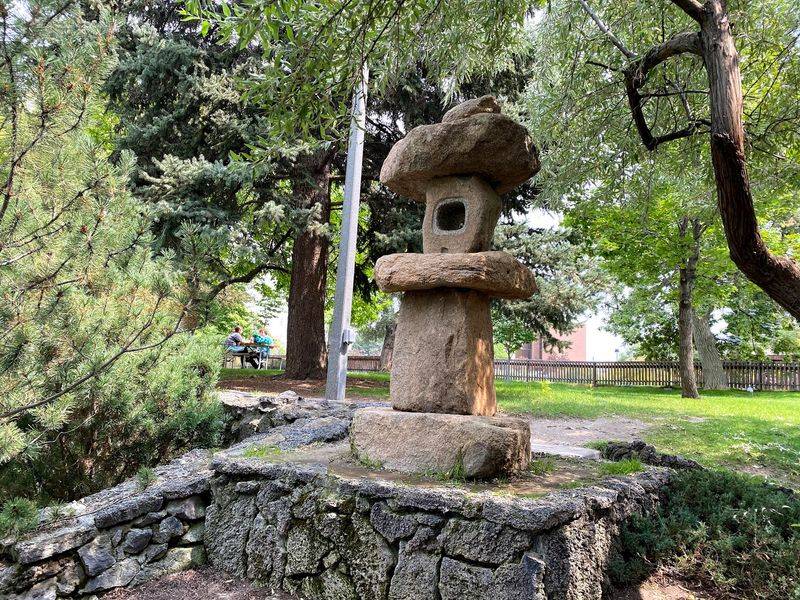
Here’s a fun twist: the garden’s most famous piece showed up about thirty years before the garden did. The large Japanese lantern was a gift from Tokai-Mura in the early 1980s.
That means the lantern was waiting around Idaho Falls for decades. When the garden finally took shape, it got a proper home.
Stone lanterns are a classic part of Japanese garden design. They’re traditionally placed near water, paths, and gathering spots.
In this garden, the large lantern joins several other stone lanterns scattered through the space. Together they give the island its unmistakable Japanese look.
I can’t imagine a better welcome gift between sister cities. It’s heavy, it’s beautiful, and it isn’t going anywhere.
Photographers tend to love lanterns because they frame a shot so neatly. Line one up with the river or a pond, and the picture practically composes itself.
Kids might enjoy a little lantern hunt. Count how many stone lanterns you can spot as you walk the paths, then see if your number matches everyone else’s.
Just admire them with your eyes, not your hands. They’ve held up nicely for a long time, and they deserve to stay that way.
Koi, Ponds, And Water Around Every Corner
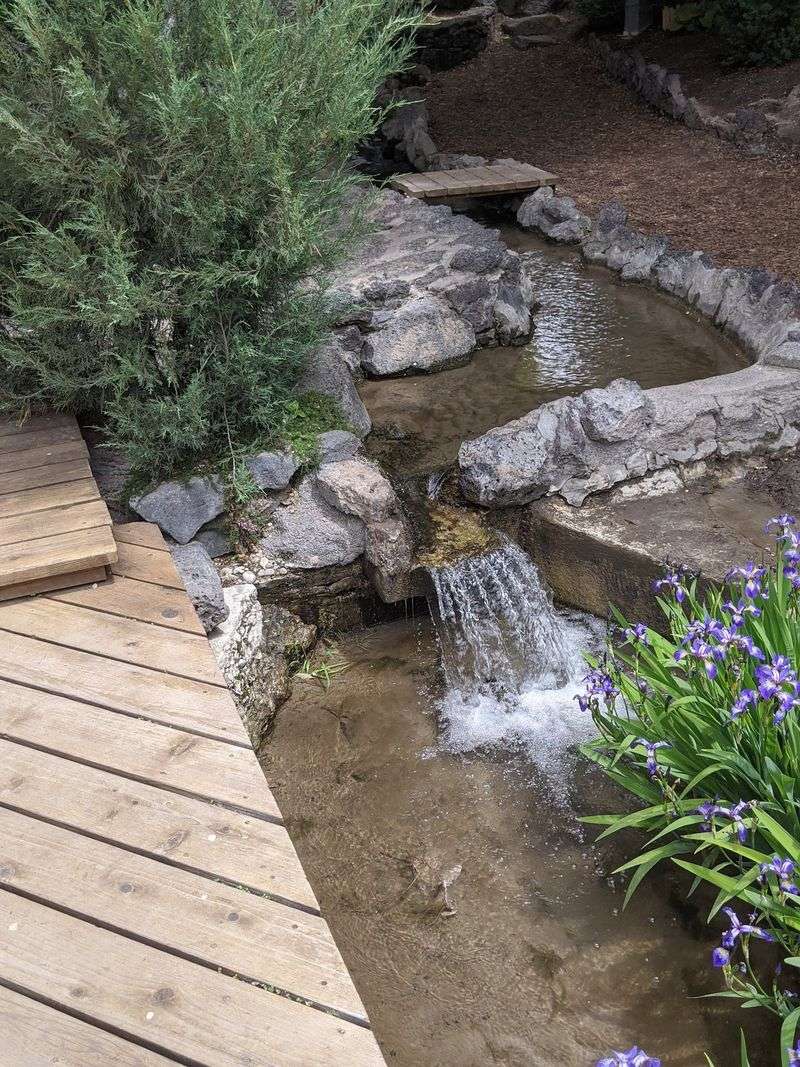
Water is the star of the show here, and it comes in every size. The garden includes koi ponds, small waterfalls, and multiple water features.
Koi are the bright, colorful fish you often see in Japanese gardens. They’re calm to watch and a hit with younger visitors.
Beyond the ponds, the Snake River surrounds the whole island. You get the soft trickle of garden water mixed with the louder rush of the falls.
That combination is a big part of the mood. The sound of moving water covers a lot of city noise, though traffic from the nearby bridge can still be heard.
On sunny days, mist from the falls can catch the light. Rainbows near the river are a real possibility when conditions line up.
Moss grows along parts of the garden too. It adds a soft green texture around the rocks and pools.
Small step stones cross some of the little pools and waterfalls. Watch your footing, especially after rain, since wet stone and trails can turn slippery.
Bring patience if you’re hoping to spot koi. Fish keep their own schedules, and part of the fun is waiting for a flash of orange.
Crossing The Water On The Dragon’s Path
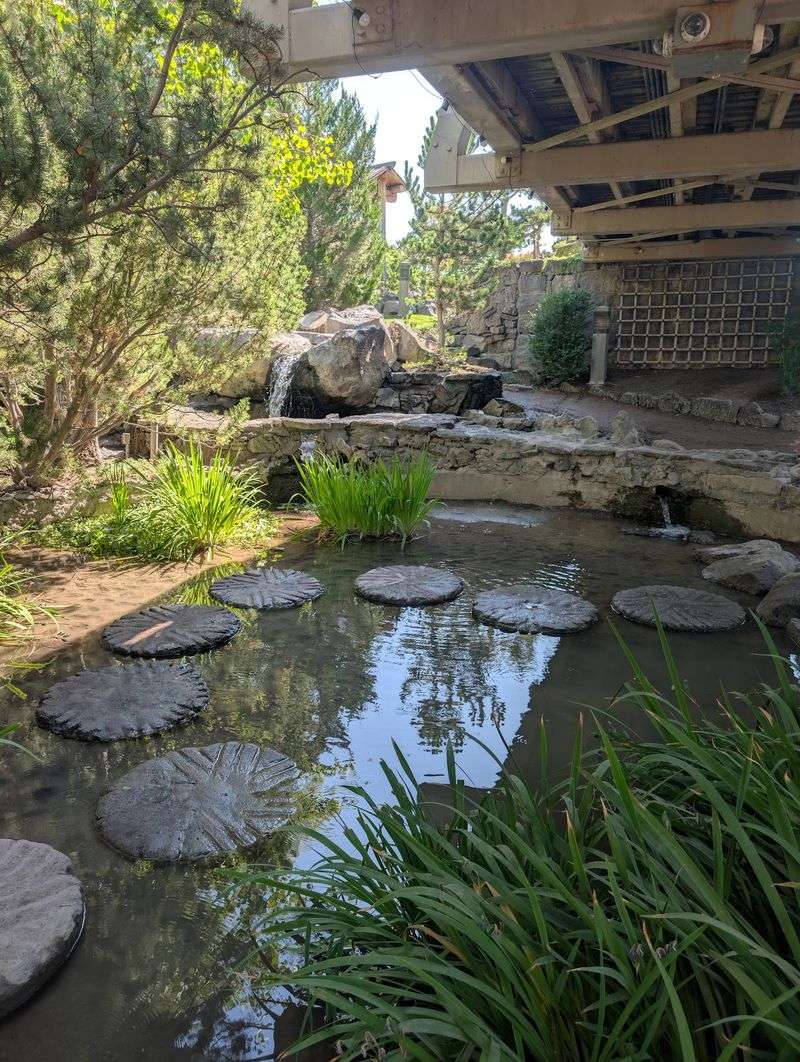
Any garden feature with a dragon in its name deserves attention. The Dragon’s Path crosses a pond inside the Japanese Friendship Garden.
It turns a simple walk into a small adventure. Instead of going around the water, you get to go right across it.
Kids will probably want to cross it more than once. Honestly, so might the adults.
Paths like this are common in Japanese garden design. They slow you down and make you pay attention to each step.
That’s kind of the point here. The garden wants you to notice the water, the stones, and the plants instead of rushing through.
Take a moment in the middle and look around. The pond, lanterns, and surrounding greenery all look a bit different from that angle.
For photos, the Dragon’s Path makes a fun focal point. A person mid-crossing adds scale and a little story to the shot.
A friendly safety note belongs here too. Stone surfaces near water can get slick after rain or snow, so steady footwear helps.
Treat it gently and stay on the route. Sticking to designated paths keeps the pond and plantings looking their best for the next visitor.
A Front-Row Seat To The Falls From The Pavilion
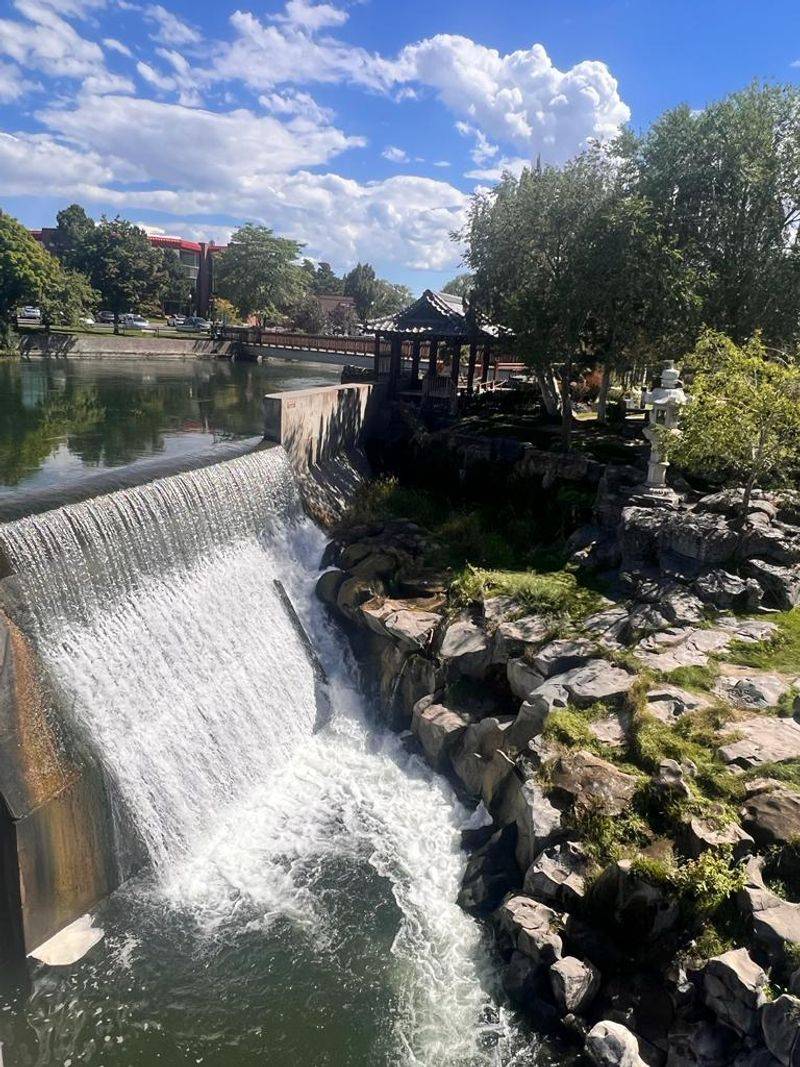
Plenty of places in Idaho Falls offer a look at the river. Few give you a pavilion aimed directly at the falls.
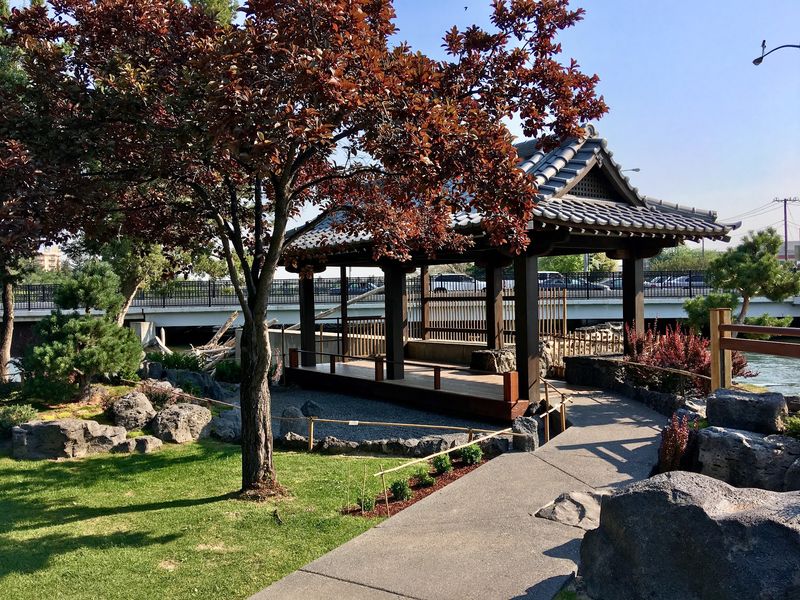
The pavilion in the Japanese Friendship Garden provides a direct view of the waterfall. It’s a natural place to pause and take it all in.
The garden also includes a viewing platform and a deck. Each gives a slightly different angle on the water and the city beyond.
From these spots, you can watch the Snake River tumble past the island. Walkers and joggers on the greenbelt add a bit of movement to the scene.
Grab a seat and let the sound do its work. Running water is famously good at quieting a busy mind.
Bring a book if you like. The pavilion and nearby grassy spots suit reading, sketching, or a slow chat with a friend.
Photographers often use the falls as a backdrop here. Sunrise and evening light can soften the scene nicely.
The view changes with the seasons too. Spring runoff sends more water over the falls, while winter brings a crisper, quieter look.
Either way, it’s a good seat. And you didn’t even need a ticket.
Raked Calm In The Zen Garden And A Little Mountain
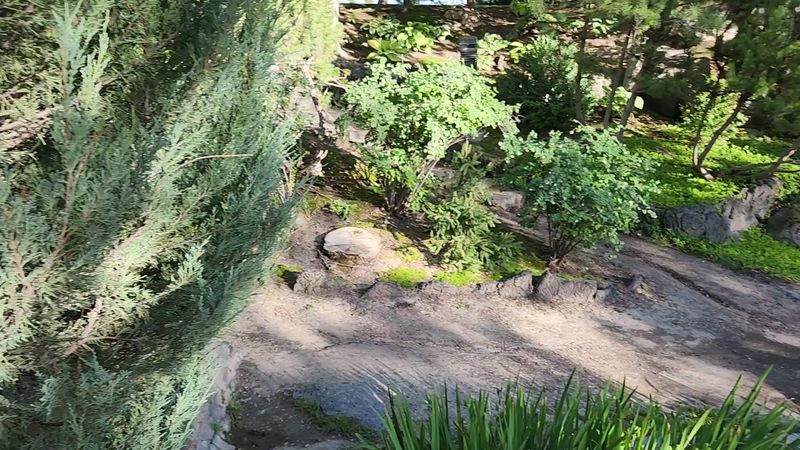
After all that rushing water, the garden offers a quieter corner. A Zen Garden was added as one of the later enhancements.
Zen gardens are known for raked gravel and carefully placed stones. They’re designed for calm thinking rather than splashing around.
It’s a nice contrast with the falls. One side of the island roars, while the Zen Garden simply sits still.
A “Mountain” landscape was also created in front of the Pavilion. In Japanese garden design, small landscaped forms often stand in for much larger natural scenes.
So yes, you can see a mountain in under a minute here. No hiking boots required.
These features show how the garden kept growing after its dedication. It wasn’t finished in 2012 and then left alone.
Kids may wonder why someone would rake gravel into patterns. It’s a great chance to talk about how Japanese gardens use simple shapes to suggest water and mountains.
Please admire the patterns without walking on them. Raked gravel takes careful work, and one stray footprint can undo it.
Stand still for a moment. The Zen Garden rewards people who slow down.
Gates, Bamboo, And Paths That Keep Getting Better
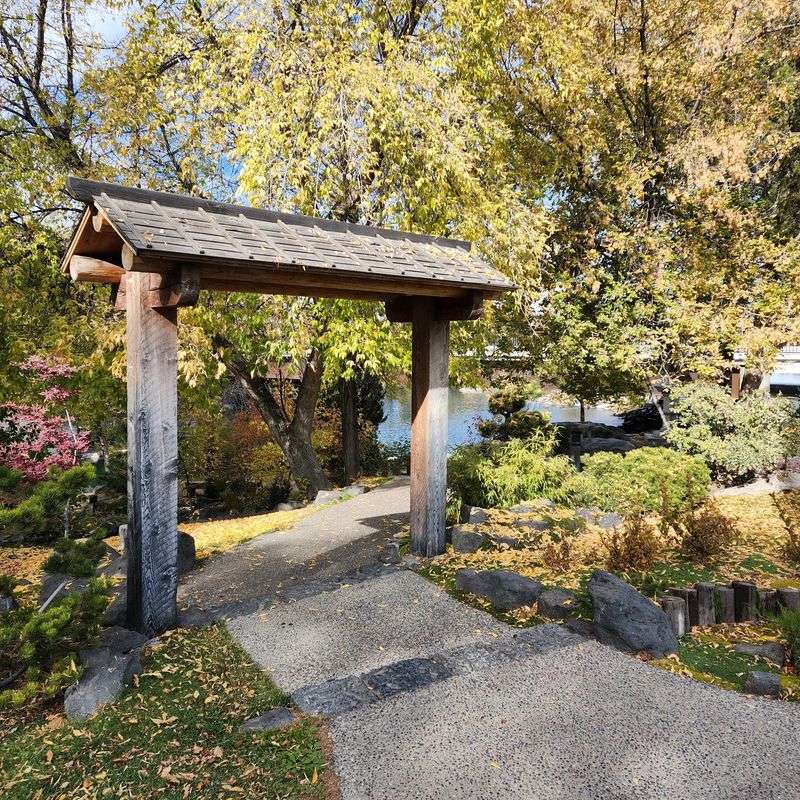
First impressions start at the traditional Japanese garden gate. Passing through it signals that you’ve left the busy street behind.
Inside, the details keep coming. Pagodas and Japanese fencing give the garden its structure and style.
A bamboo fence was built in 2016. It adds a classic texture that fits the garden’s look perfectly.
In 2017, aggregate walkways and paths were added. They help guide visitors through the space and make the route easier to follow.
I like that the garden has upgrades with real dates attached. It shows a place that’s cared for, not just installed.
Those paths matter more than you might think. Japanese gardens often use walkways to control what you see and when you see it.
Turn one corner and a lantern appears. Turn another and the falls suddenly fill the view.
Visitors are asked to stay on designated paths. It protects the plants and keeps the careful layout intact.
If you have mobility concerns, check conditions before you go. Some routes involve stones and uneven ground near water.
Each fence post and walkway adds up. Together they make a small island feel thoughtfully finished.
Volunteers Built It, And Your Manners Keep It Going
Big projects usually come with big budgets. The Japanese Friendship Garden came together with volunteers doing the building and the upkeep.
Funding comes from grants plus public and private donations. That’s a whole community pitching in for one small island.
It explains why the garden feels personal. People chose to give their time to make it happen.
Because of that, a few simple rules matter a lot. Visitors are asked to stay on designated paths, follow park rules, and pick up after themselves.
There’s also a specific request about decorations. Confetti, fake flowers, and balloons aren’t allowed in the garden.
That one might catch photo groups by surprise. It’s an easy rule to follow once you know it, and it keeps litter out of the ponds.
Since 2022, Idaho Falls Parks and Recreation no longer takes reservations for the garden. Everyone shares the space at their own pace.
So be courteous if someone is posing for pictures or reading quietly. A little patience goes a long way on a small island.
Treat it like a friend’s backyard. The volunteers will thank you, even if they never know your name.
What To Know Before You Head Downtown
Good news first: admission to the Japanese Friendship Garden is free. Your wallet can stay in your pocket.
The garden sits at 600 W Broadway St, Idaho Falls, ID 83402. Look for it on the rocky island in the Snake River, next to Key Bank on West Broadway.
It’s open every day of the year. Gates welcome visitors from early morning until late evening, but check before driving if your timing is tight.
No reservation is needed. Just show up and wander.
Plan on about 45 minutes to see everything. Add more time if you want to read, picnic, or linger by the falls.
The garden ties into the Snake River Greenbelt. That makes it easy to combine with a longer riverside walk through downtown Idaho Falls.
Wet weather can make trails muddy and slippery. Sturdy shoes are a smart choice in spring or after a storm.
Expect some traffic noise from the nearby bridge and road. The sound of the falls helps, but it’s still a city garden.
Evening visits come with a bonus. The lights over the nearby bridge make a nice backdrop after dark.
Small Island, Long Friendship, Easy Yes
Not every outing needs a full day and a packed cooler. Some of the best ones fit between lunch and dinner.
The Japanese Friendship Garden is exactly that kind of stop. It’s free, central, and ready whenever you are.
Families get koi, a Dragon’s Path, and room for curious kids. Quiet seekers get a Zen Garden and a pavilion facing the falls.
History fans get layers too. There’s a pioneer-era bridge site, the old Sportsmen’s Park, and a sister city bond that began in 1981.
I believe that mix is what makes it worth the drive. It’s a calm walk, a history lesson, and a friendship story all packed onto one island.
Eastern Idaho road-trippers can easily work it into a bigger trip. Plenty of folks heading toward Yellowstone pass right through Idaho Falls.
Is it huge? No. But it’s thoughtful, volunteer-built, and full of small details worth noticing.
Bring someone who’d enjoy a slow stroll by the river. Point out the big lantern from Tokai-Mura and share its backstory.
Somewhere across the Pacific, a village in Japan has a friend in Idaho. This garden is the proof, and you’re welcome to visit anytime.