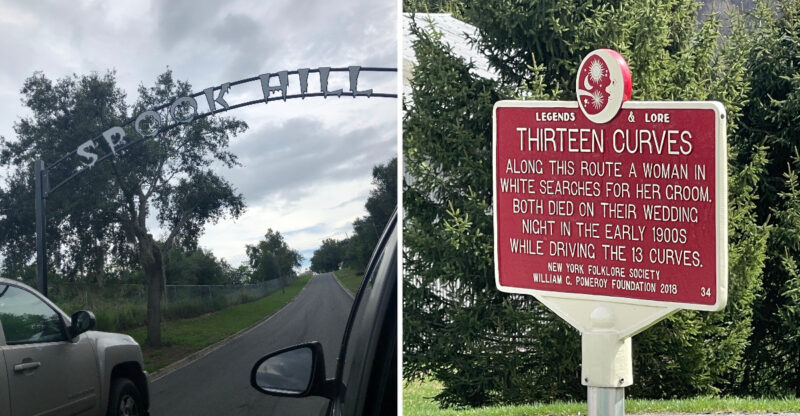
This New York State Park Gets Few Crowds And Plenty Of Spectacular Fall Beauty
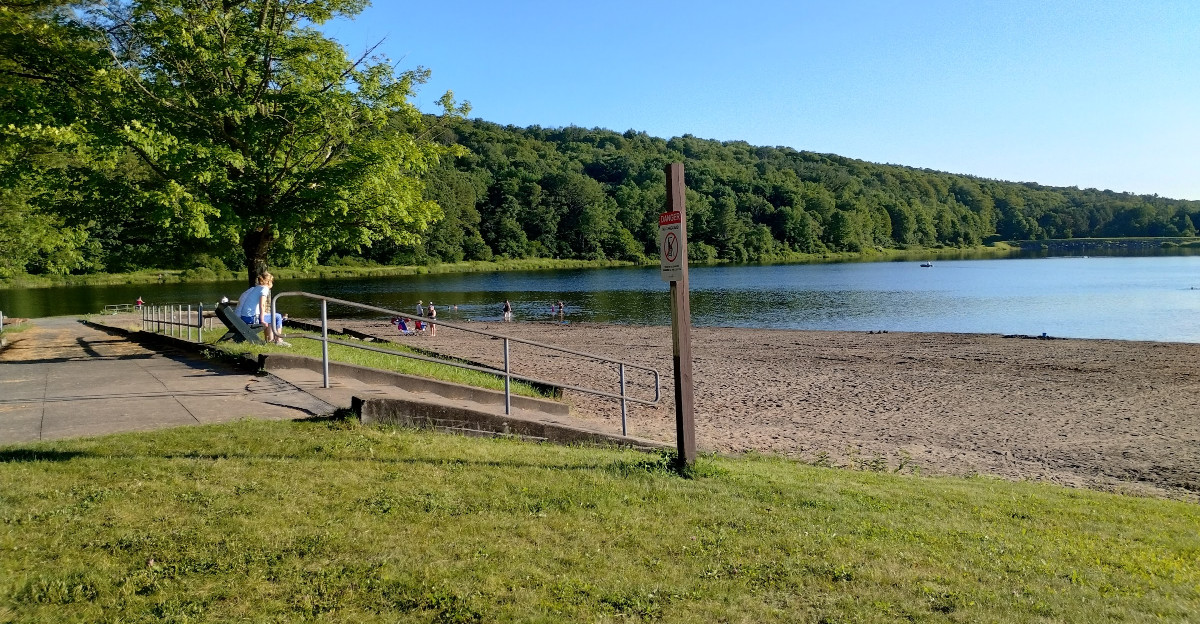
Count me in for a fall escape that keeps a few details to itself.
Somewhere in New York, a quiet park loses cell service almost as quickly as the road disappears into the trees.
I’d happily argue that the mystery is part of the appeal. There is a lake, wooded hills, and enough trail to make an afternoon stretch longer.
By October, the maples turn scarlet and the beech trees warm toward gold. I’m firmly on team places that do not need much explaining before they sound tempting.
No crowded headline attraction, no constant notifications, just a quieter corner of the state with color doing most of the work.
The only thing I’d want to know before going is simple: how long would I stay?
Your Phone Will Lose Signal, And Honestly, That’s The Best Part
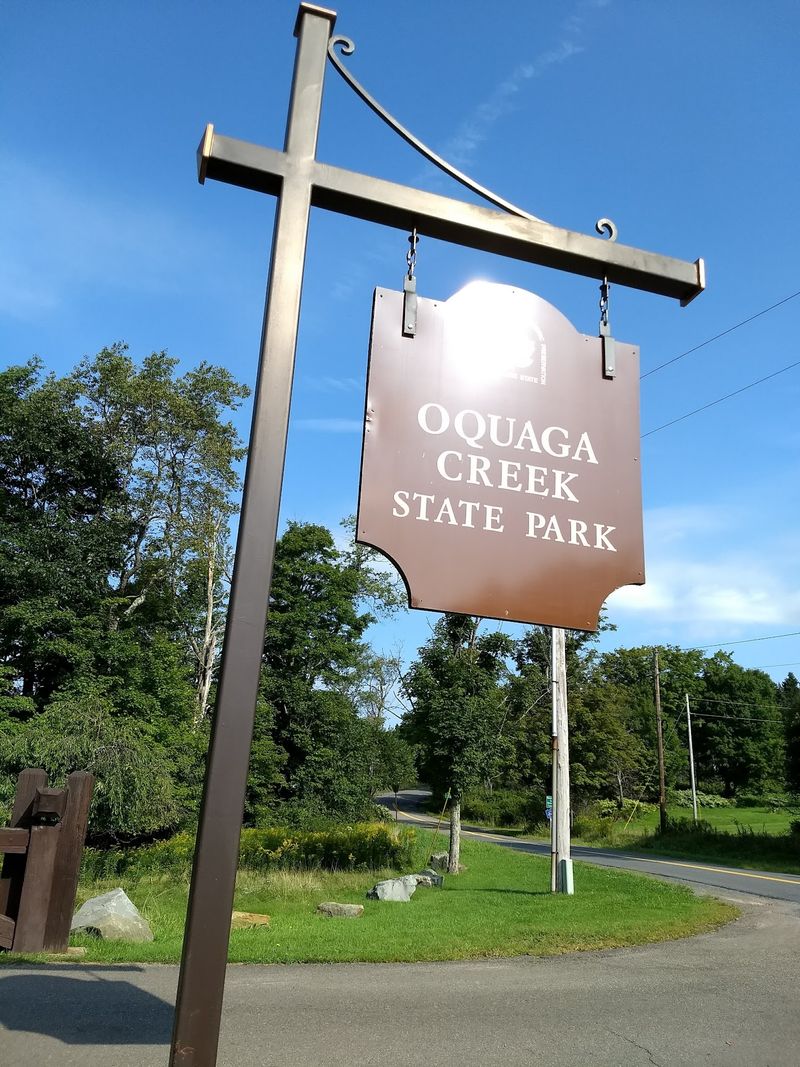
Zero bars can be part of the arrival at Oquaga Creek State Park.
The park specifically advises visitors that it has no cellular service or Wi-Fi, a practical detail that also gives the afternoon an unmistakably unplugged quality.
A downloaded map can help with the drive, but a paper trail map is useful once the phone is out of range.
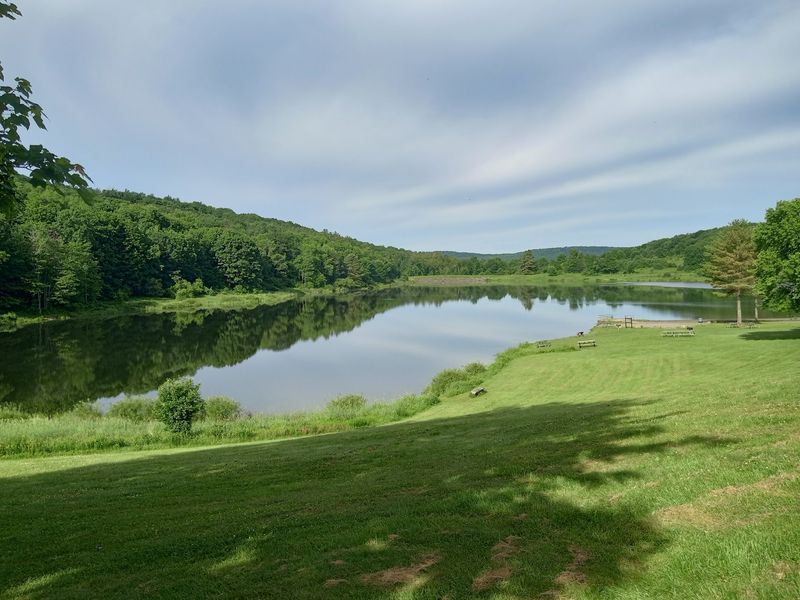
The 1,385-acre landscape includes woodland, a lake, and open areas for recreation. Benches, paths, and picnic areas encourage quiet time outdoors, although families and other visitors may share the grounds.
Day-use access runs year-round from dawn to dusk. Restrooms and other services may be unavailable after Labor Day, making advance planning particularly useful for a fall visit.
The park entrance is at 5995 County Route 20, Bainbridge, reached by roads that wind into a quieter stretch of countryside. Let someone know the plan before leaving an area with reliable service.
October Gives Arctic Lake A Colorful Frame
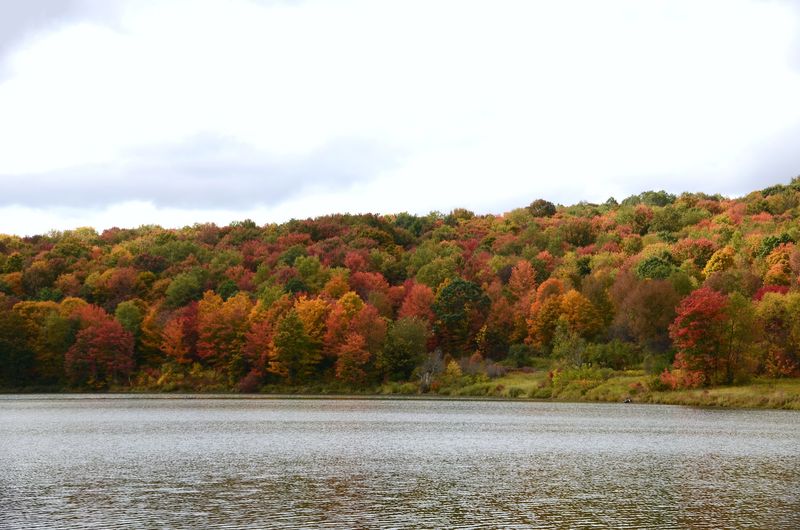
Scarlet maples, golden leaves, and dark green conifers can turn a familiar lakeshore into something striking.
Autumn at Oquaga Creek is especially attractive because the wooded slopes rise directly beyond Arctic Lake, allowing the color to spread across an entire hillside.
The lake covers approximately 55 acres. On a calm morning, its surface may reflect patches of orange and yellow, while a breeze breaks the colors into smaller ripples.
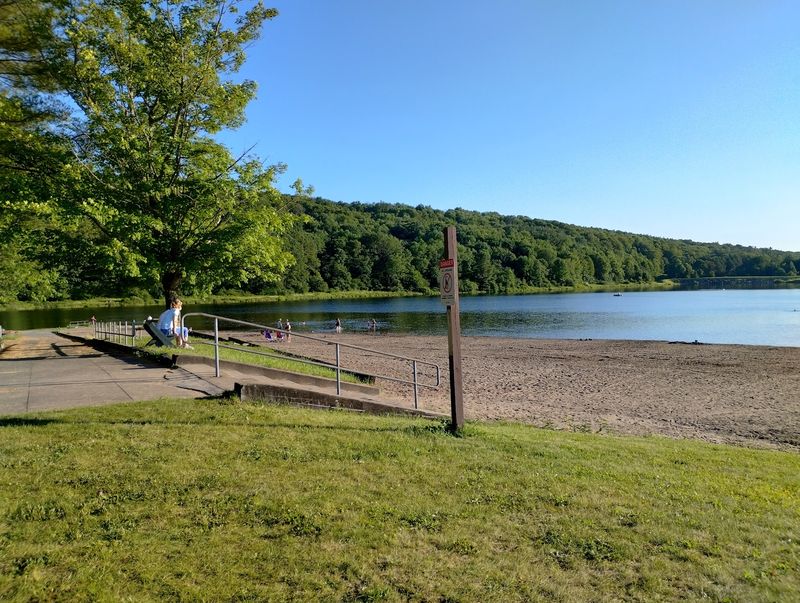
The sandy beach offers a broad view across the water, even when summer swimming facilities have finished operating.
Foliage timing changes with the weather, so no exact October week is guaranteed. Even cloudy days can reveal rich colors in the trees.
Unlike a mountain overlook reached only by a demanding climb, the lakeshore makes it possible to enjoy the scenery close to the park’s day-use areas.
It is one of those New York landscapes where a comfortable seat and a little time can be as satisfying as a packed itinerary.
Ten Miles Of Trails Lead Beyond The Campground
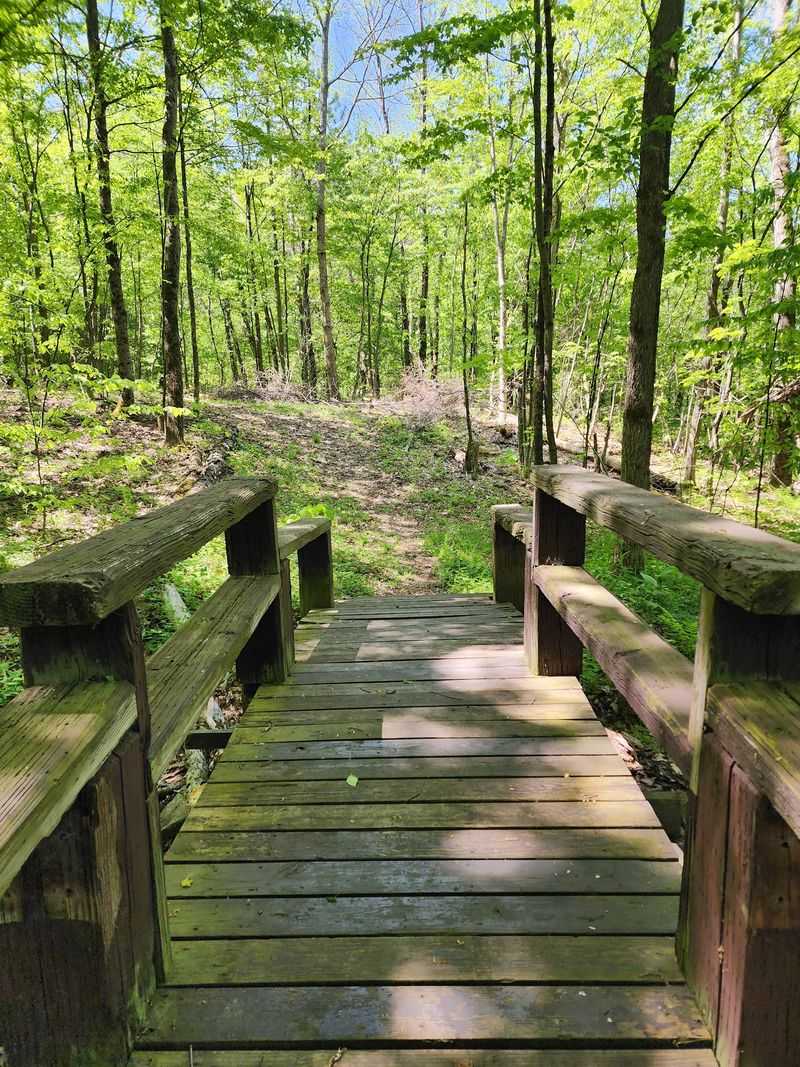
The forest offers more than a brief walk between picnic tables.
Around ten miles of park trails cross rolling terrain, with routes passing through hardwoods, evergreens, and areas where the ground can stay damp after rainfall.
An especially interesting feature is the connection toward the Finger Lakes Trail. A blue-marked side trail links the park with a much longer regional hiking network through nearby Arctic China State Forest.
That connection opens up possibilities for experienced walkers, although a short park loop is usually enough for a relaxed afternoon.
Winter brings snowshoeing and cross-country skiing, while designated routes allow biking, with helmets required for younger riders.
Bring a map and choose a route that suits the daylight remaining. October afternoons shorten quickly, and wooded junctions are easier to navigate when the trail markings have been checked ahead of time.
Comfortable, grippy shoes are helpful on leaf-covered surfaces. For anyone exploring New York on foot, the combination of a quiet lake and an unexpectedly extensive trail system is the main reason to stay longer than planned.
The Lake Belongs To Paddles Rather Than Motors
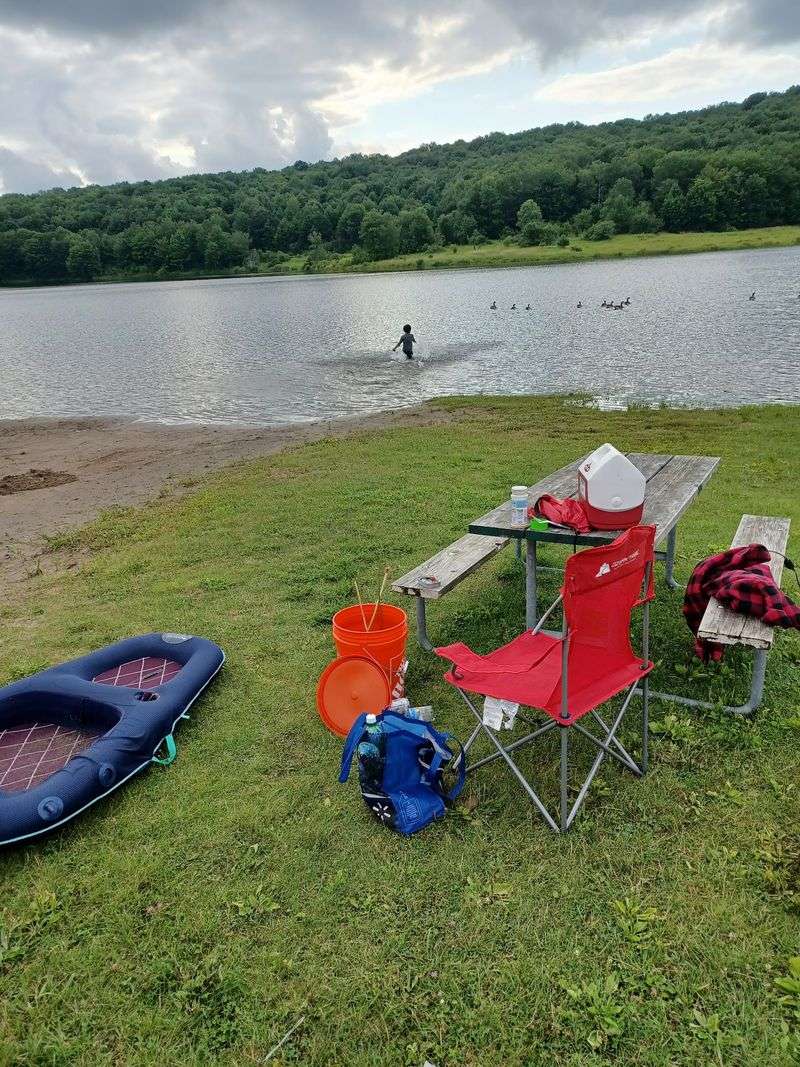
No engines interrupt a paddle across Arctic Lake. The park limits boating to nonmotorized, car-top craft, making a canoe or kayak a natural way to see the shoreline from a different angle.
Visitors bringing private boats need a permit, and boating is allowed from sunrise until sundown.
The launch area is for loading and unloading only, rather than leaving a vehicle parked while paddling. Those details matter if the plan includes carrying a boat down to the water.
Forested hills frame the water, with autumn colors visible from the shoreline. Cooler temperatures call for warm layers and a properly fitted life jacket.
Boat rentals should not be assumed to be available during the fall. Arriving with one’s own permitted craft is the more dependable plan, and park staff can clarify any seasonal launch conditions beforehand.
From the beach, the lake looks compact enough to explore at an easy pace. Out on the water, that same landscape opens into a lovely panorama of forest and sky.
A Fishing Spot That Changes With The Seasons
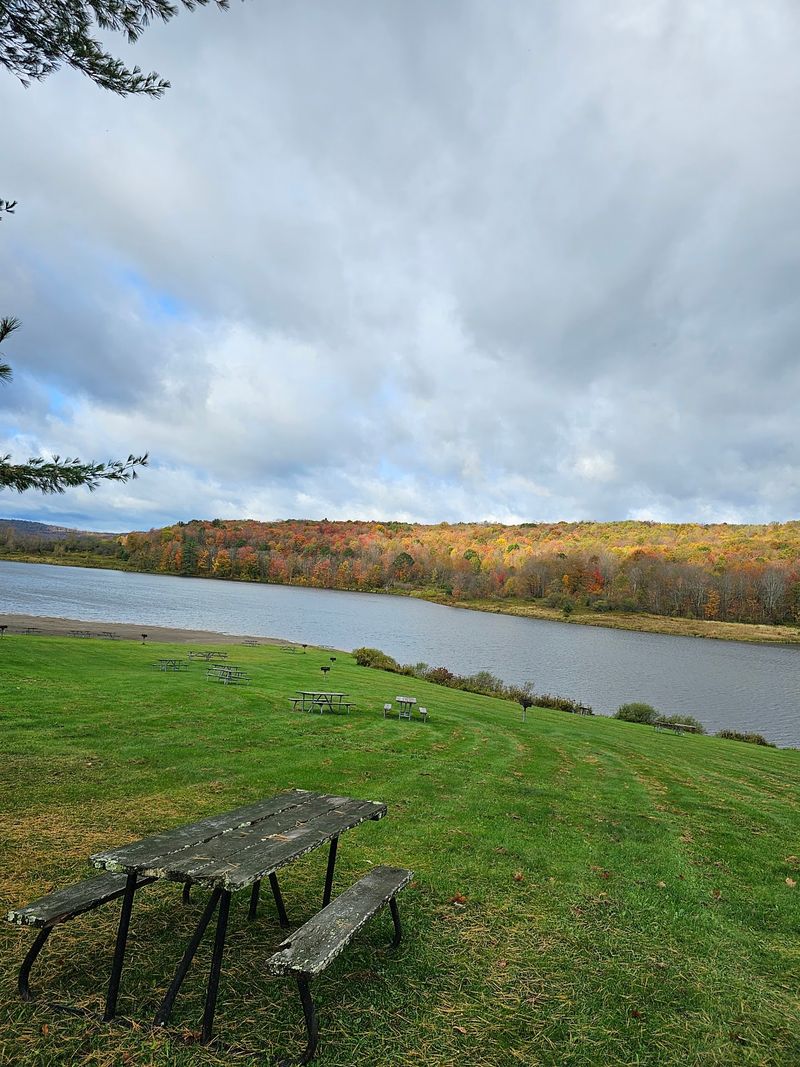
Arctic Lake offers anglers an appealing mix of open water, forested surroundings, and established fish populations.
Black bass, bullheads, and rainbow trout are among the species listed for the lake, which has also been stocked with trout.
Shore fishing is a straightforward way to spend a morning. A permitted canoe or kayak provides another option for reaching different sections of the water, provided boating conditions are suitable.
Fishing is governed by New York licensing requirements and current species regulations, which should be checked before setting out.
A quiet stretch beside the shore offers changing light, water birds, and reflections. Warm clothing is useful in October.
The park also lists ice fishing among its winter activities, but frozen-lake conditions must be evaluated before anyone considers venturing onto the surface.
The presence of a winter activity on a park listing is not an assurance that the ice is suitable on a particular day.
For those who prefer watching the water, a simple lakeside walk offers much of the same peaceful atmosphere without bringing fishing gear.
Campgrounds, Rustic Cabins, And A Proper Cottage
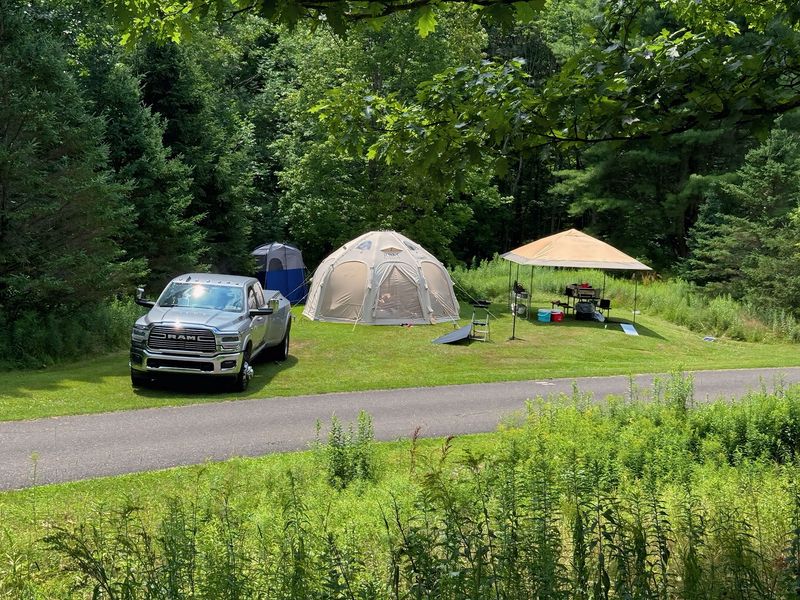
Oquaga Creek has several overnight options, although their availability does not follow the same calendar as the park’s year-round day use.
The 2026 camping season ran from May 15 through September 6, so an October visitor should not expect to arrive and claim a campsite.
During camping season, the park offers 90 campsites without electric or water hookups, along with seven rustic cabins that accommodate up to six people each.
The cabins provide shelter but do not include electricity or running water, and reservations generally require a two-night stay.
A separate full-service cottage sleeps up to eight. Its two bedrooms, equipped kitchen, bathrooms, living area, and heating offer an entirely different experience from a tent site.
Guests need to bring their own linens. Cottage booking dates and any late-season availability must be confirmed independently instead of assuming it remains open whenever the trails do.
Shared showers and comfort stations are seasonal, so autumn day-trippers should bring their own essentials.
Planning a future summer stay gives visitors time to choose between the simplicity of a tent, the rustic cabins, and a more comfortable cottage arrangement.
Disc Golf And Picnic Spots Add Another Kind Of Fun
The scenery does not have to be the only activity.
Oquaga Creek has a nine-hole wooded disc golf layout that weaves baskets through trees and across changing terrain, making it a good option for anyone who wants a little friendly competition.
The park also lists basketball, volleyball, and horseshoe areas among its recreational facilities.
Availability of equipment and seasonal amenities should be checked rather than assumed, especially once the campground office has reduced its fall services.
Picnic areas offer a quieter alternative. A packed lunch can turn a short lakeshore visit into a leisurely afternoon, while swings and open spaces provide opportunities for younger visitors to take a break from walking.
In autumn, falling leaves add color even to an ordinary bench or picnic table. Interpretive activities and the 2026 geocache challenge offer occasional additions, but schedules should be checked.
With wooded trails close by, it is easy to mix a short game, a picnic, and a stroll without committing to any one activity. The variety helps the park appeal to families as well as solo day-trippers.
A Name With Deep Roots In The Surrounding Landscape
The name Oquaga is often translated from Mohawk as “land of the wild grape.”
The Finger Lakes Trail organization connects that meaning with the berries that have long grown in the surrounding countryside, giving the park’s name a fitting connection to its natural setting.
Established as a state park in 1979, the property brings together Arctic Lake, forested slopes, and recreation areas.
The changing seasons give the same landscape several identities: green woodland and a swimming beach in summer, colored leaves above the water in autumn, and trails for snowshoeing or skiing in winter.
Deer, forest birds, and smaller woodland animals may appear. Binoculars help visitors observe them from a respectful distance.
The main entrance is near Bainbridge, and the park opens daily from dawn until dusk throughout the year. For an October trip, arriving with a trail map, snacks, and realistic expectations about seasonal services makes the day smoother.
Among New York’s smaller-feeling outdoor escapes, Oquaga Creek offers a satisfying combination of forest color, water views, and unhurried time outside.