Locals Say Everyone Should Visit These 10 Virginia Historic Landmarks At Least Once
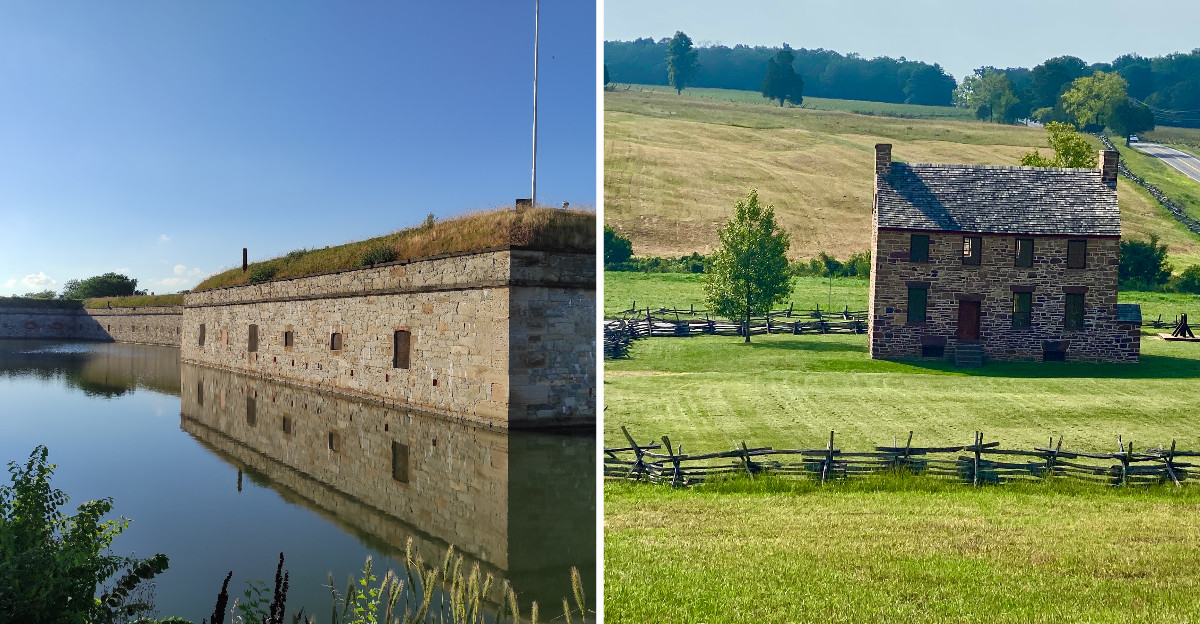
Archaeologists spent decades believing the first fort at Jamestown had washed into the river. Then a dig that started in 1994 found it sitting on dry land the whole time.
Well, well, well. History was hiding in plain sight!
How about this one? Thomas Jefferson once bought a giant stone arch from King George III. Mind you, that was in 1774, right before things got awkward with the king.
Virginia is packed with stories like these, and many of them sit just a short drive apart.
Presidents slept here, wars started and ended here, and kids today can still walk the same ground.
A few of these spots even let you watch archaeologists at work or hear a cannon roar. Which one would you visit first?
George Washington’s Mount Vernon
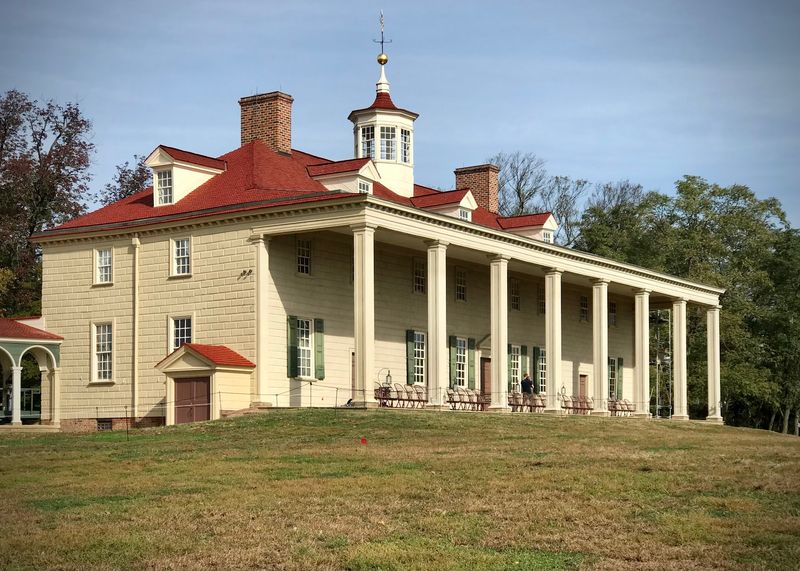
The first president had an extraordinary view from his back porch. The broad piazza at Mount Vernon looks across the Potomac River toward wooded Maryland shores, much as it did in his lifetime.
The Washington family acquired the property in 1674.
George’s father built the core of the mansion around 1734, and George began managing the estate in 1754 before inheriting it in 1761. He expanded the house twice, turning a modest residence into a 21-room landmark.
A guided tour reveals restored rooms on both floors, reopened in late 2025 after substantial preservation work.
Outside, Washington’s formal gardens, working farm demonstrations, and preserved outbuildings provide a fuller picture of life on the plantation.
The estate also interprets the experiences of the enslaved people whose labor sustained it, including through dedicated guided programs.
A museum and education center offers exhibits, personal objects, and interactive displays. Younger visitors can also explore the estate grounds and meet interpreters during scheduled activities.
The property welcomes visitors daily, generally from 9 a.m. to 5 p.m. Mansion admission requires a separately timed tour, so reserving early helps secure a preferred slot.
Find the entrance at 3200 Mount Vernon Memorial Hwy, Mount Vernon. Plan several hours, since the gardens and museum extend well beyond the famous front door.
Monticello
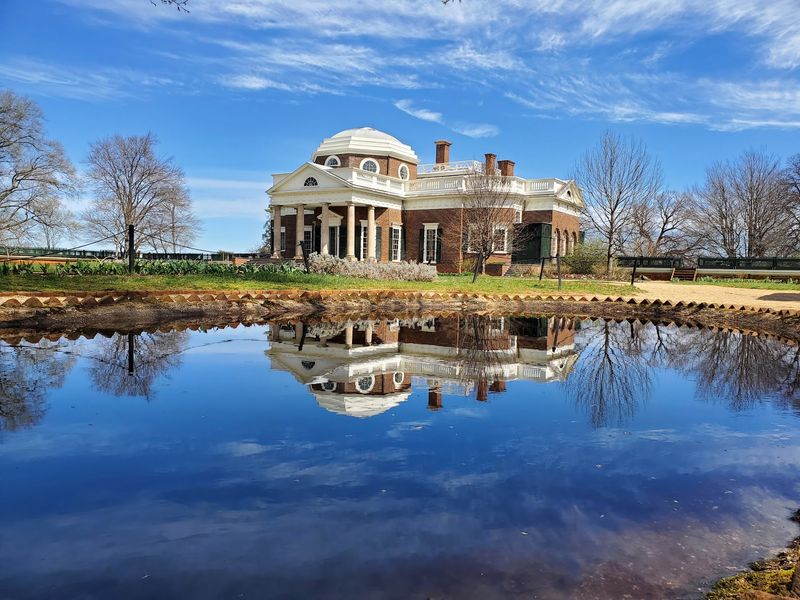
Ever seen a house on the back of a nickel and then stood in front of the real thing? Here’s your chance, high on a hill near Charlottesville.
Thomas Jefferson inherited the Monticello property in 1764 and began leveling its mountaintop in 1768.
Construction started the following year, but he continued redesigning the residence for decades. The neoclassical home and the University of Virginia’s Academical Village received joint UNESCO World Heritage recognition in 1987.
The architecture is fascinating, particularly the domed roof, unusual interior arrangements, and clever household devices.
A Highlights Tour introduces the first-floor rooms, while the Behind the Scenes option reaches upper floors and the distinctive Dome Room. Seasonal Family Friendly Tours include hands-on activities for children.
The site’s interpretation also covers the enslaved families who lived and worked on the plantation.
Mulberry Row, archaeological remains, and the From Slavery to Freedom experience make those histories central rather than an afterthought.
Begin at the David M. Rubenstein Visitor Center, which includes exhibits and the Griffin Discovery Room.
A shuttle carries visitors to the historic mountaintop. The gardens and vegetable terraces reward extra time outdoors, with views stretching toward the surrounding hills.
Monticello stands at 1050 Monticello Loop in Charlottesville. Its opening hours vary seasonally, and some house tours require advance reservations.
Arrive ahead of your appointed departure, especially if you want time for the visitor center.
Colonial Williamsburg
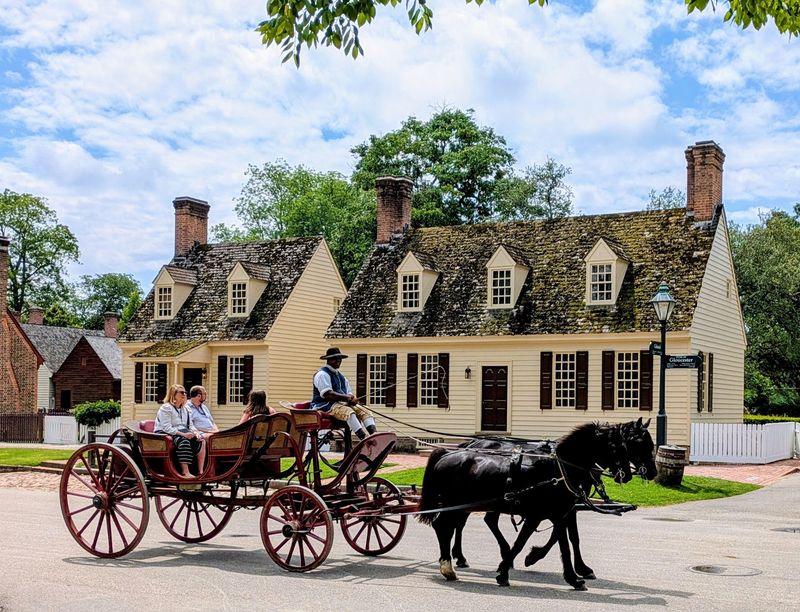
Time machines aren’t real, but 301 acres of the 1700s come pretty close. Colonial Williamsburg recreates the lively streets of the colonial capital with historic trades, gardens, and costumed interpretation.
Williamsburg became Virginia’s colonial capital in 1699 and retained that role until 1780.
Restoration efforts began in the 1920s, preserving 89 original eighteenth-century structures and reconstructing hundreds of other buildings on historical foundations.
The Governor’s Palace and Capitol reveal how public life operated, while workshops introduce blacksmithing, printing, tailoring, and other skilled trades.
Some interpreters portray people from the period, and scheduled performances give visitors opportunities to hear their perspectives. Questions are welcome, particularly in the working shops.
The Art Museums of Colonial Williamsburg exhibit furniture, decorative objects, folk art, and textiles.
Museum admission is free, although tickets are required for many historic interiors, trades, and special programs. The new archaeology center offers another angle on the ongoing work of understanding the old city.
Start at 101 Visitor Center Dr in Williamsburg to arrange tickets and transportation into the Historic Area.
The grounds are accessible throughout the year, with most historical sites operating roughly 10 a.m. to 5 p.m. Programs and hours change by day.
Historic Jamestowne
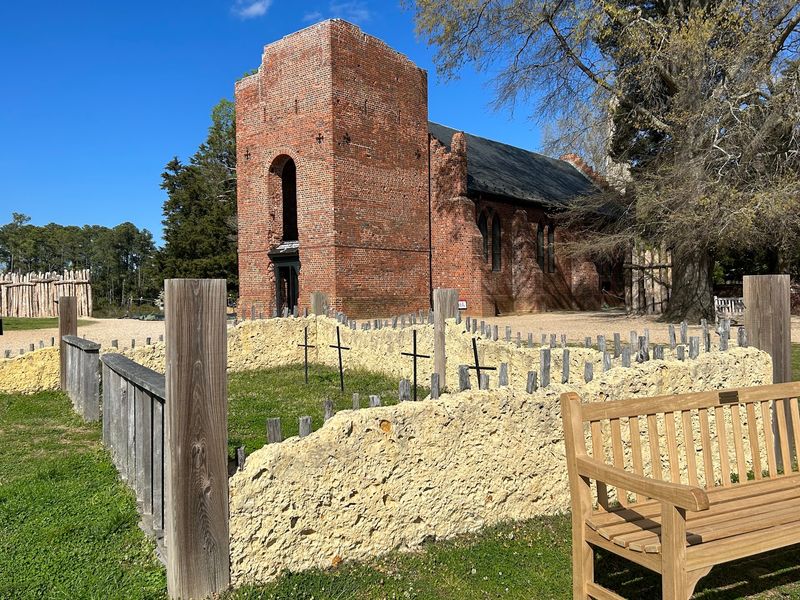
Archaeologists here are still digging, and you get to watch. Not many historic places can say their earliest structures were rediscovered after centuries of uncertainty.
English settlers founded Jamestown in May 1607, establishing the first permanent English settlement in what became the United States.
For years, historians believed the original triangular James Fort had largely eroded into the James River. Excavations beginning in 1994 revealed most of its footprint on dry ground.
Today the Jamestown Rediscovery team continues investigating the fort and surrounding settlement. Roughly three million artifacts have been recovered, and selected finds appear in the Voorhees Archaearium.
The surviving seventeenth-century church tower and reconstructed Memorial Church add architectural landmarks to the excavated site.
Walking tours explain the archaeology, while interpreters at the nearby Glasshouse demonstrate an early colonial craft using period techniques. Research activity varies with conditions, so an active excavation isn’t guaranteed every day.
Historic Jamestowne occupies 1368 Colonial Pkwy on Jamestown Island. The grounds generally open daily from 9 a.m. to 5 p.m., with entrance ending at 4:30 p.m.
The visitor center’s main exhibit and theater areas are currently unavailable, although visitor services continue. The Dale House Café is undergoing renovation.
Bring water, allow time for riverfront paths, and begin near the fort remains. The traces beneath your feet tell a story that archaeology is still revealing.
Yorktown Battlefield
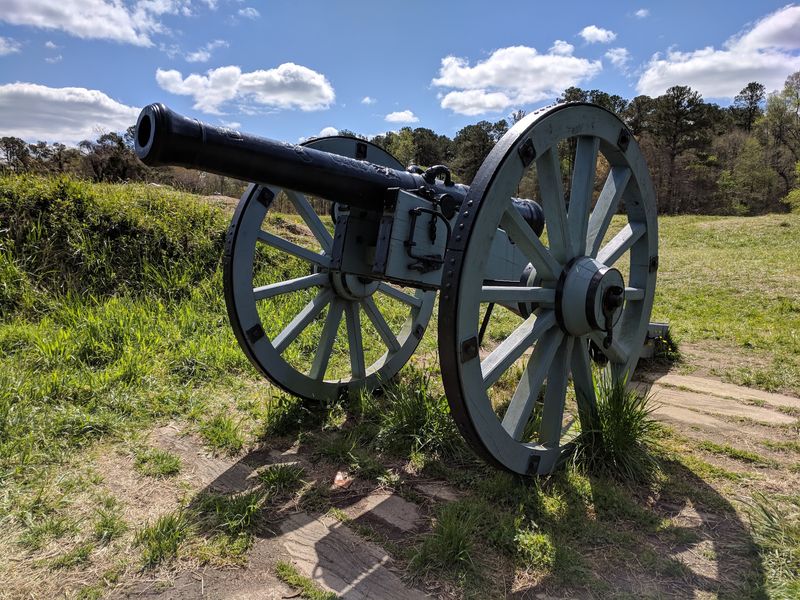
October 19, 1781, is a date worth circling. On that day, British forces under Cornwallis formally surrendered at Yorktown, a milestone in the American struggle for independence.
George Washington directed American troops alongside French allies during the campaign.
Today the preserved landscape includes earthworks, cannon positions, and landmarks that help explain how the surrounding terrain influenced the outcome. This Virginia battlefield forms part of Colonial National Historical Park.
Begin at the visitor center, where a short orientation film and exhibits introduce the 1781 events.
The collection includes objects associated with Washington’s campaign headquarters and a surviving section of his tent. Rangers lead interpretive activities when scheduled.
Two self-guided driving routes make the grounds easier to explore: a seven-mile battlefield loop and a nine-mile allied encampment route.
Among the memorable stops are Redoubts 9 and 10, Surrender Field, and the Moore House, where terms were negotiated. Historic interiors may open when staffing permits.
The visitor center stands at 1000 Colonial Pkwy in Yorktown and usually opens from 9 a.m. to 5 p.m.
You can also visit nearby historic Yorktown, with waterfront paths and eighteenth-century buildings. The York River provides a striking natural backdrop. It’s worth allowing enough time for both the exhibits and the longer driving route.
Virginia State Capitol
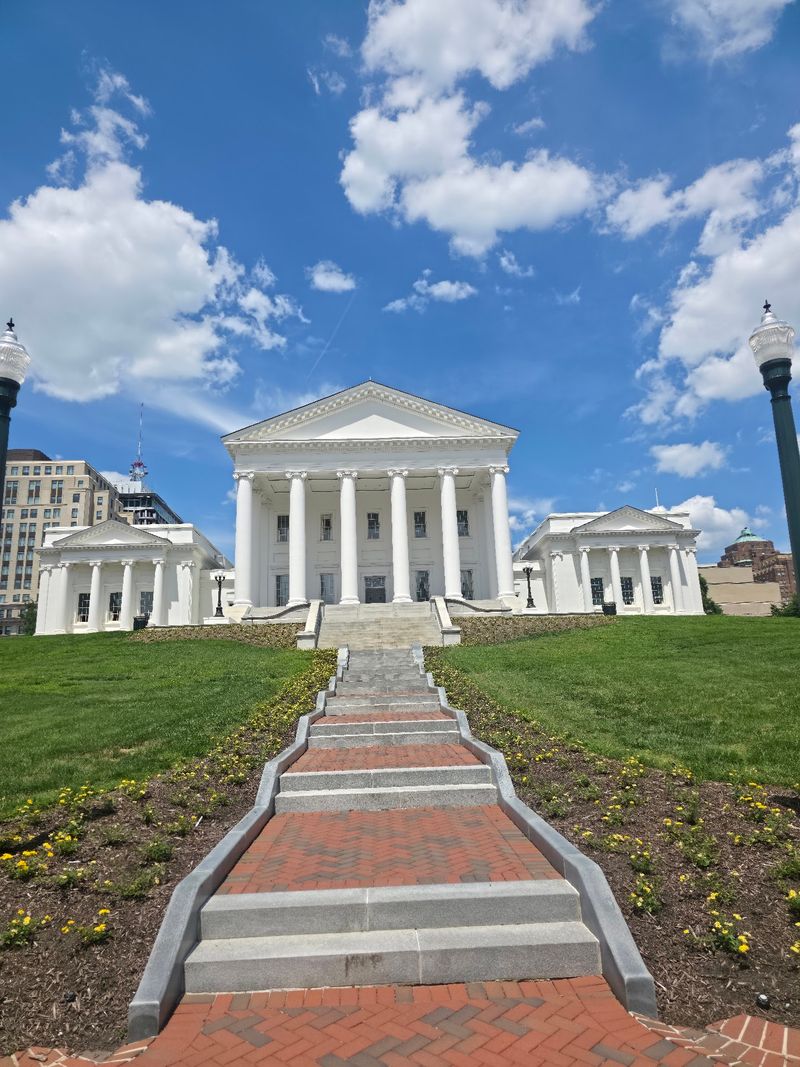
Lawmakers in Richmond meet in a building with serious bragging rights.
The Virginia General Assembly traces its roots to 1619, making it the oldest continuously operating lawmaking body in the Western Hemisphere.
Thomas Jefferson designed the Capitol in the 1780s with inspiration from an ancient Roman temple in France.
Its restrained columns and broad steps influenced later American public architecture. The building overlooks Capitol Square in central Richmond and continues to host legislative sessions today.
Inside, a life-size statue of George Washington by sculptor Jean-Antoine Houdon is among the major attractions.
Historic chambers and exhibits explain how government developed here, while portraits and architectural details make a guided tour more rewarding than a quick walk past the columns.
Tours are offered without an admission charge.
Guided visits generally run Monday through Saturday beginning in the morning, and Sunday afternoon, while self-guided access is available during visitor hours. Security screening is required, so leave a little time for entry.
Use 1000 Bank St in Richmond for the public entrance. The Capitol opens Monday through Saturday from 8:30 a.m. until 5 p.m. and on Sundays from 1 to 5 p.m. Capitol Square remains open for walks beyond building hours.
After the tour, explore the paths, trees, and monuments around the hilltop. The combination of working government and preserved architecture makes this more than a static museum.
Arlington National Cemetery
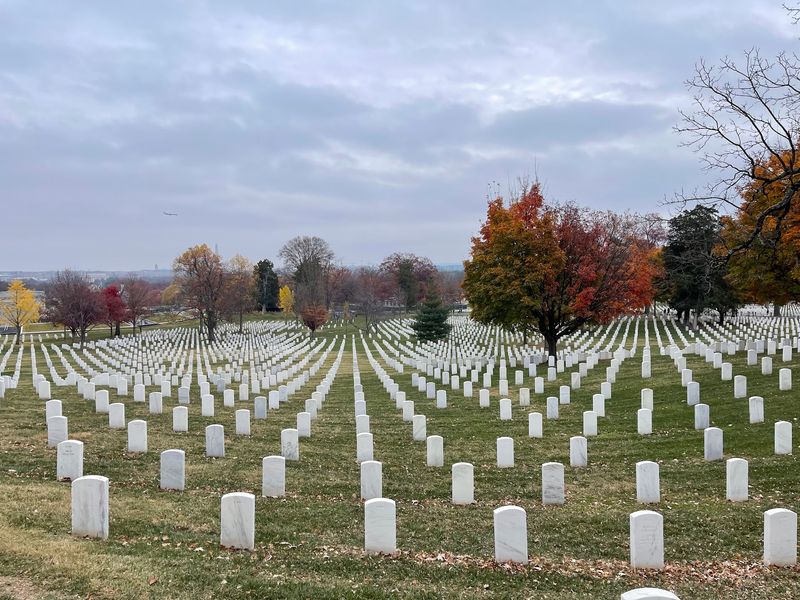
Quiet rows of white headstones stretch across the hills above the Potomac. More than 400,000 service members, veterans, and family members are honored at Arlington National Cemetery.
Established in 1864, the cemetery occupies land once connected with Arlington House, the estate associated with the Custis and Lee families.
The historic residence now interprets the people who lived there, including enslaved workers, and offers wide views toward Washington, D.C.
The Tomb of the Unknown Soldier is one of the cemetery’s most solemn landmarks. Visitors can observe the precise Changing of the Guard ceremony throughout the day.
The gravesites of Presidents John F. Kennedy and William Howard Taft are also here, along with memorials to service members and space exploration crews.
A visitor center near the entrance introduces the grounds and provides route information. The ANC Explorer service helps locate individual gravesites and memorials.
Because the cemetery covers extensive hills, an authorized tram tour is useful for those who prefer less walking.
Use 1 Memorial Ave in Arlington for navigation and parking. The cemetery currently opens daily from 8 a.m. to 5 p.m., with identification and security checks at entry. Arlington House follows separate daytime hours.
This is an active national cemetery, so a quiet manner is essential. Allow space for ceremonies and families, and plan your route thoughtfully rather than trying to cover every landmark in one hurried visit.
Appomattox Court House National Historical Park
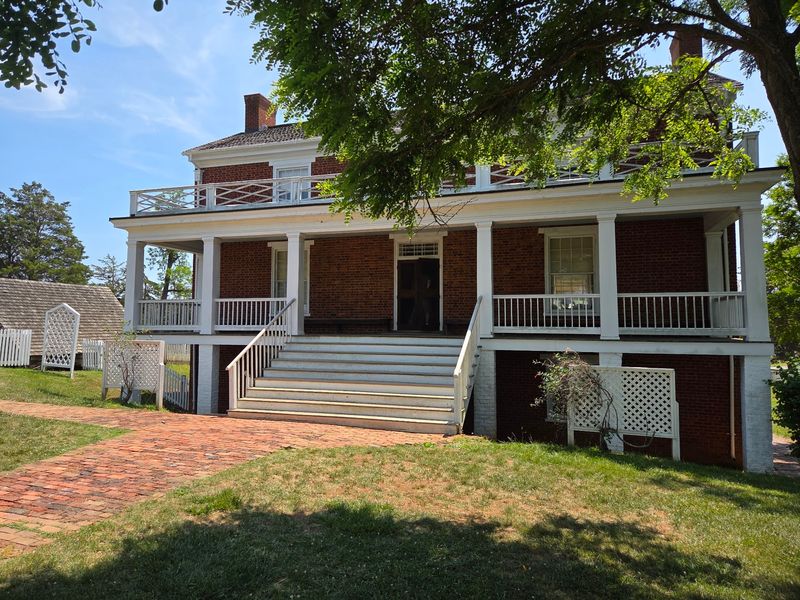
A parlor in a quiet Virginia village is where one of the nation’s most consequential military campaigns reached its turning point.
On April 9, 1865, Robert E. Lee met Ulysses S. Grant inside the McLean House and agreed to surrender his army.
The small village has been preserved and partially reconstructed, with houses, administrative buildings, and a tavern illustrating nineteenth-century life.
The McLean House itself is reconstructed. Originally built in 1848, it was dismantled decades later and rebuilt in 1948 using surviving materials.
Start in the reconstructed courthouse, which contains the visitor center. A 17-minute film and exhibits establish the historical setting, while ranger talks add context when scheduled.
The house is generally accessible during warmer months, with more limited arrangements in winter.
Paths connect the village to nearby fields and natural scenery. The old Richmond-Lynchburg Stage Road is particularly evocative, offering a sense of how travelers approached the community long before automobiles.
Historical markers help explain the people and buildings connected with the events of 1865.
Find the park at 111 National Park Dr in Appomattox. The visitor center and grounds are generally open daily from 9 a.m. to 5 p.m., with holiday exceptions. Admission is free.
Fort Monroe National Monument
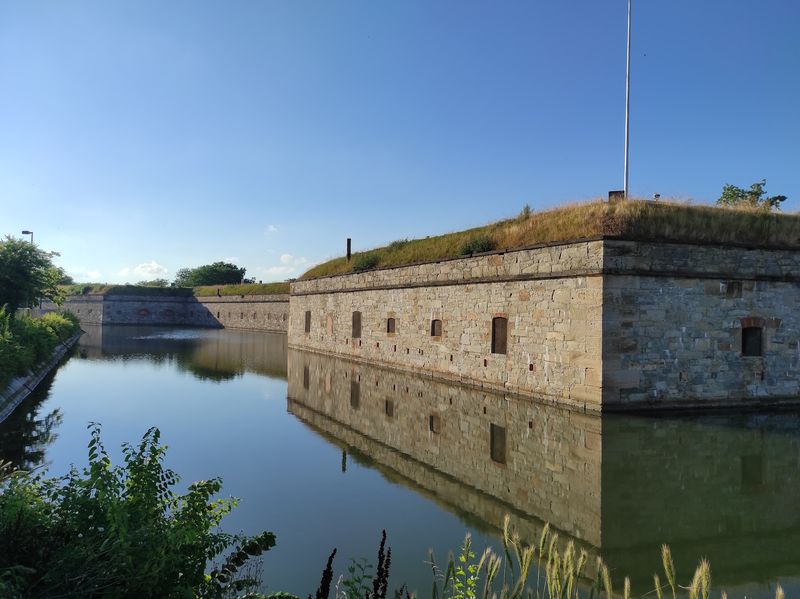
Freedom’s Fortress is a nickname rooted in an extraordinary history.
Fort Monroe became a place where enslaved people sought refuge and the possibility of freedom during the nineteenth century.
The story begins long before its monumental stone walls. In 1619, the first documented Africans brought to England’s mainland North American colonies arrived at Point Comfort, where Fort Monroe now stands.
The African Landing Memorial recognizes that important chapter.
French military engineer Simon Bernard designed the fort, constructed between 1819 and 1834. Its extensive stone defenses surround a moat and open parade grounds.
The installation remained in military use until 2011, when the national monument was established.
The Casemate Museum occupies rooms within the old fort walls, exploring the site’s varied history.
Quarters No. 1, associated with Abraham Lincoln’s 1862 visit, and the centuries-old Algernourne Oak are among the stops on self-guided walking routes.
The historic grounds combine remarkable architecture with waterfront scenery. Paths along the seawall offer views across Hampton Roads, while the beaches provide another reason to extend a visit.
Find the visitor and education center at 20 Bernard Rd in Fort Monroe. Outdoor grounds are generally open from early morning until midnight, while museums follow shorter seasonal schedules. Admission to the main historic attractions is free.
Manassas National Battlefield Park
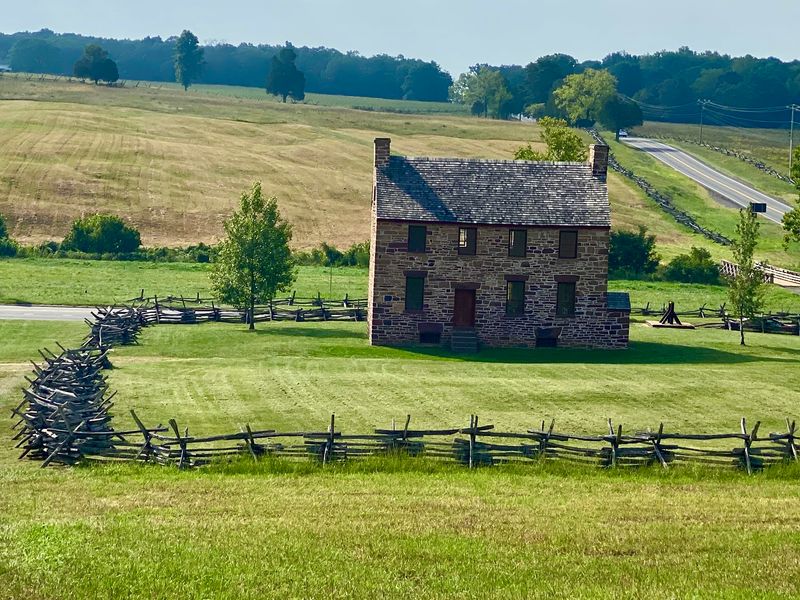
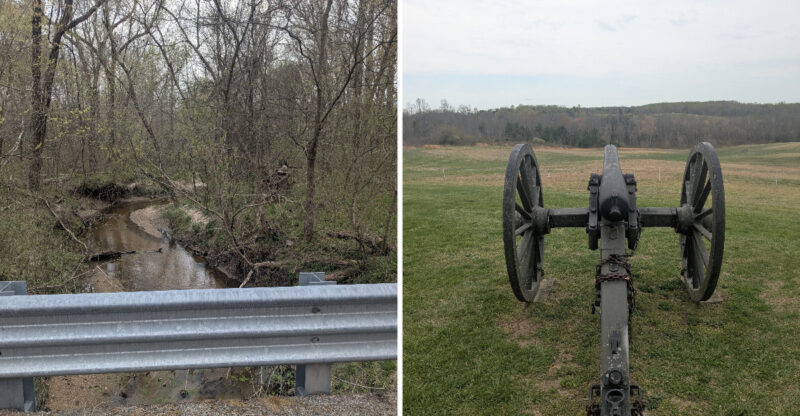
Two major nineteenth-century battles unfolded across these same fields, making Manassas a place where the landscape carries several layers of national history.
The first, in July 1861, was an early large-scale clash; the second followed in August 1862.
Manassas National Battlefield Park protects rolling hills, historic roads, stone walls, and farm landscapes connected with both campaigns.
Interpretive signs help visitors understand what happened on the ground, without requiring a specialist’s knowledge of military movements.
Begin at the Henry Hill Visitor Center, where exhibits and a 45-minute film introduce the events.
The center also offers a map presentation, period equipment displays, and information about seasonal ranger-led walks. The Stone House and Brawner Farm interpretive center open on selected dates.
Outside, trails lead past Henry Hill, the Stone Bridge, and other important points. Some routes are short enough for a relaxed family outing, while longer walks connect several sections of the park.
Bring water and allow time for the open countryside, since there is little shelter on many trails.
The entrance stands at 6511 Sudley Rd in Manassas. The visitor center currently operates from 9 a.m. to 5 p.m., with the park grounds open dawn to dusk. Film screenings begin at 10 a.m. and continue hourly.