There Is A Reason This Kentucky Church Is Called The Cradle Of The Arts, And One Look Inside Will Show You Why
A world-famous painter was baptized here as a baby in 1848. His early teacher later filled the sanctuary with five giant murals.
That connection is one reason a state historical marker calls this church the Cradle of the Arts. It amazes me that the nickname is official, not just a nice compliment.
Kentucky handed it out on purpose.
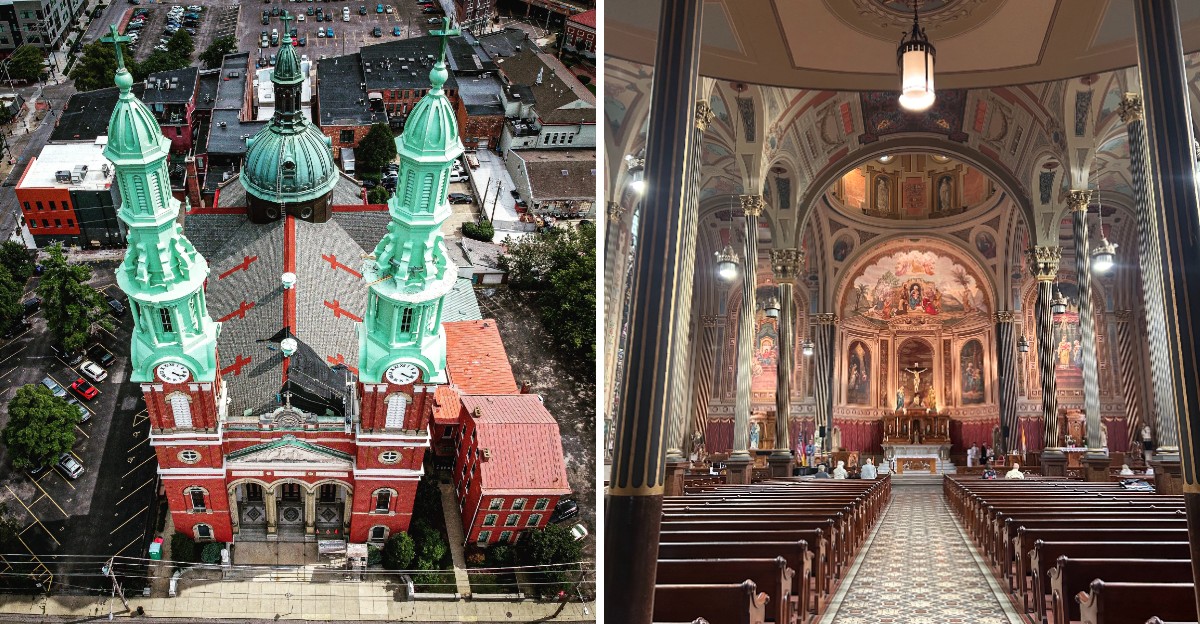
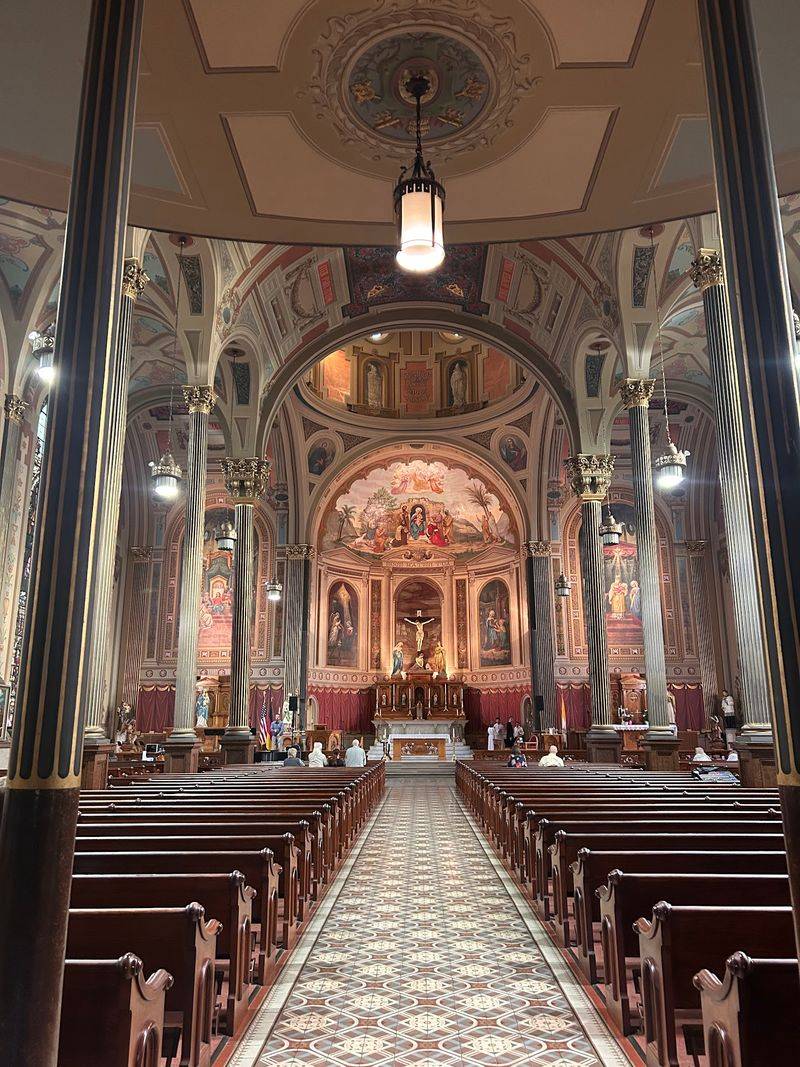
The twin towers rise 200 feet over the street. Inside, a 100-foot dome sits on columns trimmed in gold leaf.
Ceiling frescoes, Munich glass, and a hand-carved oak altar fill in the rest.
I can’t imagine looking up in there and keeping a straight face. Your neck might file a complaint.
So how did one parish gather this much art under a single roof?
The Nickname Comes With A Real Historical Marker
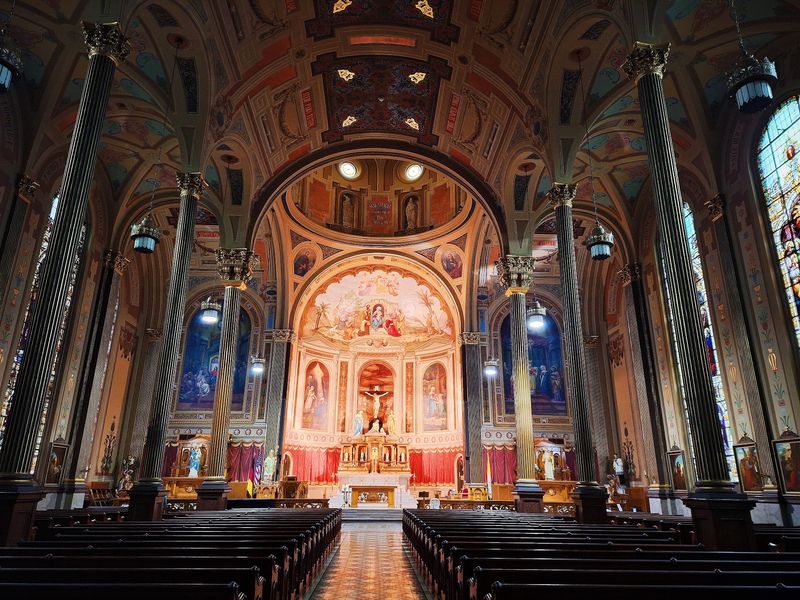
Plenty of churches get called beautiful. Very few get a state marker declaring them the birthplace of an art scene.
The Annunciation of the Ever Virgin Mary, Mother of God Roman Catholic Church holds exactly that honor. Most people simply call it Mother of God Church, or Mutter Gottes Kirche in the original German.
Kentucky Historical Marker #1460 officially names it the Cradle of the Arts.
So why the big title? Part of the answer is Frank Duveneck, a world-acclaimed painter.
He was baptized in this church in 1848. Decades later, in 1919, he was buried in its cemetery.
His story bookends a life spent shaping American art. That’s a pretty remarkable circle for one parish to hold.
Even better, Duveneck’s early teacher, Johann Schmitt, left his own mark inside these walls.
The rest of the answer sits right in the sanctuary. Murals, frescoes, carvings, mosaics, and stained glass all compete for your attention.
Each piece came from a skilled artist or workshop.
Read the marker first, then head inside. Knowing the backstory makes every painted ceiling panel feel a little more personal. It also gives you great trivia for the ride home.
You’ll find Mother of God Roman Catholic Church at 119 W. 6th Street, Covington, Kentucky.
Those Twin Towers Practically Wave From Down The Street
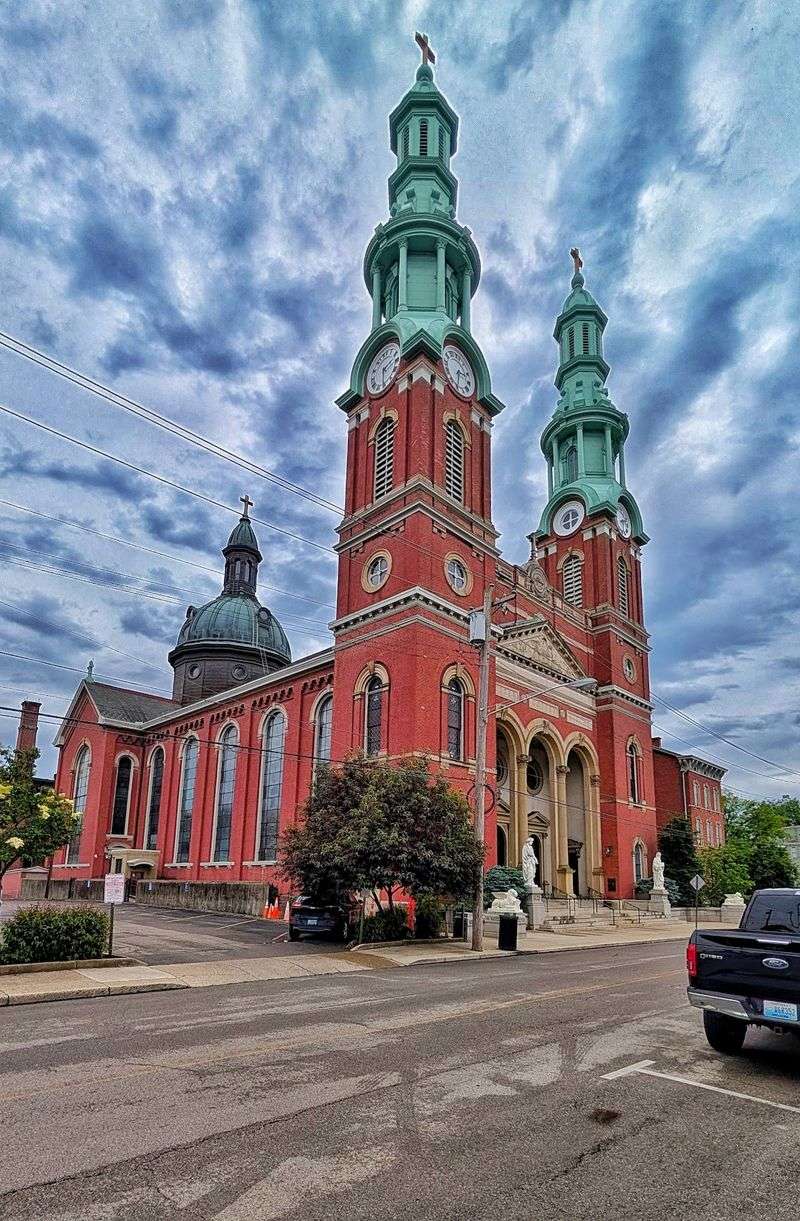
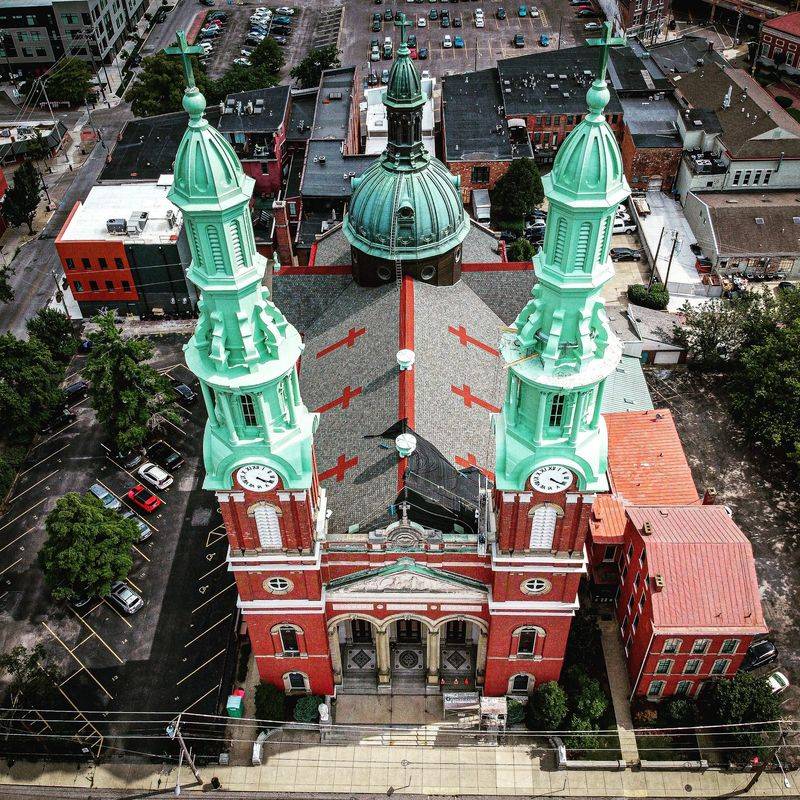
Two hundred feet. That’s how high each Renaissance tower climbs above the neighborhood.
Construction began in 1869, and the church was dedicated on September 10, 1871. Builders chose the Italian Renaissance Revival style, which was a bold move for a German parish in Kentucky.
The result still stands out among the surrounding rooftops.
Then there’s the dome. It rises about one hundred feet and gives the building a skyline worthy of a postcard.
Many consider it one of the most architecturally significant churches in the United States.
Honestly, it’s hard to look at the facade without wondering how 1870s builders managed it. No cranes, no computers, just serious skill and determination.
That alone deserves a moment of respect.
Plan to spend a few minutes outside before going in. Step back across the street if you can.
You’ll get a better angle on both towers and the dome together.
Photographers, bring a wide lens or be ready to back up. Fitting 200-foot towers into one frame takes some creative footwork.
Your camera roll will thank you later, even if your sidewalk neighbors give you funny looks.
Five Giant Murals Tell A Story Worth Following
A painter with Vatican credentials created the showstoppers in this sanctuary. His name was Johann Schmitt, and he finished the work in 1891.
Schmitt painted five large canvas murals for Mother of God Church. Together they show the five Joyful Mysteries of the Rosary.
These include scenes like the Annunciation, which also happens to be part of the church’s full name.
Here’s the fun twist. Schmitt was one of Frank Duveneck’s early teachers.
So the mentor’s work hangs in the same church where his famous student was baptized.
That connection makes the murals feel like a family photo album for American art. You’re looking at the roots of a whole artistic legacy.
Not bad for one room.
Take your time with each panel. Start at one side and move across in order, like reading a picture book.
The story unfolds naturally that way.
Bring a little background on the Joyful Mysteries if they’re new to you. Even a quick read beforehand helps the scenes click.
Suddenly the faces, gestures, and settings all make much more sense.
Look Up Or You Will Miss The Best Ceiling In Town
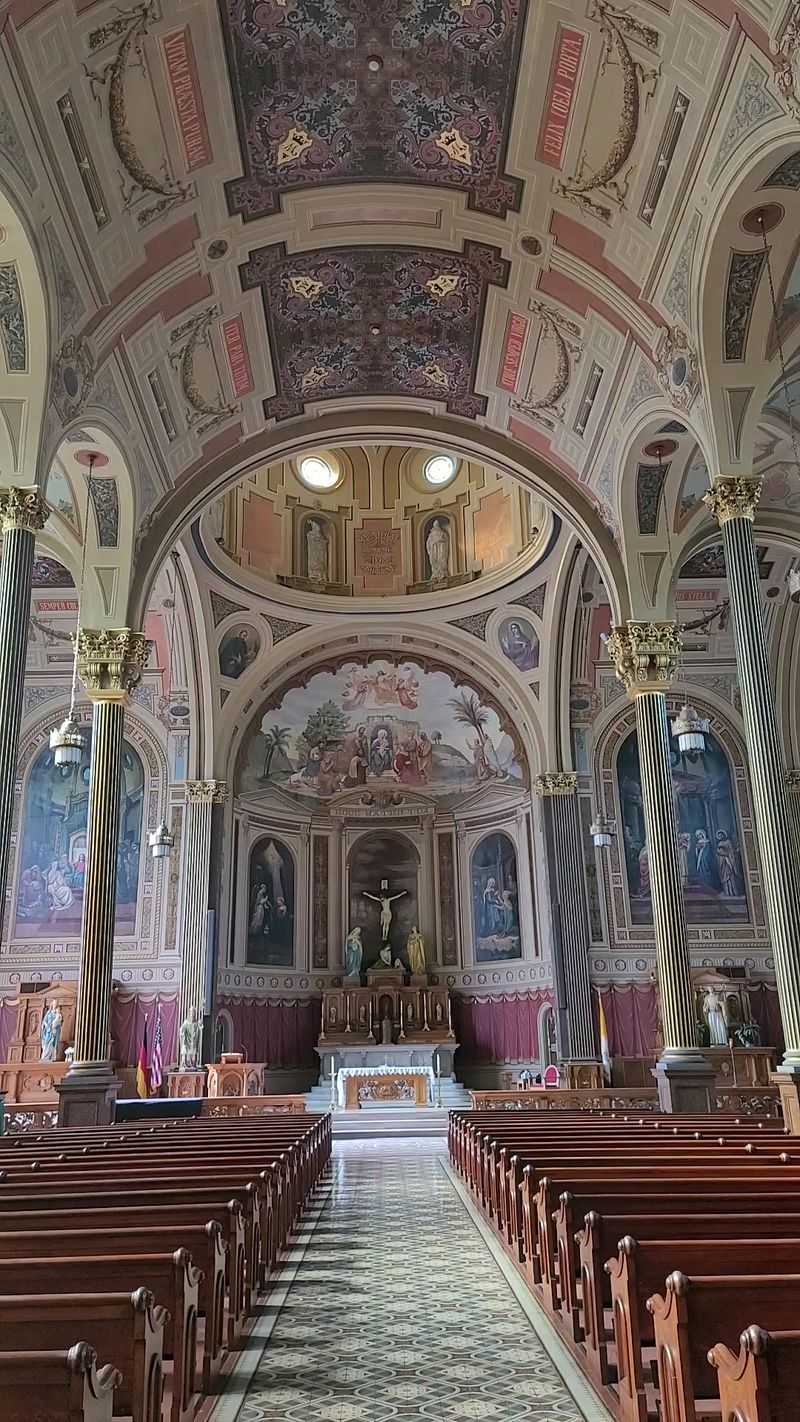
Your neck is about to get a workout. The ceiling here is that good.
In 1890, noted church artist Wenceslaus Thien painted the frescoes overhead. His work spreads color and detail across the space above the pews.
It turns the ceiling into its own gallery.
Then the dome takes over. It rises roughly one hundred feet above the floor.
Columns decorated in gold leaf support it, adding a warm shine to the whole interior.
The combination feels very Old World. Many people compare the experience to visiting a church in Europe.
You just get to skip the long flight and the jet lag.
A smart tip is to find a quiet spot in a pew and simply sit. Let your eyes travel slowly from the columns up into the dome.
Small details reveal themselves the longer you look.
Remember that this is an active parish. Visit respectfully, especially during Mass or private services like weddings and funerals.
A quiet admirer always fits right in, and the ceiling isn’t going anywhere.
Glass From Munich Paints The Room In Color
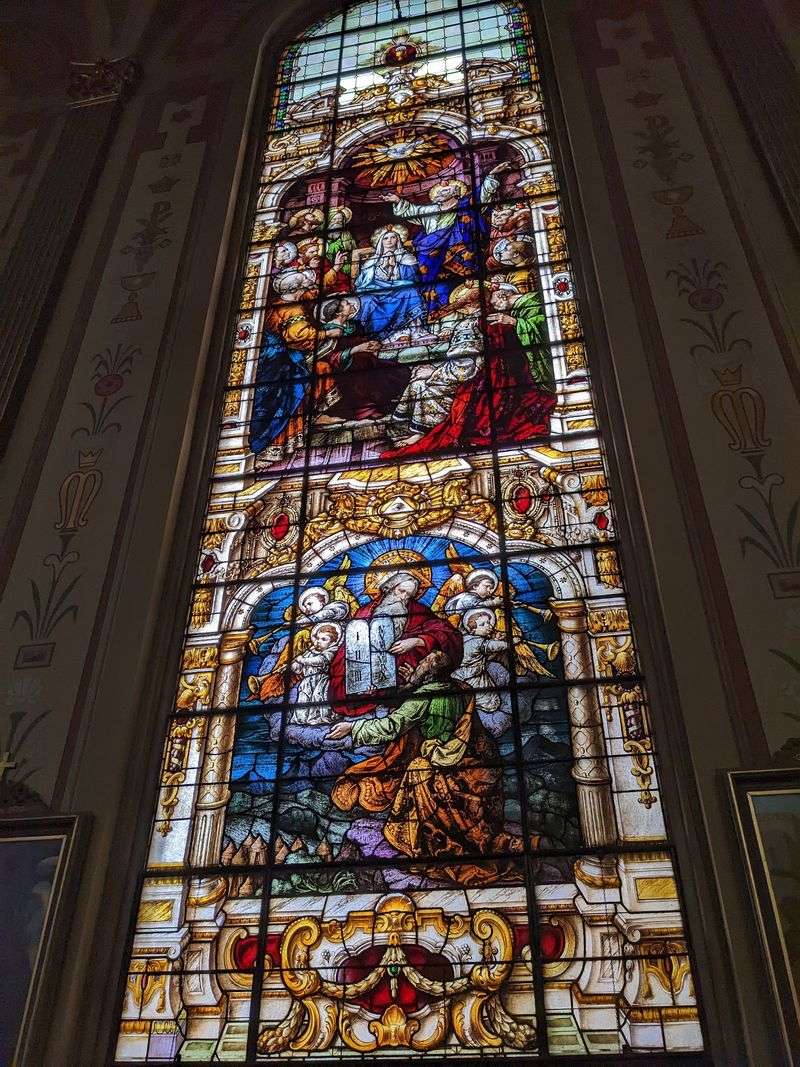
Some souvenirs from Germany fit in a suitcase. These traveled a little differently.
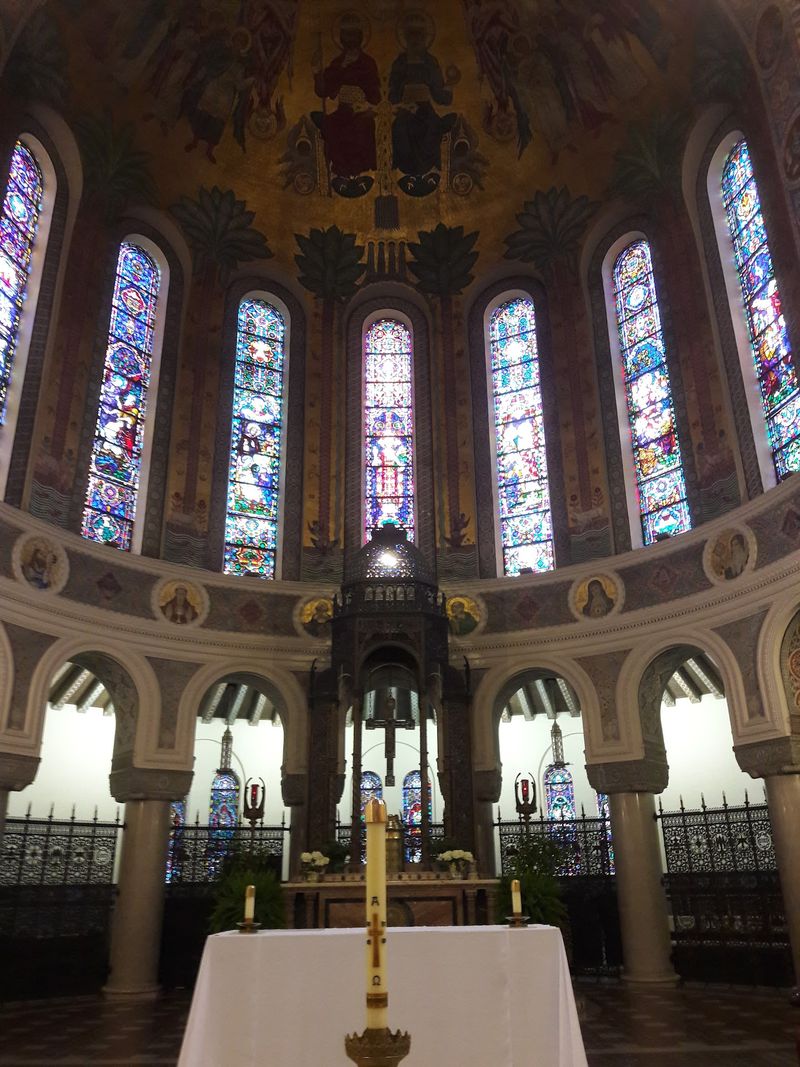
The stained-glass windows at Mother of God Church were imported from Munich. That city was famous for its glass studios.
Bringing that artistry across an ocean showed how much this German parish cared about its new home.
The windows pair beautifully with the murals and frescoes. Colors bounce between glass and paint, giving the sanctuary a rich glow.
It’s a team effort between artists who probably never met.
Quick clarification for fellow trivia fans. The world’s largest Marian stained-glass window is also in Covington.
However, it belongs to the Cathedral Basilica of the Assumption, not this church.
Don’t let that stop you from enjoying these. The Munich glass holds its own with plenty of charm and detail.
Each window rewards a close look.
Sunny days are your friend here. Natural light brings out the deepest colors in stained glass.
Visiting both churches in one trip also makes a terrific Covington art day, and the drive between them is short.
Carved Wood And Crafted Floors Deserve A Closer Look
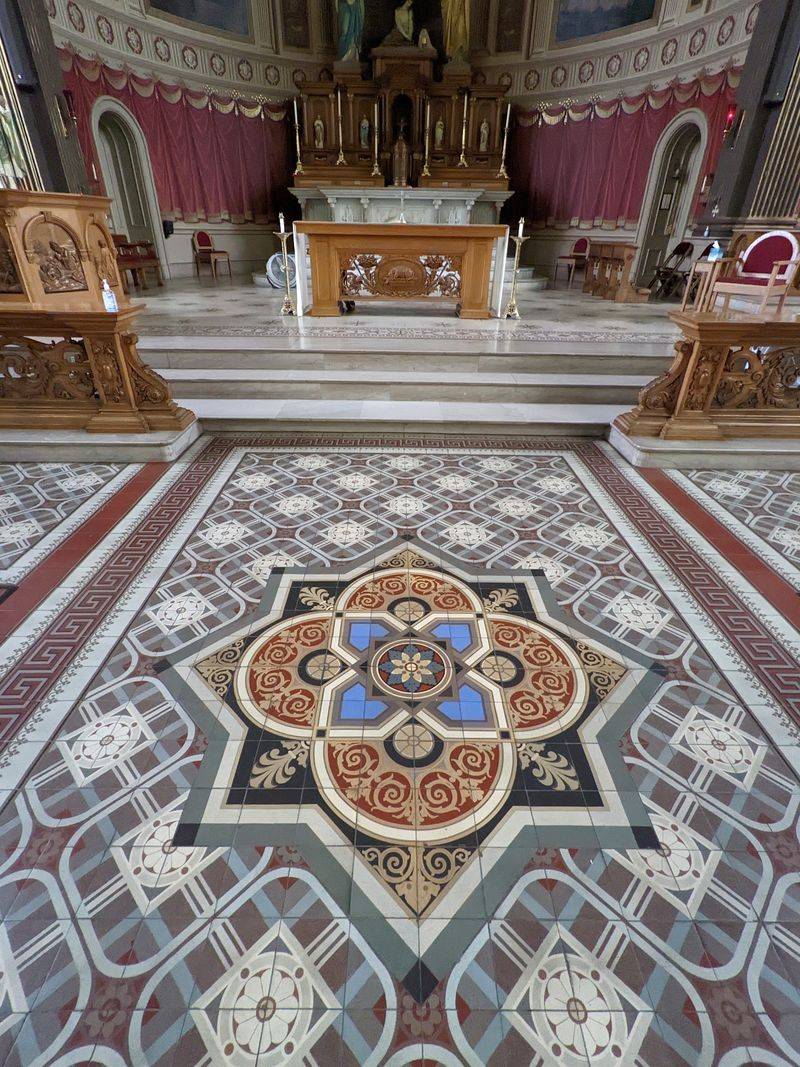
Woodworkers, prepare to be impressed. The altar here was hand-carved from oak by the Schroder brothers of Cincinnati.
Above it stands a hand-carved wooden statue group made by Mayer and Company. Together they form the focal point of the sanctuary.
The craftsmanship shows how much patience went into every detail.
Nearby hangs a large crucifix sculpted by Covington artist Ferdinand Muer. I like that a hometown artist earned a place among such famous names.
It gives the room a strong local touch.
Along the walls, you’ll find fourteen Stations of the Cross. Paul Deschwanden painted this set.
Each one adds another layer to the church’s art collection.
Now glance down. The sanctuary features an English mosaic floor installed in 1903.
A German Mettlach tile floor followed in 1921.
Most visitors focus on what’s above them, so the floors often get overlooked. Don’t make that mistake.
Two countries, two eras, and two styles meet right under your feet, which is a pretty fancy place to stand.
An 1876 Organ Still Fills Sunday Mornings With Sound
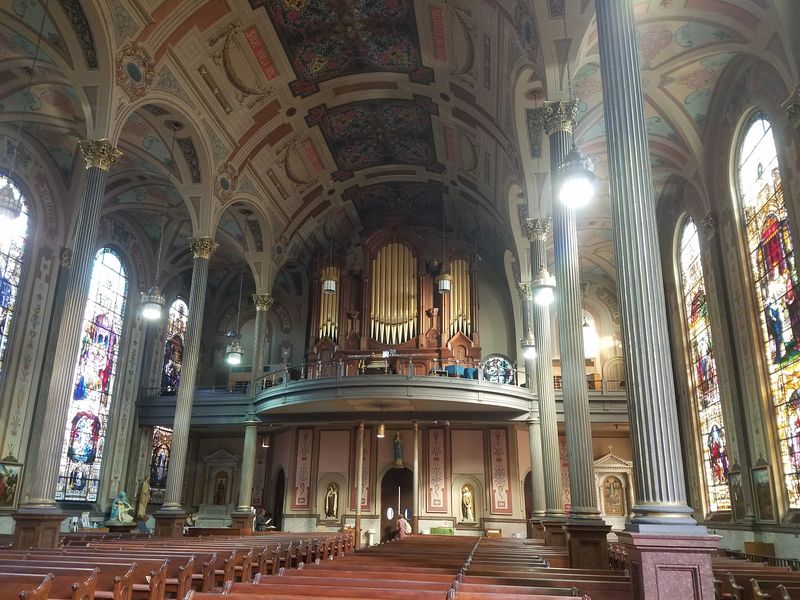
Art here isn’t only for your eyes. Your ears get a turn too.
The church holds a 38-rank Koehnken and Grimm organ built in 1876. That’s well over a century of music from the same instrument.
Koehnken and Grimm was a respected Cincinnati organ builder.
You can hear it at the 9:30 AM Sunday Mass, which features traditional organ music. Prefer something more modern?
The 11:30 AM Sunday Mass uses a contemporary ensemble instead.
That later Mass also offers American Sign Language interpretation. Mother of God is noted as the only church in the Tri-state area doing this at that service.
It’s a thoughtful way to welcome everyone.
After both Sunday Masses, coffee and donuts are served. It’s a friendly way to meet parishioners and ask questions about the building.
Donuts make history lessons go down easier anyway.
If you’re visiting from out of state, timing your trip around Sunday makes sense. You’ll hear the music and see the church in full use.
That’s when the space truly comes alive.
The Parish Story Started Long Before The Towers Went Up
Back in 1841, German-born Reverend Ferdinand Kuhr organized this parish. It became the second Catholic church in Covington.
The first church building went up in 1842. As the community grew, the parish needed something bigger.
That led to the grand building dedicated in 1871.
Mother of God also served as the mother parish for several other German parishes in the city. So its influence stretched far beyond its own walls.
Think of it as the family’s oldest sibling.
Recognition followed over the years. The church joined the National Register of Historic Places in 1973.
In 1980, the surrounding Mutter Gottes Historic District earned a listing too.
In 2016, the parish celebrated its 175th anniversary. That’s a big milestone for any Kentucky congregation.
It shows a community that has kept going strong through generations.
Spend some time walking the historic district after your visit. The neighborhood carries the same German roots as the church.
It helps you see how faith, family, and craftsmanship shaped this corner of town.
Plan Your Visit So The Doors Are Actually Open
Nothing stings like driving to a gorgeous church and finding it locked. A little planning solves that problem.
The parish office is open Monday, Tuesday, Thursday, and Friday from 9:30 AM to 4:30 PM. Wednesdays are closed.
Weekday Mass happens at 12:05 PM, except Wednesday. On Holy Days, Masses are held at 12:05 PM and 6:30 PM.
Sunday Masses are at 9:30 and 11:30 AM.
Adoration runs on Tuesdays from 11:00 to 11:45 AM. Confessions are offered Tuesdays and Saturdays from 11:00 AM to noon.
Visitors interested in Catholic life are welcome.
Accessibility is well covered. Ramps sit at the east and west side entrances.
An elevator reaches the church hall and restrooms.
Calling the office ahead is smart if you want a quiet look around. Remember that weddings and funerals happen here too.
With good timing, you’ll get to enjoy the Cradle of the Arts at its peaceful best.