Idaho Is Home To An Ice Age Floods Trail Where Giant Ripple Marks Span Whole Hillsides
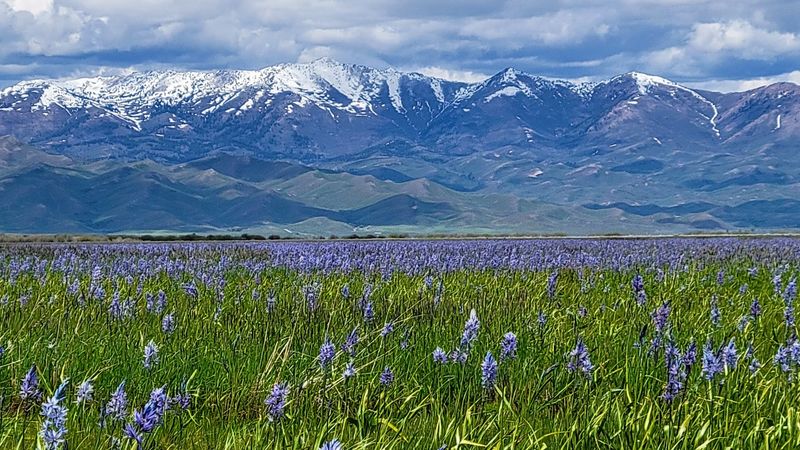
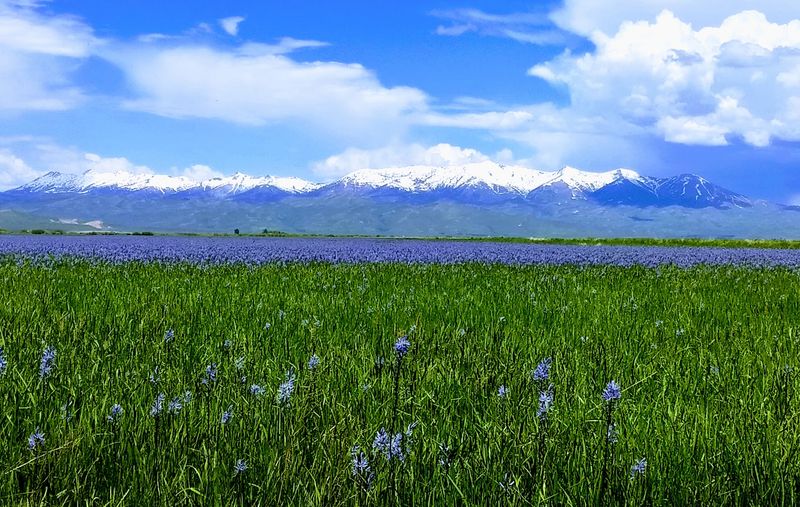
Every spring, a wet meadow in south-central Idaho turns so blue that it can pass for a lake from the road. The color comes from camas lilies, not water.
Well, mostly not water.
The bloom usually peaks in the last week of May or the first week of June. Then it can fade fast, especially after a hot spell.
That short window makes the whole thing feel like a secret you have to earn.
I like how the flowers are only half the show. Wilson’s phalaropes, cinnamon teal, terns and yellow-headed blackbirds work the shallow water.
Snowy peaks stand guard behind all of it.
I can’t imagine a better excuse for a spring drive across Idaho. So how do you time it right, and where do you park without getting stuck on a skinny dirt road?
Giant Flood Ripples Up North, A Wilder Water Story Down South
Idaho’s famous Ice Age Floods ripple marks sit way up in the Panhandle. They roll across hillsides near Spirit Lake and Clark Fork, left behind when Glacial Lake Missoula broke loose again and again.
That’s an incredible story, and it deserves a road trip of its own. Down on the Camas Prairie, though, water tells a gentler tale every single spring.
The Camas Prairie Centennial Marsh Wildlife Management Area isn’t part of the floods trail. Think of it as the cousin who skipped the dramatic exit and stayed home to garden.
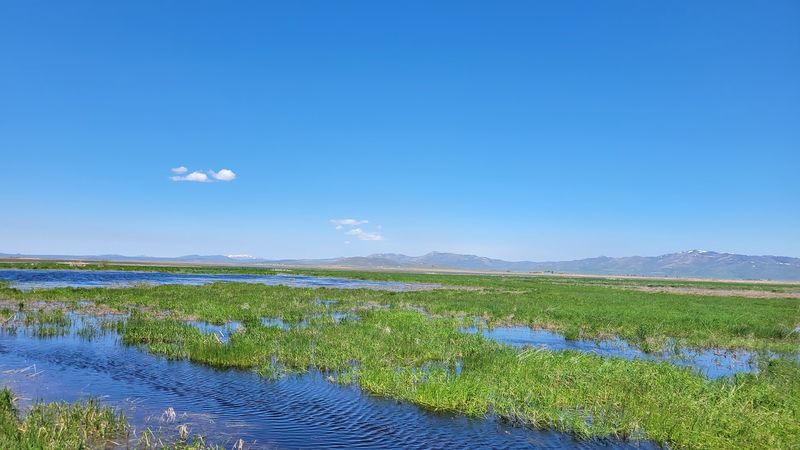
Snowmelt pools across a broad, flat prairie and turns it into a seasonal wetland.
Instead of giant ridges of gravel, you get flooded meadows and nesting birds. Instead of ancient icebergs, you get a sheet of blue flowers that shows up for a few short weeks.
I believe both stories belong on an Idaho bucket list. One shows what water did in a hurry thousands of years ago.
The other shows what water does slowly, quietly, every year.
If the floods trail makes you think about scale, this marsh makes you think about timing. And timing, as you’ll see, is everything here.
A Spring Wetland Hiding Off Highway 20 Near Hill City
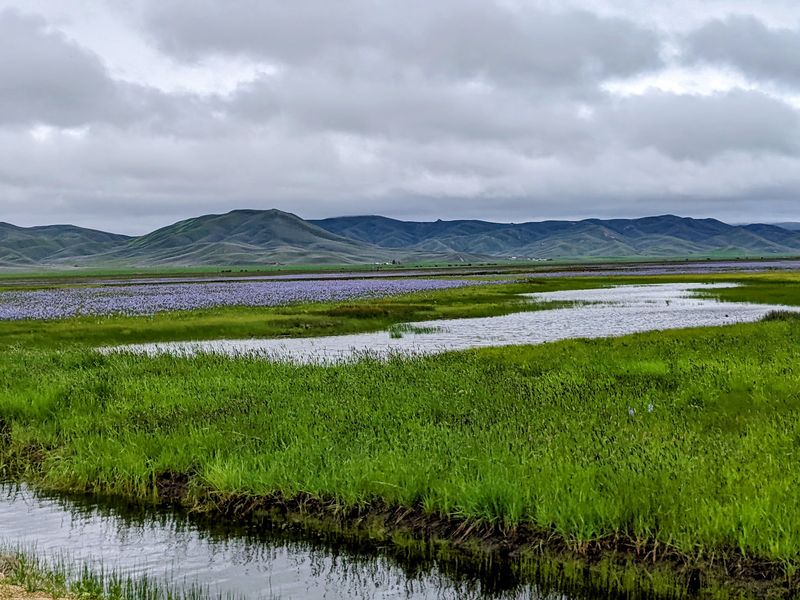
Flat, wide and wonderfully empty, the Camas Prairie stretches across south-central Idaho between Fairfield and Hill City. The Camas Prairie Centennial Marsh Wildlife Management Area sits right in the middle of that big, open bowl.
Idaho Fish and Game manages the area as wildlife habitat. That means the star attractions are birds, wetland plants and the famous camas lilies, not gift shops or snack bars.
Its mailing address is simply Hill City, ID 83337. Don’t expect a street number or a fancy entrance sign with flags.
You reach it on graded dirt roads off U.S. Highway 20, north of the highway itself.
The marsh fills with snowmelt in spring, so how wet it gets depends on the winter. A heavy snow year can push water right up to the road.
A dry year leaves more open meadow and shallower ponds.
That changing personality is part of the fun. No two springs look exactly alike out here.
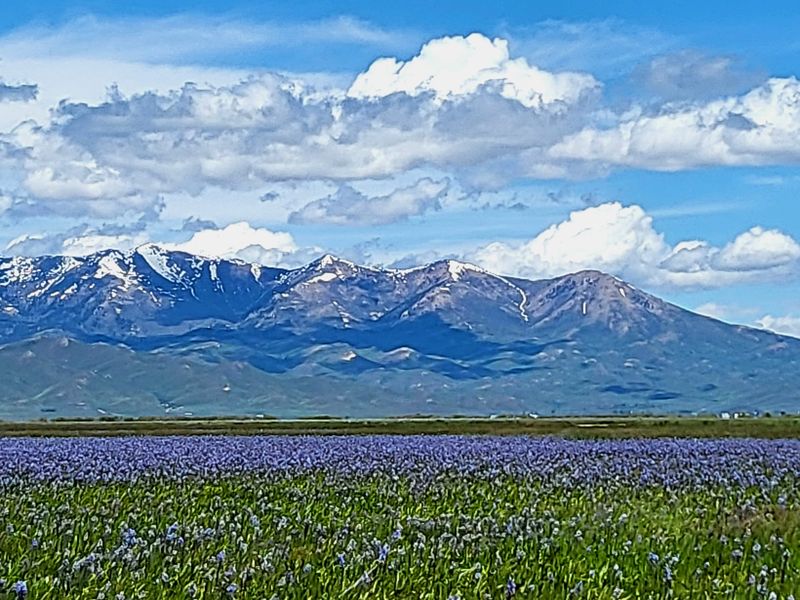
Soldier Mountain and its neighbors rise to the north, giving the whole flat scene a dramatic backdrop. It’s the kind of view that makes a phone camera feel slightly inadequate.
That Blue You See Is Actually A Field Of Lilies
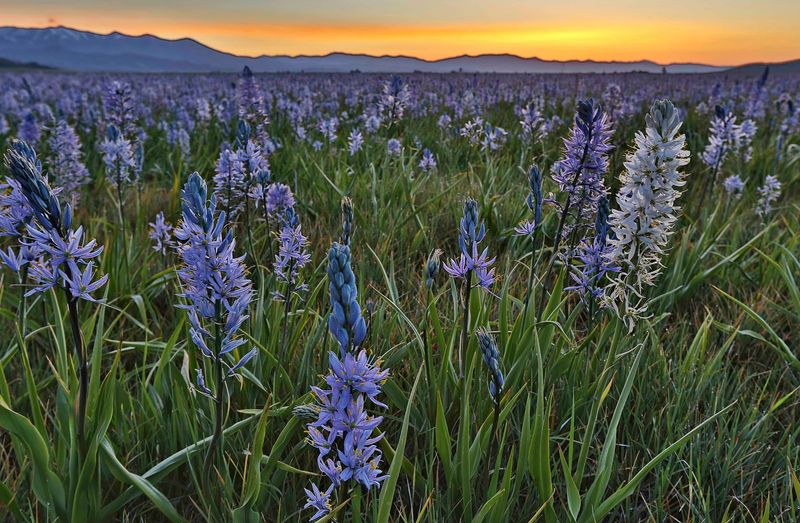
Blue camas lilies pop up right among the shallow marsh waters. When they peak, whole stretches of prairie shift from green to a soft purple-blue.
The flowers give the prairie its name, and they carry real history too. Camas bulbs were an important traditional food for Native peoples across the region, and the info board near the trailhead shares more of that story.
Reading those signs makes the view hit differently. You stop seeing pretty petals and start seeing a landscape people depended on for generations.
The bloom doesn’t last long, though. Some years the flowers are barely starting in late May, and other years they’re mostly gone by early June.
A cold, soggy spring can delay everything. A sudden heat wave can wrap up the show early, leaving only a few stragglers.
So yes, you may arrive to a sea of blue or to a polite green meadow. Either way, the marsh still delivers plenty to look at.
Photographers love pairing the lilies with Soldier Mountain in the background. Get low, frame the flowers up front, and let those snowy peaks do the heavy lifting.
Timing The Bloom Takes A Little Detective Work
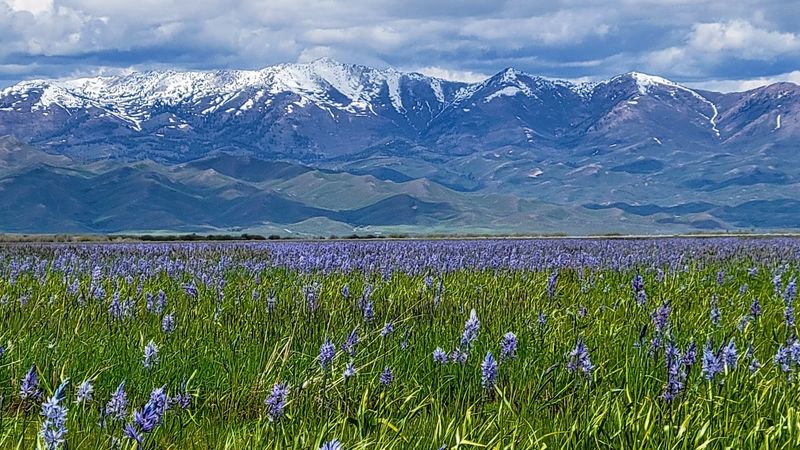
Late May through the first week of June is the usual sweet spot. Notice the word usual, because this marsh follows the weather, not the calendar.
A long winter keeps the ground soggy and slows the flowers down. In those years, early visitors may see snowy mountains and plenty of ducks but very little blue.
Hot weather flips the script. A warm stretch in early June can end the bloom faster than you’d expect, so a trip planned weeks ahead can miss it entirely.
The smart move? Check conditions before driving.
Contacting Idaho Fish and Game or the nearby Forest Service office can save you a long round trip.
Keep your plans a little flexible if you can. A weekday visit during peak season also helps, since lily time draws noticeably bigger crowds than the rest of the year.
Missed it? Don’t sulk too long.
The birds stick around after the flowers fade, and late summer still brings shorebirds working the lower water.
Honestly, there’s something fun about the gamble. When you hit it right, the payoff feels earned, like catching a sunset at exactly the right minute.
Birders, Bring Your Binoculars And Your Patience
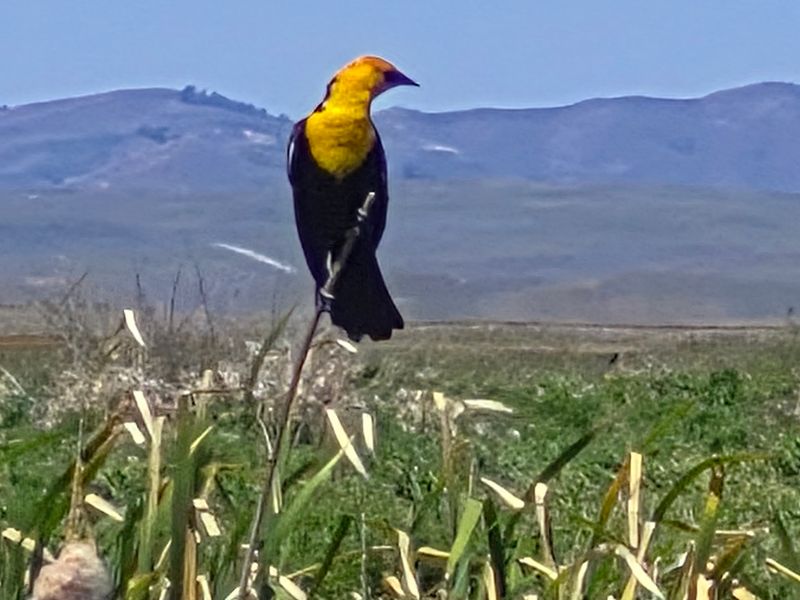
Wilson’s phalaropes spin in tight circles on the water to stir up food. Watching them is a little like watching tiny figure skaters who never got the memo about stopping.
They’re just one part of the cast. Canada geese, mallards, cinnamon teal, terns, swallows and hawks all show up here.
Yellow-headed blackbirds and red-winged blackbirds call from the reeds. American avocets also make an appearance, with those long, upturned bills that look slightly too fancy for a muddy marsh.
Bird watching ranks as the top reason people make the trip. Many birds nest here in spring, so the marsh gets busy, noisy and full of motion.
Bring binoculars, a field guide or a birding app. You’ll likely spot a few species you can’t name on the first try, and that’s half the fun.
Outside lily season, the area tends to stay pretty quiet. That calm makes it easier to sit still and let the birds come closer.
Some birds land surprisingly near the road. Have your camera ready before you open the car door, because they rarely pose twice.
Antelope, Muskrats And Sheep Wagons Round Out The Cast
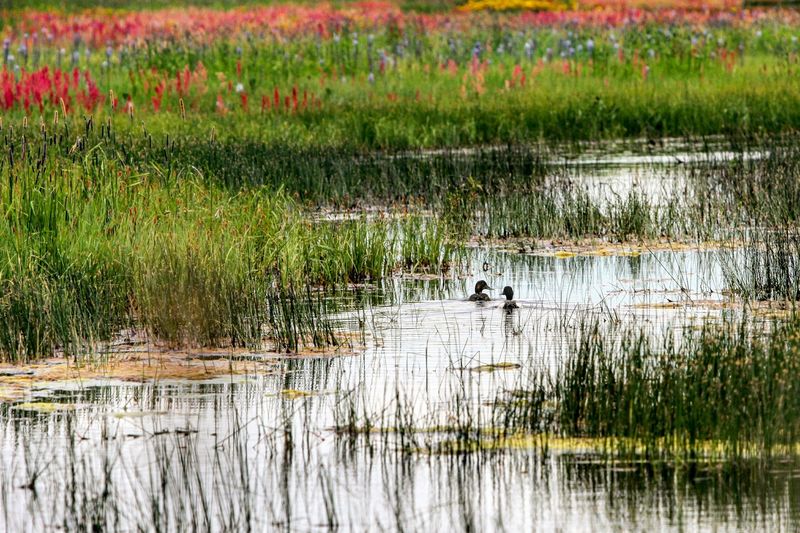
Keep an eye on the open fields as you drive in. Pronghorn antelope roam the prairie, and they blend in better than you’d think.
They’re the fastest land animals in North America. Good luck catching up to one, so maybe just enjoy the view from the car.
Down in the water, muskrats paddle between the reeds. Spotting one feels like finding a bonus level in a video game.
The Camas Prairie is also working country. Sheepherder wagons and big bands of grazing sheep sometimes dot the landscape nearby, a classic Idaho ranching scene that hasn’t gone out of style.
Kids tend to love this mix. One minute it’s ducks, the next it’s sheep, then suddenly an antelope bolts across the sagebrush.
Behind all of it stands Soldier Mountain. In spring, snow often still caps the high ridges, which frames every wildlife shot beautifully.
Bring patience and a zoom lens if you have one. Wildlife sets its own schedule, and the prairie is big enough for animals to keep their distance when they want to.
Simple Facilities Mean You Should Pack Like A Pro
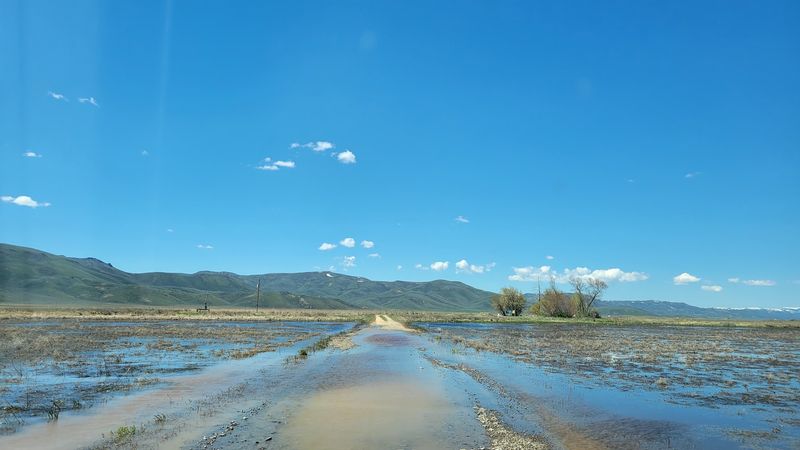
Comforts here are basic, and that’s putting it kindly. At the end of the spur road, you’ll find a dirt parking area, an info board and a vault toilet.
A picnic table sits near the marsh. It makes a fine spot for sandwiches with a side of birdsong.
There’s no drinking water, so bring plenty of your own. Pack toilet paper too, since supplies can run low during busier stretches.
Short trails wander along a pond near the parking area. They’re easy enough for kids, but the ground can get wet, so waterproof boots make a smart choice.
Leashed dogs are allowed. Keep them close, especially during nesting season, when the birds are busy raising families.
A short loop at the parking area lets small vehicles turn around. Overnight stays are possible here too, and falling asleep to a marsh full of birds sounds pretty great.
Treat it like a primitive outing and you’ll be happy. Show up expecting a visitor center with a snack counter, and you’ll be hungry and a little confused.
Take The Smarter Road In And Park Like You Mean It
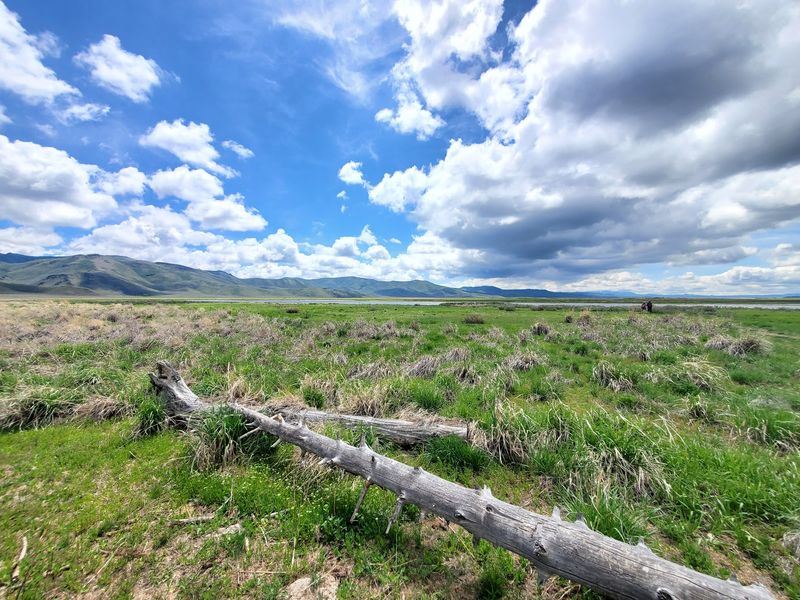
Heading east on Highway 20, you’ll spot a sign for the marsh on Swamp Road first. Tempting, but it’s the long way around, and that stretch can get rough.
Keep going a couple more miles east instead. Foster Road, also called Wolf Lane, runs more directly to the marsh and is well graded.
In most conditions, a regular sedan handles the drive just fine. Still, a wet year can push water across the road, so check conditions before driving.
The final spur road is narrow. Barely two cars can pass, and both sides drop straight into the marsh.
That’s why parking etiquette matters so much. Pull fully into the lot and never stop along the skinny road to snap photos.
Large trailers and big RVs are a poor fit for that dead-end spur. Small rigs can use the turnaround loop, but a crowded lily weekend makes even that tight.
Leaving the big camper at home is a kindness to everyone. Your fellow flower fans, and their rear bumpers, will thank you.
Mosquitoes Love The Marsh As Much As You Will
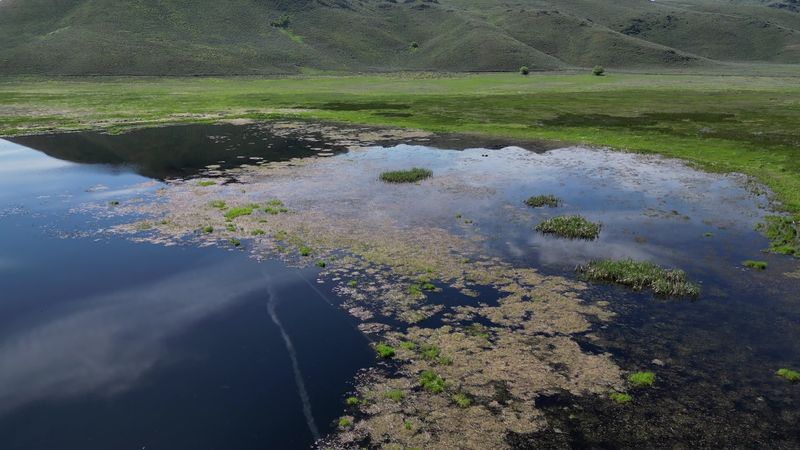
Wetlands mean water, and water means bugs. In late spring, the mosquitoes here are plentiful and very enthusiastic about visitors.
Bug spray isn’t optional. Long sleeves and pants help too, even when the sun feels warm.
If flying insect bites really bother you, plan carefully. A breezy day or a cooler morning can make a big difference.
Spring weather on the prairie can swing quickly as well. Brisk air and wind are common, so a light jacket earns its spot in the car.
Here’s a handy packing list for a happy visit. Grab water, snacks, toilet paper, sunscreen, binoculars, waterproof shoes and that all-important insect repellent.
Families with kids should add a few extras. A towel and a change of socks can rescue the ride home after somebody discovers the mud.
None of this should scare you off. A little preparation turns a buggy afternoon into a relaxed one, and the reward is a marsh full of color and song.
Think of the mosquitoes as the price of admission. The scenery itself costs nothing extra.
Fairfield Turns Lily Season Into A Hometown Celebration
Lily season doesn’t end at the marsh. Fairfield, about 15 miles north and west, hosts Camas Lily Days around the first weekend in June.
Pairing the festival with a marsh visit makes for a full Camas Prairie day. Check dates before you go, since festival schedules can shift from year to year.
Hungry after all that bird spotting? Fairfield’s Wrangler Drive-In serves classic drive-in fare, including shakes.
In Idaho, a shake after a long spring drive feels practically required. If huckleberry is on the board, you already know what to do.
The drive between the marsh and town has its own perks. Keep watching the open country for antelope as the mountains loom ahead.
Fairfield also works as a handy stop for fuel and supplies. Remember, the marsh itself has no water or services beyond the basics.
Turning the trip into a loop just feels right. Flowers and birds in the morning, a festival and a shake in the afternoon, and a scenic Highway 20 drive home.
Not a bad way to spend a Saturday in the Magic Valley’s high country.
Worth The Gamble, Bloom Or No Bloom
Nobody can promise you a perfect bloom. That’s exactly what makes the Camas Prairie Centennial Marsh Wildlife Management Area so memorable when it all lines up.
Even on an off year, the trip pays off. The birds keep things lively, the mountains stay put, and the quiet is almost startling.
It suits birders, photographers and families looking for an easy, low-cost outing. It also suits anyone who likes their Idaho scenery without crowds most of the year.
It won’t suit folks who need paved trails, running water or a gift shop. Big RVs and impatient drivers should probably skip the narrow spur road too.
Up north, the Ice Age Floods trail shows how Idaho’s land got shaped in a roar. Down here, a soggy prairie shows how it renews itself, one spring at a time.
Both are worth seeing. Only one comes with blue flowers and spinning phalaropes, though.
So watch the weather, check conditions before driving, and pack the bug spray. If the lilies cooperate, you’ll be glad you made the trip.
If they don’t, the birds will happily cover for them.