A Massive New California Attraction Will Display A Real Space Shuttle In A Launch-Ready Position For The First Time
A real space shuttle is standing upright in Los Angeles, bolted to a real fuel tank and real rocket boosters. Nobody has ever displayed the full system that way before. Not once, anywhere on Earth.
The tank in this stack is the last flight-qualified one left. It was built to fly and never got the chance. Now it gets a different job, holding up a legend in a building twenty stories tall.
I have to admit, that is a wild thing to pull off outside a NASA facility. California already has plenty of big attractions, but this one literally towers over its neighbors.
There’s more than one shuttle to see, too. Jumbo jets, wind tunnels, and spacecraft from every era of American spaceflight fill the galleries around it.
Endeavour Finally Stands Up Like It’s About To Launch
The Samuel Oschin Air and Space Center gives Space Shuttle Endeavour a pose it hasn’t held since its flying days. The orbiter stands upright, attached to real solid rocket boosters and a real external tank.
That full lineup is called a Space Shuttle System. No other display in the world shows an authentic, complete one in launch configuration.
California gets bragging rights on this one, and it earned them.
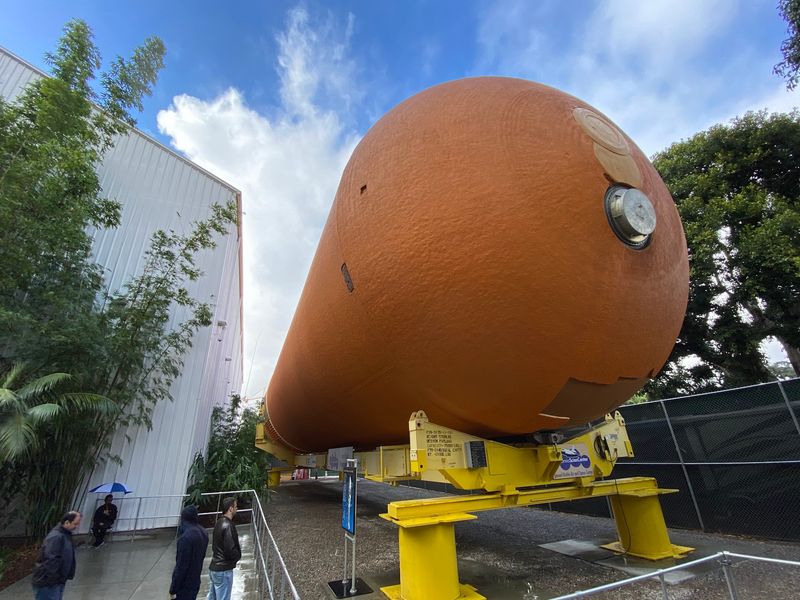
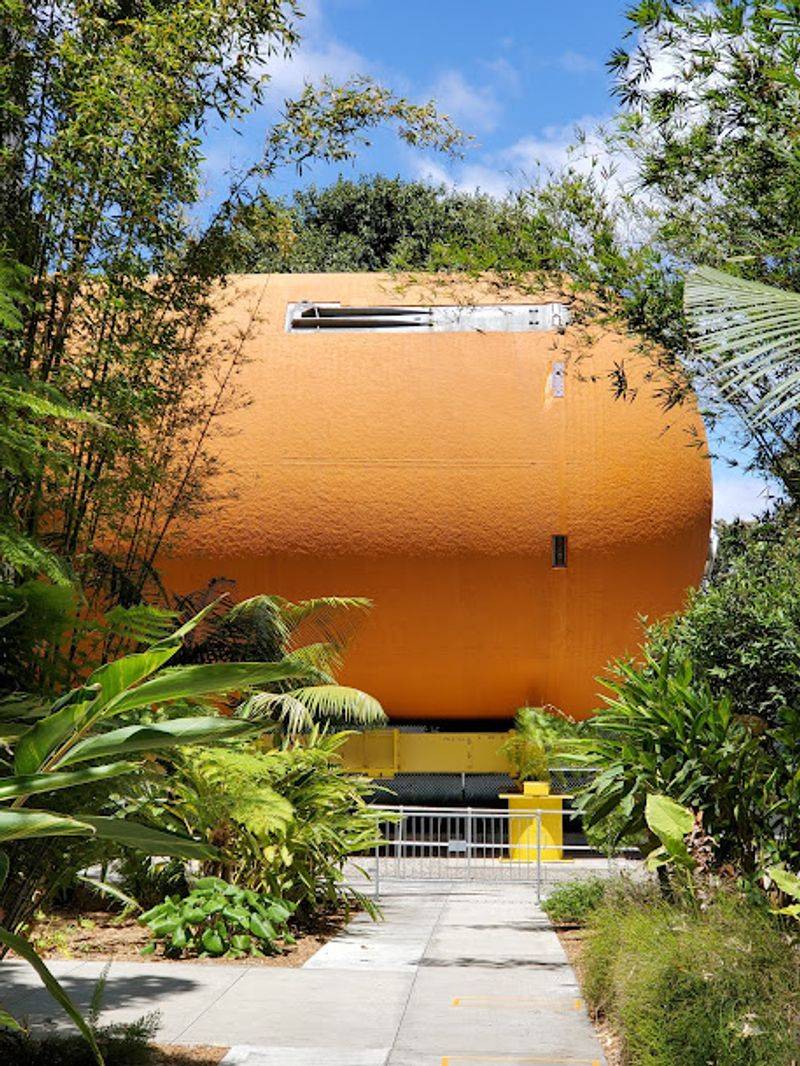
The orange tank deserves its own spotlight. Known as ET-94, it’s the last remaining flight-qualified external tank.
It was ready for space but never made the trip, so this is its big debut.
Seeing a shuttle lying flat is impressive enough. Seeing one stacked vertically changes how your brain understands it.
Suddenly the whole vehicle makes sense as a rocket, not just a plane with wings.
Endeavour itself carries serious history, having flown real missions before retirement. The California Science Center was awarded the orbiter in 2011.
It arrived in Los Angeles in 2012 and waited patiently in a horizontal display.
Now the wait is over. Endeavour finally looks ready for countdown, minus the actual liftoff.
Your neighbors will be grateful for that last part.
Moving A Shuttle Sideways Was Easy Compared To This
Engineers gave the stacking job a fittingly cool nickname: Go For Stack. The process involved moving Endeavour and assembling it vertically with its tank and boosters.
Nobody had ever done that outside a NASA facility.
Think about what that means for a second. NASA had huge buildings and specialized crews built just for stacking shuttles. This team had to make it work in the middle of Los Angeles.
The final step wrapped up on January 30, 2024. That date marked the moment Endeavour joined its full launch setup for good.
The building then rose around the stack, rather than the other way around.
Construction on the project began in June 2022. The whole effort carries a price tag of about 450 million dollars.
It’s also part of the California Science Center’s three-decade Master Plan, so this was no spur-of-the-moment idea.
I love that the story of getting the shuttle upright is almost as dramatic as the shuttle itself. Plenty of museums hang an airplane from the ceiling.
Very few can say they pulled off a NASA-level engineering stunt to set up their star attraction.
A Shiny Building Shaped Like Its Famous Resident
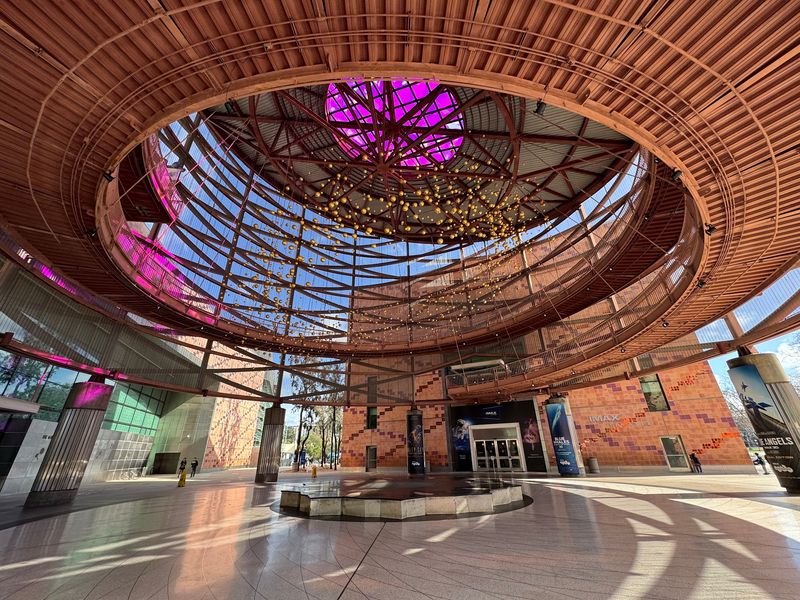
Architects at ZGF clearly took inspiration seriously here. The building’s curvy exterior is clad in stainless steel, shaped after Endeavour’s own aerodynamic form.
It looks like it could slice through the sky itself.
The whole facility covers about 200,000 square feet. That’s a lot of room, and it needs every inch.
The tallest part, the Samuel Oschin Shuttle Gallery, climbs to 200 feet, or about 20 stories.
That height makes it the tallest structure in Exposition Park. It’s also visible from various points across Los Angeles.
Good luck pretending you didn’t notice it on your next drive through the area.
I find the stainless steel choice particularly clever. A shuttle is all about smooth surfaces and slipping through air. Wrapping its home in sleek metal curves keeps that idea going from the outside in.
Many museum buildings are boxes with great stuff inside. This one tells you what it’s about before you reach the door.
It’s basically a giant metal billboard for spaceflight, and honestly, that’s the right energy for a building holding a space shuttle.
Yes, There’s A Chunk Of A Real Jumbo Jet Inside
A 50-foot section of a real Korean Air Boeing 747 lives in the Korean Air Aviation Gallery. That’s the famous jumbo jet so many travelers know. Here it becomes an exhibit instead of a long flight.
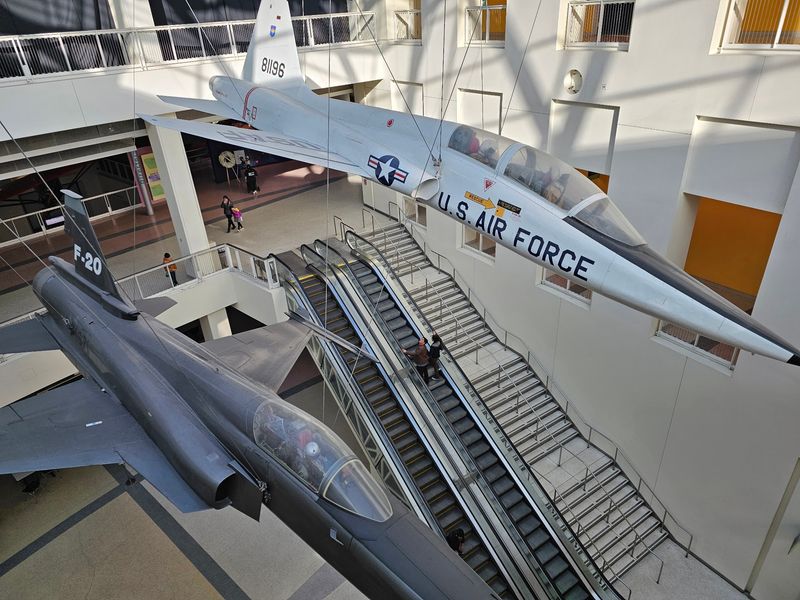
The gallery is set to feature roughly 20 to 25 aircraft. That’s a full sky’s worth of flying machines under one roof. Shuttle fans and plane fans can finally share a day out without arguing.
Hands-on exhibits fill this space too. An interactive wind tunnel lets visitors explore how air moves around shapes. Aircraft design displays invite you to think like an engineer for a while.
Kids who love paper airplanes will probably feel right at home. Adults who once wondered how a giant metal plane stays up might finally get answers.
Nobody has to admit which group they belong to.
It’s a smart pairing with Endeavour, since the shuttle landed like a glider. Flight on Earth and flight into orbit connect more than people realize.
Spending time here first makes the shuttle feel even more impressive later.
Spacecraft From Every Chapter Of American Spaceflight
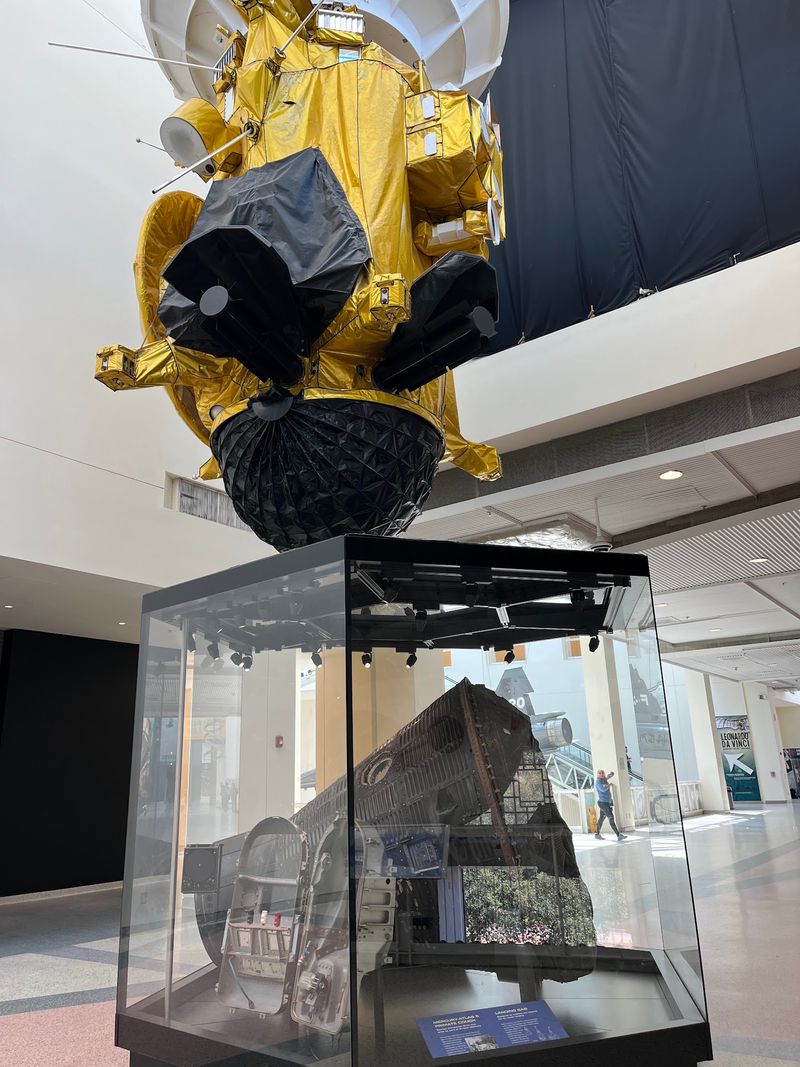
Humanity’s reach into the universe is the big theme of the Kent Kresa Space Gallery. Exhibits cover human spaceflight, robots, and rockets. It’s a lot of cosmos packed into one gallery.
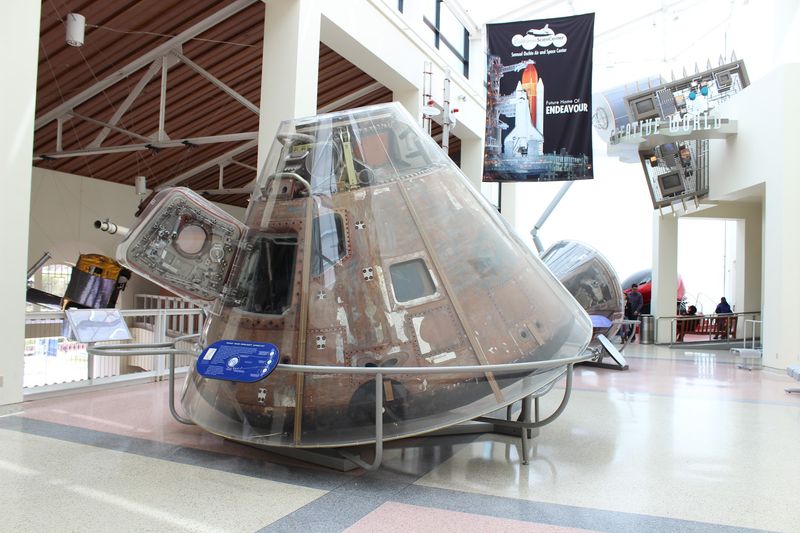
Spacecraft from every stage of the U.S. human space program will be showcased. That means the story doesn’t start or stop with Endeavour.
You get the whole family tree of American astronaut travel.
Robots get their moment as well. These machines explore places people can’t easily reach yet. Their story makes a nice reminder that space science isn’t only about astronauts.
I’d suggest visiting this gallery with curious kids who ask a hundred questions. The displays seem built for exactly that kind of energy. Each exhibit can lead to the next question, and the next.
Across the whole center, there are over 100 authentic artifacts. Another 100 new hands-on, immersive exhibits spread through three multi-level galleries.
Put together, the California Science Center nearly doubles its exhibit space with this expansion. That’s a serious upgrade for a place that was already packed with things to see.
Mark November 13, 2026 On Every Calendar You Own
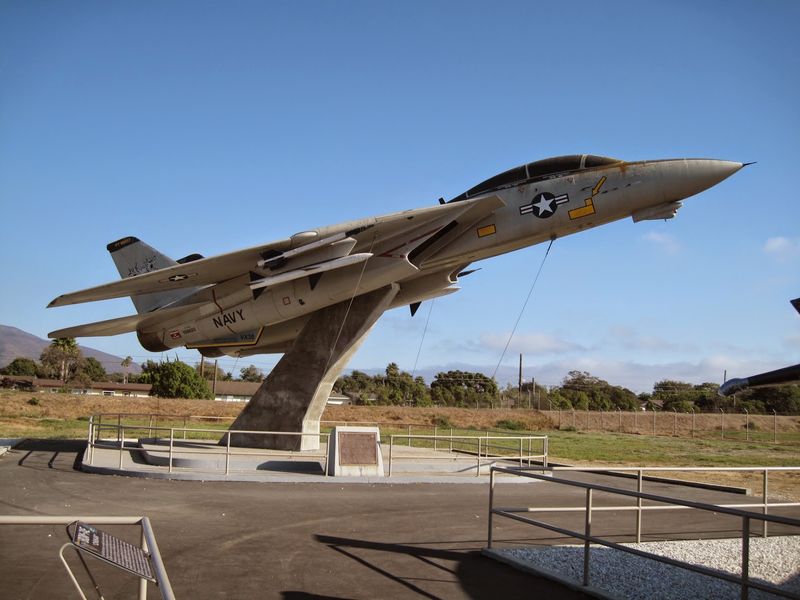
Opening day is set for November 13, 2026. Fans have been waiting since Endeavour first arrived in Los Angeles back in 2012. That’s over a decade of anticipation for one grand vertical moment.
Planning ahead is a smart move here. Advance reservations for the Samuel Oschin Air and Space Center are strongly encouraged because demand is expected to be high.
A shuttle on its tail tends to draw a crowd.
Here’s some welcome news for budgets. General admission to the California Science Center’s permanent galleries remains free.
Advance reservations for the Samuel Oschin Air and Space Center carry a $4 service fee per person, waived for California Science Center members.
Timed entry also helps everyone enjoy the view. Nobody wants to share a glass elevator with half of California at once. Picking a time slot early gives you more control over your day.
The California Science Center currently runs daily from 10 AM to 5 PM. Hours for the new wing could differ, so check before you go.
Then clear your schedule and maybe practice saying liftoff in your best mission control voice.
The Rest Of The Science Center Deserves Your Time Too
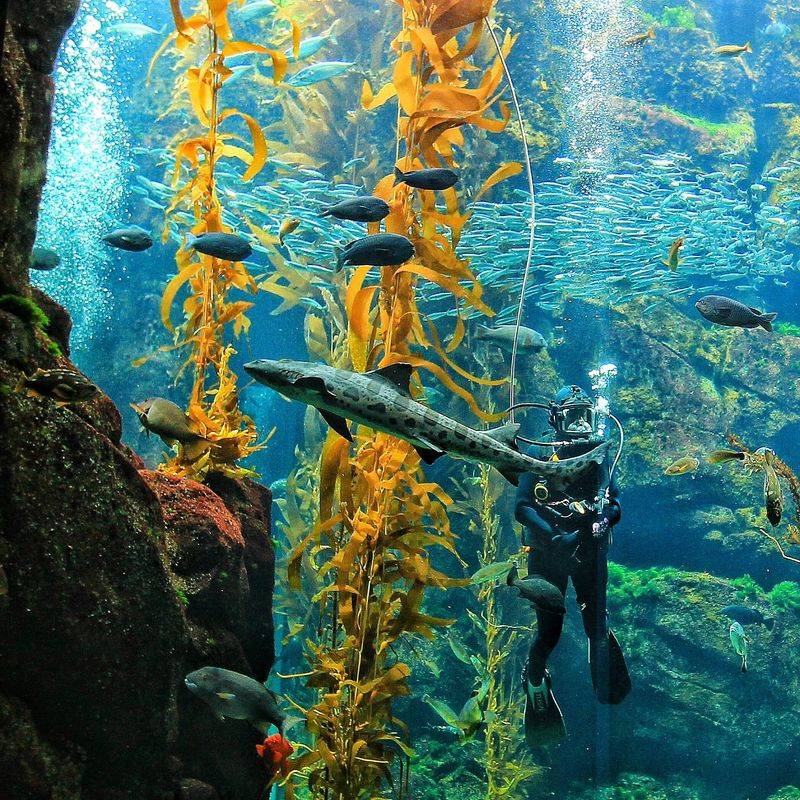
Endeavour may hog the spotlight, but the California Science Center has plenty more going on. The main museum already offers hands-on exhibits across many science topics.
Its permanent galleries are free to explore.
Ecosystem exhibits are a big part of that lineup. They include a kelp forest display, along with live animals in some areas.
Younger visitors can also find Discovery Zones, which are play spaces made for little ones.
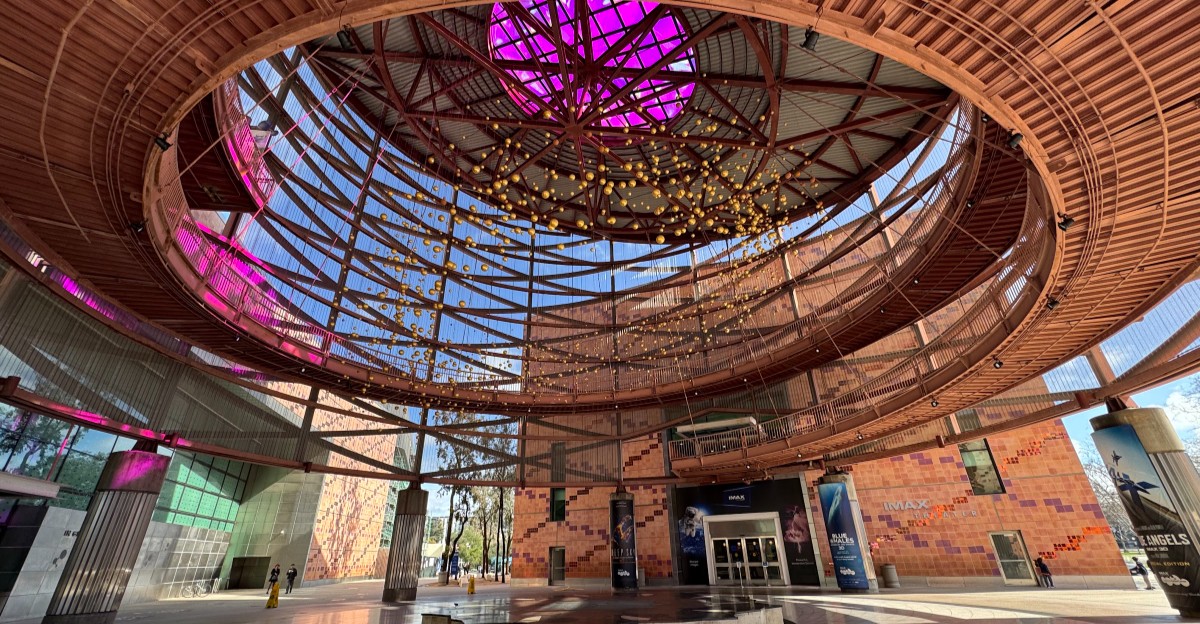
An IMAX theater sits on site as well. Films there are ticketed, separate from the free galleries.
Special exhibitions rotate through and usually require a paid ticket too.
I love that a single trip can bounce from sea life to spacecraft. That variety helps when your group has wildly different interests.
One person wants rockets, another wants fish, and everyone wins.
My practical tip is to plan a full day. Between the new air and space galleries and the existing museum, there’s a lot of ground to cover.
Wear comfortable shoes and pace yourself, because your feet will feel every one of those galleries.
Getting There Is Easier Than Reaching Orbit
You’ll find the whole complex at 700 Exposition Park Drive, Los Angeles, CA 90037. It sits inside Exposition Park, a cultural hub just south of downtown. The address is easy to plug into any map app.
Public transit makes the trip simple. A Metro rail stop sits right next to the area, which saves you from hunting for a parking space. Driving works too, though on-site parking comes with a fee.
Exposition Park offers more than one museum to explore. The California African American Museum and the Natural History Museum of Los Angeles County share the grounds.
A large rose garden adds a colorful, peaceful break between exhibits.
That mix turns a shuttle visit into a bigger day out. You can chase science in the morning and stroll among roses in the afternoon. It’s a pretty great combo for a California weekend.
So when the Samuel Oschin Air and Space Center opens, you’ll know exactly where to aim. Just look for the 200-foot steel tower on the skyline. Honestly, it would be hard to miss even if you tried.