How Craters Of The Moon Became The Idaho Spot Where Astronauts Trained For Lunar Walks
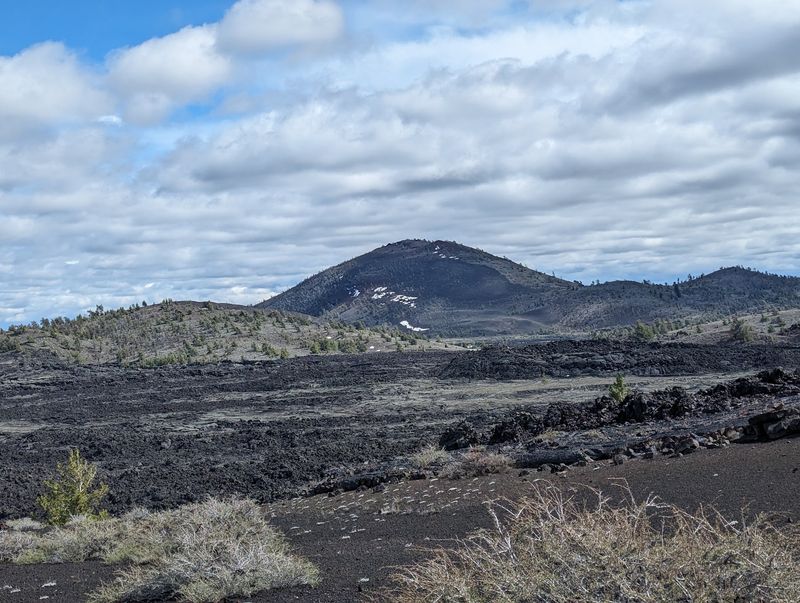
Four future moon walkers once traded flight suits for rock hammers in a field of black lava in Idaho. Alan Shepard was one of them.
The year was 1969, and NASA wanted its pilots to think like geologists.
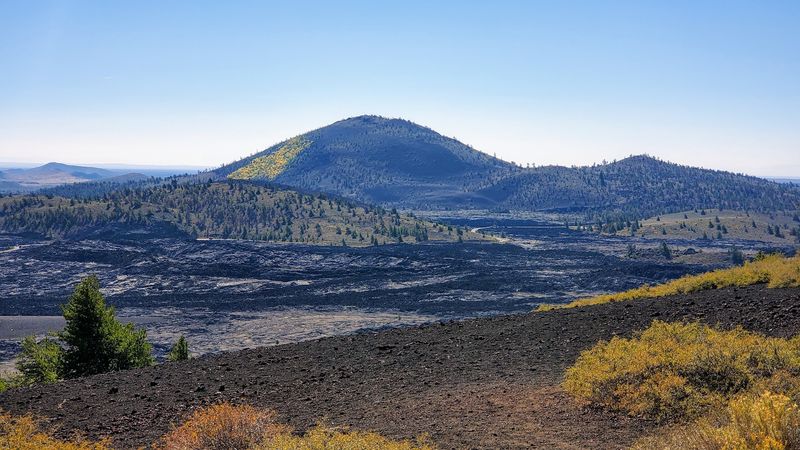
The ground they studied still looks borrowed from another world. Jagged lava flows stretch for miles.
Cinder cones rise like dark sand piles. Caves run under your feet.
I like how ordinary it sounds on paper. A drive, a few short trails, a visitor center.
Then you see the terrain and understand why astronauts got their boots dusty here first.
I can’t imagine a better classroom for a trip to the moon. The best part is that you can walk the same lava today.
So how did a quiet corner of the Snake River Plain end up in space history?
A Volcanic Moonscape Sitting Right In Central Idaho
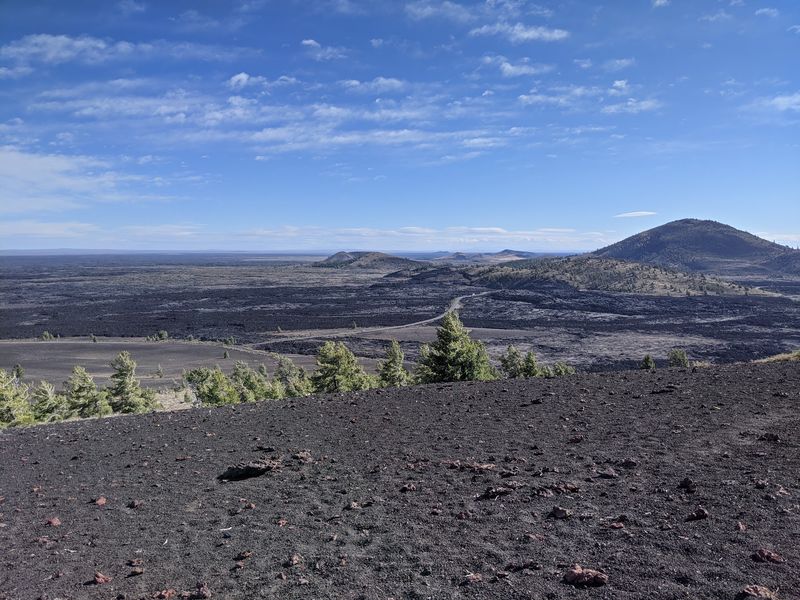
Black rock in every direction is the first thing to know about Craters of the Moon National Monument & Preserve. It sits on the Snake River Plain in central Idaho, and it looks nothing like the green mountains people expect from the state.
The monument covers roughly 750,000 acres. That’s a massive patch of lava flows, cinder cones, and cracked ground, all left by eruptions along a long rift in the earth.
Two agencies share the work here. The National Park Service and the Bureau of Land Management jointly manage the land, which helps explain how much ground is protected.
Most visitors stick to the area near the visitor center and the scenic loop. That’s where the famous trails, caves, and viewpoints sit close together.
You can see a lot without hiking all day.
The name came long before any rocket did. Still, it turned out to be weirdly accurate.
When NASA needed a place that resembled the lunar surface, this corner of Idaho made the list.
Think of it as a giant outdoor science lab. The difference is that anyone can visit, and the rocks have been waiting thousands of years.
Why NASA Sent Its Moon Walkers To The Snake River Plain
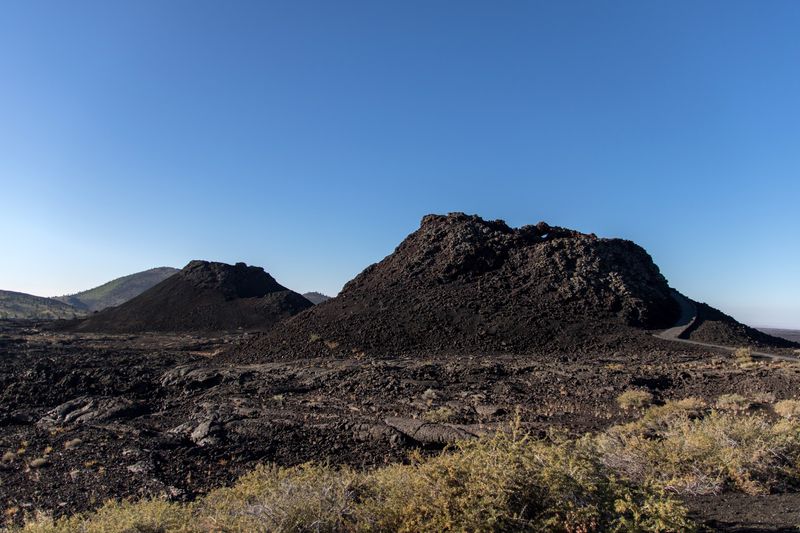
Much of the moon is covered in volcanic material. NASA knew that, and it needed astronauts who could recognize what they were looking at up there.
Pilots are trained to fly, not to read rocks. So the space agency set out to turn them into sharp field observers before they ever left Earth.
Craters of the Moon National Monument & Preserve offered a strong stand-in for lunar terrain. It had lava flows, cinder, and craters in one compact area of Idaho.
The training had a clear purpose. Astronauts practiced telling apart craters made by volcanoes from craters made by meteorite impacts.
That skill mattered when choosing samples to bring home.
Every rock collected on the moon took precious time and weight. Grabbing the right one meant knowing the story behind it.
Field lessons on real volcanic ground made that possible.
It’s a funny image when you think about it. Some of the bravest test pilots in the country were crouched over Idaho basalt, taking geology notes like students on a field trip.
Yet the payoff was real. Those lessons traveled roughly 240,000 miles and helped shape what scientists learned about the moon.
The 1969 Crew That Swapped Cockpits For Rock Hammers
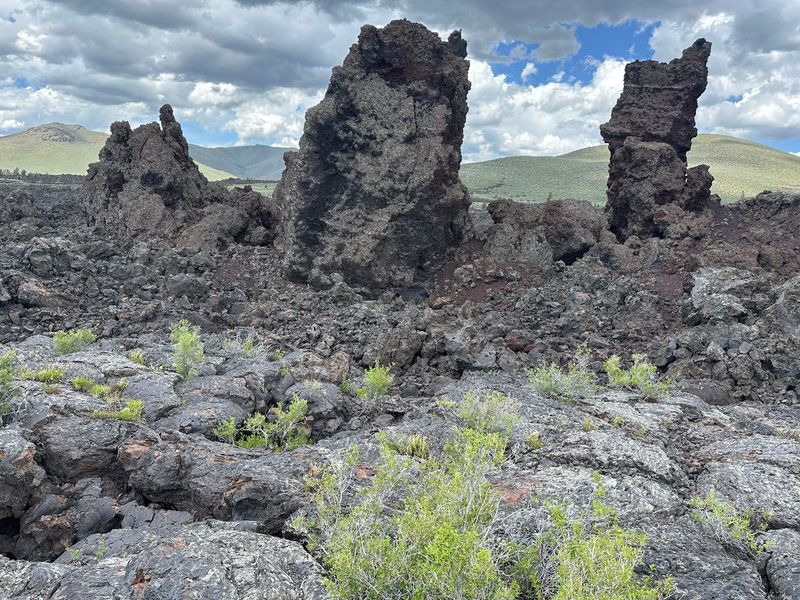
August of 1969 brought an unusual group to the lava. Alan Shepard, Edgar Mitchell, Joe Engle, and Eugene Cernan flew in near Arco, Idaho, and headed out to the monument.
Shepard and Mitchell would later walk on the moon together during Apollo 14. Cernan went on to fly Apollo 17.
Engle trained for the program as well.
Their assignment sounded simple. Learn the basics of volcanic geology, then carry that knowledge into space.
The timing is worth a second look. Apollo 11 had only just landed on the moon that same summer.
NASA was already preparing the next crews for longer, more science-heavy trips.
So the astronauts walked the flows and studied craters. They learned what fresh lava looks like and how features form.
Then they took those lessons with them.
Small towns don’t often get a role in space history. Arco got one, and the nearby lava fields got a lasting claim to fame.
It’s a detail plenty of Idahoans never learned in school. Once you know it, the rough ground near the visitor center feels a little different.
A Monument Protected Decades Before The Space Race
Calvin Coolidge saw value here long before rockets were part of the picture. In 1924, he established Craters of the Moon as a National Monument.
That made it a protected place 45 years before astronauts showed up. The volcanic features were already considered special enough to save.
Robert Limbert played a big part in the push for protection. The visitor center now carries his name, which is a nice nod to his effort.
The monument marked its 100th birthday in 2024. Celebrations ran from May through September, honoring a century of guarding this strange stretch of Idaho.
Space history added another layer later. In 1999, Eugene Cernan, Joe Engle, and Edgar Mitchell returned to help mark the 75th anniversary.
They reflected on how useful their training had been.
That reunion says a lot. Astronauts who had seen the real moon still thought this place earned a visit back.
History here comes in layers, a bit like the lava itself. There’s the ancient volcanic story, the conservation story, and the space story, all stacked on the same ground.
The Great Rift Is The Crack Behind Every Rock You See
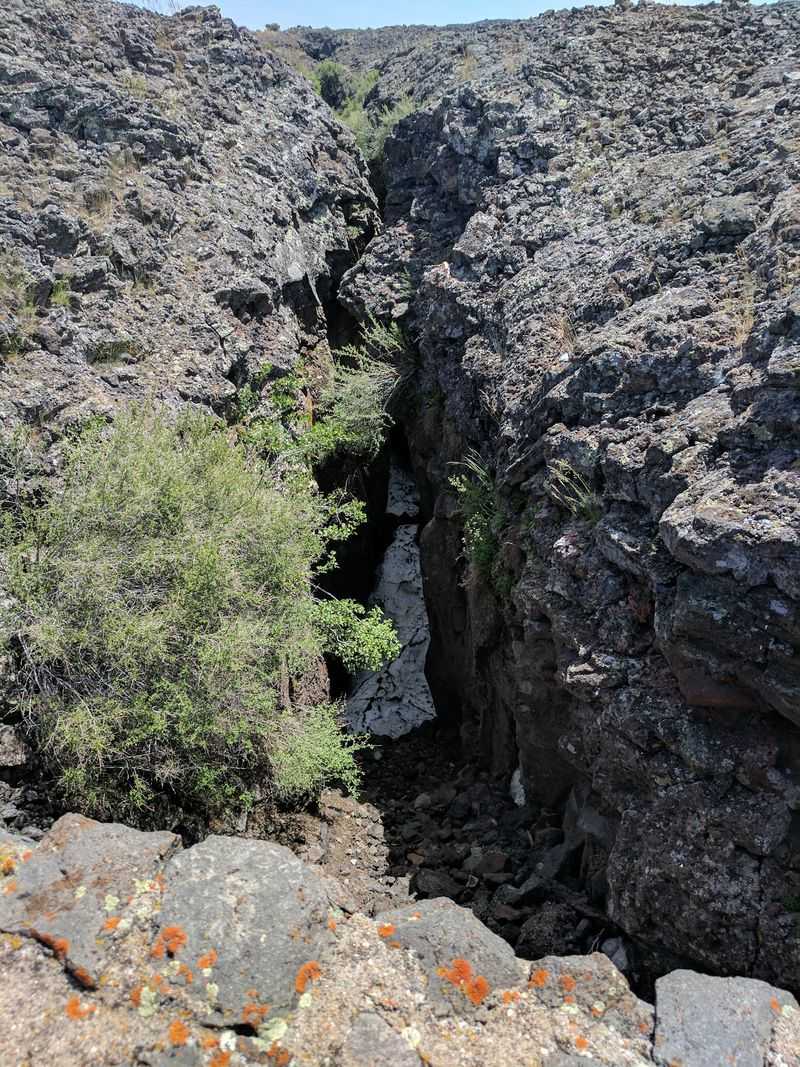
Fifty-two miles long. That’s the length of the Great Rift, a fissure in the earth’s crust at the heart of the monument.
Nearly everything at Craters of the Moon National Monument & Preserve traces back to it. Lava pushed up through the rift again and again, building the landscape piece by piece.
The eruptions happened between about 15,000 and 2,000 years ago. In geologic terms, that’s practically last week.
Fresh is the key word here. Because the lava is so young, the features still look sharp and raw.
Wind and weather haven’t had much time to soften them.
Along the rift, you’ll find open fissures, wide lava fields, and plenty of cinder cones. Each one is a clue to how the ground cracked and poured.
That variety is exactly what made the area useful for training. Astronauts could study many volcanic features in one place instead of hopping between sites.
Standing near the flows, the scale sinks in fast. A single crack in Idaho built a landscape big enough to fool your eyes into thinking you’ve left the planet.
Seven Miles Of Road That Show Off The Best Parts
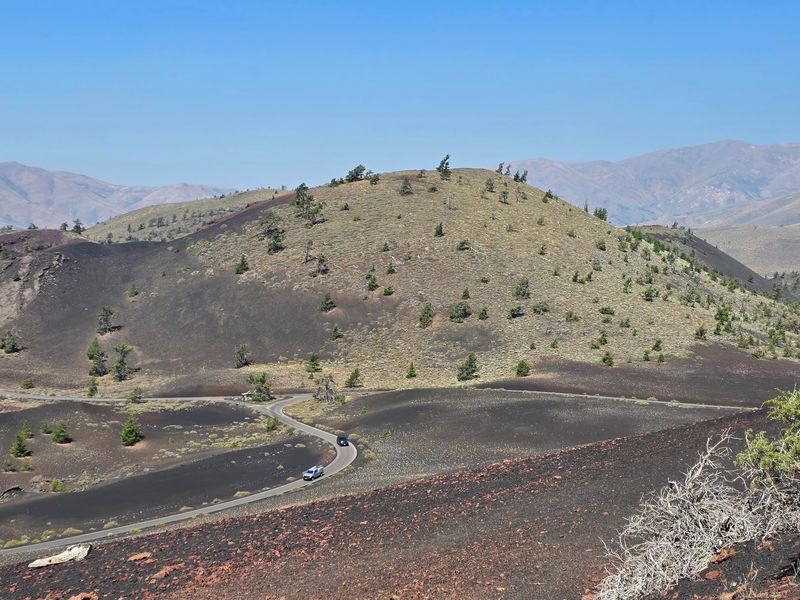
Good news for anyone short on time. A seven-mile Loop Road carries you past many of the monument’s headline features.
Pull-offs and trailheads sit along the way. You can park, stretch your legs on a short path, and hop back in the car.
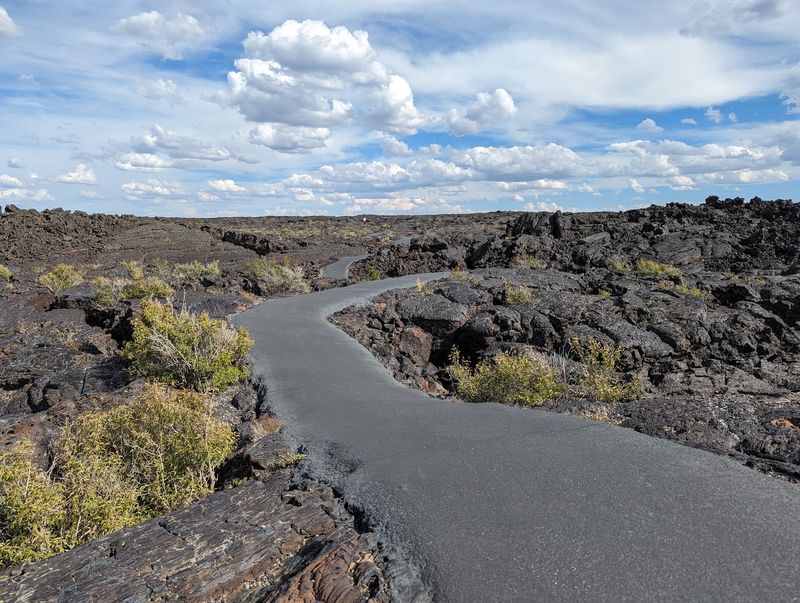
Many of the trails near the road are paved. That makes them easier for families and anyone who prefers a smooth walk over loose cinder.
Grab a map at the visitor center before you start. It lists the stops, so you can plan what to see and skip nothing important.
The North Crater Flow Trail is one popular option. It brings you right up beside the lava, close enough to study the textures astronauts once examined.
A full loop with a few short walks can fill a few hours. Spending a day or two lets you slow down and add longer trails.
The road usually opens to cars from about mid-April through late November, weather permitting. Outside that window, plans change, so check conditions before driving out across the Snake River Plain.
Your Calves Will Remember The Climb Up Inferno Cone
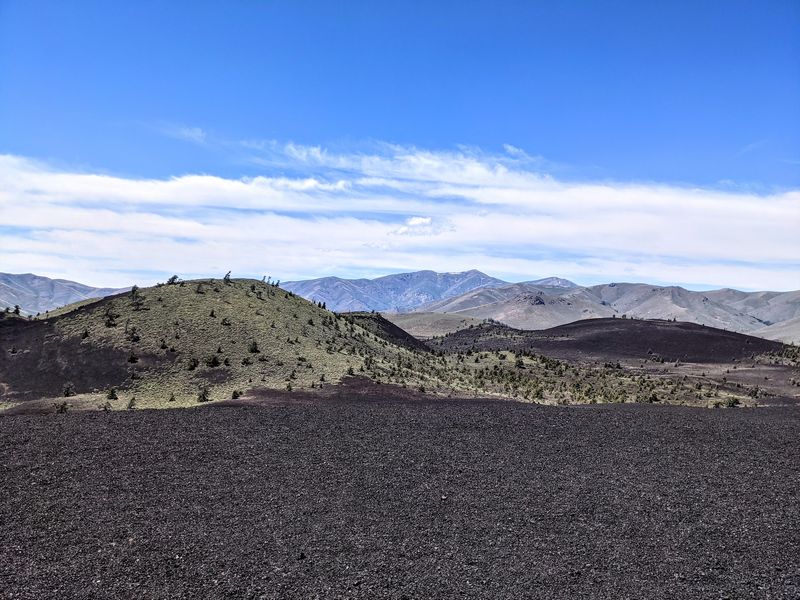
Short does not mean easy. Inferno Cone proves that the moment the trail tilts upward.
The hike isn’t long, but the grade is serious. Some stretches feel steep enough to make you question your shoes and your cardio.
Unlike many paths near the Loop Road, the route up the cone is cinder rather than pavement. Take it slow and enjoy the excuse to stop and look around.
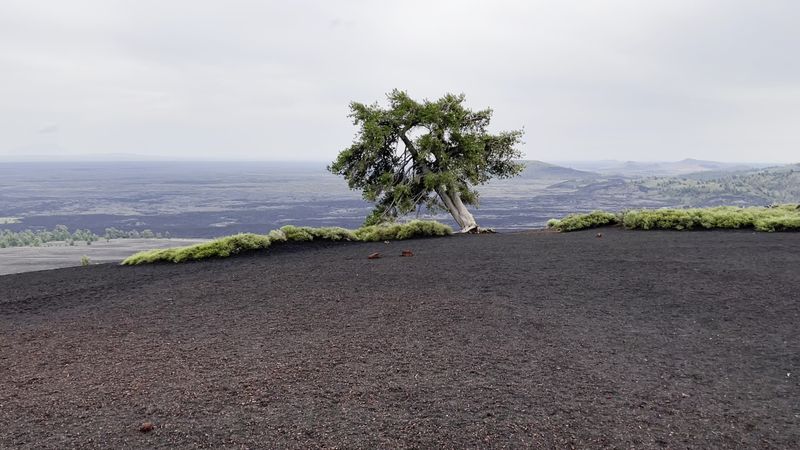
The reward waits at the top. Panoramic views spread across the lava fields, the cinder cones, and the wide open plain beyond.
From up there, the layout of the monument finally makes sense. You can trace dark flows across the land and see just how far the eruptions reached.
Late afternoon is a smart time to try it. The light softens, and the dark rock has had time to cool from the midday sun.
Wind can pick up on the summit, so bring a layer. A hat and water help too, since shade is basically a rumor on these slopes.
Mini Volcanoes Built From Flying Lava Blobs
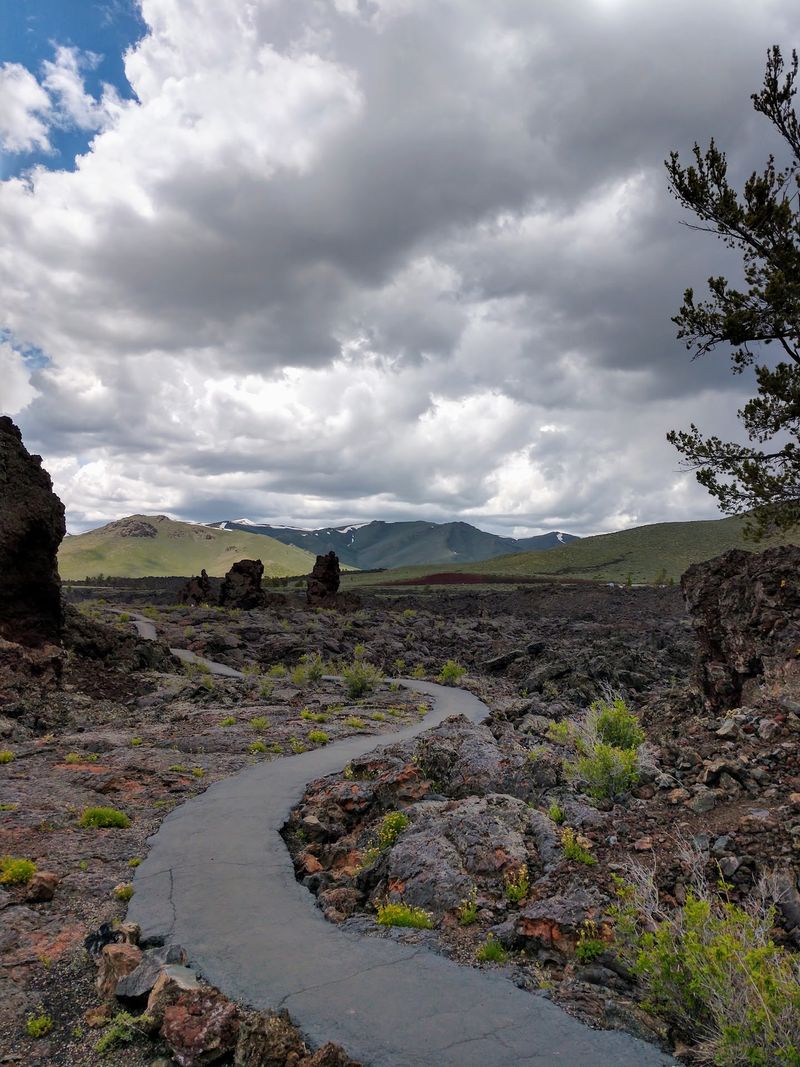
Some volcanoes go big. The Spatter Cones went small and lumpy, and they’re one of the most fun stops in the monument.
They formed when chunks of hot lava flew into the air. The blobs cooled as they landed and stacked into steep little cones.
Think of them as volcano miniatures. They’re compact enough to understand in one look, yet strange enough to keep you staring.
Kids especially tend to get it right away. If your young ones are studying volcanoes in school, these cones turn a textbook page into something they can stand beside.
The rough, splattered texture tells the whole story. You can almost picture the lava popping and piling, one hot glob at a time.
The stop pairs naturally with Inferno Cone, since both sit along the Loop Road. Seeing them back to back shows two very different ways volcanoes build mounds.
Stay on marked paths here. The formations are fragile, and they’ve lasted thousands of years because people let them be.
Headlamps Required For The Lava Tube Underground
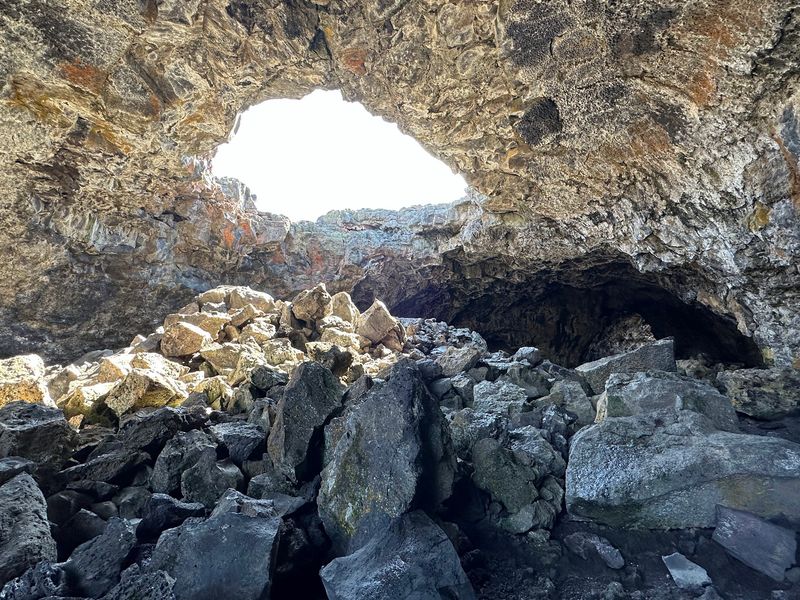
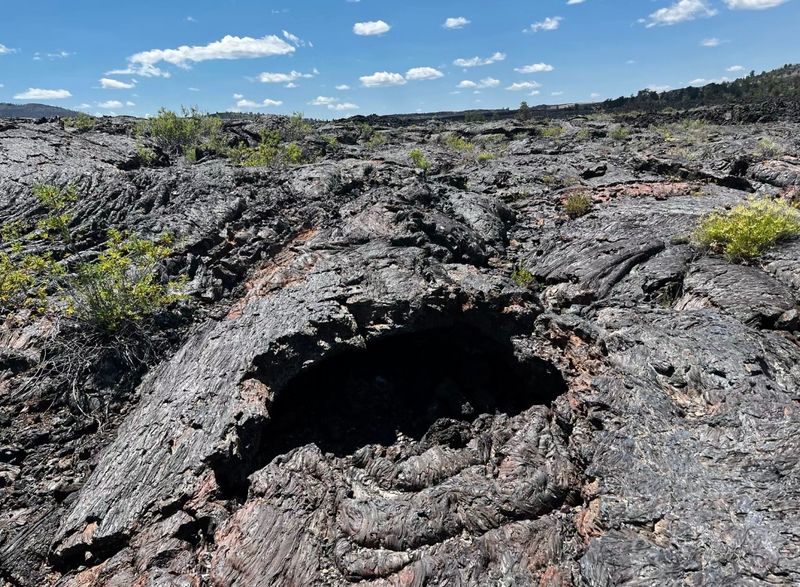
More than 500 known caves sit within the monument. Many of them are lava tubes, carved by rivers of molten rock that drained away and left hollow tunnels behind.
Indian Tunnel is a favorite. It’s large, dramatic, and reachable from the cave area along the Loop Road.
Before heading in, stop at the visitor center for a free cave permit. Rangers use the permit process to help protect the caves and the bats that live in them.
Yes, bats. Spotting one flutter past is part of the adventure, and a reminder that these tunnels are homes, not just attractions.
Bring a headlamp or flashlight. Some caves get dark fast, and good light makes footing much safer on the uneven floors.
Sturdy shoes matter too. Lava rock is rough and unforgiving on thin soles.
The tubes might be the moment the place really clicks. Above ground, you see where lava flowed.
Below ground, you stand inside the channel it carved, cool and quiet, right under the Idaho sun.
A Night Sky Fit For Former Astronauts
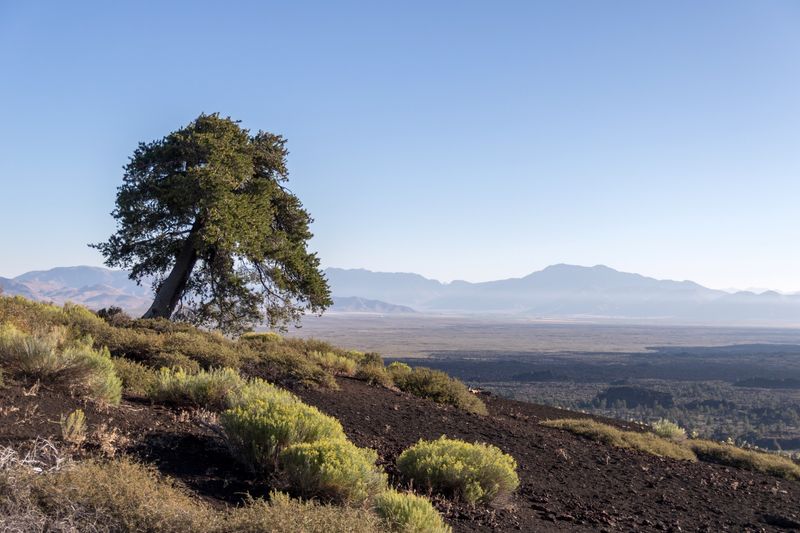
When the sun drops, the monument flips to its second act. The sky fills with stars over the same ground that once trained moon walkers.
Craters of the Moon earned International Dark Sky Park status in 2017. That recognition points to how little artificial light reaches this part of Idaho.
On clear nights, the Milky Way can stretch overhead. Astrophotographers come for exactly that, setting up cameras right on the lava landscape.
The pairing is hard to beat. Astronauts studied this terrain to reach the moon, and now visitors can look up and see it hanging there.
Planning helps. Arrive before sunset, catch the cones in golden light, and stay as the darkness settles across the plain.
A headlamp keeps you safe on paths after dark. Red light settings help protect your night vision while you wait for more stars to appear.
Camping makes the night easier, since the monument has campgrounds. Driving the highways after dark means watching for deer, so many stargazers prefer to stay put until morning.
Snowshoes On Lava When Winter Takes Over
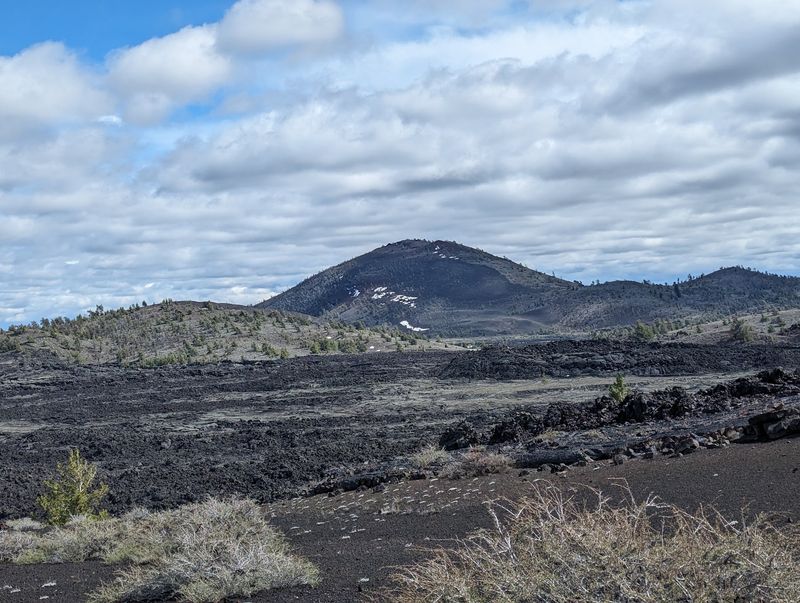
Snow on black lava makes for a wild contrast. In winter, the monument trades its moonscape look for something closer to a frosted chessboard.
Craters of the Moon National Monument & Preserve stays open all year. The scenic Loop Road closes to cars in the cold months, though, which changes how you explore.
That’s when skis and snowshoes come out. The quiet road and nearby areas become routes for cross-country skiing and snowshoeing.
It’s a completely different way to see the place. Dark rock peeks through white drifts, and the cinder cones wear caps of snow.
Winter on the Snake River Plain can be harsh, so prepare for wind and cold. Layers, warm gloves, and a solid weather check go a long way.
The visitor center keeps welcoming people through most of the year. It closes only on Thanksgiving, Christmas, and New Year’s Day.
Fewer crowds is part of the appeal. For Idahoans looking for an off-season day trip, a snowy lava field offers a story most friends haven’t heard yet.
Families, Science Buffs, And Road Trippers All Fit Here
Kids learning about volcanoes have a real-life textbook waiting in Idaho. Few places let them climb a cinder cone and crawl through a lava tube on the same afternoon.
The visitor center makes a strong starting point. It has museum exhibits, a theater showing an educational film, and interactive displays.
Rangers are on hand to answer questions and suggest stops. That’s handy if you arrive without a plan.
Road trippers get plenty from a short visit too. A couple of hours covers the highlights, and the paved trails keep things moving.
Space fans will enjoy the Apollo connection. Standing where astronauts trained adds a layer most volcanic parks can’t match.
Photographers find endless texture in the rock, plus that famous dark sky. Hikers who want more effort can tackle longer trails across the flows.
Families and near-retirees looking for a lower-cost outing will appreciate how much fits into one day. The place rewards curiosity more than stamina, which means almost everyone leaves with something to talk about on the drive home.
Handy Notes Before Heading Toward Arco
Finding the place is easy. The Robert Limbert Visitor Center sits at 1266 Craters Loop Road, Arco, ID 83213.
It’s about 18 miles southwest of Arco and 24 miles northeast of Carey. U.S.
Highway 20/26/93 runs right past the entrance.
The monument is open year-round. Peak season runs from late spring through early fall, and the visitor center usually keeps longer hours in summer.
Expect an entrance fee per vehicle, and check current rates before driving. Cave permits are free from the visitor center.
Sun is the big factor in warm months. The dark rock soaks up heat, and shade is scarce on most trails.
Pack a hat, sunscreen, and plenty of water. You can refill bottles at the visitor center, which helps on hot afternoons.
Sturdy shoes beat sandals on lava. A headlamp earns its spot in the bag if caves or stargazing are on your list.
Plan on a few hours for a quick visit. One or two days lets you settle into the trails without rushing.
Still A Testing Ground For The Next Giant Leap
Moon training was only the beginning. For more than 50 years, Craters of the Moon has served as a NASA research site.
Space science work continues today, with an eye toward future missions to Mars. The same lava that helped Apollo crews now helps researchers think about another planet.
That’s a pretty great résumé for a patch of Idaho basalt. It went from ancient eruptions to protected monument to astronaut classroom, and it keeps adding chapters.
For visitors, the appeal is refreshingly simple. Drive the loop, climb a cone, peek into a lava tube, and stay for the stars.
I believe the best visits mix all of it. Learn the history at the visitor center, then walk the flows with those astronauts in mind.
Craters of the Moon National Monument & Preserve doesn’t need much hype. The landscape does the talking, and the Apollo story adds a wink.
It’s the kind of Idaho day out that sticks. You leave with dusty shoes, a camera roll full of black rock, and a new respect for that quiet stretch of highway near Arco.