Pennsylvania’s Grand Old Railroad Curve Still Bends 2,375 Feet Around A Mountain
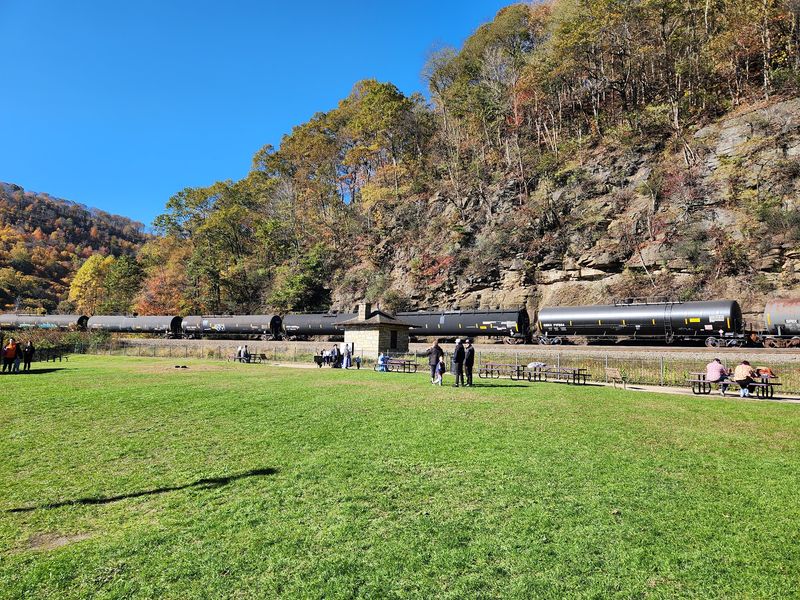
A freight train can wrap around you on three sides here. The engines head one direction while the last cars are still rolling the opposite way, right across the valley.
Workers carved this giant bend into a Pennsylvania mountainside in the early 1850s. Many of them were Irish immigrants with simple tools, and their route still carries trains every single day.
I like how nothing about it feels like a dusty museum piece. Real freight rumbles past, and passenger trains glide through too.
You can watch it all from a hillside park right beside the rails.
I can’t imagine a better spot to feel how enormous a train really is. So how do you reach a viewing area perched high above a mountain reservoir?
There are two ways up, and one of them involves a whole lot of steps.
The Famous Bend Railroad Fans Plan Entire Trips Around
Railroad history doesn’t get much more hands-on than the Horseshoe Curve National Historic Landmark. It sits just west of Altoona, in the Allegheny Mountains of central Pennsylvania.
The curve is exactly what the name promises. Three tracks swing around the head of a mountain valley in a sweeping U shape.
Those rails aren’t retired, either. They belong to Norfolk Southern’s Pittsburgh Line, one of the busier freight routes in the eastern United States.
Amtrak’s Pennsylvanian passenger train uses the same tracks on its run between Pittsburgh and New York. So the curve works for a living while you watch.
The site itself is run by the Railroaders Memorial Museum in Altoona. That partnership gives you a visitor center, a small museum, and a trackside observation park.
Getting there is half the fun. The drive in passes through a tunnel beneath the tracks, then lands you right inside the bend.
From the parking area, the curve rises around you like an amphitheater built for trains. Good luck ignoring the urge to look up every time a horn sounds.
It’s easy to see why the place holds such a grip on rail lovers. Few spots let you stand this close to a working piece of the 1850s.
Roughly 450 Workers Shaped A Mountain Without Modern Machines
Back in 1850, the Pennsylvania Railroad had a big problem. The Allegheny Mountains stood squarely between Philadelphia and Pittsburgh, and trains needed a gentler way over them.
Before the curve, travelers relied on the Allegheny Portage Railroad. It hauled canal boats and cars up steep slopes with a series of inclined planes, which was clever but slow.
Engineers came up with a bolder idea. Instead of climbing straight up, the line would loop around a valley to stretch out the climb.
Roughly 450 workers took on the job, and many were Irish immigrants. They cut, filled, and leveled the mountainside mostly with hand tools, picks, shovels, and horses.
Construction ran from 1850 to 1854. The curve officially opened on February 15, 1854, and travel across Pennsylvania changed for good.
Think about that timeline for a second. Four years of muscle and grit produced a route that trains still use more than 170 years later.
Anyone with Irish roots in the region may find this part especially moving. It’s a reminder that big engineering stories are also stories about ordinary people.
The museum at the site leans into that human side. It gives credit to the crews who made the whole thing possible.
Numbers So Big They Earned National Landmark Status Twice
Let’s talk measurements, because they’re a little wild. The curve stretches about 2,375 feet from end to end.
Its diameter measures roughly 1,300 feet across. That’s enough room for a long freight train to wrap nearly all the way around the valley.
Why so big? A wide arc lets trains climb gradually instead of fighting a steep, punishing grade.
Heavy locomotives can’t simply charge up a mountain like a pickup truck. The curve buys distance, and distance makes the climb manageable.
The nation took notice long ago. The Horseshoe Curve was named a National Historic Landmark in 1966.
Engineers gave it their own honor later on. In 2004, it was designated a National Historic Civil Engineering Landmark.
That second title matters to people who build bridges and roads for a living. It puts the curve alongside some of the most respected engineering feats in the country.
Here’s a fun detail for trivia night. All of this was planned and built decades before bulldozers or modern surveying gear existed.
Standing beside the tracks, the numbers stop feeling abstract. You can trace the full sweep with your eyes and finally understand why engineers still study it.
Count Every One Of The 194 Steps Or Catch A Ride Up
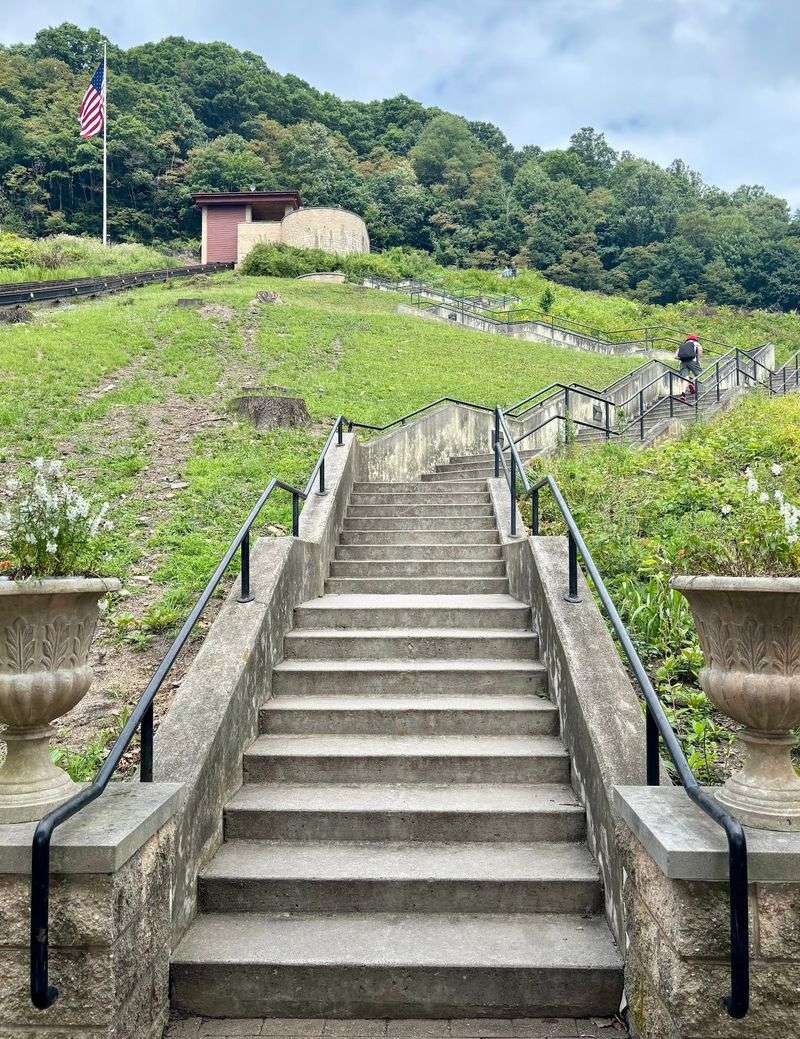
Here’s the fun little test at the heart of every visit. The observation park sits well above the visitor center, and you have to get yourself up there.
Option one is the staircase. There are 194 steps climbing the hillside, and yes, people do count them.
It’s a decent workout without being brutal. Take it slow, enjoy the woods, and your reward waits right at the top.
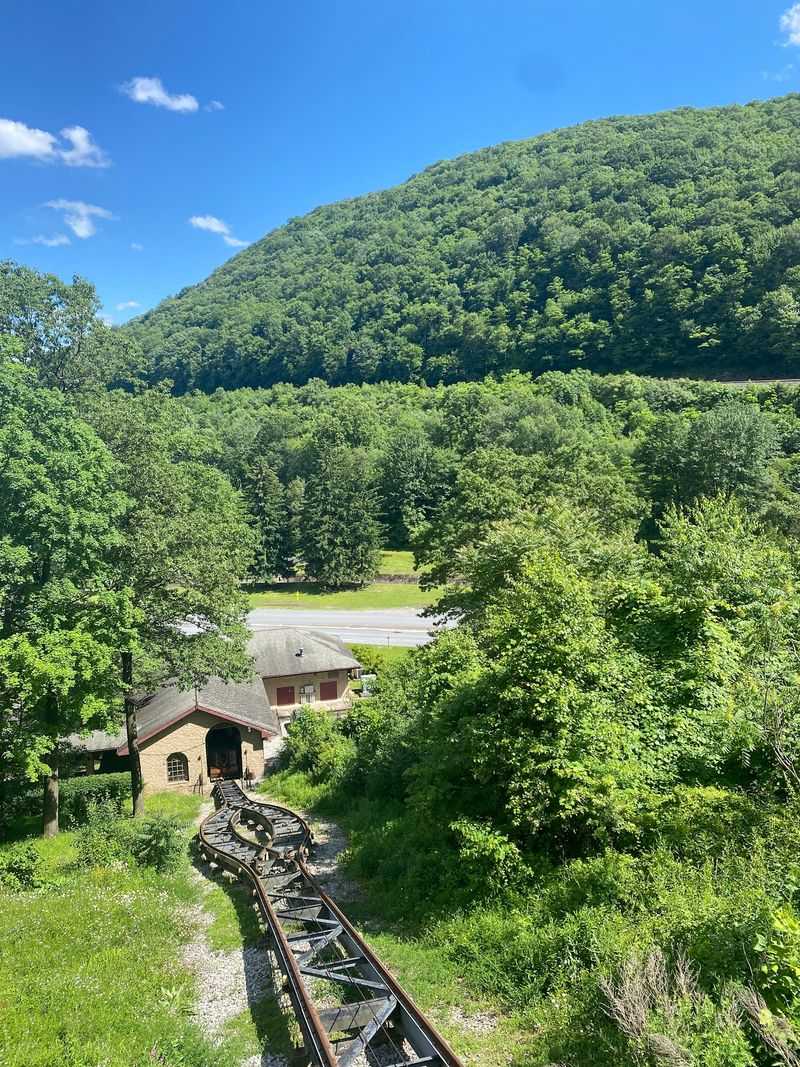
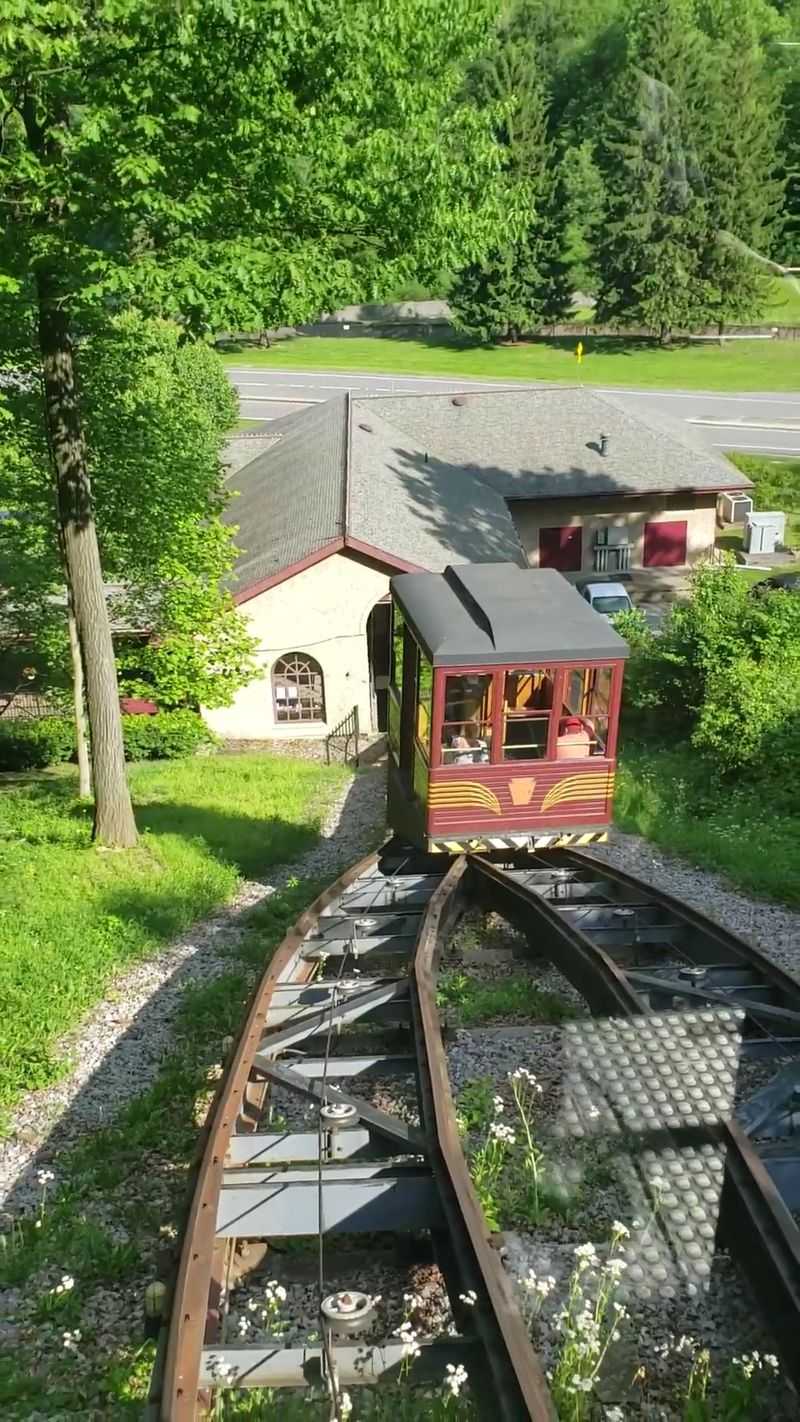
Option two is the funicular, a cable-pulled car on rails. It nods to the old inclines that once helped carry traffic over these mountains.
Now for the honest part. The funicular has been out of service for maintenance at times recently.
When that happens, staff have used a utility vehicle to shuttle guests up and down the hill. That’s a thoughtful backup for anyone who can’t handle the stairs.
Because the setup can change, check the current funicular status before you go. A quick heads-up saves surprises at the ticket counter.
One more tip for families with small kids. Restrooms are at the bottom, not the top, so plan a stop before you start climbing.
Either way you arrive, that first view of the tracks makes the effort feel well spent.
Freight Trains Show Up On Their Own Schedule, And That’s The Fun
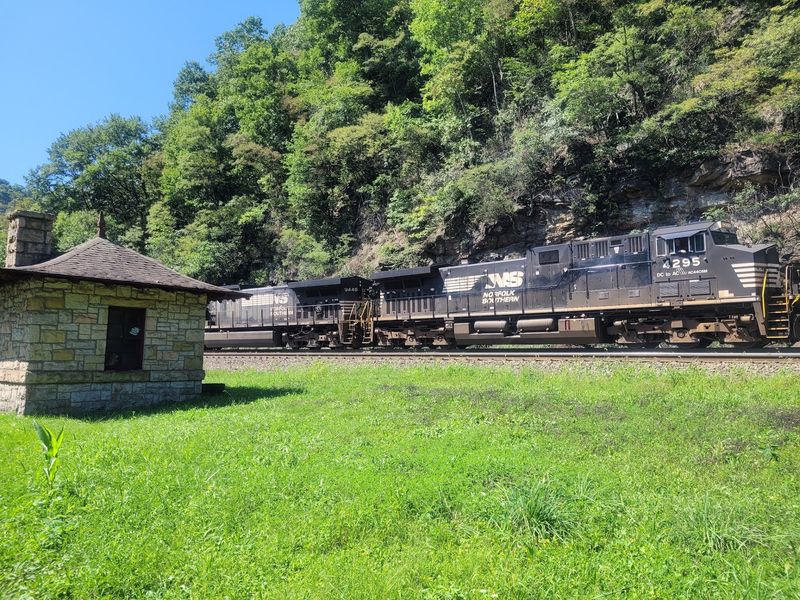
Nobody hands you a freight timetable here. Trains simply appear when they appear, which turns every visit into a friendly guessing game.
Norfolk Southern runs a steady flow of freight along the line. Activity can stack up quickly, so a quiet stretch rarely lasts forever.
Then a horn echoes off the mountain. Everyone at the overlook suddenly perks up and reaches for a camera.
The best part comes as the train rounds the bend. You might see the lead locomotives on one side while the rear cars still crawl along the other.
It’s a strange and wonderful sight. A single train can seem to surround the whole valley at once.
Passenger fans get a treat, too. Amtrak’s Pennsylvanian passes through, and its timing is easier to look up ahead.
Some engineers give a wave or a toot of the horn as they pass. Kids tend to treat that like meeting a celebrity.
Bring patience, a snack, and maybe a folding chair attitude. The waiting is part of the charm of railfanning.
Fall weekends and busy weekdays can both deliver plenty of action. Still, every day brings its own lineup, and that unpredictability keeps people coming back.
A Retired Locomotive Waits Trackside For Your Photo
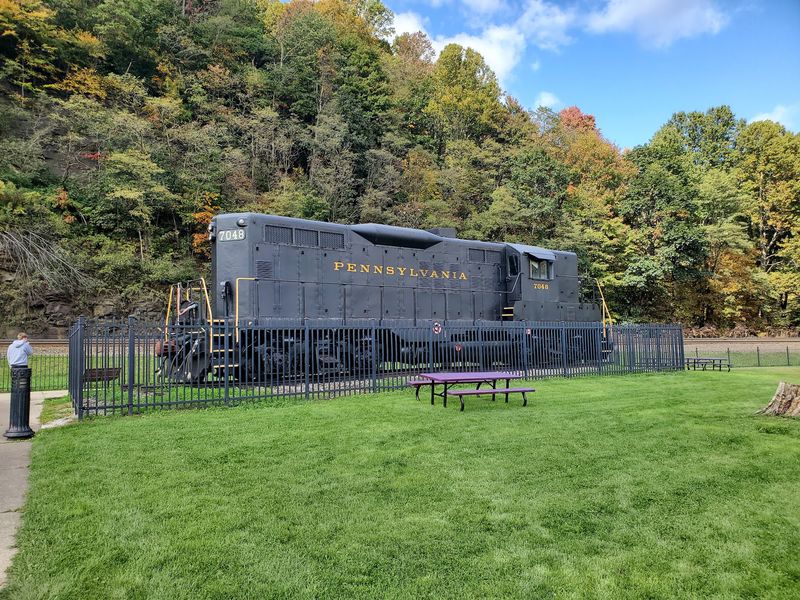
Not every train at the top is moving. A retired Pennsylvania Railroad GP9 locomotive, number 7048, sits on display in the observation park.
It’s a diesel-electric engine painted in the classic Pennsylvania Railroad scheme. The look instantly connects the present-day tracks to their golden era.
The GP9 was a workhorse model in its day. Railroads used them for all kinds of everyday hauling jobs.
Having one parked right beside active rails is a smart touch. You get to compare old and new while modern freight rolls past.
Photographers love the setup. Frame number 7048 in the foreground, then wait for a live train to swing into the background.
Little ones get a kick out of seeing a locomotive up close without any rumble or rush. It gives curious kids time to study the wheels and cab.
Keep an eye out for a small watchman’s shanty in the park, too. It recalls the workers who once kept careful watch over this busy stretch of track.
Details like these make the overlook feel like more than a viewing deck. It reads like an outdoor history lesson that happens to have a great view.
Models And Films Explain The Whole Story Before You Climb
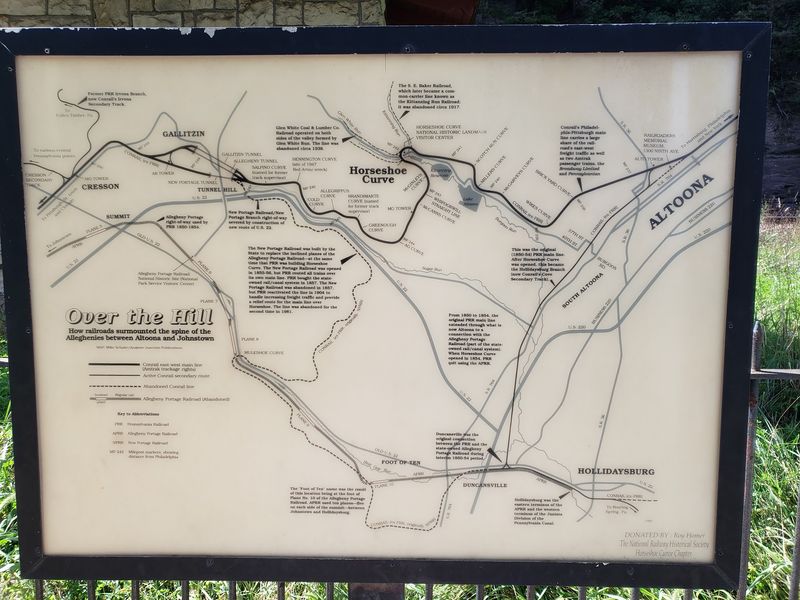
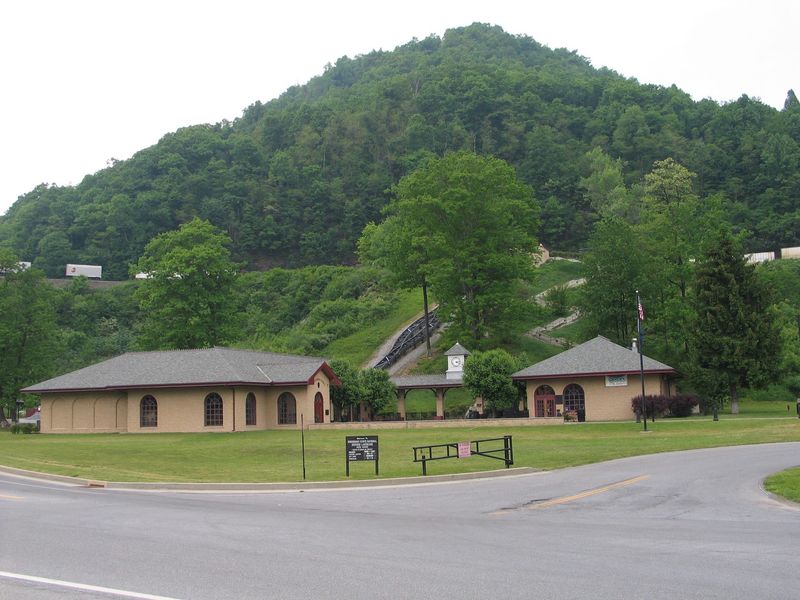
Start at the bottom, even if the tracks are calling your name. The visitor center sets up everything you’re about to see.
Inside, a small museum walks through how and why the curve was built. Scale models show the shape of the valley and the path the rails take around it.
Those models are surprisingly helpful. Seeing the whole layout from above makes the view at the top click right away.
Short films add more background in a little theater space. They cover the construction, the engineering, and the curve’s role in Pennsylvania’s growth.
History buffs will find plenty to chew on. Casual visitors can breeze through and still leave knowing far more than they expected.
The building also holds a ticket office and restrooms. It’s a natural home base before and after the climb.
Don’t skip the gift shop on your way out. It’s on the small side, but it stocks souvenirs and railroad-themed goodies for fans of every age.
A little time indoors pays off outside. Once you know the backstory, every passing train feels a bit more impressive.
Mountain Air, Reservoir Views, And A Picnic Table With Your Name On It
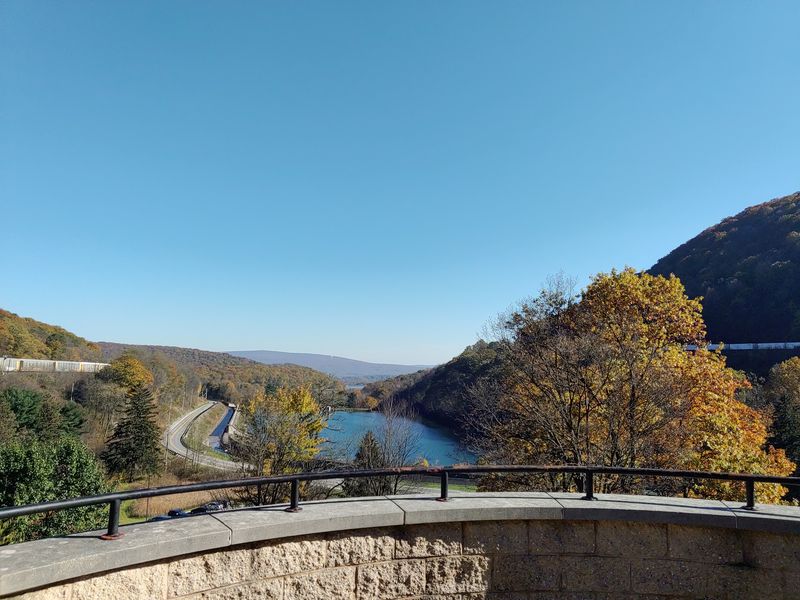
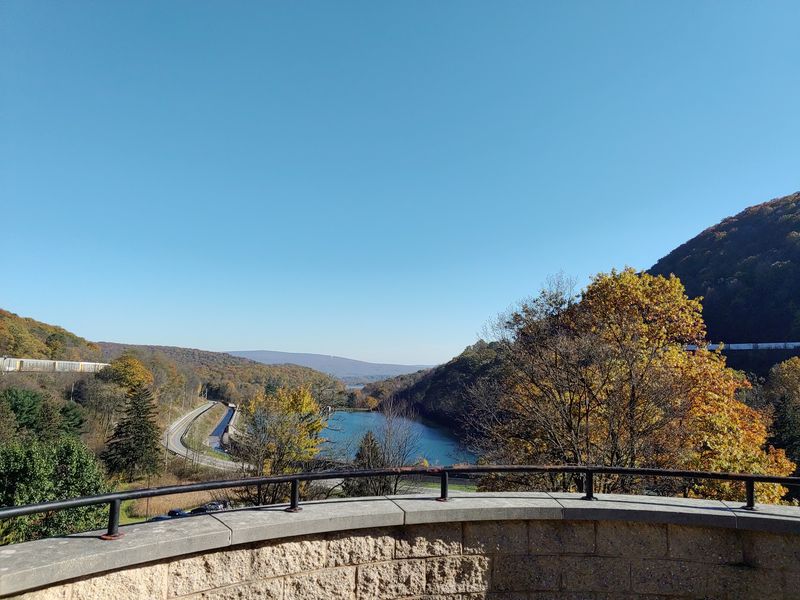
Trains get top billing, but the scenery deserves a credit too. The curve wraps around a valley holding part of Altoona’s water reservoir system.
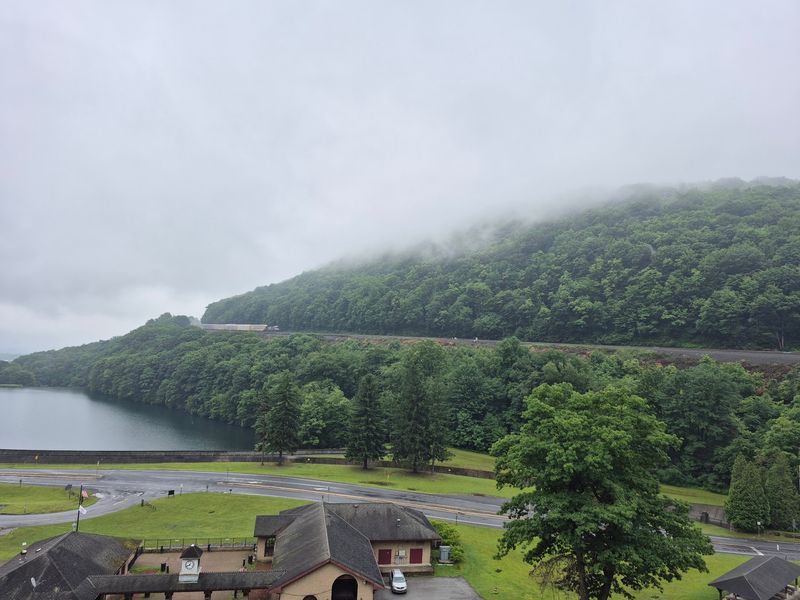
From the overlook, you can spot the water shimmering below the tracks. Forested ridges rise all around, giving the whole scene a quiet mountain feel.
Fall turns the setting into a color show. The leaves around the curve make a gorgeous backdrop for any train photo.
Early spring and late fall have another perk. With fewer leaves on the trees, you can often see more of the full horseshoe.
The top is set up for lingering. Picnic tables, shaded pavilions, and seating spots make it easy to pack a lunch and stay awhile.
Vending machines up there can cover a quick snack or drink. Just remember there’s no restroom at the top.
That mix of nature and machinery is a big part of the appeal. One minute it’s birds and breeze, and the next a mile of freight comes rumbling through.
Honestly, it’s a lovely place to do absolutely nothing. Sit, listen, and let the mountain decide when the next show begins.
Smart Planning Makes The Afternoon Go Smoothly
Your GPS destination is 2400 Veterans Memorial Hwy, Altoona, PA 16601. The road climbs into the mountains west of the city before passing under the tracks.
The Horseshoe Curve National Historic Landmark runs on a seasonal schedule. It’s typically open several days a week and closes for the winter months.
Hours can change for rentals or special events. Check ahead before making the drive so you don’t end up stuck at the gate.
Arrive with time to spare. Last admission comes earlier than closing because the climb up and back down takes a while.
There’s an entrance fee, and tickets are required to reach the observation park. Prices can shift, so look them up before you leave home.
Planning to visit the Railroaders Memorial Museum in downtown Altoona too? A combo ticket covering both sites is worth asking about.
Cell service can be spotty in the valley. Download directions ahead of time, and expect a signal to return as you head back toward town.
If the site happens to be closed, the public road below still offers limited views. It’s not the same experience, but trains don’t take days off.
Why This Curve Belongs On Every Pennsylvania Road Trip List
Some outings please one person in the car. The Horseshoe Curve National Historic Landmark has a knack for pleasing nearly everyone.
Train lovers get front-row seats on a busy main line. History fans get the story of a mountain reshaped by hand in the 1850s.
Families get a picnic spot, a staircase challenge, and the thrill of a horn echoing through the valley. Grandparents may enjoy watching young faces light up as engineers wave.
Photographers have endless angles to play with. The curve, the reservoir, and the seasonal colors give them plenty to work with.
It also makes a natural anchor for a bigger day in Altoona. Pair it with the Railroaders Memorial Museum and you’ve got a full rail-themed adventure.
What sticks with me most is how alive the place feels. Pennsylvania has many historic sites, but few still do the exact job they were built for.
Every train that rounds that bend keeps an old promise. It carries goods and people across the mountains, just like the original crews intended.
So pack a lunch and lace up comfortable shoes. The curve has been waiting since 1854, and the next train is probably already on its way.