Pennsylvania’s Tallest Waterfall Drops 94 Feet Into A Wooded Gorge
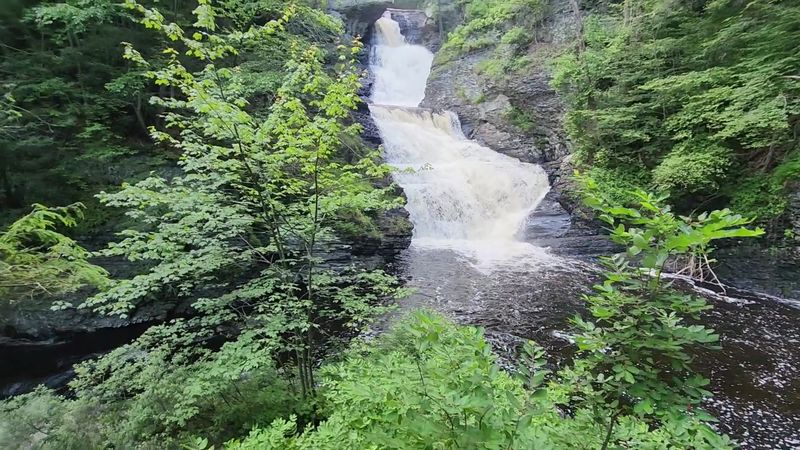
Pennsylvania’s tallest waterfall costs nothing to see. There’s no ticket booth and no turnstile, just a short trail and a creek throwing itself off a cliff in three loud stages.
The walk from the upper parking lot to the first overlook takes only a few minutes. A second platform sits lower down and frames the main drop like a framed postcard someone forgot to sell you.
I like how fast the payoff arrives here. You barely warm up your legs before the roar starts drifting through the trees, and suddenly the forest opens into a wall of moving white water.
There’s a catch, of course, and it involves stairs. Plenty of rocky ones wait for you, plus a steeper path down to creek level for anyone feeling brave.
So how far down are you willing to go?
A National Park Waterfall Hiding In Plain Sight Near The Delaware River
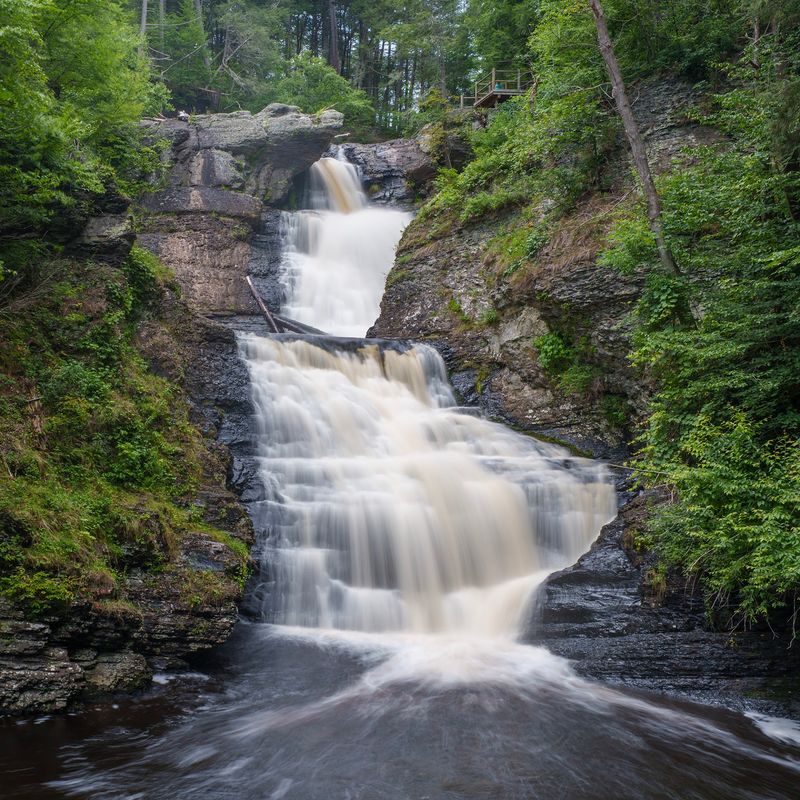
Raymondskill Falls sits inside the Delaware Water Gap National Recreation Area, a huge stretch of protected land along the Delaware River. The National Park Service manages the site, which explains the tidy signs, sturdy platforms, and well-kept paths.
The falls belong to Raymondskill Creek, a stream that winds through the woods before taking a dramatic plunge toward the river valley. It lands in Dingman Township, in the far northeastern corner of Pennsylvania, not far from the town of Milford.
That location matters for planning. You’re in a forested area with winding roads, scattered pull-offs, and very few big signs shouting about what’s around the next bend.
Many drivers cruise past the turnoff without realizing what’s waiting a short walk from the road. That’s part of the fun, honestly, because the whole thing feels like a secret the forest decided to share.
Getting there is simple once you know the spot. Raymondskill Road leads you to the parking areas, and from there the creek does most of the talking.
For a place with such a big reputation, it keeps a surprisingly low profile. No gift shop, no snack stand, no billboards.
Just trees, rock, rushing water, and a trail that gets right to the point.
The Friendly Debate Over Which Pennsylvania Falls Stands Tallest
Ask around about the tallest waterfall in Pennsylvania and you might start a lively argument. Two names usually come up, and both have a fair claim depending on how you measure.
Ganoga Falls at Ricketts Glen State Park often gets credit for the tallest single drop, listed at 94 feet. It’s a gorgeous plunge, and it anchors a trail packed with more than twenty named waterfalls.
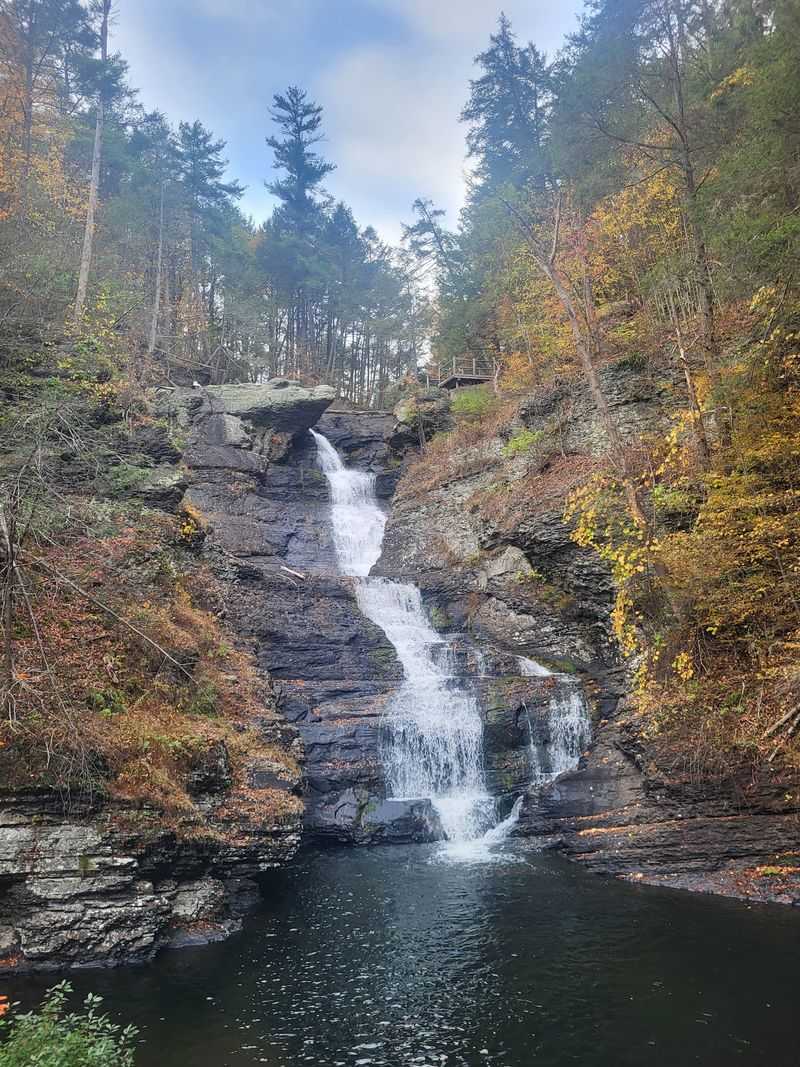
Raymondskill Falls takes the crown when you add up its tiers. The National Park Service calls it the tallest waterfall in the state, with its stacked cascades reaching roughly 150 feet combined.
So which one wins? Honestly, the answer depends on whether you count one big leap or a whole staircase of them.
Here’s the good news for road-trippers. You don’t have to pick a side, because both sit in the northeastern part of the state and make excellent day trips.
Raymondskill does have one big advantage in the bragging department. Its viewing platforms are a quick walk from the car, while Ganoga asks for a longer, rockier hike.
Whatever your stance, standing on that lower platform tends to settle the question for a few minutes. The sheer height speaks for itself, no tape measure required.
Three Roaring Cascades Stacked Like A Giant Staircase
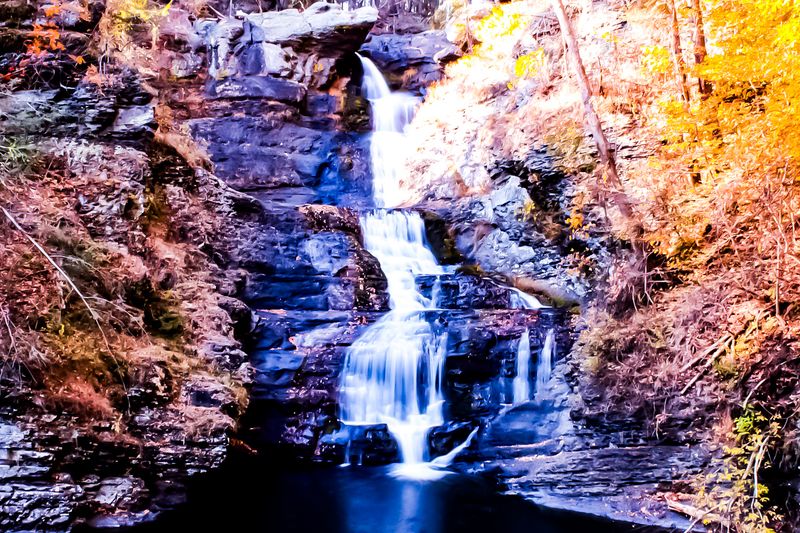
Water at Raymondskill Falls doesn’t make one tidy jump. It tumbles in three separate cascades, each with its own personality and its own rocky ledge.
The upper section spills into a pool, pauses just long enough to collect itself, then drops again. Below that, the main falls pour down in a wide, frothy sheet toward a lower pool.
That layered setup is what makes the place so photogenic. Every level offers a slightly different angle, and the rock walls frame each tier in a new way.
Flow changes with the seasons, so the falls never look exactly the same twice. After heavy rain or spring snowmelt, the cascades tend to roar with extra force.
During drier stretches of late summer, the water can thin out noticeably. The rock shapes become easier to see, which brings its own kind of beauty.
Many people head straight for the main drop and miss the smaller details. Take a moment to notice the little side trickles, mossy steps, and swirling pools between tiers.
The whole thing works like nature’s version of a fountain show. No timers, no music, just gravity doing an excellent job and a creek that never seems to run out of energy.
Your First Look Comes From The Top Of The Falls
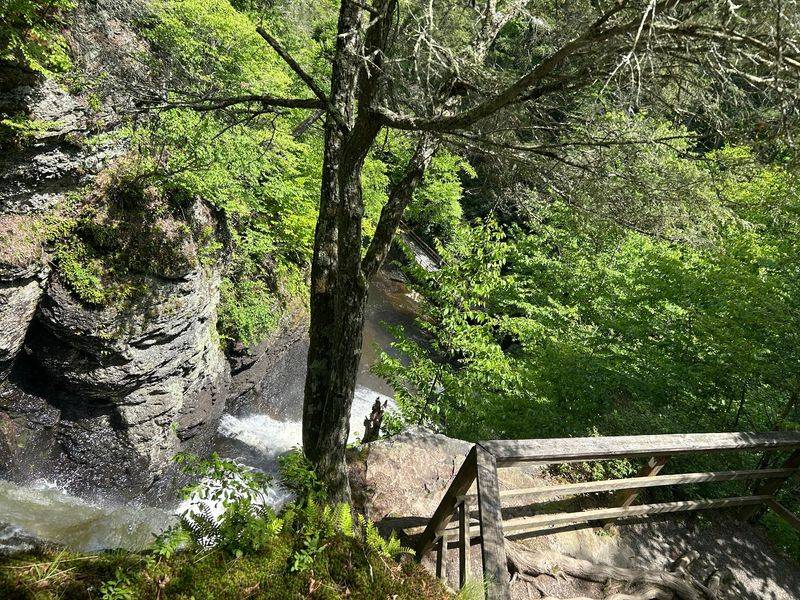
Short walks don’t usually come with this kind of reward. From the upper parking lot, a brief trail leads to the first observation platform at the top of the falls.
Up here, you look down as the creek rushes over the first ledge. The sound arrives before the view does, which builds the anticipation nicely.
The platform gives you a safe, railed spot to watch the water speed up and disappear over the edge. It’s an especially good angle for seeing how the creek gathers before each drop.
Families with younger kids often find this the easiest stop. The distance is short, though some rocky steps along the way still call for careful footing.
Photographers get a different kind of shot from this height. You capture motion and depth rather than the full sweep of the tiers below.
Plenty of visitors could stop here and feel satisfied. That would be a mistake, though, because the best scene is still waiting further down the path.
Think of the upper platform as the opening act. It’s a strong performance on its own, but the headliner sits a little lower on the hillside and deserves your full attention.
Save Your Best Camera Angle For The Lower Platform
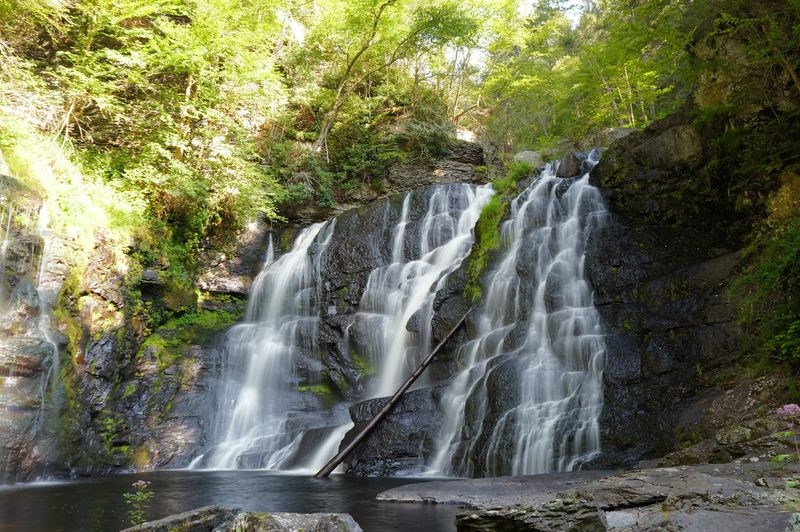
Here’s where the falls really show off. A slightly longer walk from the upper overlook brings you to the second observation platform, facing the main cascade head-on.
From this spot, you see the falls the way most postcards show them. The water spreads across the rock face, and the gorge walls frame everything neatly.
The trail between platforms includes stone steps and some elevation change. Take your time, because the path can get slick, especially after rain.
Once you arrive, the scale finally clicks. Looking up at the white water pouring down makes the tallest-in-the-state claim feel very believable.
This is the spot where people tend to linger longest. It’s easy to understand why, since the view rewards slow looking rather than a quick snapshot and a fast retreat.
Bring a lens cloth if you’re serious about photos. Mist from the falls can drift toward the platform, especially when the water runs high.
Early morning or late afternoon light often softens the scene nicely. Midday sun can create harsh contrast on the rocks, so timing your visit may help your pictures.
Either way, you’ll leave with something worth framing.
The Steep Path Down To Creek Level Is For The Bold
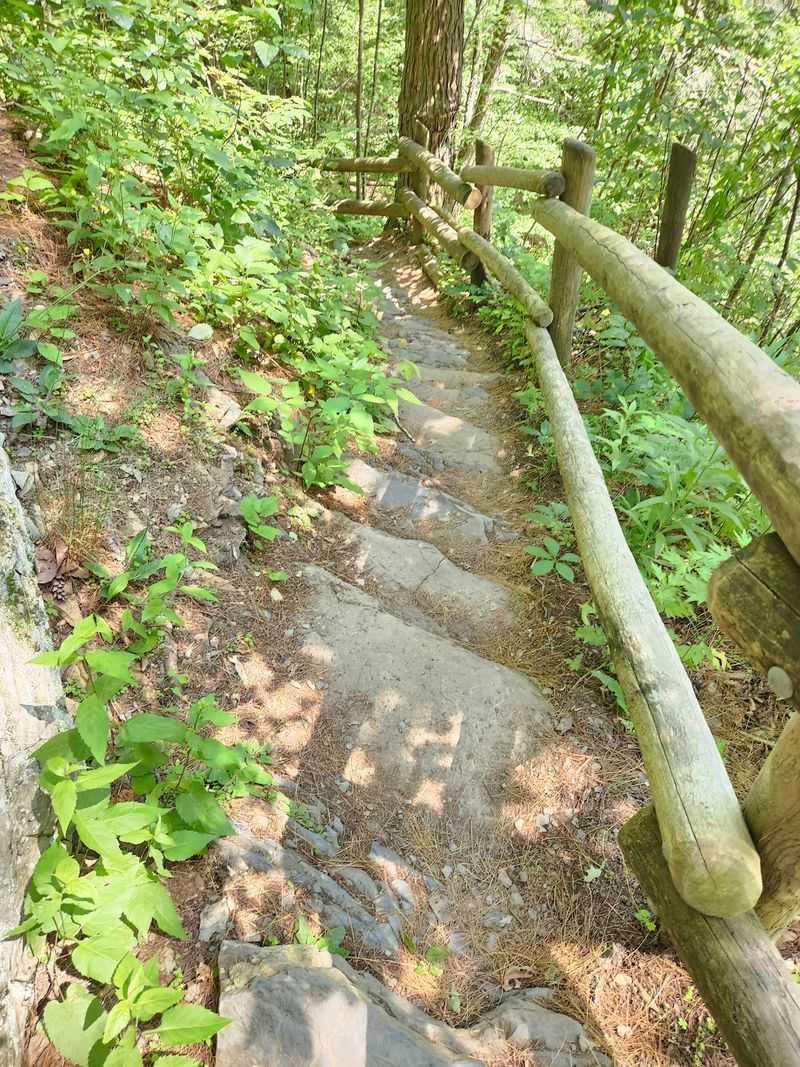
Ambitious hikers, this one’s for you. Beyond the two platforms, another trail continues down toward the bottom of the falls and creek level.
Be ready for a real change in difficulty. The descent is steep and rocky, and the climb back up to the parking areas will remind your legs who’s in charge.
Along the way, smaller waterfalls appear as you work toward the water. These little bonus cascades make the extra effort feel well spent.
Footing matters a lot on this stretch. Wet rocks and uneven steps can be slippery, so slow and steady beats fast and fancy.
Trail access can change from time to time. Sections have been closed in the past for maintenance or safety, so watch for posted signs and respect any barriers.
The full loop near the falls is short on paper, roughly under half a mile. Don’t let that number fool your calves, though, because the elevation does the heavy lifting.
Anyone who reaches the bottom gets a quieter, more personal view. The roar surrounds you, and the falls tower overhead in a way the platforms can’t quite match.
Good Shoes Matter More Than Good Cardio Here
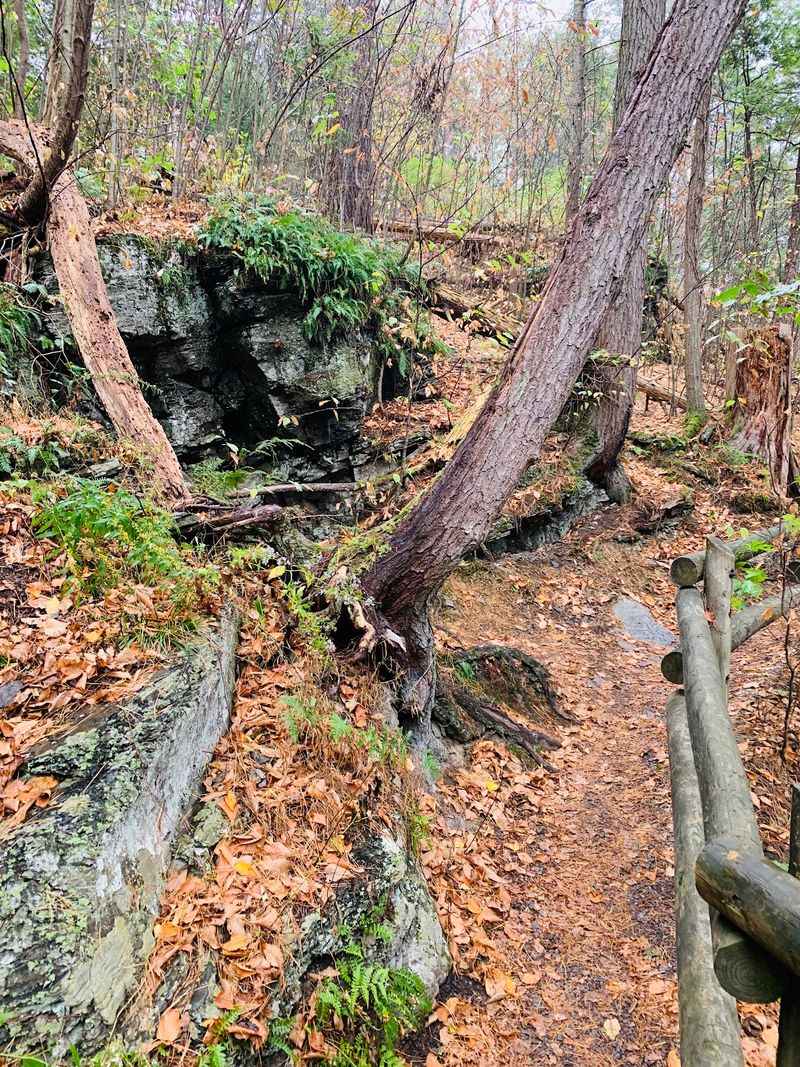
Flip-flops and this trail are not friends. The path to Raymondskill Falls features rocky steps, uneven ground, and stretches that turn slick with spray or rain.
Sturdy hiking shoes with good grip make a big difference. Even on the short walk to the platforms, solid footing keeps the outing relaxed instead of nerve-racking.
Walking sticks can help too, especially for anyone with tired knees or little ones in tow. The steps are often made of natural rock, and they don’t come in standard sizes.
The trail isn’t wheelchair accessible because of all those steps. A gravel route from the lower area has offered gentler access to the lower falls, so ask rangers about current conditions.
Weather plays a part in how tricky things get. After a storm, mud and wet leaves add an extra layer of challenge.
Dress for the woods rather than the mall. Layers help, since the shaded gorge can feel noticeably cooler than the open parking lot.
None of this should scare anyone off. A little preparation simply means more time enjoying the falls and less time worrying about every step.
Your ankles will thank you later.
Leave The Dog And The Swimsuit At Home
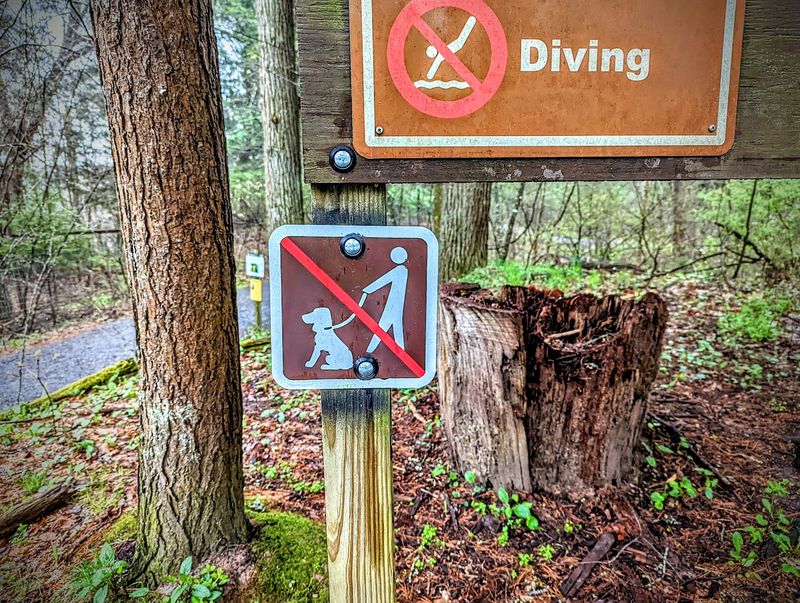
Two rules shape every visit here, and both are clearly posted. Dogs aren’t allowed on the Raymondskill Falls trail, and swimming is off-limits too.
Pet lovers sometimes learn this the hard way after a long drive. Plan ahead if your furry sidekick usually joins weekend adventures, because the rule applies to every pup.
The no-dogs policy helps protect the fragile trail and the wildlife that lives along the creek. It also keeps the narrow steps safer for everyone sharing them.
As for swimming, those pools at the base might look tempting on a hot day. Still, the rocks are slippery and the water moves with real force, so the ban makes plenty of sense.
Following the rules keeps the area in good shape for the next group. The National Park Service works hard to maintain the paths and platforms.
Other parts of the Delaware Water Gap National Recreation Area offer different options for pets and water play. A quick check with the park can point you toward those spots.
Think of this as a look-but-don’t-touch kind of attraction. The view is the entire point, and it’s more than enough to fill an afternoon.
Two Small Parking Lots And A Very Basic Restroom
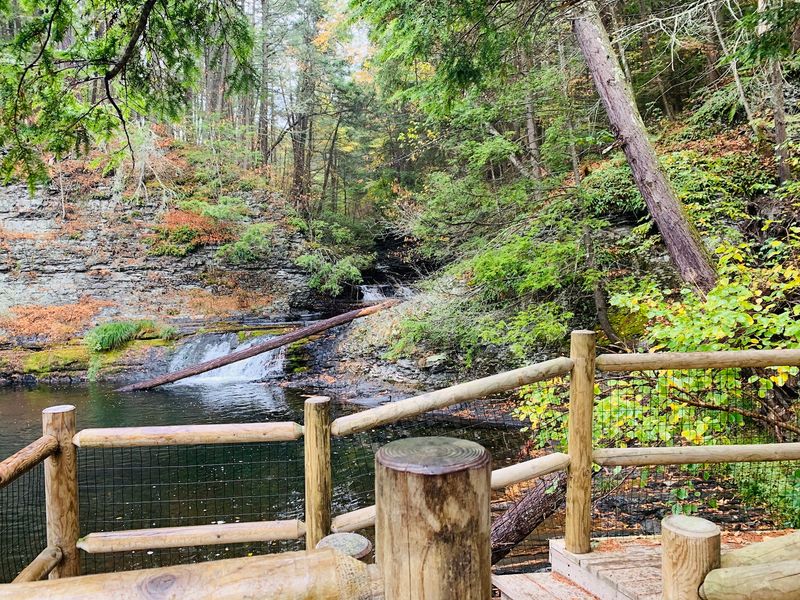
Parking is the one part of this trip that requires strategy. The falls have two small lots, one upper and one lower, and both are free.
The upper lot puts you closest to the top of the falls. It also has the restroom, a basic vault-style facility without running water.
Set your expectations accordingly. It does the job, but nobody’s writing poems about it, so a quick stop before the drive may be smart.
The lower lot works well for reaching the bottom section of the falls. Some visitors use the trail road from the upper lot to get there too.
For your GPS, the location is listed as Dingman Township, Pennsylvania 18337. Searching the falls by name usually brings you right to Raymondskill Road and the parking areas.
Spaces fill quickly, especially on weekends and pleasant summer days. Arriving early gives you the best shot at an easy spot.
If both lots are full, don’t block the road or squeeze into a sketchy shoulder. Circling back later or visiting on a weekday can save a lot of frustration.
Weekend shuttles have run in some past seasons, so check whether one is operating.
A Free Afternoon That Feels Like A Splurge
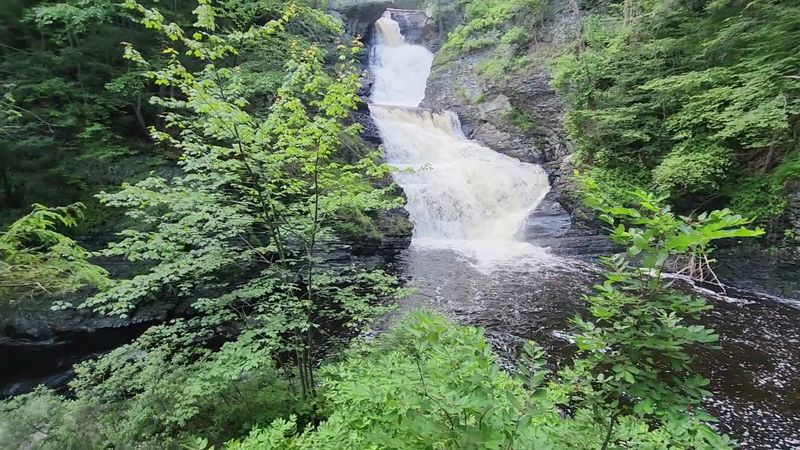
Few outings in Pennsylvania deliver this much scenery for zero admission. There’s no entrance fee for Raymondskill Falls, and parking costs nothing either.
That makes it a smart pick for families watching their budget. Retirees looking for a scenic drive with a real payoff will appreciate it too.
Pack a few snacks and a water bottle, since there’s no concession stand at the falls. A cooler in the car can turn the trip into an easy picnic afternoon nearby.
The savings leave room in the budget for lunch in Milford or fuel for more exploring. The surrounding recreation area holds plenty of other trails and overlooks.
Free also means popular, of course. Expect company on nice weekends, and plan your arrival time with that in mind.
Weekday mornings often feel calmer, giving you more space on the platforms. You’ll get cleaner photos and fewer people lining up for the best angle.
Honestly, it’s rare to find a natural landmark this impressive with no ticket attached. Treat it kindly, pack out your trash, and it’ll keep being a bargain for everyone who follows.
Who Gets The Most Out Of This Waterfall
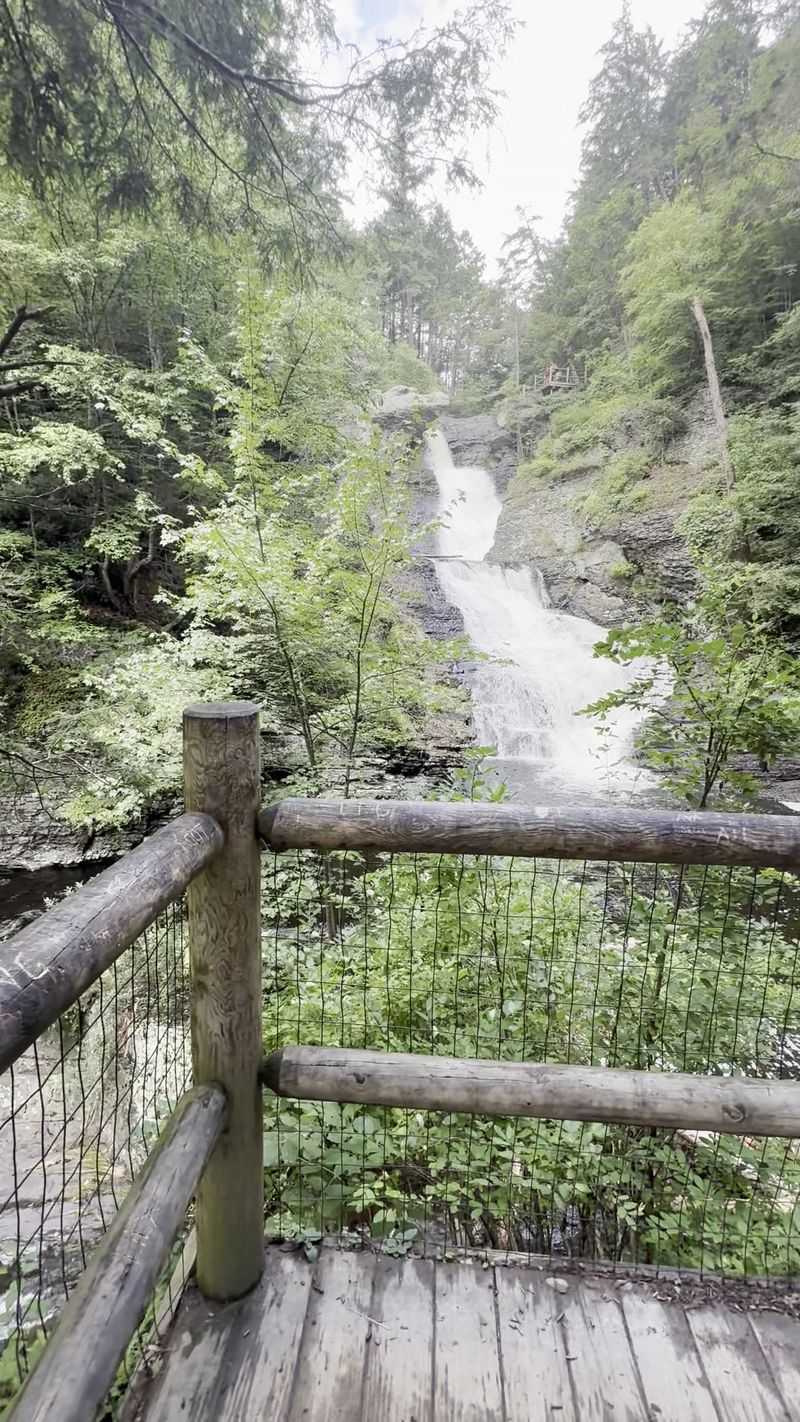
Casual walkers might be the biggest winners here. The short trail to the upper platform gives a dramatic view without demanding an all-day trek.
Photographers have plenty to work with too. Three tiers, two platforms, and changing light create endless options for anyone who loves composing a shot.
Couples looking for a scenic date will find the lower platform hard to beat. Standing above rushing water with forest all around feels pretty romantic, even on a cloudy day.
Families with school-age kids usually manage the main loop well. Just keep a close hand on little ones along the rocky steps and near the railings.
Experienced hikers can push down to creek level for a tougher workout. The steep climb back up adds some challenge to an otherwise quick visit.
Visitors with limited mobility may find the steps difficult. Calling ahead to the park about accessible options is a good idea before making the drive.
Road-trippers passing through northeastern Pennsylvania can easily slot this in as a quick stop. Even an hour here leaves you with something worth talking about on the ride home.
A Short Trail With A Very Tall Reward
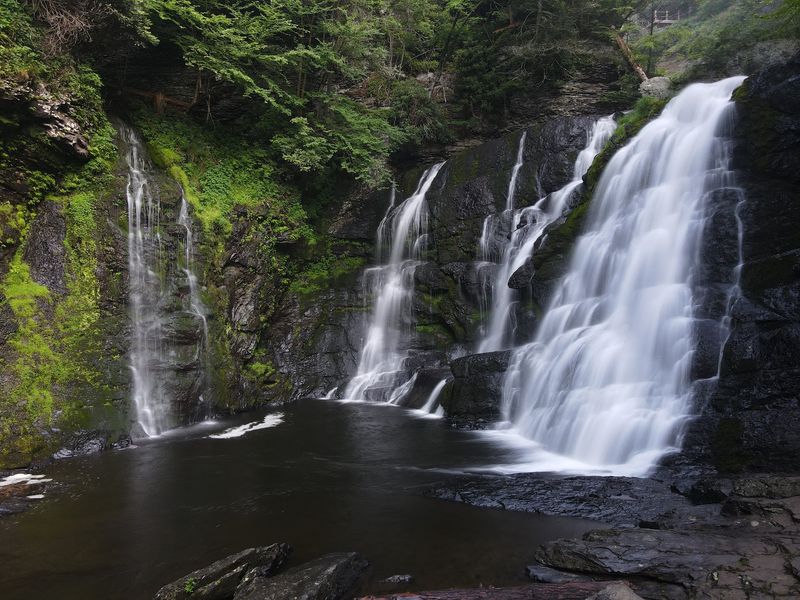
So, is it worth the drive? For anyone who loves big water and quick payoffs, Raymondskill Falls makes a strong case.
You get the state’s tallest waterfall, two solid viewing platforms, and a trail short enough for a lunch-break adventure. The bonus path to creek level adds challenge for anyone craving more.
The trade-offs are easy to manage with a little planning. Arrive early for parking, wear real shoes, and leave the dog with a sitter.
Seasons change the experience in fun ways. Spring brings stronger flow, summer offers deep green shade, and autumn wraps the gorge in warm color.
Winter conditions can make the steps icy and risky. Trail access and hours may shift with weather, so check ahead with the park before you head out.
Pair the visit with a stroll through nearby Milford or another stop in the Delaware Water Gap National Recreation Area. It’s easy to stretch a quick waterfall trip into a full, relaxed day.
Some attractions make you work hard for the good part. This one hands it over after a few minutes of walking, then quietly dares you to come back next season.