10 Missouri Destination That Feel Like You Discovered Them Before Everyone Else
A spring in the Ozarks pushes out 81 million gallons of clear blue water every day, right beside an old red mill.
I rolled my eyes at first. Then I checked the numbers, and okay, now you’ve got my attention. The proof kept stacking up.
One spot has granite boulders lined up like circus elephants, with names carved by 19th-century miners. Another has a waterfall spilling off a ledge 163 feet wide.
Missouri apparently hides this stuff in plain sight, and I’ll admit, that’s a good one.
So, which of these places will you brag about finding first?
1. Elephant Rocks State Park
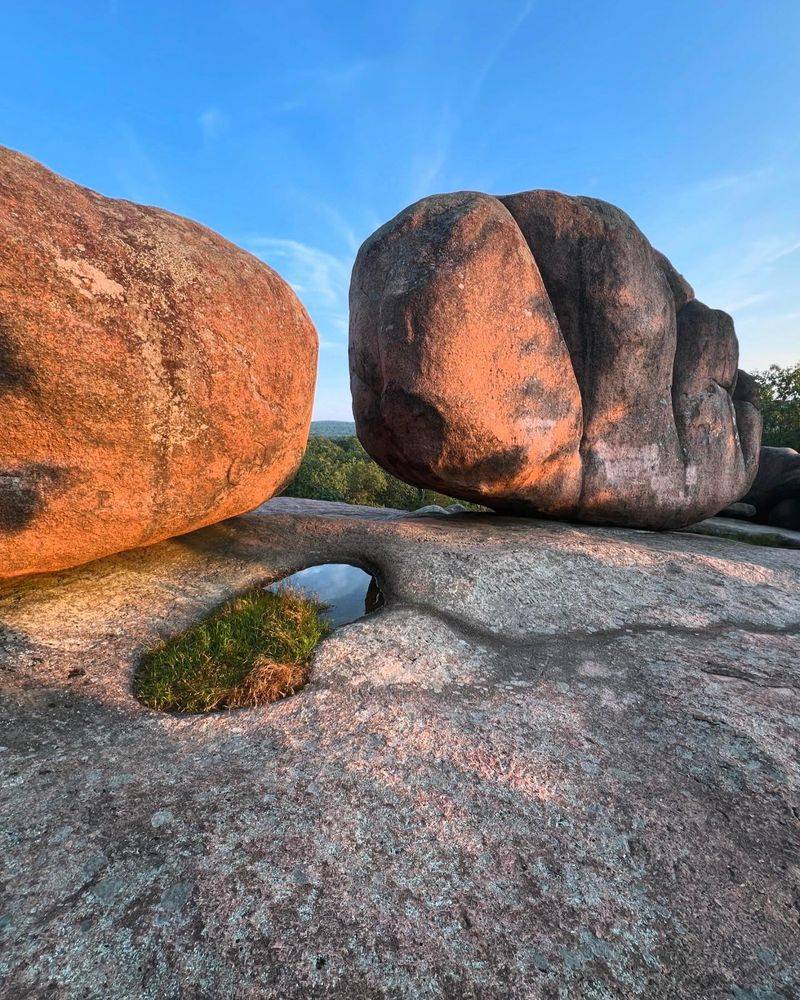
Granite boulders lined up like circus elephants? That’s not a nickname somebody stretched to make it work. The rocks really do resemble an enormous stone parade.
These rounded formations began as granite about 1.5 billion years ago.
Weathering gradually exposed the boulders, some of which tower above nearby visitors. The famous giant nicknamed Dumbo measures roughly 27 feet high, with an estimated weight of 680 tons.
Follow the one-mile Braille Trail to see the main formations.
Designed for visitors with visual and physical disabilities, its paved route includes interpretive panels with Braille text, resting places, and sections marked with guide ropes. Some slopes are steeper, so individual accessibility needs still matter.
Beyond the paved path, spaces between rocks invite exploration. Fat Man’s Squeeze is a narrow passage, while The Maze takes you through scattered granite blocks.
Names carved by nineteenth-century quarry workers add an unexpected historical detail.
A spur leads toward an old railroad engine house, once used when quarry trains transported cut stone. Granite from this region was used in St. Louis landmarks, including City Hall and Eads Bridge.
Picnic areas and a playground make it easy to stay longer. A food truck operates on selected weekends, but packing lunch works just as well. For this remarkable stone parade in Missouri, head to 7406 Highway 21, Belleview, MO 63623.
2. Ha Ha Tonka State Park
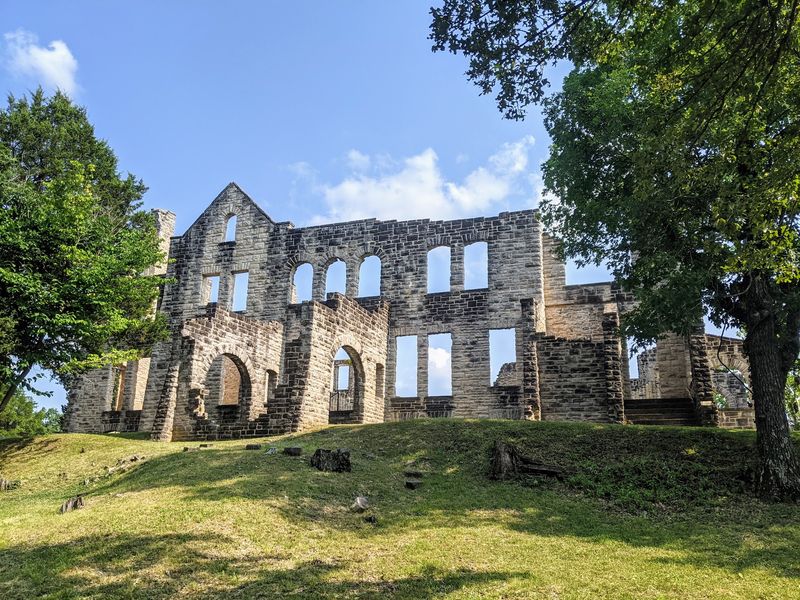
A Kansas City businessman wanted a European-style castle on a bluff. Over a century later, its stone shell still stares out over the Lake of the Ozarks.
Construction began in 1905, and the family completed the ambitious residence in 1922, following years of meticulous work on the sandstone structures.
What remains today is a dramatic collection of stone walls, arched openings, and an extraordinary view over the lake. The nearby stone water tower is another reminder of the estate’s elaborate design.
The Castle Trail provides a paved approach from the parking area. Benches and interpretive displays make it easy to appreciate the architecture without committing to a lengthy hike.
Then the landscape changes completely. Ha Ha Tonka is known for karst geology: caves, sinkholes, rocky bluffs, and an enormous natural bridge. That bridge rises more than 100 feet and spans a passage approximately 60 feet across.
Below the castle, Ha Ha Tonka Spring sends roughly 48 million gallons of water daily toward the lake. Boardwalks and trails offer views of the blue water, while the route down from the upper bluff includes plenty of steps.
Kayak rentals operate seasonally, and picnic areas offer a scenic break between explorations. Plan separate stops for the castle and spring if you prefer shorter walks.
The park’s entrance is at 1491 State Road D, Camdenton, MO 65020.
3. Alley Spring & Mill
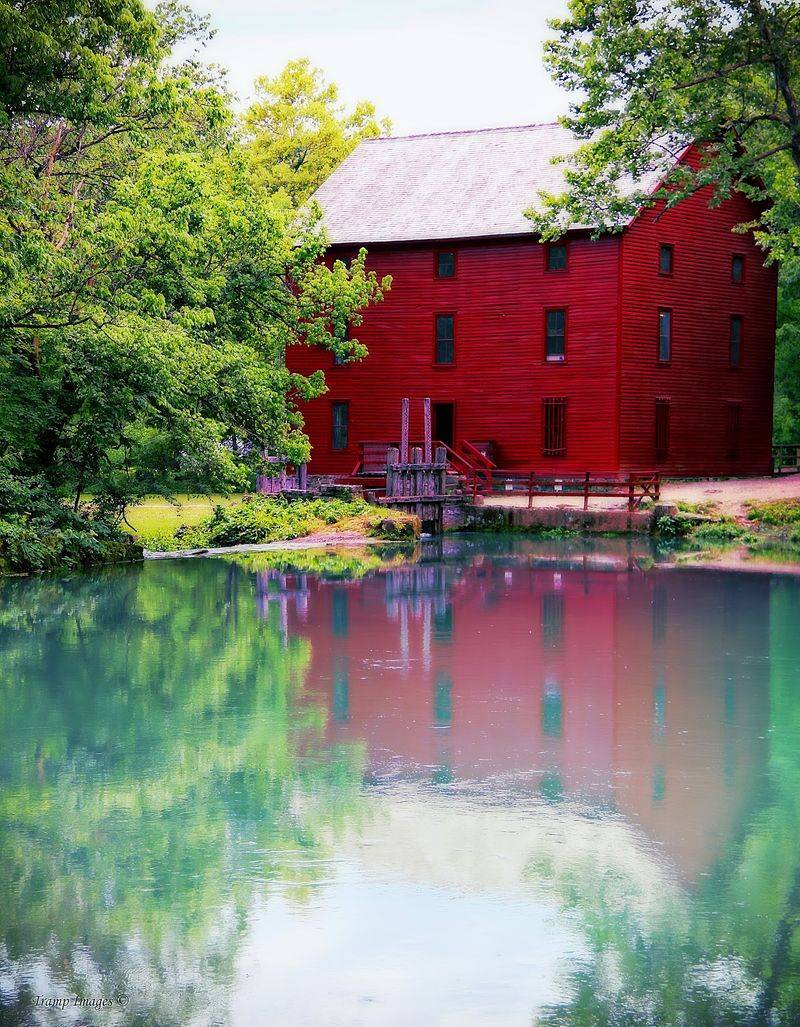
Eighty-one million gallons. That’s how much clear blue water Alley Spring releases on an average day, and the view still looks peaceful enough for an afternoon beside the water.
Just west of Eminence, the spring pours from limestone bedrock into an astonishingly blue pool, framed by green trees and rocky bluffs.
Standing beside it is the bright red Alley Roller Mill, completed in 1894. The contrast between the building and spring is practically designed to stop anyone carrying a camera.
The mill once used the spring’s flow to power machinery that processed grain for surrounding Ozark communities.
Inside, historic equipment helps explain how flour production worked before modern industrial methods became widespread.
A walking path circles the spring area, and two hiking trails begin near the mill. Stop by the neighboring general store building for additional information when it is staffed.
There’s an important difference between the grounds and the mill interior.
The outdoor spring can be enjoyed beyond the guided-tour season, but the historic mill generally opens from Memorial Day weekend through October, with daytime tours led by park rangers.
Nearby Jacks Fork River access, picnic spots, and a campground offer reasons to extend the trip. Keep swimming and fishing for designated river areas; the spring itself is protected.
For the red mill, use 12185 Alley Hollow Road, Eminence, MO 65466.
4. Grand Falls
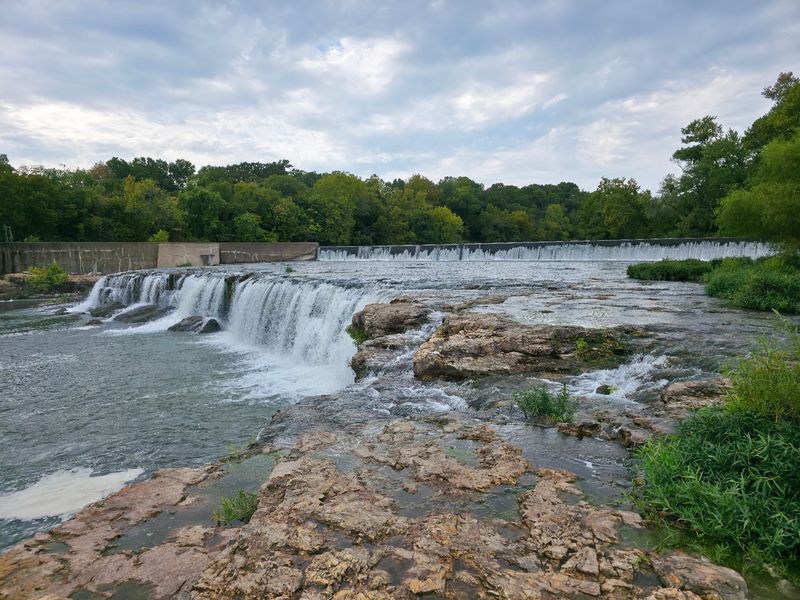
Most waterfalls are tall and skinny. Grand Falls went the other direction and spread out across a ledge 163 feet wide.
On Shoal Creek in Joplin, the waterfall drops about 12 feet over a solid shelf of chert. It’s recognized as the state’s largest continuously flowing natural waterfall, with a broad curtain of water spilling across the dark rock.
The best part is how quickly the scenery appears. Riverside Drive runs close to the creek, so you can stop for a look without dedicating a whole day to hiking.
The rock shelves provide distinctive views, although the surfaces become slippery when wet. Below the cascade, natural pools draw swimmers during warm weather.
Swimming is permitted, but creek levels and currents change, so choose calmer conditions and keep an eye on the water. Anglers also visit Shoal Creek, with regular fishing rules applying.
There are no developed visitor facilities beside the falls. Bring what you need for a short stop and save restroom breaks for elsewhere in Joplin.
The broad ledge looks especially striking after rainfall, when water covers more of its width. Sunny afternoons bring reflections, while early morning light offers a quieter atmosphere for photography.
It’s a remarkably dramatic sight for something so close to the city. The turnoff for this Missouri waterfall is along 5685 Riverside Drive, Joplin, MO 64804.
5. Dillard Mill State Historic Site
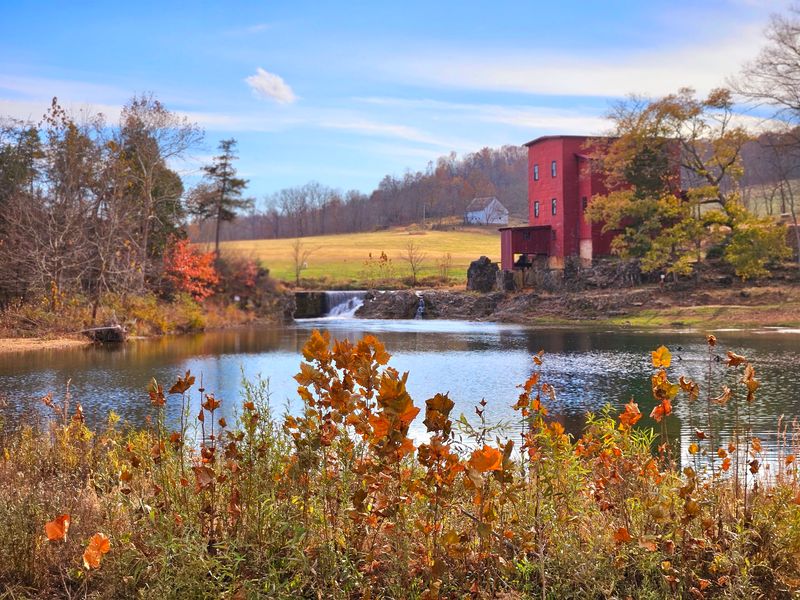
Old machines usually sit behind ropes looking tired. At Dillard Mill, the restored equipment can still be set in motion during a guided tour.
The red wooden mill stands beside Huzzah Creek, where water spills over a rock dam and flows through wooded Ozark countryside. The building was completed in 1908, replacing an earlier mill at the same site.
Its original machinery includes a turbine, belts, and roller-milling equipment used to grind grain. During demonstrations, the machinery begins turning again, turning a quiet historic building into a working lesson in rural industry.
The structure also tells a story of practical innovation. Instead of relying on older millstones, its builders installed steel rollers, a more modern approach to processing wheat.
Tours run at scheduled times, with more days offered from May through October and a shorter schedule in cooler months. Between guided sessions, the first floor may be explored with staff present.
Outside, a woodland trail climbs through oak and hickory trees toward viewpoints over the mill. Picnic tables and a playground make the site comfortable for families, while the creek adds an attractive setting for a slower afternoon.
The historic general store building gives the visit another piece of local history. Plan time for both structures rather than seeing only the red facade. Your route leads to 142 Dillard Mill Road, Davisville, MO 65456.
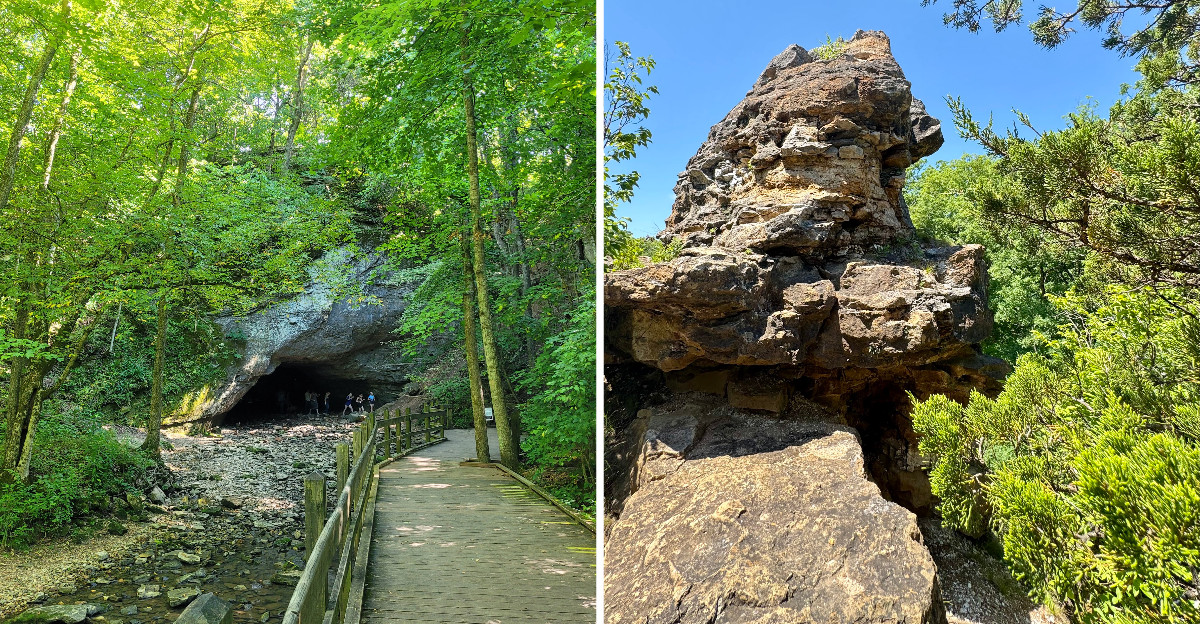
6. Rock Bridge Memorial State Park
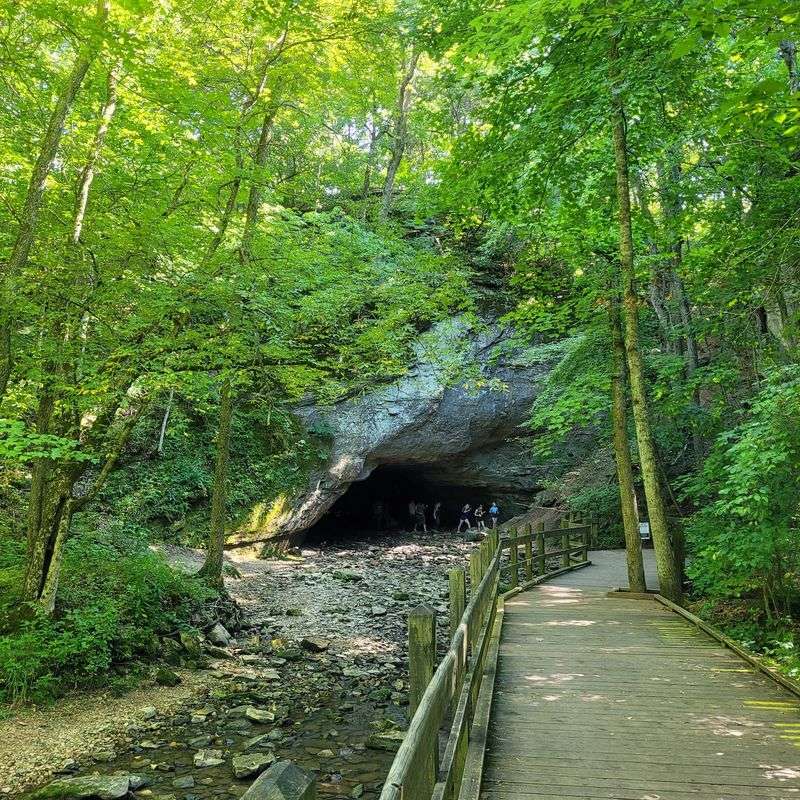
Water spent thousands of years shaping a stone bridge just outside Columbia. Your job is much easier, since you only have to follow a boardwalk to see it.
The park’s namesake is a natural limestone tunnel about 125 feet long, formed within a landscape of caves, springs, and sinkholes.
Devil’s Icebox Trail leads across bridges and wooden walkways toward the rock bridge and nearby underground features.
At the Devil’s Icebox opening, a rush of cool air hints at the cave system beneath your feet. The deeper Devil’s Icebox Cave is reserved for its resident bats, but nearby Connor’s Cave remains open for self-guided exploration.
Connor’s Cave extends about 166 feet and contains a stream, so exploring requires a flashlight, sturdy footing, and attention to water conditions. Staying with the boardwalk is an appealing alternative for an easier outing.
Beyond the cave area, trails explore grassland, wooded hillsides, and rocky creek valleys. Some routes permit mountain biking when conditions allow, while others are intended for walking.
The park also offers picnic spots, a playground, and access to the wooded Gans Creek area. It feels unexpectedly spacious for a destination so close to a university town.
A short visit can focus on the bridge, while a longer one can include beautiful forest trails. Begin at 5901 South Highway 163, Columbia, MO 65203.
7. Big Spring – Ozark National Scenic Riverways
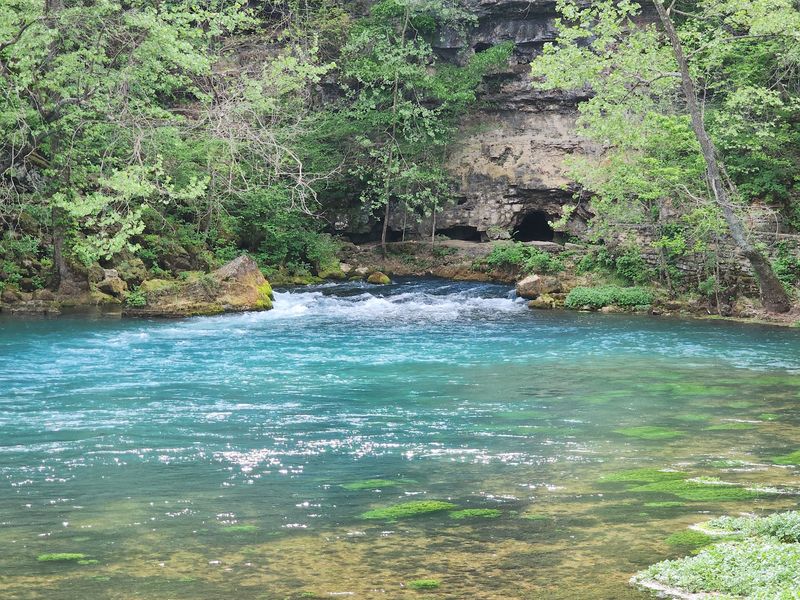
Bragging rights don’t come much bigger than this.
Big Spring is among the largest freshwater springs in the United States, sending an average of roughly 286 million gallons of water into the surrounding landscape each day.
That volume gives the spring an almost unbelievable appearance.
Turquoise water rushes out of a rocky hillside, then flows toward the nearby Current River. Minerals dissolved in the water help produce its remarkable color.
Better still, you can appreciate the scene without a strenuous hike. An accessible walkway connects the parking area with spring viewpoints, and benches provide places to linger.
The spring lies roughly three miles south of Van Buren, within Ozark National Scenic Riverways. Nearby trails allow longer walks through forest and along the river, including the accessible Slough Trail.
Camping is available in the Big Spring area, with electric and nonelectric sites. Picnic grounds and historic stone buildings constructed by the Civilian Conservation Corps add reasons to explore beyond the water itself.
Spring flows change with rainfall, so the exact volume is an average rather than a daily guarantee. The sound and color make the spring fascinating in different seasons.
For a nature outing in Missouri, this is one of the most extraordinary scenes you can reach after a short walk.
Follow Highway 103 south of Van Buren, MO 63965, to the Big Spring entrance.
8. Johnson’s Shut-Ins State Park
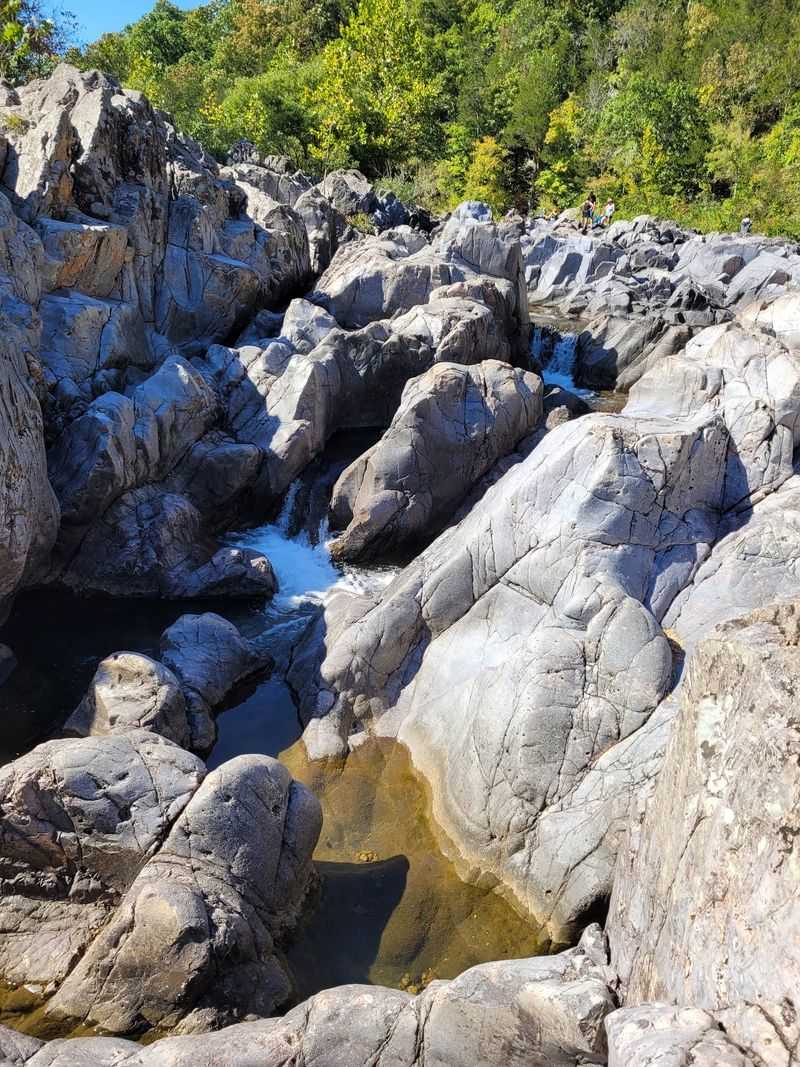
Mother Nature built a waterpark here long before anybody invented the lazy river.
The East Fork Black River gets channeled through ancient rock and forms chutes, pools, and miniature waterfalls.
The rocks are more than a billion years old. Resistant igneous stone guides the current into narrow passages, producing the smooth channels that make the shut-ins so distinctive.
During suitable water conditions, visitors can wade, swim, and enjoy the natural pools. A paved walkway and viewing platform provide a chance to see the formations before deciding whether to enter the water.
The shut-ins area has carefully managed access. Its parking lot fills early on summer weekends, and entry to the water is restricted whenever the flow becomes too strong.
Food, pets, and coolers belong outside the designated shut-ins recreation area.
A separate hiking adventure awaits on the Scour Trail, which crosses rocky terrain shaped by rushing water and offers an unusual view of the St. Francois Mountains’ geology.
Other park trails connect with forested hillsides and the broader Ozark Trail network.
Camping, cabins, and picnic facilities make longer stays possible. Changing rooms and restrooms near the day-use area simplify a family outing.
Even without a swim, the sight of water threading through those ancient rocks is completely captivating, especially after spring rains. Set your destination as 148 Taum Sauk Trail, Middle Brook, MO 63656.
9. Onondaga Cave State Park
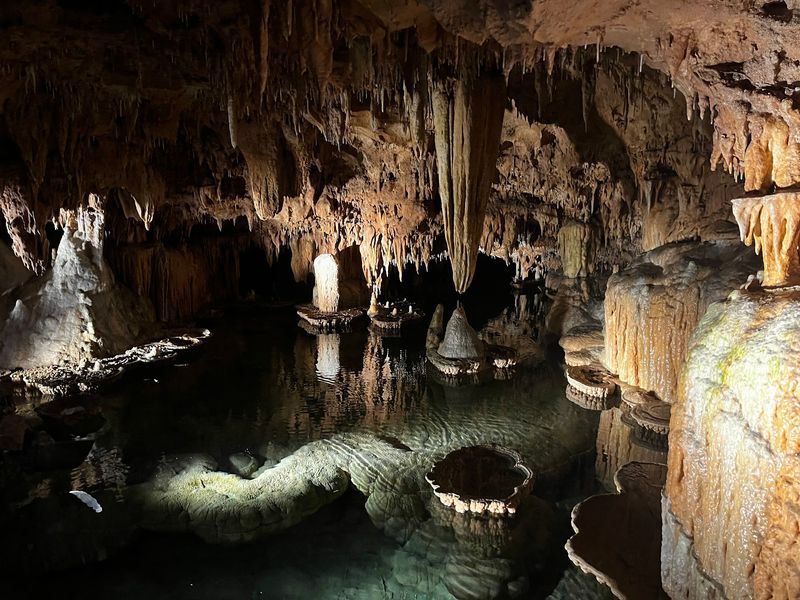
Lily pads usually float on ponds. In this cave, formations nicknamed lily pads are made of stone, which is a much stranger trick.
Onondaga Cave sits beneath a wooded state park near Leasburg.
Guided tours follow lighted, paved paths past enormous columns, delicate formations, and a stream flowing through the underground chambers.
Look for the Lily Pad Room, the King’s Canopy, and the Twins, each named for distinctive mineral formations created over immense spans of time. The cave is recognized as a National Natural Landmark.
The standard walking tour covers just under a mile and lasts about 75 minutes. Underground temperatures remain around 57 degrees throughout the year, making a light jacket worthwhile.
Tour availability is seasonal. In 2026, Onondaga Cave tours operate daily from April through October, while separate Cathedral Cave tours are scheduled on summer weekends. Reserving ahead is useful during school-trip season.
Above ground, the park provides wooded trails, camping, picnic areas, and access to the Meramec River. That variety makes it easy to combine underground exploration with a quiet afternoon outdoors.
The guided route is a better introduction than attempting to find cave passages independently. Afterward, take time to enjoy the park’s riverside landscape before leaving.
The surrounding woodland makes a contrast with the illuminated rooms underground, giving you two different worlds to explore. For underground scenery, travel to 7556 Highway H, Leasburg, MO 65535.
10. Pinnacles Youth Park
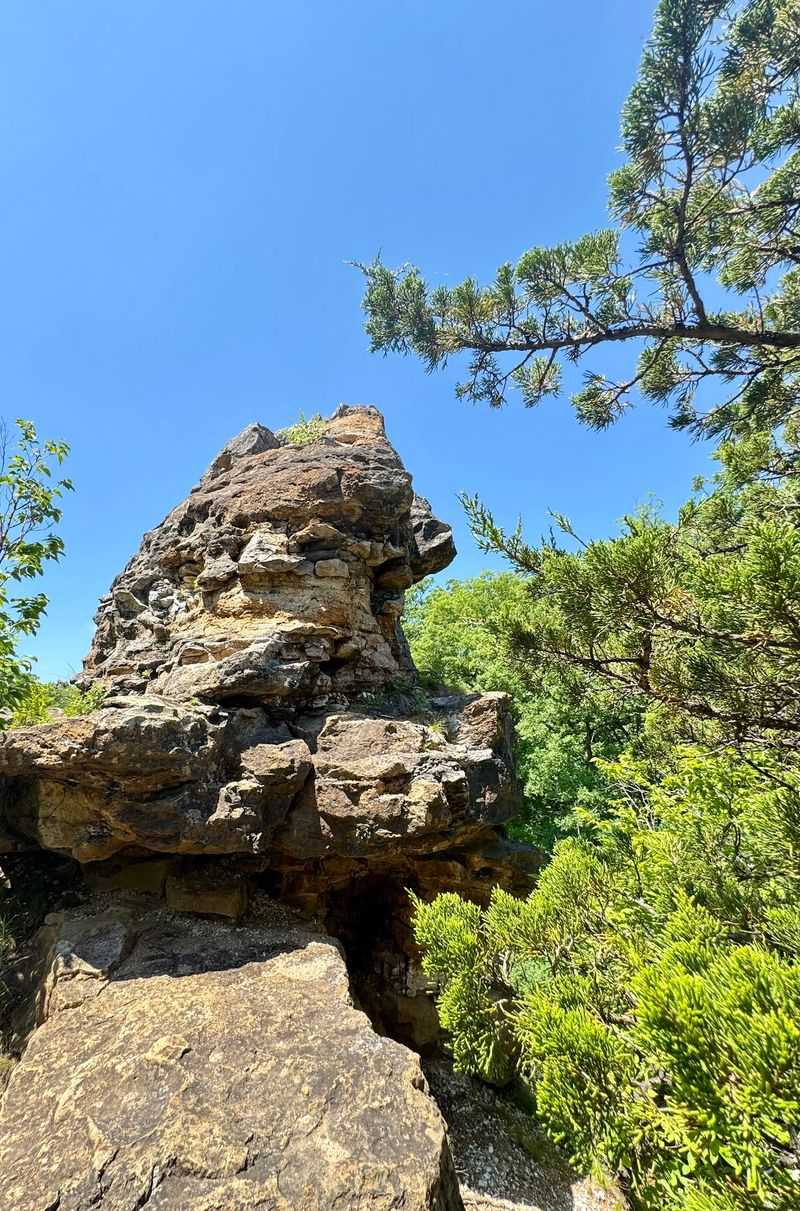
A jagged rock ridge roughly 80 feet high rises from the countryside north of Columbia. Its limestone spires look like a row of giant teeth above the forest.
Pinnacles Youth Park protects around 70 acres of privately maintained land that welcomes the public for daytime visits.
The property was dedicated to the youth of Boone County in 1965 and is cared for through donations and volunteer work.
The centerpiece is a narrow ridge between the Silver Fork and Kelley Branch streams. From below, its jagged towers look almost impossible to climb.
Trails lead toward the rock formations, but the steepest sections demand sure footing and care near exposed edges.
If climbing isn’t your plan, follow the lower paths beside the creek and admire the limestone from below. Rock overhangs, woodland, and clear stretches of running water give the park plenty of scenery at ground level.
The main walking route is approximately a mile, although exploring the smaller paths can make the visit longer. Picnic shelters, grills, and basic restrooms are available for day visitors.
This isn’t a conventional state park: youth groups can arrange overnight camping, while regular public access is for daytime recreation, generally from 8 a.m. until sunset.
It’s one of northern Missouri’s most surprising limestone landscapes, with the ridge providing a dramatic finish. Find the entrance at 850 E Pinnacles Road, Sturgeon, MO 65284.