Nothing Beats A Hike Through This Peaceful 1,700-Acre Maryland Sanctuary
Hold on, a bee so rare it had been recorded only once before in Maryland?
Scientists found a whole cluster of its nests in one sandy patch of woods. The bee is called Perdita bradleyi, and it’s very, very small.
Okay, I need a moment to appreciate that tiny comeback story.
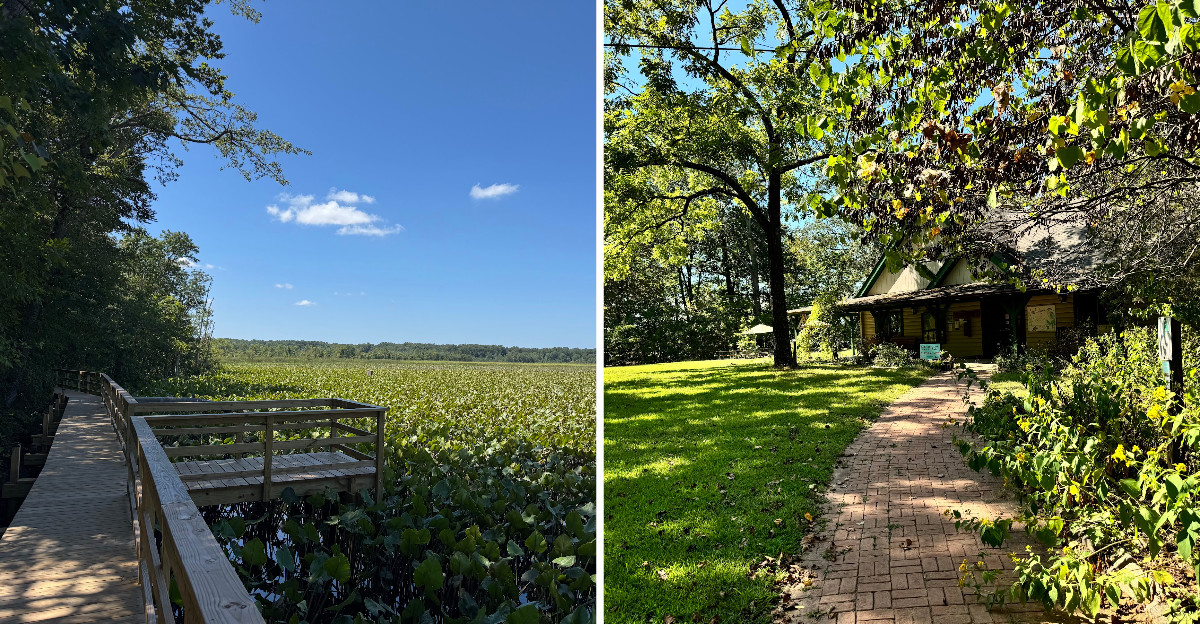
The sandy spot it calls home is a micro-desert, sitting right beside one of the largest freshwater tidal wetlands on the East Coast. Desert and marsh are practically neighbors.
Then there are the trails. Nearly 17 miles of them wind past river overlooks, beaver ponds, and boardwalks over the marsh.
How many of those steps could you take before lunch?
Over 1,700 Acres Of Quiet Are Waiting For Your Boots
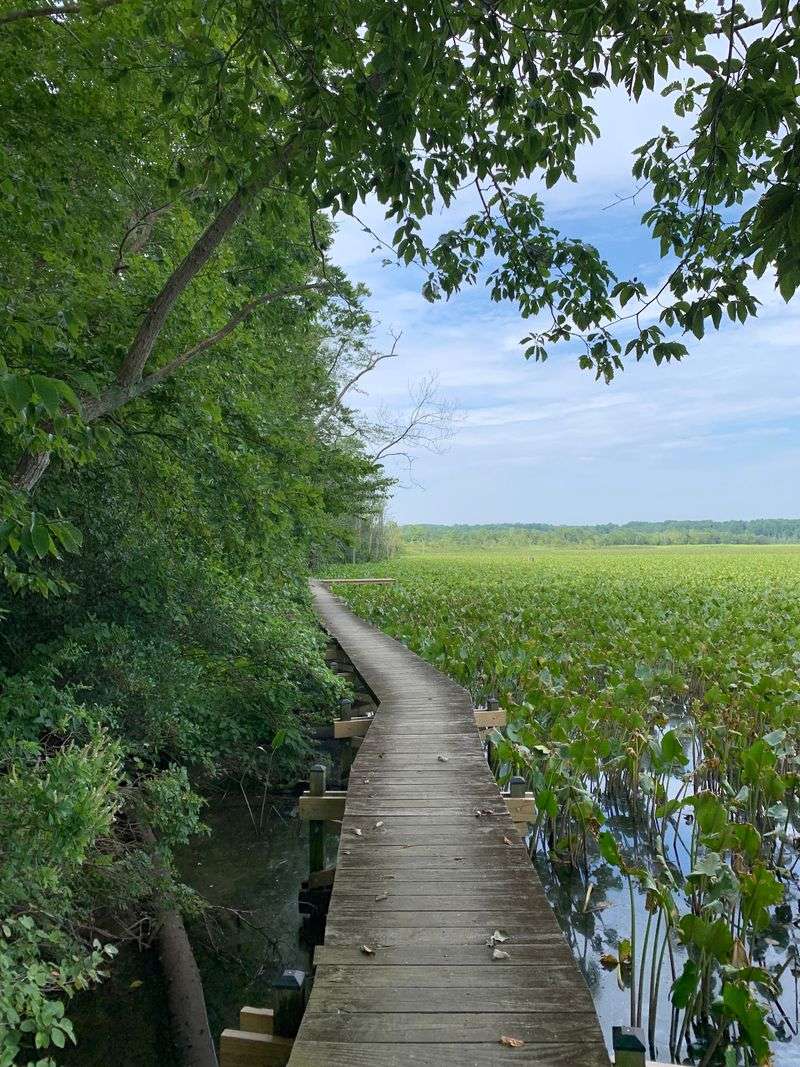
Jug Bay Wetlands Sanctuary protects more than 1,700 acres along the tidal Patuxent River. That’s a lot of room for a long, unhurried walk.
Established in 1985, it encompasses several protected properties in southern Anne Arundel County.
Most hikers begin at the Sanctuary Proper and McCann Wetlands Center. This area covers roughly 452 acres, including River Farm.
Habitats change fast: tidal marshes, forested wetlands, creeks, meadows, upland woods, and even dry sand barrens and seasonal vernal pools.
There’s history beneath the forest, too. More than 80 archaeological sites have been identified across the protected landscape, reflecting thousands of years of human activity near the Patuxent.
Today, that cultural heritage shares space with thriving natural habitats.
The sanctuary is also part of the Chesapeake Bay National Estuarine Research Reserve in Maryland. That means scientific study and environmental education are as much a part of the landscape as hiking.
Annapolis and the Washington area are within easy reach. Trade traffic for birdsong, choose a loop, and enjoy the change of pace.
Boardwalks Put You Right Over The Marsh
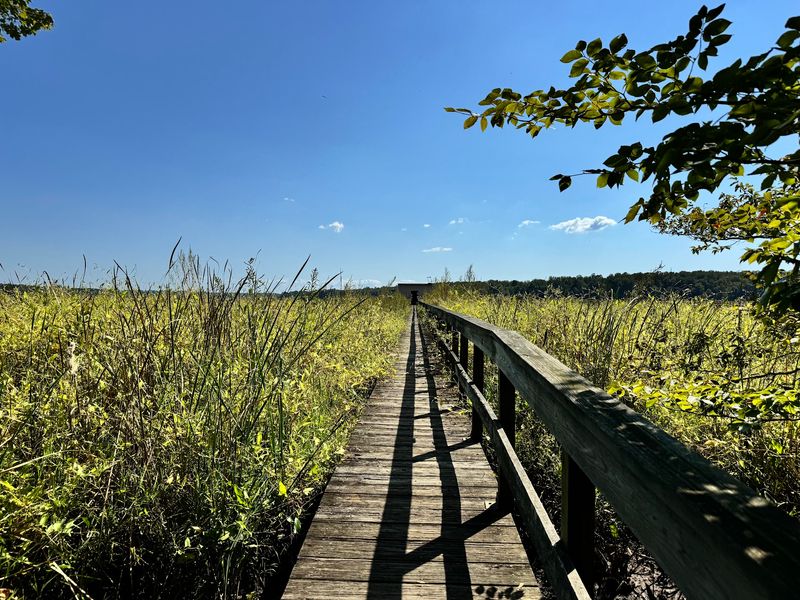
Some trails go around the wetland. The best ones here bring you close enough to study the marsh grasses and shallow channels without stepping into the water.
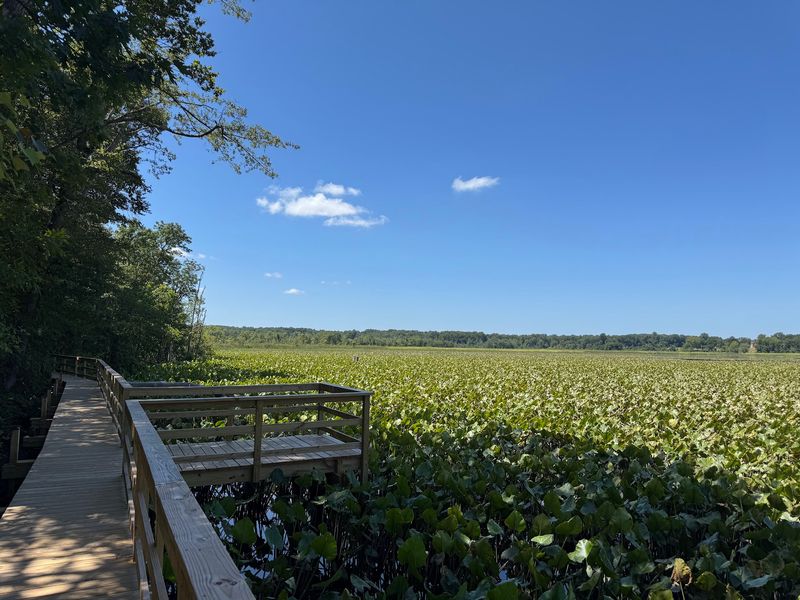
The Marsh Boardwalk passes through swamp, scrub-shrub, and tidal marsh habitats. Its roughly one-third-mile path reveals changing plant communities.
The main Marsh Boardwalk is currently closed, but other trails and viewpoints remain available.
A restored crossing at Two-Run Creek connects trails toward River Farm and Emory Waters, where the creek threads through a wooded floodplain.
From the observation deck, scan for birds and winding channels between patches of vegetation.
Plants deserve a close look here. Wild rice grows in the freshwater marsh, while pickerelweed produces purple flowers during the warmer months.
Their stems and leaves provide shelter and food for insects, fish, and visiting birds.
Tides reshape the view through the day. An exposed muddy bank in the morning can disappear beneath shallow water later on.
Bring binoculars and allow time for small discoveries. The marsh makes quiet moments interesting.
Pick A Trail, Any Trail, There Are Nearly 17 Miles
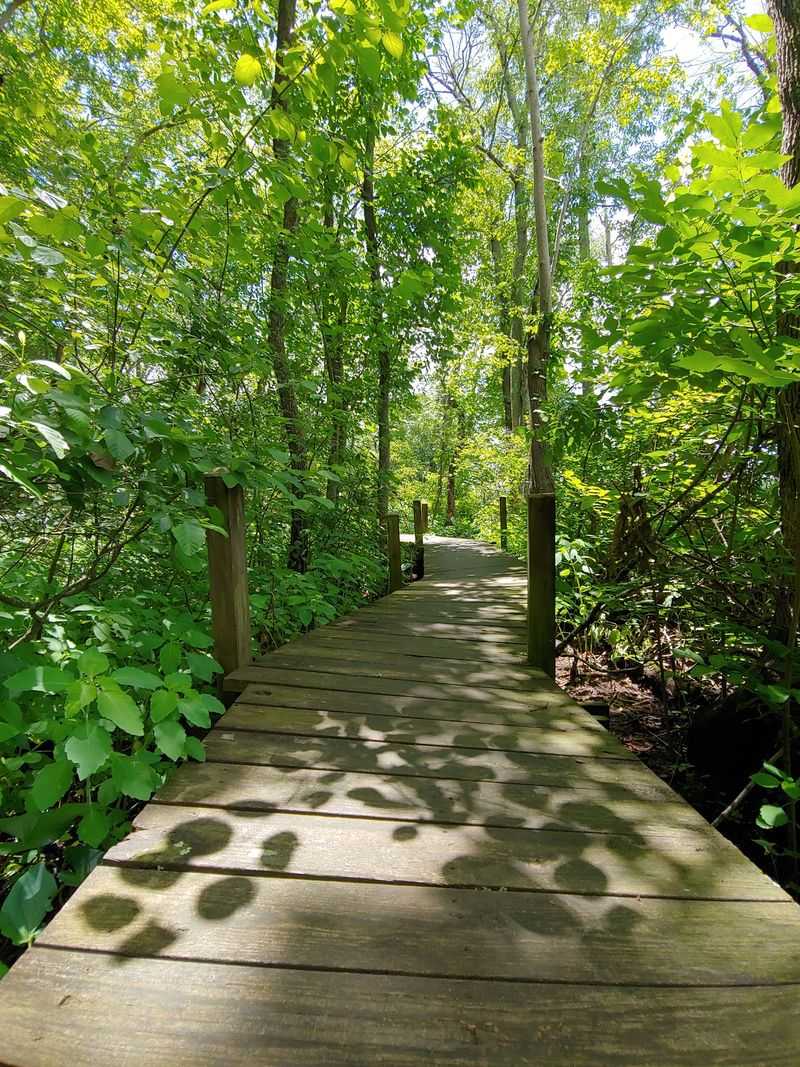
Nearly 17 miles of trails are accessible from the Sanctuary Proper and its connected properties. Your legs get to decide how ambitious today feels.
A great first pick is the Otter Loop, marked in yellow. It runs about 2.2 miles, which suits a relaxed morning or a family outing.
The green loop covers 1.2 miles, while the longer white loop extends about 3.8 miles through varied woodland.
Other routes follow railroad corridors or lead toward Emory Waters Nature Preserve via the Farm Connector.
The shortest route from the center to Jug Bay Pier is about 4.3 miles round trip. The pier offers river views, rather than a public boat launch.
Footwear matters more than you’d think. Wetland trails can get muddy after rain, and roots and damp boards reward careful steps.
The sanctuary also offers a self-guided tour of the yellow loop, with downloadable material and audio recordings introducing the habitats along the way.
That can turn an ordinary walk into an entertaining lesson about the surrounding landscape. Bring a map and check trail access before setting out. Bicycles aren’t allowed on the paths.
Birders, Bring Your Binoculars And Your Patience
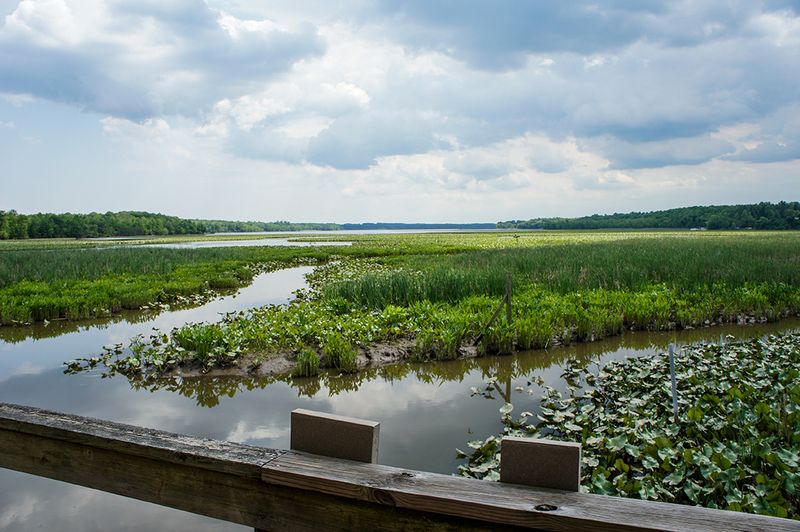
In 2016, Audubon recognized this Maryland sanctuary as an Important Bird Area. The birds had already made a strong case for it.
Least bitterns, soras, and Virginia rails inhabit its dense marsh grasses, though spotting one takes patience.
Fair warning, those three are famous for hiding. They blend into the reeds like they’re getting paid for it.
Spring and fall bring migrating birds through the region, while summer brings nesting activity. Ospreys patrol overhead, while herons and egrets search the shallows.
Wild rice is an important plant in these freshwater marshes. Its seeds nourish waterfowl, and its tall stems form cover for birds moving quietly among the channels. It’s one more reason to look beyond the open water.
Wildlife blinds make it possible to watch from a sheltered spot. Rather than moving quickly from viewpoint to viewpoint, settle in and listen. Sometimes a rustle in the grass reveals far more than a hurried glance across the water.
Guided bird walks and monitoring projects help participants learn calls and different species’ habitat preferences.
Choose one observation point and listen. The best moment may be a bird you hear before you see.
Beavers, Otters, And Turtles Run The Neighborhood
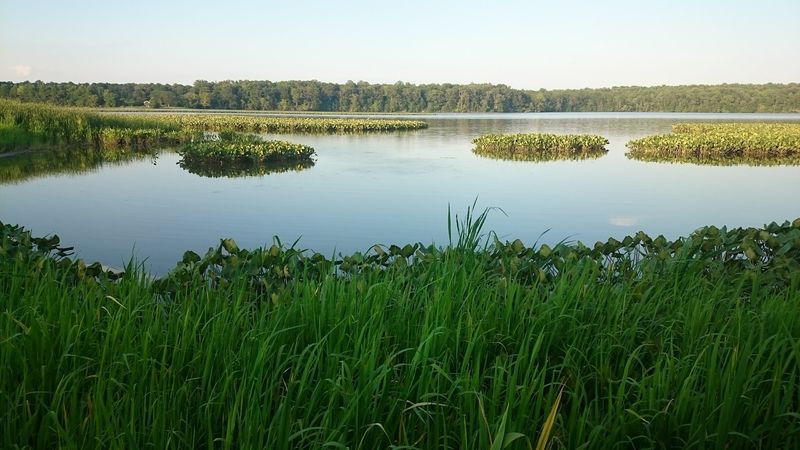
Beavers have their own pond here. Honestly, that’s better real estate than most of us get.
The beaver pond is a trail highlight. Look for their handiwork around the water even when the animals are out of sight.
River otters also inhabit the Patuxent watershed, alongside deer, frogs, fish, and countless insects. Marsh, forest, and freshwater support them all.
There are other small moments to watch for: frogs calling from damp ground, insects hovering above shallow pools, and ripples that reveal movement near the banks.
Patient watching is usually more rewarding than trying to spot everything at once.
Turtles get special attention. A long-running eastern box turtle study began in 1995 and has documented more than 7,300 sightings involving 605 marked turtles.
Those figures come from years of fieldwork by volunteers and sanctuary researchers. Identifying shell marks help scientists track individual turtles and their habitats.
Radio tracking also reveals seasonal movements. Your hike crosses the very landscape scientists study. Watch quietly from the trail and leave wildlife undisturbed.
Dogs aren’t permitted at the Sanctuary Proper, though leashed dogs are allowed at nearby Glendening Nature Preserve.
The Visitor Center Is A Smart First Stop
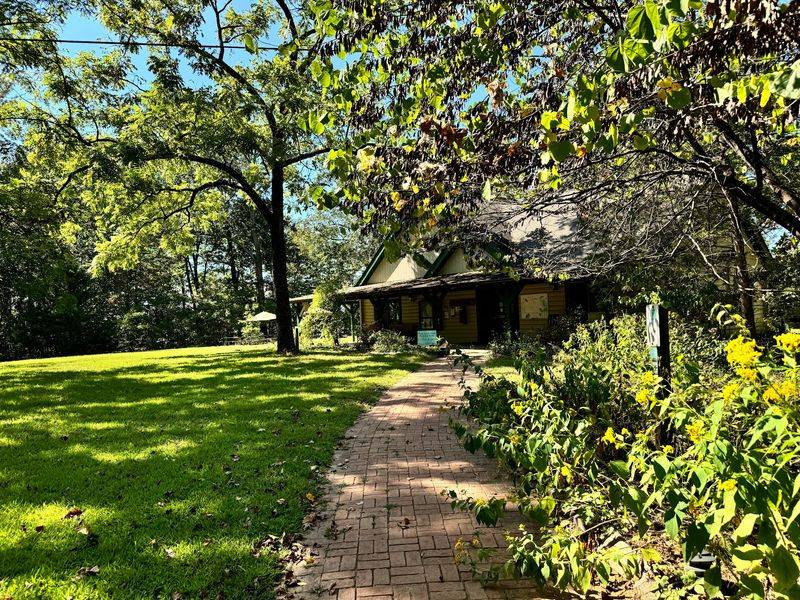
Kids love a nature play space. Grown-ups love a place to get their bearings before hitting the trails.
The McCann Wetlands Center handles both jobs at Jug Bay Wetlands Sanctuary. Its wetlands exhibit introduces the Patuxent River and the creatures of its estuary.
It’s a useful introduction before venturing into the marsh and woods.
The nature play area provides a place for younger children to explore in a more hands-on way. Indoors, the exhibits help connect what they see along the paths to the larger Patuxent watershed and its changing tides.
The center has restrooms and hosts lectures, classrooms, and field trips. Children can test water quality, learn about frogs, and join seasonal nature camps.
Adults can participate in guided hikes, birding programs, and occasional canoe trips arranged by the sanctuary.
These are scheduled activities, rather than everyday boat rentals, and public launching isn’t permitted at the main site.
Collect a map and ask about trail conditions. The marsh changes through the year, and access can change too.
A little planning helps you discover the most interesting habitats within the time you have available.
A Tiny Desert Grows In A Giant Wetland
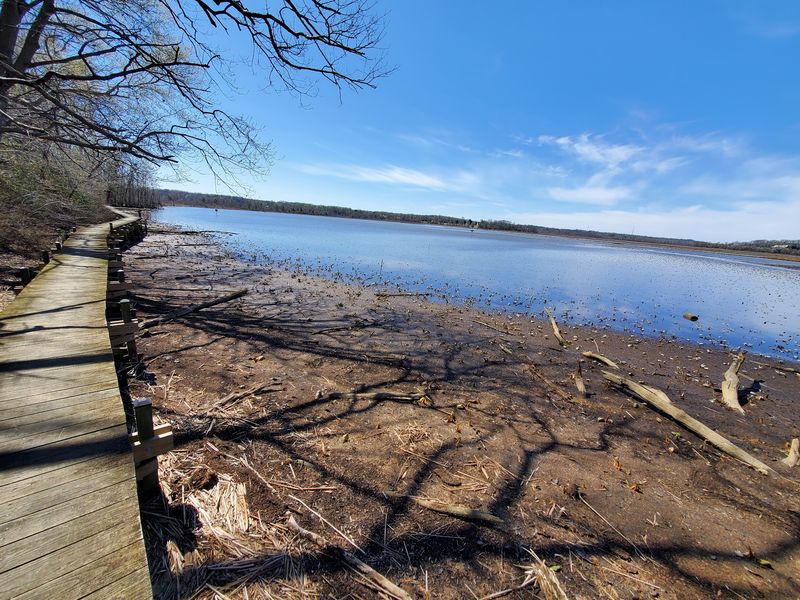
Deep, fast-draining sand sounds like beach talk. At Jug Bay, it describes the sand barrens.
Scientists call this habitat a micro-desert. Water slips through the soil quickly, creating unusually dry conditions where specialized plants and animals thrive.
That makes it an odd neighbor for the wetlands. Soggy marsh on one side, dry sand on the other.
The barrens made an extraordinary scientific impression in 2018. A survey discovered thousands of nests belonging to Perdita bradleyi, a tiny native bee previously recorded only once in Maryland, on the Eastern Shore.
The cluster may be the largest known for the species. Researchers also recorded another rare bee, Sphecodes brachycephalus, for the first time in the state.
The discovery illustrates why scientific surveys matter. A species can quietly occupy a small patch of habitat for years before researchers recognize its presence, particularly when the animal is almost small enough to overlook.
These tiny insects reveal just how unusual the dry habitat is. Stay on designated paths to protect the sandy nesting areas.
A creature small enough to overlook entirely has given this protected landscape another remarkable story.
Know The Schedule Before You Lace Up
Tuesdays are out. So are Mondays and Thursdays, which surprises plenty of first-timers.
Jug Bay Wetlands Sanctuary opens Wednesday, Friday, Saturday, and Sunday from 9 a.m. to 5 p.m. It closes on Sundays during December, January, and February.
The limited hours protect wildlife and support research. Parking, trails, and the center all close at 5 p.m.
Admission is charged per vehicle. Active military members, veterans, and their families enter without that charge with valid identification; qualifying county passes are accepted.
A few rules keep the Sanctuary Proper peaceful. Pets, bicycles, fishing, swimming, and public canoe or kayak launches aren’t permitted at this entrance.
Glendening Nature Preserve also keeps daily public hours, making it an alternative when the main sanctuary gates are closed.
Other properties offer different activities: Glendening welcomes leashed dogs, while Patuxent Wetlands Park offers fishing and small-boat access.
New cabins at the Jug Bay field station began welcoming reservations for selected weekends in 2026, with two-night stays. Reserved Emory Landing campsites provide another overnight option.
For an easy day trip in Maryland, use 1361 Wrighton Road, Lothian, MD 20711, and plan to finish before closing time.