Washington Has Its Very Own Little Grand Canyon, And Most Travelers Never See It
A group of elementary school kids helped turn one roaring waterfall into the official state waterfall of Washington.
That sounds simple enough, right? A cute civics lesson with a pretty view. Except there’s more to the story.
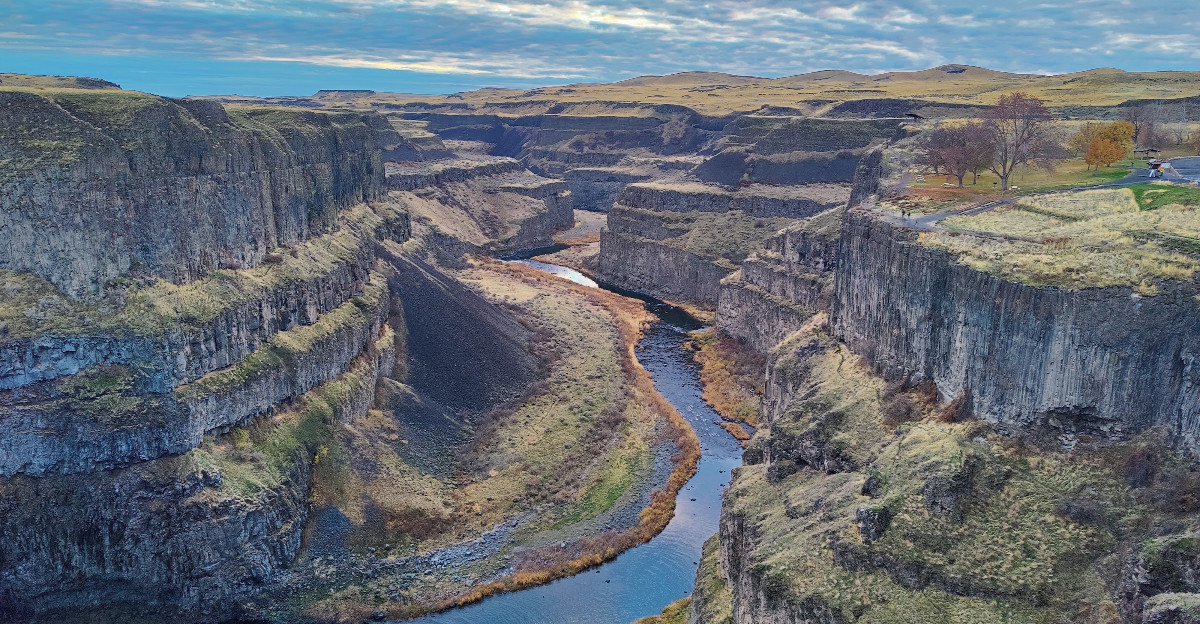
The water drops close to 200 feet into a deep bowl of dark basalt. The canyon around it was carved by giant Ice Age floods thousands of years ago.
Those floods rearranged the river and left cliffs that look borrowed from Arizona. Now you’re seeing a different side of it.
The whole scene sits among quiet wheat fields, with no big city anywhere close.
You drive past farmland, and then the ground suddenly splits wide open. Why haven’t more people made the trip?
Kids Pushed This Waterfall Into The Spotlight
Not many state symbols get their start in a grade school classroom. Palouse Falls did, and the story is pretty great.
Students in grades three through six at Washtucna School decided their favorite local landmark deserved special recognition. They researched the falls, wrote letters, and helped draft legislation.
Their proposal reached the state legislature in late 2013. The bill passed both chambers, and the governor signed it at the falls on March 18, 2014.
Before the vote, the students traveled to the state capital to explain their idea. Their letters and testimony helped make a favorite local landmark a statewide symbol.
The honor belongs to a 94-acre day-use park in southeastern Washington. It’s compact but dramatic, with basalt cliffs and a powerful river visible from the rim.
The waterfall drops 198 feet into a broad plunge pool before the Palouse River continues through the gorge toward the Snake River. Spring runoff makes its roar especially impressive.
A marker near the overlook celebrates the students’ achievement. Not bad for a classroom idea.
Ice Age Floods Did All The Heavy Lifting
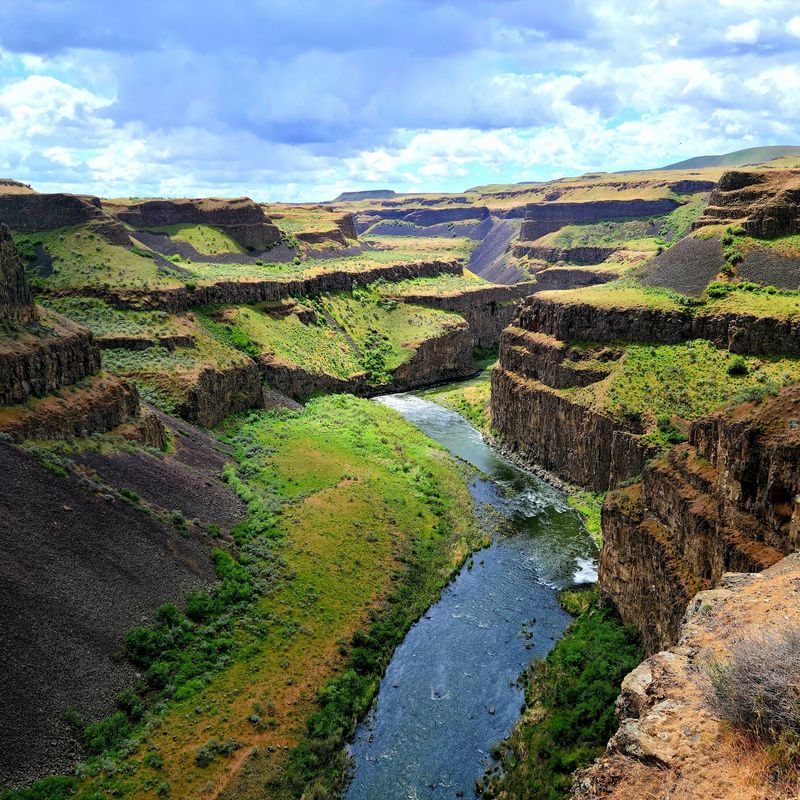
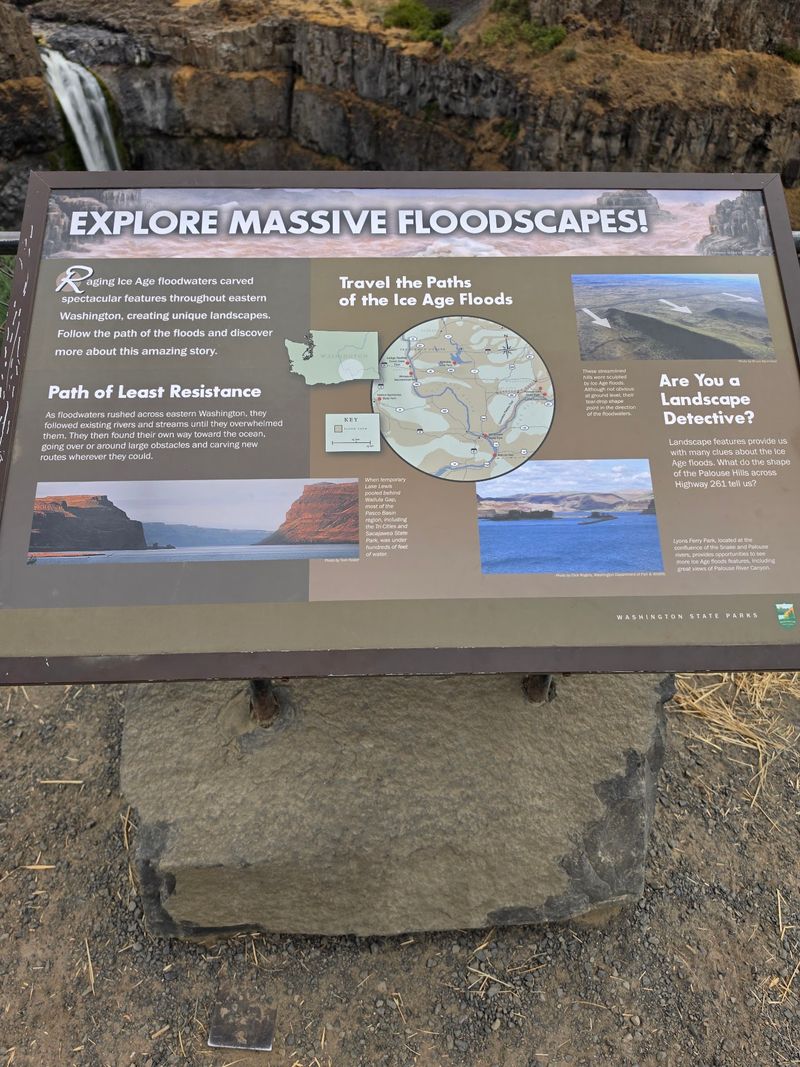
Thousands of years ago, enormous floods swept across eastern Washington. Geologists call them the Missoula Floods, and they helped create the canyon you see today.
The water came from Glacial Lake Missoula, a vast lake held back by an ice dam. When the dam gave way, extraordinary volumes of water surged across the region. The cycle repeated near the end of the Ice Age.
Those torrents washed away soil, carved channels through basalt, and redirected the ancestral Palouse River. The new course sent it toward the Snake River rather than the Columbia.
The cliffs reveal layer upon layer of the Columbia River Basalt Group, rock formed by ancient lava flows long before the floods arrived. Vertical basalt columns give the cliffs a geometric appearance.
The river now follows a winding gorge that looks far too large for today’s flow to have made on its own. That contrast helped scientists recognize the ancient floods’ scale.
Palouse Falls is part of the Ice Age Floods National Geologic Trail. The displays reveal a landscape shaped by water on an astonishing scale.
Three Viewpoints, Zero Need For Climbing Gear
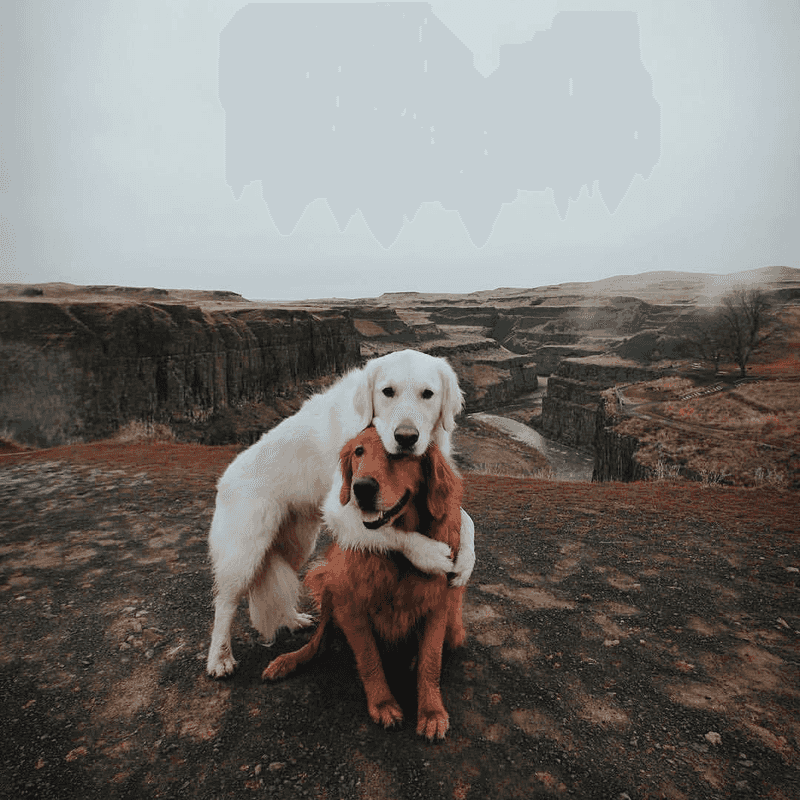
Good news for anyone who is not a mountain goat. You can see the falls without a tough hike.
The main day-use area provides access to three designated viewpoints. The lower viewpoint is reached by steps and looks directly toward the waterfall and its circular plunge pool.
A second viewpoint sits at the end of a paved interpretive path, where panels explain the canyon’s history.
Higher up, Fryxell Overlook frames both the waterfall and the winding Palouse River Canyon in one sweeping scene.
The views shift dramatically between these stops, from the waterfall’s vertical drop to the long bends of the gorge.
Part of the developed viewing area is accessible, though steps and uneven ground limit access to some sections. The short walk leaves time to enjoy shifting light on the cliffs.
One rule is especially important: all routes descending into the canyon or to the base of the waterfall are permanently closed. Stay on marked paths, even where old footpaths remain visible.
The best scenery is already visible from above. Those immense walls need no strenuous trek to appreciate.
A Giant Beaver Story Older Than Any Map
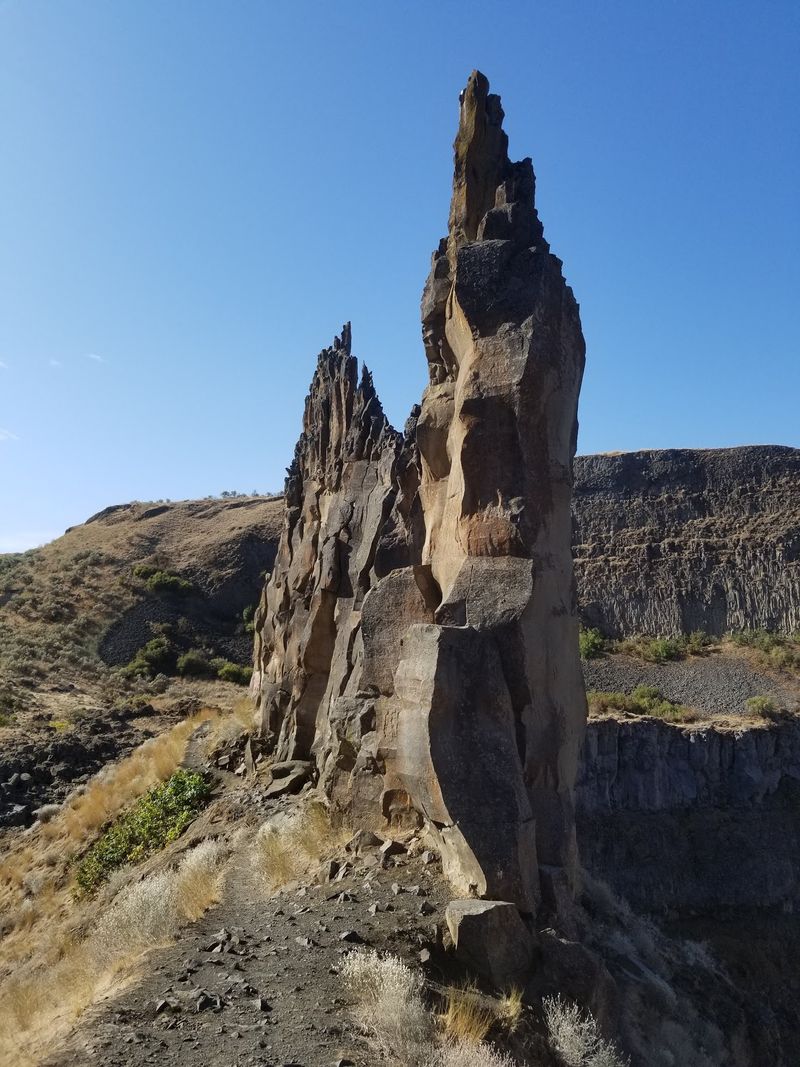
Long before geologists studied this canyon, the Palus people shared stories about how the landscape came to be.
The waterfall has also been called Aput Aput, commonly translated as Falling Water. The name predates modern maps of the river. One traditional story features a giant beaver and four giant brothers.
As the beaver raced along the river, its movements shaped the bends of the canyon. Marks along the basalt walls were understood as the traces of its claws.
Another part of the traditional account connects the waterfall itself to the giant beaver’s powerful tail. It’s a wonderfully vivid way of interpreting the cliffs.
Look across the gorge and you’ll notice long vertical fractures in the dark rock. Cooling lava and erosion explain the fractures geologically; tradition gives them another meaning.
The river corridor also holds deep cultural importance for the Palus and other Indigenous communities of the region. Its cultural history long predates the state park.
Take a moment to appreciate that enduring connection. The falls carry stories as remarkable as their scenery.
The Drive In Is Half The Adventure
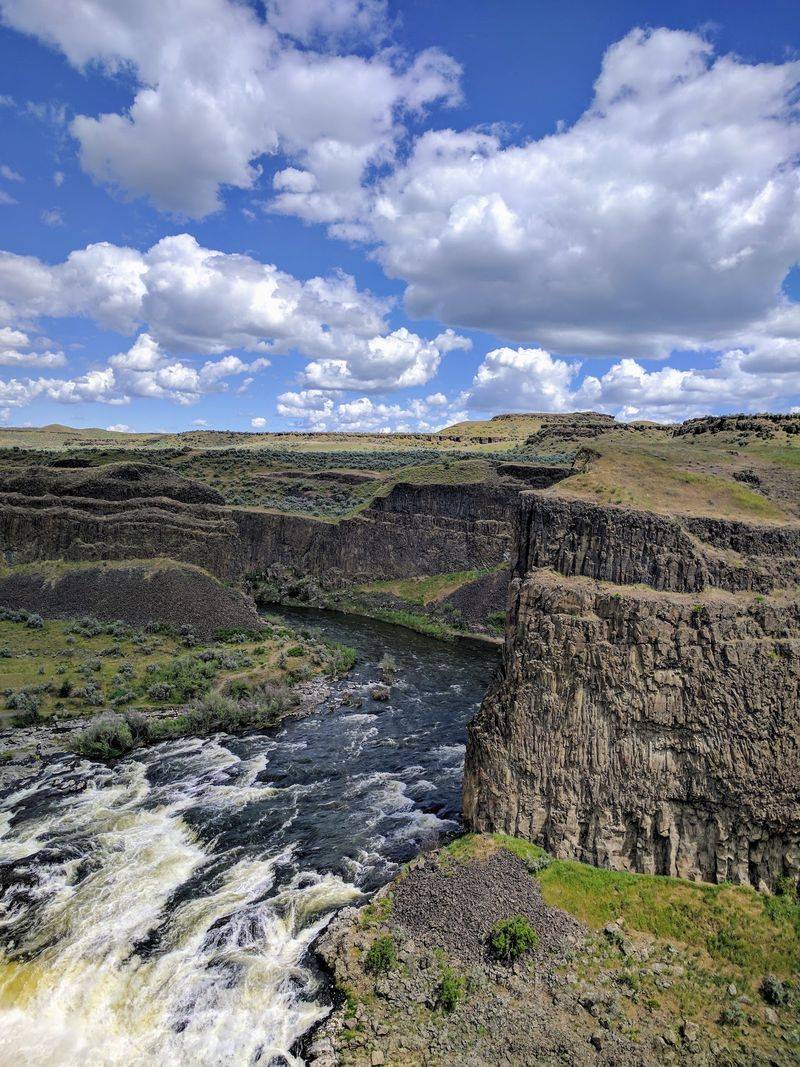
Rolling wheat fields stretch in every direction on the way here. Then the ground opens up, and suddenly there is a canyon. It feels like the land is hiding a secret.
Palouse Falls State Park Heritage Site lies off State Route 261 near Washtucna. The final 2.3 miles follow a gravel road, so drive slowly.
Across this part of Washington, farming fields and open hills make the abrupt appearance of the basalt gorge even more surprising.
Little prepares you for a waterfall dropping into a stone bowl.
Cell reception is unreliable, so save your directions before traveling. Bring fuel, water, and snacks; nearby services are scarce. The parking area is small, and weekends and holidays can bring delays.
The approach is especially dramatic in late spring, when fields turn green against the darker volcanic landscape.
Trailers and recreational vehicles aren’t permitted at the park, so choose a regular passenger vehicle for the final stretch.
Follow the park signs rather than farm tracks. The destination is Palouse Falls Road, LaCrosse, WA 99143, and the view is worth that last dusty drive.
Spring Turns The Volume All The Way Up
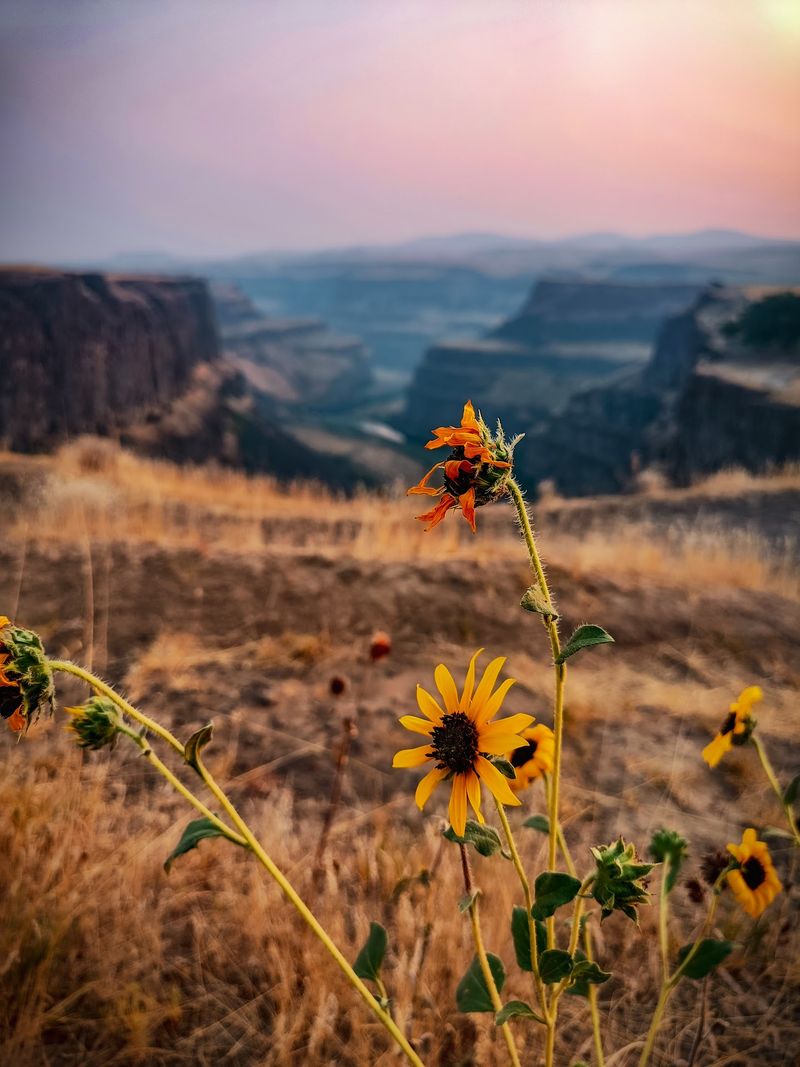
Spring is when the falls really show off. Snowmelt increases the Palouse River’s flow, sending an impressive curtain of water over the basalt rim.
The roar carries across the viewing area, and mist sometimes rises from the bowl below. Green patches contrast with dark rock and dry grassland.
The river keeps flowing throughout the year, though its volume changes with the seasons.
Summer often brings a thinner waterfall and much higher temperatures on the exposed plateau. Bring enough drinking water for the heat. Autumn offers golden grasses and cooler afternoons.
Winter brings its own appeal, with occasional ice around the falls and dramatic clouds above the gorge. Check road conditions for winter visits. Time of day changes the scene too.
Morning light reveals different rock textures, while late-afternoon sun can warm the cliffs with amber tones.
The park opens at 6:30 a.m. in summer and 8 a.m. in winter, closing at dusk. That leaves daylight for watching the changing colors.
Pack A Lunch, Because The View Deserves It
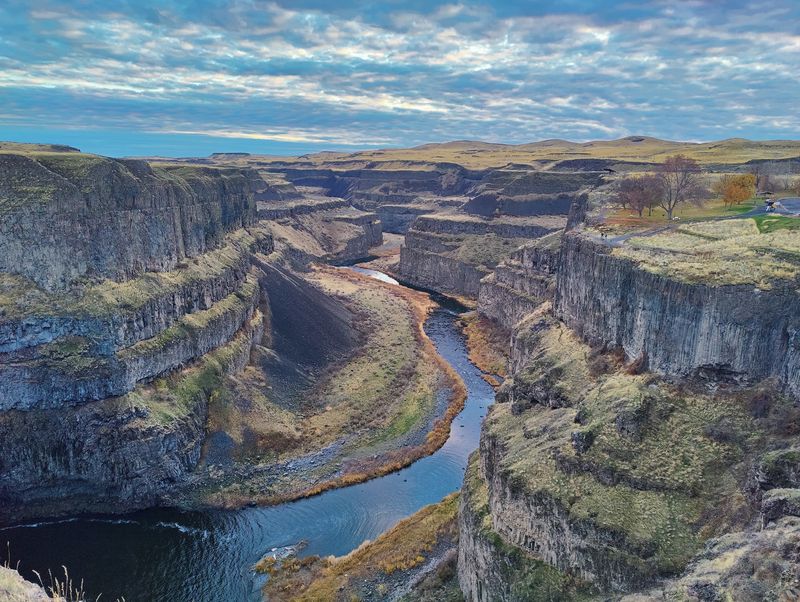
Few lunch spots in Washington come with a nearly 200-foot waterfall nearby. Palouse Falls State Park Heritage Site makes picnicking feel like a special occasion.
Tables stand in the day-use area, including a sheltered spot and several unsheltered places to spread out. Grass and scattered shade trees offer a break from the sun.
Bring your own food because the park has no café or snack stand. A packed lunch keeps you from heading back toward town.
Drinking water is particularly important. As of October 2026, the park’s potable-water system is unavailable during maintenance, so every visitor needs to bring enough for the entire outing. Basic restrooms are near the parking area.
A Discover Pass is required for vehicle visits, and the park is day-use only, with no camping or overnight parking.
The breeze can pick up along the rim. Keep loose wrappers and napkins secure, and pack out anything you bring with you.
Once lunch is finished, spend another few minutes watching shadows move across the basalt. The scene changes as afternoon passes.
Marmots Are The Unofficial Welcome Committee
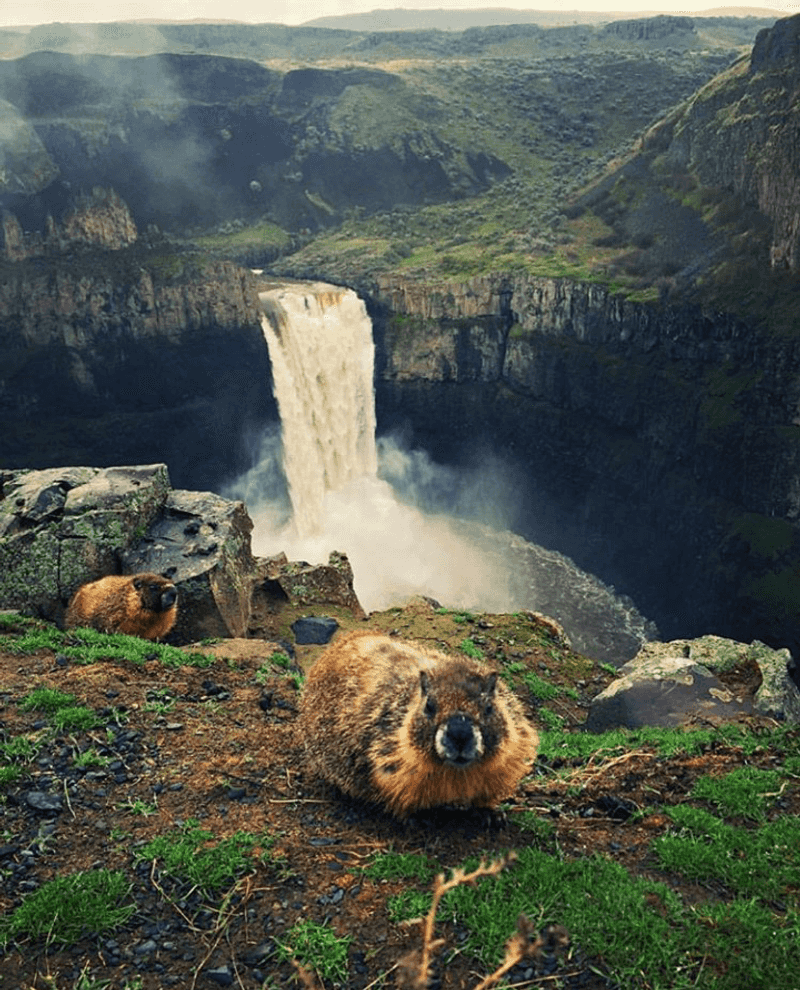
Chubby, sunbathing, and seemingly unbothered, yellow-bellied marmots are among the park’s most memorable residents.
Watch for them on rocky slopes near their burrows. They spend much of the colder season underground, so the warmer months are generally a better time to spot one.
Watch the cliffs and the sky, too. Ravens and other birds move through the canyon, sometimes using rising air currents to glide above the river. Seasonal wildflowers color the grassland.
Wildlife is best enjoyed at a respectful distance. Never feed them or approach for a closer look. Rattlesnakes also inhabit this dry, rocky landscape.
Keep to marked paths, look ahead when walking, and give any snake plenty of room to move away. Dogs are welcome only on leashes and should stay beside their handlers. A little patience reveals how lively this quiet country is.
A bird crosses the gorge, a marmot slips between rocks, and the waterfall continues its steady descent.
Bring binoculars if you have them. Sometimes the most entertaining part of the trip is the small creature you notice after admiring the enormous canyon.