Connecticut Scientists Have Identified 399 Bee Species, Including One Not Seen In Over 50 Years
Bees are easy to overlook until one starts buzzing around your picnic. But apparently, there’s a whole lot more going on in the insect world than most of us realize.
Scientists have been looking closely at these little pollinators, and the numbers are pretty surprising.
Researchers in Connecticut have identified 399 bee species, including one that hadn’t been recorded in more than fifty years.
Now that’s what caught my eye. Imagine discovering that something so small had gone unnoticed for half a century.
It makes you wonder how many other fascinating creatures are living right under our noses.
And while bees might not usually be the stars of an exciting discovery story, this one certainly deserves attention. Sometimes the smallest things turn out to be the biggest surprises.
1. Nearly 400 Bees Call This Small State Home

Most people could name maybe three kinds of bees. Scientists have now counted nearly 400 wild species living in the state, a number that keeps creeping upward.
The work comes largely from the Connecticut Agricultural Experiment Station. Tracy Zarrillo and Dr. Kelsey E.
Fisher in its Department of Entomology are key figures behind these discoveries.
The total didn’t arrive all at once. An early checklist listed 385 species, and three new finds pushed it to 388.
Later updates raised the count again, with the newest tallies landing near 400. Science moves in steps, and every step here added another tiny neighbor to the list.
That’s a lot of variety for one of the smallest states in the country. Some are fuzzy and round, while others are so slim you’d mistake them for flies.
I find that amazing for a place known more for coastlines and colonial towns. Your local park might hold dozens of these species right now.
Next time a little buzz zips past your picnic, take a closer look. Odds are good it isn’t a honey bee at all.
2. A Willow-Loving Mining Bee Finally Came Out Of Hiding

Fifty-four years is a long time to stay off the radar. Andrena nida, a small mining bee, hadn’t been recorded in the state since 1972.
Then came April 1, 2026. During targeted surveys, researchers found a large group of its nests, not just one lonely bee.
Mining bees dig their homes in the ground. Each female builds her own nest, so a big aggregation means many bees chose the same patch of soil.
Timing helped crack the case. Andrena nida feeds its young only on willow pollen, so scientists had to search when willows bloom in early spring.
That diet explains a lot. A bee active for a short window, tied to one plant, is easy to miss for decades.
The John T. and Jane A. Wiederhold Foundation supported the 2026 surveys that led to the find.
Funding for fieldwork rarely makes headlines, but here it paid off.
I like how this story rewards patience. If you have willows near a sunny, sandy spot, early spring might be the season to watch the ground closely.
3. The Black And Gold Bumble Bee Pulled An Even Bigger Vanishing Act
Talk about a comeback tour. The Black and Gold Bumble Bee, Bombus auricomus, went unseen in the state from 1919 until 2021.
That’s over a century of silence. Historically, only three female specimens had ever been recorded in the state, in 1905 and 1919.
The rediscovery didn’t come from a lab. Three people uploaded photos to iNaturalist, a community science app, from Milford, Portland, and Vernon.
Experts checked those pictures and confirmed the bee was back. Everyday folks with phones helped rewrite the state’s bee history.
I can’t imagine a better reason to snap a picture of a bug. One quick photo in your garden could become real scientific evidence.
This bumble bee is a striking one to spot. As its name suggests, it wears bold black and golden coloring.
Want to try your luck? Download iNaturalist, photograph bees you see, and upload them with the location.
Your sighting might be ordinary, or it might be the next headline. Either way, scientists gain useful data about where bees live across Connecticut.
4. Researchers Vetted 18,471 Photos And A Century Of Records

Counting bees sounds simple until you try it. The team built its inventory like detectives working a very old, very buzzy case.
They reviewed historical records and earlier checklists. They also examined every bee specimen collection in the state, drawer by drawer.
Academic reports on wild bees going back more than a century went into the pile. Old notes from long-gone collectors still carry weight today.
Then there were the photos. Researchers reviewed 18,471 state bee records on iNaturalist, helping verify species identifications and uncover previously overlooked bees.
That number deserves a pause. Picture squinting at wing veins and hair patterns thousands of times, because many bees look nearly identical.
Careful checking keeps the list honest. A blurry photo of a fly shouldn’t count as a rare bee.
I believe this mix of old and new methods is the smartest part. Dusty specimens show the past, while phone photos show what’s flying right now.
For curious readers, it’s proof that science isn’t only beakers. Sometimes it’s patience, a magnifying glass, and a giant photo folder.
5. Most Of These Bees Live Alone, And That Surprises People
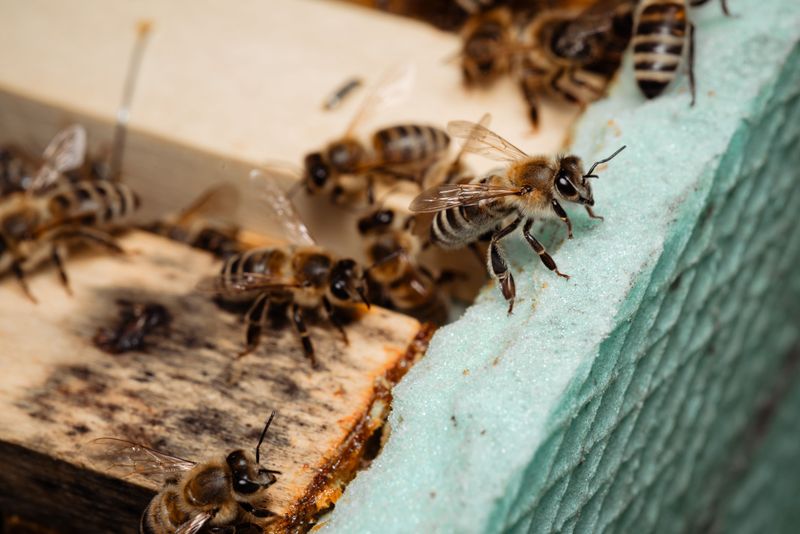
Forget the busy hive image for a second. Most of state’s bee species are solitary, meaning they don’t form colonies at all.
Honey bees and bumble bees live in groups. Yet they’re the exceptions in this crowd, not the rule.
Depending on the species, a solitary female may nest in the ground or in wood, using materials such as leaves or mud to construct and protect her nest.
Think of her as a single parent who also builds the house. It’s impressive work for something smaller than your fingernail.
Here’s a fun fact for your next trivia night. Among all these species, only European Honey Bees are known to make honey.
So the other bees aren’t slacking. They just put their energy into pollinating and raising young instead of stocking a pantry.
Want to help them out? Leave a patch of bare soil in a sunny spot, and keep some dead stems or old wood around.
Tidy lawns look nice, but they offer few nesting spots. A slightly messy corner can become prime bee real estate.
6. Your Favorite Fall Pie Depends On These Tiny Workers

Apple picking, blueberry pancakes, a pumpkin on the porch. All three lean on pollinators, and native bees are a big part of that team.
Scientists warn that declines in native bee populations can hurt the production of apples, blueberries, and pumpkins. That hits close to home, where farm stands are a seasonal tradition.
Bumble bees in particular are important pollinators for fruit and vegetable crops. Their fuzzy bodies collect and move pollen from flower to flower.
Wild plants count on bees too. Many flowering plants that wildlife depend on need pollinators to make seeds and fruit.
So a missing bee can ripple outward. Fewer flowers can mean less food for birds and other animals.
I like thinking about this the next time I bite into a crisp apple. A tiny insect helped make that snack possible.
You can return the favor easily. Plant native flowers that bloom from spring through fall, and skip pesticides when you can.
Even a small pot on a balcony helps. Bees aren’t fussy about fancy gardens, only good food.
7. Dozens Of Species Still Need Someone To Find Them

Not every bee on the list has been seen lately. When the latest checklist came out, at least 43 species hadn’t been spotted in state for over 25 years.
Some may be gone from the state. Others might be quietly hanging on, like Andrena nida was.
That’s why the inventory matters so much. It points out which species are poorly understood and which need more surveys to confirm they’re still around.
Right now, nine bee species are listed as Species of Greatest Conservation Need. Another 39 are named State Assessment Priority Species.
Lists like these guide where scientists spend time and money. Without them, rare bees could slip away unnoticed.
Andrena parnassiae was recently added to the Species of Greatest Conservation Need list. It’s a reminder that the picture keeps changing.
Honestly, I find the mystery exciting. Dozens of possible rediscoveries are waiting out there.
You don’t need a degree to join the hunt. Photograph bees, note the date and place, and share sightings on community science apps.
8. The Yellow-Banded Bumble Bee Turned Up In Litchfield County

One fuzzy bee has scientists especially worried. The yellow-banded bumble bee, Bombus terricola, has declined nearly 50 percent across its historical range.
It went undetected for a full decade, from 2009 to 2018. Ten years without a sighting is enough to make anyone nervous.
Then it reappeared in Litchfield County. The hilly northwest corner of the state proved it could still shelter this struggling species.
Good news, but not a happy ending yet. One rediscovery doesn’t fix a range-wide drop.
Litchfield County’s mix of fields, forests, and small towns gives bees varied habitat. Places like that become important refuges when populations shrink elsewhere.
If you visit the area, keep an eye on late summer flowers. A bumble bee with a bright yellow band could be a meaningful sighting.
Photos help researchers track where these bees live. Try to capture the bee from the top so its color pattern shows clearly.
I think it’s hopeful that a bee missing for ten years came back. It shows careful watching can reveal more than we expect.
9. Students And Neighbors Can Help Write The Next Chapter

The bee story isn’t only for experts in lab coats. Students at the University of Connecticut have been involved in studying native bees too.
That’s encouraging for anyone curious about nature. Young researchers bring fresh eyes, and the field clearly has room for them.
Regular residents matter just as much. Remember, iNaturalist photos helped confirm the Black and Gold Bumble Bee’s return after more than 100 years.
So your backyard counts as a research site. Seriously, scientists vetted every single bee photo on that platform.
Getting started is easy. Plant native flowers, leave some bare ground, and let a few stems stand through winter.
Then grab your phone on a sunny day. Bees are most active when it’s warm, so midday garden strolls work well.
Families can turn it into a game. See how many different bees you can photograph in one summer.
I believe the next big find could come from a kid with a camera. With nearly 400 species buzzing around, the odds aren’t bad at all.