The Connecticut Trail With Abandoned Mine Entrances, Historic Ruins, And Fascinating Rock Formations
Most hiking trails promise a nice view and a little fresh air. But what about one where the landscape holds clues to a completely different chapter of local history?
Now that sounds like an afternoon with a few surprises.
A Connecticut nature preserve combines scenic walking paths with remnants of an old mining operation that still spark curiosity.
I love the thought of exploring somewhere that feels like an outdoor history lesson, only without having to sit at a desk.
And there’s something fascinating about seeing what people left behind decades ago. Even ordinary-looking stones can become interesting when you understand why they’re there.
Of course, the natural surroundings are part of the appeal, too. It’s not every day you get to enjoy a peaceful walk while noticing evidence of an industrial past.
You don’t come across that every day.
The contrast between the landscape today and what once happened there makes this trail feel especially intriguing.
1. Those Gated Mine Openings Are Even Cooler Than They Sound
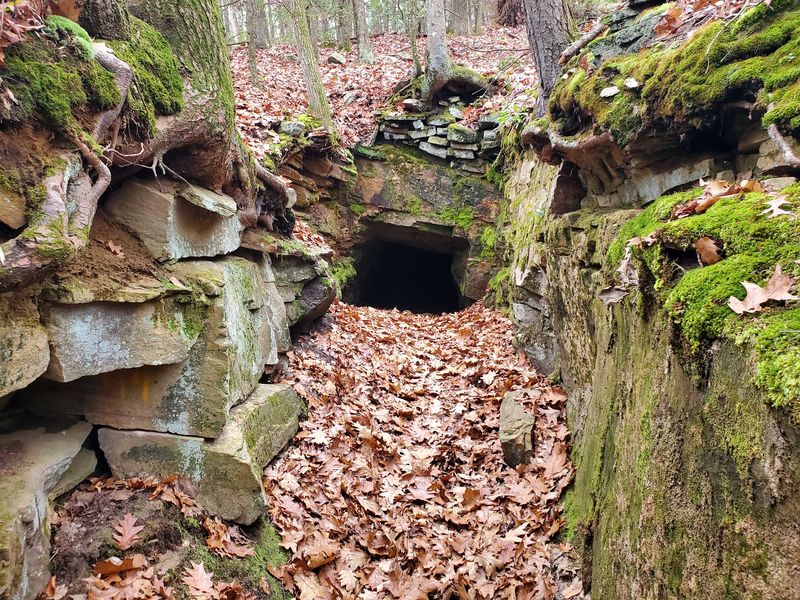
Real mine tunnels on a hiking trail? That’s quite a surprise!
Mine Hill Preserve offers a chance to explore an unusual piece of local history, with old mining entrances and mysterious shafts scattered across the hillside.
The blue-blazed loop, nicknamed the Donkey Trail, passes two tunnels and several air shafts. Reaching them takes some effort, since the mining features are farther up the hill rather than beside the parking area.
Those metal grates covering the shafts aren’t just there for hikers’ safety. They also help protect bats that use the underground spaces for winter hibernation.
It’s a clever way to preserve the wildlife while still allowing visitors to appreciate the site’s history.
Long before the area’s iron-mining boom in the 1800s, prospectors had already searched the hillside for valuable minerals. Their early efforts eventually gave way to a much larger operation, leaving behind an underground network that still fascinates visitors today.
Bring a flashlight if you’d like a better look through the protective grates, but keep a respectful distance from the openings.
After all, the best part is seeing these remarkable remnants of history while leaving the underground residents in peace.
2. An Iron Furnace Still Stands Where Fire Once Roared
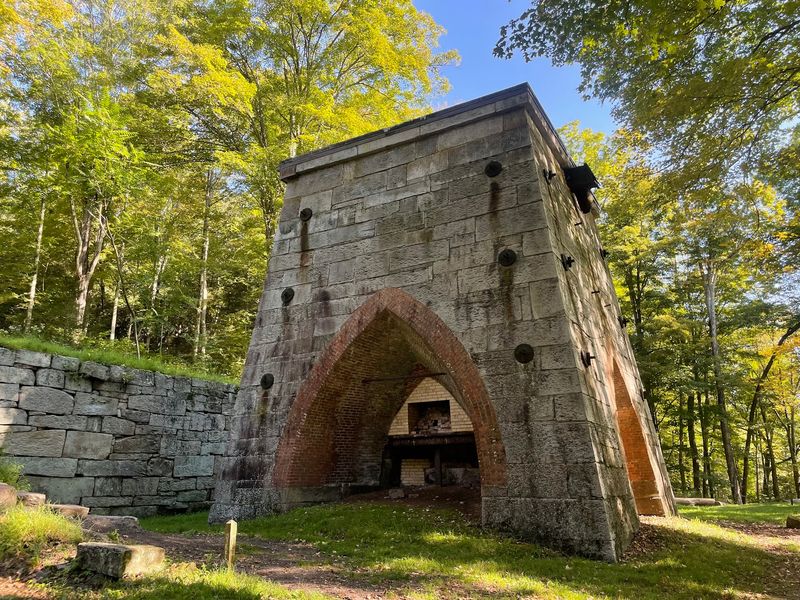
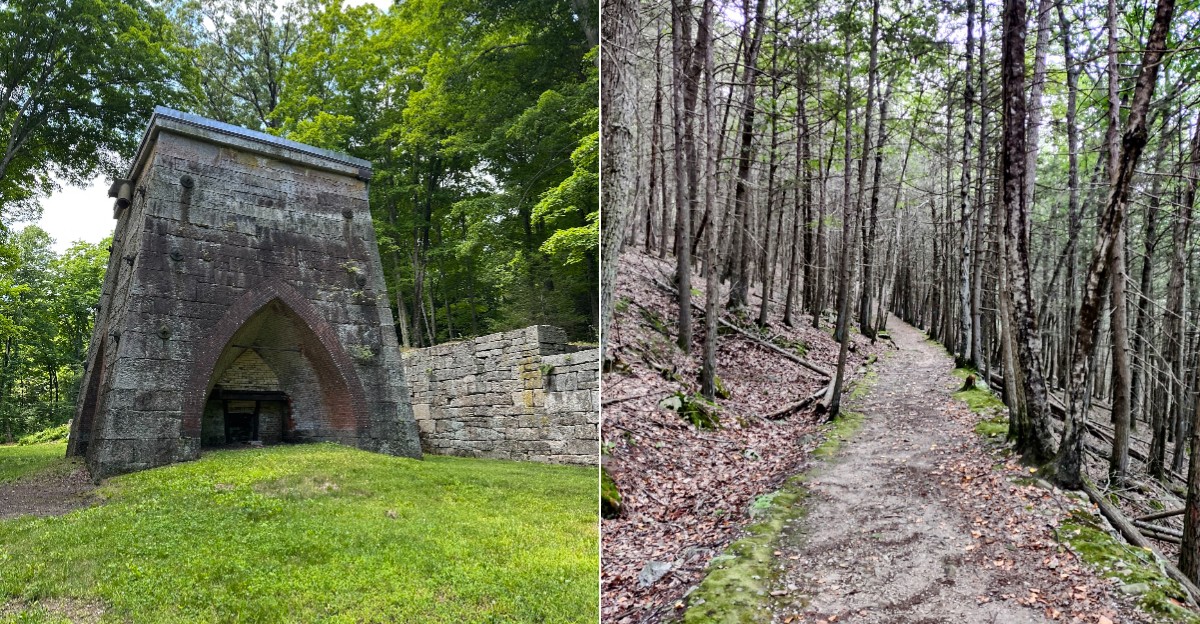
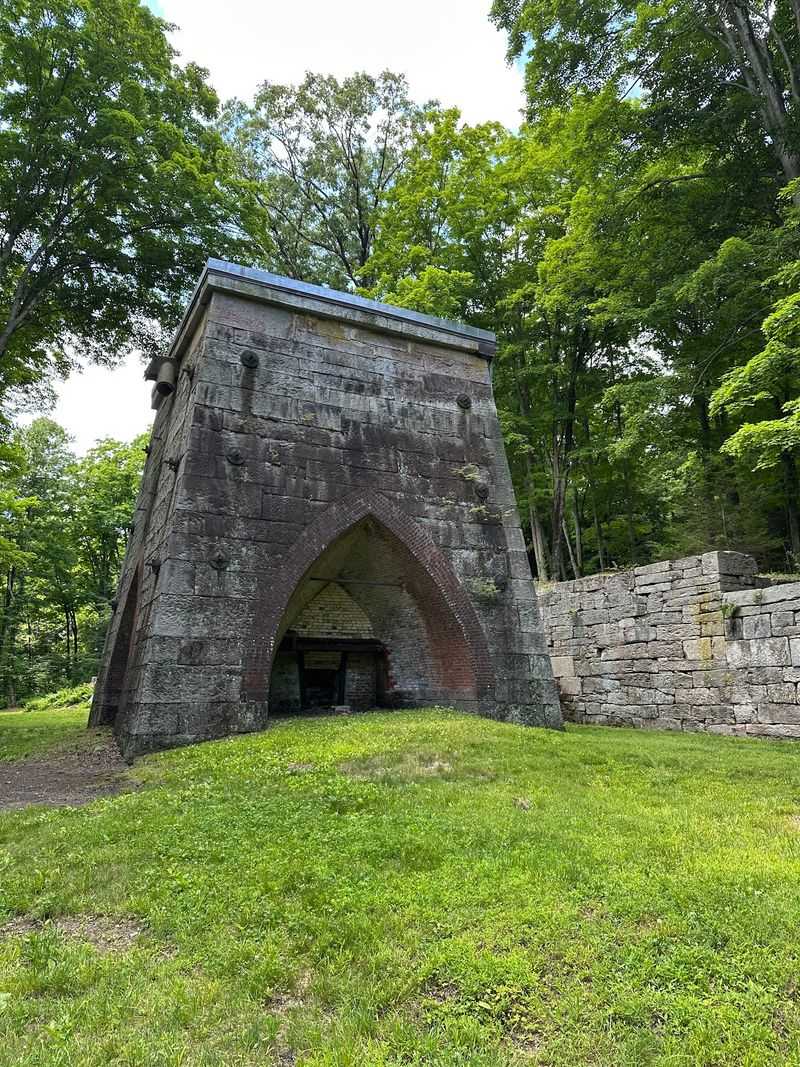
Massive stone walls rise out of the trees just a short stroll from the trailhead. They belong to a 19th-century iron mine and furnace complex that’s surprisingly well preserved.
The star of the show is the restored blast furnace. Nearby you’ll find roasting ovens and other stone and brick structures that helped turn rough ore into usable iron.
The Shepaug Spathic Iron and Steel Company ran the works from 1865 to 1872. For a short time, the operation even produced steel.
The main iron-making operation ended in 1872, although mining activity continued at the site afterward. The ruins stayed behind, quietly waiting for people to notice them again.
Notice them they did. The site joined the National Register of Historic Places in 1979, which is a big deal for any old structure.
Short on time or energy? A 0.2-mile loop leads straight to the furnace complex, making it easy for nearly anyone to visit.
Spend a few minutes walking all the way around the ruins. Each side shows different stonework, arches, and clues about how the whole system once worked together.
3. You Can Read The Whole Story Right On The Trail
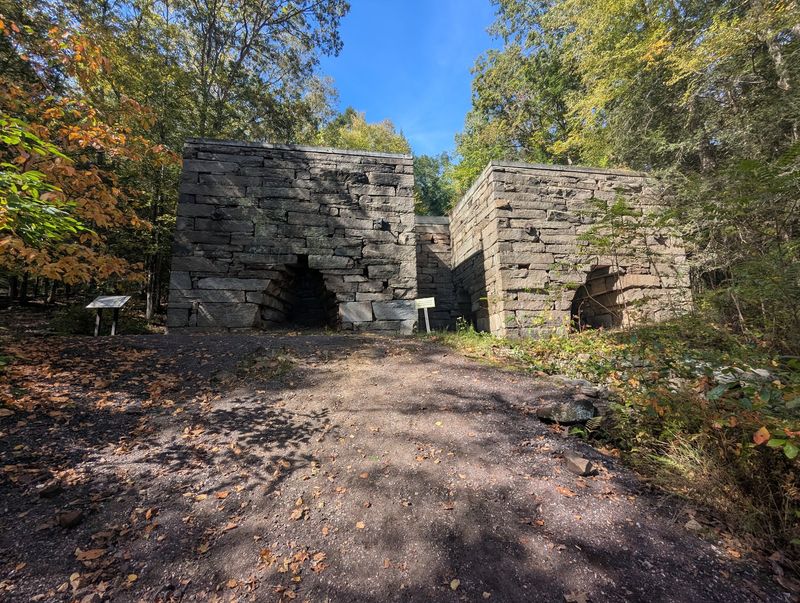
History class never smelled this much like pine needles. Informational panels stand throughout Mine Hill Preserve, explaining the iron works piece by piece.
The signs cover how iron got made, step by step. They also explain how the operation affected the surrounding region.
That turns a pile of old stones into something that makes sense. Suddenly a roasting oven isn’t just a wall, it’s part of a bigger machine.
My advice is simple. Visit the furnace area first and read the panels before tackling the long loop.
Knowing the backstory makes the rest of the hike richer. When you spot a shaft or quarry later, you’ll understand why it’s there.
Families with curious kids should slow down here. The panels give great talking points, and they offer a nice break from walking.
Snap photos of the signs if you like. They make a handy reference when someone in your group asks a tricky question halfway up the hill.
Think of these panels as a free tour guide. They never get tired, and they never rush you along.
4. A Whole Boom Town Once Filled This Valley
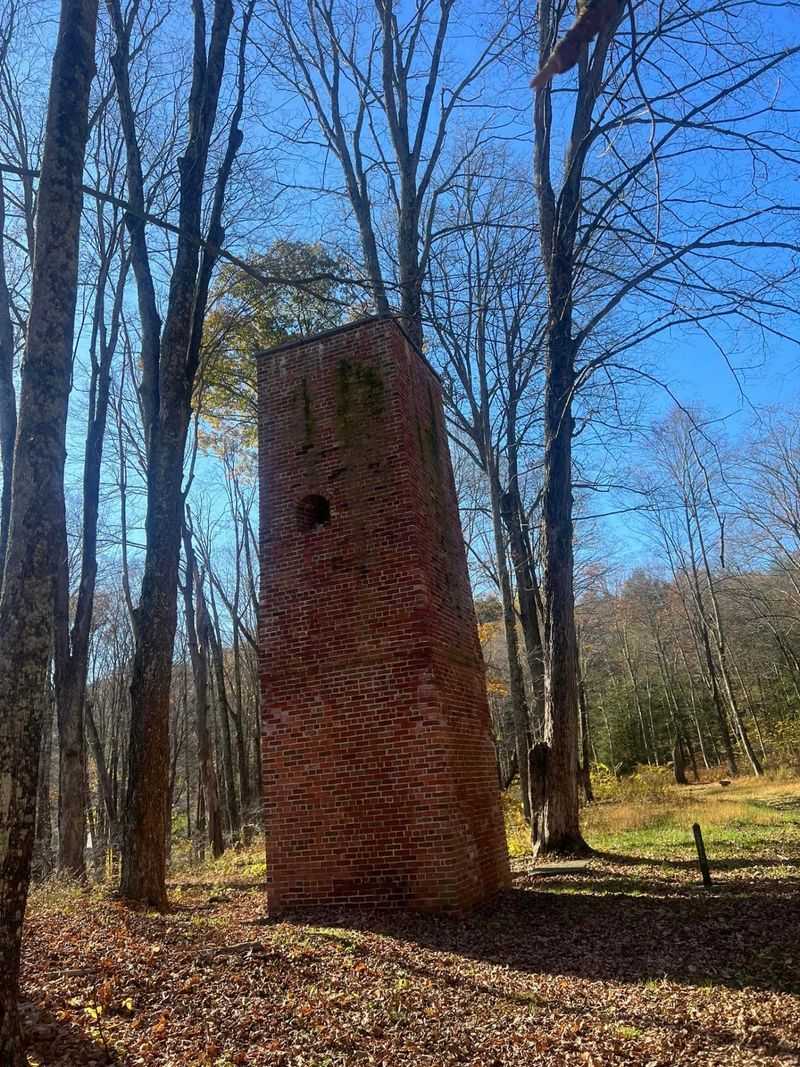
Chalybes. Try saying that three times fast, then picture a busy town that once sat at the base of Mine Hill.
Interpretive signs tell the story of this vanished community. It had numerous buildings and even its own station on the Shepaug Valley Railroad.
Hundreds of immigrant workers lived there. They powered the mines, the furnace, and the quarries with hard daily labor.
Today, the forest has taken over most of it. That quiet makes the story feel even more striking as you stand there.
I can’t imagine how loud this valley must have been back then. Trains, furnace work, and crowds of workers would have filled the air.
Now you mostly hear birds and your own footsteps. It’s a gentle reminder of how fast things can change.
Take a moment to read about Chalybes before moving on. Those workers came from far away to build lives here in Connecticut.
Their story is a big part of why the preserve matters. The ruins are impressive, but the people behind them are the real heart of it.
5. Granite Cliffs Steal The Spotlight On The Climb
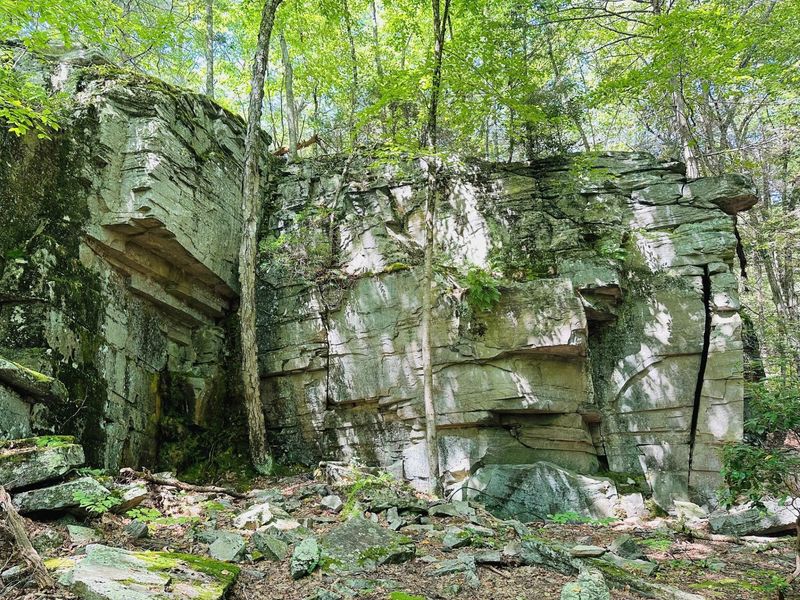
Rocks get bragging rights at this preserve. Massive granite cliffs tower along parts of the trail, and they’re hard to walk past without staring.
People noticed these stone outcrops long ago. As early as the 1700s, folks recognized the area for its mineral content.
That early interest is exactly what sparked all the digging. Without these rocks, there would be no mines, no furnace, and no boom town.
Geology fans will enjoy one more detail. The Roxbury Iron Mine worked a siderite-quartz vein, which held the iron-rich ore.
Back in the early 1800s, a geological study identified valuable carbonated iron ore on the hill. That discovery changed everything for this quiet piece of land.
Fun fact: the hill wasn’t always called Mine Hill. Its original name was Spruce Hill, before all the mining gave it a new identity.
Wear sturdy shoes for this stretch. Rocky ground and steeper sections demand good grip and careful steps.
Bring a camera too. The cliffs look especially dramatic when sunlight slips through the trees and hits the stone.
6. Old Quarries Hold Stone That Built Fancy Places
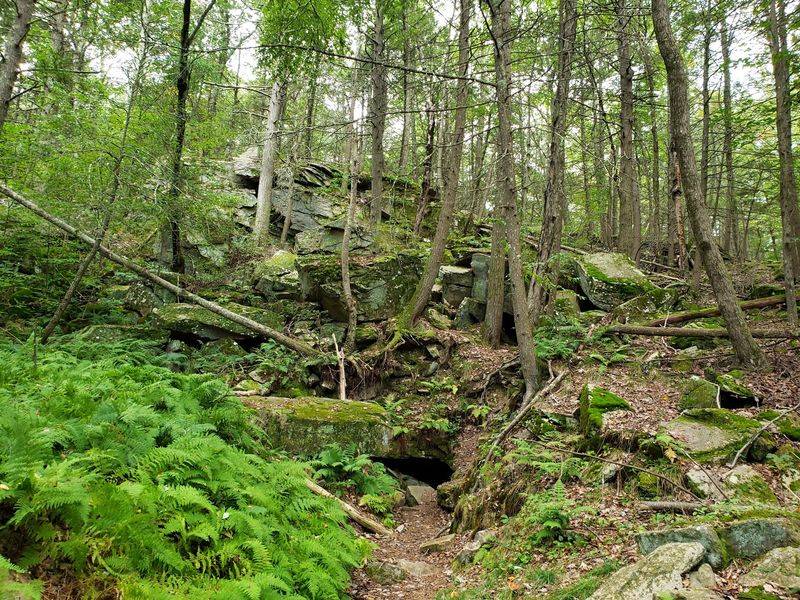
Somewhere in New York City, a building might be wearing a piece of this hill. Abandoned granite quarries here once produced the light gray Roxbury stone.
Builders wanted it badly. They used it for churches, bridges, and fine homes stretching from New York City to New Britain.
That’s quite a reputation for rock pulled from a wooded hillside. It shows how valuable this land once was beyond its iron.
The quarry kept working long after the furnace went cold. The lower quarry closed around 1935, but granite quarrying resumed at Mine Hill in the 1950s and continued beyond that period.
Look closely at the quarry walls when you reach them. You might spot cut faces and leftover blocks that show where workers split the stone.
Exploring the quarry area takes a longer hike. It’s worth the extra steps if you love seeing how people shaped the land.
Please stay on marked paths near any edges. Quarry areas can have uneven footing and sudden drops.
Next time you admire an old stone church, take a second look. It could share roots with these very quarries.
7. The Blue Loop Will Test Your Legs In The Best Way
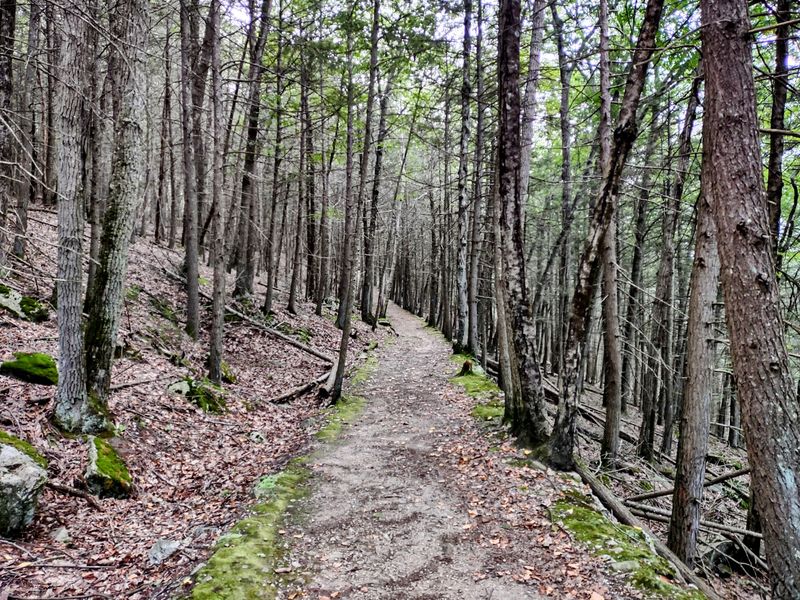
Three and a half miles. That’s the length of the blue-blazed main loop, and it climbs up and around the hill before heading back down.
It’s a satisfying challenge for steady hikers. You’ll pass many highlights along the way, including the mine tunnels and air shafts.
Mine Hill Preserve covers 360 acres with several miles of trails. You can choose a short outing or a longer adventure depending on your mood.
Want more miles? The preserve is part of the Roxbury Land Trust system, which maintains over 30 miles of blazed trails.
Pack water, snacks, and a trail map on your phone. Good planning keeps the hike fun instead of frustrating.
Give yourself plenty of time for the full loop. Stopping to explore ruins and read signs adds up quickly.
Autumn leaves look gorgeous here but can make rocky paths slippery. Watch your footing on the descents.
Hiking with your dog? The preserve is pet-friendly, so your four-legged buddy can join the fun on a leash.
8. A Calm Reservoir Offers A Breather From The Ruins
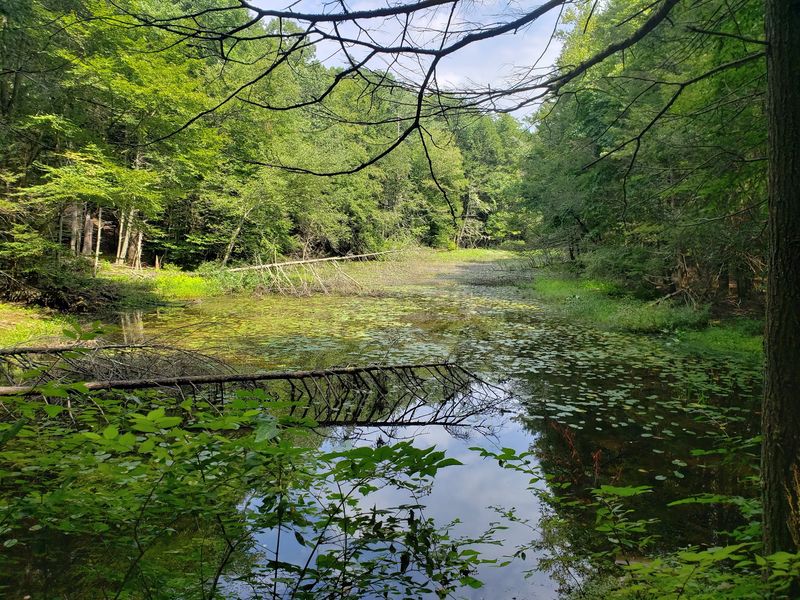
After all that iron and granite, your brain might want a break. Luckily, an easy trail circles a peaceful reservoir within the preserve.
This walk feels completely different from the rugged main loop. It’s gentler, slower, and great for anyone wanting a relaxed stroll.
Water changes the whole mood of a hike. Reflections, ripples, and quiet edges make it a lovely place to pause.
The reservoir works well for younger kids or tired legs. You still get time outdoors without a steep climb.
Bring a small snack and take your time. A little rest here can recharge you before heading back to the car.
Nature lovers should keep an eye out for wildlife. Forested water edges often attract birds and other critters going about their day.
I like that the preserve offers this softer side. Not every visit needs to be a big workout to feel worthwhile.
Pair the reservoir walk with the short furnace loop. Together they make an easy, interesting outing packed with variety.
9. Here Is How To Plan Your Trip To The Hill
Old mining ruins with river views? That’s a pretty great combination for a day outdoors!
This historic preserve in Roxbury gives hikers much more than a peaceful walk through the woods.
Mine Hill Preserve has trails that wind past remnants of the area’s mining past, with rocky terrain and scenic overlooks adding to the adventure. Some sections offer views toward the Shepaug River, making the climb even more rewarding.
The Roxbury Land Trust has cared for the property since acquiring it in 1978. Its historical importance was officially recognized in 1979, when the site joined the National Register of Historic Places.
Today, the preserve welcomes visitors throughout the year, generally from dawn until dusk. Conditions can change with the seasons, so checking the weather before visiting is always sensible.
Comfortable hiking shoes are a must, especially around uneven ground. Water is worth carrying, and bug spray can make summer outings much more pleasant.
The parking area is along Mine Hill Road, Roxbury, CT 06783, providing a convenient starting point for exploring the trails.
Keep a respectful distance from protected mine shafts and fragile historic structures. They’re fascinating to see, but preserving them matters just as much.
Between the old ruins and beautiful woodland scenery, this is one hike that offers plenty to talk about afterward.